
Lawrence Lessig
Lawrence "Larry" Lessig is an American academic and political activist. He is best known as a proponent of reduced legal restrictions on copyright, trademark, and radio frequency spectrum, particularly in technology applications. He is a director of the Edmond J. Safra Foundation Center for Ethics at Harvard University and a professor of law at Harvard Law School. Prior to rejoining Harvard, he was a professor of law at Stanford Law School and founder of its Center for Internet and Society. Lessig is a founding board member of Creative Commons, a board member of the Software Freedom Law Center and a former board member of the Electronic Frontier Foundation.
29 Books Written

Remix: Making Art and Commerce Thrive in the Hybrid Economy
by Lawrence Lessig
Rating: 3.7 ⭐
• 2 recommendations ❤️
The reigning authority on intellectual property in the Internet age, Lawrence Lessig spotlights the newest and possibly the most harmful culture — a war waged against those who create and consume art. America's copyright laws have ceased to perform their original, beneficial protecting artists' creations while allowing them to build on previous creative works. In fact, our system now criminalizes those very actions. Remix is an urgent, eloquent plea to end a war that harms every intrepid, creative user of new technologies. It also offers an inspiring vision of the postwar world where enormous opportunities await those who view art as a resource to be shared openly rather than a commodity to be hoarded.

In an era when special interests funnel huge amounts of money into our government-driven by shifts in campaign-finance rules and brought to new levels by the Supreme Court in Citizens United v. Federal Election Commission trust in our government has reached an all-time low. More than ever before, Americans believe that money buys results in Congress, and that business interests wield control over our legislature.With heartfelt urgency and a keen desire for righting wrongs, Harvard law professor Lawrence Lessig takes a clear-eyed look at how we arrived at this crisis: how fundamentally good people, with good intentions, have allowed our democracy to be co-opted by outside interests, and how this exploitation has become entrenched in the system. Rejecting simple labels and reductive logic-and instead using examples that resonate as powerfully on the Right as on the Left-Lessig seeks out the root causes of our situation. He plumbs the issues of campaign financing and corporate lobbying, revealing the human faces and follies that have allowed corruption to take such a foothold in our system. He puts the issues in terms that nonwonks can understand, using real-world analogies and real human stories. And ultimately he calls for widespread mobilization and a new Constitutional Convention, presenting achievable solutions for regaining control of our corrupted-but redeemable-representational system. In this way, Lessig plots a roadmap for returning our republic to its intended greatness. While America may be divided, Lessig vividly champions the idea that we can succeed if we accept that corruption is our common enemy and that we must find a way to fight against it. In REPUBLIC, LOST, he not only makes this need palpable and clear-he gives us the practical and intellectual tools to do something about it.

Lawrence Lessig, “the most important thinker on intellectual property in the Internet era” ( The New Yorker ), masterfully argues that never before in human history has the power to control creative progress been so concentrated in the hands of the powerful few, the so-called Big Media. Never before have the cultural powers- that-be been able to exert such control over what we can and can’t do with the culture around us. Our society defends free markets and free speech; why then does it permit such top-down control? To lose our long tradition of free culture, Lawrence Lessig shows us, is to lose our freedom to create, our freedom to build, and, ultimately, our freedom to imagine.
Should cyberspace be regulated? How can it be done? It's a cherished belief of techies and net denizens everywhere that cyberspace is fundamentally impossible to regulate. Harvard Professor Lawrence Lessig warns that, if we're not careful we'll wake up one day to discover that the character of cyberspace has changed from under us. Cyberspace will no longer be a world of relative freedom; instead it will be a world of perfect control where our identities, actions, and desires are monitored, tracked, and analyzed for the latest market research report. Commercial forces will dictate the change, and architecture—the very structure of cyberspace itself—will dictate the form our interactions can and cannot take. Code And Other Laws of Cyberspace is an exciting examination of how the core values of cyberspace as we know it—intellectual property, free speech, and privacy-—are being threatened and what we can do to protect them. Lessig shows how code—the architecture and law of cyberspace—can make a domain, site, or network free or restrictive; how technological architectures influence people's behavior and the values they adopt; and how changes in code can have damaging consequences for individual freedoms. Code is not just for lawyers and policymakers; it is a must-read for everyone concerned with survival of democratic values in the Information Age.

The Internet revolution has come. Some say it has gone. In The Future of Ideas , Lawrence Lessig explains how the revolution has produced a counterrevolution of potentially devastating power and effect. Creativity once flourished because the Net protected a commons on which widest range of innovators could experiment. But now, manipulating the law for their own purposes, corporations have established themselves as virtual gatekeepers of the Net while Congress, in the pockets of media magnates, has rewritten copyright and patent laws to stifle creativity and progress.Lessig weaves the history of technology and its relevant laws to make a lucid and accessible case to protect the sanctity of intellectual freedom. He shows how the door to a future of ideas is being shut just as technology is creating extraordinary possibilities that have implications for all of us. Vital, eloquent, judicious and forthright, The Future of Ideas is a call to arms that we can ill afford to ignore.
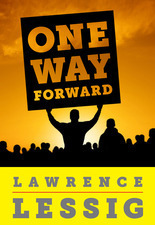
Something is clearly rotten in our Republic. Americans have lost faith in their politicians to a greater degree than ever, resigning themselves to “the best Congress money can buy,” as the comic Will Rogers once put it. It doesn’t matter whether they are Democrats or Republicans, people are disillusioned and angry as hell. They feel like outsiders in their own nation, powerless over their own lives, blocked from having a real voice in how they are governed.But all of this can change—we have the power. Lawrence Lessig, the renowned Harvard Law School professor, political activist, and author of the bestselling “Republic, Lost,” presents a clear-eyed, bipartisan manifesto for revolution just when we need it the most. “One Way Forward” is a rousing, eloquent, and ultimately optimistic call to action for Americans of all political persuasions. Notable in these viciously partisan times, Lessig pitches his address equally to Occupy Wall Streeters, Tea Party Patriots, independents, anarchists, and baffled citizens of the American middle. Despite our serious political differences, he argues, we can—and must—change the system for the better. At the core of our government, Lessig says, is “a legal corruption.” In other money. The job of politics has been left to a tiny slice of Americans who dominate campaign finance and exert a disproportionate influence on lawgivers as a result. This, he writes, “is a dynamic that would be obvious to Tony Soprano or Michael Corleone but that is sometimes obscure to political a protection racket that flourishes while our Republic burns.”“We don’t need to destroy wealth,” Lessig declares. “We need to destroy the ability of wealth to corrupt our politics.”With the common-sense idealism of his hero, Henry David Thoreau, Lessig shows how Americans can take back their country, and he provides a concrete and surprisingly practical set of instructions for doing it. In a season where Americans are poised between the hope for real change and the fear that, once again, they won’t get it, One Way Forward charts a course to a thrillingly new American future in which every citizen has a voice that matters, no matter how fat his or her wallet. . . .Lawrence Lessig is the director of the Edmond J. Safra Center for Ethics at Harvard University and the Roy L. Furman Professor of Law and Leadership at Harvard Law School. His most recent book is “Republic, Lost”, an attack on the destructive influence of special-interest money on American politics. He is also the author of “Code and other Laws of Cyberspace,” “The Future of Ideas,” “Free Culture,” “ Version 2.0,” and “ Making Art and Culture Thrive in the Hybrid Economy.” He is a founding board member of Creative Commons and serves on the board of Maplight.

WITH A NEW FOREWORD ABOUT THE 2020 ELECTION“This urgent book offers not only a clear-eyed explanation of the forces that broke our politics, but a thoughtful and, yes, patriotic vision of how we create a government that’s truly by and for the people.”—DAVID DALEY, bestselling author of Ratf**ked and UnriggedIn the vein of On Tyranny and How Democracies Die, the bestselling author of Republic, Lost argues with insight and urgency that our democracy no longer represents us and shows that reform is both necessary and possible. America’s democracy is in crisis. Along many dimensions, a single flaw—unrepresentativeness—has detached our government from the people. And as a people, our fractured partisanship and ignorance on critical issues drive our leaders to stake out ever more extreme positions.In They Don’t Represent Us, Harvard law professor Lawrence Lessig charts the way in which the fundamental institutions of our democracy, including our media, respond to narrow interests rather than to the needs and wishes of the nation’s citizenry. But the blame does not only lie with “them”—Washington’s politicians and power brokers, Lessig argues. The problem is also “us.” “We the people” are increasingly uninformed about the issues, while ubiquitous political polling exacerbates the problem, reflecting and normalizing our ignorance and feeding it back into the system as representative of our will.What we need, Lessig contends, is a series of reforms, from governmental institutions to the public itself, including:A move immediately to public campaign funding, leading to more representative candidatesA reformed Electoral College, that gives the President a reason to represent America as a wholeA federal standard to end partisan gerrymandering in the states A radically reformed SenateA federal penalty on states that don’t secure to their people an equal freedom to voteInstitutions that empower the people to speak in an informed and deliberative wayA soul-searching and incisive examination of our failing political culture, this nonpartisan call to arms speaks to every citizen, offering a far-reaching platform for reform that could save our democracy and make it work for all of us.

The American political system has been foundationally weakened by a corrupt campaign funding system, creating a dangerously unstable and inequitable design that could destroy our republic — if we let it. In Le$terland: The Corruption of Congress and How To End It, Harvard law professor Lawrence Lessig takes on the deep flaws in our campaign finance system and lays out a plan for fixing it. Lessig describes a place called Lesterland, a fictional land with a population of 311 million people of whom the 144,000, or 0.05 percent, named Lester are the people really in charge. It’s the United States, of course, and Lesters are the people who fund the election. Lessig notes that just 132 Americans gave 60 percent of the SuperPAC money spent in the election cycle. It’s these few, he says, who are our Lesters, and our dependence on them is perverting the democracy of the country. After all, if candidates have to spend 30 to 70 percent of their time trying to raise funds to get back to Congress, which they do, might that not affect their principles, their beliefs, their ideals, and what they’re prepared to fight for on behalf of the people? It's time to change the system. Here's how.

“There is not a single American awake to the world who is comfortable with the way things are.” So begins Lawrence Lessig's sweeping indictment of contemporary American institutions and the corruption that besets them. We can all see it—from the selling of Congress to special interests to the corporate capture of the academy. Something is wrong. It’s getting worse. And it’s our fault. What Lessig shows, brilliantly and persuasively, is that we can’t blame the problems of contemporary American life on bad people, as our discourse all too often tends to do. Rather, he explains, “We have allowed core institutions of America’s economic, social, and political life to become corrupted. Not by evil souls, but by good souls. Not through crime, but through compromise.” Every one of us, every day, making the modest compromises that seem necessary to keep moving along, is contributing to the rot at the core of American civic life. Through case studies of Congress, finance, the academy, the media, and the law, Lessig shows how institutions are drawn away from higher purposes and toward money, power, quick rewards—the first steps to corruption. Lessig knows that a charge so broad should not be levied lightly, and that our instinct will be to resist it. So he brings copious, damning detail gleaned from years of research, building a case that is all but America is on the wrong path. If we don’t acknowledge our own part in that, and act now to change it, we will hand our children a less perfect union than we were given. It will be a long struggle. This book represents the first steps.
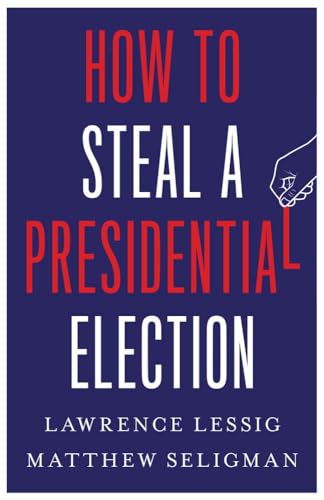
From two distinguished experts on election law, an alarming look at how the American presidency could be stolen—by entirely legal means Even in the fast and loose world of the Trump White House, the idea that a couple thousand disorganized protestors storming the U.S. Capitol might actually prevent a presidential succession was farfetched. There are, however, perfectly legal ways of overturning election results that would allow a political party to install its own candidate in place of the true winner. Lawrence Lessig and Matthew Seligman work through every option available for subverting a presumptively legitimate result—from vice-presidential intervention to election decertification and beyond. While many strategies would never pass constitutional muster, Lessig and Seligman explain the ways that some of them might. They expose correctable weaknesses in the system, including one that could be corrected only by the Supreme Court. Any strategy aimed at hacking a presidential election is a threat to democracy. This book is a clarion call to shore up the insecure system for electing the president before American democracy is forever compromised.
There's a common belief that cyberspace cannot be regulated-that it is, in its very essence, immune from the government's (or anyone else's) control.Code argues that this belief is wrong. It is not in the nature of cyberspace to be unregulable; cyberspace has no "nature." It only has code-the software and hardware that make cyberspace what it is. That code can create a place of freedom-as the original architecture of the Net did-or a place of exquisitely oppressive control.If we miss this point, then we will miss how cyberspace is changing. Under the influence of commerce, cyberpsace is becoming a highly regulable space, where our behavior is much more tightly controlled than in real space.But that's not inevitable either. We can-we must-choose what kind of cyberspace we want and what freedoms we will guarantee. These choices are all about architecture: about what kind of code will govern cyberspace, and who will control it. In this realm, code is the most significant form of law, and it is up to lawyers, policymakers, and especially citizens to decide what values that code embodies.

Based upon his 2013 TED talk, now with more than a million views, this book tells the story of the system of corruption within our government, and how we might fix it. Cross-partisan, and incredibly hopeful, the book is a map for a democracy that we could reclaim.
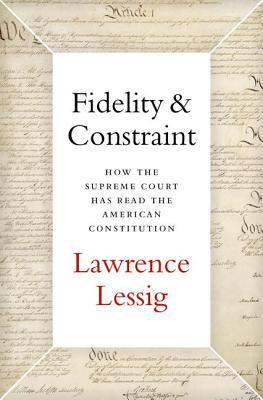
Fidelity & Constraint: How the Supreme Court Has Read the American Constitution
by Lawrence Lessig
Rating: 3.6 ⭐
The fundamental fact about our Constitution is that it is old -- the oldest written constitution in the world. The fundamental challenge for interpreters of the Constitution is how to read that old document over time.In Fidelity & Constraint , legal scholar Lawrence Lessig explains that one of the most basic approaches to interpreting the constitution is the process of translation. Indeed, some of the most significant shifts in constitutional doctrine are products of the evolution of the translation process over time. In every new era, judges understand their translations as instances of "interpretive fidelity," framed within each new temporal context.Yet, as Lessig also argues, there is a repeatedly occurring countermove that upends the process of translation. Throughout American history, there has been a second fidelity in addition to interpretive what Lessig calls "fidelity to role." In each of the cycles of translation that he describes, the role of the judge -- the ultimate translator -- has evolved too. Old ways of interpreting the text now become illegitimate because they do not match up with the judge's perceived role. And when that conflict occurs, the practice of judges within our tradition has been to follow the guidance of a fidelity to role. Ultimately, Lessig not only shows us how important the concept of translation is to constitutional interpretation, but also exposes the institutional limits on this practice.The first work of both constitutional and foundational theory by one of America's leading legal minds, Fidelity & Constraint maps strategies that both help judges understand the fundamental conflict at the heart of interpretation whenever it arises and work around the limits it inevitably creates.

The moving picture, film, and television have exerted an unmatched influence throughout the twentieth century, equally documenting and constructing our reality. It is the peculiar power of the moving image that while it may be depicting a fiction, our viewing of it is real and therefore the experience and memory we take away from it is filed away with all the other events and memories that have actually happened to us. The artists in Cut have taken the material of their reality--the movie and the news program--and manipulated it to reveal its power to communicate and shape reality. Clearly indebted to the appropriation strategies of the 1980s and sampling in hip hop and rap music of the 1990s, these artists are united by their gestural use of editing. Whether through looping, repetition, erasure, or compression, their active manipulation of their medium recalls the importance that action was given by Richard Serra in 1968, when he published “Verb List,” a list of actions that a sculptor could use to create to roll, to crease, to fold, to cut, etc. Cut explores the actions through which artists create videos. Through the physical manipulation of the most familiar of media, they restructure reality, making the familiar unfamiliar and instilling in the viewer the opportunity to comprehend and distinguish a new reality. Included are works by Candice Breitz, Omar Fast, Douglas Gordon, Michael Joaquin Grey, Pierre Huyghe, Christian Marclay, Jennifer & Kevin McCoy and Paul Pfeiffer.

In an era when special interests funnel huge amounts of money into our government-driven by shifts in campaign-finance rules and brought to new levels by the Supreme Court in Citizens United v. Federal Election Commission-trust in our government has reached an all-time low. More than ever before, Americans believe that money buys results in Congress, and that business interests wield control over our legislature. With heartfelt urgency and a keen desire for righting wrongs, Harvard law professor Lawrence Lessig takes a clear-eyed look at how we arrived at this crisis: how fundamentally good people, with good intentions, have allowed our democracy to be co-opted by outside interests, and how this exploitation has become entrenched in the system. Rejecting simple labels and reductive logic-and instead using examples that resonate as powerfully on the Right as on the Left-Lessig seeks out the root causes of our situation. He plumbs the issues of campaign financing and corporate lobbying, revealing the human faces and follies that have allowed corruption to take such a foothold in our system. He puts theissues in terms that nonwonks can understand, using real-world analogies and real human stories. And ultimately he calls for widespread mobilization and a new Constitutional Convention, presenting achievable solutions for regaining control of our corrupted-but redeemable-representational system. In this way, Lessig plots a roadmap for returning our republic to its intended greatness. While America may be divided, Lessig vividly champions the idea that we can succeed if we accept that corruption is our common enemy and that we must find a way to fight against it. In Republic Lost, he not only makes this need palpable and clear-he gives us the practical and intellectual tools to do something about it.
From the article"How could anyone be against transparency? Its virtues and its utilities seem so crushingly obvious. But I have increasingly come to worry that there is an error at the core of this unquestioned goodness. We are not thinking critically enough about where and when transparency works, and where and when it may lead to confusion, or to worse. And I fear that the inevitable success of this movement--if pursued alone, without any sensitivity to the full complexity of the idea of perfect openness--will inspire not reform, but disgust."

The fundamental fact about our Constitution is that it is old--the oldest written constitution in the world. The fundamental challenge for interpreters of the Constitution is how to read that old document over time.In Fidelity & Constraint, legal scholar Lawrence Lessig explains that one of the most basic approaches to interpreting the constitution is the process of translation. Indeed, some of the most significant shifts in constitutional doctrine are products of the evolution over time of the translation process. In every new era, judges understand their translations as instances of "interpretive fidelity," framed within each new temporal context.Yet, as Lessig also argues, there is a repeatedly occurring countermove that upends the process of translation. Throughout American history, there has been a second fidelity in addition to interpretive fidelity: what Lessig calls "fidelity to role." In each of the cycles of translation that he describes, the role of the judge--the ultimate translator--has evolved too. Old ways of interpreting the text now become illegitimate because they do not match up with the judge's perceived role. And when that conflict occurs, the practice of judges within our tradition has been to follow the guidance of a fidelity to role. Ultimately, Lessig not only shows us how important the concept of translation is to constitutional interpretation, but also exposes the institutional limits on this practice.The first work of both constitutional and foundational theory by one of America's leading legal minds, Fidelity & Constraint maps strategies that both help judges understand the fundamental conflict at the heart of interpretation whenever it arises and work around the limits it inevitably creates.

Cultura libre es un libro fundamental para comprender los problemas y prejuicios que las nuevas regulaciones sobre propiedad intelectual imponen sobre el progreso cultural y la difusion del conocimiento en el contexto de la sociedad digital.

Internet si sta rivelando uno strumento straordinario di riforma della democrazia e della politica. La Rete, in quanto spazio di elezione per una rinnovata e potentissima forma di fiducia, può porsi quale via di rinnovamento della società e di partecipazione attiva e consapevole dei cittadini, a patto che rimanga libera. Se il binomio politica-denaro ha minato la libertà e l’indipendenza della politica, screditando le istituzioni, favorendo la corruzione e creando nei cittadini un meccanismo di sfiducia nei confronti di un sistema governato dalle lobby economiche e da rappresentanti impegnati più a garantirsi il sostegno di quelle lobby che a tutelare i reali bisogni delle persone; se la sfiducia crea immobilismo e disimpegno, ebbene la Rete, con la sua capacità di mobilitazione collettiva dal basso, rappresenta nell'attuale momento di crisi un’opportunità straordinaria per ripristinare la fiducia nelle istituzioni e quindi l’indipendenza della politica. Si tratta di re-instaurare un processo di partecipazione che superi la politica in cui il cittadino sviluppa solo una passiva abilità all'ascolto, per stimolare azioni attive e creative capaci di rendere i singoli promotori di decisioni e scelte condivise.
[Free Culture: The Nature and Future of Creativity] [By: Lessig, Lawrence] [February, 2005]
by Lawrence Lessig
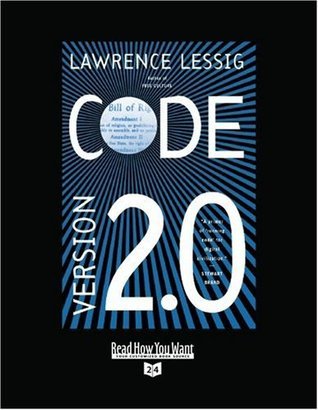
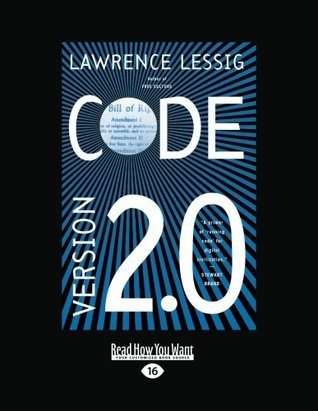
Code: Version 2.0: Easyread Super Large 24pt Edition
by Lawrence Lessig
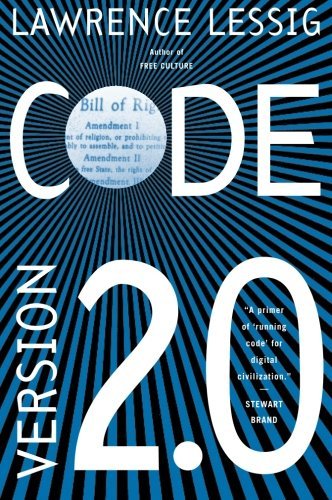
Since its original publication in 1999, this foundational book has become a classic in its field. This second edition, Code Version 2.0, updates the work and was prepared in part through a wiki, a web site allowing readers to edit the text, making this the first reader-edited revision of a popular book. Code counters the common belief that cyberspace cannot be controlled or censored. To the contrary, under the influence of commerce, cyberspace is becoming a highly regulable world where behavior will be much more tightly controlled than in real space. We can - we must - choose what kind of cyberspace we want and what freedoms it will guarantee. These choices are all about what kind of code will govern cyberspace, and who will control it. In this realm, code is the most significant form of law and it is up to lawyers, policymakers, and especially average citizens to decide what values that code embodies.

クリエイティブ・コモンズ―デジタル時代の知的財産権
by Lawrence Lessig

テレコム・メルトダウン―アメリカの情報通信政策は失敗だったのか
by Lawrence Lessig

Free Culture annotated and illustrated edition
by Lawrence Lessig
Free Culture (new edition) with annotated
by Lawrence Lessig
Lawrence Lessig, “the most important thinker on intellectual property in the Internet era” (The New Yorker), masterfully argues that never before in human history has the power to control creative progress been so concentrated in the hands of the powerful few, the so-called Big Media. Never before have the cultural powers- that-be been able to exert such control over what we can and can’t do with the culture around us. Our society defends free markets and free speech; why then does it permit such top-down control? To lose our long tradition of free culture, Lawrence Lessig shows us, is to lose our freedom to create, our freedom to build, and, ultimately, our freedom to imagine

Free Culture illustrated
by Lawrence Lessig
Lawrence Lessig, "the most important thinker on intellectual property in the Internet era" (The New Yorker), masterfully argues that never before in human history has the power to control creative progress been so concentrated in the hands of the powerful few, the so-called Big Media. Never before have the cultural powers- that-be been able to exert such control over what we can and can't do with the culture around us. Our society defends free markets and free speech; why then does it permit such top-down control? To lose our long tradition of free culture, Lawrence Lessig shows us, is to lose our freedom to create, our freedom to build, and, ultimately, our freedom to imagine.

Constitutional Law: A casebook - or a reader for Fidelity and Constraint
by Lawrence Lessig
This casebook is a companion to my book, Fidelity & Constraint (Oxford 2019). It covers the course material of federalism, separation of powers, and the Civil War Amendments, organized into a framework for understanding how the Supreme Court has developed these doctrines. That framework is suggestive for domains beyond the scope of this casebook.
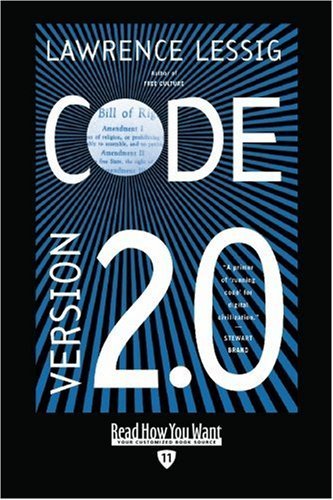
Code: Version 2.0: Easyread Edition
by Lawrence Lessig
Since its original publication in 1999, this foundational book has become a classic in its field. This second edition, Code Version 2.0, updates the work and was prepared in part through a wiki, a web site allowing readers to edit the text, making this the first reader-edited revision of a popular book. Code counters the common belief that cyberspace cannot be controlled or censored. To the contrary, under the influence of commerce, cyberspace is becoming a highly regulable world where behavior will be much more tightly controlled than in real space. We can - we must - choose what kind of cyberspace we want and what freedoms it will guarantee. These choices are all about what kind of code will govern cyberspace, and who will control it. In this realm, code is the most significant form of law and it is up to lawyers, policymakers, and especially average citizens to decide what values that code embodies.