
Erik Davis
8 Books Written

TechGnosis: Myth, Magic, and Mysticism in the Age of Information
by Erik Davis
Rating: 4.1 ⭐
• 2 recommendations ❤️
TechGnosis is a cult classic of media studies that straddles the line between academic discourse and popular culture; it appeals to both those secular and spiritual, to fans of cyberpunk and hacker literature and culture as much as new-thought adherents and spiritual seekers. How does our fascination with technology intersect with the religious imagination? In TechGnosis—a cult classic now updated and reissued with a new afterword—Erik Davis argues that while the realms of the digital and the spiritual may seem worlds apart, esoteric and religious impulses have in fact always permeated (and sometimes inspired) technological communication. Davis uncovers startling connections between such seemingly disparate topics as electricity and alchemy; online roleplaying games and religious and occult practices; virtual reality and gnostic mythology; programming languages and Kabbalah. The final chapters address the apocalyptic dreams that haunt technology, providing vital historical context as well as new ways to think about a future defined by the mutant intermingling of mind and machine, nightmare and fantasy.

High Weirdness: Drugs, Esoterica, and Visionary Experiences in the Seventies
by Erik Davis
Rating: 4.2 ⭐
An exploration of the emergence of a new psychedelic spirituality in the work of Philip K. Dick, Terence McKenna, and Robert Anton Wilson. A study of the spiritual provocations to be found in the work of Philip K. Dick, Terence McKenna, and Robert Anton Wilson, High Weirdness charts the emergence of a new psychedelic spirituality that arose from the American counterculture of the 1970s. These three authors changed the way millions of readers thought, dreamed, and experienced reality—but how did their writings reflect, as well as shape, the seismic cultural shifts taking place in America? In High Weirdness , Erik Davis—America's leading scholar of high strangeness—examines the published and unpublished writings of these vital, iconoclastic thinkers, as well as their own life-changing mystical experiences. Davis explores the complex lattice of the strange that flowed through America's West Coast at a time of radical technological, political, and social upheaval to present a new theory of the weird as a viable mode for a renewed engagement with reality.

In this wickedly entertaining and thoroughly informed homage to one of rock music's towering pinnacles, Erik Davis investigates the magic—black or otherwise—that surrounds this album. Carefully peeling the layers from each song, Davis reveals their dark and often mystical roots—and leaves the reader to decide whether Four Symbols is some form of occult induction or just an inspired, brilliantly played rock album.“Stripping Led Zeppelin's famous name off the fourth record was an almost petulant attempt to let their Great Work symbolically stand on its own two feet. But the wordless jacket also lent the album charisma. Fans hunted for hidden meanings, or, in failing to find them, sensed a strange reflection of their own mute refusal to communicate with the outside world. This helped to create one of the supreme paradoxes of rock history: an esoteric megahit, a blockbuster arcanum. Stripped of words and numbers, the album no longer referred to anything but itself: a concrete talisman that drew you into its world, into the frame. All the stopgap titles we throw at the thing are lame: Led Zeppelin IV, [Untitled], Runes, Zoso, Four Symbols. In an almost Lovecraftian sense, the album was nameless, a thing from beyond, charged with manna. And yet this uncanny fetish was about as easy to buy as a jockstrap.”
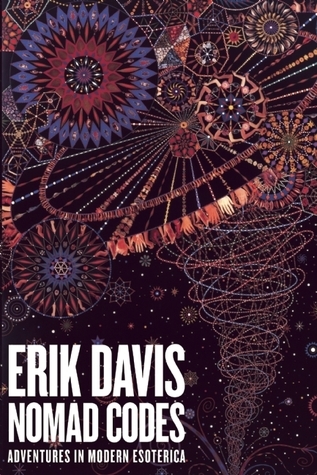
In these wide-ranging essays, Erik Davis explores the codes — spiritual, cultural, and embodied — that people use to escape the limitations of their lives and enrich their experience of the world. These include Asian religious traditions and West African trickster gods, Western occult and esoteric lore, postmodern theory and psychedelic science, as well as festival scenes such as Burning Man. Whether his subject is collage art or the "magickal realism" of H. P. Lovecraft, Davis writes with keen yet skeptical sympathy, intellectual subtlety and wit, and unbridled curiosity. The common thread running through these pieces is what Davis calls "modern esoterica," which he describes as "a no-man’s-land located somewhere between anthropology and mystical pulp, between the zendo and the metal club, between cultural criticism and extraordinary experience. Such an ambiguous and startling landscape demands that the intrepid adventurer shed any territorial claims and go nomad."

With a rich cultural history and Hollywood stars publicly attesting to a wide range of faiths, it's no surprise that California's spiritual landscape is as diverse as its natural surroundings. The Visionary State weaves text and image into a compelling narrative of religion, architecture, and consciousness in California, from neopaganism to televangelism, UFO cults to austere Zen Buddhism. Acclaimed culture critic Erik Davis brings together the immigrant and homegrown religious influences that have been part of the region's character from its earliest days, drawing connections between seemingly unlike traditions and celebrating the diversity of California's spiritual composition. Michael Rauner's evocative photographs depict the sites and structures where these traditions have taken root and flourished. The Visionary State is a landmark look at what is likely the most varied locale for religious activity anywhere.

A richly illustrated exploration of the history, art, and design of printed LSD blotter tabs.Blotter is the first comprehensive written account of the history, art, and design of LSD blotter paper, the iconic drug delivery device that will perhaps forever be linked to underground psychedelic culture and contemporary street art. Created in collaboration with Mark McCloud’s Institute of Illegal Images, the world’s largest archive of blotter art, Davis’s boldly illustrated exhibition treats his outsider subject with the serious, art-historical respect it deserves, while also staying true to the sense of play, irreverence, and adventure inherent in psychedelic exploration.Davis weaves together two main first, the largely unknown history of blotter paper’s development in the 1960s and its later flowering in the 1970s and 1980s; and second, the story of how San Francisco artist, professor, and “freak” McCloud began collecting blotter and ultimately became embroiled with the LSD trade. The book closes with a unique discussion of the market for “vanity blotter”—more recent perforated papers produced as collectible art objects never meant to be dipped in LSD. While vanity blotters are intimately related to the underground blotters of the LSD trade, they effectively open up their own visual world. As the ultimate document of this ephemeral artform, Blotter represents an exceptional contribution to the scholarship of art and psychedelics that will entertain older readers with lysergic nostalgia and younger readers with its image-driven journey through a colorful and scandalous corner of psychedelic lore.

High Weirdness: Drugs, Esoterica, and Visionary Experience in the Seventies
by Erik Davis
Rating: 4.3 ⭐
MP3 CD Format An exploration of the emergence of a new psychedelic spirituality in the work of Philip K. Dick, Terence McKenna, and Robert Anton Wilson.A study of the spiritual provocations to be found in the work of Philip K. Dick, Terence McKenna, and Robert Anton Wilson, High Weirdness charts the emergence of a new psychedelic spirituality that arose from the American counterculture of the 1970s. These three authors changed the way millions of readers thought, dreamed, and experienced reality—but how did their writings reflect, as well as shape, the seismic cultural shifts taking place in America?In High Weirdness , Erik Davis—America's leading scholar of high strangeness—examines the published and unpublished writings of these vital, iconoclastic thinkers, as well as their own life-changing mystical experiences. Davis explores the complex lattice of the strange that flowed through America's West Coast at a time of radical technological, political, and social upheaval to present a new theory of the weird as a viable mode for a renewed engagement with reality.
