Loading themes...
Explore the best books about British Literature theme.

This is an alternative cover edition for ISBN 9780007230181England in the 1520s is a heartbeat from disaster. If the king dies without a male heir, the country could be destroyed by civil war. Henry VIII wants to annul his marriage of twenty years and marry Anne Boleyn. The pope and most of Europe opposes him. Into this impasse steps Thomas Cromwell: a wholly original man, a charmer and a bully, both idealist and opportunist, astute in reading people, and implacable in his ambition. But Henry is volatile: one day tender, one day murderous. Cromwell helps him break the opposition, but what will be the price of his triumph?
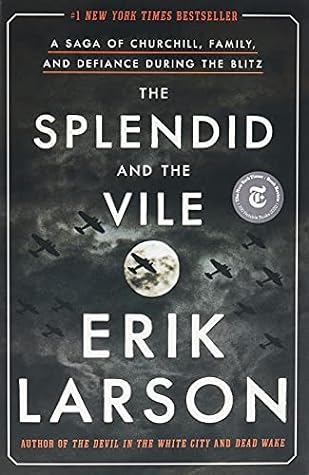
"The #1 New York Times bestselling author of The Devil in the White City and Dead Wake delivers a fresh and compelling portrait of Winston Churchill and London during the Blitz. On Winston Churchill's first day as prime minister, Hitler invaded Holland and Belgium. Poland and Czechoslovakia had already fallen, and the Dunkirk evacuation was just two weeks away. For the next twelve months, Hitler would wage a relentless bombing campaign, killing 45,000 Britons. It was up to Churchill to hold the country together and persuade President Franklin Roosevelt that Britain was a worthy ally-and willing to fight to the end. In The Splendid and the Vile, Erik Larson shows, in cinematic detail, how Churchill taught the British people "the art of being fearless." It is a story of political brinkmanship, but it's also an intimate domestic drama set against the backdrop of Churchill's prime-ministerial country home, Chequers; his wartime retreat, Ditchley, where he and his entourage go when the moon is brightest and the bombing threat is highest; and of course 10 Downing Street in London. Drawing on diaries, original archival documents, and once-secret intelligence reports-some released only recently-Larson provides a new lens on London's darkest year through the day-to-day experience of Churchill and his wife, Clementine; their youngest daughter, Mary, who chafes against her parents' wartime protectiveness; their son, Randolph, and his beautiful, unhappy wife, Pamela; Pamela's illicit lover, a dashing American emissary; and the cadre of close advisers who comprised Churchill's "Secret Circle," including his lovestruck private secretary, John Colville; newspaper baron Lord Beaverbrook; and the Rasputin-like Frederick Lindemann. The Splendid and the Vile takes readers out of today's political dysfunction and back to a time of true leadership, when-in the face of unrelenting horror-Churchill's eloquence, courage, and perseverance bound a country, and a family, together."--

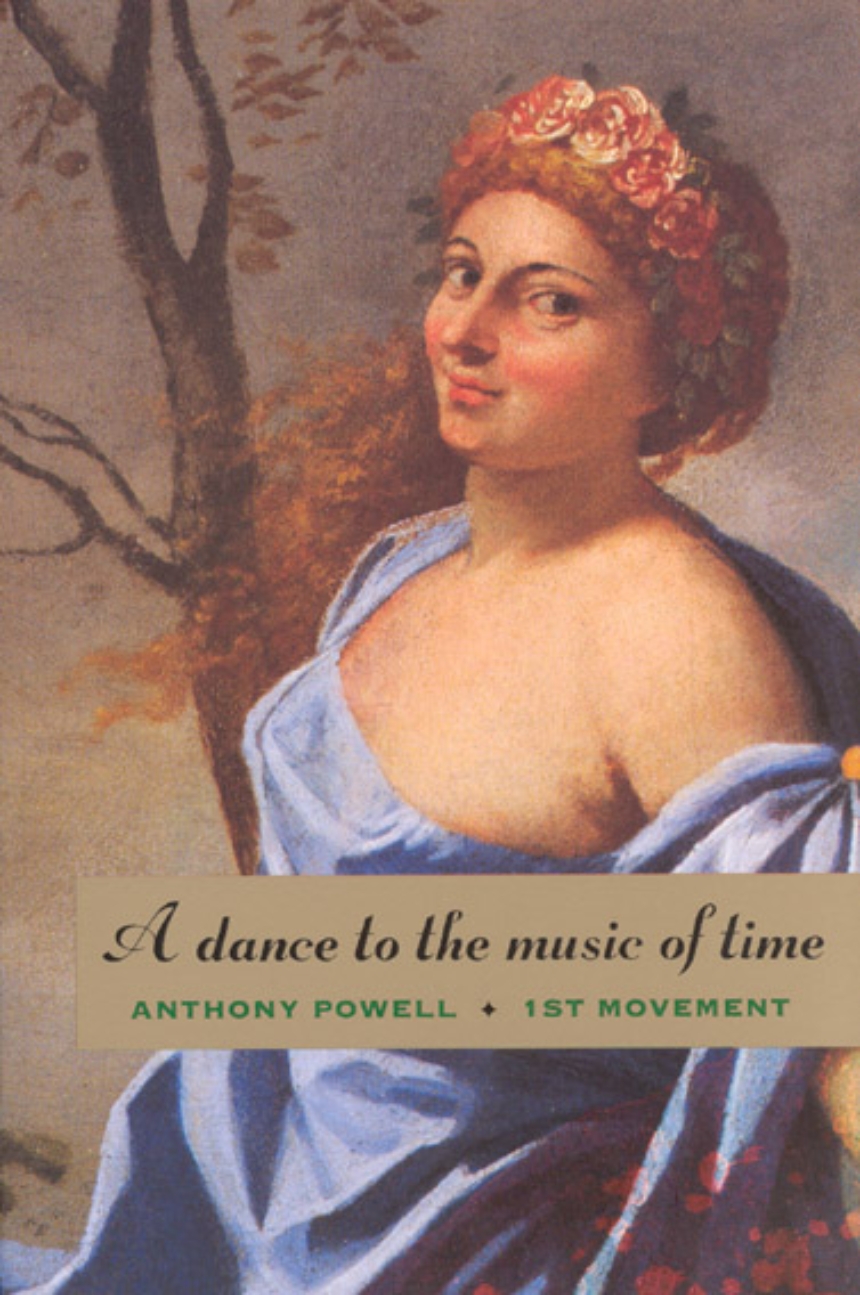
Anthony Powell's universally acclaimed epic encompasses a four-volume panorama of twentieth century London. Hailed by Time as "brilliant literary comedy as well as a brilliant sketch of the times," A Dance to the Music of Time opens just after World War I. Amid the fever of the 1920s and the first chill of the 1930s, Nick Jenkins and his friends confront sex, society, business, and art. In the second volume they move to London in a whirl of marriage and adulteries, fashions and frivolities, personal triumphs and failures. These books "provide an unsurpassed picture, at once gay and melancholy, of social and artistic life in Britain between the wars" (Arthur Schlesinger, Jr.). The third volume follows Nick into army life and evokes London during the blitz. In the climactic final volume, England has won the war and must now count the losses.Four very different young men on the threshold of manhood dominate this opening volume of A Dance to the Music of Time. The narrator, Jenkins—a budding writer—shares a room with Templer, already a passionate womanizer, and Stringham, aristocratic and reckless. Widermerpool, as hopelessly awkward as he is intensely ambitious, lurks on the periphery of their world. Amid the fever of the 1920s and the first chill of the 1930s, these four gain their initiations into sex, society, business, and art. Considered a masterpiece of modern fiction, Powell's epic creates a rich panorama of life in England between the wars.Includes these novels: A Question of Upbringing A Buyer's Market The Acceptance World

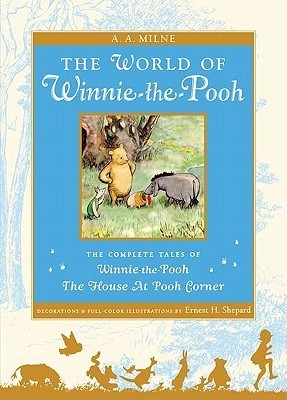
In 1926, "Winnie-the-Pooh," a collection of stories about a rather stout, somewhat confused bear, was published in England and America. The enchanting tales of Pooh, Piglet, Eeyore, Christopher Robin, and the others were an immediate success, and firmly established A.A. Milne, already an acclaimed dramatist, as a major author of children's books. "Winnie-the-Pooh" was followed in 1928 by a second collection, "The House at Pooh Corner," which continued the adventures from the Hundred Acre Wood and introduced bouncy, lovable Tigger.This deluxe volume brings all of the Pooh stories together in one full-colour, large-format book. The texts are complete and unabridged, and all of the illustrations, each gloriously recoloured, are included. Here are the beloved stories of Pooh stuck in Rabbit's doorway, of gloomy Eeyore and his nearly forgotten birthday, of playing Poohsticks on the bridge, and so many more.

Between 1927 and his death in 1973, W. H. Auden endowed poetry in the English language with a new face. Or rather, with several faces, since his work ranged from the political to the religious, from the urbane to the pastoral, from the mandarin to the invigoratingly plain-spoken.This collection presents all the poems Auden wished to preserve, in the texts that received his final approval. It includes the full contents of his previous collected editions along with all the later volumes of his shorter poems. Together, these works display the astonishing range of Auden's voice and the breadth of his concerns, his deep knowledge of the traditions he inherited, and his ability to recast those traditions in modern times.

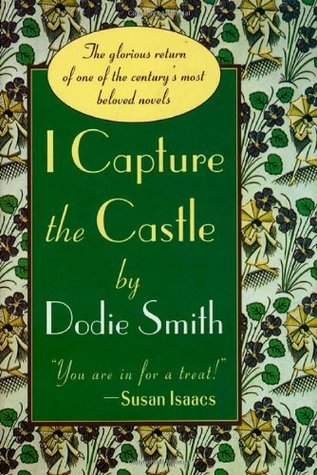
Through six turbulent months of 1934, 17-year-old Cassandra Mortmain keeps a journal, filling three notebooks with sharply funny yet poignant entries about her home, a ruined Suffolk castle, and her eccentric and penniless family. By the time the last diary shuts, there have been great changes in the Mortmain household, not the least of which is that Cassandra is deeply, hopelessly, in love.

Jessica Mitford, the great muckraking journalist, was part of a legendary English aristocratic family. Her sisters included Nancy, doyenne of the 1920s London smart set and a noted novelist and biographer; Diana, wife to the English fascist chief Sir Oswald Mosley; Unity, who fell head over in heels in love with Hitler; and Deborah, later the Duchess of Devonshire. Jessica swung left and moved to America, where she took part in the civil rights movement and wrote her classic expose of the undertaking business, The American Way of Death.Hons and Rebels is the hugely entertaining tale of Mitford's upbringing, which was, as she dryly remarks, not exactly conventional. . . Debo spent silent hours in the chicken house learning to do an exact imitation of the look of pained concentration that comes over a hen's face when it is laying an egg. . . . Unity and I made up a complete language called Boudledidge, unintelligible to any but ourselves, in which we translated various dirty songs (for safe singing in front of the grown-ups). But Mitford found her family's world as smothering as it was singular and, determined to escape it, she eloped with Esmond Romilly, Churchill's nephew, to go fight in the Spanish Civil War. The ensuing scandal, in which a British destroyer was dispatched to recover the two truants, inspires some of Mitford's funniest, and most pointed, pages.A family portrait, a tale of youthful folly and high-spirited adventure, a study in social history, a love story, Hons and Rebels is a delightful contribution to the autobiographer's art.

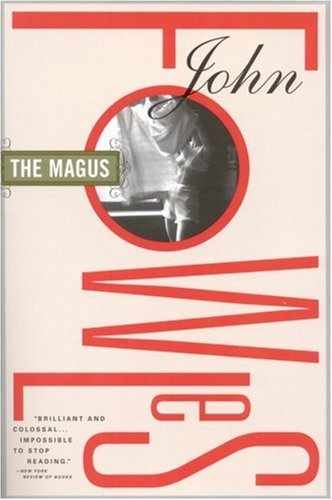
This daring literary thriller, rich with eroticism and suspense, is one of John Fowles's best-loved and bestselling novels and has contributed significantly to his international reputation as a writer of the first degree. At the center of The Magus is Nicholas Urfe, a young Englishman who accepts a teaching position on a remote Greek island, where he befriends a local millionaire. The friendship soon evolves into a deadly game, in which reality and fantasy are deliberately manipulated, and Nicholas finds that he must fight not only for his sanity but for his very survival.

Considered by contemporary critics to be Trollope's greatest novel, The Way We Live Now is a satire of the literary world of nineteenth-century London and a bold indictment of the new power of speculative finance in English life. The story concerns Augustus Melmotte, a French swindler and scoundrel, and his daughter, to whom Felix Carbury, adored son of the authoress Lady Carbury, is induced to propose marriage for the sake of securing a fortune. Trollope's portrait of Lady Carbury, impetuous, unprincipled, and unswervingly devoted to her own self-promotion, is one of his finest satirical achievements. In his kaleidoscopic depiction of a society on the verge of moral bankruptcy, Trollope gives us life as it was lived more than a hundred years ago, while speaking eloquently to some of the governing obsessions of our own age.

From award-winning writer David Mitchell comes a sinewy, meditative novel of boyhood on the cusp of adulthood and the old on the cusp of the new.Black Swan Green tracks a single year in what is, for thirteen-year-old Jason Taylor, the sleepiest village in muddiest Worcestershire in a dying Cold War England, 1982. But the thirteen chapters, each a short story in its own right, create an exquisitely observed world that is anything but sleepy. A world of Kissingeresque realpolitik enacted in boys’ games on a frozen lake; of “nightcreeping” through the summer backyards of strangers; of the tabloid-fueled thrills of the Falklands War and its human toll; of the cruel, luscious Dawn Madden and her power-hungry boyfriend, Ross Wilcox; of a certain Madame Eva van Outryve de Crommelynck, an elderly bohemian emigré who is both more and less than she appears; of Jason’s search to replace his dead grandfather’s irreplaceable smashed watch before the crime is discovered; of first cigarettes, first kisses, first Duran Duran LPs, and first deaths; of Margaret Thatcher’s recession; of Gypsies camping in the woods and the hysteria they inspire; and, even closer to home, of a slow-motion divorce in four seasons.Pointed, funny, profound, left-field, elegiac, and painted with the stuff of life, Black Swan Green is David Mitchell’s most subtlest and effective achievement to date.

An alternative cover for this ISBN can be found here.The most nostalgic and reflective of Evelyn Waugh's novels, Brideshead Revisited looks back to the golden age before the Second World War. It tells the story of Charles Ryder's infatuation with the Marchmains and the rapidly-disappearing world of privilege they inhabit. Enchanted first by Sebastian at Oxford, then by his doomed Catholic family, in particular his remote sister, Julia, Charles comes finally to recognize only his spiritual and social distance from them.

Do you know your desert-island, all-time, top five most memorable split-ups? Rob does. He keeps a list, in fact. But Laura isn't on it—even though she's just become his latest ex. He's got his life back, you see. He can just do what he wants when he wants: like listen to whatever music he likes, look up the girls that are on his list, and generally behaves as if Laura never mattered. But Rob finds he can't move on. He's stuck in a really deep groove—and it's called Laura. Soon, Rob's asking himself some big questions: about love, about life—and about why we choose to share ours with the people we do.

Universally acclaimed for their compelling narrative, their fresh insights, and their objective renderings of Winston Churchill's life, The Last Lion trilogy presents a revelatory and unparalleled portrait of this brilliant, flawed, and dynamic adventurer, aristocrat, soldier, and statesman. Born at the end of the 19th century when Imperial Britain still stood at the splendid pinnacle of her power, Churchill would witness the shift a few years later as the Empire hovered on the brink of a catastrophic new era. One of the greatest wartime leaders of our time, he would go on to stand alone, politically isolated in Parliament, as he took the lead in warning of the growing Nazi threat, and would lead Britain to victory against Nazi Germany and the Axis powers in World War II. Now, celebrated historian William Manchester's landmark biographies are collected together for the first time, along with the eagerly anticipated final installment Churchill's last years in power. More than thirty years in the making, The Last Lion is the definitive work on this remarkable man whose courageous vision guided the destiny of a nation during darkly troubled times-and who looms as one of the greatest figures of our century.

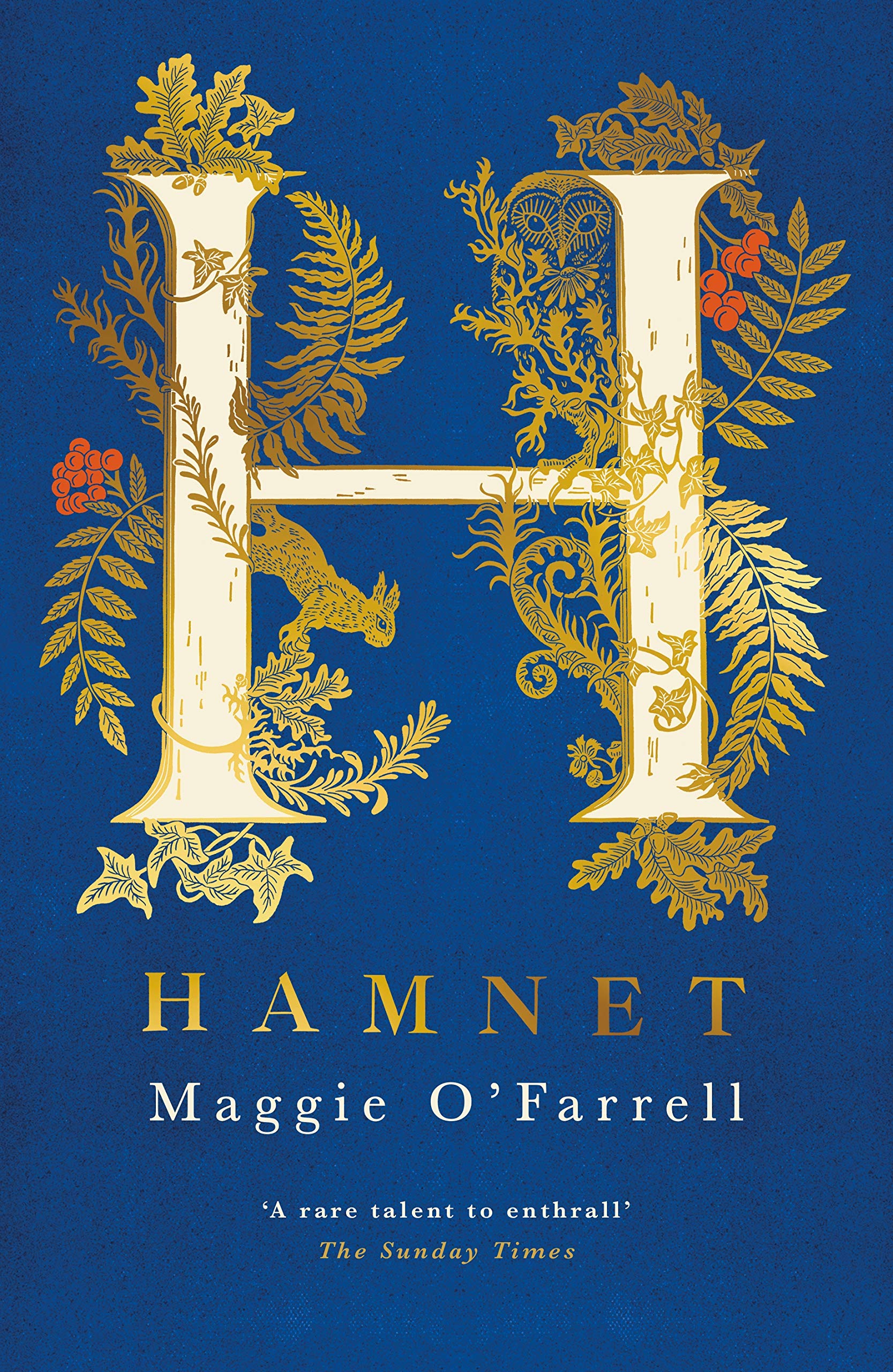
Drawing on Maggie O'Farrell's long-term fascination with the little-known story behind Shakespeare's most enigmatic play, Hamnet is a luminous portrait of a marriage, at its heart the loss of a beloved child. Warwickshire in the 1580s. Agnes is a woman as feared as she is sought after for her unusual gifts. She settles with her husband in Henley street, Stratford, and has three children: a daughter, Susanna, and then twins, Hamnet and Judith. The boy, Hamnet, dies in 1596, aged eleven. Four years or so later, the husband writes a play called Hamlet. Award-winning author Maggie O'Farrell's new novel breathes full-blooded life into the story of a loss usually consigned to literary footnotes, and provides an unforgettable vindication of Agnes, a woman intriguingly absent from history.A New York Times Notable Book (2020), Best Book of 2020: Guardian, Financial Times, Literary Hub, and NPR.

David Mitchell follows his eerily precocious, globe-striding first novel, Ghostwritten, with a work that is in its way even more ambitious. In outward form, number9dream is a Dickensian coming-of-age journey: Young dreamer Eiji Miyake, from remote rural Japan, thrust out on his own by his sister’s death and his mother’s breakdown, comes to Tokyo in pursuit of the father who abandoned him. Stumbling around this strange, awesome city, he trips over and crosses—through a hidden destiny or just monstrously bad luck—a number of its secret power centers. Suddenly, the riddle of his father’s identity becomes just one of the increasingly urgent questions Eiji must answer. Why is the line between the world of his experiences and the world of his dreams so blurry? Why do so many horrible things keep happening to him? What is it about the number 9? To answer these questions, and ultimately to come to terms with his inheritance, Eiji must somehow acquire an insight into the workings of history and fate that would be rare in anyone, much less in a boy from out of town with a price on his head and less than the cost of a Beatles disc to his name.

At the center of this invigorating novel are two unlikely friends, Archie Jones and Samad Iqbal. Hapless veterans of World War II, Archie and Samad and their families become agents of England’s irrevocable transformation. A second marriage to Clara Bowden, a beautiful, albeit tooth-challenged, Jamaican half his age, quite literally gives Archie a second lease on life, and produces Irie, a knowing child whose personality doesn’t quite match her name (Jamaican for “no problem”). Samad’s late-in-life arranged marriage (he had to wait for his bride to be born), produces twin sons whose separate paths confound Iqbal’s every effort to direct them, and a renewed, if selective, submission to his Islamic faith. Set against London’s racial and cultural tapestry, venturing across the former empire and into the past as it barrels toward the future, White Teeth revels in the ecstatic hodgepodge of modern life, flirting with disaster, confounding expectations, and embracing the comedy of daily existence.

Anthony Powell's universally acclaimed epic encompasses a four-volume panorama of twentieth century London. Hailed by Time as "brilliant literary comedy as well as a brilliant sketch of the times," A Dance to the Music of Time opens just after World War I. Amid the fever of the 1920s and the first chill of the 1930s, Nick Jenkins and his friends confront sex, society, business, and art. In the second volume they move to London in a whirl of marriage and adulteries, fashions and frivolities, personal triumphs and failures. These books "provide an unsurpassed picture, at once gay and melancholy, of social and artistic life in Britain between the wars" (Arthur Schlesinger, Jr.). The third volume follows Nick into army life and evokes London during the blitz. In the climactic final volume, England has won the war and must now count the losses.In this third volume of A Dance to the Music of Time, we again meet Widmerpool, doggedly rising in rank; Jenkins, shifted from one dismal army post to another; Stringham, heroically emerging from alcoholism; Templer, still on his eternal sexual quest. Here, too, we are introduced to Pamela Flitton, one of the most beautiful and dangerous women in modern fiction. Wickedly barbed in its wit, uncanny in its seismographic recording of human emotions and social currents, this saga stands as an unsurpassed rendering of England's finest yet most costly hour.Includes these novels:The Valley of BonesThe Soldier's ArtThe Military Philosophers"Anthony Powell is the best living English novelist by far. His admirers are addicts, let us face it, held in thrall by a magician."—Chicago Tribune"A book which creates a world and explores it in depth, which ponders changing relationships and values, which creates brilliantly living and diverse characters and then watches them grow and change in their milieu. . . . Powell's world is as large and as complex as Proust's."—Elizabeth Janeway, New York Times"One of the most important works of fiction since the Second World War. . . . The novel looked, as it began, something like a comedy of manners; then, for a while, like a tragedy of manners; now like a vastly entertaining, deeply melancholy, yet somehow courageous statement about human experience."—Naomi Bliven, New Yorker

Whatever the cause of Bertie Wooster's consternation — Bobbie Wickham gives away fierce Aunt Agatha's dog; again in the bad books of Sir Roderick Glossop; Tuppy crushes on robust opera singer — Jeeves can untangle the most ferocious muddle. 1 Jeeves and the Impending Doom2 The Inferiority Complex of Old Sippy3 Jeeves and the Yule-Tide Spirit4 Jeeves and the Song of Songs5 Episode of the Dog McIntosh6 The Spot of Art7 Jeeves and the Kid Clementina8 The Love that Purifies9 Jeeves and the Old School Chum10 Indian Summer of an Uncle11 The Ordeal of Young Tuppy

This is Wodehouse's last, unfinished chronicle of Blandings and includes a treasure trove of detailed notes on the final stages of the plot, enabling us to watch over his shoulder to observe the master at work. The revels at Blandings Castle are now ended but, as Richard Usborne confirms delightedly, its cloud-capped towers shall not dissolve. Although written when Wodehouse was ninety-three, the pages of Sunset at Blandings remain 'funny, fresh, young in heart and full of hammocks, sunshine and four pairs of lovers headed for altars'.

In Ballard's hallucinatory novel, the car provides the hellish tableau in which Vaughan, a "TV scientist" turned "nightmare angel of the highways," experiments with erotic atrocities among auto crash victims, each more sinister than the last. James Ballard, his friend and fellow obsessive, tells the story of this twisted visionary as he careens rapidly toward his own demise in an intentionally orchestrated car crash with Elizabeth Taylor. A classic work of cutting edge fiction, Crash explores the disturbing potentialities of contemporary society's increasing dependence on technology as intermediary in human relations.

Mark Helprin’s legions of devoted readers cherish his timeless novels and short stories, which are uplifting in their conviction of the goodness and resilience of the human spirit. Freddy and Fredericka—a brilliantly refashioned fairy tale and a magnificently funny farce—only seems like a radical departure of form, for behind the laughter, Helprin speaks of leaps of faith and second chances, courage and the primacy of love. Helprin’s latest work, an extraordinarily funny allegory about a most peculiar British royal family, is immensely mocking of contemporary monarchy and yet deeply sympathetic to the individuals caught in its lonely absurdities.

Time Magazine included the book in its list of the 100 Best English-language Novels from 1923 to 2005. The story of John Self and his insatiable appetite for money, alcohol, fast food, drugs, pornography, and more, Money is ceaselessly inventive and thrillingly savage; a tale of life lived without restraint, of money and the disasters it can precipitate.

W. Somerset Maugham led many lives, including that of a doctor in London's slums, a successful playwright and novelist, an agent for British Intelligence during World War I, and a world traveler. In 1917, he took the first of many voyages to the Pacific Islands and the Far East, where his keen sense of observation found inspiration for some of his finest writing.Rain and Other South Sea Stories features one of Maugham's most famous tales, concerning the clash between a missionary and a prostitute. "Rain" was adapted for the stage and filmed on three separate occasions, its leading character portrayed by Gloria Swanson, Joan Crawford, and Rita Hayworth. This collection also includes "Macintosh," a psychological study of the competition between two officials; "The Fall of Edward Barnard," a tale of social rebellion that foreshadows The Razor's Edge; "The Pool," a portrait of a marriage between people from different cultures; and other compelling stories of life in the tropics.

Can You Forgive Her? (1864-5) is the first of the six famous Palliser novels which, as a group, provide us with the most extensive and contradictory expose of British life during the period of its greatest prestige. In Can You Forgive Her? Trollope inextricably binds together the issues of parliamentary election and marriage, of politics and privacy. The values and aspirations of the governing stratum of Victorian society are ruthlessly examined and none remain unscathed. Above all Trollope focuses on the predicament of women. 'What should a woman do with her life?' asks Alice Vavasor of herself, and this theme is echoed by every other woman in the novel, from the uncomfortably married Lady Glencora to the coquettish Mrs Greenow and Alice's clear-headed cousin, Kate.

Interviews with painter, Francis Bacon.

A. J. P. Taylor was one of the most acclaimed and uncompromising historians of the twentieth century. In this clear, lively and now-classic account of the First World War, he tells the story of the conflict from the German advance in the West, through the Marne, Gallipoli, the Balkans and the War at Sea to the offensives of 1918 and the state of Europe after the war. Containing photographs and maps, this an essential history of the war that 'cut deep into the consciousness of modern man'.

The Poons, according to gossip in post-war Hong Kong, have plenty of money. But when Wallace Nolasco marries May Ling, daughter of the house of Poon, he finds he has been sold short. Wallace is relegated to the bottom of the household pecking order. By the author of "Sour Sweet".

G. K. Chesterton's surreal masterpiece is a psychological thriller that centers on seven anarchists in turn-of-the-century London who call themselves by the names of the days of the week. Chesterton explores the meanings of their disguised identities in what is a fascinating mystery and, ultimately, a spellbinding allegory.As Jonathan Lethem remarks in his Introduction, The real characters are the ideas. Chesterton's nutty agenda is really quite simple: to expose moral relativism and parlor nihilism for the devils he believes them to be. This wouldn't be interesting at all, though, if he didn't also show such passion for giving the devil his due. He animates the forces of chaos and anarchy with every ounce of imaginative verve and rhetorical force in his body.

Statesman, political thinker, orator, and ardent campaigner, Edmund Burke was one of the most brilliant figures of the eighteenth century. This unorthodox biography focuses on Burke's thoughts, responses, and actions to the great events and debates surrounding Britain's tumultuous relationships with her three colonies—America, Ireland, and India—and archrival France."In bringing Burke to our attention, Mr. O'Brien has brought back a lost treasure. The Great Melody is a brilliant work of narrative sweep and analytical depth. Conor Cruise O'Brien on Edmund Burke is a literary gift to political thought."—John Patrick Diggins, New York Times Book Review"Serious readers of history are in for a a book by the greatest living Irishman on the greatest Irishman who ever lived. . . . O'Brien's study is not merely a reconstruction of a fascinating man and period. It is also a tract for the times. . . . I cannot remember another time when I finished a book of more than 600 pages wishing it were longer."—Paul Johnson, The Independent" The Great Melody combines superb biography and fascinating history with a profound understanding of political philosophy."—Former President Richard Nixon

ترجمهٔ سرگذشت حاجی بابای اصفهانی که محصول سالهای پختگی میرزا حبیب اصفهانی و متکی به تجربههای گذشتهٔ او به منظور کشف قابلیتهای زبان فارسی است، یک ترجمهٔ متعارف نیست و در چارچوبِ تنگِ تعریفِ ترجمه نمیگنجد. ترجمهٔ سرگذشت حاجی بابای اصفهانی بازآفرینی یک اثر گمشده و تلاشی برای نوشتن یک رمان ایرانی – اولین رمان ایرانی – به دست یک نویسندهٔ ایرانیست. زبان میرزا حبیب متکیست به فارسی کهن و با اتکا به این پشتوانه است که زمینهٔ رهایی خودش را از بند زبان رسمی و مُنشیانهٔ قاجاری فراهم میکند. میرزا حبیب ایجاز و استحکام و وقار زبانش را به اسلاف خودش مدیون است و زبان او حلقهٔ پیوندیست میان فارسینویسی قرن ششم هجری با عصر ما. میرزا حبیب زبانی را که به دست مُنشیان بیمایه و ادیبان متظاهر قُلمبهسُلمبهنویس معاصرش به زبانِ الکنِ به بُنبست رسیده و دست و پا بستهای تبدیل شده بود، به یک زبان زندهٔ داستانگو تبدیل کرد و با تسلطی که بر زبان گفتار زمانهاش داشت و با پیوند زدن این زبان به زبان نُهصدسالهٔ فارسی، به همنهادی رسید که در قالب رمان به خوبی جا میافتاد و جواب میداد.سرگذشت حاجی بابای اصفهانی برای اولین بار در سال ۱۹۰۵ میلادی در کلکته و از روی نسخهٔ دستنوشتهٔ شیخ احمد روحی کرمانی به چاپ رسید. ویرایش جدیدی که از این اثر به دست دارید اولین ویرایشیست که براساس نسخهٔ دستنوشتهٔ خود میرزا حبیب اصفهانی به چاپ میرسد.

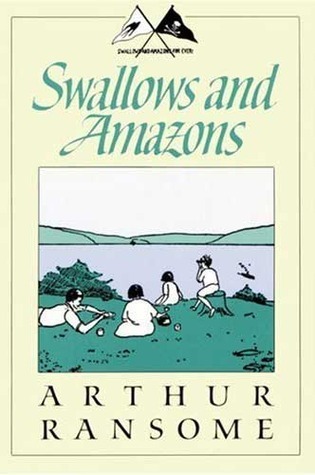
The first title in Arthur Ransome's classic series, originally published in 1930: for children, for grownups, for anyone captivated by the world of adventure and imagination. Swallows and Amazons introduces the lovable Walker family, the camp on Wild Cat island, the able-bodied catboat Swallow, and the two intrepid Amazons, Nancy and Peggy Blackett.

The Machiavellian Moment is a classic study of the consequences for modern historical and social consciousness of the ideal of the classical republic revived by Machiavelli and other thinkers of Renaissance Italy. J.G.A. Pocock suggests that Machiavelli's prime emphasis was on the moment in which the republic confronts the problem of its own instability in time, and which he calls the "Machiavellian moment."After examining this problem in the thought of Machiavelli, Guicciardini, and Giannotti, Pocock turns to the revival of republican thought in Puritan England and in Revolutionary and Federalist America. He argues that the American Revolution can be considered the last great act of civic humanism of the Renaissance. He relates the origins of modern historicism to the clash between civic, Christian, and commercial values in the thought of the eighteenth century.

With an Introduction and Notes by Dr Carole Jones, freelance writer and researcher.George Eliot's final novel, Daniel Deronda (1876), follows the intertwining lives of the beautiful but spoiled and selfish Gwendolene Harleth and the selfless yet alienated Daniel Deronda, as they search for personal and vocational fulfilment and sympathetic relationship.Set largely in the degenerate English aristocratic society of the 1860s, Daniel Deronda charts their search for meaningful lives against a background of imperialism, the oppression of women, and racial and religious prejudice. Gwendolen's attempts to escape a sadistic relationship and atone for past actions catalyse her friendship with Deronda, while his search for origins leads him, via Judaism, to a quest for moral growth.Eliot's radical dual narrative constantly challenges all solutions and ensures that the novel is as controversial now, as when it first appeared.

Samuel Johnson's literary reputation rests on such a varied output that he defies easy description: poet, critic, lexicographer, travel writer, essayist, editor, and, thanks to his good friend Boswell, the subject of one of the most famous English biographies.This volume celebrates Johnson's astonishing talent by selecting widely across the full range of his work. It includes London and The Vanity of Human Wishes among other poems, and many of his essays for the Rambler and Idler. The prefaces to his edition of Shakespeare and his famous Dictionary, together with samples from the texts, are given, as well as selections from A Journey to the Western Islands of Scotland, the Lives of the Poets and Rasselas in its entirety. There is also a substantial representation of lesser-known prose, and of his poetry, letters, and journals.

In this seminal story of naval life during the Napoleonic War, Frederick Murrayat's young hero embarks upon a life at sea and finds it be a rough school indeed. Simple's trials and triumphs, alongside his faithful mentor, Terence O'Brien, Mirror Marryat's personal experience, from the hand-to-hand combat of cutting-out missions to the devastating hurricane off St. Pierre and the mutiny aboard the "Rattlesnake". "Peter Simple" is a towering tale from the great age of sail, filled with keen wit, vivid characters, and gripping adventure.

To Rule the Waves tells the extraordinary story of how the British Royal Navy allowed one nation to rise to a level of power unprecedented in history. From the navy's beginnings under Henry VIII to the age of computer warfare and special ops, historian Arthur Herman tells the spellbinding tale of great battles at sea, heroic sailors, violent conflict, and personal tragedy -- of the way one mighty institution forged a nation, an empire, and a new world.This P.S. edition features an extra 16 pages of insights into the book, including author interviews, recommended reading, and more.

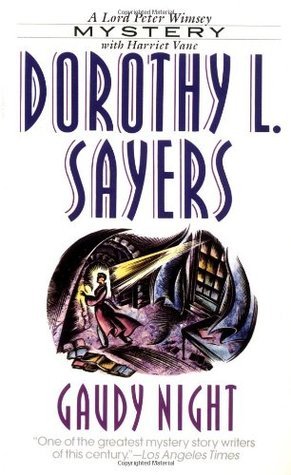
The dons of Harriet Vane's alma mater, the all-female Shrewsbury College, Oxford, have invited her back to attend the annual Gaudy celebrations. However, the mood turns sour when someone begins a series of malicious acts including poison-pen messages, obscene graffiti and wanton vandalism. Harriet asks her old friend Wimsey to investigate.

The Collected Poems of Dylan Thomas contains poems that Thomas personally decided best represented his work. A year before its publication Thomas died from swelling of the brain triggered by excessive drinking. Since its initial publication in 1953, this book has become the definitive edition of the poet’s work. Thomas wrote “Prologue” addressed to “my readers, the strangers” — an introduction in verse that was the last poem he would ever write. Also included are classics such as “And Death Shall Have No Dominion,” “Do Not Go Gentle into that Good Night,” and “Fern Hill” that have influenced generations of artists from Bob Dylan (who changed his last name from Zimmerman in honor of the poet), to John Lennon (The Beatles included Thomas’ portrait on the cover of Sgt. Pepper’s Lonely Hearts Club Band); this collection even appears in the film adaptation of Cormac McCarthy’s The Road when it is retrieved from the rubble of a bookshelf.

The Horse's Mouth, the third and most celebrated volume of Joyce Cary's First Trilogy, is perhaps the finest novel ever written about an artist. Its painter hero, the charming and larcenous Gulley Jimson, has an insatiable genius for creation and a no less remarkable appetite for destruction. Is he a great artist? a has-been? or an exhausted, drunken ne'er-do-well? He is without doubt a visionary, and as he criss-crosses London in search of money and inspiration the world as seen though his eyes appears with a newly outrageous and terrible beauty.

Featuring the column Orwell wrote for the Socialist weekly Tribune (where he was the literary editor), As I Please also includes Orwell's spirited defense of English cooking, notes on the perfect cup of tea, and accounts of the difficulties with - and ultimate success of - Animal Farm.--From the 2000 edition.

This classic humour novel chronicles the momentous journey of Steeple Sinderby (an unremarkable Fenland village) from the mire of obscurity to national heroics. This unbelievable feat is contrived by the serendipitous meeting of three great Mr Fangfoss (who cares nothing for football), Dr Kossuth - a Hungarian academic and headmaster of the village school, and the Wanderers captain Alex Slingsby, a mighty warrior biding his time in quiet Sinderby for the chance to rise once more. The story takes an affectionate look at small-minded Middle England, and the glories of God's own game while taking in love and death, bigotry, bigamy and good old-fashioned English snobbery.

The Command of the Ocean describes with unprecedented authority and scholarship the rise of Britain to naval greatness, and the central place of the Navy and naval activity in the life of the nation and government. Based on the author's own research in a dozen languages over more than a decade, it describes not just battles, voyages, and cruises but also how the Navy was manned, supplied, fed, and, above all, how it was financed and directed.N. A. M. Rodger provides convincing reassessments of such famous figures as Pepys, Hawke, Howe, and St. Vincent. The very particular and distinct qualities of Nelson and Collingwood are illuminatingly contrasted, and the world of officers and men who make up the originals of Jack Aubrey and Horatio Hornblower is brilliantly brought to life. Rodger's comparative view of other navies—French, Dutch, Spanish, and American—allows him to make a fresh assessment of the qualities of the British.

All skools make some sort at teaching the pupils things and the headmaster pin up a huge timetable of lessons ect. which make the heart sink when you look at it. Nigel Molesworth is back, this time taking the tinies in hand and showing that they can survive the first term - as long as you avoid the prefects and show all due respect to Molesworth 1. Back to Skool might be particularly hard on Mater and Pater, but think of those poor new bugs, forced to be their best at Latin, English, foopball and French (Armand in his striped shirt and feeble questions). Just follow his timeless advice, however, and you too could be Topp.

“The gardens of Blandings Castle are that original garden from which we are all exiled. All those who know them long to return.” ―Evelyn Waugh When Lord Tilbury receives a letter from Galahad Threepwood stating he will no longer be publishing his memoir, he decides to travel to Blandings Castle and steal the manuscript. But he isn’t the only one after the memoir. Sir Gregory Parsloe-Parsloe and Lady Constance Keeble are also trying to lay their hands on it to prevent Ronnie Fish and Sue Brown from getting married. Monty Bodkin, Lord Emsworth’s new secretary, is also after the manuscript in order to secure a year’s employment at the Mammoth Publishing Company. Who will get their hands on the manuscript? Only the Empress of Blandings knows!

This trilogy of novels about World War II, largely based on his own experiences as an army officer, is the crowning achievement of Evelyn Waugh's career. Its central character is Guy Crouchback, head of an ancient but decayed Catholic family, who at first discovers new purpose in the challenge to defend Christian values against Nazi barbarism, but then gradually finds the complexities and cruelties of war too much for him. Yet, though often somber, the Sword of Honour trilogy is also a brilliant comedy, peopled by the fantastic figures so familiar from Waugh's early satires. The deepest pleasures these novels afford come from observing a great satiric writer employ his gifts with extraordinary subtlety, delicacy, and human feeling, for purposes that are ultimately anything but satiric.

A moving and beautiful novel of the transformation of rural England. Taking its title from the strangely frozen picture by surrealist painter Giorgio de Chirico, the Enigma of Arrival is the story of a young Indian from the Crown Colony of Trinidad who arrives in post-imperial England and consciously, over many years, finds himself as a writer. As he does so, he also observes the gradual but profound and permanent changes wrought on the English landscape by the march of "progress", as an old world is lost to the relentless drift of people and things over the face of the earth. But while this is a novel of dignity, compassion and candour it is also, perhaps surprisingly, a work of celebration.

Publisher Harold Hart approached Neill to write about his controversial school, & together compiled this book from Neill's other works, which became the number one nonfiction bestseller in the USA. The effect of the book helped to promulgate Neill's educational theories, as well as reviving the flagging attendance at the long-running experimental school that he had founded in 1921 in Germany in conjunction with the Neue Schule, & then moved to England in 1923.

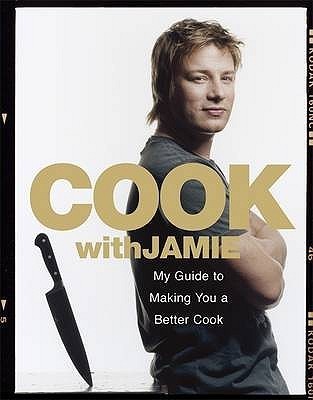
This is my guide to making you a better cook and it's the biggest book I've ever done! I think it looks beautiful and is full of simple and accessible recipes (160 of them!) that will blow the socks off your family and any guests you might have round for dinner. And that's not all - there’s information on the equipment that I think you should have in your kitchen, advice on how to recognize and cook loads of different cuts of meat, as well as on how to get the best value and quality when you’re out shopping. With Britain consuming more processed food than the rest of Europe put together, it’s a sad fact that most people just aren’t confident enough to cook any more. I'm hoping that with this new book, everyone will get stuck in and reclaim our fantastic cooking heritage!

Daniel Defoe relates the tale of an English sailor marooned on a desert island for nearly three decades. An ordinary man struggling to survive in extraordinary circumstances, Robinson Crusoe wrestles with fate and the nature of God. This edition features maps.

The author of the acclaimed Sour Sweet presents a sweeping historical novel about corruption and greed, class, race, love and treachery set in Macao and Canton before and during the Opium Wars of the 19th century. Nominated for England's prestigious Booker Prize.

The Raj Quartet, Paul Scott's epic study of British India in its final years, has no equal. Tolstoyan in scope and Proustian in detail but completely individual in effect, it records the encounter between East and West through the experiences of a dozen people caught up in the upheavals of the Second World War and the growing campaign for Indian independence from Britain.The first novel, The Jewel in the Crown, describes the doomed love between an English girl and an Indian boy, Daphne Manners and Hari Kumar. This affair touches the lives of other characters in three subsequent volumes, most of them unknown to Hari and Daphne but involved in the larger social and political conflicts which destroy the lovers. In The Day of the Scorpion, Ronald Merrick, a sadistic policeman who arrested and prosecuted Hari, insinuates himself into an aristocratic British family as World War II escalates.On occasions unsparing in its study of personal dramas and racial differences, the Raj Quartet is at all times profoundly humane, not least in the author’s capacity to identify with a huge range of characters. It is also illuminated by delicate social comedy and wonderful evocations of the Indian scene, all narrated in luminous prose.The other two novels in the Raj Quartet, The Towers of Silence and A Division of the Spoils, are also available from Everyman’s Library. With a new introduction by Hilary Spurling(Book Jacket Status: Jacketed)

For generations the traditional focus for those wishing to understand the roots of the modern world has been France on the eve of the Revolution. Porter certainly acknowledges France's importance, but here makes an overwhelming case for consideringBritain the true home of modernity - a country driven by an exuberance, diversity and power of invention comparable only to twentieth-century America. Porter immerses the reader in a society which, recovering from the horrors of the Civil War and decisively reinvigorated by the revolution of 1688, had emerged as something new and extraordinary - a society unlike any other in the world.

Written in 1908, this is Lawrence's first novel and one that he found himself compelled to write and rewrite, to pour himself into, in order to prove himself to himself. Begun when he was 21 and published in 1911, it shows many of Lawrence's major themes.

In New Grub Street George Gissing re-created a microcosm of London's literary society as he had experienced it. His novel is at once a major social document and a story that draws us irresistibly into the twilit world of Edwin Reardon, a struggling novelist, and his friends and acquaintances in Grub Street including Jasper Milvain, an ambitious journalist, and Alfred Yule, an embittered critic. Here Gissing brings to life the bitter battles (fought out in obscure garrets or in the Reading Room of the British Museum) between integrity and the dictates of the market place, the miseries of genteel poverty and the damage that failure and hardship do to human personality and relationships.

Thomas Babington Macaulay (1800-1859) won instantaneous and outstanding success in prose poetry, in politics and oratory. His History, translated throughout Europe and achieving sales in America second only to the Bible, immediately became the canon of historical orthodoxy, replacing previous histories so completely that it is now difficult to see past its long and apparently effortless triumph.

Once vast swathes of the globe were coloured imperial red and Britannia ruled not just the waves, but the prairies of America, the plains of Asia, the jungles of Africa and the deserts of Arabia. Just how did a small, rainy island in the North Atlantic achieve all this? And why did the empire on which the sun literally never set finally decline and fall? Niall Ferguson's acclaimed Empire brilliantly unfolds the imperial story in all its splendours and its miseries, showing how a gang of buccaneers and gold-diggers planted the seed of the biggest empire in all history - and set the world on the road to modernity.

“Mrs. Dalloway said she would buy the flowers herself.” So begins Virginia Woolf’s much-beloved fourth novel. First published in 1925, Mrs. Dalloway has long been considered Woolf’s masterpiece. A pivotal work of literary modernism, its simple plot—centered on an upper-class Londoner preparing to give a party—is complicated by Woolf’s satire of the English social system.For decades, Woolf’s rapturous style and vision of individual consciousness have challenged and inspired readers, novelists, and scholars alike. In this annotated volume based on the original British edition, acclaimed essayist and Oxford don Merve Emre mines Woolf’s diaries and notes on writing to take us into the making of Mrs. Dalloway, revealing the novel’s artistry and astonishing originality. Alongside her generous commentary, Emre offers hundreds of illustrations and little-known photographs from Woolf’s life. The result is not only an essential volume for students and Woolf devotees, but an incomparable gift to all lovers of literature.

At six years of age, Robert Cecil, the 3rd Marquess of Salisbury, was sent to a brutal boarding school he likened to “an existence among devils.” By 23, he was a member of the British Parliament. And before his death at age 73 in 1903, he would spend nearly two decades as Britain’s Prime Minister, single-mindedly driving the British Empire to extend its iron grip to five continents. This multiple award-winning biography sheds uncompromising light on Lord Salisbury’s troubled family life, his transformational experiences in Australia, India, and Africa, and his dogged pursuit of political power in the court of Queen Victoria.

An alternative cover edition for this ISBN can be found hereRegarded by many as the finest, and funniest, comic novel of the twentieth century, Lucky Jim remains as trenchant, withering, and eloquently misanthropic as when it first scandalized readers back in 1954. This is the story of Jim Dixon, a hapless lecturer in medieval history at a provincial university who knows better than most that “there was no end to the ways in which nice things are nicer than nasty ones.” Kingsley Amis’s scabrous debut leads the reader through a gallery of emphatically English bores, cranks, frauds, and neurotics with whom Dixon must contend in one way or another in order to hold on to his cushy academic perch and win the girl of his fancy.More than just a merciless satire of cloistered college life and stuffy postwar manners, Lucky Jim is an attack on the forces of boredom, whatever form they may take, and a work of art that at once distills and extends an entire tradition of English comic writing, from Fielding and Dickens through Wodehouse and Waugh. As Christopher Hitchens has written, “If you can picture Bertie or Jeeves being capable of actual malice, and simultaneously imagine Evelyn Waugh forgetting about original sin, you have the combination of innocence and experience that makes this short romp so imperishable.”
Book annotation not available for this title.

This charming classic, first published in 1970, brings together twenty years of correspondence between Helene Hanff, a freelance writer living in New York City, and a used-book dealer in London. Through the years, though never meeting and separated both geographically and culturally, they share a winsome, sentimental friendship based on their common love for books. Their relationship, captured so acutely in these letters, is one that will grab your heart and not let go.

An ingenious tour de force: an utterly compelling historical mystery with a plot that twists and turns and keeps the reader guessing until the very last page.We are in England in the 1660s. Charles II has been restored to the throne following years of civil war and Cromwell's short-lived republic. Oxford is the intellectual seat of the country, a place of great scientific, religious, and political ferment. A fellow of New College is found dead in suspicious circumstances. A young woman is accused of his murder. We hear the story of the death from four witnesses: an Italian physician intent on claiming credit for the invention of blood transfusion; the son of an alleged Royalist traitor; a master cryptographer who has worked for both Cromwell and the king; and a renowned Oxford antiquarian. Each tells his own version of what happened. Only one reveals the extraordinary truth.With rights sold for record-breaking sums around the world, An Instance of the Fingerpost is destined to become a major international publishing event. Deserving of comparison to the works of John Fowles and Umberto Eco, Iain Pears's novel is an ingenious tour de force: an utterly compelling historical mystery with a plot that twists and turns and keeps the reader guessing until the very last page.

Aldous Huxley's lifelong concern with the dichotomy between passion and reason finds its fullest expression both thematically and formally in his masterpiece Point Counter Point. By presenting a vision of life in which diverse aspects of experience are observed simultaneously, Huxley characterizes the symptoms of "the disease of the modern man" in the manner of a composer--themes and characters are repeated, altered slightly, and played off one another in a tone that is at once critical and sympathetic.First published in 1928, Huxley's satiric view of intellectual life in the '20s is populated with characters based on such celebrities as D.H. Lawrence, Katherine Mansfield, Nancy Cunard, and John Middleton Murry, as well as Huxley himself.

A lively and still one of the best introductions to philosophy, this book pays off both a closer reading for students and specialists, and a casual reading for the general public.

Poet, lexicographer, critic, moralist and Great Cham, Dr. Johnson had in his friend Boswell the ideal biographer.Notoriously and self-confessedly intemperate, Boswell shared with Johnson a huge appetite for life and threw equal energy into recording its every aspect in minute but telling detail. This irrepressible Scotsman was 'always studying human nature and making experiments', and the marvelously vivacious Journals he wrote daily furnished him with first-rate material when he came to write his biography.The result is a masterpiece that brims over with wit, anecdote and originality. Hailed by Macaulay as the best biography ever written and by Carlyle as a book 'beyond any other product of the eighteenth century', The Life of Samuel Johnson today continues to enjoy its status as a classic of the language.This shortened version is based on the 1799 edition, the last in which the author had a hand.

Ways of An Autobiography by Greene, Graham

Explores the complex lives of five very different men, including Xan Meo, a one-time familial paragon who suffers a personality change following a brutal assault, and King Henry IX of England, whose life is complicated by his incapacitated wife.

In Success Martin Amis pens a mismatched pair of foster brothers--one "a quivering condom of neurosis and ineptitude," the other a "bundle of contempt, vanity and stock-response"--in a single London flat. He binds them with ties of class hatred, sexual rivalry, and disappointed love, and throws in a disloyal girlfriend and a spectacularly unstable sister to create a modern-day Jacobean revenge comedy that soars with malicious poetry.

Paperback book.

A gallery attendant at the Hermitage. A young jazz buff in Tokyo. A crooked British lawyer in Hong Kong. A disc jockey in Manhattan. A physicist in Ireland. An elderly woman running a tea shack in rural China. A cult-controlled terrorist in Okinawa. A musician in London. A transmigrating spirit in Mongolia. What is the common thread of coincidence or destiny that connects the lives of these nine souls in nine far-flung countries, stretching across the globe from east to west? What pattern do their linked fates form through time and space?A writer of pyrotechnic virtuosity and profound compassion, a mind to which nothing human is alien, David Mitchell spins genres, cultures, and ideas like gossamer threads around and through these nine linked stories. Many forces bind these lives, but at root all involve the same universal longing for connection and transcendence, an axis of commonality that leads in two directions—to creation and to destruction. In the end, as lives converge with a fearful symmetry, Ghostwritten comes full circle, to a point at which a familiar idea—that whether the planet is vast or small is merely a matter of perspective—strikes home with the force of a new revelation. It marks the debut novel of a writer with astonishing gifts.

In his explosive new book, Mark Curtis reveals a new picture of Britain's role in the world since 1945 and in the 'war against terrorism' by offering a comprehensive critique of the Blair government's foreign policy. Curtis argues that Britain is an 'outlaw state', often a violator of international law and ally of many repressive regimes. He reasons not only that Britain's foreign policies are generally unethical but that they are also making the world more dangerous and unequal. The Web of Deceit describes the staggering gulf that has arisen between New Labour's professed commitment to upholding ethical values and the reality of current policies. It outlines the new phase in global intervention, the immorality of British policy in Afghanistan, Kosovo, Iraq and Indonesia and support for repressive governments in Israel, Russia, Turkey and Saudi Arabia. Curtis also reveals Britain's acquiescence in the Rwanda genocide and economic policies in the World Trade Organisation that are increasing poverty and inequality around the world. Drawing on formerly secret government files, the book also shows British complicity in the slaughter of a million people in Indonesia in 1965; the depopulation of the island of Diego Garcia; the overthrow of governments in Iran and British Guiana; repressive colonial policies in Kenya, Malaya and Oman; and much more.

At the beginning of the twentieth century England's empire spanned the globe, its economy was strong, and its political system seemed immune to the ills that inflicted so many other countries. After a resounding electoral triumph in 1906, the Liberals formed the government of the most powerful nation on earth, yet within a few years the House of Lords lost its absolute veto over legislation, the Home Rule crisis brought Ireland to the brink of civil war and led to an army mutiny, the campaign for woman's suffrage created widespread civil disorder and discredited the legal and penal systems, and an unprecedented wave of strikes swept the land. This is a classic account, first published in 1935, of the dramatic upheaval and political change that overwhelmed England in the period 1910-1914. Few books of history retain their relevance and vitality after more than sixty years. The Strange Death of Liberal England is one of the most important books of the English past, a prime example that history can be abiding literature. As a portrait of England enmeshed in the turbulence of new movements, which often led to violence against the pieties of Liberal England—until it was overwhelmed by the greatest violence of all, World War I—this extraordinary book has continued to exert a powerful influence on the way historians have observed early twentieth-century England.

Shamela is a brilliant parody of Samuel Richardson's PAMELA, in which a virtuous servant girl long resists her master's advances and is eventually 'rewarded' with marriage. Fielding's far more spirited and sexually honest heroine, by contrast, merely uses coyness and mock modesty as techniques to catch a rich husband. Joseph Andrews, Fielding's first full-length novel, can also be seen as a response to Richardson, as the lascivious Lady Booby sets out to seduce her comically chaste servant Joseph, (himself in love with the much-put-upon Fanny Goodwill). As in Tom Jones, Fielding takes a huge cast of characters out on the road and exposes them to many colourful and often hilarious adventures.

The Conquest of Happiness is Bertrand Russell’s recipe for good living. First published in 1930, it pre-dates the current obsession with self-help by decades. Leading the reader step by step through the causes of unhappiness and the personal choices, compromises and sacrifices that (may) lead to the final, affirmative conclusion of ‘The Happy Man’, this is popular philosophy, or even self-help, as it should be written.

A timelesss tale of a midshipman's rise in Nelson's navy.Widely regarded as Marryat's best work, Mr. Midshipman Easy is based on the author's adventures sailing with Lord Thomas Cochrane. This classic seafaring tale is a fascinating account of naval life and warfare, of French prisons and love affairs, and of the midshipman's berth. Marryat's ready wit, unforgettable characters, and true-to-life details have earned him praise from Conrad, Hemingway, and Ford Madox Ford, who called him "the greatest of English novelists."

Expelled from Oxford for indecent behaviour, Paul Pennyfeather is oddly unsurprised to find himself qualifying for the position of schoolmaster at Llanabba Castle. His colleagues are an assortment of misfits, including Prendy (plagued by doubts) and captain Grimes, who is always in the soup (or just plain drunk). Then Sports Day arrives, and with it the delectable Margot Beste-Chetwynde, floating on a scented breeze. As the farce unfolds and the young run riot, no one is safe, least of all Paul. Taking its title from Edward Gibbon's Decline and Fall of the Roman Empire, Evelyn Waugh's first, funniest novel immediately caught the ear of the public with his account of an ingénu abroad in the decadent confusion of 1920s high society.

This best-selling book is a beautifully illustrated history of the English country house from the Middle Ages to the twentieth century. In it, renowned architectural historian Mark Girouard presents a rare and revealing glimpse of the English upper classes—their public and personal lives, their servants, and their homes."A deeply important book, one of the most interesting contributions to architectural history."—J. H. Plumb, The New York Review of Books"A survey of country houses through the past five centuries, from a broad range of materials: family archives, literature, plans and photographs.... The book itself is a physical artifact of surpassing beauty which could fit on the grandest table in the houses it describes."—David Hackett Fischer, The New Republic"Informative, balanced, knowledgeable, and witty."—The New Yorker"This enthralling and immensely informative book...tells with wit, scholarship, and lucidity how the country house evolved to meet the needs and reflect the social attitudes of the times."—Philip Ziegler, The Times"One of those very useful and very enjoyable books that the learned can seldom write, and the entertaining seldom achieve—clear, detailed, and witty."—Angus Wilson, The ObserverWinner of the 1978 Duff Cooper Memorial Prize and the W. H. Smith & Son Annual Literary Award for 1979.

Arcadia takes us back and forth between the nineteenth and twentieth centuries, ranging over the nature of truth and time, the difference between the Classical and the Romantic temperament, and the disruptive influence of sex on our orbits in life. Focusing on the mysteries--romantic, scientific, literary--that engage the minds and hearts of characters whose passions and lives intersect across scientific planes and centuries, it is "Stoppard's richest, most ravishing comedy to date, a play of wit, intellect, language, brio and... emotion. It's like a dream of levitation: you're instantaneously aloft, soaring, banking, doing loop-the-loops and then, when you think you're about to plummet to earth, swooping to a gentle touchdown of not easily described sweetness and sorrow... Exhilarating" (Vincent Canby, The New York Times).

Geoffrey Firmin, a former British consul, has come to Quauhnahuac, Mexico. His debilitating malaise is drinking, an activity that has overshadowed his life. On the most fateful day of the consul's life—the Day of the Dead—his wife, Yvonne, arrives in Quauhnahuac, inspired by a vision of life together away from Mexico and the circumstances that have driven their relationship to the brink of collapse. She is determined to rescue Firmin and their failing marriage, but her mission is further complicated by the presence of Hugh, the consul's half brother, and Jacques, a childhood friend. The events of this one significant day unfold against an unforgettable backdrop of a Mexico at once magical and diabolical.Under the Volcano remains one of literature's most powerful and lyrical statements on the human condition, and a brilliant portrayal of one man's constant struggle against the elemental forces that threaten to destroy him.

The serene and maternal Mrs. Ramsay, the tragic yet absurd Mr. Ramsay, and their children and assorted guests are on holiday on the Isle of Skye. From the seemingly trivial postponement of a visit to a nearby lighthouse, Woolf constructs a remarkable, moving examination of the complex tensions and allegiances of family life and the conflict between men and women.As time winds its way through their lives, the Ramsays face, alone and simultaneously, the greatest of human challenges and its greatest triumph—the human capacity for change.

A foundling of mysterious parentage brought up by Mr. Allworthy on his country estate, Tom Jones is deeply in love with the seemingly unattainable Sophia Western, the beautiful daughter of the neighboring squire—though he sometimes succumbs to the charms of the local girls. When Tom is banished to make his own fortune and Sophia follows him to London to escape an arranged marriage, the adventure begins. A vivid Hogarthian panorama of eighteenth-century life, spiced with danger and intrigue, bawdy exuberance and good-natured authorial interjections, Tom Jones is one of the greatest and most ambitious comic novels in English literature. • Includes a chronology, suggestions for further reading, notes, glossary, and an appendix of Fielding's revisions • Introduction discusses narrative tecniques and themes, the context of eighteenth-century fiction and satire, and the historical and political background of the Jacobite revolutionFor more than seventy years, Penguin has been the leading publisher of classic literature in the English-speaking world. With more than 1,700 titles, Penguin Classics represents a global bookshelf of the best works throughout history and across genres and disciplines. Readers trust the series to provide authoritative texts enhanced by introductions and notes by distinguished scholars and contemporary authors, as well as up-to-date translations by award-winning translators.

🎧Run Time = 15 hours and 38 minutesA modernist classic from the author of Brave New World, who was hailed as “a genius” (The New Yorker): Cynical socialite Anthony Beavis searches for meaning in life — and his worldview is dramatically transformed after he joins the Mexican Revolution. “An important book” (The New York Times Book Review) performed by an Earphones Award–winning narrator!Though somewhat overshadowed by Brave New World and The Doors of Perception, Huxley’s modernist novel Eyeless in Gaza (1936) is often regarded as his finest work. The writer and historian Simon Heffer dubbed it, unequivocally, ‘his only great novel.’The plot centres on Anthony Beavis, a dilettante social theorist, a man inclined to recoil from life. The pleasures of the physical world disgust him and the universe of ideas is but a poor refuge. Having long lost the art of intimacy, he betrays friendships and toys with the affections of women. But as Beavis approaches middle age, his world of perfect detachment begins to lose its appeal. Finally realising that his withdrawal from life has been motivated not by intellectual honesty but by moral cowardice, Beavis, devastated and at crisis point, meets the remarkable and redoubtable Dr Miller.The novel’s style and setting create a unique atmosphere. Placed mainly in the inter-war years of the 20th century, the story is told in short, dated sections without following strict chronology: we encounter characters and events through fractured time, forward and backward, resulting in an unusual perspective. Eyeless in Gaza – a quotation from Milton’s Samson Agonistes – will come as an exciting, enriching surprise to many who know only the more popular Huxley. Especially in this persuasive recording by Jamie Parker.

Pauline, Petrova and Posy are orphans determined to help out their family by attending the Children's Academy of Dancing and Stage Training. But when they vow to make a name for themselves, they have no idea it's going to be such hard work! They launch themselves into the world of show business, complete with working papers, the glare of the spotlight, and practice, practice, practice! Pauline is destined for the movies. Posy is a born dancer. But practical Petrova finds she'd rather pilot a plane than perform a pirouette. Each girl must find the courage to follow her dream.

Set after the Second Afghan War which ended in 1881, but before the Third fought in 1919, probably in the period 1893 to 1898. The novel is notable for its detailed portrait of the people, culture, and varied religions of India. The book presents a vivid picture of India, its teeming populations, religions, and superstitions, and the life of the bazaars and the road.Two men - a boy who grows into early manhood and an old ascetic priest, the lama - are at the center of the novel. A quest faces them both. Born in India, Kim is nevertheless white, a sahib. While he wants to play the Great Game of Imperialism, he is also spiritually bound to the lama. His aim, as he moves chameleon-like through the two cultures, is to reconcile these opposing strands, while the lama searches for redemption from the Wheel of Life. A celebration of their friendship in a beautiful but often hostile environment, 'Kim' captures the opulence of India's exotic landscape, overlaid by the uneasy presence of the British Raj.

L.P. Hartley's moving exploration of a young boy's loss of innocence The Go-Between is edited with an introduction and notes by Douglas Brooks-Davies in Penguin Modern Classics.'The past is a foreign country: they do things differently there'When one long, hot summer, young Leo is staying with a school-friend at Brandham Hall, he begins to act as a messenger between Ted, the farmer, and Marian, the beautiful young woman up at the hall. He becomes drawn deeper and deeper into their dangerous game of deceit and desire, until his role brings him to a shocking and premature revelation. The haunting story of a young boy's awakening into the secrets of the adult world, The Go-Between is also an unforgettable evocation of the boundaries of Edwardian society.Leslie Poles Hartley (1895-1972) was born in Whittlesey, Cambridgeshire, and educated at Harrow and Balliol College, Oxford. For more than thirty years from 1923 he was an indefatigable fiction reviewer for periodicals including the Spectator and Saturday Review. His first book, Night Fears (1924) was a collection of short stories; but it was not until the publication of Eustace and Hilda (1947), which won the James Tait Black prize, that Hartley gained widespread recognition as an author. His other novels include The Go-Between (1953), which was adapted into an internationally-successful film starring Julie Christie and Alan Bates, and The Hireling (1957), the film version of which won the Palme d'Or at the Cannes Film Festival.If you enjoyed The Go-Between, you might like Barry Hines's A Kestrel for a Knave, also available in Penguin Modern Classics.'Magical and disturbing'Independent 'On a first reading, it is a beautifully wrought description of a small boy's loss of innocence long ago. But, visited a second time, the knowledge of approaching, unavoidable tragedy makes it far more poignant and painful'Express

A novel of remarkable depth and poignancy from one of the most acclaimed writers of our time.It is July 1962. Florence is a talented musician who dreams of a career on the concert stage and of the perfect life she will create with Edward, an earnest young history student at University College of London, who unexpectedly wooed and won her heart. Newly married that morning, both virgins, Edward and Florence arrive at a hotel on the Dorset coast. At dinner in their rooms they struggle to suppress their worries about the wedding night to come. Edward, eager for rapture, frets over Florence’s response to his advances and nurses a private fear of failure, while Florence’s anxieties run deeper: she is overcome by sheer disgust at the idea of physical contact, but dreads disappointing her husband when they finally lie down together in the honeymoon suite. Ian McEwan has caught with understanding and compassion the innocence of Edward and Florence at a time when marriage was presumed to be the outward sign of maturity and independence. On Chesil Beach is another masterwork from McEwan—a story of lives transformed by a gesture not made or a word not spoken.

In the 1760s a group of amateur experimenters met and made friends in the Midlands. Most came from humble families, all lived far from the centre of things, but they were young and their optimism was together they would change the world. Among them were the ambitious toy-maker Matthew Boulton and his partner James Watt, of steam-engine fame; the potter Josiah Wedgewood; the larger-than-life Erasmus Darwin, physician, poet, inventor and theorist of evolution (a forerunner of his grandson Charles). Later came Joseph Priestley, discoverer of oxygen and fighting radical. With a small band of allies they formed the Lunar Society of Birmingham (so called because it met at each full moon) and kick-started the Industrial Revolution. Blending science, art and commerce, the "Lunar Men" built canals, launched balloons, named plants, gases and minerals, changed the face of England and the china in its drawing rooms and plotted to revolutionize its soul. This exhilarating account uncovers the friendships, political passions, love affairs, and love of knowledge (and power) that drove these extraordinary men. It echoes to the thud of pistons and the wheeze and snort of engines, and brings to life the tradesmen, artisans and tycoons who shaped and fired the modern age.

The Masque of Anarchy (or The Mask of Anarchy) is a British political poem written in 1819 following the Peterloo massacre of that year.

The fifth in the 'Strangers and Brothers' series begins with the dying Master of a Cambridge college. His imminent demise causes intense rivalry and jealousy amongst the other fellows. Former friends become enemies as the election looms.

The book has no illustrations or index.

Graham Greene's classic Cuban spy story, now with a new package and a new introduction First published in 1959, Our Man in Havana is an espionage thriller, a penetrating character study, and a political satire that still resonates to this day. Conceived as one of Graham Greene's 'entertainments,' it tells of MI6's man in Havana, Wormold, a former vacuum-cleaner salesman turned reluctant secret agent out of economic necessity. To keep his job, he files bogus reports based on Lamb's Tales from Shakespeare and dreams up military installations from vacuum-cleaner designs. Then his stories start coming disturbingly true.

In his uproarious first novel Martin Amis, author of the bestselling London Fields, gave us one of the most noxiously believable -- and curiously touching -- adolescents ever to sniffle and lust his way through the pages of contemporary fiction. On the brink of twenty, Charles High-way preps desultorily for Oxford, cheerfully loathes his father, and meticulously plots the seduction of a girl named Rachel -- a girl who sorely tests the mettle of his cynicism when he finds himself falling in love with her.

An iconic figure of the 1960s and ’70s, Pattie Boyd breaks a forty-year silence in Wonderful Tonight , and tells the story of how she found herself bound to two of the most addictive, promiscuous musical geniuses of the twentieth century and became the most famous muse in the history of rock and roll.She met the Beatles in 1964 when she was cast as a schoolgirl in A Hard Day’s Night . Ten days later a smitten George Harrison proposed. For twenty-year-old Pattie Boyd, it was the beginning of an unimaginably rich and complex life as she was welcomed into the Beatles inner circle—a circle that included Mick Jagger, Ron Wood, Jeff Beck, and a veritable who’s who of rock musicians. She describes the dynamics of the group, the friendships, the tensions, the musicmaking, and the weird and wonderful memories she has of Paul and Linda, Cynthia and John, Ringo and Maureen, and especially the years with her husband, George.It was a sweet, turbulent life, but one that would take an unexpected turn, starting with a simple note that began “dearest l.”I read it quickly and assumed that it was from some weirdo; I did get fan mail from time to time.... I thought no more about it until that evening when the phone rang. It was Eric [Clapton]. “Did you get my letter?”... And then the penny dropped. “Was that from you?” I said....It was the most passionate letter anyone had ever written me.For the first time Pattie Boyd, former wife of both George Harrison and Eric Clapton, a high-profile model whose face epitomized the swinging London scene of the 1960s, a woman who inspired Harrison’s song “Something” and Clapton’s anthem “Layla,” has decided to write a book that is rich and raw, funny and heartbreaking—and totally honest and open and breathtaking. Here is the truth, here is what happened, here is the story you’ve been waiting for.

Kitty Vandervane, the wife of a philandering orchestra conductor, asks Douglas Yandell, a music writer and family friend, to find out who is the current flame

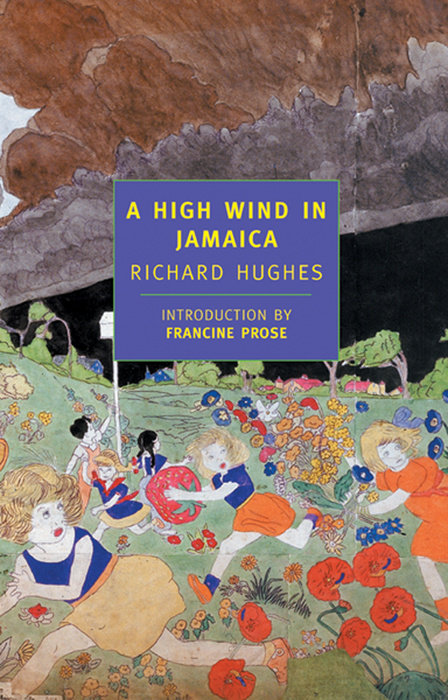
New edition of a classic adventure novel and one of the most startling, highly praised stories in English literature - a brilliant chronicle of two sensitive children's violent voyage from innocence to experience.After a terrible hurricane levels their Jamaican estate, the Bas-Thorntons decide to send their children back to the safety and comfort of England. On the way their ship is set upon by pirates, and the children are accidentally transferred to the pirate vessel. Jonsen, the well-meaning pirate captain, doesn't know how to dispose of his new cargo, while the children adjust with surprising ease to their new life. As this strange company drifts around the Caribbean, events turn more frightening and the pirates find themselves increasingly incriminated by the children's fates. The most shocking betrayal, however, will take place only after the return to civilization.The swift, almost hallucinatory action of Hughes's novel, together with its provocative insight into the psychology of children, made it a best seller when it was first published in 1929 and has since established it as a classic of twentieth-century literature - an unequaled exploration of the nature, and limits, of innocence.