
Anthony Trollope
Anthony Trollope became one of the most successful, prolific and respected English novelists of the Victorian era. Some of Trollope's best-loved works, known as the Chronicles of Barsetshire, revolve around the imaginary county of Barsetshire; he also wrote penetrating novels on political, social, and gender issues and conflicts of his day. Trollope has always been a popular novelist. Noted fans have included Sir Alec Guinness (who never travelled without a Trollope novel), former British Prime Ministers Harold Macmillan and Sir John Major, economist John Kenneth Galbraith, American novelists Sue Grafton and Dominick Dunne and soap opera writer Harding Lemay. Trollope's literary reputation dipped somewhat during the last years of his life, but he regained the esteem of critics by the mid-twentieth century. See also http://en.wikipedia.org/wiki/Anthony_...
31 Books Written

Considered by contemporary critics to be Trollope's greatest novel, The Way We Live Now is a satire of the literary world of nineteenth-century London and a bold indictment of the new power of speculative finance in English life. The story concerns Augustus Melmotte, a French swindler and scoundrel, and his daughter, to whom Felix Carbury, adored son of the authoress Lady Carbury, is induced to propose marriage for the sake of securing a fortune. Trollope's portrait of Lady Carbury, impetuous, unprincipled, and unswervingly devoted to her own self-promotion, is one of his finest satirical achievements. In his kaleidoscopic depiction of a society on the verge of moral bankruptcy, Trollope gives us life as it was lived more than a hundred years ago, while speaking eloquently to some of the governing obsessions of our own age.

An alternate cover edition for this ISBN can be found here."The Warden" centers on Mr. Harding, a clergyman of great personal integrity who is nevertheless in possession of an income from a charity far in excess of the sum devoted to the purposes of the foundation. On discovering this, young John Bold turns his reforming zeal to exposing what he regards as an abuse of privilege, despite the fact that he is in love with Mr. Harding's daughter Eleanor. It was a highly topical novel (a case regarding the misapplication of church funds was the scandalous subject of contemporary debate), but like other great Victorian novelists, Trollope uses the specific case to explore and illuminate the universal complexities of human motivation and social morality

Can You Forgive Her? (1864-5) is the first of the six famous Palliser novels which, as a group, provide us with the most extensive and contradictory expose of British life during the period of its greatest prestige. In Can You Forgive Her? Trollope inextricably binds together the issues of parliamentary election and marriage, of politics and privacy. The values and aspirations of the governing stratum of Victorian society are ruthlessly examined and none remain unscathed. Above all Trollope focuses on the predicament of women. 'What should a woman do with her life?' asks Alice Vavasor of herself, and this theme is echoed by every other woman in the novel, from the uncomfortably married Lady Glencora to the coquettish Mrs Greenow and Alice's clear-headed cousin, Kate.

Trollope left the manuscript of his autobiography in a desk drawer with instructions for his son Henry on publishing it after his death. The autobiography is immensely fun to read. It would be best if you could hold off until you've read the 30-some-odd novels he had written before he wrote the autobiography. But who can wait that long? (Goodreads)

Trollope's comic masterpiece of plotting and backstabbing opens as the Bishop of Barchester lies on his deathbed. Soon a pitched battle breaks out over who will take power, involving, among others, the zealous reformer Dr Proudie, his fiendish wife and the unctuous schemer Obadiah Slope. Barchester Towers is one of the best-loved novels in Trollope's Chronicles of Barsetshire series, which captured nineteenth-century provincial England with wit, worldly wisdom and an unparalleled gift for characterization. It is the second book in the Chronicles of Barsetshire.

A recent cover reprint for this ISBN can be found here and an older one here.Son of a bankrupt landowner, Frank Gresham is intent on marrying his beloved Mary Thorne, despite her illegitimacy and apparent poverty. Frank's ambitious mother and haughty aunt are set against the match, however, and push him to save the family's mortgaged estate by making a good marriage to a wealthy heiress. Only Mary's loving uncle, Dr Thorne, knows the secret of her birth and the fortune she is to inherit that will make her socially acceptable in the eyes of Frank's family - but the high-principled doctor believes she should be accepted on her own terms. A telling examination of the relationship between society, money and morality, Dr Thorne (1858) is enduringly popular for Trollope's affectionate depiction of rural English life and his deceptively simple portrayal of human nature.

The second of Trollope's "Palliser" novels introduces its title character, Phineas Finn, a talented but naive doctor's son from Ireland with Parliamentary aspirations. He must make numerous practical and ethical choices regarding his career, his political beliefs, and his romantic life, in hopes of emerging with his character, reputation, and prospects intact.

When Reverend Josiah Crawley, the impoverished curate of Hogglestock, is accused of theft it causes a public scandal, sending shockwaves through the world of Barsetshire. The Crawleys desperately try to remain dignified while they are shunned by society, but the scandal threatens to tear them, and the community, apart.Drawing on his own childhood experience of genteel poverty, Trollope gives a painstakingly realistic depiction of the trials of a family striving to maintain its standards at all costs. With its sensitive portrayal of the proud and self-destructive figure of Crawley, this final volume is the darkest and most complex of all the Barsetshire novels.

Widely regarded as one of Trollope's most successful later novels, He Knew He Was Right is a study of marriage and of sexual relationships cast against a background of agitation for women's rights.

The Small House at Allington is the fifth book in Anthony Trollope's Barchester series. As with all of Trollope, it is beautifully written and draws the reader into its many interwoven tales.Former Prime Minister John Major declared this particular novel to be his favourite book of all time, and in doing so, he was joining the good company of the countless Trollope fans who have ensured this work's lasting fame, and helped to enshrine its place as a literary classic.

The third novel in Trollope’s Palliser series, The Eustace Diamonds bears all the hallmarks of his later works, blending dark cynicism with humor and a keen perception of human nature. Following the death of her husband, Sir Florian, beautiful Lizzie Eustace mysteriously comes into possession of a hugely expensive diamond necklace. She maintains it was a gift from her husband, but the Eustace lawyers insist she give it up, and while her cousin Frank takes her side, her new lover, Lord Fawn, declares that he will only marry her if the necklace is surrendered. As gossip and scandal intensify, Lizzie’s truthfulness is thrown into doubt, and, in her desire to keep the jewels, she is driven to increasingly desperate acts. This revised edition of The Eustace Diamonds includes an updated introduction which explores Trollope's depiction of a society that worships money and highlights his concerns with truth, honesty, and honor, as well as new explanatory notes and suggestions for further reading. For more than seventy years, Penguin has been the leading publisher of classic literature in the English-speaking world. With more than 1,700 titles, Penguin Classics represents a global bookshelf of the best works throughout history and across genres and disciplines. Readers trust the series to provide authoritative texts enhanced by introductions and notes by distinguished scholars and contemporary authors, as well as up-to-date translations by award-winning translators.

Fourth in the Barsetshire Chronicles, Framley Parsonage was published in 1860. In it the values of a Victorian gentleman, the young clergyman Mark Robarts, are put to the test.Like much fiction of 19th century England, Framley Parsonage concerns property, status, family and social conventions. In it Trollope captures the essence of Victorian England.

Plantaganet Palliser, Prime Minister of England - a man of power and prestige, with all the breeding and inherited wealth that goes with it - is appalled at the inexorable rise of Ferdinand Lopez. An exotic impostor, seemingly from nowhere, Lopez has society at his feet, while well-connected ladies vie with each other to exert influence on his behalf - even Palliser's own wife, Lady Glencora. But when the interloper makes a socially advantageous marriage, Palliser must decide whether to stand by his wife's support for Lopez in a by-election or leave him to face exposure as a fortune-hunting adventurer. A novel of social, sexual and domestic politics, The Prime Minister raises one of the most enduring questions in government - whether a morally scrupulous gentleman can make an effective leader.

In the fourth of the 'Palliser' stories, Trollope follows Phineas Finn's return to the dangerous world of Westminster politics. When his political rival is murdered, Phineas is thrown under suspicion and eventually finds himself standing trial at the Old Bailey. The situation is complicated by the presence of two women in his life: his old flame Lady Laura, whose estranged husband is determined to destroy Phineas's reputation, and the wealthy and enimgatic widow, Madame Max.

Plantagenet Palliser must face new challenges and a changing world if he is to hold his family together in the final installment of the Palliser Novels.After losing his devoted wife, Glencora, Duke Plantagenet Palliser takes on a task he has never had the time or skills to bother with before: dealing with his children. Palliser has never been a doting father, what with the responsibilities of title and duty constantly beckoning him away, but now his government no longer needs him. And it does not take him long to realize that his children have somehow become adults of their own accord—though not for the better.Unbeknownst to Palliser, his late wife had given their daughter, Lady Mary, her blessing to pursue a courtship with a poor gentleman friend of the duke’s eldest son, Lord Silverbridge. Meanwhile, Silverbridge has followed his father’s wishes by entering Parliament only to become enamored with an American heiress who refuses to marry unless Palliser willingly welcomes her into the family. And Palliser’s youngest, Lord Gerald, has managed to get himself expelled from Oxford.With such odds set against him, the duke will have to find it within himself to change, to face the end of the proper world he has always known, and to accept the new world his family has embraced for the good of all.With The Duke’s Children, Anthony Trollope brings one of the great classic Victorian sagas to a close.
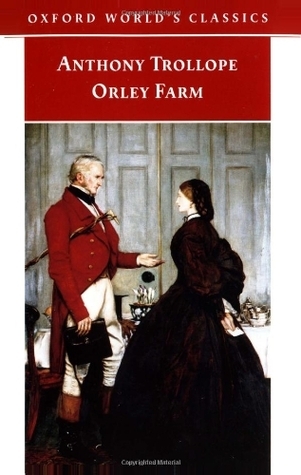
With its concern for social issues and its extensive coverage of middle-class and landed life, 'Orley Farm' is a novel that demands attention in the rich field of nineteenth-century fiction.

In "Miss Mackenzie" Trollope made a deliberate attempt "to prove that a novel may be produced without any love," but as he candidly admits in his "Autobiography," the attempt "breaks down before the conclusion."In taking for his heroine an middle-aged spinster, his contemporaries of writing about young girls in love. Instead he depicts Margaret Mackenzie, overwhelmed with money troubles, as she tries to assess the worth and motives of four very different suitors. Although her creator calls her "unattractive," most readers will warm to Miss Mackenzie and admire her modesty, dignity, and shrewdness.

Anthony Trollope offers the complete six-novel collection of his acclaimed Barchester Chronicles, a narrative of clerical drama within the cathedral city.

Mr Peacocke, a Classical scholar, has come to Broughtonshire with his beautiful American wife to live as a schoolmaster. But when the blackmailing brother of her American first husband appears at the school gates, their dreadful secret is revealed, and the county is scandalized. In the character of Dr Wortle, the combative but warm-hearted headmaster, who takes the couple's part in the face of general ostracism, there is an element of self-portrait. There are echoes, too, in Wortle's gallantry to Mrs Peacocke, of Trollope's own attachment to the vivacious Bostonian, Kate Field. With its scathing depiction of American manhood, its jousting with convention and its amiable, egotistical protagonist, Dr Wortle's School (1879) is one of the sharpest and most engaging of Trollope's later novels.For more than seventy years, Penguin has been the leading publisher of classic literature in the English-speaking world. With more than 1,700 titles, Penguin Classics represents a global bookshelf of the best works throughout history and across genres and disciplines. Readers trust the series to provide authoritative texts enhanced by introductions and notes by distinguished scholars and contemporary authors, as well as up-to-date translations by award-winning translators.

It is through reading novels, wrote Trollope in his Autobiography, 'that girls learn what is expected from them, and what they are to expect when lovers come'.Early on in Rachel Ray Trollope's heroine meets and falls in love with his hero Luke Rowan, a dashing youth ambitious to make his fortune in the Devon brewery trade. Unaccustomed to courtship, innocent of the world and unread in the novel, Rachel hesitates. The course of true love is further impeded by the odious Mr Prong, a local evangelical clergyman, who argues that no commitment can possibly be given until the gentleman's financial position is secured.George Eliot praised Trollope's subtlety of art in constructing a novel 'natty and complete as a nut on its stem'. In Rachel Ray Trollope combines nimble comedy with an engaging portrayal of the tender fluctuations of mood, agitation, happiness, dismay, of a young girl in love. Introducing this edition John Sutherland discusses the genesis of Rachel Ray and the 'magazine wars' that preceded its appearance in 1863.

Christmas at Thompson Hall brings together the best of the Christmas stories of Anthony Trollope, one of the most successful, prolific, and respected English novelists of the nineteenth century. Characterized by insightful, psychologically rich, and sometimes wryly humorous depictions of the middle class and gentry of Victorian England—and inspired occasionally by missives in the “lost letter” box of the provincial post office that Trollope ran—these tales helped to enshrine the traditions of the decorated Christmas tree, the holiday turkey, and the giving of store-bought gifts. Today, they open a window onto a time when carolers filled the streets and each house’s door displayed a wreath of evergreen boughs, a time at once distant and yet startlingly familiar.This collection includes:Christmas at Thompson Hall --Christmas day at Kirkby Cottage --The mistletoe bough --The two generals --Not if I know it.

When it appeared in 1874 "Lady Anna" met with little success, and positively outraged readers, but Trollope staunchly defended the novel. It is a tightly constructed and passionate study of enforced marriage in the world of Radical politics and social inequality. "Lady Anna" records the lifelong attempt of Countess Lovel to justify her claim to her title, and her daughter Anna's legitimacy, after her husband announces that he already has a wife. Anna falls in love with the journeyman tailor and young Radical Daniel Thwaite, but her mother wishes her to marry her cousin, heir to her father's title. Can Anna be allowed - can she allow herself - to change her mind? Though the conclusion is a foregone one, Trollope's ambivalence on the question is profound, and the novel both intense and powerful.Excerpt from Lady Anna:Of course She told her father. Of course she invoked every Murray in and out of Scotland. Of course there were many threats. A duel was fought up near London, in which Lord Lovel consented to be shot at twice, - declaring that after that he did not think that the circumstances of the case required that he Should be shot at any more. In the midst of this a daughter was born to her and her father died, - during which time She was still allowed to live at Lovel Grange. But what was it expedient that she should do? He declared that he had a former wife when he married her, and that therefore she was not and could not be his wife. Should she institute a prosecution against him for bigamy, thereby acknowledging that She was herself no wife and that her Child was illegitimate? From such evidence as she could get, She believed that the Italian woman whom the earl in former years had married had died before her own marriage. The earl declared that the countess, the real countess, had not paid her debt to nature, till some months after the little ceremony which had taken place in Apple thwaite Church. In a moment of weakness Josephine fell at his feet and asked him to renew the ceremony. He stooped over her, kissed her, and smiled. My pretty child, he said, Why should I do that? He never kissed her again.

Arabella Trefoil, the beautiful anti-heroine of this novel, inspired Trollope to write of her, "I wished to express the depth of my scorn for women who run down husbands." Arabella's determination to find a rich husband is at the heart of this story and her character, though often maligned, isone of Trollope's most famous and vivid creations.

Since its first appearance in 1867, this novel has been acclaimed as one of Trollope's most successful protrayals of mid-Victorian life. The Claverings is filled with contemporary detail and shows, as Trollope often does, the weakness of men and the emotional strength of women.

The Palliser novels ( six 6 volumes in 1 slipcase )

First published in 1865, The Belton Estate is concerned with the plight of unmarried, impecunious women in the 19th century. A novel rich in psychological insights, this is a love story, but one of unusual proportions in a Trollope novel.
This is a reproduction of the original artefact. Generally these books are created from careful scans of the original. This allows us to preserve the book accurately and present it in the way the author intended. Since the original versions are generally quite old, there may occasionally be certain imperfections within these reproductions. We're happy to make these classics available again for future generations to enjoy!

Frank Fenwick, the vicar of the title and a likeable and energetic clergyman, sets out to prove a young man's innocence in a murder and to prevent the eviction of a prostitute from her home. Choosing a prostitute as a central female character, Trollope addresses a topical question of histime: how women should maintain due and proper regard for themselves without adopting either the manners of a prostitute or the political excesses of a feminist.

Cousin Henry , first published in 1879, is perhaps the most unusual and intriguing of Trollope's shorter novels. Trollope's masterly handling of the novel's unlikely hero, a tiresome and timid coward, is notable for its insight and compassion.

This is Trollope's eightieth tale. Though it is the work of an older man, it is perhaps the brightest and freshest novel he ever wrote. The story of a young woman forced to choose a husband from among three unsavory men, the novel is remarkable for its wealth of minor characters and itromantic exuberance.

Set in the 1850s, The Three Clerks exposes and probes the relationships between three clerks and the three sisters who became their wives. At the same time it satirizes the Civil Service examinations and financial corruption in dealings on the stock market.