
John Fowles
John Robert Fowles was born in Leigh-on-Sea, a small town in Essex. He recalled the English suburban culture of the 1930s as oppressively conformist and his family life as intensely conventional. Of his childhood, Fowles said "I have tried to escape ever since." Fowles attended Bedford School, a large boarding school designed to prepare boys for university, from ages 13 to 18. After briefly attending the University of Edinburgh, Fowles began compulsory military service in 1945 with training at Dartmoor, where he spent the next two years. World War II ended shortly after his training began so Fowles never came near combat, and by 1947 he had decided that the military life was not for him. Fowles then spent four years at Oxford, where he discovered the writings of the French existentialists. In particular he admired Albert Camus and Jean-Paul Sartre, whose writings corresponded with his own ideas about conformity and the will of the individual. He received a degree in French in 1950 and began to consider a career as a writer. Several teaching jobs followed: a year lecturing in English literature at the University of Poitiers, France; two years teaching English at Anargyrios College on the Greek island of Spetsai; and finally, between 1954 and 1963, teaching English at St. Godric's College in London, where he ultimately served as the department head. The time spent in Greece was of great importance to Fowles. During his tenure on the island he began to write poetry and to overcome a long-time repression about writing. Between 1952 and 1960 he wrote several novels but offered none to a publisher, considering them all incomplete in some way and too lengthy. In late 1960 Fowles completed the first draft of The Collector in just four weeks. He continued to revise it until the summer of 1962, when he submitted it to a publisher; it appeared in the spring of 1963 and was an immediate best-seller. The critical acclaim and commercial success of the book allowed Fowles to devote all of his time to writing. The Aristos, a collection of philosophical thoughts and musings on art, human nature and other subjects, appeared the following year. Then in 1965, The Magus - drafts of which Fowles had been working on for over a decade - was published. The most commercially successful of Fowles' novels, The French Lieutenant's Woman, appeared in 1969. It resembles a Victorian novel in structure and detail, while pushing the traditional boundaries of narrative in a very modern manner. In the 1970s Fowles worked on a variety of literary projects--including a series of essays on nature--and in 1973 he published a collection of poetry, Poems. Daniel Martin, a long and somewhat autobiographical novel spanning over 40 years in the life of a screenwriter, appeared in 1977, along with a revised version of The Magus. These were followed by Mantissa (1982), a fable about a novelist's struggle with his muse; and A Maggot (1985), an 18th century mystery which combines science fiction and history. In addition to The Aristos, Fowles wrote a variety of non-fiction pieces including many essays, reviews, and forewords/afterwords to other writers' novels. He also wrote the text for several photographic compilations. From 1968, Fowles lived in the small harbour town of Lyme Regis, Dorset. His interest in the town's local history resulted in his appointment as curator of the Lyme Regis Museum in 1979, a position he filled for a decade. Wormholes, a book of essays, was published in May 1998. The first comprehensive biography on Fowles, John Fowles: A Life in Two Worlds, was published in 2004, and the first volume of his journals appeared the same year (followed recently by volume two). John Fowles passed away on November 5, 2005 after a long illness.
29 Books Written
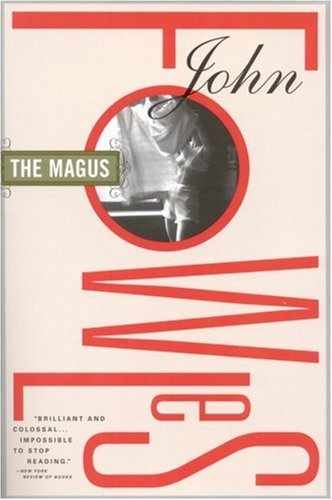
This daring literary thriller, rich with eroticism and suspense, is one of John Fowles's best-loved and bestselling novels and has contributed significantly to his international reputation as a writer of the first degree. At the center of The Magus is Nicholas Urfe, a young Englishman who accepts a teaching position on a remote Greek island, where he befriends a local millionaire. The friendship soon evolves into a deadly game, in which reality and fantasy are deliberately manipulated, and Nicholas finds that he must fight not only for his sanity but for his very survival.

Withdrawn, uneducated and unloved, Frederick collects butterflies and takes photographs. He is obsessed with a beautiful stranger, the art student Miranda. When he wins the pools he buys a remote Sussex house and calmly abducts Miranda, believing she will grow to love him in time.

The scene is the village of Lyme Regis on Dorset's Lyme Bay..."the largest bite from the underside of England's out-stretched southwestern leg." The major characters in the love-intrigue triangle are Charles Smithson, 32, a gentleman of independent means & vaguely scientific bent; his fiancée, Ernestina Freeman, a pretty heiress daughter of a wealthy & pompous dry goods merchant; & Sarah Woodruff, mysterious & fascinating...deserted after a brief affair with a French naval officer a short time before the story begins. Obsessed with an irresistible fascination for the enigmatic Sarah, Charles is hurtled by a moment of consummated lust to the brink of the existential void. Duty dictates that his engagement to Tina must be broken as he goes forth once again to seek the woman who has captured his Victorian soul & gentleman's heart.

An extraordinary work of fiction, from one of the world's most exceptional writers.A journalist visits an elderly painter and becomes intrigued by his young female companions. Four years' worth of book research is set on fire in front of a writer. A successful MP disappears without a trace. Written with stylistic innovation, this sequence of novellas exploring the nature of art echoes the themes and preoccupations of Fowles' earlier work and cements his position as a master storyteller.

In the spring of 1736 four men and one woman, all traveling under assumed names, are crossing the Devonshire countryside en route to a mysterious rendezvous. Before their journey ends, one of them will be hanged, one will vanish, and the others will face a murder trial. Out of the truths and lies that envelop these events, John Fowles has created a novel that is at once a tale of erotic obsession, an exploration of the conflict between reason and superstition, an astonishing act of literary legerdemain, and the story of the birth of a new faith.

An extraordinary work of fiction, from one of the world's most exceptional writers.WITH AN INTRODUCTION BY JULIAN FELLOWESAfter graduating from Oxford, Daniel Martin moved to America and successfully pursued the dreams of many: he became a Hollywood screenwriter. But, as the years go by, Daniel grows more and more unsatisfied with the life he once coveted and the person he has become. Now Daniel has been called back to England to reconcile with a dying friend, but finds that he must also reconcile with the past and with himself.'I find it disastrous to read any of John Fowles' books - once I pick one up, I cannot put it down so everything else gets ignored!' Judi Dench, Daily Express'An instant masterpiece. It is a tour de force of stamina and subtlety' Daily Telegraph

In Mantissa (1982), a novelist awakes in the hospital with amnesia -- and comes to believe that a beautiful female doctor is, in fact, his muse.

John Fowles (1926 - 2005) is widely regarded as one of the preeminent English novelists of the twentieth century his books have sold millions of copies worldwide, been turned into beloved films, and been popularly voted among the 100 greatest novels of the century.To a smaller yet no less passionate audience, Fowles is also known for having written The Tree, one of his few works of nonfiction. First published a generation ago, it is a provocative meditation on the connection between the natural world and human creativity, and a powerful argument against taming the wild. In it, Fowles recounts his own childhood in England and describes how he rebelled against his Edwardian father's obsession with the quantifiable yield of well-pruned fruit trees and came to prize instead the messy, purposeless beauty of nature left to its wildest.The Tree is an inspiring, even life-changing book, like Lewis Hyde's The Gift, one that reaffirms our connection to nature and reminds us of the pleasure of getting lost, the merits of having no plan, and the wisdom of following ones nose wherever it may leadin life as much as in art.

Two years after The Collector had brought him international recognition and a year before he published The Magus, John Fowles set out his ideas on life in The Aristos. The chief inspiration behind them was the fifth century BC philosopher Heraclitus. In the world he posited of constant and chaotic flux the supreme good was the Aristos, 'of a person or thing, the best or most excellent its kind'.'What I was really trying to define was an ideal of human freedom (the Aristos) in an unfree world,' wrote Fowles in 1965. He called a materialistic and over-conforming culture to reckoning with his views on a myriad of subjects - pleasure and pain, beauty and ugliness, Christianity, humanism, existentialism, socialism

John fowles's popularity and his place in the English literary canon have been assured for several decades. His novels The Magus and The French Lieutenant's Woman became instant classics upon publication. Here, with Wormholes, for the first time is a representative gathering of Fowles's fugitive and intensely personal nonfiction writings: essays, literary criticism, commentaries, autobiographical statements, memoirs, and musings. It is a delicious sampling of the various matters that have plagued, preoccupied, or delighted Fowles throughout his life.

Содержание:Роман как игра в Бога, или Магический театр Джона Фаулза. ПредисловиеКоллекционерВолхвПримечания

An evocative portfolio of photographs supports Fowles exploration of the double reality of Stonehenge--that, even as it resists a scientific final solution to questions about its origin and purpose, it symbolizes the imprecision of man's feeling and thought


In 1963, John Fowles won international recognition with The Collector, his first published novel. In the years following—with the publication of The Magus, The French Lieutenant’s Woman , The Ebony Tower, and his other critically acclaimed works of fiction, nonfiction, and poetry—Fowles took his place among the most innovative and important English novelists of our time. Now, with this first volume of his journals, which covers the years from 1949 to 1965, we see revealed not only the creative development of a great writer but also the deep connection between Fowles’s autobiographical experience and his literary inspiration.Commencing in Fowles’s final year at Oxford, the journals in this volume chronicle the years he spent as a university lecturer in France; his experiences teaching school on the Greek island of Spetsai (which would inspire The Magus ) and his love affair there with the married woman who would later become his first wife; and his return to England and his ongoing struggle to achieve literary success. It is an account of a life lived in total engagement with the world; although Fowles the novelist takes center stage, we see as well Fowles the nascent poet and critic, ornithologist and gardener, passionate naturalist and traveler, cinephile and collector of old books.Soon after he fell in love with his first wife, Elizabeth, Fowles wrote in his journal, “She has asked me not to write about her in here. But I could not not write, loving her as I do. . . . What else I betrayed, I could not betray this diary.” It is that determined, unsparing honesty and forthrightness that imbues these journals with all the emotional power and narrative complexity of his novels. They are a revelation of both the man and the artist.

"Коллекционер" - первый роман Фаулза, но уже в нем есть все то, что позволяет автору многие годы оставаться любимцем публики и литературной критики, удивительно ловко совмещать массовую читательскую аудиторию со славой писателя-интеллектуала: тонкие размышления и крепко закрученный сюжет, психологический реализм и таинственная атмосфера, точность деталей и широта обобщений, детективная интрига, положенная в основу сюжета, и высоты философской притчи. "Куколка" - роман публикуется в новом переводе и выходит по-русски полностью: переведены и вплетенные в романную ткань фрагменты хроникальной секции лондонского ежемесячника "Джентльменз мэгэзин", которые не только складываются в живописную панораму эпохи, но и содержат ключ к возможной разгадке происходящего. А происходящее в романе - таинственно донельзя. Пейзажи старой Англии, детективный сюжет с элементами мистики, хитроумные интриги и таинственные происшествия служат Фаулзу великолепным фоном для глубокого психологического исследования относительности познания и истины, границ человеческой свободы, исторических корней современной цивилизации.

The second and concluding volume of John Fowles’s eloquent, revelatory journals, the first of which was widely greeted as a literary landmark (“The book is gripping, and one can’t help feeling that Fowles was writing—with a dogged passion, and almost inadvertently—what may come to be seen as one of the very best of his works” — Literary Review ). Commencing in 1966, after the author had already achieved international renown with the publications of The Collector and The Magus , these journals chart the rewards and struggles of Fowles’s continuing career and the inner life of the often-reluctant celebrity.Bravely forthright and honest, Fowles writes in his journals about the attention and wealth that accrued to him with each new book—among them The French Lieutenant’s Woman in 1969 (a film version of which was released to international acclaim in 1981), The Ebony Tower in 1974, Daniel Martin in 1977, A Maggot in 1985—and about his deep ambivalence toward his growing fame. He chronicles his move from London to a remote house on England’s Dorset coast near the town of Lyme Regis, the increasingly isolated life he cultivated there, his disenchantment with what he saw as an unrelenting materialism at the center of contemporary society, and his unwillingness to adopt a public persona for his readers and fans. He describes the strains that grew between him and his wife, Elizabeth, and tells about the challenges—illness, depression, loss—of the passing years. But he describes, as well, the pleasure he found in his ten-year post as curator of the small Lyme Regis historical museum, and the great solace he took in gardening, in books, and in his impassioned study of the flora, fauna, and fossils of the countryside around his home.Fiercely candid, and as ardent, gripping, and beautifully written as his novels, Fowles’s journals illuminate the complex life and mind of one of the most important writers of our time.


Джон Фаулз. Человек, сделавший современный англоязычный авангард таким, каким мы его знаем теперь. Джон Фаулз. Культовый писатель последних десятилетий. Подлинный король британского постмодерна, знаменитый уже хотя бы тем, что вывел постмодернистскую прозу из субкультурного "подполья" и сделал ее достоянием не избранных, но многих... Перед вами - два великолепных романа Джона Фаулза, которые можно считать знаковыми для его творческой биографии... "Коллекционер" - произведение, написанное по всем канонам реализма, сопоставимо по скрытой внутреннем экспрессии с прозой Уильяма Голдинга. Полные напряжения и трагизма отношения мужчины и женщины превращаются здесь в "другую реальность", обретая черты кошмара наяву. "Любовница французского лейтенанта" - почти шокирующая в своей психологической обнаженности история любви, рассказанная интеллектуалом, но поразительная по искренности и завораживающей силе воздействия на читателя...


From the foreword by the author, John Fowles - ". . . I have always found the writing of poetry, which I began before I attempted prose, an enormous relief from the play-acting of fiction. I never pick up a book of poems without thinking that it will have one advantage over most I shall know the writer better at the end of it. I do not have to hope this is true of what follows. I know it is true - and also how slender a justification mere personal truth is in writing."


extremely rare,very good condition


This selection of Fowles’s poetic work includes two major sequences dating from the early part of his career in the 1950s and 60s, both of which (‘Apollo’ and ‘Mycenae’) draw on his time living in Greece and his interest in Greek mythology. The other poems included, largely unpublished previously and roughly in chronological order, are very varied in content, form and technique, and culminate in a sequence written in hospital towards the end of his life. Together, these poems constitute a powerful body of work reflecting on love, nature, suffering and desire. Fowles was always interested in verse translation and adaptation, and the book concludes with a fascinating sample of this side of his literary achievement. This section includes his translations of Martial, Catullus, Li Po and the eighth-century Man’yoshu, Japan’s oldest poetry compilation. John Fowles (1926–2005) is widely regarded as one of the most innovative and important English novelists of the second half of the twentieth century, but his career as a writer began in the 1950s with poetry. After studying French at Oxford, he taught in France and Greece before returning to England. His first published novel, The Collector (1963), was a major critical as well as commercial success, and was followed in 1965 by The Magus, a highly original novel set in Greece. In 1968 he moved to Lyme Regis, a town that featured in his next novel, The French Lieutenant’s Woman (1969). Subsequent works of fiction are The Ebony Tower (1974), Daniel Martin (1977), Mantissa (1982) and A Maggot (1985). He also published a number of non-fiction books, but his only book of poetry, simply called Poems, came out in the USA (but not in the UK) in 1973.


Volumul Jurnale reuneste cele mai reprezentative fragmente din jurnalul inceput de John Fowles in 1949, cind era inca student la Oxford, si tinut fara intrerupere mai bine de o jumatate de secol. Scrise intr-un stil de o franchete cuceritoare, chiar daca pe alocuri socanta, acestea invita cititorul la o incursiune deopotriva in viata cotidiana si in lumea imaginara a unuia dintre cei mai ingeniosi scriitori ai secolului XX. Volumul, care are savoarea si virtuozitatea romanelor lui Fowles, cuprinde insemnari despre experientele din anii petrecuti ca profesor in Franta si apoi pe insula greceasca Spetses, despre relatiile sale amoroase si casatoria furtunoasa cu Elizabeth sau despre intoarcerea in Anglia si eforturile uriase de a-si construi o cariera literara. Fowles vorbeste cu onestitate despre succesul cunoscut dupa publicarea romanelor Colectionarulsi Magicianul, despre relatiile cu alti scriitori, cu editorii sau regizorii care s-au ocupat de ecranizarea romanelor sale, dar si despre retragerea in casa de linga Lyme Regis si dezamagirea tot mai profunda pe care i-o pricinuiesc o lume dezbracata de magie si o societate din ce in ce mai materialista.

Jutukogumiku esialgne pealkiri oli "Variatsioonid"; ma tahtsin nii viidata variatsioonidele minu eelmistes raamatutes leidunud teemade ja jutustamisviiside ainel - kuigi lugejates ei tohiks ju tekitada tunnet, nagu oleksid nad täbaras seisus, sest ei orienteeru minu töödes või ei saa kätt südamele pannes vanduda, et teavad, mis vahe on récit´l ja discours´il. Kuid jäägem rahulikuks. Mul tuli esialgsest pealkirjast loobuda, sest esimesed elukutselised lugejad, kes minu raamatuid tõepoolest tunnevad, ei leidnud "Variatsioonidele" mingit õigustust - kui väga isiklik kangastus autori peas välja arvata. Ma alistusin hinnangutele ja olen äsjase erandiga oma illusioonid enesele hoidnud...

A collection of photographs of the seaside town where the author set his novel, The French Lieutenant's Woman, and where he has lived since 1965. Deeply involved in the history of the locale, he charts the life of the town and its changing inhabitants.