
Mark Girouard
Mark Girouard FSA was a British architectural historian who was an authority on the country house, and Elizabethan and Victorian architecture.
30 Books Written
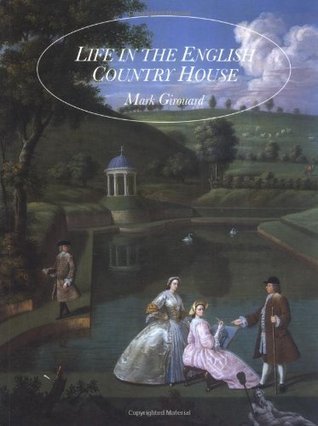
Life in the English Country House: A Social and Architectural History
by Mark Girouard
Rating: 4.2 ⭐
• 2 recommendations ❤️
This best-selling book is a beautifully illustrated history of the English country house from the Middle Ages to the twentieth century. In it, renowned architectural historian Mark Girouard presents a rare and revealing glimpse of the English upper classes—their public and personal lives, their servants, and their homes."A deeply important book, one of the most interesting contributions to architectural history."—J. H. Plumb, The New York Review of Books"A survey of country houses through the past five centuries, from a broad range of materials: family archives, literature, plans and photographs.... The book itself is a physical artifact of surpassing beauty which could fit on the grandest table in the houses it describes."—David Hackett Fischer, The New Republic"Informative, balanced, knowledgeable, and witty."—The New Yorker"This enthralling and immensely informative book...tells with wit, scholarship, and lucidity how the country house evolved to meet the needs and reflect the social attitudes of the times."—Philip Ziegler, The Times"One of those very useful and very enjoyable books that the learned can seldom write, and the entertaining seldom achieve—clear, detailed, and witty."—Angus Wilson, The ObserverWinner of the 1978 Duff Cooper Memorial Prize and the W. H. Smith & Son Annual Literary Award for 1979.

PrefaceSurvival & revivalSir Walter Scott The age of Abbotsford The broad stone of honour Radical chivalry The Eglinton tournamentVictoria & AlbertMuscular chivalry A mid-century miscellany The public schools The return of ArthurModern courtly love Knights of the empirePlaying the game Chivalry of the people The chivalrous gentlemenThe great warNotes to the TextIndexPhotographic Acknowledgments

Mark Girouard, author of Life in the English Country House and other superb books, extends his realm to France in this perceptive and witty portrait of the upper classes at home in their châteaux, manoirs, and gentilhommières.In these lavishly illustrated pages we experience all the variety and beauty of the châteaux. We learn how they reflected, in their decoration and organization, the manners and mores of their occupants--how the different rooms were lived in, how changes in taste accommodated the waxing and waning fortunes of the aristocracy (and then the bourgeoisie), how design and architecture evolved to serve changing lifestyles and values. The grim fortified donjons of old developed into the extravagant towers in which late-medieval seigneurs lived in luxury and splendor. In the time of Francis I and his successors, the romance of chivalry infused with Renaissance culture: the pageantry of balls and masques in the grande salle, the cultivation of privacy in richly decorated cabinets and galleries. In the ancien régime, the château offered intimate conversations in seventeenth-century alcoves, amorous encounters in Louis Quinze boudoirs, the pleasures of private theatricals, and the refined social life of the salon. After the Revolution, the noblesse returned to its medieval roots, but brought old values up to date with plush upholstered sofas, potted palms, and parks in the English manner. Seriousness was diluted by the extravagant entertainments of the Belle Epoque, and in our own time nostalgia combines with a dogged fight for survival.Mr. Girouard is as a marvelous guide to "downstairs" as he is to "upstairs," showing us how the kitchens operated, how the stables were organized, how the servants were provided for, as well as how developments in lighting, plumbing, and water supply affected everyone's comfort and customs. He has explored scores of French houses, as well as the letters and diaries, inventories, and books of etiquette that give us an intimate sense of what it meant to inhabit a French country house.For everyone who has visited or dreamed of the French countryside, this endlessly appealing book will bring to life that storied place and its people.

This social and aesthetic history of the world's major cities from antiquity to the present focuses on crucial periods of the cities' past and examines their architecture in light of the men and women who used it

. with dustjacket, BCA edition, clean copy, binding tight, no markings, Yale University Press, Professional booksellers since 1981

Does a neglected masterpiece by Jane Austen enshrine her first love affair? Who was Vita Sackville West's real grandfather? What clues are there to the identity of 'Walter', doyen of Victorian pornographers? When and why did P.G. Wodehouse mutate from hack to genius? Was Oscar Wilde really down and out in Paris? Was Brideshead really Madresfield?These and other excursions into literary or social history have developed out of Mark Girouard's spare time enthusiasms, as diversions from his main occupation as an architectural historian. In nine essays he calls attention to points that have not been noticed before, corrects fallacies that have got into general circulation, suggests, identifies, redates, refutes, or pours a little cold water on unjustified romanticisms. Three further essays sample another enthusiasm, his own family background, and introduce characters such as the dwarf who had to stand on a bench to address the South African Parliament, the colonial governor who fell in love with his niece, and the dowager duchess with whom he spent his childhood on the edge of the park at Chatsworth.

Elizabethan and Jacobean architecture— the uniquely strange and exciting buildings built by the great and powerful, ranging from huge houses to gem-like pavilions and lodges designed for feasting and hunting—is a phenomenon as remarkable as the literature that accompanied it, the literature of Shakespeare, Spenser, Sidney, Marlow, and others.In this beautiful and fascinating book, Mark Girouard discusses social structure and the way of life behind it, the evolution of the house plan, the excitement of English patrons and craftsmen as they learned not only about the classic Five Orders and the buildings of Ancient Rome, the surprising wealth of architectural drawings that survive from the period, the inroads of foreign craftsmen who brought new fashions in ornament, but also the strength of the native tradition that was creatively integrated with the “antique” style. Behind the book is a vivid consciousness of the European scene: Italy, France, central Europe and above all the Low Countries and their influence on England. But the principal argument of the book is the unique individuality of the English achievement.The result of new research and fieldwork, as well as a lifetime’s observation and scholarship, this remarkable book displays Girouard’s unique sense of style and his enduring excitement for the architecture of the period.

Traces the development of English city life from the Middle Ages to the twentieth century through characteristic buildings and sites such as markets, assembly rooms, streets, and factories

Presents a National Trust guidebook for visitors to National Trust Properties. This work covers history, horticulture, garden history, history of art, architecture, social history, natural environment, and conservation.

Describes the career of the seventeenth-century British architect, looks at his designs for rural mansions and castles, and discusses his contributions to their interior decoration

This book celebrates the rise and laments the fall of yhe Victorian pub by looking at buildings, builders, landlords and users with the eye of a social and architectural historian. The main emphasis is on London but there is also a final chapter covering in less detail the rest of England and Ireland

British architectural writer Mark Girouard has compiled an anthology of personal anecdotes and reminiscences about the English country house by people who lived in them, worked in them, or visited them.

Describes the Queen Anne movement, in architecture, furnishings, gardens, and picture books, and examines schools, businesses, and homes constructed in this style

Explores the history of the design and building of The Natural History Museum in London. It traces the development of the design, describes the influences of the key personalities involved and highlights the features of the building.

Shows and describes the history of British palaces, castles, manors, and mansions in Britain, and includes profiles of the people associated with each home
English Heritage guidebook to Old Wardour Castle in Wiltshire, with a full tour and history of the site.

The first major biography of James Stirling, one of the world's greatest modern architects - an intimate portrait of the man and a critical assessment of his work. James Stirling is one of the few postwar architects to whom the word genius can be applied. Formidable, ebulient, self-centred, at times outrageous, he pursued architecute and the creation of buildings with a single-minded intensity, evoking hero-worship and sometimes hatred in the process. Mark Girouard traces Stirling's life from his tough boyhood in Liverpool to the revolutionary buildings of the 1960s - the Engineering Buiding for Leicester University, the History Faculty Building at Cambridge and the Florey Building at Oxford - and the acclaimed Stuttgart Art Gallery in 1980. Celebrated abroad, in Britain Stirling's association with Palumbo's plan for a new building in the centre of the City of London divided the architectual world into furious camps, creating fiery debates which lasted until his early death in 1992. The arguments and the passions still reverberate today. Mark Girouard's perceptive, entertaining account combines an intimate picture of the man - his personality, his relationships, his life-style and mania for collecting - with an informed eye.

In this collection of essays and articles best selling author Mark Girouard writes of places he has visited in town and country. Mixing erudition with anecdote, he offers fascinating insights into both buildings and their inhabitants. He tells how he first became interested in architecture, describes the country houses which he visited as a boy, provides an authoritative interpretation of the origins of English rococo art, analyzes the formation of an English seaside resort, recreates the Georgian architecture and polite society of Jane Austen's world, and traces changing attitudes toward the landscape in architecture from eighteenth-century Britain to twentieth-century America.Old Slaughter's Coffee-House in the mid-eighteenth century; Holdenby, an Elizabethan great house built by a royal favourite who was called by one of his contemporaries "a mere vegetable of the court that sprung up at night and sank again at noon"; Belvedere, the eighteenth-century Irish country house that was witness to a tragic story of adultery and these are just a few of the buildings described by Girouard in these delightful essays on architecture and society in bygone eras in England and Ireland.Written with his customary wit and elegance, this collection of Girouard's finest essays illuminates not only architecture and social history but also the man who has explored both with such elan.

A photographic portrait of a royal castle and the life lived in and around it over the centuries, from the Middle Ages to the present.

This is, in effect, a hymn to friendships, and what they have meant to the architectural historian Mark Girouard, portrayed by means of thirty letters or other communications from friends, and by Girouard's writing about them. Some are grand, a few are or were famous, but others not at all so, for the point of the book is that friendship has nothing at all to do with fame or success, but with that sudden click of reciprocity, or pleasure in companionship, that helps make life worth living.So the reader can savour walks with John Betjeman through the ruins of blitzed London, or with Denys Lasdun through the concrete dramas of the National Theatre; be regaled with stories about the Gorbals by Ruby Milton, the champion child dancer from Glasgow; eat disgusting rook pie off Bourbon gold plate with the Duke of Wellington; scribble tipsy jokes in London pubs with lazy but delightful Peter Ferriday; be touched by the surprising love life of Sir John Summerson, loftiest of architectural historians; grieve at the decline of Mariga Guinness, gifted, drunken and lovable queen of the Irish Georgians; and hear how a Chelsea landlady modelled for the figure of Peace, riding her skyline chariot on the arch at London's Hyde Park Corner. The letters are reproduced in whole or part in facsimile, and the varying handwritings reveal the characters of the writers and help bring them to life in a way impossible for the all-conquering email.

A Biographical Dictionary of English Architecture, 1540-1640
by Mark Girouard
The first comprehensive dictionary of everyone of importance in the creation of English architecture during the Elizabethan and Jacobean agesThis long-awaited work of scholarship provides a comprehensive dictionary of everyone of importance in the creation of English architecture in the Elizabethan and Jacobean ages. With characteristically deft prose, Mark Girouard draws on a lifetime of experience in the study of architectural history to assess the impact of some six hundred master craftsmen, surveyors, designers and patrons at work between 1540 and 1640. Surveying a period not covered by other dictionaries, this book is a key text for students and scholars of British architecture and its allied arts between the sixteenth and seventeenth centuries. Mark Girouard’s lively comments and felicitous style also make it an enjoyable browse for anyone interested in the magnificent buildings that formed the background to the music of Dowland, Wilbye and Byrd; the fascinating political intrigues of the Tudor court; and the writings of Sidney, Shakespeare, Donne, Campion and Jonson.

A Hundred Years at Waddesdon
by Mark Girouard

英国のカントリー・ハウス〈上〉貴族の生活と建築の歴史
by Mark Girouard

英国のカントリー・ハウス〈下〉貴族の生活と建築の歴史
by Mark Girouard

Villes et des hommes architecture et societe
by Mark Girouard
Physical viii, 344 p. ; 27 cm. Includes index. Country homes, upper class ; Great Britain, History. Architecture and society ; Great Britain,History.
Robert Smythson and the architecture of the Elizabethan era
by Mark Girouard

![RARE 1985 CITIES AND PEOPLE PROFUSELY ILLUSTRATED 11X9 INCHES DUST JACKET [Hardcover] MARK GIROUARD](https://m.media-amazon.com/images/S/compressed.photo.goodreads.com/books/1694827144i/137751789.jpg)
RARE 1985 CITIES AND PEOPLE PROFUSELY ILLUSTRATED 11X9 INCHES DUST JACKET [Hardcover] MARK GIROUARD
by Mark Girouard