
Ian McEwan
Ian McEwan studied at the University of Sussex, where he received a BA degree in English Literature in 1970 and later received his MA degree in English Literature at the University of East Anglia. McEwan's works have earned him worldwide critical acclaim. He won the Somerset Maugham Award in 1976 for his first collection of short stories First Love, Last Rites; the Whitbread Novel Award (1987) and the Prix Fémina Etranger (1993) for The Child in Time; and Germany's Shakespeare Prize in 1999. He has been shortlisted for the Man Booker Prize for Fiction numerous times, winning the award for Amsterdam in 1998. His novel Atonement received the WH Smith Literary Award (2002), National Book Critics' Circle Fiction Award (2003), Los Angeles Times Prize for Fiction (2003), and the Santiago Prize for the European Novel (2004). He was awarded a CBE in 2000. In 2006, he won the James Tait Black Memorial Prize for his novel Saturday and his novel On Chesil Beach was named Galaxy Book of the Year at the 2008 British Book Awards where McEwan was also named Reader's Digest Author of the Year. McEwan lives in London.
31 Books Written

Ian McEwan's Somerset Maugham Award-winning collection First Love, Last Rites brought him instant recognition as one of the most influential voices writing in England today. Taut, brooding, and densely atmospheric, these stories show us the ways in which murder can arise out of boredom, perversity can result from adolescent curiosity, and sheer evil might be the solution to unbearable loneliness. These tales are as horrifying as anything written by Clive Barker or Stephen King, but they are crafted with a lyricism and intensity that compel us to confront our secret kinship with the horrifying.

At once chilling and beguiling, the seven stories in this collection engage and implicate us in the most fearful ways imaginable. McEwan, the bestselling author of Atonement and one of literature's most acclaimed practitioners of literary unease, is "an acute psychologist of the ordinary mind" ( The New York Times Book Review).A two-timing pornographer becomes an unwilling object in the fantasies of one of his victims. A jaded millionaire buys himself the perfect mistress and plunges into a hell of jealousy and despair. And in the course of a weekend with his teenage daughter, a guilt-ridden father discovers the depths of his own blundering innocence.Don’t miss Ian McEwan’s new novel, Lessons .

NATIONAL BESTSELLER • The Booker Prize winner and bestselling author of Atonement brilliantly illuminates the collision of sexual longing, deep-seated fears, and romantic fantasy on a young couple’s wedding night.“No one now writing in English surpasses or even matches McEwan's accomplishment." — The Washington Post Book WorldIt is 1962, and Florence and Edward are celebrating their wedding in a hotel on the Dorset coast. Yet as they dine, the expectation of their marital duties become overwhelming. Unbeknownst to them both, the decisions they make this night will resonate throughout their lives. With exquisite prose, Ian McEwan creates in On Chesil Beach a story of lives transformed by a gesture not made or a word not spoken.Don’t miss Ian McEwan’s new novel, Lessons .

Ian McEwan's symphonic novel of love and war, childhood and class, guilt and forgiveness provides all the satisfaction of a brilliant narrative and the provocation we have come to expect from this master of English prose. On a hot summer day in 1935, thirteen-year-old Briony Tallis witnesses the flirtation between her older sister, Cecilia, and Robbie Turner, the son of a servant. But Briony's incomplete grasp of adult motives—together with her precocious literary gifts—brings about a crime that will change all their lives. As it follows that crime's repercussions through the chaos and carnage of World War II and into the close of the twentieth century, Atonement engages the reader on every conceivable level, with an ease and authority that mark it as a genuine masterpiece.

Machines Like Me takes place in an alternative 1980s London. Charlie, drifting through life and dodging full-time employment, is in love with Miranda, a bright student who lives with a terrible secret. When Charlie comes into money, he buys Adam, one of the first synthetic humans and—with Miranda's help— he designs Adam's personality. The near- perfect human that emerges is beautiful, strong, and clever. It isn't long before a love triangle forms, and these three beings confront a profound moral dilemma.In his subversive new novel, Ian McEwan asks whether a machine can understand the human heart—or whether we are the ones who lack understanding. --front flap

Il giro del mondo in diciotto autori. La narrativa straniera Einaudi 1994 (e oltre) nelle pagine autobiografiche degli scrittori
by Ian McEwan
Rating: 3.0 ⭐

A fiercely intelligent, well-respected High Court judge in London faces a morally ambiguous case while her own marriage crumbles in a novel that will keep readers thoroughly enthralled until the last stunning page.Fiona Maye is a High Court judge in London presiding over cases in family court. She is fiercely intelligent, well respected, and deeply immersed in the nuances of her particular field of law. Often the outcome of a case seems simple from the outside, the course of action to ensure a child's welfare obvious. But the law requires more rigor than mere pragmatism, and Fiona is an expert in considering the sensitivities of culture and religion when handing down her verdicts. But Fiona's professional success belies domestic strife. Her husband, Jack, asks her to consider an open marriage and, after an argument, moves out of their house. His departure leaves her adrift, wondering whether it was not love she had lost so much as a modern form of respectability; whether it was not contempt and ostracism she really fears. She decides to throw herself into her work, especially a complex case involving a seventeen-year-old boy whose parents will not permit a lifesaving blood transfusion because it conflicts with their beliefs as Jehovah's Witnesses. But Jack doesn't leave her thoughts, and the pressure to resolve the case - as well as her crumbling marriage - tests Fiona in ways that will keep readers thoroughly enthralled until the last stunning page.

Saturday, February 15, 2003. Henry Perowne is a contented man - a successful neurosurgeon, the devoted husband of Rosalind, and proud father of two grown-up children. Unusually, he wakes before dawn, drawn to the window of his bedroom and filled with a growing unease. As he looks out at the night sky, he is troubled by the state of the world - the impending war against Iraq, a gathering pessimism since 9/11, and a fear that his city and his happy family life are under threat.Later, as Perowne makes his way through London streets filled with hundreds of thousands of anti-war protestors, a minor car accident brings him into a confrontation with Baxter, a fidgety, aggressive young man, on the edge of violence. To Perowne's professional eye, there appears to be something profoundly wrong with him. But it is not until Baxter makes a sudden appearance as the Perowne family gathers for a reunion, that Henry's fears seem about to be realised.
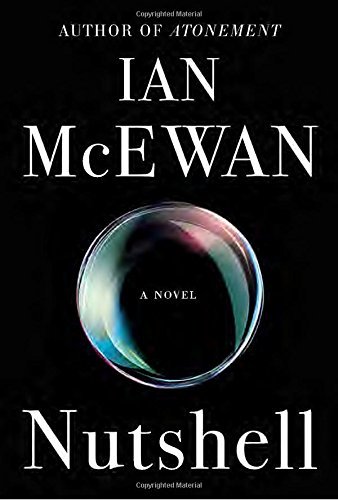
Nutshell is a classic story of murder and deceit, told by a narrator with a perspective and voice unlike any in recent literature. A bravura performance, it is the finest recent work from a true master.To be bound in a nutshell, see the world in two inches of ivory, in a grain of sand. Why not, when all of literature, all of art, of human endeavour, is just a speck in the universe of possible things.

BOOKER PRIZE WINNER • NATIONAL BESTSELLER • A sharp contemporary morality tale, cleverly disguised as a comic novel, Amsterdam is "a dark tour de force, perfectly fashioned" ( The New York Times ) from the bestselling author of Atonement.On a chilly February day, two old friends meet in the throng outside a London crematorium to pay their last respects to Molly Lane. Both Clive Linley and Vernon Halliday had been Molly's lovers in the days before they reached their current Clive is Britain's most successful modern composer, and Vernon is a newspaper editor. Gorgeous, feisty Molly had other lovers, too, notably Julian Garmony, Foreign Secretary, a notorious right-winger tipped to be the next prime minister. In the days that follow Molly's funeral, Clive and Vernon will make a pact with consequences that neither could have foreseen…Don’t miss Ian McEwan’s new novel, Lessons .

ISBN13: 9780224097376; ISBN10: 0224097377 In this stunning new novel, Ian McEwan's first female protagonist since Atonement is about to learn that espionage is the ultimate seduction. Cambridge student Serena Frome's beauty and intelligence make her the ideal recruit for MI5. The year is 1972. The Cold War is far from over. England's legendary intelligence agency is determined to manipulate the cultural conversation by funding writers whose politics align with those of the government. The operation is code named "Sweet Tooth." Serena, a compulsive reader of novels, is the perfect candidate to infiltrate the literary circle of a promising young writer named Tom Haley. At first, she loves his stories. Then she begins to love the man. How long can she conceal her undercover life? To answer that question, Serena must abandon the first rule of espionage: trust no one. Once again, Ian McEwan's mastery dazzles us in this superbly deft and witty story of betrayal and intrigue, love and the invented self.

Joe planned a postcard-perfect afternoon in the English countryside to celebrate his lover's return after 6 weeks in the States. The perfect day turns to nightmare however, when they are involved in freak ballooning accident in which a boy is saved but a man is killed. In itself, the accident would change the couple and the survivors' lives, filling them with an uneasy combination of shame, happiness, and endless self-reproach. But fate has far more unpleasant things in store for Joe. Meeting the eye of fellow rescuer Jed Parry, for example, turns out to be a very bad move. For Jed is instantly obsessed, making the first of many calls to Joe and Clarissa's London flat that same night. Soon he's openly shadowing Joe and writing him endless letters. (One insane epistle begins, "I feel happiness running through me like an electrical current. I close my eyes and see you as you were last night in the rain, across the road from me, with the unspoken love between us as strong as steel cable.") Worst of all, Jed's version of love comes to seem a distortion of Joe's feelings for Clarissa. Apart from the incessant stalking, it is the conditionals--the contingencies--that most frustrate Joe, a scientific journalist. If only he and Clarissa had gone straight home from the airport... If only the wind hadn't picked up... If only he had saved Jed's 29 messages in a single day... Ian McEwan has long been a poet of the arbitrary nightmare, his characters ineluctably swept up in others' fantasies, skidding into deepening violence, and--worst of all--becoming strangers to those who love them. Even his prose itself is a masterful and methodical exercise in de-familiarisation. But Enduring Love and its underrated predecessor, Black Dogs, are also meditations on knowledge and perception as well as brilliant manipulations of our own expectations. By the novel's end, you will be surprisingly unafraid of hot-air balloons, but you won't be too keen on looking a stranger in the eye. --Alex Freeman

When the world is still counting the cost of the Second World War and the Iron Curtain has closed, eleven-year-old Roland Baines's life is turned upside down. Two thousand miles from his mother's protective love, stranded at an unusual boarding school, his vulnerability attracts piano teacher Miss Miriam Cornell, leaving scars as well as a memory of love that will never fade.Now, when his wife vanishes, leaving him alone with his tiny son, Roland is forced to confront the reality of his restless existence. As the radiation from Chernobyl spreads across Europe, he begins a search for answers that looks deep into his family history and will last for the rest of his life.Haunted by lost opportunities, Roland seeks solace through every possible means—music, literature, friends, sex, politics, and, finally, love cut tragically short, then love ultimately redeemed. His journey raises important questions for us all. Can we take full charge of the course of our lives without causing damage to others? How do global events beyond our control shape our lives and our memories? And what can we really learn from the traumas of the past?Epic, mesmerizing, and deeply humane, Lessons is a chronicle for our times—a powerful meditation on history and humanity through the prism of one man's lifetime.

In this tour de force of psychological unease - now a major motion picture starring Charlotte Gainsbourg and Sinead Cusack - McEwan excavates the ruins of childhood and uncovers things that most adults have spent a lifetime forgetting or denying. "Possesses the suspense and chilling impact of Lord of the Flies." Washington Post Book World.

Michael Beard is a Nobel prize–winning physicist whose best work is behind him. Trading on his reputation, he speaks for enormous fees, lends his name to the letterheads of renowned scientific institutions, and half-heartedly heads a government-backed initiative tackling global warming. While he coasts along in his professional life, Michael’s personal life is another matter entirely. His fifth marriage is crumbling under the weight of his infidelities. But this time the tables are turned: His wife is having an affair, and Michael realizes he is still in love with her. When Michael’s personal and professional lives begin to intersect in unexpected ways, an opportunity presents itself in the guise of an invitation to travel to New Mexico. Here is a chance for him to extricate himself from his marital problems, reinvigorate his career, and very possibly save the world from environmental disaster. Can a man who has made a mess of his life clean up the messes of humanity? A complex novel that brilliantly traces the arc of one man’s ambitions and self-deceptions, Solar is a startling, witty, and stylish new work from one of the world’s great writers.

As their holiday unfolds, Colin and Maria are locked into their own intimacy. They groom themselves meticulously, as though there waits someone who cares deeply about how they appear. Then they meet a man with a disturbing story to tell and become drawn into a fantasy of violence and obsession.
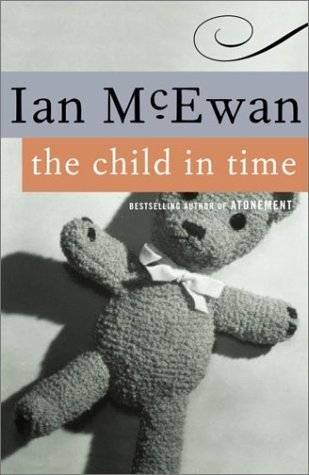
Stephen Lewis, a successful writer of children's books, is confronted with the unthinkable: his only child, three-year-old Kate, is snatched from him in a supermarket. In one horrifying moment that replays itself over the years that follow, Stephen realizes his daughter is gone. With extraordinary tenderness and insight, Booker Prize–winning author Ian McEwan takes us into the dark territory of a marriage devastated by the loss of a child. Kate's absence sets Stephen and his wife, Julie, on diverging paths as they each struggle with a grief that only seems to intensify with the passage of time. Eloquent and passionate, the novel concludes in a triumphant scene of love and hope that gives full rein to the author's remarkable gifts. The winner of the Whitbread Prize, The Child in Time is an astonishing novel by one of the finest writers of his generation.

Psychological thriller set in Berlin during the Cold War, based on an actual (but little known) incident which tells of the secret tunnel under the Soviet sector which the British and Americans built in 1954 to gain access to the Russians' communication system. The protagonist, Leonard Marnham, is a 25-year-old, naive, unsophisticated English post office technician who is astonished and alarmed to find himself involved in a top-secret operation. At the same time that he loses his political innocence, Leonard experiences his sexual initiation in a clandestine affair with a German divorcee five years his senior. As his two secret worlds come together, events develop into a gruesome nightmare, building to a searing, unforgettable scene of surrealist intensity in which Leonard and his lover try to conceal evidence of a murder. Acting to save himself from a prison sentence, Leonard desperately performs an act of espionage whose ironic consequences resonate down the years to a twister of an ending. Though its plot rivals any thriller in narrative tension, this novel is also a character study--of a young man coming of age in bizarre circumstances, and of differences in national character: the gentlemanly Brits, all decorum and civility; the brash, impatient Americans; the cynical Germans. McEwan's neat, tensile prose raises this book to the highest level of the genre.

Set in late 1980s Europe at the time of the fall of the Berlin Wall, "Black Dogs" is the intimate story of the crumbling of a marriage, as witnessed by an outsider. Jeremy is the son-in-law of Bernard and June Tremaine, whose union and estrangement began almost simultaneously. Seeking to comprehend how their deep love could be defeated by ideological differences Bernard and June cannot reconcile, Jeremy undertakes writing June's memoirs, only to be led back again and again to one terrifying encounter forty years earlier - a moment that, for June, was as devastating and irreversible in its consequences as the changes sweeping Europe in Jeremy's own time. In a finely crafted, compelling examination of evil and grace, Ian McEwan weaves the sinister reality of civilisation's darkest moods - its black dogs - with the tensions that both create love and destroy it.

That morning, Jim Sams, clever but by no means profound, woke from uneasy dreams to find himself transformed into a gigantic creature. Jim Sams has undergone a metamorphosis. In his previous life he was ignored or loathed, but in his new incarnation he is the most powerful man in Britain – and it is his mission to carry out the will of the people. Nothing must get in his way: not the opposition, nor the dissenters within his own party. Not even the rules of parliamentary democracy.With trademark intelligence, insight and scabrous humour, Ian McEwan pays tribute to Franz Kafka’s most famous work to engage with a world turned on its head.

Peter Fortune is a daydreamer. He's a quiet ten year old who can't help himself from dropping out of reality and into the amazing world of his vivid imagination. His daydreams are fantastic and fascinating - only in the bizarre and disturbing world of dreams can he swap bodies with the family cat and his baby cousin, Kenneth, or wipe out his entire family with vanishing cream.

2014 : At a dinner for close friends and colleagues, renowned poet Francis Blundy honors his wife's birthday by reading aloud a new poem dedicated to her, 'A Corona for Vivien'. Much wine is drunk as the guests listen, and a delicious meal consumed. Little does anyone gathered around the candlelit table know that for generations to come people will speculate about the message of this poem, a copy of which has never been found, and which remains an enduring mystery. 2119 : Just over one hundred years in the future, much of the western world has been submerged by rising seas following a catastrophic nuclear accident. Those who survive are haunted by the richness of the world that has been lost. In the water-logged south of what used to be England, Thomas Metcalfe, a lonely scholar and researcher, longs for the early twenty-first century as he chases the ghost of one poem, 'A Corona for Vivian'. How wild and full of risk their lives were, thinks Thomas, as he pores over the archives of that distant era, captivated by the freedoms and possibilities of human life at its zenith. When he stumbles across a clue that may lead to the elusive poem's discovery, a story is revealed of entangled loves and a brutal crime that destroy his assumptions about people he thought he knew intimately well. What We Can Know is a masterpiece, a fictional tour de force, a love story about both people and the words they leave behind, a literary detective story which reclaims the present from our sense of looming catastrophe and imagines a future world where all is not quite lost. -- Provided by publisher.

Short story published in the March 28, 2016 Edition of The New Yorker. Also available to read online.‘You will have heard of my friend the once celebrated novelist Jocelyn Tarbet, but I suspect his memory is beginning to fade…You’d never heard of me, the once obscure novelist Parker Sparrow, until my name was publicly connected with his. To a knowing few, our names remain rigidly attached, like the two ends of a seesaw. His rise coincided with, though did not cause, my decline… I don’t deny there was wrongdoing. I stole a life, and I don’t intend to give it back. You may treat these few pages as a confession.’A jewel of a book: a brand new short story from the author of Atonement. My Purple Scented Novel follows the perfect crime of literary betrayal, scrupulously wrought yet unscrupulously executed, published to celebrate Ian McEwan’s 70th birthday.

Charles Frieth, preeminent composer, conductor and prodigious womaniser, is preparing for a performance of one of his early works, and the world premiere of "Demonic Aubade". Obstinate and myopic, he is oblivious to the growing turmoil around him; his wife's poor health and dissatisfaction; the exhausted efforts of his secretary; and, the disquieting diligence of his housekeeper, Maria. As the first performance draws near, the maestro is suddenly awoken to the chaos, and as Charles struggles to regain control of his life, a terrible tragedy begins to unfold. "For You" is a beautifully wrought and compelling libretto - It is Ian McEwan at his very best.

This volume contains the stories from both of McEwan's previous collections: First Love, Last Rites and In Between the Sheets. The former was awarded the Somerset Maugham Award.

El espacio de la imaginación: El ensayo de George Orwell En el vientre de la ballena
by Ian McEwan
Rating: 3.5 ⭐
¿Son compatibles la libertad estética y el compromiso político? McEwan reflexiona a partir de Orwell y Camus.En 1940 George Orwell publicó el ensayo «En el vientre de la ballena», en el que se pregunta cómo pueden conjugar los escritores la integridad estética y el compromiso político. ¿Son compatibles? ¿Cuál debe prevalecer por encima del otro? ¿Tiene sentido exigirle a un creador la denuncia de las injusticias del mundo? Años después, en 1957, Albert Camus, otro heterodoxo antitotalitario, y temprano denunciante del estalinismo, se planteó el mismo asunto.Ian McEwan aborda la relación entre arte y compromiso a partir de ellos, porque sus reflexiones siguen interpelándonos en el convulso mundo actual.

Molti dei romanzi di Ian McEwan, da Sabato a Solar fino a Macchine come me, attingono a campi specialistici solitamente preclusi ai profani. Non vi è dunque da stupirsi se nei cinque saggi qui raccolti l’autore sceglie di sottolineare i punti di convergenza, anziché le discrepanze, fra due forme di indagine della realtà, la letteratura e la scienza, tradizionalmente ritenute distanti se non incompatibili. Se in L’originalità delle specie la connessione è individuata nel comune anelito alla priorità, in Una tradizione parallela si evidenzia la necessità condivisa di un canone di riferimento. E in Letteratura, scienza e natura umana è la relazione fra ciò che tutti gli esseri umani hanno in comune e ciò che li distingue, o più precisamente fra genetica e cultura, a fare da trait d’union fra i saperi. Il proliferare di credenze parascientifiche e parareligiose sul tempo dell’inizio e della fine, esplorate in Blues della fine del mondo, dimostrerebbe una pulsione di collettività nelle cose ultime, ma è in definitiva all’Io, con le sue infinite sfaccettature in ambito letterario e neuroscientifico, che tutto si riconduce. È la penna del grande romanziere a fare di una storia di scoperte scientifiche lunga due secoli, da Darwin a Dawkins, un «sublime trionfo della creatività umana».

Ian McEwan Bestsellers: The Child in Time, The Cement Garden, The Comfort of Strangers
by Ian McEwan
Rating: 4.0 ⭐
Award winning author Ian McEwan is known for his stories dealing with dysfunctional families and deviant sexuality. Collected here are three of his bestselling stories. The Child in Time: Life can change in an instant. Stephen Lewis is a successful author of children’s books. It is a routine Saturday morning and while on a trip to the supermarket, Stephen gets distracted. Within moments, his daughter is kidnapped and his life is forever changed. From that moment, Lewis spirals into bereavement that has effects on his relationship with his wife, his psyche, and with time itself. The Cement Garden: When they are suddenly orphaned, four siblings encase their mother’s body in concrete in the basement to prevent the outside world from discovering her death and placing them in foster care. This book tells a dark and disturbing story that deals with themes of familial love, boundary-crossing intimacy, and isolation. The Comfort of Strangers: Colin and Mary are lovers on holiday in Italy, their relationship becoming increasingly problematic as they become increasingly alienated from one and other. While Mary and Colin indeed rediscover each other in ways during this time--an erotic attraction to each other that was below the surface--they also find that their relationship/friendship with another couple takes turns that are likewise erotic and violent in nature.

Picador paperback, 1982. The Imitation Three Plays for Television. Early work by Ian McEwan.

L’umanità si è sempre lasciata incantare dai racconti che annunciavano la sua totale distruzione: gli ultimi giorni, il tempo della fine, l’estinzione della vita sul pianeta. Oggi, la fantasia di una fine violenta e collettiva risorge nei movimenti apocalittici: pacifici o bellicosi, musulmani o cristiani ma tutti capaci di influenzare la politica contemporanea. Assistiamo all’imponente risorgere del pensiero apocalittico, perché la scienza e la cultura della ragione non sono ancora riuscite a trovare una mitologia che possa competere con il fascino della fine. Ma se la credenza apocalittica è una funzione della fede, quell’intima convinzione che non richiede alcuna conferma, allora l’antidoto non è tanto la ragione quanto l’impulso umano alla curiosità. Perché il mandato della nostra maturità è agire con saggezza, scegliendo tra salvezza e autodistruzione.Da un maestro della letteratura contemporanea, una riflessione provocatoria e sorprendente sui modi di guardare alla nostra esistenza collettiva.

Für Ian McEwan ist die Geschichte der Wissenschaft eine faszinierende Saga voller intellektuellem Mut, harter Arbeit, tausendfachem Scheitern und kurzen Momenten der Inspiration. Sie ist auch eine Einladung, sich zu wundern und zu freuen. Anhand von Figuren wie Darwin, Einstein oder Turing erforscht Ian McEwan in diesen brillanten Essays das Verhältnis von Wissenschaft und Literatur, Ratio und Glauben und ihren Bezug zu unserer menschlichen Natur.