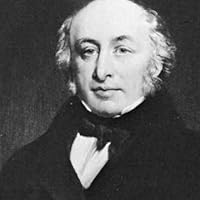
James Morier
English author, diplomat, and adventurer JAMES JUSTINIAN MORIER (1780-1849) served as the British ambassador to the court of Persia from 1810 to 1816. He is also remembered for his memoir A Journey through Persia, Armenia and Asia Minor to Constantinople in 1808. see James Justinian Morier [Wikipedia]
30 Books Written

This collection of literature attempts to compile many of the classic works that have stood the test of time and offer them at a reduced, affordable price, in an attractive volume so that everyone can enjoy them.

Many of the earliest books, particularly those dating back to the 1900s and before, are now extremely scarce and increasingly expensive. We are republishing these classic works in affordable, high quality, modern editions, using the original text and artwork.

This work has been selected by scholars as being culturally important, and is part of the knowledge base of civilization as we know it. This work was reproduced from the original artifact, and remains as true to the original work as possible. Therefore, you will see the original copyright references, library stamps (as most of these works have been housed in our most important libraries around the world), and other notations in the work. This work is in the public domain in the United States of America, and possibly other nations. Within the United States, you may freely copy and distribute this work, as no entity (individual or corporate) has a copyright on the body of the work.As a reproduction of a historical artifact, this work may contain missing or blurred pages, poor pictures, errant marks, etc. Scholars believe, and we concur, that this work is important enough to be preserved, reproduced, and made generally available to the public. We appreciate your support of the preservation process, and thank you for being an important part of keeping this knowledge alive and relevant.


This historic book may have numerous typos and missing text. Purchasers can usually download a free scanned copy of the original book (without typos) from the publisher. Not indexed. Not illustrated. 1824 edition. ...the Russians had got possession of that country. ' On the following day, the day of my long expected happiness, I and all my family arose betimes in the morning. The weather was serene but sultry; there had been a-tendency to storm for several days before, and heavy clouds stood in threatening attitudes with their white heads in the horizon. But nature was beautiful, and refreshed by a shower that had fallen in the night. My friend, the captain, lent me his horse, which I caparisoned and ornamented as well as I could on the occasion. I myself put on a new suit of clothes from head to foot, and with the addition of many silverstudded belts, cartouche-boxes, daggers, and other appendages fastened about me, and which had been lent me by a Georgian in the service of the Russians, I was told, and I believe it, thatl made a very handsome appearance. Accompanied by my male relations, the Russian captain, and as many of his men as could be spared in order to create a crowd, we proceeded to Geuklfi, and approaching it, marshalled ourselves in procession, preceded by music, songs, and shouts. We alighted at my bride's house, where we partook of refreshments, and received the congratulations of all the village; and then, when all was prepared for our return to Gavmishlfi, where my uncle was to perform the ceremony, we mounted again. My bride, covered by a crimson veil from head to_foot, which flowed. over a flat platter placed on her crown, was mounted on her father's steed, led on either side by her brothers. It is the custom for the bridegroom to hold a sash or girdle by his right hand, which is held at the other end by the bride on their way to the church, and this we did. All our friends, our relations, all the youth of the...

This work has been selected by scholars as being culturally important, and is part of the knowledge base of civilization as we know it. This work was reproduced from the original artifact, and remains as true to the original work as possible. Therefore, you will see the original copyright references, library stamps (as most of these works have been housed in our most important libraries around the world), and other notations in the work. This work is in the public domain in the United States of America, and possibly other nations. Within the United States, you may freely copy and distribute this work, as no entity (individual or corporate) has a copyright on the body of the work. As a reproduction of a historical artifact, this work may contain missing or blurred pages, poor pictures, errant marks, etc. Scholars believe, and we concur, that this work is important enough to be preserved, reproduced, and made generally available to the public. We appreciate your support of the preservation process, and thank you for being an important part of keeping this knowledge alive and relevant.

This historic book may have numerous typos and missing text. Purchasers can usually download a free scanned copy of the original book (without typos) from the publisher. Not indexed. Not illustrated. 1834 edition. ... chapter viii Gent. Faith! once or twice, she heaved the name of father Pantingly forth, as if it press'd her heart. King Lear. The Capitan Pasha, upon leaving the house, gave Zabetta assurances of his future protection; recommended her to take the greatest care of her daughter; told her that she should want for nothing; and, as an earnest of this, made her, upon stepping from the door, a handsome present in money. Ordering Cara Bey to follow him, and the night being far advanced, he returned incognito to his own palace. Zabetta could scarcely sleep, from delightful anticipations of the grandeur and worldly prosperity in store for her; whilst Ayesha, from apprehensions of that same fate, was equally unable to close her eyes. The former had no other visions before her than of rich dresses, gilded palaces, fine equipages, splendid boats, and never-ceasing pleasure; the latter could not divest herself of the horror of being subject to the power of some rude and barbarous master, in common with1 other unfortunate women; whilst her own lover, her fond and devoted Osmond, might be wasting away his existence in a prison, forgotten and despised. The succeeding day had not long appeared, when their attention was awakened by a knocking at the door. Zabetta looked out of the upper window, and, seeing several men in waiting, and among them a Frank, ordered the servant not to admit them before she had ascertained who they were. "Kim der?--Who is it?" said the old woman, as she stood with her hand on the latch, and with her ear towards the door. "Atch--open!" said a Turk. "Who are you?" repeated the old woman. "Atch--open!" again said the voice. By this time, Zabetta, having thrown her veil over her head, had come to the assistance of the servant, and...

A Second Journey through Persia, Armenia, and Asia Minor, to Constantinople, between the Years 1810 and 1816
by James Morier
Rating: 5.0 ⭐
This Elibron Classics book is a facsimile reprint of a 1818 edition by Longman, Hurst, Rees, Orme, and Brown, London.

Excerpt from The MirzaThe Persians have aptly been called the Frenchmen of the East; vanity is, in truth, their besetting sin, and that circumstance alone may, perhaps, account for the lust for compliment and adulation which exists in both nations.


About the Book Books within the Romance Novel genre focus a romantic relationship between two or more people. This genre can also incorporate elements of other genres, such as fantasy, or historical romance. Examples of this genre Northanger Abbey, Two on a Tower, Flatland, The border of an Anglo-Indian romance, A Rose of a Hundred Leaves, An experiment in marriage, and A Last Century Love Story. About us Trieste Publishing ’s aim is to provide readers with the highest quality reproductions of fiction and non-fiction literature that has stood the test of time. Our titles are produced from scans of the original books and as a result may sometimes have imperfections. To ensure a high-quality product we You can look up “Trieste Publishing” in categories that interest you to find other titles in our large collection. Come home to the books that made a difference!

Excerpt from Zohrab, the HostageIn this book, I confess that the quantum of history is very small indeed in proportion to the fiction. It may be compared to the small canal by means of which water is made to meander through a cultivated field in the East, fertilizing the tract through which it passes, but without which it would be barren and without value....

A Journey through Persia, Armenia, and Asia Minor, to Constantinople, in the Years 1808 and 1809
by James Morier
Rating: 4.0 ⭐
Excerpt from A Journey Through Persia, Armenia, and Asia Minor, to Constantinople, in the Years 1808 and 1809: In Which Is Included, Some Account of the Proceedings of His Majesty's Mission, Under Sir Harford Jones, Bart, K. C., To the Court of the King of Persia. Amasia, is the result of my own observation, corrected by the same masterly hand. It terminates at Amasia, because my journey from that place to Constantinople was performed as much by night as it was by day, and prosecuted with too great speed to permit me to observe with accuracy. Besides which, in Turkey, where the people are much more jealous and watchful of travellers than in Persia, I found that I could not make my remarks so much at my casc as I wished, although assisted by the of a Persian dress. The courses and distances, noted in the journal, are only to be regarded as a kind of dead reckoning, subject to correction by the application of latitudes in certain places, and of approximated positions in others. (Goodreads)


This work has been selected by scholars as being culturally important, and is part of the knowledge base of civilization as we know it. This work was reproduced from the original artifact, and remains as true to the original work as possible. Therefore, you will see the original copyright references, library stamps (as most of these works have been housed in our most important libraries around the world), and other notations in the work.This work is in the public domain in the United States of America, and possibly other nations. Within the United States, you may freely copy and distribute this work, as no entity (individual or corporate) has a copyright on the body of the work.As a reproduction of a historical artifact, this work may contain missing or blurred pages, poor pictures, errant marks, etc. Scholars believe, and we concur, that this work is important enough to be preserved, reproduced, and made generally available to the public. We appreciate your support of the preservation process, and thank you for being an important part of keeping this knowledge alive and relevant.

Excerpt from The Adventures of Hajji Baba, of Ispahan, Vol. 3 of 3I anxiously considered in what state I should find my family. - Would my old schoolmaster be alive - Should I find our neighbour the Baqal (or chandler), at whose shop I used to spend in' sweetmeats all the copper money that I could purloin from my father, when I shaved for him, would he be still in existence - And my old friend the Capijz', the door-keeper of the caravan serai, he Whom I frightened so much at the attack of the Turcomans, is the; door of his life still open, or has it been closed upbn him for ever?About the PublisherForgotten Books publishes hundreds of thousands of rare and classic books. Find more at www.forgottenbooks.comThis book is a reproduction of an important historical work. Forgotten Books uses state-of-the-art technology to digitally reconstruct the work, preserving the original format whilst repairing imperfections present in the aged copy. In rare cases, an imperfection in the original, such as a blemish or missing page, may be replicated in our edition. We do, however, repair the vast majority of imperfections successfully; any imperfections that remain are intentionally left to preserve the state of such historical works.


This work has been selected by scholars as being culturally important, and is part of the knowledge base of civilization as we know it. This work was reproduced from the original artifact, and remains as true to the original work as possible. Therefore, you will see the original copyright references, library stamps (as most of these works have been housed in our most important libraries around the world), and other notations in the work. This work is in the public domain in the United States of America, and possibly other nations. Within the United States, you may freely copy and distribute this work, as no entity (individual or corporate) has a copyright on the body of the work.As a reproduction of a historical artifact, this work may contain missing or blurred pages, poor pictures, errant marks, etc. Scholars believe, and we concur, that this work is important enough to be preserved, reproduced, and made generally available to the public. We appreciate your support of the preservation process, and thank you for being an important part of keeping this knowledge alive and relevant.

This work has been selected by scholars as being culturally important, and is part of the knowledge base of civilization as we know it. This work was reproduced from the original artifact, and remains as true to the original work as possible. Therefore, you will see the original copyright references, library stamps (as most of these works have been housed in our most important libraries around the world), and other notations in the work. This work is in the public domain in the United States of America, and possibly other nations. Within the United States, you may freely copy and distribute this work, as no entity (individual or corporate) has a copyright on the body of the work.As a reproduction of a historical artifact, this work may contain missing or blurred pages, poor pictures, errant marks, etc. Scholars believe, and we concur, that this work is important enough to be preserved, reproduced, and made generally available to the public. We appreciate your support of the preservation process, and thank you for being an important part of keeping this knowledge alive and relevant.
![The Adventures of Hajji Baba of Ispahan [Christmas Summary Classics]](https://m.media-amazon.com/images/S/compressed.photo.goodreads.com/books/1677809327i/20369263.jpg)

Zohrab: the Hostage; VOL. I
by James Morier
Nineteenth Century Collections European Literature, 1790-1840: The Corvey Collection includes the full-text of more than 9,500 English, French and German titles. The collection is sourced from the remarkable library of Victor Amadeus, whose Castle Corvey collection was one of the most spectacular discoveries of the late 1970s. The Corvey Collection comprises one of the most important collections of Romantic era writing in existence anywhere -- including fiction, short prose, dramatic works, poetry, and more -- with a focus on especially difficult-to-find works by lesser-known, historically neglected writers. The Corvey library was built during the last half of the 19th century by Victor and his wife Elise, both bibliophiles with varied interests. The collection thus contains everything from novels and short stories to belles lettres and more populist works, and includes many exceedingly rare works not available in any other collection from the period. These invaluable, sometimes previously unknown works are of particular interest to scholars and researchers. European Literature, 1790-1840: The Corvey Collection * Novels and Gothic Novels* Short Stories* Belles-Lettres* Short Prose Forms* Dramatic Works* Poetry* Anthologies* And more Selected with the guidance of an international team of expert advisors, these primary sources are invaluable for a wide range of academic disciplines and areas of study, providing never before possible research opportunities for one of the most studied historical periods. Additional Metadata Primary B0025801PSM NCCOF0063-C00000-B0025801DVI Collection NCCOC0062Bibliographic NCCO001385 30 4UVCOriginal Richard BentleyOriginal Publication 1832Original Publication LondonOriginal Imprint J. B. Nichols and SonSubjects English fiction -- 19th century.

Hajji Baba Tome 1 (Litterature)
by James Morier
Hajji Baba. T1 /, traduit de l'anglais par le traducteur des romans de sir Walter ScottDate de l'édition 1824Le présent ouvrage s'inscrit dans une politique de conservation patrimoniale des ouvrages de la littérature Française mise en place avec la BNF.HACHETTE LIVRE et la BNF proposent ainsi un catalogue de titres indisponibles, la BNF ayant numérisé ces oeuvres et HACHETTE LIVRE les imprimant à la demande.Certains de ces ouvrages reflètent des courants de pensée caractéristiques de leur époque, mais qui seraient aujourd'hui jugés condamnables.Ils n'en appartiennent pas moins à l'histoire des idées en France et sont susceptibles de présenter un intérêt scientifique ou historique.Le sens de notre démarche éditoriale consiste ainsi à permettre l'accès à ces oeuvres sans pour autant que nous en cautionnions en aucune façon le contenu.Pour plus d'informations, rendez-vous sur www.hachettebnf.fr

The Mirza, Vol. 3 of 3
by James Morier
Excerpt from The MirzaYou have now heard the determination of your sister, and are acquainted with her feel ingsi You cannot be cruel enough to separate us  let us depart hence  should fortune favour me you will hear from me again, and then, perhaps, you will regret the part you have taken in this matter.

Hajji Baba Tome 4 (Litterature)
by James Morier
Hajji Baba, traduit de l'anglais par le traducteur des romans de sir Walter ScottDate de l'édition 1824Le présent ouvrage s'inscrit dans une politique de conservation patrimoniale des ouvrages de la littérature Française mise en place avec la BNF.HACHETTE LIVRE et la BNF proposent ainsi un catalogue de titres indisponibles, la BNF ayant numérisé ces oeuvres et HACHETTE LIVRE les imprimant à la demande.Certains de ces ouvrages reflètent des courants de pensée caractéristiques de leur époque, mais qui seraient aujourd'hui jugés condamnables.Ils n'en appartiennent pas moins à l'histoire des idées en France et sont susceptibles de présenter un intérêt scientifique ou historique.Le sens de notre démarche éditoriale consiste ainsi à permettre l'accès à ces oeuvres sans pour autant que nous en cautionnions en aucune façon le contenu.Pour plus d'informations, rendez-vous sur www.hachettebnf.fr

Hajji Baba Tome 3 (Litterature)
by James Morier
Hajji Baba, traduit de l'anglais par le traducteur des romans de sir Walter ScottDate de l'édition 1824Le présent ouvrage s'inscrit dans une politique de conservation patrimoniale des ouvrages de la littérature Française mise en place avec la BNF.HACHETTE LIVRE et la BNF proposent ainsi un catalogue de titres indisponibles, la BNF ayant numérisé ces oeuvres et HACHETTE LIVRE les imprimant à la demande.Certains de ces ouvrages reflètent des courants de pensée caractéristiques de leur époque, mais qui seraient aujourd'hui jugés condamnables.Ils n'en appartiennent pas moins à l'histoire des idées en France et sont susceptibles de présenter un intérêt scientifique ou historique.Le sens de notre démarche éditoriale consiste ainsi à permettre l'accès à ces oeuvres sans pour autant que nous en cautionnions en aucune façon le contenu.Pour plus d'informations, rendez-vous sur www.hachettebnf.fr

The Mirza, Vol. 2 of 3
by James Morier
Excerpt from The Mirza, Vol. 2 of 3This is my second self, said the King, pointing to the favourite, fear not.Your slave must be silent, if such be your royal pleasure; but, as Allah is Allah, the matter is of great importance.About the PublisherForgotten Books publishes hundreds of thousands of rare and classic books. Find more at www.forgottenbooks.comThis book is a reproduction of an important historical work. Forgotten Books uses state-of-the-art technology to digitally reconstruct the work, preserving the original format whilst repairing imperfections present in the aged copy. In rare cases, an imperfection in the original, such as a blemish or missing page, may be replicated in our edition. We do, however, repair the vast majority of imperfections successfully; any imperfections that remain are intentionally left to preserve the state of such historical works.

The Adventures of Hajji Baba of Ispahan: A Coloring Book
by James Morier
Full of rip-roaring exploits, witty satire, and nimble humor, this classic work of fiction my British diplomat James Morier was first published in 1824 and soon became known as a classic to be compared with the Arabian Nights. It launches readers along the rags-to-riches escapades of Hajji Baba, the lazy son of a barber, as he seeks his fortune ... but only if it doesn't demand too much work of him. Hajji Baba of Ispahan appealed to Cyrus Leroy Baldridge as exquisitely appropriate for his highly colorful illustrations. At Baghdad, he set off with his wife to retrace the journeys of Hajji Baba himself, and after a series of fantastic adventures -- in one town a native told him calmly "the last man who sketched here, we stoned to death" -- brought home the 24 illustrations that appear in this coloring book.

Zohrab, Vol. 2 of 3: The Hostage
by James Morier
Excerpt from Zohrab, Vol. 2 of 3: The HostageApproaching the person on the present occasion, he soon discovered that all was not right. Sadek was standing thoughtfully loung ing in the ante-room, with one hand stuck in his girdle and one foot against the wall. Hashim's vivacity had forsaken him; and the chief physician, the Hakim Bashi, was about taking his departure, with his eyebrows running under his cap, with an air of apprehension that might have suited some wretch on the verge of life and death.The expert barber, deeply learned in all the circumstances of time, place, and opportunity.About the PublisherForgotten Books publishes hundreds of thousands of rare and classic books. Find more at www.forgottenbooks.comThis book is a reproduction of an important historical work. Forgotten Books uses state-of-the-art technology to digitally reconstruct the work, preserving the original format whilst repairing imperfections present in the aged copy. In rare cases, an imperfection in the original, such as a blemish or missing page, may be replicated in our edition. We do, however, repair the vast majority of imperfections successfully; any imperfections that remain are intentionally left to preserve the state of such historical works.

Abel Allnutt, Vol. 1 of 3: A Novel
by James Morier
Excerpt from Abel Allnutt, Vol. 1 of 3: A NovelIN a remote part of one of the western coun ties of England, thickly surrounded by trees, overgrown with ivy, and secluded from the public gaze, was situated an ancient, small red brick house, that was often compared to the face of an old lady, peeping through the close frills and ribands of her cap, looking snug, neat, and cheerful. From a back study, about ten o'clock one fine summer's morning was heard to issue the sounds of a German flute, which, although both door and windows were closed, would find its way to the ears of the.About the PublisherForgotten Books publishes hundreds of thousands of rare and classic books. Find more at www.forgottenbooks.comThis book is a reproduction of an important historical work. Forgotten Books uses state-of-the-art technology to digitally reconstruct the work, preserving the original format whilst repairing imperfections present in the aged copy. In rare cases, an imperfection in the original, such as a blemish or missing page, may be replicated in our edition. We do, however, repair the vast majority of imperfections successfully; any imperfections that remain are intentionally left to preserve the state of such historical works.

Abel Allnutt, a Novel
by James Morier
This work has been selected by scholars as being culturally important, and is part of the knowledge base of civilization as we know it. This work was reproduced from the original artifact, and remains as true to the original work as possible. Therefore, you will see the original copyright references, library stamps (as most of these works have been housed in our most important libraries around the world), and other notations in the work. This work is in the public domain in the United States of America, and possibly other nations. Within the United States, you may freely copy and distribute this work, as no entity (individual or corporate) has a copyright on the body of the work.As a reproduction of a historical artifact, this work may contain missing or blurred pages, poor pictures, errant marks, etc. Scholars believe, and we concur, that this work is important enough to be preserved, reproduced, and made generally available to the public. We appreciate your support of the preservation process, and thank you for being an important part of keeping this knowledge alive and relevant.