
A.S. Neill
Alexander Sutherland Neill was a Scottish progressive educator, author and founder of Summerhill school and its philosophy of freedom from adult coercion and its community self-governance, which remains open and continues to follow his educational philosophy to this day. He is best known as an advocate of personal freedom for children.
30 Books Written

Originally published in 1960, Summerhill became an instant bestseller and a classic volume of education for an entire generation. Now, this thoroughly expanded and revised version of the original Summerhill reinstates the revolutionary "free school" traditions begun by Summerhill's founder A.S. Neill.As American education lags behind the rest of the world, this new edition is more timely than ever. The children of today face struggles far greater than any previous generation and we, as parents and teachers, must teach them now to make choices for themselves and to learn from the outcome of their decisions.This classic work yet again invites a new view of childhood and presents an essential treatise that challenges us to rethink our approach to education.
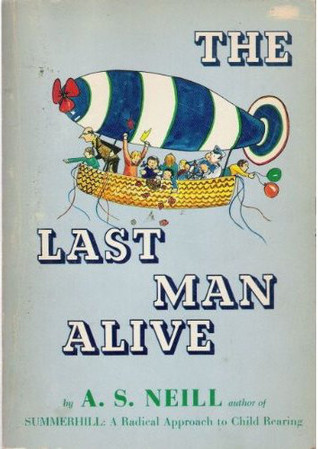
The adventures of a group who survived a poisonous cloud that turned everyone else into stone.

A.S. Neill, the now-renowned headmaster of the Summerhill School in England, has received hundreds of letters from correspondents in the USA requesting advice about their specific problems in child rearing. With his uncommon wisdom & in his unique, forthright style, he proffers answers. There are chapters about sibling rivalry, homosexuality, eating habits, the fearful child, censorship, homework, nudity in the home, children of the divorced & about other vital topics which either directly or obliquely affect the home life of theAmerican child. This penetrating volume will be read & quoted again & again. It's sure to excite controversial discussion. The title epitomizes Neill's Summerhillian philosophy. Every child is entitled to freedom; an excess of freedom constitutes license. Freedom deals with the rights of the child; license constitutes trespassing on the rights of others. Neill explains how & where the line is drawn between these two.

En 1991 se cumplió el septuagésimo aniversario de la escuela progresista más famosa del mundo, Summerhill, la cual constituye uno de los experimentos pedagógicos más innovadores del siglo XX y lo que va del XXl. Esta obra presenta a A.S. Neill en la retrospectiva de 50 años de dirigir su escuela. Recorre su propia historia y observa los cambios fundamentales que marcan ya nuestra época y los analiza con la objetividad de quien nunca quiso imponer su criterio personal.

Very good+ in very good dust jacket (bookplate, tape repair to spine of dj.) Hardcover first edition - New Hart Publishing Company, Inc., (1972.). Hardcover first edition -. Very good+ in very good dust jacket (bookplate, tape repair to spine of dj.). First printing. Warm and very personal autobiography - and comments about his views on everything from reading to women, death, humor and the future - by the founder and head of the controversial school, Summerhill - written 50 years after its founding. An unassuming book, but an important book for anyone interested in education. Illustrated with photographs. Index. 538 pp.

Summerhill, for and Against: Outstanding Writers in Education, and Psychology Evaluate the Concepts of A.S. Neill
by A.S. Neill
Rating: 3.8 ⭐
When the book A Radical Approach to Child Rearing was announced in 1960, A.S. Neill was virtually unknown in the U.S., and not a single bookseller placed an advanced order. Yet today Neill's controversial theories are required reading in universities and the interest in Summerhill is worldwide. Expressing highly contrasting views in For and Against are fifteen noted scholars and writers, including Erich Fromm, Louise Bates Ames, Bruno Bettelheim, and Sylvia Ashton-Warner.

A. S. Neill, founder of Summerhill, the most admired and most feared of all progressive schools, was famous as a schoolteacher, educational reformer, and author of illuminating and stylish books about education and the mind of the child. But few people know he was also a dedicated, prolific, uninhibited, witty and often mischievous letter writer. This selection of gems, first published in 1983, has been chosen from hundreds of his letters by his biographer. It includes letters about education, children, politics, writing, fatherhood, the Bomb, old age and death. 'All the best, Neill' was the familiar ending of his letters to the famous - H. G. Wells, Bertrand Russell, Henry Miller, Paul Goodman, Wilhelm Reich, Homer Lane; to important educators - W. B. Curry of Dartington, John Aitkenhead of Kilquhanity, Bob Mackenzie of Braehead, Dora Russell of Beacon Hill; to unknown friends, parents, and even casual correspondents. To read these letters is to share the company of a great and always delightful man, who wrote each one with the same commitment and gaiety.

Excerpt: ...nothing to do with me. He became angry, but he became speechless when I said, " I sympathise with you. Had it been my garden I should have sworn possibly harder than you have done. On the other hand, had it been twenty years ago and my kite, well, I should have done exactly what the boy did. Good morning." Although it was no concern of mine I called the boy out, and advised him to ]xj us to think of other people. Then I addressed the bairns. "You might convey to your parents," I said, " that I am not the policeman in this village; I'm a schoolmaster." I think that mann parents are annoyed at my giving up punishment. They feel that I am not doing their work for them; they think that the dominie should do the training of children.... other people's children, not their own. I find that I am trying to do a very difficult thing. The home influence is bad in many cases; the children hear their parents slight the teacher, and they do not know what to think. The average parent looks upon the teacher as an enemy. If I hit a boy the parents side with him, if I don't hit the boy who hit their boy, they indignantly ask what education is coming to. Many a night I feel disheartened. I find that I am on the side of the bairns. I am against law and discipline; I am all for freedom of action. At last I have attained my ambition. As a boy my great ambition was to possess a cavalry trumpet and bugle. I have just bought both. I call the bairns to school with " Stables " or the ' Fall In," and I gleefully look forward to playtime so that I may have another tootle. The bairns love to hear the calls, but I think I enjoy them most. I try hard to share the bairns' joys. At present I am out with them every day flying kites, and I never ti...


Hardcover - first edition in unclipped jacket (in removable plastic protection); both in excellent condition for age, with one instance of very minor edgewear on jacket. Very good indeed, with clean, sound pages throughout. TS

Excerpt from A Dominie in DoubtSix days ago he wrote asking me to come and spend a holiday with him, so I hastily packed my bag and made for Euston.This evening had been a sort of complimentary dinner in my honour, the guests being neighbouring dominies and their wives, none of whom I knew. We had talked of the war, of rising prices, and a thousand other things. Suddenly someone mentioned education, and of course my unfortunate Log had come under discussion.

In consequence of the Dominie’s go-as- you-please methods of educating village children, the inevitable happens he is dismissed, giving place to an approved disciplinarian. The unhappy Dominie, forced to leave his bairns, seeks to enlist but the doctor discovers that his lungs are affected, and he is ordered an open-air life. He returns as a cattleman to the village where he has previously been a school master. Incidentally, he watches the effect of his successor’s teaching, the triumph of his own methods and the discomfiture of his rival at the hands of the children, in whom the Dominie cultivated personality and the rights of bairns.

Öğretici ruh nedir? Çevrenize baktığınızda, etki altına aldığınız insanların sizden ne kadar yararlandıklarını gördüğünüzde veya etki alanı oluşturmak için gösterdiğiniz çabaya karşılık ortaya sizden bir parça çıktığında kendinizi bir "öğretici" yerine koyabilir misiniz? Günlük koşuşturmaların insanları tek tip eylem ve tek tip düşünceye doğru yönlendirdiğini gördükçe, bizi kuşatan değer yargılarını yeterince ve istediğimiz gibi kullanıp kullanamadığımızı hiç düşündük mü? Veya okul öncesi anne ve babamızdan ya da okulda iken aldığımız teorik eğitimlerin bugün geldiğimiz noktada ne kadar işimize yaradığını... Summerhill Okulu'nun kurucusu da olan yazarın elinden çıkan "Öğretici Ruh", yarınları kuracak anne-babaların, öğretmenlerin nasıl yetiştirilmesi gerektiğini belirlerken, sadece okul yaşamını değil, günlük hayatın "öğreti"ye açık pencerelerinde uyulması gereken kurallar bütününü de eğitim düzleminde inceliyor.


A Dominie's Five by AS Neill
by A.S. Neill
Summerhill School: A New View of Childhood
by A.S. Neill
La Liberté- Pas L'anarchie
by A.S. Neill

Summerhill
by A.S. Neill

Το πρόβλημα “οικογένεια”
by A.S. Neill
Η προβληματική οικογένειαΤο μωρόΟ δυστυχισμένος γάμοςΗ πειθαρχίαΟι ανέντιμοι γονείςΤο σχολείοΤο κακομαθημένο παιδίΗ ερωτική πράξηΗ θρησκείαΟ φόβος για το μέλλονΧρήμα και ντύσιμοΗ γονεϊκή αγάπηΜερικά προβληματικά παιδιά και η αγωνίαΗ σκληρότηταΟ κίνδυνος του σφιγμένου στομαχιούΗ ψυχολογία της οικογένειαςΔημοκρατία στο σπίτιΗ οικογένεια της εργατικής τάξηςΘεραπεύοντας τα προβληματικά παιδιάΈχετε καμία ερώτηση;Μιλώντας προσωπικά
Is Scotland Educated?
by A.S. Neill
Originally published in 1936, and with more than a slightly tongue-in-cheek tone at times, the author of this book declares that Scotland is not educated but merely learned. This book does not deal with education in its narrowest it ranges from the Kirk to Haggis, Tartans and Burns, Whisky and repressed sex in its discussion, proclaiming Calvinism as the root of most of Scotland’s evils. Honest and at times provocative, this volume does give direct access to the emotional roots of Neill’s feelings about Scottish education.
The Booming of Bunkie
by A.S. Neill

Liberdade no Lar
by A.S. Neill

Selbstverwaltung in der Schule
by A.S. Neill