Loading themes...
Explore the best books about American History theme.

How America's high standard of living came to be and why future growth is under threatIn the century after the Civil War, an economic revolution improved the American standard of living in ways previously unimaginable. Electric lighting, indoor plumbing, motor vehicles, air travel, and television transformed households and workplaces. But has that era of unprecedented growth come to an end? Weaving together a vivid narrative, historical anecdotes, and economic analysis, The Rise and Fall of American Growth challenges the view that economic growth will continue unabated, and demonstrates that the life-altering scale of innovations between 1870 and 1970 cannot be repeated. Robert Gordon contends that the nation's productivity growth will be further held back by the headwinds of rising inequality, stagnating education, an aging population, and the rising debt of college students and the federal government, and that we must find new solutions. A critical voice in the most pressing debates of our time, The Rise and Fall of American Growth is at once a tribute to a century of radical change and a harbinger of tougher times to come.

At the height of WWI, history’s most lethal influenza virus erupted in an army camp in Kansas, moved east with American troops, then exploded, killing as many as 100 million people worldwide. It killed more people in twenty-four months than AIDS killed in twenty-four years, more in a year than the Black Death killed in a century. But this was not the Middle Ages, and 1918 marked the first collision of science and epidemic disease. Magisterial in its breadth of perspective and depth of research and now revised to reflect the growing danger of the avian flu, The Great Influenza is ultimately a tale of triumph amid tragedy, which provides us with a precise and sobering model as we confront the epidemics looming on our own horizon. John M. Barry has written a new afterword for this edition that brings us up to speed on the terrible threat of the avian flu and suggest ways in which we might head off another flu pandemic.

The Right Stuff is an exhilarating flight into the death-defying lives of the Mercury Seven, America’s first astronauts. This Folio edition of Tom Wolfe’s classic features superb retro-styled color illustrations by Tavis Coburn."What is it that makes a man willing to sit up on top of an enormous Roman candle, and wait for someone to light the fuse?" In The Right Stuff, hailed as one of the greatest books ever written about space flight, Tom Wolfe sets out to answer the question, and lays bare the mindset and motivations of the first American astronauts to risk life and limb to beat the Soviets into orbit. He blows apart the mythology of the Mercury Seven – Deke Slayton, Gus Grissom, Alan Shepard, Wally Schirra, John Glenn, Scott Carpenter and Gordon Cooper – and the forerunner of them all, supersonic test pilot Chuck Yeager. Dazzlingly written, this is a thrilling account of men who "pushed the edge of the envelope" at work and play, all to prove they possessed the quality that Wolfe famously christened the right stuff. Opening with a new introduction by space historian Andrew Chaikin and featuring Tavis Coburn’s striking retro-styled graphic illustrations, this is an exceptional edition of a 20th-century classic from the Folio Society.UNIQUE SPACE AGE ILLUSTRATIONThis is the ultimate edition of Tom Wolfe’s most celebrated non-fiction book. To produce it, the Folio Society tapped into the expertise of Andrew Chaikin, author of A Man on the Moon – the definitive account of the Apollo space program, published in its own lavish Folio edition in 2021. Chaikin worked closely with Folio and illustrator Tavis Coburn on the visual look and feel of the book, which takes its cue from 1940s comic art and Soviet posters of the time. The illustrations portray the astronauts as Cold War heroes, and Coburn’s beautiful retro-futurist cover design perfectly captures the aesthetic and spirit of the early Space Age. Andrew Chaikin’s new introduction explores the origins of the book, and its uncanny ability to get inside the mindset of the Mercury astronauts: "Wolfe seemed to have found his way into their high-octane psyches and spilled their secret, innermost thoughts… they became three-dimensional human beings."Bound in printed and blocked clothSet in Cartier Book with Helvetica as display448 pagesFrontispiece and 7 colour illustrations, including 5 double-page spreadsBlack & white chapter detailsPrinted endpapersPrinted page edgesPrinted slipcase8 ¾" x 5 ½"

First of a 3-volume social history, Parting the Waters is more than a biography of the Rev. Martin Luther King Jr. during the decade preceding his emergence as a national figure. This 1000-page effort, which won the Pulitzer Prize as well as the National Book Critics Circle Award for General Nonfiction, profiles the key players & events that helped shape the American social landscape following WWII but before the civil-rights movement of the 60s reached its climax. Branch then goes a step further, endeavoring to explain how the struggles evolved as they did by probing the influences of the main actors while discussing the manner in which events conspired to create fertile ground for change. Also analyzing the beginnings of black self-consciousness, this book maps the structure of segregation & bigotry in America between '54 & '63. The author considers the constantly changing behavior of those in Washington with regard to the injustice of offical racism operating in many states at this time.Forerunner: Vernon Johns Rockefeller and Ebenezer Niebuhr and the Pool TablesFirst Trombone The Montgomery Bus BoycottA Taste of the World The Quickening Shades of PoliticsA Pawn of HistoryThe Kennedy TransitionBaptism on Wheels The Summer of Freedom RidesMoses in McComb, King in Kansas City Almost Christmas in Albany Hoover's Triangle and King's MachineThe Fireman's Last Reprieve The Fall of Ole MissTo Birmingham Greenwood and Birmingham JailThe Children's Miracle Firestorm The March on Washington Crossing Over: Nightmares and Dreams

"A wonderful, splendid book--a book that should be ready by every American, student or otherwise, who wants to understand his country, its true history, and its hope for the future." --Howard FastWith a new introduction by Anthony Arnove, this edition of the classic national bestseller chronicles American history from the bottom up, throwing out the official narrative taught in schools—with its emphasis on great men in high places—to focus on the street, the home and the workplace.Known for its lively, clear prose as well as its scholarly research, A People's History of the United States is the only volume to tell America's story from the point of view of—and in the words of—America's women, factory workers, African-Americans, Native Americans, the working poor, and immigrant laborers. As historian Howard Zinn shows, many of our country's greatest battles—the fights for a fair wage, an eight-hour workday, child-labor laws, health and safety standards, universal suffrage, women's rights, racial equality—were carried out at the grassroots level, against bloody resistance.Covering Christopher Columbus's arrival through President Clinton's first term, A People's History of the United States features insightful analysis of the most important events in our history.

From the host of the Travel Channel’s “The Wild Within.”A hunt for the American buffalo—an adventurous, fascinating examination of an animal that has haunted the American imagination. In 2005, Steven Rinella won a lottery permit to hunt for a wild buffalo, or American bison, in the Alaskan wilderness. Despite the odds—there’s only a 2 percent chance of drawing the permit, and fewer than 20 percent of those hunters are successful—Rinella managed to kill a buffalo on a snow-covered mountainside and then raft the meat back to civilization while being trailed by grizzly bears and suffering from hypothermia. Throughout these adventures, Rinella found himself contemplating his own place among the 14,000 years’ worth of buffalo hunters in North America, as well as the buffalo’s place in the American experience. At the time of the Revolutionary War, North America was home to approximately 40 million buffalo, the largest herd of big mammals on the planet, but by the mid-1890s only a few hundred remained. Now that the buffalo is on the verge of a dramatic ecological recovery across the West, Americans are faced with the challenge of how, and if, we can dare to share our land with a beast that is the embodiment of the American wilderness.American Buffalo is a narrative tale of Rinella’s hunt. But beyond that, it is the story of the many ways in which the buffalo has shaped our national identity. Rinella takes us across the continent in search of the buffalo’s past, present, and to the Bering Land Bridge, where scientists search for buffalo bones amid artifacts of the New World’s earliest human inhabitants; to buffalo jumps where Native Americans once ran buffalo over cliffs by the thousands; to the Detroit Carbon works, a “bone charcoal” plant that made fortunes in the late 1800s by turning millions of tons of buffalo bones into bone meal, black dye, and fine china; and even to an abattoir turned fashion mecca in Manhattan’s Meatpacking District, where a depressed buffalo named Black Diamond met his fate after serving as the model for the American nickel. Rinella’s erudition and exuberance, combined with his gift for storytelling, make him the perfect guide for a book that combines outdoor adventure with a quirky blend of facts and observations about history, biology, and the natural world. Both a captivating narrative and a book of environmental and historical significance, American Buffalo tells us as much about ourselves as Americans as it does about the creature who perhaps best of all embodies the American ethos.

Are leaders born or made? Where does ambition come from? How does adversity affect the growth of leadership? Does the leader make the times or do the times make the leader? In Leadership, Goodwin draws upon the four presidents she has studied most closely—Abraham Lincoln, Theodore Roosevelt, Franklin D. Roosevelt, and Lyndon B. Johnson (in civil rights)—to show how they recognized leadership qualities within themselves and were recognized as leaders by others. By looking back to their first entries into public life, we encounter them at a time when their paths were filled with confusion, fear, and hope.Leadership tells the story of how they all collided with dramatic reversals that disrupted their lives and threatened to shatter forever their ambitions. Nonetheless, they all emerged fitted to confront the contours and dilemmas of their times. No common pattern describes the trajectory of leadership. Although set apart in background, abilities, and temperament, these men shared a fierce ambition and a deep-seated resilience that enabled them to surmount uncommon hardships. At their best, all four were guided by a sense of moral purpose. At moments of great challenge, they were able to summon their talents to enlarge the opportunities and lives of others.

We live, according to Eddie S. Glaude Jr., in a moment when the struggles of Black Lives Matter and the attempt to achieve a new America have been challenged by the election of Donald Trump, a president whose victory represents yet another failure of America to face the lies it tells itself about race. From Charlottesville to the policies of child separation at the border, his administration turned its back on the promise of Obama's presidency and refused to embrace a vision of the country shorn of the insidious belief that white people matter more than others.We have been here before: For James Baldwin, these after times came in the wake of the civil rights movement, when a similar attempt to compel a national confrontation with the truth was answered with the murders of Medgar Evers, Malcolm X, and Martin Luther King, Jr. In these years, spanning from the publication of The Fire Next Time in 1963 to that of No Name in the Street in 1972, Baldwin transformed into a more overtly political writer, a change that came at great professional and personal cost. But from that journey, Baldwin emerged with a sense of renewed purpose about the necessity of pushing forward in the face of disillusionment and despair.In the story of Baldwin's crucible, Glaude suggests, we can find hope and guidance through our own after times, this Trumpian era of shattered promises and white retrenchment. Mixing biography--drawn partially from newly uncovered interviews--with history, memoir, and trenchant analysis of our current moment, Begin Again is Glaude's endeavor, following Baldwin, to bear witness to the difficult truth of race in America today. It is at once a searing exploration that lays bare the tangled web of race, trauma, and memory, and a powerful interrogation of what we all must ask of ourselves in order to call forth a new America.

Covers a seventy year span in chronological essays. Includes end notes and master index.

In the final decades of the nineteenth century, three brilliant and visionary titans of America’s Gilded Age—Thomas Edison, Nikola Tesla, and George Westinghouse—battled bitterly as each vied to create a vast and powerful electrical empire. In Empires of Light , historian Jill Jonnes portrays this extraordinary trio and their riveting and ruthless world of cutting-edge science, invention, intrigue, money, death, and hard-eyed Wall Street millionaires. At the heart of the story are Thomas Alva Edison, the nation’s most famous and folksy inventor, creator of the incandescent light bulb and mastermind of the world’s first direct current electrical light networks; the Serbian wizard of invention Nikola Tesla, elegant, highly eccentric, a dreamer who revolutionized the generation and delivery of electricity; and the charismatic George Westinghouse, Pittsburgh inventor and tough corporate entrepreneur, an industrial idealist who in the era of gaslight imagined a world powered by cheap and plentiful electricity and worked heart and soul to create it.Edison struggled to introduce his radical new direct current (DC) technology into the hurly-burly of New York City as Tesla and Westinghouse challenged his dominance with their alternating current (AC), thus setting the stage for one of the eeriest feuds in American corporate history, the War of the Electric Currents. The battlegrounds: Wall Street, the 1893 Chicago World’s Fair, Niagara Falls, and, finally, the death chamber—Jonnes takes us on the tense walk down a prison hallway and into the sunlit room where William Kemmler, convicted ax murderer, became the first man to die in the electric chair.Empires of Light is the gripping history of electricity, the “mysterious fluid,” and how the fateful collision of Edison, Tesla, and Westinghouse left the world utterly transformed.

A New York Times bestseller! The untold story of the eccentric Wall Street tycoon and the circle of scientific geniuses who helped build the atomic bomb and defeat the Nazis—changing the course of history.Legendary financier, philanthropist, and society figure Alfred Lee Loomis gathered the most visionary scientific minds of the twentieth century—Albert Einstein, Werner Heisenberg, Niels Bohr, Enrico Fermi, and others—at his state-of-the-art laboratory in Tuxedo Park, New York, in the late 1930s. He established a top-secret defense laboratory at MIT and personally bankrolled pioneering research into new, high-powered radar detection systems that helped defeat the German Air Force and U-boats. With Ernest Lawrence, the Nobel Prize–winning physicist, he pushed Franklin Delano Roosevelt to fund research in nuclear fission, which led to the development of the atomic bomb.Jennet Conant, the granddaughter of James Bryant Conant, one of the leading scientific advisers of World War II, enjoyed unprecedented access to Loomis’ papers, as well as to people intimately involved in his life and work. She pierces through Loomis’ obsessive secrecy and illuminates his role in assuring the Allied victory.

Gore Vidal's Narratives of Empire series spans the history of the United States from the Revolution to the post-World War II years. With their broad canvas and large cast of fictional and historical characters, the novels in this series present a panorama of the American political and imperial experience as interpreted by one of its most worldly, knowing, and ironic observers.To most Americans, Abraham Lincoln is a monolithic figure, the Great Emancipator and Savior of the Union, beloved by all. In Gore Vidal's Lincoln we meet Lincoln the man and Lincoln the political animal, the president who entered a besieged capital where most of the population supported the South and where even those favoring the Union had serious doubts that the man from Illinois could save it. Far from steadfast in his abhorrence of slavery, Lincoln agonizes over the best course of action and comes to his great decision only when all else seems to fail. As the Civil War ravages his nation, Lincoln must face deep personal turmoil, the loss of his dearest son, and the harangues of a wife seen as a traitor for her Southern connections. Brilliantly conceived, masterfully executed, Gore Vidal's Lincoln allows the man to breathe again.

In his own book, Wartime, Paul Fussell called With the Old Breed "one of the finest memoirs to emerge from any war." John Keegan referred to it in The Second World War as "one of the most arresting documents in war literature." And Studs Terkel was so fascinated with the story he interviewed its author for his book, "The Good War." What has made E.B. Sledge's memoir of his experience fighting in the South Pacific during World War II so devastatingly powerful is its sheer honest simplicity and compassion.Now including a new introduction by Paul Fussell, With the Old Breed presents a stirring, personal account of the vitality and bravery of the Marines in the battles at Peleliu and Okinawa. Born in Mobile, Alabama in 1923 and raised on riding, hunting, fishing, and a respect for history and legendary heroes such as George Washington and Daniel Boone, Eugene Bondurant Sledge (later called "Sledgehammer" by his Marine Corps buddies) joined the Marines the year after the bombing of Pearl Harbor and from 1943 to 1946 endured the events recorded in this book. In those years, he passed, often painfully, from innocence to experience.Sledge enlisted out of patriotism, idealism, and youthful courage, but once he landed on the beach at Peleliu, it was purely a struggle for survival. Based on the notes he kept on slips of paper tucked secretly away in his New Testament, he simply and directly recalls those long months, mincing no words and sparing no pain. The reality of battle meant unbearable heat, deafening gunfire, unimaginable brutality and cruelty, the stench of death, and, above all, constant fear. Sledge still has nightmares about "the bloody, muddy month of May on Okinawa." But, as he also tellingly reveals, the bonds of friendship formed then will never be severed.Sledge's honesty and compassion for the other marines, even complete strangers, sets him apart as a memoirist of war. Read as sobering history or as high adventure, With the Old Breed is a moving chronicle of action and courage.

Winner of the Pulitzer for History, No Ordinary Time is a chronicle of one of the most vibrant & revolutionary periods in US history. With an extraordinary collection of details, Goodwin weaves together a number of story lines—the Roosevelt’s marriage & partnership, Eleanor’s life as First Lady, & FDR’s White House & its impact on America as well as on a world at war. Goodwin melds these into an intimate portrait of Eleanor & Franklin Roosevelt & of the time during which a new, modern America was born.Preface"The decisive hour has come" "A few nice boys with BB guns""Back to the Hudson" "Living here is very oppressive""No ordinary time" "I am a juggler" "I can't do anything about her" "Arsenal of democracy" "Business as usual" "A great hour to live""A completely changed world""Two little boys playing soldier""What can we do to help?" "By god, if it ain't Old Frank!""We are striking back" "The greatest man I have ever known" "It is blood on your hands" "It was a sight I will never forget""I want to sleep and sleep" "Suspended in space" "The old master still had it""So darned busy" "It is good to be home" "Everybody is crying" "A new country is being born"AfterwordNotesBibliographyAcknowledgmentsIndexAfterword

At once an incredible adventure narrative and a penetrating biographical portrait, The River of Doubt is the true story of Theodore Roosevelt’s harrowing exploration of one of the most dangerous rivers on earth.The River of Doubt—it is a black, uncharted tributary of the Amazon that snakes through one of the most treacherous jungles in the world. Indians armed with poison-tipped arrows haunt its shadows; piranhas glide through its waters; boulder-strewn rapids turn the river into a roiling cauldron.After his humiliating election defeat in 1912, Roosevelt set his sights on the most punishing physical challenge he could find, the first descent of an unmapped, rapids-choked tributary of the Amazon. Together with his son Kermit and Brazil’s most famous explorer, Cândido Mariano da Silva Rondon, Roosevelt accomplished a feat so great that many at the time refused to believe it. In the process, he changed the map of the western hemisphere forever.Along the way, Roosevelt and his men faced an unbelievable series of hardships, losing their canoes and supplies to punishing whitewater rapids, and enduring starvation, Indian attack, disease, drowning, and a murder within their own ranks. Three men died, and Roosevelt was brought to the brink of suicide. The River of Doubt brings alive these extraordinary events in a powerful nonfiction narrative thriller that happens to feature one of the most famous Americans who ever lived.From the soaring beauty of the Amazon rain forest to the darkest night of Theodore Roosevelt’s life, here is Candice Millard’s dazzling debut.

Doris Kearns Goodwin, winner of the Pulitzer Prize and author of Team of Rivals, captures the Progressive Era through the story of the broken friendship between Theodore Roosevelt and William Howard Taft, culminating in their running against one another for president in 1912.

From the #1 New York Times bestselling author and master of narrative nonfiction comes the enthralling story of the sinking of the LusitaniaOn May 1, 1915, a luxury ocean liner as richly appointed as an English country house sailed out of New York, bound for Liverpool, carrying a record number of children and infants. The passengers were anxious. Germany had declared the seas around Britain to be a war zone, and for months, its U-boats had brought terror to the North Atlantic. But the Lusitania was one of the era's great transatlantic "Greyhounds" and her captain, William Thomas Turner, placed tremendous faith in the gentlemanly strictures of warfare that for a century had kept civilian ships safe from attack. He knew, moreover, that his ship - the fastest then in service - could outrun any threat. Germany, however, was determined to change the rules of the game, and Walther Schwieger, the captain of Unterseeboot-20, was happy to oblige. Meanwhile, an ultra-secret British intelligence unit tracked Schwieger's U-boat, but told no one. As U-20 and the Lusitania made their way toward Liverpool, an array of forces both grand and achingly small - hubris, a chance fog, a closely guarded secret, and more--all converged to produce one of the great disasters of history. It is a story that many of us think we know but don't, and Erik Larson tells it thrillingly, switching between hunter and hunted while painting a larger portrait of America at the height of the Progressive Era. Full of glamour, mystery, and real-life suspense, Dead Wake brings to life a cast of evocative characters, from famed Boston bookseller Charles Lauriat to pioneering female architect Theodate Pope Riddle to President Wilson, a man lost to grief, dreading the widening war but also captivated by the prospect of new love. Gripping and important, Dead Wake captures the sheer drama and emotional power of a disaster that helped place America on the road to war.

New York, 1888. Gas lamps still flicker in the city streets, but the miracle of electric light is in its infancy. The person who controls the means to turn night into day will make history--and a vast fortune. A young untested lawyer named Paul Cravath, fresh out of Columbia Law School, takes a case that seems impossible to win. Paul's client, George Westinghouse, has been sued by Thomas Edison over a billion-dollar question: Who invented the light bulb and holds the right to power the country? The case affords Paul entry to the heady world of high society--the glittering parties in Gramercy Park mansions, and the more insidious dealings done behind closed doors. The task facing him is beyond daunting. Edison is a wily, dangerous opponent with vast resources at his disposal--private spies, newspapers in his pocket, and the backing of J. P. Morgan himself. Yet this unknown lawyer shares with his famous adversary a compulsion to win at all costs. How will he do it?In obsessive pursuit of victory, Paul crosses paths with Nikola Tesla, an eccentric, brilliant inventor who may hold the key to defeating Edison, and with Agnes Huntington, a beautiful opera singer who proves to be a flawless performer on stage and off. As Paul takes greater and greater risks, he'll find that everyone in his path is playing their own game, and no one is quite who they seem.

#1 NEW YORK TIMES BESTSELLERIt was never supposed to be this close. And of course she was supposed to win. How Hillary Clinton lost the 2016 election to Donald Trump is the riveting story of a sure thing gone off the rails. For every Comey revelation or hindsight acknowledgment about the electorate, no explanation of defeat can begin with anything other than the core problem of Hillary's campaign--the candidate herself. Through deep access to insiders from the top to the bottom of the campaign, political writers Jonathan Allen and Amie Parnes have reconstructed the key decisions and unseized opportunities, the well-intentioned misfires and the hidden thorns that turned a winnable contest into a devastating loss. Drawing on the authors' deep knowledge of Hillary from their previous book, the acclaimed biography HRC, Shattered offers an object lesson in how Hillary herself made victory an uphill battle, how her difficulty articulating a vision irreparably hobbled her impact with voters, and how the campaign failed to internalize the lessons of populist fury from the hard-fought primary against Bernie Sanders. Moving blow-by-blow from the campaign's difficult birth through the bewildering terror of election night, Shattered tells an unforgettable story with urgent lessons both political and personal, filled with revelations that will change the way readers understand just what happened to America on November 8, 2016.

In revealing conversations with our greatest historians, cofounder of The Carlyle Group and patriotic philanthropist David M. Rubenstein takes listeners on a sweeping journey across the grand arc of the American story.These lively dialogues present some of the biggest names in American history exploring the subjects they intimately know and understand. You’ll hear live recordings —David McCullough on John Adams —Ron Chernow on Alexander Hamilton —Walter Isaacson on Benjamin Franklin —Cokie Roberts on Founding Mothers —Doris Kearns Goodwin on Abraham Lincoln —A. Scott Berg on Charles Lindbergh —Jay Winik on Franklin D. Roosevelt and 1944 —Jean Edward Smith on Dwight D. Eisenhower —Taylor Branch on Martin Luther King —Bob Woodward on Richard Nixon —H.W. Brands on Ronald Reagan —And a special conversation with Chief Justice John Roberts Through his popular program The David Rubenstein Show, David Rubenstein has established himself as one of today’s most thoughtful interviewers. Now, in The American Story, David shares almost a dozen interviews that capture the brilliance of today’s most esteemed historians, as well as the souls of their subjects. The audiobook presents archival recordings of these interviews and features new introductions by Rubenstein as well as a foreword by Librarian of Congress Carla Hayden, the first woman and the first African American to lead our national library. Through these captivating exchanges, these bestselling and Pulitzer Prize–winning authors offer fresh insight on pivotal moments from the Founding Era to the late 20th century.

Think a newspaper can’t be responsible for mass murder? Think again.As flagship of the American news media, the New York Times is the world’s most powerful news outlet. With thousands of reporters covering events from all corners of the globe, the Times has the power to influence wars, foment revolution, shape economies and change the very nature of our culture. It doesn’t just cover the news: it creates it.But the institution that is the New York Times is showing cracks. No longer the fact-stringing paper of record once known as the Gray Lady, the Times has become a political lightning rod that divides more often than it unites. It is frequently beset by scandal and has even emerged as a symbol of the political, cultural and social ills plaguing our society.The Gray Lady Winked pulls back the curtain on this illustrious institution to reveal a quintessentially human organization where ideology, ego, power and politics compete with the more humble need to present the facts. In its 10 gripping chapters, The Gray Lady Winked offers readers an eye-opening, often shocking, look at the New York Times’s greatest journalistic failures, so devastating they changed the course of history.These are the stories that mattered most, including the Times’s disastrous coverage of the:Second World War – Holocaust – Rise of the Soviet Union – Cuban Revolution – Vietnam War – Second Palestinian Intifada – Atomic Bombing of Japan – Iraq War – Founding of AmericaThe result is an essential look at the tangled relationship between media, power and politics in a post-truth world told with novelistic flair to reveal a uniquely powerful institution’s tortured relationship with the truth.Most importantly of all, The Gray Lady Winked presents a cautionary tale that shows what happens when the guardians of the truth abandon that sacred value in favor of self-interest and ideology—and what this means for our future as much as for our past.

From the author of the widely acclaimed King Leopold's Ghost comes the taut, gripping account of one of the most brilliantly organized social justice campaigns in history - the fight to free the slaves of the British Empire. In early 1787, twelve men - a printer, a lawyer, a clergyman, and others united by their hatred of slavery - came together in a London printing shop and began the world's first grass-roots movement, battling for the rights of people on another continent. Masterfully stoking public opinion, the movement's leaders pioneered a variety of techniques that have been adopted by citizens' movements ever since, from consumer boycotts to wall posters and lapel buttons to celebrity endorsements. A deft chronicle of this groundbreaking antislavery crusade and its powerful enemies, Bury the Chains gives a little-celebrated human rights watershed its due at last.

David Hackett Fischer, one of our most prominent historians, has garnered a reputation for making history come alive--even stories as familiar as Paul Revere's ride, or as complicated as the assimilation of British culture in North America. Now, in The Great Wave, Fischer has done it again, marshaling an astonishing array of historical facts in lucid and compelling prose to outline a history of prices--"the history of change," as Fischer puts it--covering the dazzling sweep of Western history from the medieval glory of Chartres to the modern day. Going far beyond the economic data, Fischer writes a powerful history of the people of the Western world: the economic patterns they lived in, and the politics, culture, and society that they created as a result. As he did in Albion's Seed and Paul Revere's Ride, two of the most talked-about history books in recent years, Fischer combines extensive research and meticulous scholarship with wonderfully evocative writing to create a book for scholars and general readers alike.Records of prices are more abundant than any other quantifiable data, and span the entire range of history, from tables of medieval grain prices to the overabundance of modern statistics. Fischer studies this wealth of data, creating a narrative that encompasses all of Western culture. He describes four waves of price revolutions, each beginning in a period of equilibrium: the High Middle Ages, the Renaissance, the Enlightenment, and finally the Victorian Age. Each revolution is marked by continuing inflation, a widening gap between rich and poor, increasing instability, and finally a crisis at the crest of the wave that is characterized by demographic contraction, social and political upheaval, and economic collapse. The most violent of these climaxes was the catastrophic fourteenth century, in which war, famine, and the Black Death devastated the continent--the only time in Europe's history that the population actually declined.Fischer also brilliantly illuminates how these long economic waves are closely intertwined with social and political events, affecting the very mindset of the people caught in them. The long periods of equilibrium are marked by cultural and intellectual movements--such as the Renaissance, the Enlightenment, and the Victorian Age-- based on a belief in order and harmony and in the triumph of progress and reason. By contrast, the years of price revolution created a melancholy culture of despair.Fischer suggests that we are living now in the last stages of a price revolution that has been building since the turn of the century. The destabilizing price surges and declines and the diminished expectations the United States has suffered in recent years--and the famines and wars of other areas of the globe--are typical of the crest of a price revolution. He does not attempt to predict what will happen, noting that "uncertainty about the future is an inexorable fact of our condition." Rather, he ends with a brilliant analysis of where we might go from here and what our choices are now. This book is essential reading for anyone concerned about the state of the world today.

In this groundbreaking work of science, history, and archaeology, Charles C. Mann radically alters our understanding of the Americas before the arrival of Columbus in 1492.Contrary to what so many Americans learn in school, the pre-Columbian Indians were not sparsely settled in a pristine wilderness; rather, there were huge numbers of Indians who actively molded and influenced the land around them. The astonishing Aztec capital of Tenochtitlan had running water and immaculately clean streets, and was larger than any contemporary European city. Mexican cultures created corn in a specialized breeding process that it has been called man’s first feat of genetic engineering. Indeed, Indians were not living lightly on the land but were landscaping and manipulating their world in ways that we are only now beginning to understand. Challenging and surprising, this a transformative new look at a rich and fascinating world we only thought we knew.

Selected by The Modern Library as one of the 100 best nonfiction books of all timeThis classic biography is the story of seven men—a naturalist, a writer, a lover, a hunter, a ranchman, a soldier, and a politician—who merged at age forty-two to become the youngest President in history.The Rise of Theodore Roosevelt begins at the apex of his international prestige. That was on New Year’s Day, 1907, when TR, who had just won the Nobel Peace Prize, threw open the doors of the White House to the American people and shook 8,150 hands. One visitor remarked afterward, “You go to the White House, you shake hands with Roosevelt and hear him talk—and then you go home to wring the personality out of your clothes.”The rest of this book tells the story of TR’s irresistible rise to power. During the years 1858–1901, Theodore Roosevelt transformed himself from a frail, asthmatic boy into a full-blooded man. Fresh out of Harvard, he simultaneously published a distinguished work of naval history and became the fist-swinging leader of a Republican insurgency in the New York State Assembly. He chased thieves across the Badlands of North Dakota with a copy of Anna Karenina in one hand and a Winchester rifle in the other. Married to his childhood sweetheart in 1886, he became the country squire of Sagamore Hill on Long Island, a flamboyant civil service reformer in Washington, D.C., and a night-stalking police commissioner in New York City. As assistant secretary of the navy, he almost single-handedly brought about the Spanish-American War. After leading “Roosevelt’s Rough Riders” in the famous charge up San Juan Hill, Cuba, he returned home a military hero, and was rewarded with the governorship of New York. In what he called his “spare hours” he fathered six children and wrote fourteen books. By 1901, the man Senator Mark Hanna called “that damned cowboy” was vice president. Seven months later, an assassin’s bullet gave TR the national leadership he had always craved.His is a story so prodigal in its variety, so surprising in its turns of fate, that previous biographers have treated it as a series of haphazard episodes. This book, the only full study of TR’s pre-presidential years, shows that he was an inevitable chief executive. “It was as if he were subconsciously aware that he was a man of many selves,” the author writes, “and set about developing each one in turn, knowing that one day he would be President of all the people.”

Robert Timberg weaves together the lives of Annapolis graduates John McCain, James Webb, Oliver North, Robert McFarlane, and John Poindexter to reveal how the Vietnam War continues to haunt America. Casting all five men as metaphors for a legion of well-meaning if ill-starred warriors, Timberg probes the fault line between those who fought the war and those who used money, wit, and connections to avoid battle. A riveting tale that illuminates the flip side of the fabled Vietnam generation -- those who went.

Here for the first time, in rich, human, political, and scientific detail, is the complete story of how the bomb was developed, from the turn-of-the-century discovery of the vast energy locked inside the atom to the dropping of the first bombs on Japan.Few great discoveries have evolved so swiftly -- or have been so misunderstood. From the theoretical discussions of nuclear energy to the bright glare of Trinity there was a span of hardly more than twenty-five years. What began as merely an interesting speculative problem in physics grew into the Manhattan Project, and then into the Bomb with frightening rapidity, while scientists known only to their peers -- Szilard, Teller, Oppenheimer, Bohr, Meitner, Fermi, Lawrence, and yon Neumann -- stepped from their ivory towers into the limelight.Richard Rhodes takes us on that journey step by step, minute by minute, and gives us the definitive story of man's most awesome discovery and invention.

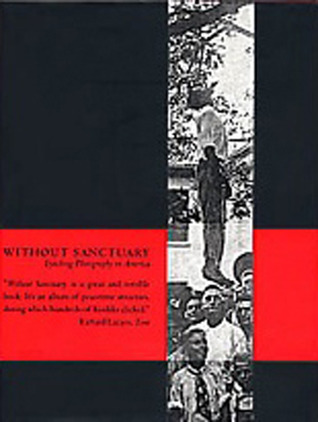
The Tuskegee Institute records the lynching of 3,436 blacks between 1882 and 1950. This is probably a small percentage of these murders, which were seldom reported, and led to the creation of the NAACP in 1909, an organization dedicated to passing federal anti-lynching laws. Through all this terror and carnage someone -- many times a professional photographer -- carried a camera and took pictures of the events. These lynching photographs were often made into postcards and sold as souvenirs to the crowds in attendance. These images are some of photography's most brutal, surviving to this day so that we may now look back on the terrorism unleashed on America's African-American community and perhaps know our history and ourselves better. The almost one hundred images reproduced here are a testament to the camera's ability to make us remember what we often choose to forget.

Challenging conventional history, Amity Shlaes offers a reinterpretation of the Great Depression. She shows how both Presidents Hoover and Roosevelt failed to understand the prosperity of the 1920s and heaped massive burdens on the country that more than offset the benefit of New Deal programs.

MacArthur, the public figure, the private man, the soldier-hero whose mystery and appeal created a uniquely American legend, portrayed in a biography that will challenge the cherished myths of admirers and critics alike.IllustrationsPreamble: ReveilleFirst Call Ruffles & Flourishes (1880-1917)Charge (1917-1918) Call to Quarters (1919-1935)To the Colors (1935-1941)Retreat (1941-1942) The Green War (1942-1944)At High Port (1944-1945)Last Post (1945-1950) Sunset Gun (1950-1951) Recall (1951) Taps (1951-1964)AcknowledgmentsNotesBibliographyCopyright AcknowledgmentsIndex

At the height of his fame Thomas Alva Edison was hailed as “the Napoleon of invention” and blazed in the public imagination as a virtual demigod. Newspapers proclaimed his genius in glowing personal profiles and quipped that “the doctor has been called” because the great man “has not invented anything since breakfast.” Starting with the first public demonstrations of the phonograph in 1878 and extending through the development of incandescent light, a power generation and distribution system to sustain it, and the first motion picture cameras—all achievements more astonishing in their time than we can easily grasp today—Edison’s name became emblematic of all the wonder and promise of the emerging age of technological marvels.But as Randall Stross makes clear in this critical biography of the man who is arguably the most globally famous of all Americans, Thomas Edison’s greatest invention may have been his own celebrity. Edison was certainly a technical genius, but Stross excavates the man from layers of myth-making and separates his true achievements from his almost equally colossal failures. How much credit should Edison receive for the various inventions that have popularly been attributed to him—and how many of them resulted from both the inspiration and the perspiration of his rivals and even his own assistants? How much of Edison’s technical skill helped him overcome a lack of business acumen and feel for consumers’ wants and needs?This bold reassessment of Edison’s life and career answers these and many other important questions while telling the story of how he came upon his most famous inventions as a young man and spent the remainder of his long life trying to conjure similar success. We also meet his partners and competitors, presidents and entertainers, his close friend Henry Ford, the wives who competed with his work for his attention, and the children who tried to thrive in his shadow—all providing a fuller view of Edison’s life and times than has ever been offered before. The Wizard of Menlo Park reveals not only how Edison worked, but how he managed his own fame, becoming the first great celebrity of the modern age.

From the bestselling author of The Ascent of Money and The Square and the TowerIs America an empire? Certainly not, according to our government. Despite the conquest of two sovereign states in as many years, despite the presence of more than 750 military installations in two thirds of the world’s countries and despite his stated intention "to extend the benefits of freedom...to every corner of the world," George W. Bush maintains that "America has never been an empire." "We don’t seek empires," insists Defense Secretary Rumsfeld. "We’re not imperialistic." Nonsense, says Niall Ferguson. In Colossus he argues that in both military and economic terms America is nothing less than the most powerful empire the world has ever seen. Just like the British Empire a century ago, the United States aspires to globalize free markets, the rule of law, and representative government. In theory it’s a good project, says Ferguson. Yet Americans shy away from the long-term commitments of manpower and money that are indispensable if rogue regimes and failed states really are to be changed for the better. Ours, he argues, is an empire with an attention deficit disorder, imposing ever more unrealistic timescales on its overseas interventions. Worse, it’s an empire in denial—a hyperpower that simply refuses to admit the scale of its global responsibilities. And the negative consequences will be felt at home as well as abroad. In an alarmingly persuasive final chapter Ferguson warns that this chronic myopia also applies to our domestic responsibilities. When overstretch comes, he warns, it will come from within—and it will reveal that more than just the feet of the American colossus is made of clay.

On a scorching June Sunday in 1876, thousands of Indian warriors - Lakota Sioux, Cheyenne and Arapaho - converged on a grassy ridge above the valley of Montana's Little Bighorn River. On the ridge five companies of United States cavalry - 262 soldiers, comprising officers and troopers - fought desperately but hopelessly. When the guns fell silent, no soldier - including their commanding officer, Lt Col. George Armstrong Custer - had survived. Custer's Last Stand is among the most enduring events in American history - 130 years after the fact, books continue to be written and people continue to argue about even the most basic details surrounding the Little Bighorn. Evan S. Connell, whom Joyce Carol Oates has described as 'one of our most interesting and intelligent American writers', wrote what continues to be the most reliable - and compulsively readable - account of the subject. Connell makes good use of his research and novelist's eye for story and detail to re-create the heroism, foolishness and savagery of this crucial chapter in the history of the West.

On October 3, 1993, about a hundred U.S. soldiers were dropped by helicopter into a teeming market in the heart of Mogadishu, Somalia, to abduct two top lieutenants of a Somali warlord. The action was supposed to take an hour. Instead, they spent a long and terrible night fighting thousands of armed Somalis. By morning, eighteen Americans were dead, and more than seventy badly injured. Mark Bowden's gripping narrative is one of the most exciting accounts of modern war ever written--a riveting story that captures the heroism, courage and brutality of battle.

A Simon & Schuster eBook. Simon & Schuster has a great book for every reader.

Of Galbraith's classic examination of the 1929 financial collapse, the Atlantic Monthly said:"Economic writings are seldom notable for their entertainment value, but this book is. Galbraith's prose has grace and wit, and he distills a good deal of sardonic fun from the whopping errors of the nation's oracles and the wondrous antics of the financial community." Now, with the stock market riding historic highs, the celebrated economist returns with new insights on the legacy of our past and the consequences of blind optimism and power plays within the financial community.

From Pulitzer Prize-winning author Taylor Branch, the second part of his epic trilogy on the American Civil Rights Movement.In the second volume of his three-part history, a monumental trilogy that began with Parting the Waters, winner of the Pulitzer Prize and the National Book Critics Circle Award, Taylor Branch portrays the Civil Rights Movement at its zenith, recounting the climactic struggles as they commanded the national stage.

Gore Vidal's Narratives of Empire series spans the history of the United States from the Revolution to the post-World War II years. With their broad canvas and large cast of fictional and historical characters, the novels in this series present a panorama of the American political and imperial experience as interpreted by one of its most worldly, knowing, and ironic observers. Burr is a portrait of perhaps the most complex and misunderstood of the Founding Fathers. In 1804, while serving as vice president, Aaron Burr fought a duel with his political nemesis, Alexander Hamilton, and killed him. In 1807, he was arrested, tried, and acquitted of treason. In 1833, Burr is newly married, an aging statesman considered a monster by many. Burr retains much of his political influence if not the respect of all. And he is determined to tell his own story. As his amanuensis, he chooses Charles Schermerhorn Schuyler, a young New York City journalist, and together they explore both Burr's past and the continuing political intrigues of the still young United States.

The winner of the National Book Award and now considered a classic, The House of Morgan is the most ambitious history ever written about an American banking dynasty. Acclaimed by The Wall Street Journal as "brilliantly researched and written," the book tells the rich, panoramic story of four generations of Morgans and the powerful, secretive firms they spawned. It is the definitive account of the rise of the modern financial world. A gripping history of banking and the booms and busts that shaped the world on both sides of the Atlantic, The House of Morgan traces the trajectory of the J. P. Morgan empire from its obscure beginnings in Victorian London to the crash of 1987. Ron Chernow paints a fascinating portrait of the private saga of the Morgans and the rarefied world of the American and British elite in which they moved. Based on extensive interviews and access to the family and business archives, The House of Morgan is an investigative masterpiece, a compelling account of a remarkable institution and the men who ran it, and an essential book for understanding the money and power behind the major historical events of the last 150 years.

Explores the epic human drama behind the making of the five movies nominated for Best Picture in 1967-Guess Who's Coming to Dinner, The Graduate, In the Heat of the Night, Doctor Doolittle, and Bonnie and Clyde-and through them, the larger story of the cultural revolution that transformed Hollywood, and America, forever.
"This is the simple soldier who, all untaught by the silken phrase-makers, linked words together with an art surpassing the art of the schools and put into them something which will bring to American ears, as long as America shall last, the roll of his vanished drums and the tread of his marching hosts."-Mark Twain. "This record of Grant's campaigns may well rank . . . as the most remarkable work of its kind since the Commentaries of Julius Caesar. . . . A unique expression of the national character."-Edmund Wilson, Patriotic Gore. At the age of thirty-nine, Ulysses Simpson Grant volunteered to command a regiment after the attack on Fort Sumter. His campaign in early 1862 against Forts Henry and Donelson resulted in the first major Union victory of the Civil War. Shiloh, Vicksburg, Chattanooga-the great battles in the West that followed-are stunningly described in Personal Memoirs. After Grant's rise to commanding general of the Army of the Potomac in March 1864, the narrative reveals the pressure on him to produce victories and the gradual success of his overall strategy, leading to General Lee's surrender of Confederate forces at Appomattox. Although Grant went on to become president of the United States, Personal Memoirs ends with his Civil War service. The memoirs were written in 1884-85 when Grant was deeply in debt and dying of throat cancer. Fighting pain with cocaine, composing in long hand because he could no longer dictate, the general completed his great work less than a week before his death. A huge commercial as well as critical success, Personal Memoirs redeemed his name and provided for his survivors. Brooks D. Simpson is a professor of American history at Arizona StateUniversity and the author of Let Us Have Peace: Ulysses S. Grant and the Politics of War and Reconstruction, 1861-1868.

The celebrated Ron Chernow provides a richly nuanced portrait of the father of America. With a breadth and depth matched by no other one-volume life, he carries the reader through Washington's troubled boyhood, his precocious feats in the French and Indian Wars, his creation of Mount Vernon, his heroic exploits with the Continental Army, his presiding over the Constitutional Convention and his magnificent performance as America's first president.Despite the reverence his name inspires Washington remains a waxwork to many readers, worthy but dull, a laconic man of remarkable self-control. But in this groundbreaking work Chernow revises forever the uninspiring stereotype. He portrays Washington as a strapping, celebrated horseman, elegant dancer and tireless hunter, who guarded his emotional life with intriguing ferocity. Not only did Washington gather around himself the foremost figures of the age, including James Madison, Alexander Hamilton, John Adams, and Thomas Jefferson, he orchestrated their actions to help realise his vision for the new federal government, define the separation of powers, and establish the office of the presidency.Ron Chernow takes us on a page-turning journey through all the formative events of America's founding. This is a magisterial work from one of America's foremost writers and historians.

NEW YORK TIMES BESTSELLER • SELECTED BY THE ECONOMIST AS ONE OF THE BEST BOOKS OF THE YEARRemarkable as it may seem today, there once was a time when the president of the United States could pick up the phone and ask the president of General Motors to resign his position and take the reins of a great national enterprise. And the CEO would oblige, no questions asked, because it was his patriotic duty. In Freedom’s Forge, bestselling author Arthur Herman takes us back to that time, revealing how two extraordinary American businessmen—automobile magnate William Knudsen and shipbuilder Henry J. Kaiser—helped corral, cajole, and inspire business leaders across the country to mobilize the “arsenal of democracy” that propelled the Allies to victory in World War II. “Knudsen? I want to see you in Washington. I want you to work on some production matters.” With those words, President Franklin D. Roosevelt enlisted “Big Bill” Knudsen, a Danish immigrant who had risen through the ranks of the auto industry to become president of General Motors, to drop his plans for market domination and join the U.S. Army. Commissioned a lieutenant general, Knudsen assembled a crack team of industrial innovators, persuading them one by one to leave their lucrative private sector positions and join him in Washington, D.C. Dubbed the “dollar-a-year men,” these dedicated patriots quickly took charge of America’s moribund war production effort. Henry J. Kaiser was a maverick California industrialist famed for his innovative business techniques and his can-do management style. He, too, joined the cause. His Liberty ships became World War II icons—and the Kaiser name became so admired that FDR briefly considered making him his vice president in 1944. Together, Knudsen and Kaiser created a wartime production behemoth. Drafting top talent from companies like Chrysler, Republic Steel, Boeing, Lockheed, GE, and Frigidaire, they turned auto plants into aircraft factories and civilian assembly lines into fountains of munitions, giving Americans fighting in Europe and Asia the tools they needed to defeat the Axis. In four short years they transformed America’s army from a hollow shell into a truly global force, laying the foundations for a new industrial America—and for the country’s rise as an economic as well as military superpower. Featuring behind-the-scenes portraits of FDR, George Marshall, Henry Stimson, Harry Hopkins, Jimmy Doolittle, and Curtis LeMay, as well as scores of largely forgotten heroes and heroines of the wartime industrial effort, Freedom’s Forge is the American story writ large. It vividly re-creates American industry’s finest hour, when the nation’s business elites put aside their pursuit of profits and set about saving the world.Praise for Freedom’s Forge “A rambunctious book that is itself alive with the animal spirits of the marketplace.”— The Wall Street Journal “A rarely told industrial saga, rich with particulars of the growing pains and eventual triumphs of American industry . . . Arthur Herman has set out to right an injustice: the loss, down history’s memory hole, of the epic achievements of American business in helping the United States and its allies win World War II.”— The New York Times Book Review “Magnificent . . . It’s not often that a historian comes up with a fresh approach to an absolutely critical element of the Allied victory in World War II, but Pulitzer finalist Herman . . . has done just that.”— Kirkus Reviews (starred review)

When Pulitzer Prize–winning journalist Bill Dedman noticed in 2009 a grand home for sale, unoccupied for nearly sixty years, he stumbled through a surprising portal into American history. Empty Mansions is a rich mystery of wealth and loss, connecting the Gilded Age opulence of the nineteenth century with a twenty-first-century battle over a $300 million inheritance. At its heart is a reclusive heiress named Huguette Clark, a woman so secretive that, at the time of her death at age 104, no new photograph of her had been seen in decades. Though she owned palatial homes in California, New York, and Connecticut, why had she lived for twenty years in a simple hospital room, despite being in excellent health? Why were her valuables being sold off? Was she in control of her fortune, or controlled by those managing her money? Dedman has collaborated with Huguette Clark’s cousin, Paul Clark Newell, Jr., one of the few relatives to have frequent conversations with her. Dedman and Newell tell a fairy tale in reverse: the bright, talented daughter, born into a family of extreme wealth and privilege, who secrets herself away from the outside world. Huguette was the daughter of self-made copper industrialist W. A. Clark, nearly as rich as Rockefeller in his day, a controversial senator, railroad builder, and founder of Las Vegas. She grew up in the largest house in New York City, a remarkable dwelling with 121 rooms for a family of four. She owned paintings by Degas and Renoir, a world-renowned Stradivarius violin, a vast collection of antique dolls. But wanting more than treasures, she devoted her wealth to buying gifts for friends and strangers alike, to quietly pursuing her own work as an artist, and to guarding the privacy she valued above all else. The Clark family story spans nearly all of American history in three generations, from a log cabin in Pennsylvania to mining camps in the Montana gold rush, from backdoor politics in Washington to a distress call from an elegant Fifth Avenue apartment. The same Huguette who was touched by the terror attacks of 9/11 held a ticket nine decades earlier for a first-class stateroom on the second voyage of the Titanic. Empty Mansions reveals a complex portrait of the mysterious Huguette and her intimate circle. We meet her extravagant father, her publicity-shy mother, her star-crossed sister, her French boyfriend, her nurse who received more than $30 million in gifts, and the relatives fighting to inherit Huguette’s copper fortune. Richly illustrated with more than seventy photographs, Empty Mansions is an enthralling story of an eccentric of the highest order, a last jewel of the Gilded Age who lived life on her own terms.The No. 1 New York Times bestseller. Best nonfiction books of the year at Goodreads, Amazon.com, and Barnes & Noble. One of the New York Times critic Janet Maslin's 10 favorite books of 2013.

Jimmy Carter, thirty-ninth President, Nobel Peace Prize winner, international humanitarian, fisherman, reflects on his full and happy life with pride, humor, and a few second thoughts.At ninety, Jimmy Carter reflects on his public and private life with a frankness that is disarming. He adds detail and emotion about his youth in rural Georgia that he described in his magnificent An Hour Before Daylight. He writes about racism and the isolation of the Carters. He describes the brutality of the hazing regimen at Annapolis, and how he nearly lost his life twice serving on submarines and his amazing interview with Admiral Rickover. He describes the profound influence his mother had on him, and how he admired his father even though he didn't emulate him. He admits that he decided to quit the Navy and later enter politics without consulting his wife, Rosalynn, and how appalled he is in retrospect.In A Full Life, Carter tells what he is proud of and what he might do differently. He discusses his regret at losing his re-election, but how he and Rosalynn pushed on and made a new life and second and third rewarding careers. He is frank about the presidents who have succeeded him, world leaders, and his passions for the causes he cares most about, particularly the condition of women and the deprived people of the developing world.This is a wise and moving look back from this remarkable man. Jimmy Carter has lived one of our great American lives -- from rural obscurity to world fame, universal respect, and contentment. A Full Life is an extraordinary read.

Ulysses S. Grant's life has typically been misunderstood. All too often he is caricatured as a chronic loser and inept businessman, fond of drinking to excess; or as the triumphant but brutal Union general of the Civil War; or as a credulous and hapless president whose tenure came to symbolize the worst excesses of the Gilded Age. These stereotypes don't come close to capturing adequately his spirit and the sheer magnitude of his monumental accomplishments. A biographer at the height of his powers, Chernow has produced a portrait of Grant that is a masterpiece, the first to provide a complete understanding of the general and president whose fortunes rose and fell with dizzying speed and frequency. Before the Civil War, Grant was flailing. His business ventures had been dismal, and despite distinguished service in the Mexican War, he ended up resigning from the army in disgrace amid recurring accusations of drunkenness. But in the Civil War, Grant began to realize his remarkable potential, soaring through the ranks of the Union army, prevailing at the Battle of Shiloh and in the Vicksburg campaign and ultimately defeating the legendary Confederate general Robert E. Lee after a series of unbelievably bloody battles in Virginia. Along the way Grant endeared himself to President Lincoln and became his most trusted general and the strategic genius of the war effort. His military fame translated into a two-term presidency, but one plagued by corruption scandals involving his closest staff. All the while Grant himself remained more or less above reproach. But, more importantly, he never failed to seek freedom and justice for black Americans, working to crush the Ku Klux Klan and earning the admiration of Frederick Douglass, who called him 'the vigilant, firm, impartial, and wise protector of my race." After his presidency, he was again brought low by a trusted colleague, this time a dashing young swindler on Wall Street, but he resuscitated his image by working with Mark Twain to publish his memoirs, which are recognized as a masterpiece of the genre. With his famous lucidity, breadth, and meticulousness, Chernow finds the threads that bind these disparate stories together, shedding new light on the man whom Walt Whitman described as "nothing heroic... and yet the greatest hero." His probing portrait of Grant's lifelong struggle with alcoholism transforms our understanding of the man at the deepest level. This is America's greatest biographer, bringing movingly to life one of America's finest but most underappreciated presidents. The definitive biography, Grant is a grand synthesis of painstaking research and literary brilliance that makes sense of all sides of Grant's life, explaining how this simple Midwesterner could at once be so ordinary and so extraordinary.

An absorbing and original narrative history of American capitalismNAMED A BEST BOOK OF 2017 BY THE ECONOMISTFrom the days of the Mayflower and the Virginia Company, America has been a place for people to dream, invent, build, tinker, and bet the farm in pursuit of a better life. Americana takes us on a four-hundred-year journey of this spirit of innovation and ambition through a series of Next Big Things -- the inventions, techniques, and industries that drove American history from the telegraph, the railroad, guns, radio, and banking to flight, suburbia, and sneakers, culminating with the Internet and mobile technology at the turn of the twenty-first century. The result is a thrilling alternative history of modern America that reframes events, trends, and people we thought we knew through the prism of the value that, for better or for worse, this nation holds capitalism. In a winning, accessible style, Bhu Srinivasan boldly takes on four centuries of American enterprise, revealing the unexpected connections that link them. We learn how Andrew Carnegie's early job as a telegraph messenger boy paved the way for his leadership of the steel empire that would make him one of the nation's richest men; how the gunmaker Remington reinvented itself in the postwar years to sell typewriters; how the inner workings of the Mafia mirrored the trend of consolidation and regulation in more traditional business; and how a 1950s infrastructure bill triggered a series of events that produced one of America's most enduring KFC. Reliving the heady early days of Silicon Valley, we are reminded that the start-up is an idea as old as America itself.Entertaining, eye-opening, and sweeping in its reach, Americana is an exhilarating new work of narrative history.

NAMED ONE OF THE “100 NOTABLE BOOKS OF THE YEAR” BY THE NEW YORK TIMES BOOK REVIEW“An extraordinary book, I can’t recommend it highly enough.” –Whoopi Goldberg, The ViewBy the widely celebrated New York Times bestselling author of Last Call —the powerful, definitive, and timely account of how the rise of eugenics helped America close the immigration door to “inferiors” in the 1920s.A forgotten, dark chapter of American history with implications for the current day, The Guarded Gate tells the story of the scientists who argued that certain nationalities were inherently inferior, providing the intellectual justification for the harshest immigration law in American history. Brandished by the upper class Bostonians and New Yorkers—many of them progressives—who led the anti-immigration movement, the eugenic arguments helped keep hundreds of thousands of Jews, Italians, and other unwanted groups out of the US for more than 40 years.Over five years in the writing, The Guarded Gate tells the complete story from its beginning in 1895, when Henry Cabot Lodge and other Boston Brahmins launched their anti-immigrant campaign. In 1921, Vice President Calvin Coolidge declared that “biological laws” had proven the inferiority of southern and eastern Europeans; the restrictive law was enacted three years later. In his characteristic style, both lively and authoritative, Okrent brings to life the rich cast of characters from this time, including Lodge’s closest friend, Theodore Roosevelt; Charles Darwin’s first cousin, Francis Galton, the idiosyncratic polymath who gave life to eugenics; the fabulously wealthy and profoundly bigoted Madison Grant, founder of the Bronx Zoo, and his best friend, H. Fairfield Osborn, director of the American Museum of Natural History; Margaret Sanger, who saw eugenics as a sensible adjunct to her birth control campaign; and Maxwell Perkins, the celebrated editor of Hemingway and Fitzgerald. A work of history relevant for today, The Guarded Gate is an important, insightful tale that painstakingly connects the American eugenicists to the rise of Nazism, and shows how their beliefs found fertile soil in the minds of citizens and leaders both here and abroad.

A journalist's twenty-year obsession with the Manson murders brings shocking revelations about the most infamous crimes in American history: carelessness from police, misconduct by prosecutors, and even potential surveillance by intelligence agents. What really happened in 1969? In 1999, when Tom O'Neill was assigned a magazine piece about the thirtieth anniversary of the Manson murders, he worried there was nothing new to say. Weren't the facts indisputable? Charles Manson had ordered his teenage followers to commit seven brutal murders, and in his thrall, they'd gladly complied. But when O'Neill began reporting the story, he kept finding holes in the prosecutor Vincent Bugliosi's narrative, long enshrined in the best-selling Helter Skelter. Before long, O'Neill had questions about everything from the motive to the manhunt. Though he'd never considered himself a conspiracy theorist, the Manson murders swallowed the next two decades of his career. He was obsessed. Searching but never speculative, CHAOS follows O'Neill's twenty-year effort to rebut the "official" story behind Manson. Who were his real friends in Hollywood, and how far would they go to hide their ties? Why didn't law enforcement act on their many chances to stop him? And how did he turn a group of peaceful hippies into remorseless killers? O'Neill's hunt for answers leads him from reclusive celebrities to seasoned spies, from the Summer of Love to the shadowy sites of the CIA's mind-control experiments, on a trail rife with cover-ups and coincidences. Featuring hundreds of new interviews and dozens of never-before-seen documents from the LAPD, the FBI, and the CIA, CHAOS mounts an argument that could be, according to Los Angeles Deputy District Attorney Stephen Kay, strong enough to overturn the verdicts on the Manson murders. In those two dark nights in Los Angeles, O'Neill finds the story of California in the sixties: when charlatans mixed with prodigies, free love was as possible as brainwashing, and utopia-or dystopia-was just an acid trip away.

A recent poll showed 43% of Americans think more socialism would be a good thing. What do these people not know? Socialism has killed millions, but it’s now the ideology du jour on American college campuses and among many leftists. Reintroduced by leaders such as Bernie Sanders and Alexandria Ocasio-Cortez, the ideology manifests itself in starry-eyed calls for free-spending policies like Medicare-for-all and student loan forgiveness.In The Case Against Socialism, Rand Paul outlines the history of socialism, from Stalin’s gulags to the current famine in Venezuela. He tackles common misconceptions about the “utopia” of socialist Europe. As it turns out, Scandinavian countries love capitalism as much as Americans, and have, for decades, been cutting back on the things Bernie loves the most.Socialism’s return is only possible because many Americans have forgotten the true dangers of the twentieth-century’s deadliest ideology. Paul reveals the devastating truth: for every college student sporting a Che Guevara T-shirt, there’s a Venezuelan child dying of starvation. Desperate refugees flee communist Cuba to escape oppressive censorship, rationed food and squalid hospitals, not “free” healthcare. Socialist dictatorships like the People’s Republic of China crush freedom of speech and run massive surveillance states while masquerading as enlightened modern nations. Far from providing economic freedom, socialist governments enslave their citizens. They offer illusory promises of safety and equality while restricting personal liberty, tightening state power, sapping human enterprise and making citizens dependent on the dole.If socialism takes hold in America, it will imperil the fate of the world’s freest nation, unleashing a plague of oppressive government control. The Case Against Socialism is a timely response to that threat and a call to action against the forces menacing American liberty.

Christopher Knowlton, author of Cattle Kingdom and former Fortune writer, takes an in-depth look at the spectacular Florida land boom of the 1920s and shows how it led directly to the Great Depression.The 1920s in Florida was a time of incredible excess, immense wealth, and precipitous collapse. The decade there produced the largest human migration in American history, far exceeding the settlement of the West, as millions flocked to the grand hotels and the new cities that rose rapidly from the teeming wetlands. The boom spawned a new subdivision civilization—and the most egregious large-scale assault on the environment in the name of “progress.” Nowhere was the glitz and froth of the Roaring Twenties more excessive than in Florida. Here was Vegas before there was a Vegas: gambling was condoned and so was drinking, since prohibition was not enforced. Tycoons, crooks, and celebrities arrived en masse to promote or exploit this new and dazzling American frontier in the sunshine. Yet, the import and deep impact of these historical events have never been explored thoroughly until now. In Bubble in the Sun Christopher Knowlton examines the grand artistic and entrepreneurial visions behind Coral Gables, Boca Raton, Miami Beach, and other storied sites, as well as the darker side of the frenzy. For while giant fortunes were being made and lost and the nightlife raged more raucously than anywhere else, the pure beauty of the Everglades suffered wanton ruination and the workers, mostly black, who built and maintained the boom, endured grievous abuses. Knowlton breathes dynamic life into the forces that made and wrecked Florida during the decade: the real estate moguls Carl Fisher, George Merrick, and Addison Mizner, and the once-in-a-century hurricane whose aftermath triggered the stock market crash. This essential account is a revelatory—and riveting—history of an era that still affects our country today.

Popular consensus says that the US rose over two centuries to Cold War victory and world domination, and is now in slow decline. But is this right? History’s great civilisations have always lasted much longer, and for all its colossal power, the US was overshadowed by Europe until recently. What if this isn’t the end?Bruno Maçães offers a compelling vision of America’s future, both fascinating and unnerving. From the early American Republic, Maçães takes us to the turbulent present, when, he argues, America is finally forging its own path. We can see the birth pangs of this new civilisation in today’s debates on guns, religion, foreign policy and the significance of Trump. What will its values be, and what will this new America look like?

In a masterly work, Garry Wills shows how Lincoln reached back to the Declaration of Independence to write the greatest speech in the nation’s history.The power of words has rarely been given a more compelling demonstration than in the Gettysburg Address. Lincoln was asked to memorialize the gruesome battle. Instead he gave the whole nation “a new birth of freedom” in the space of a mere 272 words. His entire life and previous training and his deep political experience went into this, his revolutionary masterpiece.By examining both the address and Lincoln in their historical moment and cultural frame, Wills breathes new life into words we thought we knew, and reveals much about a president so mythologized but often misunderstood. Wills shows how Lincoln came to change the world and to effect an intellectual revolution, how his words had to and did complete the work of the guns, and how Lincoln wove a spell that has not yet been broken.

For the first time, the full story of what happened when Frank brought his best pals to party in a land called VegasJanuary 1960. Las Vegas is at its smooth, cool peak. The Strip is a jet-age theme park, and the greatest singer in the history of American popular music summons a group of friends there to make a movie. One is an insouciant singer of Italian songs, ex-partner to the most popular film comedian of the day. One is a short, black, Jewish, one-eyed, singing, dancing wonder. One is an upper-crust British pretty boy turned degenerate B-movie star actor, brother-in-law to an ascendant politician. And one is a stiff-shouldered comic with the quintessential Borscht Belt emcee’s knack for needling one-liners. The architectonically sleek marquee of the Sands Hotel announces their presence simply by listing their FRANK SINATRA. DEAN MARTIN. SAMMY DAVIS, JR. PETER LAWFORD. JOEY BISHOP. Around them an entire cast actors, comics, singers, songwriters, gangsters, politicians, and women, as well as thousands of starstruck everyday folks who fork over pocketfuls of money for the privilege of basking in their presence. They call themselves The Clan. But to an awed world, they are known as The Rat Pack.They had it all. Fame. Gorgeous women. A fabulouse playground of a city and all the money in the world. The backing of fearsome crime lords and the blessing of the President of the United States. But the dark side–over the thin line between pleasure and debauchery, between swinging self-confidence and brutal arrogance–took its toll. In four years, their great ride was over, and showbiz was never the same.Acclaimed Jerry Lewis biographer Shawn Levy has written a dazzling portrait of a time when neon brightness cast sordid shadows. It was Frank’s World, and we just lived in it.

This national best-seller is an entertaining, informative, and sometimes shocking expose of the way history is taught to American students. Lies My Teacher Told Me won the American Book Award and the Oliver Cromwell Cox Award for Distinguished Anti-Racist Scholarship.James W. Loewen, a sociology professor and distinguished critic of history education, puts 12 popular textbooks under the microscope-and what he discovers will surprise you. In his opinion, every one of these texts fails to make its subject interesting or memorable. Worse still is the proliferation of blind patriotism, mindless optimism and misinformation filling the pages.From the truth about Christopher Columbus to the harsh reality of the Vietnam War, Loewen picks apart the lies we've been told. This audiobook, narrated by Brian Keeler (The Hurricane, "All My Children") will forever change your view of the past.

Here in their own words are Frederick Douglass, George Jackson, Chief Joseph, Martin Luther King Jr., Plough Jogger, Sacco and Vanzetti, Patti Smith, Bruce Springsteen, Mark Twain, and Malcolm X, to name just a few of the hundreds of voices that appear in Voices of a People's History of the United States, edited by Howard Zinn and Anthony Arnove.Paralleling the twenty-four chapters of Zinn's A People's History of the United States, Voices of a People’s History is the long-awaited companion volume to the national bestseller. For Voices, Zinn and Arnove have selected testimonies to living history—speeches, letters, poems, songs—left by the people who make history happen but who usually are left out of history books—women, workers, nonwhites. Zinn has written short introductions to the texts, which range in length from letters or poems of less than a page to entire speeches and essays that run several pages. Voices of a People’s History is a symphony of our nation’s original voices, rich in ideas and actions, the embodiment of the power of civil disobedience and dissent wherein lies our nation’s true spirit of defiance and resilience.

In The Eternal Frontier, world-renowned scientist and historian Tim Flannery tells the unforgettable story of the geological and biological evolution of the North American continent, from the time of the asteroid strike that ended the age of dinosaurs 65 million years ago, to the present day. Flannery describes the development of North America's deciduous forests and other flora, and tracks the immigration and emigration of various animals to and from Europe, Asia, and South America, showing how plant and animal species have either adapted or become extinct. The story takes in the massive changes wrought by the ice ages and the coming of the Indians, and continues right up to the present, covering the deforestation of the Northeast, the decimation of the buffalo, and other facets of the enormous impact of frontier settlement and the development of the industrial might of the United States. Natural history on a monumental scale, The Eternal Frontier contains an enormous wealth of fascinating scientific details, and Flannery's accessible and dynamic writing makes the book a delight to read. This is science writing at its very best -- a riveting page-turner that is simultaneously an accessible and scholarly trove of incredible information that is already being hailed by critics as a classic. "Tim Flannery's account ... will fascinate Americans and non-Americans alike." -- Jared Diamond, author of Guns, Germs, and Steel "No one before Flannery ... has been brave enough to tackle the whole pageant of North America." -- David Quammen, the New York Times Book Review "Tim Flannery's book will forever change your perspective on the North American continent ... Exhilarating." -- John Terborgh, The New York Review of Books "Full of engaging and attention-catching information about North America's geology, climate, and paleontology." -- Patricia Nelson Limerick, the Washington Post Book World "Natural history par excellence." -- Kirkus Reviews (starred review) "This gutsy Aussie may have read our landscape and ecological history with greater clarity than any native son." -- David A. Burney, Natural History "A fascinating, current, and insightful look at our familiar history from a larger perspective." -- David Bezanson, Austin-American Statesman "The scope of [Flannery's] story is huge, and his research exhaustive." -- Lauren Gravitz, The Christian Science Monitor

From the most eloquent of American presidents, nearly 400 astute observations on subjects ranging from women to warfare: "Bad promises are better broken than kept"; "Marriage is neither heaven nor hell; it is simply purgatory"; "Whenever I hear anyone arguing for slavery, I feel a strong impulse to see it tried on him personally."

The fabled 1964 cross-country bus trip of Ken Kesey and the Merry Pranksters - on a psychedelically painted school bus crammed with amplifiers, cameras, costumes, and assorted contraband as cargo and Beat legend Neal Cassady at the wheelmarked the irreversible end of the "Eisenhower Era, " and set an American cultural revolution in motion. On the Bus is a celebration of the unforgettable exploits of the Merry Pranksters, immortalized in Tom Wolfe's bestselling book. In this engrossing popular history, the spirit of the era is captured in a remarkable living chronicle, combining analysis and history with colorful additional narrative by Kesey sidekick Ken Babbs. It features over 100 never-before-seen photos by Prankster photographer Ron Bevirt, Allen Ginsberg, and others, alongside candid and insightful interviews with participants and leading countercultural figures.

From the early years of fur trading to today's Silicon Valley empires, America has proved to be an extraordinarily fertile land for the creation of enormous fortunes. Each generation has produced one or two phenomenally successful leaders, often in new industries that caught contemporaries by surprise, and each of these new fortunes reconfirmed the power of fanatically single-minded visionaries. John Jacob Astor and Cornelius Vanderbilt were the first American moguls; John D. Rockefeller, Andrew Carnegie, and J. P. Morgan were kingpins of the Gilded Age; David Sarnoff, Walt Disney, Ray Kroc, and Sam Walton were masters of mass culture. Today Oprah Winfrey, Andy Grove, and Bill Gates are giants of the Information Age. America has again and again been the land of dizzying mountains of wealth. Here, in a wittily told and deeply insightful history, is a complete set of portraits of America's greatest generators of wealth. Only such a collective study allows us to appreciate what makes the great entrepreneurs really tick. As H. W. Brands shows, these men and women are driven, they are focused, they deeply identify with the businesses they create, and they possess the charisma necessary to persuade other talented people to join them. They do it partly for the money, but mostly for the thrill of creation.The stories told here -- including how Nike got its start as a business-school project for Phil Knight; how Robert Woodruff almost refused to take control of Coca-Cola to spite his father; how Thomas Watson saved himself from prison by rescuing Dayton, Ohio, from a flood; how Jay Gould nearly cornered the gold market; how H. L. Hunt went from gambling at cards to gambling with oilleases -- make for a narrative that is always lively and revealing and often astonishing. An observer in 1850, studying John Jacob Astor, would not have predicted the rise of Henry Ford and the auto industry. Nor would a student of Ford in 1950 have anticipated the takeoff of direct marketing that made Mary Kay Ash a trusted guide for millions of American women. Full of surprising insights, written with H. W. Brands's trademark flair, the stories in "Masters of Enterprise" are must reading for all students of American business history.

This definitive box set includes all the landmark speeches of the great orator and American leader Martin Luther King, Jr., from his inspirational "I Have a Dream" to his firey "Give Us the Ballot." Comprised of recordings previously included in A Call to Conscience and A Knock at Midnight, THE ESSENTIAL BOX SET is a must-have for any home, library, or school collection.

Cholera was the classic epidemic disease of the nineteenth century, as the plague had been for the fourteenth. Its defeat was a reflection not only of progress in medical knowledge but of enduring changes in American social thought. Rosenberg has focused his study on New York City, the most highly developed center of this new society. Carefully documented, full of descriptive detail, yet written with an urgent sense of the drama of the epidemic years, this narrative is as absorbing for general audiences as it is for the medical historian. In a new Afterword, Rosenberg discusses changes in historical method and concerns since the original publication of The Cholera Years ."A major work of interpretation of medical and social thought . . . this volume is also to be commended for its skillful, absorbing presentation of the background and the effects of this dread disease."—I.B. Cohen, New York Times" The Cholera Years is a masterful analysis of the moral and social interest attached to epidemic disease, providing generally applicable insights into how the connections between social change, changes in knowledge and changes in technical practice may be conceived."—Steven Shapin, Times Literary Supplement"In a way that is all too rarely done, Rosenberg has skillfully interwoven medical, social, and intellectual history to show how medicine and society interacted and changed during the 19th century. The history of medicine here takes its rightful place in the tapestry of human history."—John B. Blake, Science

Corporate candy giants Milton Hershey and Forrest Mars built business empires out of one of the world's most magical, sought-after substances: chocolate. In The Emperors of Chocolate , Joël Glenn Brenner--the first person to ever gain access to the highly secretive companies of Hershey and Mars--spins a unique story that takes us inside a world as mysterious as Willy Wonka's Chocolate Factory. Packed with flavorful stories and outrageous characters that give the true scoop on this real-life candyland, The Emperors of Chocolate is a delectable read for business buffs and chocoholics alike. Start reading and you'll soon be hungry for more.

The news-breaking book that has sent shockwaves through the Bush White House, Ghost Wars is the most accurate and revealing account yet of the CIA's secret involvement in al-Qaeda's evolution. It won the Pulitzer Prize in 2005.Prize-winning journalist Steve Coll has spent years reporting from the Middle East, accessed previously classified government files and interviewed senior US officials and foreign spymasters. Here he gives the full inside story of the CIA's covert funding of an Islamic jihad against Soviet forces in Afghanistan, explores how this sowed the seeds of Bin Laden's rise, traces how he built his global network and brings to life the dramatic battles within the US government over national security. Above all, he lays bare American intelligence's continual failure to grasp the rising threat of terrorism in the years leading to 9/11 - and its devastating consequences.

Written by one of our foremost historians and published in 1965, A Thousand Days is still considered the most complete and definitive portrait of John F. Kennedy and his administration. Handpicked by Kennedy to serve as special assistant to the president, historian and Harvard professor Arthur M. Schlesinger, Jr. witnessed firsthand the politics and personalities that influenced some of the most important and dramatic events in modern history.The hundreds of photographs and documents included here have been gleaned from such sources as the John F. Kennedy Library, the Library of Congress, the Associated Press, Life magazine, and more. The photos capture private meetings with the president, the Bay of Pigs, the Civil Rights movement, and the Cuban Missile Crisis, as well as official White House memoranda, public speeches, social occasions, and private moments with the Kennedy family. These powerful images add a new dimension to the award-winning text and introduce a new generation to some of the most important and visually iconic moments in our recent past.

“Fascists,” “Brownshirts,” “jackbooted stormtroopers”—such are the insults typically hurled at conservatives by their liberal opponents. Calling someone a fascist is the fastest way to shut them up, defining their views as beyond the political pale. But who are the real fascists in our midst?Liberal Fascism offers a startling new perspective on the theories and practices that define fascist politics. Replacing conveniently manufactured myths with surprising and enlightening research, Jonah Goldberg reminds us that the original fascists were really on the left, and that liberals from Woodrow Wilson to FDR to Hillary Clinton have advocated policies and principles remarkably similar to those of Hitler's National Socialism and Mussolini's Fascism.Contrary to what most people think, the Nazis were ardent socialists (hence the term “National socialism”). They believed in free health care and guaranteed jobs. They confiscated inherited wealth and spent vast sums on public education. They purged the church from public policy, promoted a new form of pagan spirituality, and inserted the authority of the state into every nook and cranny of daily life. The Nazis declared war on smoking, supported abortion, euthanasia, and gun control. They loathed the free market, provided generous pensions for the elderly, and maintained a strict racial quota system in their universities—where campus speech codes were all the rage. The Nazis led the world in organic farming and alternative medicine. Hitler was a strict vegetarian, and Himmler was an animal rights activist.Do these striking parallels mean that today’s liberals are genocidal maniacs, intent on conquering the world and imposing a new racial order? Not at all. Yet it is hard to deny that modern progressivism and classical fascism shared the same intellectual roots. We often forget, for example, that Mussolini and Hitler had many admirers in the United States. W.E.B. Du Bois was inspired by Hitler's Germany, and Irving Berlin praised Mussolini in song. Many fascist tenets were espoused by American progressives like John Dewey and Woodrow Wilson, and FDR incorporated fascist policies in the New Deal.Fascism was an international movement that appeared in different forms in different countries, depending on the vagaries of national culture and temperament. In Germany, fascism appeared as genocidal racist nationalism. In America, it took a “friendlier,” more liberal form. The modern heirs of this “friendly fascist” tradition include the New York Times, the Democratic Party, the Ivy League professoriate, and the liberals of Hollywood. The quintessential Liberal Fascist isn't an SS storm trooper; it is a female grade school teacher with an education degree from Brown or Swarthmore.These assertions may sound strange to modern ears, but that is because we have forgotten what fascism is. In this angry, funny, smart, contentious book, Jonah Goldberg turns our preconceptions inside out and shows us the true meaning of Liberal Fascism.

Doris Kearns Goodwin's classic life of Lyndon Johnson, who presided over the Great Society, the Vietnam War & other defining moments the tumultuous '60s, is a monument in political biography. From the moment the author, then a young woman from Harvard, 1st encountered President Johnson at a White House dance in the spring of 67, she became fascinated by the man: his character, his enormous energy & drive, & his manner of wielding these gifts in an endless pursuit of power. As a member of his White House staff, she soon became his personal confidante. In the years before his death he revealed himself to her as to no other. Widely praised & enormously popular, Lyndon Johnson & the American Dream is a biography like few others. With insight & a richly engrossing style, the author renders LBJ in all his vibrant, conflicted humanity.PrefacePrologueGrowing up Education & the dream of success The making of a politician Rise to power in the senateThe senate leader The vice-presidencyThe transition yearThe great society Vietnam Things go wrongUnder siege in the White House The withdrawalEpilogueAcknowledgmentsAuthor's PostscriptNotesIndex

Master of the Senate, Book Three of The Years of Lyndon Johnson, carries Johnson’s story through one of its most remarkable periods: his twelve years, from 1949 to 1960, in the United States Senate.At the heart of the book is its unprecedented revelation of how legislative power works in America, how the Senate works, and how Johnson, in his ascent to the presidency, mastered the Senate as no political leader before him had ever done. It was during these years that all Johnson’s experience—from his Texas Hill Country boyhood to his passionate representation in Congress of his hardscrabble constituents to his tireless construction of a political machine—came to fruition. Caro introduces the story with a dramatic account of the Senate itself: how Daniel Webster, Henry Clay, and John C. Calhoun had made it the center of governmental energy, the forum in which the great issues of the country were thrashed out. And how, by the time Johnson arrived, it had dwindled into a body that merely responded to executive initiatives, all but impervious to the forces of change. Caro anatomizes the genius for political strategy and tactics by which, in an institution that had made the seniority system all-powerful for a century and more, Johnson became Majority Leader after only a single term-the youngest and greatest Senate Leader in our history; how he manipulated the Senate’s hallowed rules and customs and the weaknesses and strengths of his colleagues to change the “unchangeable” Senate from a loose confederation of sovereign senators to a whirring legislative machine under his own iron-fisted control. Caro demonstrates how Johnson’s political genius enabled him to reconcile the unreconcilable: to retain the support of the southerners who controlled the Senate while earning the trust—or at least the cooperation—of the liberals, led by Paul Douglas and Hubert Humphrey, without whom he could not achieve his goal of winning the presidency. He shows the dark side of Johnson’s ambition: how he proved his loyalty to the great oil barons who had financed his rise to power by ruthlessly destroying the career of the New Dealer who was in charge of regulating them, Federal Power Commission Chairman Leland Olds. And we watch him achieve the impossible: convincing southerners that although he was firmly in their camp as the anointed successor to their leader, Richard Russell, it was essential that they allow him to make some progress toward civil rights. In a breathtaking tour de force, Caro details Johnson’s amazing triumph in maneuvering to passage the first civil rights legislation since 1875. Master of the Senate, told with an abundance of rich detail that could only have come from Caro’s peerless research, is both a galvanizing portrait of the man himself—the titan of Capital Hill, volcanic, mesmerizing—and a definitive and revelatory study of the workings and personal and legislative power.

Originally penned in the mid-eighteenth century by Frenchman Alexis de Tocqueville, Democracy in America remains one of the most penetrating and astute picture of American life, politics, and morals ever written, as relevant today as when it first appeared in print nearly two hundred years ago. This edition, based on the revised and corrected text of the 1961 French edition and meticulously edited by the distinguished de Tocqueville scholar J. P. Mayer, is widely recognized as the preeminent translation.

In this fascinating new interpretation of Cold War history, John Lewis Gaddis focuses on how the United States and the Soviet Union have managed to get through more than four decades of Cold War confrontation without going to war with one another.Using recently-declassified American and British documents, Gaddis argues that the postwar international system has contained previously unsuspected elements of stability. This provocative reassessment of contemporary history--particularly as it relates to the current status of Soviet-American relations--will certainly generate discussion, controversy, and important new perspectives on both past and present aspects of the age in which we live.

At Canaan's Edge concludes America in the King Years, a three-volume history that will endure as a masterpiece of storytelling on American race, violence, and democracy. Pulitzer Prize-winner and bestselling author Taylor Branch makes clear in this magisterial account of the civil rights movement that Martin Luther King, Jr., earned a place next to James Madison and Abraham Lincoln in the pantheon of American history.

From the moment that he first shook up the world in the mid 1950s, Elvis Presley has been one of the most vivid and enduring myths of American culture.Last Train to Memphis: The Rise of Elvis Presley is the first biography to go past that myth and present an Elvis beyond the legend. Based on hundreds of interviews and nearly a decade of research, it traces the evolution not just of the man but of the music and of the culture he left utterly transformed, creating a completely fresh portrait of Elvis and his world.This volume tracks the first twenty-four years of Elvis' life, covering his childhood, the stunning first recordings at Sun Records ("That's All Right," "Mystery Train"), and the early RCA hits ("Heartbreak Hotel," "Hound Dog," "Don't Be Cruel"). These were the years of his improbable self-invention and unprecedented triumphs, when it seemed that everything that Elvis tried succeeded wildly. There was scarcely a cloud in sight through this period until, in 1958, he was drafted into the army and his mother died shortly thereafter. The book closes on that somber and poignant note.Last Train to Memphis takes us deep inside Elvis' life, exploring his lifelong passion for music of every sort (from blues and gospel to Bing Crosby and Mario Lanza), his compelling affection for his family, and his intimate relationships with girlfriends, mentors, band members, professional associates, and friends. It shows us the loneliness, the trustfulness, the voracious appetite for experience, and above all the unshakable, almost mystical faith that Elvis had in himself and his music. Drawing frequently on Elvis' own words and on the recollections of those closest to him, the book offers an emotional, complex portrait of young Elvis Presley with a depth and dimension that for the first time allow his extraordinary accomplishments to ring true.Peter Guralnick has given us a previously unseen world, a rich panoply of people and events that illuminate an achievement, a place, and a time as never revealed before. Written with grace, humor, and affection, Last Train to Memphis has been hailed as the definitive biography of Elvis Presley. It is the first to set aside the myths and focus on Elvis' humanity in a way that has yet to be duplicated.

Bitter Fruit is a comprehensive and insightful account of the CIA operation to overthrow the democratically elected government of Jacobo Arbenz of Guatemala in 1954. First published in 1982, this book has become a classic, a textbook case of the relationship between the United States and the Third World. The authors make extensive use of U.S. government documents and interviews with former CIA and other officials. It is a warning of what happens when the United States abuses its power.

'This was much more than a bunch of guys out on an exploring and collecting expedition. This was a military expedition into hostile territory'. In 1803 President Thomas Jefferson selected his personal secretary, Captain Meriwether Lewis, to lead a pioneering voyage across the Great Plains and into the Rockies. It was completely uncharted territory; a wild, vast land ruled by the Indians. Charismatic and brave, Lewis was the perfect choice and he experienced the savage North American continent before any other white man. UNDAUNTED COURAGE is the tale of a hero, but it is also a tragedy. Lewis may have received a hero's welcome on his return to Washington in 1806, but his discoveries did not match the president's fantasies of sweeping, fertile plains ripe for the taking. Feeling the expedition had been a failure, Lewis took to drink and piled up debts. Full of colourful characters - Jefferson, the president obsessed with conquering the west; William Clark, the rugged frontiersman; Sacagawea, the Indian girl who accompanied the expedition; Drouillard, the French-Indian hunter - this is one of the great adventure stories of all time and it shot to the top of the US bestseller charts. Drama, suspense, danger and diplomacy combine with romance and personal tragedy making UNDAUNTED COURAGE an outstanding work of scholarship and a thrilling adventure.

“In this fascinating book, Madeleine Albright weaves together history, personal experiences, and brilliant analysis in exploring how religion can be a force for liberty and tolerance rather than oppression and terror." -- Walter Isaacson, author of The Code Breaker The New York Times bestselling author and former secretary of state Madeleine Albright offers a provocative and very personal look at the role of religion in America’s foreign policy Traditionally, America’s foreign policy professionals have sought to downplay the impact of religious beliefs in international affairs. Reinforced by the constitutional separation between church and state, policymakers have shied away from this potentially volatile and divisive issue. In this timely precient book, one of the most renowned figures in American politic argues that in today’s climate, a secular approach is no longer sufficient. The 21st century seems to be devolving into a period of religious war, and in an era of confrontation between international terrorism and the West, our political leaders can no longer avoid dealing directly and explicitly with religious issues. In The Mighty and the Almighty, Madeleine Albright examines religion and foreign affairs through the lens of U.S. history as well as her own experience in public office. She offers a sharp critique of U.S. policy, condemnation for those who exploit religious fervor for violent ends, and praise for political, cultural, and spiritual leaders who seek to harness the values of faith to unite us in these confusing and dangerous times. Illuminating and engrossing, this is a provocative work calling for leadership that is bold enough to rein in divisive religious rivalries and lay the groundwork for a new moral consensus.

Many modern historians have painted Ulysses S. Grant as a butcher, a drunk, and a failure as president. Others have argued the exact opposite and portray him with saintlike levels of ethic and intellect.In Ulysses S. Grant: Triumph over Adversity 1822–1865, historian Brooks D. Simpson takes neither approach, recognizing Grant as a complex and human figure with human faults, strengths, and motivations. Simpson offers a balanced and complete study of Grant from birth to the end of the Civil War, with particular emphasis on his military career and family life and the struggles he overcame in his unlikely rise from unremarkable beginnings to his later fame as commander of the Union Army. Chosen as a New York Times Notable Book upon its original publication, Ulysses S. Grant is a readable, thoroughly researched portrait that sheds light on this controversial figure.

Packed With Magnificent Material On Southern California's Galaxy of Person Alities, This Book Provides Insights Into Subjects Ranging From The Origins Hollywood To The Flowering of International-Style Architecture. and It Does That By Looking At Personalities As Diverse As Helen Hunt Jackson To Aimee Semple McPherson, Huntington The Finan- Cier To Hatfield The Rainmaker.

The Barnes & Noble ReviewFormer president and Nobel Peace Prize winner Jimmy Carter presents a novel of the Revolutionary War that emphasizes the role of the South in the battle for America's independence. With a multitude of previous nonfiction works, ranging in topics from the Middle East conflict (The Blood of Abraham) to the workings of democracy (A Government as Good as Its People), Carter uses his political understanding to bring this well-researched tale to fascinating life.When newlyweds Ethan and Epsey Pratt move from Philadelphia to a settlement in Georgia, they find themselves drawn into the war despite all their best efforts. Side by side with their Quaker neighbors Kindred and Mavis Morris, the Pratts are forced to take up arms against the British, as the world around them is bitterly changed forever. With a discerning eye and a commitment to historical accuracy, Carter provides a unique view of the American Revolution by presenting lesser-known aspects of the conflict -- including the shameful way everyone involved tried to manipulate and control the Indian tribes. Despite a huge cast of characters and an extremely detailed and complex narrative, Carter keeps the story rooted in the personalities of common folks faced with extraordinary difficulties. The Hornet's Nest is a vivid, compelling, and original fiction debut from one of our most noted history makers. Tom Piccirilli

This analysis of Jefferson's antislavery views and the actions to which they gave rise, the subject matter of The Wolf by the Ears, is necessarily episodic; while chronology has been generally observed, it was not possible to weld this disparate material into the form of a biographical narrative.

If the Kennedys are America's royal family, then John F. Kennedy was the nation's crown prince. Magnetic, handsome, and charismatic, his perfectly coifed image overshadowed the successes and failures of his presidency, and his assassination cemented his near-mythological status in American culture and politics. Struck down in his prime, he represented the best and the brightest of America's future, and when he died, part of the nation's promise and innocence went with him. That, at least, is the public version of the story.The private version, according to Pulitzer Prize-winning journalist Seymour M. Hersh, is quite different. His meticulous investigation of Kennedy has revealed a wealth of indiscretions and malfeasance, ranging from frequent liaisons with prostitutes and mistresses to the attempted assassination of Fidel Castro to involvement in organized crime. Though scandals in the White House are nothing new, Hersh maintains that Kennedy's activities went beyond minor abuses of power and personal indulgences: they threatened the security of the nation--particularly in the realm of foreign policy--and the integrity of the office. Hersh believes it was only a matter of time before Kennedy's dealings were exposed, and only his popularity and charm, compounded by his premature death, spared such an investigation for so long. Exposure was further stalled by Bobby Kennedy's involvement in nefarious dealings, enabling him to bury any investigation of his brother and--by extension--himself.Based on interviews with former Kennedy administration officials, former Secret Service agents, and hundreds of Kennedy's personal friends and associates, The Dark Side of Camelot rewrites the history of John F. Kennedy and his presidency.

The book that launched environmental history now updated. Winner of the Francis Parkman PrizeIn this landmark work of environmental history, William Cronon offers an original and profound explanation of the effects European colonists' sense of property and their pursuit of capitalism had upon the ecosystems of New England. Reissued here with an updated afterword by the author and a new preface by the distinguished colonialist John Demos, Changes in the Land, provides a brilliant inter-disciplinary interpretation of how land and people influence one another. With its chilling closing line, "The people of plenty were a people of waste," Cronon's enduring and thought-provoking book is ethno-ecological history at its best.

"More than any other public figure of the eighteenth century, Tom Paine strikes our times like a trumpet blast from a distant world." So begins John Keane's magnificent and award-winning (the Fraunces Tavern Book Award) biography of one of democracy's greatest champions. Among friends and enemies alike, Paine earned a reputation as a notorious pamphleteer, one of the greatest political figures of his day, and the author of three best-selling books, Common Sense, The Rights of Man, and The Age of Reason. Setting his compelling narrative against a vivid social backdrop of prerevolutionary America and the French Revolution, John Keane melds together the public and the shadowy private sides of Paine's life in a remarkable piece of scholarship. This is the definitive biography of a man whose life and work profoundly shaped the modern age. "Provide[s] an engaging perspective on England, America, and France in the tumultuous years of the late eighteenth century." -- Pauline Maier, The New York Times Book Review "It is hard to imagine this magnificent biography ever being superceded.... It is a stylish, splendidly erudite work." -- Terry Eagleton, The Guardian

First published in 1962, this wonderfully provocative book introduced the notion of “pseudo-events”—events such as press conferences and presidential debates, which are manufactured solely in order to be reported—and the contemporary definition of celebrity as “a person who is known for his well-knownness.” Since then Daniel J. Boorstin’s prophetic vision of an America inundated by its own illusions has become an essential resource for any reader who wants to distinguish the manifold deceptions of our culture from its few enduring truths.Cover design by Matt Dorfman.

When the official history of twentieth-century Wall Street is written, it will certainly contain more than a few pages on Michael Steinhardt. One of the most successful money managers in the history of "The Street," Steinhardt far outshone his peers by achieving an average annual return of over thirty percent-significantly greater than that of every market benchmark. During his almost thirty-year tenure as a hedge fund manager, he amassed vast wealth for his investors and himself. One dollar invested with Steinhardt Partners L.P., his flagship hedge fund, at its inception in 1967 would have been worth $462 when he retired from active money management in 1995.No Bull offers an account of some of the investment strategies that drove Michael Steinhardt's historic success as a hedge fund manager including a focus on his skills as an industry analyst and consummate stock picker. He also reveals how his uncanny talent for knowing when to trade against the prevailing market trend-a talent that was not always appreciated by several erstwhile high-profile clients-resulted in many of his greatest successes. Here he provides detailed accounts of some of his most sensational coups-including his momentous decision, in 1981, to stake everything on bonds-and his equally sensational failures, such as his disastrous foray into global macro-trading in the mid-1990s.At the same time, No Bull is the rags-to-riches story of a boy from Bensonhurst and his rise from the streets of Brooklyn to the heights of Wall Street. In a thoroughly engaging narrative, Steinhardt relates the early influences that shaped his attitudes toward life and success, as well as the beginning of his love affair with stock investing. Further, he chronicles his dawning awareness of the need for a purpose in life beyond the acquisition of wealth and how it led to his decision to retire and redirect his energies. We learn about his experiences as the chairman of the Democratic Leadership Council for nearly a decade, as well as his innovative thinking and ambitious projects to strengthen the Jewish community.The inspiring true story of a Wall Street genius and world-class philanthropist, No Bull is an unforgettable read for finance professionals and students of human nature alike.Michael Steinhardt is one of the most successful money managers in the history of Wall Street. He is also widely known for his philanthropic activities, particularly in the Jewish community-most notably as cofounder with Charles Bronfman of birthright israel, a program whose mission is to provide a free educational opportunity for every young Jewish person of the Diaspora to visit Israel.

As a newly commisioned Captain of a veteran Army regiment, MacDonald's first combat was war at its most hellish--the Battle of the Bulge. In this plain-spoken but eloquent narrative, we live each minute at MacDonald's side, sharing in all of combat's misery, terror, and drama. How this green commander gains his men's loyalty in the snows of war-torn Europe is one of the great, true, unforgettable war stories of all time.

Hailed by national leaders as politically diverse as former Vice President Al Gore and former House Speaker Newt Gingrich, Generations has been heralded by reviewers as a brilliant, if somewhat unsettling, reassessment of where America is heading.William Strauss and Neil Howe posit the history of America as a succession of generational biographies, beginning in 1584 and encompassing everyone through the children of today. Their bold theory is that each generation belongs to one of four types, and that these types repeat sequentially in a fixed pattern. The vision of Generations allows us to plot a recurring cycle in American history—a cycle of spiritual awakenings and secular crises—from the founding colonists through the present day and well into this millenium.Generations is at once a refreshing historical narrative and a thrilling intuitive leap that reorders not only our history books but also our expectations for the twenty-first century.

In contrast to other scholars who emphasize the affinity of the "New York Intellectuals" for literary modernism and its largely Jewish composition as its defining characteristics, Wald finds these traits to be secondary to the group's agonizing efforts in the 1930s and after to build a Marxist alternative to the official Communist movement. Wald presents an absorbing account of this misunderstood chapter in the history of literary radicalism and the Marxist intellectual tradition in the United States.

This classic account of the traditional upper class in America traces its origins, lifestyles, and political and social attitudes from the time of Theodore Roosevelt to that of John F. Kennedy. Sociologist E. Digby Baltzell describes the problems of exclusion and prejudice within the community of white Anglo-Saxon Protestants (or WASPs, an acronym he coined) and predicts with amazing accuracy what will happen when this inbred group is forced to share privilege and power with talented members of minority groups. “The book may actually hold more interest today than when it was first published. New generations of readers can resonate all the more to this masterly and beautifully written work that provides sociological understanding of its engrossing subject.”―Robert K. Merton, Columbia University “The documentation and illustration in the book make it valuable as social history, quite apart from any theoretical hypothesis. As such, it sketches the rise of the WASP penchant for country clubs, patriotic societies and genealogy. It traces the history of anti-Semitism in America. It describes the intellectual conflict between Social Darwinism and the environmental social science founded half a century ago by men like John Dewey, Charles A. Beard, Thorstein Veblen, Franz Boas and Frederick Jackson Turner. In short, The Protestant Establishment is a wide-ranging, intelligent and provocative book.”―Alvin Toffler, New York Times Book Review “ The Protestant Establishment has many virtues that lift it above the level we have come to expect in works of contemporary social and cultural analysis. It is clearly and convincingly written.”―H. Stuart Hughes, New York Review of Books “What makes Baltzell’s analysis of the evolution of the American elite superior to the accounts of earlier writers . . . is that he exposes the connections between high social status and political and economic power.”―Dennis H. Wrong, Commentary

An epic narrative documents the fight to create the United States of America, beginning with the deterioration in relations between England and her colonists and chronicling the events of the American Revolution until the last British flag was lowered during the siege of Yorktown. Reprint.

Theodore Roosevelt’s writing has the same verve, panache, and energy as the life he lived. Perhaps no president in U.S. history—not even Jefferson—had so many opinions and intellectual interests, believed in so many causes, or worked so hard to translate his beliefs into action. A hard-headed idealist, an unabashed interventionist, a crusader on behalf of environmental preservation and against big business ”trusts,” he was also a writer of uncommon grace and passion with a gift for the memorable phrase. His autobiography, one of the two or three finest ever written by a U.S. president, abounds in exciting episodes of personal transformation and insights into the bitter politics of the day. Roosevelt was a sickly youth who steeled himself for a life of vigor, growing up surrounded by wealth in nineteenth-century Manhattan but vacationing in the West, where he rode with cowboys and learned to revere and study the natural world. His book describes his early failures in his political career and his ascent from the New York City police board to assistant secretary of the Navy where he advocated war with Spain, to his brief stint and public renown as a Rough Rider; and on to the governorship of New York, vice presidency under McKinley, and finally the presidency itself. Elting Morison’s new introduction analyzes what Roosevelt has included—and not included—about his many political conflicts, his role in the acquisition of the Panama Canal, and the deaths of his wife and his mother.As everywhere in his writing, the personality of T.R.—alert, voluble, forceful, compassionate—shines forth from this book, which remains a singular study of a dynamic and, in many respects, exemplary man who was also a key figure in the Age of Reform.

William Lee Miller’s ethical biography is a fresh, engaging telling of the story of Lincoln’s rise to power. Through careful scrutiny of Lincoln’s actions, speeches, and writings, and of accounts from those who knew him, Miller gives us insight into the moral development of a great politician — one who made the choice to go into politics, and ultimately realized that vocation’s fullest moral possibilities.As Lincoln’s Virtues makes refreshingly clear, Lincoln was not born with his face on Mount Rushmore; he was an actual human being making choices — moral choices — in a real world. In an account animated by wit and humor, Miller follows this unschooled frontier politician’s rise, showing that the higher he went and the greater his power, the worthier his conduct would become. He would become that rare bird, a great man who was also a good man. Uniquely revealing of its subject’s heart and mind, it represents a major contribution to our understanding and of Lincoln, and to the perennial American discussion of the relationship between politics and morality.

This timely reissue of Richard Hofstadter's classic work on the fringe groups that influence American electoral politics offers an invaluable perspective on contemporary domestic affairs. In The Paranoid Style in American Politics, acclaimed historian Richard Hofstadter examines the competing forces in American political discourse and how fringe groups can influence — and derail — the larger agendas of a political party. He investigates the politics of the irrational, shedding light on how the behavior of individuals can seem out of proportion with actual political issues, and how such behavior impacts larger groups. With such other classic essays as “Free Silver and the Mind of 'Coin' Harvey” and “What Happened to the Antitrust Movement?”, The Paranoid Style in American Politics remains both a seminal text of political history and a vital analysis of the ways in which political groups function in the United States."Recent months have witnessed an attack of unprecedented passion and ferocity against the national government. The Republican Party has apparently embarked on a crusade to destroy national standards, national projects, and national regulations and to transfer domestic governing authority from the national government to the states. A near majority of the Supreme Court even seems to want to replace the Constitution by the Articles of Confederation…"Unbridled rhetoric is having consequences far beyond anything that antigovernment politicians intend. The flow of angry words seems to have activated and in a sense legitimized what the historian Richard Hofstadter called the 'paranoid strain' in American politics." - Arthur Schlesinger, Jr., Wall Street Journal, June 7, 1995

The epic of Chicago is the story of the emergence of modern America. Here, witness Chicago's growth from a desolate fur-trading post in the 1830s to one of the world's most explosively alive cities by 1900.Donald Miller's powerful narrative embraces it all: Chicago's wild beginnings, its reckless growth, its natural calamities (especially the Great Fire of 1871), its raucous politics, its empire-building businessmen, its world-transforming architecture, its rich mix of cultures, its community of young writers and journalists, and its staggering engineering projects -- which included the reversal of the Chicago River and raising the entire city from prairie mud to save it from devastating cholera epidemics. The saga of Chicago's unresolved struggle between order and freedom, growth and control, capitalism and community, remains instructive for our time, as we seek ways to build and maintain cities that retain their humanity without losing their energy. City of the Century throbs with the pulse of the great city it brilliantly brings to life.

Since its publication in 1984, Chants Democratic has endured as a classic narrative on labor and the rise of American democracy. In it, Sean Wilentz explores the dramatic social and intellectual changes that accompanied early industrialization in New York. He provides a panoramic chronicle of New York City's labor strife, social movements, and political turmoil in the eras of Thomas Jefferson and Andrew Jackson. Twenty years after its initial publication, Wilentz has added a new preface that takes stock of his own thinking, then and now, about New York City and the rise of the American working class.

In 1960, Barry Goldwater set forth his brief manifesto in The Conscience of a Conservative. Written at the height of the Cold War and in the wake of America's greatest experiment with big government, the New Deal, Goldwater's message was not only remarkable, but radical. He argued for the value and importance of conservative principles--freedom, foremost among them--in contemporary political life. Using the principles he espoused in this concise but powerful book, Goldwater fundamentally altered the political landscape of his day--and ours.