
29 Books Written

"More than any other public figure of the eighteenth century, Tom Paine strikes our times like a trumpet blast from a distant world." So begins John Keane's magnificent and award-winning (the Fraunces Tavern Book Award) biography of one of democracy's greatest champions. Among friends and enemies alike, Paine earned a reputation as a notorious pamphleteer, one of the greatest political figures of his day, and the author of three best-selling books, Common Sense, The Rights of Man, and The Age of Reason. Setting his compelling narrative against a vivid social backdrop of prerevolutionary America and the French Revolution, John Keane melds together the public and the shadowy private sides of Paine's life in a remarkable piece of scholarship. This is the definitive biography of a man whose life and work profoundly shaped the modern age. "Provide[s] an engaging perspective on England, America, and France in the tumultuous years of the late eighteenth century." -- Pauline Maier, The New York Times Book Review "It is hard to imagine this magnificent biography ever being superceded.... It is a stylish, splendidly erudite work." -- Terry Eagleton, The Guardian

The Shortest History of Democracy: 4,000 Years of Self-Government―A Retelling for Our Times
by John Keane
Rating: 3.4 ⭐
From The Shortest History series comes the complete history of democracy, its champions, and its detractors—from the assemblies of ancient Mesopotamia to present perils This tumultuous global story begins with democracy’s radical core idea: We can collaborate, as equals, to determine our own lives and futures. John Keane traces how this concept emerged and evolved, from the earliest “assembly democracies” to European-style electoral democracy to our present system of “monitory democracy.” Today, governments answer not only to voters on Election Day, but to intense public scrutiny (monitoring) every day. Keane calls this media- and communication-driven system “the most complex and vibrant form of democracy yet”—but it is not invulnerable. We live in an age of political and environmental crisis, when despots in China, Russia, Saudi Arabia, and elsewhere reject the promises of power-sharing. At this urgent moment, Keane’s book mounts a new defense of a precious global ideal.

From Plato to de Tocqueville to Fukuyama—an epic history of the governing philosophy that has defined Western history. In the grand tradition of Paul Kennedy’s The Rise and Fall of the Great Powers comes this provocative history of world democracy, which begins with the ancient Myceans and ends in our fractious present. Overturning long-cherished notions, John Keane poses challenging questions: Did democracy actually begin in ancient Greece or earlier in Mesopotamia? Do the American and British systems actually live up to their democratic ideals? Why is there a bad moon rising over the world’s democracies? Written by a leading political theorist, this book presents readers with a counterintuitive look at democracy’s past, present, and future, which Keane argues lies not in the West but in the turbulent democracies of the East, especially in India. Keane, avoiding the triumphalism of global democracy’s most boisterous pundits, cautions that democracy today is more fragile than ever and that, unless major corrective measures are taken, we may be sleepwalking our way into even deeper trouble.

This authorized biography of Havel, based on unrestricted access to him, his circle, and even his enemies, is the first definitive account of one of the great moral and political leaders of our time, a vivid portrait of the tumultuous events of this century. Begun as European colonialism was dying and fascism gripped the continent, Havel's life has been shaped and determined by the large political shifts of the century: World War II, the drawing of the Iron Curtain, the Prague Spring, the fall of Communism, and the emerging democracies of the Eastern bloc. Readers will be surprised to discover many things hitherto unknown about Havel. They will taste the moments of joy, irony, farce, and misfortune through which he has lived. Above all, they will discover something that both his critics and supporters should never forget: Havel taught the world more about the powerful and the powerless, power-grabbing and power-sharing, than virtually any of his twentieth-century rivals.

A disturbing in-depth expos� of the antidemocratic practices of despotic governments now sweeping the world.One day they'll be like us. That was once the West's complacent and self-regarding assumption about countries emerging from poverty, imperial rule, or communism. But many have hardened into something very different from liberal democracy: what the eminent political thinker John Keane describes as a new form of despotism. And one day, he warns, we may be more like them.Drawing on extensive travels, interviews, and a lifetime of thinking about democracy and its enemies, Keane shows how governments from Russia and China through Central Asia to the Middle East and Europe have mastered a formidable combination of political tools that threaten the established ideals and practices of power-sharing democracy. They mobilize the rhetoric of democracy and win public support for workable forms of government based on patronage, dark money, steady economic growth, sophisticated media controls, strangled judiciaries, dragnet surveillance, and selective violence against their opponents.Casting doubt on such fashionable terms as dictatorship, autocracy, fascism, and authoritarianism, Keane makes a case for retrieving and refurbishing the old term "despotism" to make sense of how these regimes function and endure. He shows how they cooperate regionally and globally and draw strength from each other's resources while breeding global anxieties and threatening the values and institutions of democracy. Like Montesquieu in the eighteenth century, Keane stresses the willing complicity of comfortable citizens in all these trends. And, like Montesquieu, he worries that the practices of despotism are closer to home than we care to admit.

In this essay, John Keane rethinks the relationship between the media and democracy. He opens up and explores a cluster of vital where did the modern ideals of republican democracy and 'liberty of the press' originate? Have they been destroyed during the twentieth century by new forms of state censorship, or the emergence of transnational media conglomerates, or the growth of electronic media? Do the new digital technologies, satellite broadcasting and the convergence of broadcasting and telecommunications hinder or help these ideals? Is the free and equal communication of citizens through the media a feasible ideal at the end of the twentieth century?While these questions have long been neglected in social science and in the high-pressured world of print and electronic journalism, Keane restores them to the centre of political analysis and debate. He challenges many conventional assumptions of journalists, academics and policymakers. His essay sets out a radically new account of the importance of the media to democracy and elaborates a new conception of the public service model of communications - a model which would expose invisible power, publicize risks and facilitate 'a genuine commonwealth of forms of life, tastes and opinions'.

Probably the only full-time pet detective in America, Keane explains his ten-step method for recovering a missing or stolen pet and recounts humorous, frequently touching stories about some unusual animals

"I'd recommend this book to anyone, whether beginner or expert." --From the Foreword by Peter Buck of R.E.M. "Because everything is explained so concisely, you spend less time wading through pages and more time recording music." -- Sound on Sound magazine "An excellent book for any engineer or home recordist just getting into Pro Tools." -- Tape Op magazine

Genocidal wars, concentration camps, firebombed cities, spreading plagues of private the twentieth century has seen more than its fair share of violence, planned and unplanned, with prospects of still more to come. And yet, argues John Keane, among the paradoxes of this long century of violence is the paucity of imaginative reflection on the conceptual meaning, cause and effects, and ethical-political implications of violence itself.Comparable to Hannah Arendt’s classic On Violence , Keane’s book challenges this indifference. It throws fresh light on the notion that we are drifting towards a “new middle ages” marked by uncivil wars sanctioned by decentralized powers—warlords, gangsters, sects—which the modern state was supposed to eliminate. John Keane shows how the term “violence” is riddled with ambiguities, and he confronts the argument, stretching back from St Augustine to Freud, that violence is rooted in “human nature.”Rejecting simple-minded pacifism, he goes on to formulate a theory of “uncivil society” and to examine the practical possibilities for greater civility. Above all, he insists that political philosophy and democratic politics must urgently address the issue of violence, not only because of the terrible crimes committed during the century now drawing to a close, but also because we are witnessing the significant growth of a new “politics of civility” aimed at publicizing and reducing a range of specific forms of violence, from rape and child abuse to ethnic conflict and uncivil war.

Amid fears of terrorism, rising tides of xenophobia, and protests, John Keane explores the contradictory arguments and traces the historical origins, contemporary meanings and political potential of globalization. Defending the idea of a global civil society, Keane stresses the need for new democratic ways of living and demonstrates how it is linked with such developments as turbocapitalism, social movements and the political institutions of "cosmocracy." Keane's provocative reflections in Global Civil Society? draw upon a variety of scholarly sources and offer a fresh perspective on contemporary political thinking and new global problems. John Keane was born in Australia and educated at the Universities of Adelaide, Toronto and Cambridge. He is Professor of Politics at the University of Westminster. In 1989, he founded the Centre for the Study of Democracy. His most recent work is a study of power, Václav A Political Tragedy in Six Acts (Basic Books, 1999). His other books include Civil Old Images, New Visions (Stanford, 1998), Democracy and Civil Society (Verso Books, 1998), Reflections on Violence (Verso Books, 1996), the prizewinning Tom A Political Life (Little Brown, 1995), and The Media and Democracy (Blackwell, 1991). He has been awarded many fellowships and research grants and has lectured throughout the world; he often appears on radio and television and is a regular contributor to The Times Literary Supplement. Currently he is writing a full-scale history of democracy.

We live in a revolutionary age of communicative abundance in which many media innovations - from satellite broadcasting to smart glasses and electronic books - spawn great fascination mixed with excitement. In the field of politics, hopeful talk of digital democracy, cybercitizens and e-government has been flourishing. This book admits the many thrilling ways that communicative abundance is fundamentally altering the contours of our lives and of our politics, often for the better. But it asks whether too little attention has been paid to the troubling counter-trends, the decadent media developments that encourage public silence and concentrations of unlimited power, so weakening the spirit and substance of democracy. Exploring examples of clever government surveillance, market censorship, spin tactics and back-channel public relations, John Keane seeks to understand and explain these trends, and how best to deal with them. Tackling some tough but big and fateful questions, Keane argues that 'media decadence' is deeply harmful for public life.

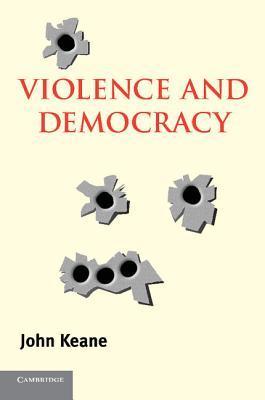
John Keane offers an original account of the origins of violence, its consequences, its uses and remedies, and the relationship between violence and democracy. Rejecting the view that "human nature" is violent, Keane demonstrates why democracies do not wage war upon each other, and are unusually sensitive to violence. He emphasizes ethical questions, such as the circumstances in which violence can be justified, and argues that violence can and should be "democratized" and made publicly accountable.

China's Galaxy Empire: Wealth, Power, War, and Peace in the New Chinese Century
by John Keane
Rating: 4.0 ⭐
In China's Galaxy Empire, John Keane and Baogang He target a development of enormous China's return, after two centuries of decline and subjugation, to a position of prominence in world affairs. The daring thesis is that China is a newly rising empire of a kind never before a galaxy empire. The first to be born of the digital communications era, this young empire is economically and politically powerful, and heavily armed. Its gravitational, push-pull effects are impacting every continent--and even outer space, where China is competing with the United States, India, and Europe to become the leading power. The galaxy empire interpretation rejects clich?d misdescriptions of China as a "big power" or monolithic "autocracy", and it explains why China defies older definitions of land, sea, and air-based empires. The book charts the developments that have made its rising empire so novel, including the launch of the Belt and Road Initiative, the rapid rise of a global Chinese middle class, and internal colonialism in Tibet and Xinjiang. The book notes the protean, shapeshifting qualities of this young empire. It therefore warns against the political and military perils of simple-minded, friend-versus-enemy thinking and "Big China, Bad China" politics. But it also proffers a forewarning to China's while every rising empire aims to shift the balance of power in its favour, no empire lasts forever, and some are stillborn, because they indulge illusions of greatness and reckless power adventures.

"Ποιους κινδύνους για τη δημοκρατία συνιστά η κατάρρευση του πολιτικού συστήματος; Αυτή η αγωνία διακατέχει όσους και όσες θεωρούν τη δημοκρατία ως μία από τις βασικές αξίες που οφείλουν να υπερασπιστούν, ακόμη κι αν έχουν επιφυλάξεις ή ασκούν κριτική στη συγκεκριμένη μορφή με την οποία πραγματώθηκε η δημοκρατία στην πατρίδα μας μετά το 1974.Η κρίση έθεσε το πρόβλημα της οικονομικής βιωσιμότητας της δημοκρατίας. Πώς μια κοινωνία μπορεί να αυτοκυβερνηθεί δημοκρατικά αν δεν είναι βιώσιμη οικονομικά; Και αν η κρίση που ζούμε δεν είναι παροδική αλλά αφορά μείζονες ανατροπές, ποια θέση έχει η δημοκρατία; Η διεύρυνση της ανισοκατανομής του πλούτου αποσυνθέτει όχι μόνο την έννοια του δήμου, αλλά και τη φαντασιακή του προβολή στη δημοκρατία. Πώς μπορούμε να σκεφτούμε τη δημοκρατία όταν οι άνθρωποι αισθάνονται απογοήτευση από τους θεσμούς της, όταν η ίδια δεν μπορεί να πάρει αποφάσεις για το μέλλον της, γιατί το έχει ήδη υποθηκεύσει; Η σύγχρονη δημοκρατία πρέπει να γίνεται κατανοητή στο πλαίσιο της διεθνούς διακυβέρνησης που είναι κάτι περισσότερο από το άθροισμα των δημοκρατιών, των διεθνών οργανισμών και των αγορών. Η αποδυνάμωση του αντιπροσωπευτικού συστήματος καταλήγει στην εμφάνιση μη πολιτικών ή αντιπολιτικών κινήσεων και κινημάτων, τα οποία βρίσκονται διάσπαρτα στο κοινωνικό σώμα, από τις εξεγερμένες ελίτ έως τους εξεγερμένους υποπρολεταρίους. Η κρίση πλήττοντας και ακυρώνοντας τα κοινωνικά δικαιώματα, πλήττει την ίδια την ιδιότητα του πολίτη. Επομένως για ποιο είδος δημοκρατίας μπορούμε να μιλήσουμε;Ωστόσο, η συζήτηση για τη δημοκρατία είναι, και πρέπει να κατανοηθεί ως συζήτηση για την έξοδο, για την επαύριον της κρίσης. Και αν αυτή η έξοδος δεν θα είναι επάνοδος στις παλιές ξένοιαστες μέρες, χρειάζεται να σκεφτούμε την αναθέσμιση της δημοκρατίας, ώστε να αντέξει στις υψηλές θερμοκρασίες που προκαλεί και θα προκαλέσει στο κοινωνικό σώμα η κρίση". (Α. Λιάκος, από την Εισαγώγη της έκδοσης)

America's Greatest Pet Detective Is Here. Join John Keane aka Sherlock Bones on His Incredible Adventures.What would you do if you had amazing deduction skills? You'd become a detective. However Sherlock Bones is not an ordinary detective. He combined his incredible deduction skills and love for animals and became America's greatest pet detective.If your pet went missing under mysterious circumstances, or you suspect that some foul play happened, but you can't prove it – who are you going to call? Of course, Sherlock Bones.This book is a collection of some of John's most famous and difficult cases. It includes more than a dozen compelling stories, each with a unique twist. What obstacles will he encounter on his journey? Will he solve them, and how?Sit back, and enjoy the adventures of Sherlock Bones, America's greatest pet detective.Here's what this unique book will offer Incredible main Discover more about John Keane aka Sherlock Bones, America's greatest pet detective.A dozen of different Read more than a dozen of Sherlock's memoirs. Inside this book, you will find the toughest cases he solved.Compelling Discover the stories packed with action and intrigue. Stories that are guaranteed to keep you on your toes and ask for more.Unique Every story has a unique twist. Will you see it coming? Will you discover the culprit before Sherlock?Great This book is an excellent read for both adults and teenagers, especially pet owners.Join Sherlock on his adventures and have fun. Engage in an intriguing and compelling storyline, and try to solve the case before Sherlock does. What are you waiting for?Scroll up, click on "Buy Now with 1-Click", and Get Your Copy Now!

Pico-solar Electric Systems: The Earthscan Expert Guide to the Technology and Emerging Market
by John Keane
Rating: 4.3 ⭐
This book provides a comprehensive overview of the technology behind the pico-solar revolution and offers guidance on how to test and choose quality products. The book also discusses how pioneering companies and initiatives are overcoming challenges to reach scale in the marketplace, from innovative distribution strategies to reach customers in rural India and Tanzania, to product development in Cambodia, product assembly in Mozambique and the introduction of ‘pay as you go’ technology in Kenya. Pico-solar is a new category of solar electric system which has the potential to transform the lives of over 1.6 billion people who live without access to electricity. Pico-solar systems are smaller and more affordable than traditional solar systems and have the power to provide useful amounts of electricity to charge the increasing number of low power consuming appliances from mobile phones, e-readers and parking metres, to LED lights which have the power to light up millions of homes in the same way the mobile phone has connected and empowered communities across the planet. The book explains the important role pico-solar has in reducing reliance on fossil fuels while at the same time tackling world poverty and includes useful recommendations for entrepreneurs, charities and governments who want to participate in developing this exciting and rapidly expanding market.

This book examines an age-old European theme - democracy. It reconsiders the central themes in modern democratic thought and soberly assesses the serious dangers now facing democratic institutions throughout Europe.

Predictions of the coming collapse of Chinese politics are today commonplace, however this thought-provoking book explores a radically different alternative. China, it argues, is a one-party-dominated political system whose surprising levels of public support and resilience in the face of serious economic, environmental and social problems suggest that it is more durable than most outside observers suppose. China is not an ailing 'autocracy', a case of 'crony capitalism' or a blindly repressive 'authoritarian regime'. The rulers of China are in fact experimenting with a wide range of locally-made democratic tools designed to win the trust and loyalty of their subjects. Examples probed in this book include the injection of accountability mechanisms into state bureaucracy, the toleration of independent public opinion leaders, the growing reliance of Party officials and corporate executives on public opinion polls and 'democratic style', and the calculated use by Party officials of digitally networked media as early warning devices.Written for students and teachers, researchers and general readers fascinated by the rising global power of China, When Trees Fall, Monkeys Scatter shows why locally-made democratic practices often favour one-party rule and why China is becoming a globally significant political laboratory: a 21st century testing ground for a new type of top-down popular government at odds with power-sharing democracy as it was known during the past generation.

Power and Humility: The Future of Monitory Democracy
by John Keane
Democracy urgently needs re-imagining if it is to address the dangers and opportunities posed by current global realities, argues leading political thinker John Keane. He offers an imaginative, radically new interpretation of the twenty-first-century fate of democracy. The book shows why the current literature on democracy is failing to make sense of many intellectual puzzles and new political trends. It probes a wide range of themes, from the growth of cross-border institutions and capitalist market failures to the greening of democracy, the dignity of children and the anti-democratic effects of everyday fear, violence and bigotry. Keane develops the idea of 'monitory democracy' to show why periodic free and fair elections are losing their democratic centrality; and why the ongoing struggles by citizens and their representatives, in a multiplicity of global settings, to humble the high and mighty and deal with the dangers of arbitrary power, force us to rethink what we mean by democracy and why it remains a universal ideal.
A fitting tribute to John B. Keane, for decades Ireland's favorite storyteller, this winning short story collection typifies the late author's folkloric imagination and storytelling arts. These are congenial tales, too, as this literary legend views the foibles and fallibilities of Irish country folk with abundant compassion as well as a shrewd, sometimes sardonic eye. Add to that Keane's glorious sense of fun and roguery that will make readers relish all the more how and why, in "Fred Rimble," Jim Conlon kills the best friend he ever had. Or how Willie Ramley determines that his future wife will be "Guaranteed Pure." Or how, to tragic as well as comic effect, a gasp, garlic, and gossip undo Denny Bruder in "The Hanging." In all, Keane uncovers the folly in the romantic pangs, exalted aspirations, misguided mischief, and everyday shortcomings of the characters in the village of his storyteller's mind--and beyond the folly finds their humanity.

Book by Keane, John

In Cultural and Theological Reflections on the Japanese Quest for Divinity , John J. Keane offers an explanation of Japanese divinity ( kami 神) using sociology, anthropology, linguistics, literature and history. He presents an overview of how the Japanese have sought to love and serve their kami - a quest that rivals the interest that the West gives to God. The principles of interreligious dialogue are applied to the meaning of kami and a plea is made for a dialogue that respectfully accepts differences between the cultures and the theologies of Eastern and Western thought. Important cultural themes are discussed as a part of this quest, such as the emperors of Japan and the Japanese Tea Ceremony. The work also challenges the understanding of kami as highlighted by Akutagawa Ryunosuke and Endo Shusaku.


From highwaymen to healing waters, and from breweries to bridges, not to mention lots of castles, cathedrals, and abbeys, this collection of fascinating stories details the lore and landmarks of Ireland's County Kilkenny from top to bottom. Locals and visitors alike will find plenty of interest in this quirky collection.
Whatever Happened to Democracy?
by John Keane

The Prime Minister is in danger. They needed the best. They called Daisy


A Musician's Guide to Pro Tools 6
by John Keane
A Musician’s Guide to Pro Tools 6, a newly revised book by producer/engineer/musician John Keane, is designed to help beginners get off the ground quickly with Pro Tools 6 and earlier. It provides tutorials containing very specific step-by-step instructions for recording, editing, and mixing a home demo. The book includes a CD-ROM with a Pro Tools session as part of the tutorial. It is a valuable resource, filled with tips and advice from a seasoned professional. Written in a clear, non-technical, and humorous style, it de-mystifies the recording process, saving the user countless hours of frustration from plowing through reference manuals.