
Ron Chernow
Ron Chernow was born in 1949 in Brooklyn, New York. After graduating with honors from Yale College and Cambridge University with degrees in English Literature, he began a prolific career as a freelance journalist. Between 1973 and 1982, Chernow published over sixty articles in national publications, including numerous cover stories. In the mid-80s Chernow went to work at the Twentieth Century Fund, a prestigious New York think tank, where he served as director of financial policy studies and received what he described as “a crash course in economics and financial history.” Chernow’s journalistic talents combined with his experience studying financial policy culminated in the writing of his extraordinary first book, The House of Morgan: An American Banking Dynasty and the Rise of Modern Finance (1990). Winner of the 1990 National Book Award for Nonfiction, The House of Morgan traces the amazing history of four generations of the J.P. Morgan empire. The New York Times Book Review wrote, “As a portrait of finance, politics and the world of avarice and ambition on Wall Street, the book has the movement and tension of an epic novel. It is, quite simply, a tour de force.” Chernow continued his exploration of famous financial dynasties with his second book, The Warburgs (1994), the story of a remarkable Jewish family. The book traces Hamburg’s most influential banking family of the 18th century from their successful beginnings to when Hitler’s Third Reich forced them to give up their business, and ultimately to their regained prosperity in America on Wall Street. Described by Time as “one of the great American biographies,” Chernow’s Titan: The Life of John D. Rockefeller, Sr. (1998) brilliantly reveals the complexities of America’s first billionaire. Rockefeller was known as a Robber Baron, whose Standard Oil Company monopolized an entire industry before it was broken up by the famous Supreme Court anti-trust decision in 1911. At the same time, Rockefeller was one of the century’s greatest philanthropists donating enormous sums to universities and medical institutions. Chernow is the Secretary of PEN American Center, the country’s most prominent writers’ organization, and is currently at work on a biography of Alexander Hamilton. He lives in Brooklyn Heights, New York. In addition to writing biographies, Chernow is a book reviewer, essayist, and radio commentator. His book reviews and op-ed articles appear frequently in The New York Times and The Wall Street Journal. He comments regularly on business and finance for National Public Radio and for many shows on CNBC, CNN, and the Fox News Channel. In addition, he served as the principal expert on the A&E biography of J.P. Morgan and will be featured as the key Rockefeller expert on an upcoming CNBC documentary.
22 Books Written

John D. Rockefeller, Sr.--history's first billionaire and the patriarch of America's most famous dynasty--is an icon whose true nature has eluded three generations of historians. Now Ron Chernow, the National Book Award-winning biographer of the Morgan and Warburg banking families, gives us a history of the mogul "etched with uncommon objectivity and literary grace . . . as detailed, balanced, and psychologically insightful a portrait of the tycoon as we may ever have" (Kirkus Reviews). Titan is the first full-length biography based on unrestricted access to Rockefeller's exceptionally rich trove of papers. A landmark publication full of startling revelations, the book will indelibly alter our image of this most enigmatic capitalist. Born the son of a flamboyant, bigamous snake-oil salesman and a pious, straitlaced mother, Rockefeller rose from rustic origins to become the world's richest man by creating America's most powerful and feared monopoly, Standard Oil. Branded "the Octopus" by legions of muckrakers, the trust refined and marketed nearly 90 percent of the oil produced in America. Rockefeller was likely the most controversial businessman in our nation's history. Critics charged that his empire was built on unscrupulous tactics: grand-scale collusion with the railroads, predatory pricing, industrial espionage, and wholesale bribery of political officials. The titan spent more than thirty years dodging investigations until Teddy Roosevelt and his trustbusters embarked on a marathon crusade to bring Standard Oil to bay. While providing abundant new evidence of Rockefeller's misdeeds, Chernow discards the stereotype of the cold-blooded monster to sketch an unforgettably human portrait of a quirky, eccentric original. A devout Baptist and temperance advocate, Rockefeller gave money more generously--his chosen philanthropies included the Rockefeller Foundation, the University of Chicago, and what is today Rockefeller University--than anyone before him. Titan presents a finely nuanced portrait of a fascinating, complex man, synthesizing his public and private lives and disclosing numerous family scandals, tragedies, and misfortunes that have never before come to light. John D. Rockefeller's story captures a pivotal moment in American history, documenting the dramatic post-Civil War shift from small business to the rise of giant corporations that irrevocably transformed the nation. With cameos by Joseph Pulitzer, William Randolph Hearst, Jay Gould, William Vanderbilt, Ida Tarbell, Andrew Carnegie, Carl Jung, J. Pierpont Morgan, William James, Henry Clay Frick, Mark Twain, and Will Rogers, Titan turns Rockefeller's life into a vivid tapestry of American society in the late nineteenth and early twentieth centuries. It is Ron Chernow's signal triumph that he narrates this monumental saga with all the sweep, drama, and insight that this giant subject deserves.From the Hardcover edition.

The #1 New York Times bestseller and New York Times Book Review 10 Best Books of 2017“Eminently readable but thick with import . . . Grant hits like a Mack truck of knowledge.” — Ta-Nehisi Coates , The AtlanticPulitzer Prize winner Ron Chernow returns with a sweeping and dramatic portrait of one of our most compelling generals and presidents, Ulysses S. Grant. Ulysses S. Grant's life has typically been misunderstood. All too often he is caricatured as a chronic loser and an inept businessman, or as the triumphant but brutal Union general of the Civil War. But these stereotypes don't come close to capturing him, as Chernow shows in his masterful biography, the first to provide a complete understanding of the general and president whose fortunes rose and fell with dizzying speed and frequency. Before the Civil War, Grant was flailing. His business ventures had ended dismally, and despite distinguished service in the Mexican War he ended up resigning from the army in disgrace amid recurring accusations of drunkenness. But in war, Grant began to realize his remarkable potential, soaring through the ranks of the Union army, prevailing at the battle of Shiloh and in the Vicksburg campaign, and ultimately defeating the legendary Confederate general Robert E. Lee. Along the way, Grant endeared himself to President Lincoln and became his most trusted general and the strategic genius of the war effort. Grant’s military fame translated into a two-term presidency, but one plagued by corruption scandals involving his closest staff members.More important, he sought freedom and justice for black Americans, working to crush the Ku Klux Klan and earning the admiration of Frederick Douglass, who called him “the vigilant, firm, impartial, and wise protector of my race.” After his presidency, he was again brought low by a dashing young swindler on Wall Street, only to resuscitate his image by working with Mark Twain to publish his memoirs, which are recognized as a masterpiece of the genre. With lucidity, breadth, and meticulousness, Chernow finds the threads that bind these disparate stories together, shedding new light on the man whom Walt Whitman described as “nothing heroic... and yet the greatest hero.” Chernow’s probing portrait of Grant's lifelong struggle with alcoholism transforms our understanding of the man at the deepest level. This is America's greatest biographer, bringing movingly to life one of our finest but most underappreciated presidents. The definitive biography, Grant is a grand synthesis of painstaking research and literary brilliance that makes sense of all sides of Grant's life, explaining how this simple Midwesterner could at once be so ordinary and so extraordinary.Named one of the best books of the year by Goodreads • Amazon • The New York Times • Newsday • BookPage • Barnes and Noble • Wall Street Journal

The House of Morgan: An American Banking Dynasty and the Rise of Modern Finance
by Ron Chernow
Rating: 4.2 ⭐
• 4 recommendations ❤️
Published to critical acclaim twenty years ago, and now considered a classic, The House of Morgan is the most ambitious history ever written about American finance. It is a rich, panoramic story of four generations of Morgans and the powerful, secretive firms they spawned, ones that would transform the modern financial world. Tracing the trajectory of J. P. Morgan’s empire from its obscure beginnings in Victorian London to the financial crisis of 1987, acclaimed author Ron Chernow paints a fascinating portrait of the family’s private saga and the rarefied world of the American and British elite in which they moved—a world that included Charles Lindbergh, Henry Ford, Franklin Roosevelt, Nancy Astor, and Winston Churchill. A masterpiece of financial history—it was awarded the 1990 National Book Award for Nonfiction and selected by the Modern Library as one of the 100 Best Nonfiction Books of the Twentieth Century— The House of Morgan is a compelling account of a remarkable institution and the men who ran it, and an essential book for understanding the money and power behind the major historical events of the last 150 years.
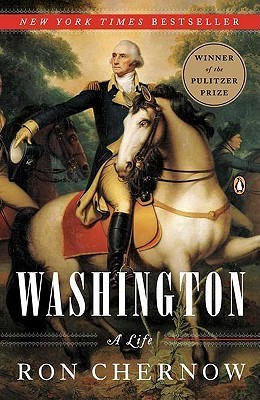
A gripping portrait of the first president of the United States from the author of Alexander Hamilton, the New York Times bestselling biography that inspired the musical.Celebrated biographer Ron Chernow provides a richly nuanced portrait of the father of our nation and the first president of the United States. With a breadth and depth matched by no other one volume biography of George Washington, this crisply paced narrative carries the reader through his adventurous early years, his heroic exploits with the Continental Army during the Revolutionary War, his presiding over the Constitutional Convention, and his magnificent performance as America's first president. In this groundbreaking work, based on massive research, Chernow shatters forever the stereotype of George Washington as a stolid, unemotional figure and brings to vivid life a dashing, passionate man of fiery opinions and many moods.Winner of the 2011 Pulitzer Prize for Biography“Truly magnificent… [a] well-researched, well-written and absolutely definitive biography” –Andrew Roberts, The Wall Street Journal“Superb… the best, most comprehensive, and most balanced single-volume biography of Washington ever written.” –Gordon S. Wood, The New York Review of Books“A truly gripping biography of George Washington... I can’t recommend it highly enough—as history, as epic, and, not least, as entertainment. It’s as luxuriantly pleasurable as one of those great big sprawling, sweeping Victorian novels.” –Hendrik Hertzberg, The New YorkerLin-Manuel Miranda’s smash Broadway musical Hamilton has sparked new interest in the Revolutionary War and the Founding Fathers. In addition to Alexander Hamilton, the production also features George Washington, Thomas Jefferson, James Madison, Aaron Burr, Lafayette, and many more.

An alternate cover edition can be found here.In the first full-length biography of Alexander Hamilton in decades, National Book Award winner Ron Chernow tells the riveting story of a man who overcame all odds to shape, inspire, and scandalize the newborn America. According to historian Joseph Ellis, Alexander Hamilton is “a robust full-length portrait, in my view the best ever written, of the most brilliant, charismatic and dangerous founder of them all.” Few figures in American history have been more hotly debated or more grossly misunderstood than Alexander Hamilton. Chernow’s biography gives Hamilton his due and sets the record straight, deftly illustrating that the political and economic greatness of today’s America is the result of Hamilton’s countless sacrifices to champion ideas that were often wildly disputed during his time. “To repudiate his legacy,” Chernow writes, “is, in many ways, to repudiate the modern world.” Chernow here recounts Hamilton’s turbulent life: an illegitimate, largely self-taught orphan from the Caribbean, he came out of nowhere to take America by storm, rising to become George Washington’s aide-de-camp in the Continental Army, coauthoring The Federalist Papers, founding the Bank of New York, leading the Federalist Party, and becoming the first Treasury Secretary of the United States. Historians have long told the story of America’s birth as the triumph of Jefferson’s democratic ideals over the aristocratic intentions of Hamilton. Chernow presents an entirely different man, whose legendary ambitions were motivated not merely by self-interest but by passionate patriotism and a stubborn will to build the foundations of American prosperity and power. His is a Hamilton far more human than we’ve encountered before—from his shame about his birth to his fiery aspirations, from his intimate relationships with childhood friends to his titanic feuds with Jefferson, Madison, Adams, Monroe, and Burr, and from his highly public affair with Maria Reynolds to his loving marriage to his loyal wife Eliza. And never before has there been a more vivid account of Hamilton’s famous and mysterious death in a duel with Aaron Burr in July of 1804. Chernow’s biography is not just a portrait of Hamilton, but the story of America’s birth seen through its most central figure. At a critical time to look back to our roots, Alexander Hamilton will remind readers of the purpose of our institutions and our heritage as Americans.

Pulitzer Prize-winning biographer Ron Chernow illuminates the full, fascinating, and complex life of the writer long celebrated as the father of American literature, Mark TwainRon Chernow, the highly lauded biographer of Alexander Hamilton, George Washington, and Ulysses S. Grant, brings his considerable powers to bear on America’s first, and most influential, literary celebrity, Mark Twain. Born Samuel Langhorne Clemens in 1835, under Halley’s Comet, the rambunctious Twain was an early teller of tall tales. He left his home in Missouri at an early age, piloted steamboats on the Mississippi, and arrived in the Nevada Territory during the silver-mining boom. Before long, he had accepted a job at the local newspaper, where he barged into vigorous discourse and debate, hoaxes and hijinks. After moving to San Francisco, he published stories that attracted national attention for their brashness and humor, writing under a pen name soon to be immortalized.Chernow draws a richly nuanced portrait of the man who shamelessly sought fame and fortune and crafted his celebrity persona with meticulous care. Twain eventually settled with his wife and three daughters in Hartford, where he wrote some of his most well-known works, The Adventures of Tom Sawyer, Life on the Mississippi, and Adventures of Huckleberry Finn, earning him further acclaim. He threw himself into American politics, emerging as the nation’s most notable pundit. While his talents as a writer and speaker flourished, his madcap business ventures eventually forced him into bankruptcy; to economize, Twain and his family spent nine eventful years in exile in Europe. He suffered the death of his wife and two daughters, and the last stage of his life was marked by heartache, political crusades, and eccentric behavior that sometimes obscured darker forces at play.Drawing on Twain’s bountiful archives, including his fifty notebooks, thousands of letters, and hundreds of unpublished manuscripts, Chernow masterfully captures a man whose career reflected the country’s westward expansion, industrialization, and foreign wars. No other white author of his generation grappled so fully with the legacy of slavery after the Civil War or showed such keen interest in African American culture. Today, more than one hundred years after his death, Twain’s writing continues to be read, debated, and quoted. In this brilliant work of scholarship, a moving tribute to the writer’s talent and humanity, Chernow reveals the magnificent and often maddening life of one of the most original characters in American history.

The Warburgs: The Twentieth-Century Odyssey of a Remarkable Jewish Family
by Ron Chernow
Rating: 4.0 ⭐
Bankers, philanthropists, scholars, socialites, artists, and politicians, the Warburgs stood at the pinnacle of German (and, later, of German-American) Jewry. They forged economic dynasties, built mansions and estates, assembled libraries, endowed charities, and advised a German kaiser and two American presidents. But their very success made the Warburgs lightning rods for anti-Semitism, and their sense of patriotism became increasingly dangerous in a Germany that had declared Jews the enemy.Ron Chernow's hugely fascinating history is a group portrait of a clan whose members were renowned for their brilliance, culture, and personal energy yet tragically vulnerable to the dark and irrational currents of the twentieth century.

The Death of the Banker: The Decline and Fall of the Great Financial Dynasties and the Triumph of the Small Investor
by Ron Chernow
Rating: 3.5 ⭐
"For anyone interested in the world behind the business-page headlines, this is the book to read." --Publishers WeeklyWith the same breadth of vision and narrative élan he brought to his monumental biographies of the great financiers, Ron Chernow examines the forces that made dynasties like the Morgans, the Warburgs, and the Rothschilds the financial arbiters of the early twentieth century and then rendered them virtually obsolete by the century's end.As he traces the shifting balance of power among investors, borrowers, and bankers, Chernow evokes both the grand theater of capital and the personal dramas of its most fascinating protagonists. Here is Siegmund Warburg, who dropped a client in the heat of a takeover deal because the man wore monogrammed shirt cuffs, as well as the imperious J. P. Morgan, who, when faced with a federal antitrust suit, admonished Theodore Roosevelt to "send your man to my man and they can fix it up." And here are the men who usurped their power, from the go-getters of the 1920s to the masters of the universe of the 1980s. Glittering with perception and anecdote, The Death of the Banker is at once a panorama of twentieth-century finance and a guide to the new era of giant mutual funds on Wall Street."Chernow . . . delivers a sound, accessible account of the forces shaping capital, credit, currency, and securities markets on the eve of a new millennium. "--Kirkus Reviews
![Washington [Abridged, Audiobook] Publisher: Penguin Audio](https://m.media-amazon.com/images/S/compressed.photo.goodreads.com/books/1697018656i/135781431.jpg)
Excellent Item


"For anyone interested in the world behind the business-page headlines, this is the book to read." --Publishers WeeklyWith the same breadth of vision and narrative élan he brought to his monumental biographies of the great financiers, Ron Chernow examines the forces that made dynasties like the Morgans, the Warburgs, and the Rothschilds the financial arbiters of the early twentieth century and then rendered them virtually obsolete by the century's end.As he traces the shifting balance of power among investors, borrowers, and bankers, Chernow evokes both the grand theater of capital and the personal dramas of its most fascinating protagonists. Here is Siegmund Warburg, who dropped a client in the heat of a takeover deal because the man wore monogrammed shirt cuffs, as well as the imperious J. P. Morgan, who, when faced with a federal antitrust suit, admonished Theodore Roosevelt to "send your man to my man and they can fix it up." And here are the men who usurped their power, from the go-getters of the 1920s to the masters of the universe of the 1980s. Glittering with perception and anecdote, The Death of the Banker is at once a panorama of twentieth-century finance and a guide to the new era of giant mutual funds on Wall Street."Chernow . . . delivers a sound, accessible account of the forces shaping capital, credit, currency, and securities markets on the eve of a new millennium. "

Warbugs Part 1 of 2
by Ron Chernow
![RAMPARTS [Magazine]. Vol. 12, No. 10. April 1974](https://m.media-amazon.com/images/S/compressed.photo.goodreads.com/books/1699366034i/133688968.jpg)
RAMPARTS [Magazine]. Vol. 12, No. 10. April 1974
by Ron Chernow
RAMPARTS was a leading magazine of the "alternative Press" during the Vietnam War. This issue includes Ron Chernow on filmmaker JOHN FORD; Paul Jacobs on DANIEL BERRIGAN; Edgar Friedenberg on R. D. LAING; Fred Halliday and Maxine Molyneux on BRAZIL'S UNDERSIDE; Alexander Cockburn; Studs Terkel; others.

タイタン 上
by Ron Chernow

1 了解美国奠基人的**本书,*公正完整的华盛顿传记,从没有人将美国国父写得如此透彻。 2 普利策传记奖作品,《华尔街日报》《纽约书评》《经济学人》权威推荐。 3 他是美国和美国理想的具体化身,要理解美国,先理解华盛顿。 4 全方位展示美国建国历程的史诗级作品,美国总统的标准是如何创立的?美国为何能避开君主制,走上宪政之路? 5 了解美国宪政的开端。他没有顺应当时世界的政治主流,为世界再添一顶皇冠,然而世界从此多了一位总统,产生了一种新的进步政体和国体,从而使王冠黯然失色。

アレグザンダー・ハミルトン伝~アメリカを近代国家につくり上げた天才政治家
by Ron Chernow
Warburgs
by Ron Chernow
The Warburgs
by Ron Chernow

アレグザンダー・ハミルトン伝~アメリカを近代国家につくり上げた天才政治家
by Ron Chernow