
11 Books Written

The Wizard of Menlo Park: How Thomas Alva Edison Invented the Modern World
by Randall E. Stross
Rating: 3.8 ⭐
• 4 recommendations ❤️
Thomas Edison’s greatest invention? His own fame. At the height of his fame Thomas Alva Edison was hailed as “the Napoleon of invention” and blazed in the public imagination as a virtual demigod. Starting with the first public demonstrations of the phonograph in 1878 and extending through the development of incandescent light and the first motion picture cameras, Edison’s name became emblematic of all the wonder and promise of the emerging age of technological marvels. But as Randall Stross makes clear in this critical biography of the man who is arguably the most globally famous of all Americans, Thomas Edison’s greatest invention may have been his own celebrity. Edison was certainly a technical genius, but Stross excavates the man from layers of myth-making and separates his true achievements from his almost equally colossal failures. How much credit should Edison receive for the various inventions that have popularly been attributed to him—and how many of them resulted from both the inspiration and the perspiration of his rivals and even his own assistants? This bold reassessment of Edison’s life and career answers this and many other important questions while telling the story of how he came upon his most famous inventions as a young man and spent the remainder of his long life trying to conjure similar success. We also meet his partners and competitors, presidents and entertainers, his close friend Henry Ford, the wives who competed with his work for his attention, and the children who tried to thrive in his shadow—all providing a fuller view of Edison’s life and times than has ever been offered before. The Wizard of Menlo Park reveals not only how Edison worked, but how he managed his own fame, becoming the first great celebrity of the modern age.

eBoys: The First Inside Account of Venture Capitalists at Work
by Randall E. Stross
Rating: 4.1 ⭐
• 2 recommendations ❤️
In eBOYS, Randall Stross takes us behind the scenes and inside the heads of the gutsy entrepreneurs who are financing the hottest businesses on the Web. The six tall men who started Benchmark, Silicon Valley's most exciting venture capital firm, put themselves at the cutting edge of the new economy by backing billion dollar start-ups like eBay and Webvan. The risks were enormous--but the rewards have proven to be staggering. Within two years, eBay's net worth grew from $20 million to more than $21 billion, while each Benchmark founding partner saw his own personal net worth soar by hundreds of millions of dollars.For two roller-coaster years, Stross had total access not only to Benchmark's executives but to the companies they financed. He was a fly on the wall as fortunes were made in an instant, snap decisions got locked in, and new ventures took off--and sometimes crashed. Here are the testosterone-pumped conversations, round-the-clock meetings, and gutsy deals that launched the eBoys and their clients into the stratosphere of mega-wealth. Written like a novel but absolutely true, eBOYS brings to vivid life the glory days of the greatest business adventure of our time.

Originally published in 1993, this is the story of Steve Jobs’s ambitious attempts after he left Apple in 1985 to create a new company, NeXT Computer. This period was the nadir of Jobs’s professional life, as NeXT’s products failed to find a welcome in the marketplace. The company burned through more than $250 million without managing to eke out a profit. It would eventually be rescued by Apple and Jobs would return there after the close of the book’s narrative. When he did, he took with him lessons learned during his NeXT years in how not to manage a company.

Planet Google: One Company's Audacious Plan to Organize Everything We Know
by Randall E. Stross
Rating: 3.4 ⭐
• 2 recommendations ❤️
"In this spellbinding behind-the-scenes look, S tross leads readers through Google’s evolution…the unfolding narrative reads like a suspense novel" ( Publishers Weekly , starred review).Based on unprecedented access to the "Googleplex," Planet Google goes deep inside the company to unveil the extraordinary scope and scale of its ambition to become the master gate-keeper of "all the world’s information," including its users’ most personal information. New York Times columnist Randall Stross provides a lively tour through Google’s flurry of new information gathering initiatives. Will Google stay true to its famous "Don’t Be Evil" mantra? Will it protect all of the personal information it collects? Planet Google is a much-needed wake-up call about how powerful the Google juggernaut has become.
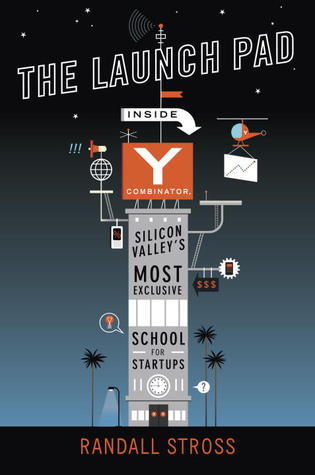
The Launch Pad: Inside Y Combinator, Silicon Valley's Most Exclusive School for Startups
by Randall E. Stross
Rating: 4.0 ⭐
Twice a year in the heart of Silicon Valley, a small investment firm called Y Combinator selects an elite group of young entrepreneurs from around the world for three months of intense work and instruction. Their brand-new two- or three-person start-ups are given a seemingly impossible to turn a raw idea into a viable business, fast. Each YC session culminates in a demo day, when investors and venture capitalists flock to hear pitches from the new graduates. Any one of them might turn out to be the next Dropbox (class of 2007, now valued at $5 billion) or Airbnb (2009, $1.3 billion). Randall Stross is the first journalist to have fly-on-the-wall access to Y Combinator. He tells the full story of how Paul Graham started this ultra exclusive institution, how it chooses among hundreds of aspiring Mark Zuckerbergs, and how it teaches them to go from concept to profitability in record time.

The Microsoft Way: The Real Story Of How The Company Outsmarts Its Competition
by Randall E. Stross
Rating: 3.5 ⭐
Argues that the secret behind the extraordinary success of Microsoft is not predatory marketing tactics, but rather an approach that includes staying eager for ideas and being responsive to markets, and discusses the company's ever-changing plans for an online world.

A Practical Education: Why Liberal Arts Majors Make Great Employees
by Randall E. Stross
Rating: 2.6 ⭐
The liberal arts major is often lampooned: lacking in "skills," unqualified for a professional career, underemployed. But studying for the joy of learning turns out to be surprisingly practical. Unlike career-focused education, liberal education prepares graduates for anything and everything--and nervous "fuzzy major" students, their even more nervous parents, college career center professionals, and prospective employers would do well to embrace liberal arts majors. Just look to Silicon Valley, of all places, to see that liberal arts majors can succeed not in spite of, but because of, their education.A Practical Education investigates the real-world experiences of graduates with humanities majors, the majors that would seem the least employable in Silicon Valley's engineering-centric workplaces. Drawing on the experiences of Stanford University graduates and using the students' own accounts of their education, job searches, and first work experiences, Randall Stross provides heartening demonstrations of how multi-capable liberal arts graduates are. When given a first opportunity, these majors thrive in work roles that no one would have predicted.Stross also weaves the students' stories with the history of Stanford, the rise of professional schools, the longstanding contention between engineering and the liberal arts, the birth of occupational testing, and the popularity of computer science education to trace the evolution in thinking about how to prepare students for professional futures. His unique blend of present and past produces a provocative exploration of how best to utilize the undergraduate years.At a time when institutions of higher learning are increasingly called on to justify the tangible merits of the liberal arts, A Practical Education reminds readers that the most useful training for an unknowable future is the universal, time-tested preparation of a liberal education.

Bulls in the China Shop is an engagingly anecdotal, lucidly written account of the tragicomic cultural and political misadventures that have plagues American commercial ventures over the past two decades in the People’s Republic of China.When diplomatic tensions between the two countries were eased in the 1970s, American businesses rushed to China, lured by the world’s largest national market. As they tried to introduce capitalism to China’s socialist society they soon discovered that the rules of business, as they understood them, did not apply. Chinese buyers placed huge orders for which they had no money to Chinese marketing bore no relation to capitalist exigencies—playing cards were named “Maxipuke” ( poker), designer men’s underwear, “Pansy”; million-dollar projects already underway were cancelled without warning.The Chinese, in turn, were astonished by the indiscretion of the Americans, who prized “directness” above all in negotiations and were at once brash and guileless in exposing weaknesses in their own bargaining positions. Like Mark Twain’s innocents, Americans were woefully ignorant of Chinese etiquette, and prone to embarrassing gaffes. And the Chinese found the American insistence on lengthy, detailed contracts fatuous, if not insulting.Bulls in the China Shop is a fascinating look at the uneasy commerce between American and China—between capitalism and socialism—and at the cultural, political, and historical significance of trade between the two nations.

The Stubborn Earth: American Agriculturalists on Chinese Soil, 1898-1937
by Randall E. Stross
Rating: 5.0 ⭐
Uses diary selections and letters to document the experiences of American agricultural specialists in China, and describes the social, political, and cultural conditions which affected their mission

Socialism and Ethics
by Randall E. Stross
Bulls in the China Shop is an engagingly anecdotal, lucidly written account of the tragicomic cultural and political misadventures that have plagues American commercial ventures over the past two decades in the People’s Republic of China. When diplomatic tensions between the two countries were eased in the 1970s, American businesses rushed to China, lured by the world’s largest national market. As they tried to introduce capitalism to China’s socialist society they soon discovered that the rules of business, as they understood them, did not apply. Chinese buyers placed huge orders for which they had no money to Chinese marketing bore no relation to capitalist exigencies—playing cards were named “Maxipuke” ( poker), designer men’s underwear, “Pansy”; million-dollar projects already underway were cancelled without warning. The Chinese, in turn, were astonished by the indiscretion of the Americans, who prized “directness” above all in negotiations and were at once brash and guileless in exposing weaknesses in their own bargaining positions. Like Mark Twain’s innocents, Americans were woefully ignorant of Chinese etiquette, and prone to embarrassing gaffes. And the Chinese found the American insistence on lengthy, detailed contracts fatuous, if not insulting. Bulls in the China Shop is a fascinating look at the uneasy commerce between American and China—between capitalism and socialism—and at the cultural, political, and historical significance of trade between the two nations.
Bulls in the China Shop: And Other Sino-American Business Encounters by Randall E. Stross
by Randall E. Stross