
Richard Rhodes
Richard Lee Rhodes is an American journalist, historian, and author of both fiction and non-fiction (which he prefers to call "verity"), including the Pulitzer Prize-winning The Making of the Atomic Bomb (1986), and most recently, Arsenals of Folly: The Making of the Nuclear Arms Race (2007). He has been awarded grants from the Ford Foundation, the Guggenheim Foundation, the MacArthur Foundation and the Alfred P. Sloan Foundation among others. He is an affiliate of the Center for International Security and Cooperation at Stanford University. He also frequently gives lectures and talks on a broad range of subjects to various audiences, including testifying before the U.S. Senate on nuclear energy.
28 Books Written

**Winner of the Pulitzer Prize, the National Book Award, and the National Book Critics Circle Award**The definitive history of nuclear weapons— from the turn-of-the-century discovery of nuclear energy to J. Robert Oppenheimer and the Manhattan Project—this epic work details the science, the people, and the sociopolitical realities that led to the development of the atomic bomb.This sweeping account begins in the 19th century, with the discovery of nuclear fission, and continues to World War Two and the Americans’ race to beat Hitler’s Nazis. That competition launched the Manhattan Project and the nearly overnight construction of a vast military-industrial complex that culminated in the fateful dropping of the first bombs on Hiroshima and Nagasaki.Reading like a character-driven suspense novel, the book introduces the players in this saga of physics, politics, and human psychology—from FDR and Einstein to the visionary scientists who pioneered quantum theory and the application of thermonuclear fission, including Planck, Szilard, Bohr, Oppenheimer, Fermi, Teller, Meitner, von Neumann, and Lawrence.From nuclear power’s earliest foreshadowing in the work of H.G. Wells to the bright glare of Trinity at Alamogordo and the arms race of the Cold War, this dread invention forever changed the course of human history, and The Making of The Atomic Bom b provides a panoramic backdrop for that story.Richard Rhodes’s ability to craft compelling biographical portraits is matched only by his rigorous scholarship. Told in rich human, political, and scientific detail that any reader can follow, The Making of the Atomic Bomb is a thought-provoking and masterful work.

A masterful, timely, fully authorized biography of the great and hugely influential biologist and naturalist E. O. Wilson, one of the most ground-breaking and controversial scientists of our time—from the Pulitzer Prize-winning author of The Making of the Atomic Bomb“An impressive account of one of the 20th century’s most prominent biologists, for whom the natural world is ‘a sanctuary and a realm of boundless adventure; the fewer the people in it, the better.’” — The New York Times Book ReviewFew biologists in the long history of that science have been as productive, as ground-breaking and as controversial as the Alabama-born Edward Osborne Wilson. At 91 years of age he may be the most eminent American scientist in any field.Fascinated from an early age by the natural world in general and ants in particular, his field work on them and on all social insects has vastly expanded our knowledge of their many species and fascinating ways of being. This work led to his 1975 book Sociobiolog y, which created an intellectual firestorm from his contention that all animal behavior, including that of humans, is governed by the laws of evolution and genetics. Subsequently Wilson has become a leading voice on the crucial importance to all life of biodiversity and has worked tirelessly to synthesize the fields of science and the humanities in a fruitful way.Richard Rhodes is himself a towering figure in the field of science writing and he has had complete and unfettered access to Wilson, his associates, and his papers in writing this book. The result is one of the most accomplished and anticipated and urgently needed scientific biographies in years.

Here, for the first time, in a brilliant, panoramic portrait by the Pulitzer Prize-winning author of The Making of the Atomic Bomb, is the definitive, often shocking story of the politics and the science behind the development of the hydrogen bomb and the birth of the Cold War.Based on secret files in the United States and the former Soviet Union, this monumental work of history discloses how and why the United States decided to create the bomb that would dominate world politics for more than forty years.

Hedy's Folly: The Life and Breakthrough Inventions of Hedy Lamarr, the Most Beautiful Woman in the World
by Richard Rhodes
Rating: 3.2 ⭐
Pulitzer Prize-winning author Richard Rhodes delivers a remarkable story of science how a ravishing film star and an avant-garde composer invented spread-spectrum radio, the technology that made wireless phones, GPS systems, and many other devices possible. Beginning at a Hollywood dinner table, Hedy's Folly tells a wild story of innovation that culminates in U.S. patent number 2,292,387 for a "secret communication system." Along the way Rhodes weaves together Hollywood’s golden era, the history of Vienna, 1920s Paris, weapons design, music, a tutorial on patent law and a brief treatise on transmission technology. Narrated with the rigor and charisma we've come to expect of Rhodes, it is a remarkable narrative adventure about spread-spectrum radio's genesis and unlikely amateur inventors collaborating to change the world.

Masters of Death: The SS-Einsatzgruppen and the Invention of the Holocaust
by Richard Rhodes
Rating: 4.1 ⭐
In Masters of Death, Richard Rhodes gives full weight, for the first time, to the part played by the Einsatzgruppen - the professional killing squads deployed in Poland and the Soviet Union, early in World War II, by Himmler's SS. And he shows how these squads were utilized as the Nazis made two separate plans for dealing with the civilian populations they wanted to destroy. Drawing on Nuremberg Tribunal documents largely ignored until now, and on newly available material from eyewitnesses and survivors, Richard Rhodes has given us a book that is essential reading on the Holocaust the World War II.
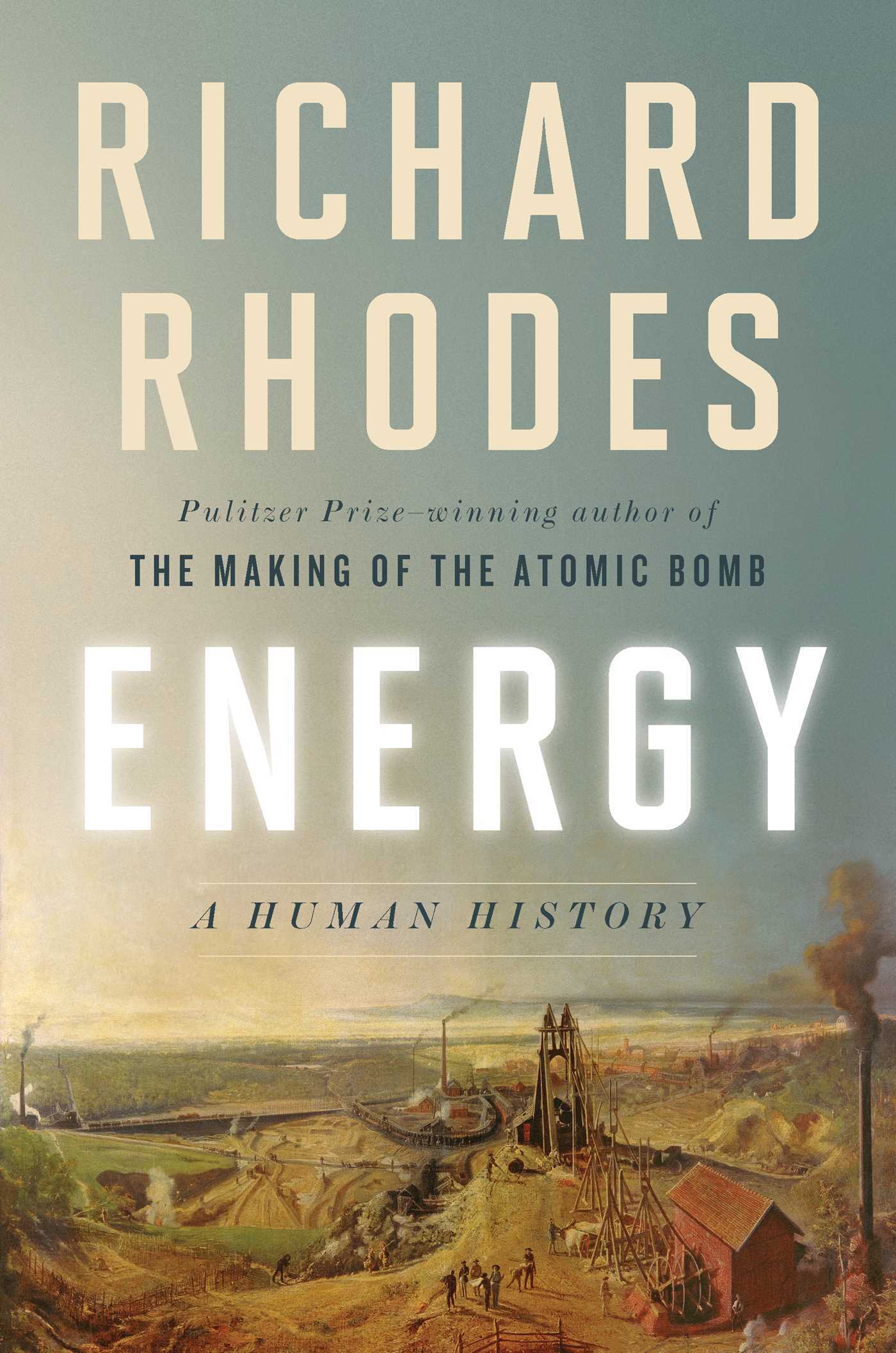
Pulitzer Prize- and National Book Award-winning author Richard Rhodes reveals the fascinating history behind energy transitions over time—wood to coal to oil to electricity and beyond.People have lived and died, businesses have prospered and failed, and nations have risen to world power and declined, all over energy challenges. Ultimately, the history of these challenges tells the story of humanity itself.Through an unforgettable cast of characters, Pulitzer Prize-winning author Richard Rhodes explains how wood gave way to coal and coal made room for oil, as we now turn to natural gas, nuclear power, and renewable energy. Rhodes looks back on five centuries of progress, through such influential figures as Queen Elizabeth I, King James I, Benjamin Franklin, Herman Melville, John D. Rockefeller, and Henry Ford.In Energy , Rhodes highlights the successes and failures that led to each breakthrough in energy production; from animal and waterpower to the steam engine, from internal-combustion to the electric motor. He addresses how we learned from such challenges, mastered their transitions, and capitalized on their opportunities. Rhodes also looks at the current energy landscape, with a focus on how wind energy is competing for dominance with cast supplies of coal and natural gas. He also addresses the specter of global warming, and a population hurtling towards ten billion by 2100.Human beings have confronted the problem of how to draw life from raw material since the beginning of time. Each invention, each discovery, each adaptation brought further challenges, and through such transformations, we arrived at where we are today. In Rhodes’s singular style, Energy details how this knowledge of our history can inform our way tomorrow.

In this brilliant and gripping medical detective story. Richard Rhodes follows virus hunters on three continents as they track the emergence of a deadly new brain disease that first kills cannibals in New Guinea, then cattle and young people in Britain and France -- and that has already been traced to food animals in the United States. In a new Afterword for the paperback, Rhodes reports the latest U.S. and worldwide developments of a burgeoning global threat.

From the Pulitzer Prize–winning author of The Making of the Atomic the story of the entire postwar superpower arms race, climaxing during the Reagan-Gorbachev decade when the United States and the Soviet Union came within scant hours of nuclear war—and then nearly agreed to abolish nuclear weapons.In a narrative that reads like a thriller, Rhodes reveals how the Reagan administration’s unprecedented arms buildup in the early 1980s led ailing Soviet leader Yuri Andropov to conclude that Reagan must be preparing for a nuclear war. In the fall of 1983, when NATO staged a larger than usual series of field exercises that included, uniquely, a practice run-up to a nuclear attack, the Soviet military came very close to launching a defensive first strike on Europe and North America. With Soviet aircraft loaded with nuclear bombs warming up on East German runways, U.S. intelligence organizations finally realized the danger. Then Reagan, out of deep conviction, launched the arms-reduction campaign of his second presidential term and set the stage for his famous 1986 summit meeting with Gorbachev in Reykjavik, Iceland, and the breakthroughs that followed.Rhodes reveals the early influence of neoconservatives and right-wing figures such as Richard Perle, Donald Rumsfeld, Dick Cheney, and Paul Wolfowitz. We see how Perle in particular sabotaged the Reykjavik meeting by convincing Reagan that mutual nuclear disarmament meant giving up his cherished dream of strategic defense (the Star Wars system). Rhodes’s detailed exploration of these and other events constitutes a prehistory of the neoconservatives, demonstrating that the manipulation of government and public opinion with fake intelligence and threat inflation that the administration of George W. Bush has used to justify the current “war on terror” and the disastrous invasion of Iraq were developed and applied in the Reagan era and even before.Drawing on personal interviews with both Soviet and U.S. participants, and on a wealth of new documentation, memoir literature, and oral history that has become available only in the past ten years, Rhodes recounts what actually happened in the final years of the Cold War that led to its dramatic end. The story is new, compelling, and continually surprising—a revelatory re-creation of a hugely important era of our recent history.

John James Audubon came to America as a dapper eighteen-year-old eager to make his fortune. He had a talent for drawing and an interest in birds, and he would spend the next thirty-five years traveling to the remotest regions of his new country–often alone and on foot–to render his avian subjects on paper. The works of art he created gave the world its idea of America. They gave America its idea of itself. Here Richard Rhodes vividly depicts Audubon’s life and career: his epic wanderings; his quest to portray birds in a lifelike way; his long, anguished separations from his adored wife; his ambivalent witness to the vanishing of the wilderness. John James Audubon: The Making of an American is a magnificent achievement.

From the Pulitzer Prize winning and bestselling author of The Making of the Atomic Bomb the remarkable story of the Spanish Civil War through the eyes of the reporters, writers, artists, doctors, and nurses who witnessed it. The Spanish Civil War inspired and haunted an extraordinary number of exceptional artists and writers, including Pablo Picasso, Joan Miro, Martha Gellhorn, Ernest Hemingway, George Orwell, and John Dos Passos. The idealism of the cause—defending democracy from fascism at a time when Europe was darkening toward another world war—and the brutality of the conflict drew from them some of their best work: Guernica, For Whom the Bell Tolls, Homage to Catalonia, The Spanish Earth.The war spurred breakthroughs in military and medical technology as well. New aircraft, new weapons, new tactics and strategy all emerged in the intense Spanish conflict. Indiscriminate destruction raining from the sky became a dreaded reality for the first time. Progress also arose from the horror: the doctors and nurses who volunteered to serve with the Spanish defenders devised major advances in battlefield surgery and front-line blood transfusion. In those ways, and in many others, the Spanish Civil War served as a test bed for World War II, and for the entire twentieth century. From the life of John James Audubon to the invention of the atomic bomb, readers have long relied on Richard Rhodes to explain, distill, and dramatize crucial moments in history. Now, he takes us into battlefields and bomb shelters, into the studios of artists, into the crowded wards of war hospitals, and into the hearts and minds of a rich cast of characters to show how the ideological, aesthetic, and technological developments that emerged in Spain changed the world forever.

Richard Rhodes, Pulitzer Prize-winning author of The Making of the Atomic Bomb , brings his inimitable vision, exhaustive research, and mesmerizing prose to this timely book that dissects violence and offers new solutions to the age old problem of why people kill.Lonnie Athens was raised by a brutally domineering father. Defying all odds, Athens became a groundbreaking criminologist who turned his scholar's eye to the problem of why people become violent. After a decade of interviewing several hundred violent convicts--men and women of varied background and ethnicity, he discovered "violentization," the four-stage process by which almost any human being can evolve into someone who will assault, rape, or murder another human being. Why They Kill is a riveting biography of Athens and a judicious critique of his seminal work, as well as an unflinching investigation into the history of violence.

The Twilight of the Bombs: Recent Challenges, New Dangers, and the Prospects for a World Without Nuclear Weapons
by Richard Rhodes
Rating: 4.4 ⭐
The culminating volume in Richard Rhodes’s monumental and prizewinning history of nuclear weapons, offering the first comprehensive narrative of the challenges faced in a post–Cold War age.The past twenty years have transformed our relationship with nuclear weapons drastically. With extraordinary depth of knowledge and understanding, Rhodes makes clear how the five original nuclear powers—Russia, Great Britain, France, China, and especially the United States—have struggled with new realities. He shows us how the stage was set for a second tragic war when Iraq secretly destroyed its nuclear infrastructure and reveals the real reasons George W. Bush chose to fight a second war in Iraq. We see how the efforts of U.S. weapons labs laid the groundwork for nuclear consolidation in the former Soviet Union, how and why South Africa secretly built and then destroyed a small nuclear arsenal, and how Jimmy Carter’s private diplomacy prevented another Korean War.We also see how the present day represents a nuclear turning point and what hope exists for our future. Rhodes assesses the emerging threat of nuclear terrorism and offers advice on how our complicated relationships with North Korea and South Asia should evolve. Finally, he imagines what a post-nuclear world might look like, suggesting what might make it possible.Powerful and persuasive, The Twilight of the Bombs is an essential work of contemporary history.

When he first published A Hole in the World in 1990, Pulitzer Prize-winner Richard Rhodes helped launch and legitimate a decade-long publishing phenomenon—the memoir of abused childhood. In this tenth anniversary edition, Rhodes offers new reflections on the abuse he and his older brother endured at the hands of their terrorizing stepmother and negligent father. He also describes readers' powerful and moving responses to his book, considers his changing sentiments as the years have passed, and provides additional details on his brother Stanley, who remains the author's true hero in this moving memoir.

Uniquely fusing practical advice on writing with his own insights into the craft, Pulitzer Prize-winning author Richard Rhodes constructs beautiful prose about the issues would-be writers are most afraid to articulate: How do I dare write? Where do I begin? What do I do with this story I have to tell that fills and breaks my heart? Rich with personal vignettes about Rhode's sources of inspiration, How to Write is also a memoir of one of the most original and celebrated writers of our day.

Richly textured and deeply moving, Farm chronicles a year in the life of Tom and Sally Bauer of Crevecoeur County, Missouri, who cultivate nearly two square miles of the surface of the earth. They struggle to build up their farm, harvesting corn, birthing calves, planting wheat, coping with the vagaries of nature and government regulations. Required of them are ancient skills (an attunement to the weather, animals, crops, and land) as well as a mastery of modern technology, from high-tech machinery to genetics and sophisticated chemicals.

In 1846 several hundred wagons set out from Independence, Missouri, to follow the California Trail nearly 2,000 miles across unpopulated prairies, up sluggish and seemingly endless rivers, and through the Rocky Mountains over the Continental Divide. There, where the water flowed west to the far Pacific, the more prudent emigrants swung north through present-day Idaho, though that was the longer way west. One group, the Donner Party, braver or more foolhardy than the rest, chose an untried route that would shorten the distance. It did. It also subjected them to obstacles so formidable that it cost many of them their lives. Yet it preserved their names and the story of their travail down through history-crowded years. No work of fiction has rendered this remarkable epic of ordeal with more vividness and power than Richard Rhodes's novel of the Donner Party, The Ungodly . Upon its initial printing in 1973, Rhodes's masterful tale was praised for its realistic and gripping depiction of the struggles faced by that ill-fated group of men, women, and children. Now, more than thirty years later, Stanford University Press has reissued this harrowing and haunting novel. The Ungodly is an unforgettable story of terrible hardship and awesome courage―a story that increases our understanding of what kind of people made this nation and what a full and immeasurable price they paid.

A frank look at the act of making love describes one man's personal experience of sex and physical love, attempting to understand how those experiences shaped his life. By the author of The Making of the Atomic Bomb. 30,000 first printing. National ad/promo.

Visions of Technology: A Century of Vital Debate About Machines Systems and the Human World
by Richard Rhodes
Rating: 3.8 ⭐
Technology was the blessing and the bane of the twentieth century. Human life span nearly doubled in the West, but in no century were more human beings killed by new technologies of war. Improvements in agriculture now feed increasing billions, but pesticides and chemicals threaten to poison the earth. Does technology improve us or diminish us? Enslave us or make us free? With this first-ever collection of the essential twentieth-century writings on technology, Pulitzer Prize-winning historian Richard Rhodes explores the optimism, ambivalence, and wrongheaded judgments with which Americans have faced an ever-shifting world.Visions of Technology collects writings on events from the Great Exposition of 1900 and the invention of the telegraph to the advent of genetic counseling and the defeat of Garry Kasparov by IBM's chess-playing computer, Deep Blue. Its gems of opinion and history include Henry Ford on the horseless carriage, Robert Caro on the transformation of New York City, J. Robert Oppenheimer on science and war, Loretta Lynn on the Pill and much more. Together, they chronicle an unprecedented century of change.

The author of the Pulitzer Prize-winning The Making of the Atomic Bomb discusses the feasibility of nuclear power in America, arguing that it is the safest, cleanest, and most economical energy source available. 25,000 first printing. $20,000 ad/promo.

The Secrets of History
by Richard Rhodes
Author and historian Richard Rhodes takes you on an unforgettable journey throughout history. Covering the span of thousands of years, we take a closer look at some of the more controversial and little known events that have taken place around the globe. These events are presented in an easy to navigate, chronological order. At well over 300 pages, this informative book is packed full of interesting and insightful content you won’t find anywhere else. Some of the key events include: • Did Atlantis Actually Exist? • Why Did the Mayan Civilization Come to an Abrupt End? • Who Built Easter Island? • Who Poisoned Mozart? • The Secrets of Hitler

Vivid photographs and text pay tribute to the scenic landscapes and wildlife of the Ozarks

The Inland Ground: An Evocation of the American Middle West?Revised Edition
by Richard Rhodes
Rating: 3.7 ⭐
The Inland Ground is Richard Rhodes's first book. It was published quietly in 1970 to critical acclaim ( The New York Times Book Review named it one of the best books of the year) but few sales. In the two decades that followed, Rhodes published ten more books, including A Hole in the World , Farm , and The Making of the Atomic Bomb , for which he won the National Book Award, the National Book Critics Circle Award, and the Pulitzer Prize.Yet, Rhodes contends, some of his best writing is collected here, in The Inland Ground , sixteen essays that evoke the Middle West, on topics that range from coyote hunting to the Mayo Clinic. For this updated edition Rhodes has chosen the twelve best of his early pieces, combined them with four new essays, and added a spare, forceful preface."Very early on you are convinced that the author is in love with the land he is writing about, and that he is a real writer. The mysteries of this Inland Ground are teasingly hinted at and sometimes brilliantly illuminated (as in poetically rendered essays on hog-butchering, on wheat-growing, on the Writers' Workshop in Iowa). Mr. Rhodes has the skill and the love of language as well as of the land to bring it to our attention and our understanding.— "New York Times Book Review."Richard Rhodes' Middle West is a sweep of the American earth from the St. Louis arch to the eastern border of Colorado. On the subjects of wheat, coyote hunting, hog butchering, Truman, and Eisenhower, Rhodes is poetic.— "Indiana Magazine of History.
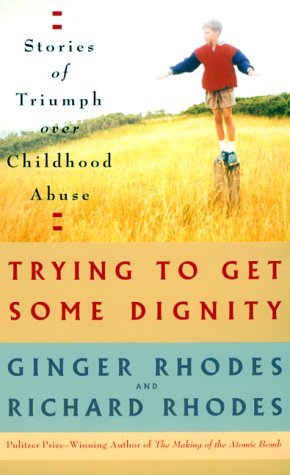
Trying to Get Some Stories of Triumph Over Childhood Abuse evolved from Richard Rhodes's memoir, A Hole in the An American Boyhood , in which he told of the abuse he endured at the hands of his stepmother. Here is an oral history of child abuse--physical, mental, and sexual--and how its survivors dealt with it. While talking with victims of abuse, the authors found that "each strategy [for survival] was original, imaginative, off the books, a tribute to the canny resilience of the human spirit. Collectively, like breathtaking third-act reversals, they promised to lift the narrative from one of pain to one of triumph." Trying to Get Some Dignity will reaffirm readers' faith in their ability to overcome seemingly insurmountable obstacles in their own lives.

In this perceptive and illustrative look at the expressive and practical use of stone throughout history, Richard Rhodes unlocks the underlying principles of this ancient material—and explains the closely guarded “Sacred Rules” of the Freemasons guild for the first time ever.The relationship between mankind and stone is elemental and deeply ingrained in us all. Stone, after all, has been the primary building material for more than five thousand years of human history, and it continues to record our triumphs and failures. In this searching history, Rhodes—a sculptor, stonemason, and scholar of stonework—explores how stone is best used today and throughout history.Stone presents the closely kept “Sacred Rules” developed over centuries by the medieval Freemason guild, previously available only to the initiated. Here, the rules are explained through historical examples and photographs. In these times of rapid development and expansive urbanization, Rhodes implores us to explore the essential qualities of stone that emerge from the Sacred Rules, not only to rediscover the ancient and traditional knowledge that governed its use for so long but also to find a roadmap for how future generations might thoughtfully recapture the power this material offers.MOST RENOWNED STONEMASON IN THE Richard Rhodes apprenticed as a stonemason in Siena, Italy, after graduate studies at the London Academy of Music and Dramatic Art. As the first non-Italian admitted into Siena’s ancient masonic guild in 726 years, he is known throughout the sculpture and stone community as the “last apprentice.”HISTORICAL A nationally acclaimed lecturer and educator, Rhodes has shared his deep knowledge of the history of stone and stonemasonry through convention addresses to the American Institute of Architects and the Association of Professional Landscape Designers, a five-lecture educational series to the Institute of Classical Architecture in both New York and San Francisco, and lectures to the Building Stone Institute and many public and private universities. His writing has been featured in Architectural Digest, New York Times, Architectural Record, MSNBC, The Globe and Mail, Greenwich Post, Seattle Times, and The Globe and Mail, among many others. EXPERT The book includes a foreword by Paul Goldberger, a contributing editor at Vanity Fair and previous architecture critic for both the New Yorker and the New York Times, where he was awarded the Pulitzer Prize. He is the author of many books, including Why Architecture Matters.


Fleeing from America after her father's death, young Cassie finds herself attracted to Seth Crown, the strong, resilient son of African missionaries whose past is darkened by murder and racism


Through years of research and clinical work, Doctors Alan and Donna Brauer have developed an amazing technique which will revolutionise readers sex lives, exploring the mental and emotional as well as physical aspects.