
Jimmy Carter
Librarian’s note: There is more than one author in the Goodreads database with this name. James Earl Carter, Junior, known as Jimmy, the thirty-ninth president of the United States from 1977 to 1981, creditably established energy-conservation measures, concluded the treaties of Panama Canal in 1978, negotiated the accords of Camp David between Egypt and Israel in 1979, and won the Nobel Prize of 2002 for peace. Ronald Wilson Reagan defeated Jimmy Carter, the incumbent, in the presidential election of 1980. He served and received. Carter served two terms in the senate of Georgia and as the 76th governor from 1971 to 1975. Carter created new Cabinet-level Department of education. A national policy included price decontrol and new technology. From 1977, people reduced foreign oil imports one-half to 1982. In foreign affairs, Carter pursued the second round of strategic arms limitation talks (SALT). Carter sought to put a stronger emphasis on human rights in 1979. People saw his return of the zone as a major concession of influence in Latin America, and Carter came under heavy criticism. Iranian students in 1979 took over the American embassy and held hostages, and an attempt to rescue them failed; several additional major crises, including serious fuel shortages and the Soviet invasion of Afghanistan, marked the final year of his tenure. Edward Moore Kennedy challenged significantly higher disapproval ratings of Carter for nomination of the Democratic Party before the election of 1980. Carter defeated Kennedy for the nomination lost the election to Ronald Wilson Reagan, a Republican. Carter left office and with Rosalynn Smith Carter, his wife, afterward founded the nongovernmental center and organization that works to advance human rights. He traveled extensively to conduct, to observe elections, and to advance disease prevention and eradication in developing nations. He, a key, also figured in the project of habitat for humanity. Carter particularly vocalized on the Palestinian conflict. http://us.macmillan.com/author/jimmyc...
29 Books Written

In his major New York Times bestseller, Jimmy Carter looks back from ninety years of age and “reveals private thoughts and recollections over a fascinating career as businessman, politician, evangelist, and humanitarian” ( Booklist ).At ninety, Jimmy Carter reflects on his public and private life with a frankness that is disarming. He adds detail and emotion about his youth in rural Georgia that he described in his magnificent An Hour Before Daylight . He writes about racism and the isolation of the Carters. He describes the brutality of the hazing regimen at Annapolis, and how he nearly lost his life twice serving on submarines and his amazing interview with Admiral Rickover. He describes the profound influence his mother had on him, and how he admired his father even though he didn’t emulate him. He admits that he decided to quit the Navy and later enter politics without consulting his wife, Rosalynn, and how appalled he is in retrospect.In his “warm and detailed memoir” ( Los Angeles Times ), Carter tells what he is proud of and what he might do differently. He discusses his regret at losing his re-election, but how he and Rosalynn pushed on and made a new life and second and third rewarding careers. He is frank about the presidents who have succeeded him, world leaders, and his passions for the causes he cares most about, particularly the condition of women and the deprived people of the developing world.“Always warm and human…even inspirational” ( Buffalo News ), A Full Life is a wise and moving look back from this remarkable man. Jimmy Carter has lived one of our great American lives—from rural obscurity to world fame, universal respect, and contentment. A Full Life is an extraordinary read from a “force to be reckoned with” ( Christian Science Monitor ).

The Hornet's Nest: A Novel of the Revolutionary War
by Jimmy Carter
Rating: 3.2 ⭐
• 2 recommendations ❤️
The first work of fiction by a President of the United States -- a sweeping novel of the American South and the War of Independence In his ambitious and deeply rewarding novel, Jimmy Carter brings to life the Revolutionary War as it was fought in the Deep South; it is a saga that will change the way we think about the conflict. He reminds us that much of the fight for independence took place in that region and that it was a struggle of both great and small battles and of terrible brutality, with neighbor turned against neighbor, the Indians' support sought by both sides, and no quarter asked or given. The Hornet's Nest follows a cast of characters and their loved ones on both sides of this violent conflict -- including some who are based on the author's ancestors. At the heart of the story is Ethan Pratt, who in 1766 moves with his wife, Epsey, from Philadelphia to North Carolina and then to Georgia in 1771, in the company of Quakers. On their homesteads in Georgia, Ethan and his wife form a friendship with neighbors Kindred Morris and his wife, Mavis. Through Kindred and his young Indian friend Newota, Ethan learns about the frontier and the Native American tribes who are being continually pressed farther inland by settlers. As the eight-year war develops, Ethan and Kindred find themselves in life-and-death combat with opposing forces. With its moving love story, vivid action, and the suspense of a war fought with increasing ferocity and stealth, The Hornet's Nest is historical fiction at its best, in the tradition of such major classics as The Last of the Mohicans.

Following his #1 New York Times bestseller, Our Endangered Values, the former president, winner of the Nobel Peace Prize, offers an assessment of what must be done to bring permanent peace to Israel with dignity and justice to Palestine.President Carter, who was able to negotiate peace between Israel and Egypt, has remained deeply involved in Middle East affairs since leaving the White House. He has stayed in touch with the major players from all sides in the conflict and has made numerous trips to the Holy Land, most recently as an observer in the Palestinian elections of 2005 and 2006. In this book, President Carter shares his intimate knowledge of the history of the Middle East and his personal experiences with the principal actors, and he addresses sensitive political issues many American officials avoid. Pulling no punches, Carter prescribes steps that must be taken for the two states to share the Holy Land without a system of apartheid or the constant fear of terrorism. The general parameters of a long-term, two-state agreement are well known, the president writes. There will be no substantive and permanent peace for any peoples in this troubled region as long as Israel is violating key UN resolutions, official American policy, and the international “road map” for peace by occupying Arab lands and oppressing the Palestinians. Except for mutually agreeable negotiated modifications, Israel’s official pre-1967 borders must be honored. As were all previous administrations since the founding of Israel, US government leaders must be in the forefront of achieving this long-delayed goal of a just agreement that both sides can honor. Palestine Peace Not Apartheid is a challenging, provocative, and courageous book.

President Jimmy Carter offers a passionate defense of separation of church and state. He warns that fundamentalists are deliberately blurring the lines between politics and religion. As a believing Christian, Carter takes on issues that are under fierce debate -- women's rights, terrorism, homosexuality, civil liberties, abortion, the death penalty, science and religion, environmental degradation, nuclear arsenals, preemptive war, and America's global image.

In An Hour Before Daylight, Jimmy Carter, bestselling author of Living Faith and Sources of Strength, recreates his Depression-era boyhood on a Georgia farm before the civil rights movement forever changed it and the country.Carter writes about the powerful rhythms of countryside and community in a sharecropping economy, offering an unforgettable portrait of his father, a brilliant farmer and a strict segregationist who treated black workers with respect and fairness; his strong-willed and well-read mother; and the five other people who shaped his early life, three of whom were black.Carter's clean and eloquent prose evokes a time when the cycles of life were predictable and simple and the rules were heartbreaking and complex. In his singular voice and with a novelist's gift for detail, Jimmy Carter creates a sensitive portrait of an era that shaped the nation and recounts a classic, American story of enduring importance.
The world's discrimination and violence against women and girls is the most serious, pervasive, and ignored violation of basic human rights: This is President Jimmy Carter's call to action.President Carter was encouraged to write this book by a wide coalition of leaders of all faiths. His urgent report is current. It covers the plight of women and girls–strangled at birth, forced to suffer servitude, child marriage, genital cutting, deprived of equal opportunity in wealthier nations and "owned" by men in others. And the most vulnerable, along with their children, are trapped in war and violence.He addresses the adverse impact of distorted religious texts on women, by Protestants, Catholics, Jews, and Muslims. Special verses are often omitted or quoted out of context to exalt the status of men and exclude women. In a remark that is certain to get attention, Carter points out that women are treated more equally in some countries that are atheistic or where governments are strictly separated from religion.Carter describes his personal observations of the conditions and hardships of women around the world. He describes a trip in Africa with Bill Gates, Sr. and his wife, where they are appalled by visits to enormous brothels. He tells how he joined Nelson Mandela to plead for an end to South Africa's practice of outlawing treatments to protect babies from AIDS-infected mothers.Throughout, Carter reports on observations of women activists and workers of The Carter Center. This is an informed and passionate charge about human rights abuses against half the world's population. It comes from one of the world's most renowned human rights advocates.

Jimmy Carter remembers Christmas in Plains, Georgia, the source of spiritual strength, respite, friendship, and vacation fun in this charming portrait.In a beautifully rendered portrait, Jimmy Carter remembers the Christmas days of his Plains boyhood—the simplicity of family and community gift-giving, his father’s eggnog, the children’s house decorations, the school Nativity pageant, the fireworks, Luke’s story of the birth of Christ, and the poignancy of his black neighbors’ poverty.Later, away at Annapolis, he always went home to Plains, and during his Navy years, when he and Rosalynn were raising their young family, they spent their Christmases together recreating for their children the holiday festivities of their youth.Since the Carters returned home to Plains for good, they have always been there on Christmas Day, with only one exception in forty-eight years: In 1980, with Americans held hostage in Iran, Jimmy, Rosalynn, and Amy went by themselves to Camp David, where they felt lonely. Amy suggested that they invite the White House staff and their families to join them and to celebrate.Nowadays the Carters’ large family is still together at Christmastime, offering each other the gifts and the lifelong rituals that mark this day for them.With the novelist’s eye that enchanted readers of his memoir An Hour Before Daylight, Jimmy Carter has written another American classic, in the tradition of Truman Capote’s A Christmas Memory and Dylan Thomas’s A Child’s Christmas in Wales.

Here is the edited, annotated diary of President Jimmy Carter - filled with insights into his presidency, his relationships with friends and foes, and his lasting impact on issues that still preoccupy America and the world.Each day during his presidency, Jimmy Carter made several entries in a private diary, recording his thoughts, impressions, delights, and frustrations. He offered unvarnished assessments of cabinet members, congressmen, and foreign leaders; he narrated the progress of secret negotiations, such as those that led to the Camp David Accords. When his four-year term came to an end in early 1981, the diary amounted to more than 5,000 pages. But this extraordinary document has never been made public - until now. By carefully selecting the most illuminating and relevant entries, Carter has provided us with an astonishingly intimate view of his presidency. Day by day, we see his forceful advocacy for nuclear containment, sustainable energy, human rights, and peace in the Middle East. We witness his interactions with such complex personalities as Ted Kennedy, Henry Kissinger, Joe Biden, Anwar Sadat, and Menachem Begin. We get the inside story of his so-called "malaise speech", his bruising battle for the 1980 Democratic nomination, and the Iranian hostage crisis. Remarkably, we also get Carter's retrospective comments on these topics and more: 30 years after the fact, he has annotated the diary with his candid reflections on the people and events that shaped his presidency, and on the many lessons learned. Carter is now widely seen as one of the truly wise men of our time. Offering an unprecedented look at both the man and his tenure, this fascinating book will stand as a unique contribution to the history of the American presidency.

Former president Jimmy Carter reflects on aging, blending memoir, anecdote, political savvy, and practical advice to truly illuminate the rich promises of growing older.“As we've grown older, the results have been surprisingly good,” writes former president Jimmy Carter in this wise, deeply personal meditation on the new experiences that come to us with age. President Carter had never enjoyed more prestige or influence on the world stage, nor had he ever felt more profound happiness with himself, with his accomplishments, and with his beloved wife, Rosalynn, than in his golden years. In The Virtues of Aging, Jimmy Carter shares the knowledge and the pleasures that age have brought him. The approach to old age was not an easy one for President Carter. At fifty-six, having lost a presidential election, he found himself involuntarily retired from a job he loved and facing a large debt on his farm and warehouse business. President Carter writes movingly here of how he and Rosalynn overcame their despair and disappointment as together they met the challenges ahead.President Carter delves into issues he and millions of others confront in planning for retirement, undertaking new diet and exercise regimens, coping with age prejudice, and sorting out key political questions. On a more intimate level, Carter paints a glowing portrait of his happy marriage to Rosalynn, a relationship that deepened when they became grandparents. Here too are fascinating sketches of world leaders, Nobel laureates, and great thinkers President Carter has been privileged to know—and the valuable lessons on aging he learned from them.The Virtues of Aging celebrates both the blessings that come to us as we grow older and the blessings older people can bestow upon others. An important and moving book, written with gentleness, humor, and love, The Virtues of Aging is a treasure for readers of all ages.

For almost three decades, President Carter has regularly spent part of each Sunday reading from scripture and sharing his personal faith with neighbors, friends, and visitors at his Baptist church in Plains, Georgia. In "Living Faith," he draws on this experience, exploring the values closest to his heart and the personal beliefs that have nurtured and sustained him.For President Carter, faith finds its deepest expression in a life of compassion, reconciliation, and service to others. "Living Faith" is filled with stories of people whose lives have touched his--some from the world stage, more from modest walks of life. We see how President Carter learned about other faiths from Prime Minister Menachim Begin and President Anwar Sadat; learned a lesson in forgiveness from a clash with commentator George Will; how he was inspired by the simple theology of preacher Ely Cruz, "Love God and the person in front of you"; and how the cheerful strength of family friend Annie Mae Rhodes taught him the meaning of "patient faith."Rooted in scripture and infused with a vision of how a dynamic faith can enrich our public and private lives, this is the most personal book yet by one of our most admired Americans--a warmly inspirational volume to give and to share.
For Jimmy Carter, Holy Scripture has been a constant companion, a source of inspiration and strength in both good times and bad. A lifetime of devoted Bible reading has taught him that the truths of Scripture have the power to enrich and transform our daily lives in unexpected ways. Sources of Strength is his invitation to share in the spiritual bounty of Scripture and the joyous, more fulfilling life that a living faith makes possible. President Jimmy Carter has been known for decades as an avid student and teacher of the Bible. His adult Sunday school classes in his hometown Baptist church are well attended...and world famous. As The New York Times put it, "These weekly sessions...are remarkable for the ability of regular folks to walk in, grab a seat and exchange views with the 39th President of the United States. But they are also remarkable for what Mr. Carter has to say." Now, this most admired American has selected fifty-two of his favorite Bible meditations from his teachings to share with those searching for new faith, or for a deeper understanding of lifelong beliefs. The result is this remarkable book, Sources of Strength. Based on Old and New Testament passages, these thoughtful, inspiring lessons reflect themes that touch every the blessings and challenges of family love; loss, grief, and healing; forgiveness and reconciliation; the meaning of the good life; and, above all, the transforming power of God's love in our lives. A lifetime of devoted Bible reading has taught him that the truths of Scripture have the power to enrich and transform readers' daily lives in unexpected ways. As President Carter writes, "The Bible offers concrete guidance for overcoming our weaknesses and striving toward the...life for which we were created."

"A Remarkable Mother" is President Carter's loving, admiring, wry homage to Miss Lillian Carter, who championed the underdog always, even when her son was president. A registered nurse, pecan grower, university housemother, Peace Corps volunteer, public speaker, and renowned raconteur, Miss Lillian ignored the mores and prejudices of the racially segregated South of the Great Depression years. She was an avid supporter of the Brooklyn Dodgers (because she happened to attend the first major league baseball game in which Jackie Robinson, from Cairo, Georgia, played), was a favored guest on television talk shows (usually able to "steal the microphone" from hosts such as Johnny Carson and Walter Cronkite), and an important role model for the nation. Jimmy Carter's mother emerges from this portrait as redoubtable, generous, and forward-looking. He ascribes to her the inspiration for his own life's work of commitment and faith.

In Keeping Faith , originally published in 1982, President Carter provides a candid account of his time in the Oval Office, detailing the hostage crisis in Iran, his triumph at the Camp David Middle East peace summit, his relationships with world leaders, and even glimpses into his private world. “Responsible, truthful, intelligent, earnest, rational, purposeful. Thus the thus the book” ( The Washington Post ).

Following his New York Times bestselling classics comes this sparkling account of the joys of sharing the simple pleasures of life from Jimmy Carter.In this wonderfully evocative volume, Jimmy Carter writes about the things that matter most, the simple relaxed days and nights that he has enjoyed with family and friends through the years and across the generations.Here are lively, witty accounts of exploring the outdoors with his father and with black playmates; making furniture; painting; pursuing new adventures and going places with children, grandchildren, and friends; and sharing life with his wife, Rosalynn.Sharing Good Times is an inspirational guide for anyone desiring to stretch mind and heart and to combine work and pleasure.

In this urgent, balanced, and passionate book, Nobel Peace Laureate and former President Jimmy Carter argues that the present moment is a unique time for achieving peace in the Middle East -- and he offers a bold and comprehensive plan to do just that. President Carter has been a student of the biblical Holy Land all his life. For the last three decades, as president of the United States and as founder of The Carter Center, he has studied the complex and interrelated issues of the region's conflicts and has been actively involved in reconciling them. He knows the leaders of all factions in the region who will need to play key roles, and he sees encouraging signs among them.Carter describes the history of previous peace efforts and why they fell short. He argues persuasively that the road to a peace agreement is now open and that it has broad international and regional support. Most of all, since there will be no progress without courageous and sustained U.S. leadership, he says the time for progress is now. President Barack Obama is committed to a personal effort to exert that leadership, starting early in his administration.This is President Carter's call for action, and he lays out a practical and doable path to peace.

This is the story of President Jimmy Carter's post-presidency, the most admired and productive in the nation's history. Through The Carter Center, which he and Rosalynn Carter founded in 1982, he has fought neglected diseases, waged peace in war zones, and built hope among some of the most forgotten and needy people in the world.Serving in more than seventy nations, Carter has led peacekeeping efforts for Ethiopia, North Korea, Haiti, Bosnia and Herzegovina, Uganda, and Sudan. With his colleagues from The Carter Center, he has monitored more than sixty-five elections in troubled nations, from Palestine to Indonesia.Carter's bold initiatives, undertaken with dedicated colleagues, have eliminated, prevented, or cured an array of diseases that have been characterized as "neglected" by the World Health Organization and that afflict tens of millions of people unnecessarily. The Carter Center has taught millions of African families how to increase the production of food grains, and Rosalynn Carter has led a vigorous war against the stigma of mental illness around the world."Immersing ourselves among these deprived and suffering people has been a great blessing as it stretched our minds and hearts," Jimmy Carter writes. "The principles of The Carter Center have been the same ones that should characterize our nation, or any individual. They are the beliefs inherent in all the great world religions, including commitments to peace, justice, freedom, humility, forgiveness or an attempt to find accommodation with potential foes, generosity, human rights or fair treatment of others, protection of the environment, and the alleviation of suffering. This is our agenda for the future."

The first collection of poetry by former President Jimmy Carter, who shares here his private memories about his childhood, his family and political life, with illustrations by his granddaughter. Always a Reckoning sets a precedent since no other president has published a book of poetry. Gift packaged with ribbon marker. A portion of the proceeds from sales will be donated to charity.

The former president's personal tale of political intrigue and social conflict during his first campaign for public office. Iluminates the origins of his commitment to human rights and bears further witness to the accomplishments of an extraordinary man.

Why Not the Best?, originally published in 1975, is President Carter’s presidential campaign autobiography, the book that introduced the world to Georgia governor Jimmy Carter and asked the American people to demand the best and highest standards of excellence from our government.

In 2002, President Jimmy Carter received the Nobel Peace Prize for his dedicated efforts for peaceful solutions to advance human rights and delivered this inspiring lecture—now published in ebook form.On October 11, 2002, the Norwegian Nobel Committee announced that the winner of the Nobel Peace Prize for 2002 was Jimmy Carter, making him the first American-born laureate since Martin Luther King, Jr. was awarded the prize in 1967. President Jimmy Carter received the Nobel Peace Prize on December 10, 2002, and delivered this inspiring lecture.
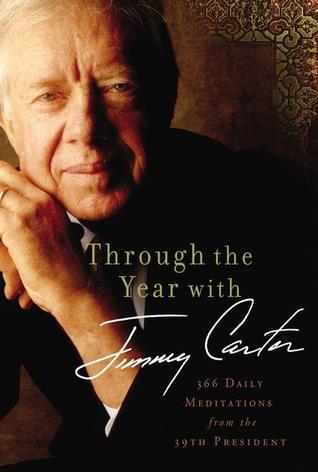
Through the Year with Jimmy Carter: 366 Daily Meditations from the 39th President
by Jimmy Carter
Rating: 4.2 ⭐
In Through the Year with Jimmy Carter, the thirty-ninth President of the United States takes you on a unique journey into the heart of the Christian faith. Based on more than three decades of practical Bible teaching, these readings draw from the riches of God's Word and the compelling experiences of Mr. Carter's own life. Whether through fascinating glimpses into behind-the-scenes activity at the White House, or insightful remembrances of his career in the U.S. Navy, Mr. Carter never ceases to connect the wisdom of Scripture with your own crucial place on the stage of life. Frank, honest, sometimes funny, sometimes heartbreaking, and always relevant, Through the Year with Jimmy Carter challenges readers to be more Christ-like every day of their lives.

New edition (previous 1985, 1986, 1988, 1993) of the former president's history and analysis. Annotation copyright Book News, Inc. Portland, Or.

From a global leader and human rights advocate whose commitment to public service has reached from Georgia to the White House to developing countries around the world comes a remarkable discussion of the foremost issue of our time: peace. This book is the first by a former United States president to address younger readers. Part personal narrative and part thoughtful exposition of current history, the vivid text examines the causes and effects of conflict and explains the urgent call for nonviolent conflict resolution in the world today. The author introduces readers to the peacemaking techniques that he developed in the Oval Office and has continued to use at the Carter Center, in Atlanta, Georgia, a nonpartisan public-policy organization that he and his wife, Rosalynn, founded in 1982. Among other projects, the Carter Center has monitored elections in Latin America and Africa, conducted mediation talks between parties in conflict, brought improved cultivation methods to thousands of African farmers, and spearheaded the global attack against several deadly diseases. The fearless idealism and practical approach that have long characterized the public work of the architect of the Camp David Accords shine through the pages here. Readers will discover the implied power and responsibility behind the author's message that all people - regardless of age, race, gender, and nationality - share common needs, common rights, a common dignity, and a common quest: the pursuit of peace.

For Jimmy and Rosalynn Carter, the transition from the White House to Plains, Georgia, was painful. EVERYTHING TO GAIN is their warm and unpretentious account of their successful adjustment to a new life, full of encouragement and insight for any couple wanting to renew their commitment to each other and to life.From the Paperback edition.

An Outdoor Journal , first published in 1988, is President Carter’s memoir of hunting and fishing and the meaning of nature, revealing much about a man who embodies “so much of what Americans claim to admire—self-reliance, honesty, humor, modesty, intelligence—the stuff of heroes” ( The New York Times Book Review ).

Fresh from the success of his highly praised volume of poetry, Always a Reckoning , former president Jimmy Carter now pens his first children's book, illustrated by his daughter Amy. Young Jeremy, who cannot walk, is abandoned at the seashore one day when the others flee at the sight of a terrifying sea monster. With no choice but to face this horror, Jeremy is surprised to discover a kindred spirit in the little baby Snoogle-Fleejer. (All Ages)

Former President Jimmy Carter has won the respect and affection of millions for his long and illustrious career as a humanitarian, a peacemaker, and an active promoter of human rights around the world. The Nobel Committee recognized President Carter’s remarkable achievements by awarding him the Peace Prize in October 2002 for his accomplishments fostering peace during his presidency and his tireless work after leaving office monitoring elections, promoting peaceful resolutions to conflict, and helping provide food, shelter, and healthcare to the world’s poor.Now, in The Personal Beliefs of Jimmy Carter , readers have for the first time in one volume the complete text of his spiritual autobiography, Living Faith , in which President Carter shares the values and experiences that have shaped his life, and Sources of Strength , fifty-two of his favorite Bible lessons that he has taught at his hometown church in Plains, Georgia, over the decades. These radiant works beautifully capture how President Carter has transformed his deep religious faith into an enduring course of action that has brought life and hope to those most in need. Bestsellers when they first published, these two books are even more resonant today as we continue to search for the answers to life’s most meaningful questions.

Leading a Worthy Life: Sunday Mornings in Plains: Bible Study with Jimmy Carter Vol. 1
by Jimmy Carter
Rating: 4.1 ⭐
A unique and personal audio legacy from one of the most important voices of our time Jimmy Carter's beloved bestsellers Living Faith, Sources of Strength and Our Endangered Values have established him as one of our nation's most trusted authorities on issues of faith and society. Today, the weekly Bible class he teaches at his home church in Plains, Georgia is attended by visitors from around the world, representing a wide range of faiths and denominations. Sunday Mornings in Plains gives you the opportunity to share in this remarkable experience wherever you are. Each volume of this extraordinary audio series draws on an extensive archive of recordings to present a month-long sequence of President Carter's Bible classes. Listening to these live recordings, you'll hear the unscripted interaction and unexpected insights that make his classes so popular, as well as the anecdotes from President Carter's life and observations about world events that he infuses into his lessons. Jimmy Carter has been teaching Sunday school ever since he was a young midshipman in Annapolis; in later years he conducted religious services on submarines on which he served, and even led the occasional class in Washington while he was president. For the last 25 years, President Carter has taught the adult Bible study at his church in Plains, where several hundred visitors join him each Sunday to understand the wisdom of the Bible and apply it to their lives. Leading a Worthy Life presents the four classes President Carter taught in January 1998 on the Book of Ephesians. Describing basic tenets of Christian living that still resonate today, Paul urges us "to lead a life worthy of the calling to which you have been called, with all humility and gentleness, with patience, bearing with one another in love, making every effort to maintain the unity of the Spirit in the bond of peace." (Ephesians 4: 1-3) As he speaks to the theme of reconciliation-with God and with each other-that runs through all four lessons, President Carter connects Paul's message to the concerns of our time, including such relevant issues as fundamentalism and disunity in the church, and shares insights into the practical application of faith in daily life that will challenge and inspire all of us.

In the 1980s former President Jimmy Carter took up painting in his free time. Using his home woodworking shop as a studio, Carter has since produced more than a hundred works, capturing the landscapes and people of his beloved Plains, Georgia, and the far-flung places to which he has traveled to advance the work of the The Carter Center. This book showcases in one place for the first time, more than fifty of his favorite paintings. The works are accompanied by his own written narrative.