
Steve Coll
Steve Coll is President & CEO of New America Foundation, and a staff writer at The New Yorker magazine. Previously he spent 20 years as a foreign correspondent and senior editor at The Washington Post, serving as the paper's managing editor from 1998 to 2004. He is author six books, including The Deal of the Century: The Break Up of AT&T (1986); The Taking of Getty Oil (1987); Eagle on the Street, based on the Pulitzer Prize-winning account of the SEC's battle with Wall Street (with David A. Vise, 1991); On the Grand Trunk Road: A Journey into South Asia (1994), Ghost Wars: The Secret History of the CIA, Afghanistan and Bin Laden, from the Soviet Invasion to September 10, 2001 (2004); and The Bin Ladens: An Arabian Family in the American Century (2008). Mr. Coll's professional awards include two Pulitzer Prizes. He won the first of these, for explanatory journalism, in 1990, for his series, with David A. Vise, about the SEC. His second was awarded in 2005, for his book, Ghost Wars, which also won the Council on Foreign Relations' Arthur Ross award; the Overseas Press Club award and the Lionel Gelber Prize for the best book published on international affairs during 2004. Other awards include the 1992 Livingston Award for outstanding foreign reporting; the 2000 Robert F. Kennedy Memorial Award for his coverage of the civil war in Sierra Leone; and a second Overseas Press Club Award for international magazine writing. Mr. Coll graduated Phi Beta Kappa, Cum Laude, from Occidental College in 1980 with a degree in English and history. He lives in Washington, D.C.
12 Books Written

Ghost Wars: The Secret History of the CIA, Afghanistan, and Bin Laden from the Soviet Invasion to September 10, 2001
by Steve Coll
Rating: 4.3 ⭐
• 2 recommendations ❤️
The news-breaking book that has sent shockwaves through the Bush White House, Ghost Wars is the most accurate and revealing account yet of the CIA's secret involvement in al-Qaeda's evolution. It won the Pulitzer Prize in 2005.Prize-winning journalist Steve Coll has spent years reporting from the Middle East, accessed previously classified government files and interviewed senior US officials and foreign spymasters. Here he gives the full inside story of the CIA's covert funding of an Islamic jihad against Soviet forces in Afghanistan, explores how this sowed the seeds of Bin Laden's rise, traces how he built his global network and brings to life the dramatic battles within the US government over national security. Above all, he lays bare American intelligence's continual failure to grasp the rising threat of terrorism in the years leading to 9/11 - and its devastating consequences.

Directorate S: The C.I.A. and America's Secret Wars in Afghanistan and Pakistan, 2001-2016
by Steve Coll
Rating: 4.2 ⭐
Winner of the National Book Critics Circle Award for Nonfiction • Nominated for the National Book Award for NonfictionFrom the Pulitzer Prize-winning author of Ghost Wars and The Achilles Trap, the epic and enthralling story of America's intelligence, military, and diplomatic efforts to defeat Al Qaeda and the Taliban in Afghanistan and Pakistan since 9/11 Prior to 9/11, the United States had been carrying out small-scale covert operations in Afghanistan, ostensibly in cooperation, although often in direct opposition, with I.S.I., the Pakistani intelligence agency. While the US was trying to quell extremists, a highly secretive and compartmentalized wing of I.S.I., known as "Directorate S," was covertly training, arming, and seeking to legitimize the Taliban, in order to enlarge Pakistan's sphere of influence. After 9/11, when fifty-nine countries, led by the U. S., deployed troops or provided aid to Afghanistan in an effort to flush out the Taliban and Al Qaeda, the U.S. was set on an invisible slow-motion collision course with Pakistan.Today we know that the war in Afghanistan would falter badly because of military hubris at the highest levels of the Pentagon, the drain on resources and provocation in the Muslim world caused by the U.S.-led invasion of Iraq, and corruption. But more than anything, as Coll makes painfully clear, the war in Afghanistan was doomed because of the failure of the United States to apprehend the motivations and intentions of I.S.I.'s "Directorate S". This was a swirling and shadowy struggle of historic proportions, which endured over a decade and across both the Bush and Obama administrations, involving multiple secret intelligence agencies, a litany of incongruous strategies and tactics, and dozens of players, including some of the most prominent military and political figures. A sprawling American tragedy, the war was an open clash of arms but also a covert melee of ideas, secrets, and subterranean violence. Coll excavates this grand battle, which took place away from the gaze of the American public. With unsurpassed expertise, original research, and attention to detail, he brings to life a narrative at once vast and intricate, local and global, propulsive and painstaking. This is the definitive explanation of how America came to be so badly ensnared in an elaborate, factional, and seemingly interminable conflict in South Asia. Nothing less than a forensic examination of the personal and political forces that shape world history, Directorate S is a complete masterpiece of both investigative and narrative journalism.

In Private Empire Steve Coll investigates the largest and most powerful private corporation in the United States, revealing the true extent of its power. ExxonMobil’s annual revenues are larger than the economic activity in the great majority of countries. In many of the countries where it conducts business, ExxonMobil’s sway over politics and security is greater than that of the United States embassy. In Washington, ExxonMobil spends more money lobbying Congress and the White House than almost any other corporation. Yet despite its outsized influence, it is a black box.Private Empire pulls back the curtain, tracking the corporation’s recent history and its central role on the world stage, beginning with the Exxon Valdez accident in 1989 and leading to the Deepwater Horizon oil spill in the Gulf of Mexico in 2010. The action spans the globe, moving from Moscow, to impoverished African capitals, Indonesia, and elsewhere in heart-stopping scenes that feature kidnapping cases, civil wars, and high-stakes struggles at the Kremlin. At home, Coll goes inside ExxonMobil’s K Street office and corporation headquarters in Irving, Texas, where top executives in the “God Pod” (as employees call it) oversee an extraordinary corporate culture of discipline and secrecy.The narrative is driven by larger than life characters, including corporate legend Lee “Iron Ass” Raymond, ExxonMobil’s chief executive until 2005. A close friend of Dick Cheney’s, Raymond was both the most successful and effective oil executive of his era and an unabashed skeptic about climate change and government regulation.. This position proved difficult to maintain in the face of new science and political change and Raymond’s successor, current ExxonMobil chief executive Rex Tillerson, broke with Raymond’s programs in an effort to reset ExxonMobil’s public image. The larger cast includes countless world leaders, plutocrats, dictators, guerrillas, and corporate scientists who are part of ExxonMobil’s colossal story.The first hard-hitting examination of ExxonMobil, Private Empire is the masterful result of Coll’s indefatigable reporting. He draws here on more than four hundred interviews; field reporting from the halls of Congress to the oil-laden swamps of the Niger Delta; more than one thousand pages of previously classified U.S. documents obtained under the Freedom of Information Act; heretofore unexamined court records; and many other sources. A penetrating, newsbreaking study, Private Empire is a defining portrait of ExxonMobil and the place of Big Oil in American politics and foreign policy.Winner of the Financial Times and Goldman Sachs Business Book of the Year Award 2012

The Achilles Trap: Saddam Hussein, the C.I.A., and the Origins of America's Invasion of Iraq
by Steve Coll
Rating: 4.3 ⭐
From bestselling and Pulitzer Prize-winning author Steve Coll, the definitive story of the decades-long relationship between the United States and Saddam Hussein, and a deeply researched and news breaking investigation into how human error, cultural miscommunication, and hubris led to one of the costliest geopolitical conflicts of our timeWhen the United States invaded Iraq in 2003, its message was Iraq, under the control of strongman Saddam Hussein, possessed weapons of mass destruction which, if left unchecked, posed grave danger to the world. But when no WMDs were found, the US and its allies were forced to examine the political and intelligence failures that had led to the invasion and the occupation, and the civil war that followed. One integral question has remained Why had Saddam seemingly sacrificed his long reign in power by giving the false impression that he possessed hidden stocks of dangerous weapons?The Achilles Trap masterfully untangles the people, ploys of power, and geopolitics that led to America’s disastrous war with Iraq, and, for the first time, details America’s fundamental miscalculations during its decades-long relationship with Saddam Hussein. Beginning with Saddam’s rise to power in 1979 and the birth of Iraq’s secret nuclear weapons program, Steve Coll traces Saddam’s motives by way of his inner circle. He brings to life the diplomats, scientists, family members, and generals who had no choice but to defer to their leader—a leader directly responsible for the deaths of hundreds of thousands of Iraqis, as well as the torture or imprisonment of hundreds of thousands more. This was a man whose reasoning was impossible to reduce to a simple explanation, and the CIA and successive presidential administrations failed to grasp critical nuances of his paranoia, resentments, and inconsistencies – even when the stakes were incredibly high.Calling on unpublished and under-reported sources, interviews with surviving participants, and Saddam’s own transcripts and audio files, Coll pulls together an incredibly comprehensive portrait of a man who was convinced the world was out to get him, and acted accordingly. A work of great historical significance, The Achilles Trap is the definitive account of how corruptions of power, lies of diplomacy, and vanity – on both sides – led to avoidable errors of statecraft, ones that would enact immeasurable human suffering and forever change the political landscape as we know it.

The rise and rise of the Bin Laden family is one of the great stories of the twentieth century; its repercussions have already deeply marked the twenty-first. Until now, however, it is a story that has never been fully told, as the Bin Ladens have successfully fended off attempts to understand the family circles from which Osama sprang. In this the family has been abetted by the kingdom it calls home, Saudi Arabia, one of the most closed societies on earth.Steve Coll’s The Bin Ladens: An Arabian Family in the American Century is the groundbreaking history of a family and its fortune. It chronicles a young illiterate Yemeni bricklayer, Mohamed Bin Laden, who went to the new, oil-rich country of Saudi Arabia and quickly became a vital figure in its development, building great mosques and highways and making himself and many of his children millionaires. It is also a story of the Saudi royal family, whom the Bin Ladens served loyally and without whose capricious favor they would have been nothing. And it is a story of tensions and contradictions in a country founded on extreme religious purity, which then became awash in oil money and dazzled by the temptations of the West. In only two generations the Bin Ladens moved from a famine-stricken desert canyon to luxury jets, yachts, and private compounds around the world, even going into business with Hollywood celebrities. These religious and cultural gyrations resulted in everything from enthusiasm for America—exemplified by Osama’s free-living pilot brother Salem—to an overwhelming determination to destroy it.The Bin Ladens is a meticulously researched, colorful, shocking, entertaining, and disturbing narrative of global integration and its limitations. It encapsulates the unsettling contradictions of globalization in the story of a single family who has used money, mobility, and technology to dramatically varied ends.

The Taking of Getty Oil: Pennzoil, Texaco, and the Takeover Battle That Made History
by Steve Coll
Rating: 4.4 ⭐
A larger-than-life account of family, greed, and a courtroom showdown between Big Oil rivals from the New York Times–bestselling author of Private Empire. Pulitzer Prize–winning author Steve Coll is renowned for “his ability to take complicated, significant business stories and turn them into quick-reading engaging narratives” (Chicago Tribune). Coll is at the height of his talents in this “riveting” tale of one of the most spectacular—and catastrophic—corporate takeovers of all time (Newsday). As the head of a sprawling oil empire, J. Paul Getty was once the world’s richest man. But by 1984, eight years after his death, Getty’s legacy was in His children were locked in a bitter feud over the family trust and the company he founded was riven by boardroom turmoil. Then Pennzoil made an agreement with Getty’s son, Gordon, to purchase Getty Oil. It was a done deal—until Texaco swooped in to claim the $10 billion prize. What followed was an epic legal battle that pit “good ole boy” J. Hugh Liedtke of Pennzoil against the Wall Street brokers behind Texaco’s offer. The scandalous details of the case would shock the business world and change the landscape of the oil industry forever. With a large cast of colorful characters and the dramatic pacing of a novel, The Taking of Getty Oil is a “suspenseful” and “always intriguing” chronicle of one of the most fascinating chapters in American corporate history (Publishers Weekly).

When the US Department of Justice brought an antitrust lawsuit against AT&T in 1974, the telecommunications giant held a monopoly on phone service throughout the country. Over the following decade, an army of lawyers, executives, politicians, and judges spent countless hours clashing over what amounted to the biggest corporate breakup in American history. From boardroom to courtroom, Steve Coll untangles the myriad threads of this complex and critical case and gives readers “an excellent behind-the-scenes look” at the human drama involved in the remaking of an entire industry (The Philadelphia Inquirer). Hailed by the New York Times Book Review as “rich, intricate and convincing,” The Deal of the Century is the definitive narrative of a momentous turning point in the way America does business. A New York Times–bestselling author’s “superbly reported” account of the dismantling of the world’s largest corporation (The Washington Post). Written by the two-time Pulitzer Prize–winning author of Ghost Wars and Private Empire, The Deal of the Century chronicles the decade-long war for control of AT&T.

In this stirring travelogue, a Pulitzer Prize-winning Washington Post reporter journeys through the tumultuous nations of South Asia--India, Pakistan, Bangladesh, Sri Lanka, Nepal, and Afghanistan. This is a land where the 10th and 20th centuries uneasily intermix--and often explode.

Please Note That The Following Individual Books As Per Original ISBN and Cover Image In this Listing shall be Dispatched Titles In This The Achilles Trap [Hardcover] Ghost Wars [Paperback] Directorate S [Paperback] Steve Coll 3 Books Collection Set (The Achilles Trap [Hardcover], Ghost Wars, Directorate S): The Achilles Trap [Hardcover]: The Achilles Trap masterfully untangles the people, ploys of power and geopolitics that led to America's disastrous war with Iraq and, for the first time, details America's fundamental miscalculations during its ruinous, decades-long relationship with Saddam Hussein.Beginning with Saddam's rise to power in 1979 and the birth of Iraq's secret nuclear weapons programme, Steve Coll traces Saddam's motives through understanding his inner circle. Ghost Steve Coll has spent years reporting from the Middle East, accessed previously classified government files and interviewed senior US officials and foreign spymasters. Here he gives the full inside story of the CIA's covert funding of an Islamic jihad against Soviet forces in Afghanistan, explores how this sowed the seeds of bn Laden's rise, traces how he built his global network and brings to life the dramatic battles within the US government over national security. Directorate From the Pulitzer Prize winning of the acclaimed Ghost Wars, this is the full story of America's grim involvement in the affairs of Afghanistan from 2001 to 2016. In the wake of the terrible shock of 9/11, the C.I.A. scrambled to work out how to destroy Bin Laden and his associates. The C.I.A. had long familiarity with Afghanistan and had worked closely with the Taliban to defeat the Soviet Union there. A tangle of assumptions, old contacts, favours and animosities were now reactivated.9780525562269/9780525562269/9780718194499
Collaboration in Science.
by Steve Coll
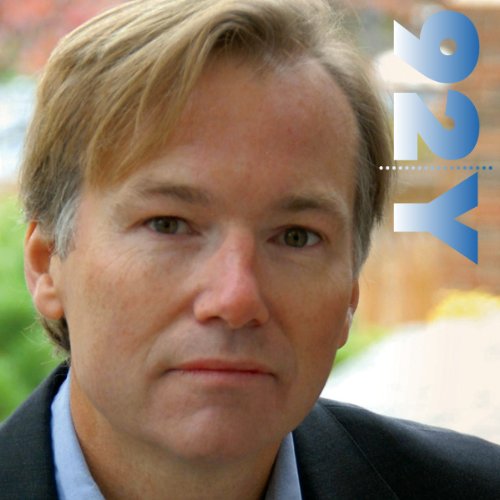
The author of the Pulitzer Prize-winning Ghost The Secret History of the CIA, Afghanistan, and Bin Laden, from the Soviet Invasion to September 10, 2001, The New Yorker writer Steve Coll discusses his most recent book, The Bin An Arabian Family in the American Century. Coll talks to David Remnick, the editor in chief of The New Yorker.