Loading genres...
Explore the best books about Theology genre.

A translation of the Kabbalah for the layperson includes a compact presentation of each primary text and features a practical analysis and vital historical information that offer insight into the various aspects of Jewish mysticism.

Machen's classic defense of orthodox Christianity establishes the importance of scriptural doctrine and contrasts the teachings of liberalism and orthodoxy on God and man, the Bible, Christ, salvation, and the church. Though originally published nearly seventy years ago, the book maintains its relevance today.

An astonishing work of cultural criticism, this book is widely recognized as a brilliant and devastating challenge to conventional views of literature, anthropology, religion, and psychoanalysis. In its scope and interest it can be compared with Freud's Totem and Taboo, the subtext Girard refutes with polemic daring, vast erudition, and a persuasiveness that leaves the reader compelled to respond, one way or another.This is the single fullest summation of Girard's ideas to date, the book by which they will stand or fall. In a dialogue with two psychiatrists (Jean-Michel Oughourlian and Guy Lefort), Girard probes an encyclopedic array of topics, ranging across the entire spectrum of anthropology, psychoanalysis, and cultural production.Girard's point o departure is what he calls 'mimesis,' the conflict that arises when human rivals compete to differentiate themselves from each other, yet succeed only in becoming more and more alike. At certain points in the life of a society, according to Girard, this mimetic conflict erupts into a crisis in which all difference dissolves in indiscriminate violence. In primitive societies, such crises were resolved by the 'scapegoating mechanism,' in which the community, en masse, turned on an unpremeditated victim. The repression of this collective murder and its repetition in ritual sacrifice then formed the foundations of both religion and the restored social order.How does Christianity, at once the most 'sacrificial' of religions and a faith with a non-violent ideology, fit into this scheme? Girard grants Freud's point, in Totem and Taboo, that Christianity is similar to primitive religion, but only to refute Freud—if Christ is sacrificed, Girard argues, it is not because God willed it, but because human beings wanted it.The book is not merely, or perhaps not mainly, biblical exegesis, for within its scope fall some of the most vexing problems of social history—the paradox that violence has social efficacy, the function of the scapegoat, the mechanism of anti-semitism.

A centennial edition of I and Thou , a landmark of 20th-century intellectual history and one of the most important books of Western theology and philosophy, featuring the original English translation.Considered to be one of the most important books of Western theology since its original publication in 1923, Martin Buber’s slender volume I and Thou influenced the way theologians, philosophers, and laymen think about the meaning of the relationship between human life and God. Heavily influenced by the writings of Friedrich Nietzsche, Buber unites the proto-existentialist currents of modern German thought with the Judeo-Christian tradition, powerfully updating faith for modern times.I and Thou is Martin Buber’s seminal work and the centerpiece of his groundbreaking philosophy. In it, Buber—one of the greatest Jewish minds of the twentieth century—lays out a view of the world in which human beings can enter into relationships using their innermost and whole being to form true partnerships (an I – Thou attitude). These deep forms of rapport contrast with those that sprang from the Industrial Revolution, namely the treatment of others as objects for our use (an I – It attitude). Buber goes on to demonstrate how these interhuman meetings are a reflection of the human meeting with God. For Buber, the essence of biblical religion consists in the fact that—regardless of the infinite abyss between them—a dialogue between man and God is possible.This original English translation by Ronald Gregor Smith was prepared in the author’s presence and is considered to be the definitive edition of the book.

In the classic Mere Christianity, C.S. Lewis, the most important writer of the 20th century, explores the common ground upon which all of those of Christian faith stand together. Bringing together Lewis’ legendary broadcast talks during World War Two from his three previous books The Case for Christianity, Christian Behavior, and Beyond Personality, Mere Christianity provides an unequaled opportunity for believers and nonbelievers alike to hear this powerful apologetic for the Christian faith.

The Age of Reason represents the results of years of study and reflection by Thomas Paine on the place of religion in society. Paine wrote: "Of all the tyrannies that affect mankind, tyranny in religion is the worst; every other species of tyranny is limited to the world we live in; but this attempts to stride beyond the grave, and seeks to pursue us into eternity." The cool rationale of Paine's The Age of Reason influenced religious thinking throughout the world; and its pervasive influence continues to the present day.

A beautiful collection of blessings to support you through both the ordinary and extraordinary events of life, from the author of the bestselling Anam Cara “John O’Donohue is a man of the soul.”— Times (London) To Bless the Space Between Us is a compelling blend of elegant, poetic language and spiritual insight to offer readers comfort and encouragement on their journeys through life. John O’Donohue, Irish teacher and poet, looks at life’s thresholds—getting married, having children, starting a new job—and offers invaluable guidelines for making the transition from a known, familiar world into a new, unmapped territory. Most profoundly, however, O’Donohue explains “blessings” as a way of life, a lens through which the whole world is transformed. He awakens readers to timeless truths and shows the power they have to answer contemporary dilemmas and ease us through periods of change.

"I am neither a theologian, nor a scholar learned in the history of religions, nor an anthropologist. Psychology is the only branch of learning in which I am particularly versed. To the psychologist the religious propensities of man must be at least as interesting as any other of the facts pertaining to his mental constitution. It would seem, therefore, as a psychologist, the natural thing for me would be to invite you to a descriptive survey of those religious propensities." When William James went to the University of Edinburgh in 1901 to deliver a series of lectures on "natural religion," he defined religion as "the feelings, acts, and experiences of individual men in their solitude, so far as they apprehend themselves to stand in relation to whatever they may consider the divine." Considering religion, then, not as it is defined by--or takes place in--the churches, but as it is felt in everyday life, he undertook a project that, upon completion, stands not only as one of the most important texts on psychology ever written, not only as a vitally serious contemplation of spirituality, but for many critics one of the best works of nonfiction written in the 20th century. Reading The Varieties of Religious Experience, it is easy to see why. Applying his analytic clarity to religious accounts from a variety of sources, James elaborates a pluralistic framework in which "the divine can mean no single quality, it must mean a group of qualities, by being champions of which in alternation, different men may all find worthy missions." It's an intellectual call for serious religious tolerance — indeed, respect — the vitality of which has not diminished through the subsequent decades.

A Masterpiece of Satire on Hell’s Latest Novelties and Heaven’s Unanswerable AnswerC.S. Lewis’s The Screwtape Letters has entertained and enlightened readers the world over with its sly and ironic portrayal of human life and foibles from the unique vantage point of Screwtape, a highly placed assistant to “Our Father Below.” At once wildly comic, deadly serious, and strikingly original, C.S. Lewis gives us the correspondence of the wordly-wise devil to his nephew Wormwood, a novice demon in charge of securing the damnation of an ordinary young man. The Screwtape Letters is the most engaging account of temptation—and triumph over it—ever written.

Blaise Pascal, the precociously brilliant contemporary of Descartes, was a gifted mathematician and physicist, but it is his unfinished apologia for the Christian religion upon which his reputation now rests. The Penseés is a collection of philosohical fragments, notes and essays in which Pascal explores the contradictions of human nature in pscyhological, social, metaphysical and - above all - theological terms. Mankind emerges from Pascal's analysis as a wretched and desolate creature within an impersonal universe, but who can be transformed through faith in God's grace.

Moving from the Paleolithic age to the present, Karen Armstrong details the great lengths to which humankind has gone in order to experience a sacred reality that it called by many names, such as God, Brahman, Nirvana, Allah, or Dao. Focusing especially on Christianity but including Judaism, Islam, Buddhism, Hinduism, and Chinese spiritualities, Armstrong examines the diminished impulse toward religion in our own time, when a significant number of people either want nothing to do with God or question the efficacy of faith. Why has God become unbelievable? Why is it that atheists and theists alike now think and speak about God in a way that veers so profoundly from the thinking of our ancestors?Answering these questions with the same depth of knowledge and profound insight that have marked all her acclaimed books, Armstrong makes clear how the changing face of the world has necessarily changed the importance of religion at both the societal and the individual level. And she makes a powerful, convincing argument for drawing on the insights of the past in order to build a faith that speaks to the needs of our dangerously polarized age. Yet she cautions us that religion was never supposed to provide answers that lie within the competence of human reason; that, she says, is the role of logos. The task of religion is “to help us live creatively, peacefully, and even joyously with realities for which there are no easy explanations.” She emphasizes, too, that religion will not work automatically. It is, she says, a practical its insights are derived not from abstract speculation but from “dedicated intellectual endeavor” and a “compassionate lifestyle that enables us to break out of the prism of selfhood.”

In "Falling Upward, " Richard Rohr seeks to help readers understand the tasks of the two halves of life and to show them that those who have gone "down" are the only ones who understand "up." Those who have somehow fallen, and fallen well, are the only ones who can grow spiritually and not misuse "up." More than anything else, he describes what "up" (in the second half of life) will look like and could look like."The Companion Journal" helps those who have (and those who have not) read "Falling Upward "to engage more deeply with the questions the book raises. Using a blend of quotes, questions for individual and group reflection, stories, and suggestions for spiritual practices, it provides a wise guide for deepning the spiritual journey--at any time of life.

In No god but God, internationally acclaimed scholar Reza Aslan explains Islam—the origins and evolution of the faith—in all its beauty and complexity. This updated edition addresses the events of the past decade, analyzing how they have influenced Islam’s position in modern culture. Aslan explores what the popular demonstrations pushing for democracy in the Middle East mean for the future of Islam in the region, how the Internet and social media have affected Islam’s evolution, and how the war on terror has altered the geopolitical balance of power in the Middle East. He also provides an update on the contemporary Muslim women’s movement, a discussion of the controversy over veiling in Europe, an in-depth history of Jihadism, and a look at how Muslims living in North America and Europe are changing the face of Islam. Timely and persuasive, No god but God is an elegantly written account that explains this magnificent yet misunderstood faith.

From the New York Times bestselling author of Hallelujah Anyway and Help, Thanks, Wow, a spiritual antidote to anxiety and despair in increasingly fraught times.As Anne Lamott knows, the world is a dangerous place. Terrorism and war have become the new normal. Environmental devastation looms even closer. And there are personal demands on her faith as well: getting older; her mother's Alzheimer's; her son's adolescence; and the passing of friends and time.Fortunately for those of us who are anxious about the state of the world, whose parents are also aging and dying, whose children are growing harder to recognize as they become teenagers, Plan B offers hope that we’re not alone in the midst of despair. It shares with us Lamott's ability to comfort and to make us laugh despite the grim realities.Anne Lamott is one of our most beloved writers, and Plan B is a book more necessary now than ever. It is further evidence that, as The New Yorker has written, "Anne Lamott is a cause for celebration."

Originally titled The Religions of Man, this completely revised and updated edition of Smith′s masterpiece, now with an engaging new foreword, explores the essential elements and teachings of the world′s predominant faiths, including:Hinduism,Buddhism,Confucianism,Taoism,Islam,Judaism,Christianity,and the native traditions of the Americas, Australia, Africa, and Oceania.Emphasising the inner -- rather than institutional -- dimensions of these religions, Smith devotes special attention to Zen and Tibetan Buddhism, Sufism, and the teachings of Jesus. He convincingly conveys the unique appeal and gifts of each of the traditions and reveals their hold on the human heart and imagination.

Hannah Arendt began her scholarly career with an exploration of Saint Augustine's concept of caritas, or neighborly love, written under the direction of Karl Jaspers and the influence of Martin Heidegger. After her German academic life came to a halt in 1933, Arendt carried her dissertation into exile in France, and years later took the same battered and stained copy to New York. During the late 1950s and early 1960s, as she was completing or reworking her most influential studies of political life, Arendt was simultaneously annotating and revising her dissertation on Augustine, amplifying its argument with terms and concepts she was using in her political works of the same period. The disseration became a bridge over which Arendt traveled back and forth between 1929 Heidelberg and 1960s New York, carrying with her Augustine's question about the possibility of social life in an age of rapid political and moral change.In Love and Saint Augustine, Joanna Vecchiarelli Scott and Judith Chelius Stark make this important early work accessible for the first time. Here is a completely corrected and revised English translation that incorporates Arendt's own substantial revisions and provides additional notes based on letters, contracts, and other documents as well as the recollections of Arendt's friends and colleagues during her later years.

A magisterial mappa mundi of the terrain that Pierre Hadot has so productively worked for decades, this ambitious work revises our view of ancient philosophy―and in doing so, proposes that we change the way we see philosophy itself. Hadot takes ancient philosophy out of its customary realm of names, dates, and arid abstractions and plants it squarely in the thick of life. Through a meticulous historical reading, he shows how the various schools, trends, and ideas of ancient Greek and Roman philosophy all tended toward one to provide a means for achieving happiness in this life, by transforming the individual’s mode of perceiving and being in the world.Most pressing for Hadot is the question of how the ancients conceived of philosophy. He argues in great detail, systematically covering the ideas of the earliest Greek thinkers, Hellenistic philosophy, and late antiquity, that ancient philosophers were concerned not just to develop philosophical theories, but to practice philosophy as a way of life―a way of life to be suggested, illuminated, and justified by their philosophical “discourse.” For the ancients, philosophical theory and the philosophical way of life were inseparably linked.What Is Ancient Philosophy? also explains why this connection broke down, most conspicuously in the case of academic, professional philosophers, especially under the influence of Christianity. Finally, Hadot turns to the question of whether and how this connection might be reestablished. Even as it brings ancient thoughts and thinkers to life, this invigorating work provides direction for those who wish to improve their lives by means of genuine philosophical thought.

A Room Called Remember brings together some of Buechner's finest writings on faith, love, and the power of words in the form of essays, addresses, and sermons. Here Buechner explores autobiography as theology, offers exhilarating reflections on biblical passages, and leads us into the "room called Remember," that "still room within us all where the past lives on as part of the present,...where with patience, with clarity, with quietness of heart, we remember consciously to remember the lives we have lived."

In this extensive inquiry into the sources of modern selfhood, Charles Taylor demonstrates just how rich and precious those resources are. The modern turn to subjectivity, with its attendant rejection of an objective order of reason, has led—it seems to many—to mere subjectivism at the mildest and to sheer nihilism at the worst. Many critics believe that the modern order has no moral backbone and has proved corrosive to all that might foster human good. Taylor rejects this view. He argues that, properly understood, our modern notion of the self provides a framework that more than compensates for the abandonment of substantive notions of rationality.The major insight of Sources of the Self is that modern subjectivity, in all its epistemological, aesthetic, and political ramifications, has its roots in ideas of human good. After first arguing that contemporary philosophers have ignored how self and good connect, the author defines the modern identity by describing its genesis. His effort to uncover and map our moral sources leads to novel interpretations of most of the figures and movements in the modern tradition. Taylor shows that the modern turn inward is not disastrous but is in fact the result of our long efforts to define and reach the good. At the heart of this definition he finds what he calls the affirmation of ordinary life, a value which has decisively if not completely replaced an older conception of reason as connected to a hierarchy based on birth and wealth. In telling the story of a revolution whose proponents have been Augustine, Montaigne, Luther, and a host of others, Taylor's goal is in part to make sure we do not lose sight of their goal and endanger all that has been achieved. Sources of the Self provides a decisive defense of the modern order and a sharp rebuff to its critics.

The strength of Puritan character and life lay in prayer and meditation. In this practice the spirit of prayer was regarded as of first importance and the best form of prayer, for living prayer is the characteristic of genuine spirituality. Yet prayer is also vocal and may therefore on occasions be written. Consequently in the Puritan tradition there are many written prayers and meditations which constitute an important corpus of inspiring devotional literature. Too often ex tempore prayer lacks variety, order and definiteness. The reason for this lies partly in a neglect of due preparation. It is here that the care and scriptural thoroughness which others found necessary in their approach to God may be of help. This book has been prepared not to 'supply' prayers but to prompt and encourage the Christian as he treads the path on which others have gone before.

This fresh book argues that the four Gospels are closely based on eyewitness testimony of those who knew Jesus. Noted New Testament scholar Richard Bauckham challenges the prevailing assumption that the accounts of Jesus circulated as “anonymous community traditions” instead asserting that they were transmitted in the name of the original eyewitness. To drive home this controversial point, Bauckham draws on internal literary evidence, study of personal names in the first century, and recent developments in the understanding of oral traditions. Jesus and the Eyewitnesses also taps into the rich resources of modern study of memory and cognitive psychology, refuting the conclusions of the form critics and calling New Testament scholarship to make a clean break with this long-dominant tradition. Finally, Bauckham challenges readers to end the classic division between the “historical Jesus” and the “Christ of faith” proposing the “Jesus of testimony” that is actually presented by Gospels. Sure to ignite heated debate on the precise character of the testimony about Jesus, Jesus and the Eyewitnesses will be valued by scholars, students and all who seek to understand the origins of the Gospels.

For almost 1,500 years, the New Testament manuscripts were copied by hand––and mistakes and intentional changes abound in the competing manuscript versions. Religious and biblical scholar Bart Ehrman makes the provocative case that many of our widely held beliefs concerning the divinity of Jesus, the Trinity, and the divine origins of the Bible itself are the results of both intentional and accidental alterations by scribes.In this compelling and fascinating book, Ehrman shows where and why changes were made in our earliest surviving manuscripts, explaining for the first time how the many variations of our cherished biblical stories came to be, and why only certain versions of the stories qualify for publication in the Bibles we read today. Ehrman frames his account with personal reflections on how his study of the Greek manuscripts made him abandon his once ultra–conservative views of the Bible.

Martin Buber was one of the most significant religious thinkers of the twentieth century. In this short and remarkable book he presents the essential teachings of Hasidism, the mystical Jewish movement which swept through Eastern Europe in the eighteenth and nineteenth centuries. Told through stories of imagination and spirit, together with Buber's own unique insights, The Way of Man offers us a way of understanding ourselves and our place in a spiritual world. 'There is something', he suggests, 'that can only be found in one place. It is a great treasure, which may be called the fulfilment of existence. The place where this treasure can be found is the place on which one stands.' Challenging us to recognize our own potential and to reach our true goal, The Way of Man is a life-enhancing book.

When The Universe Next Door was first introduced nearly thirty years ago, it set the standard for a clear, readable introduction to worldviews. In concise, easily understood prose, James W. Sire explained the basics of theism, deism, naturalism, nihilism, existentialism, Eastern monism and the new consciousness. The second edition was updated and expanded to include sections on Marxism and secular humanism, as well as a completely reworked chapter on what is now widely known as New Age philosophy rather than new consciousness. And the third edition offered further updating and revisions, including a thoroughly revised chapter on New Age philosophy and, perhaps most importantly, a new chapter on postmodernism. Now the fourth edition refines the definition of worldview itself, incorporating Sire's thinking and teaching during the past decade. (His recent work is showcased in a new book, Naming the Elephant, also published by IVP.) The Universe Next Door has been translated into several languages and has been used as a text at over one hundred colleges and universities in courses ranging from apologetics and world religions to history and English literature. With the publication of the fourth edition, this book will continue to aid students, teachers and anyone who wants to understand the variety of worldviews that compete with Christianity for the allegiance of our minds and hearts.

Combining three incredibly important books for the teaching of the Church, The Goldsworthy Trilogy offers a complete and comprehensive guide to understanding the gospel throughout the whole of Scripture. Hugely popular, this collection is being released in this special format and will be an essential guide to be used again and again for those who seek to understand the Bible in the light of who Jesus is. Straightforward in his approach, Goldsworthy looks at how the Bible can only be understood through the eyes of the gospel. This being the base of his interpretation, he studies the Old Testament and its application for today, Israels wisdom literature and its role in the Christian life and the purpose and contemporary relevance of the book of Revelation. This trilogy follows the Bible chronologically to give the reader a complete overview of evangelical biblical interpretation forming an essential one-stop reference that will last a lifetime.

Is there a higher power in the universe? What happens to us when we die? Frank J. Tipler claims to scientifically prove the existence of God and the physical resurrection of the dead.

The Bhagavad Gita tells the story of how Arjuna, the great warrior, is seated in his chariot about to engage in battle, when he sees his own kinsmen and his revered teacher arrayed in battle against him, and feels that he cannot fight. It is then that Krishna, the Cosmic Lord, comes to counsel him. Arjuna represents the human soul seated in the chariot of the body and Krishna is the inner Spirit, the God within, who is there to consel him. Today we see humanity divided against itself and threatened with nuclear war and mutual destruction. No political means are adequate to deal with this problem, and many are driven to despair. It is then that the message of the Gita comes to teach us that it is only when we rise above human schemes and calculations and awake to the presence of the indwelling Spirit that we can hope to find the answer to our need.

From a passionate and talented chef who also happens to be an Episcopalian priest comes this surprising and thought-provoking treatise on everything from prayer to poetry to puff pastry. In The Supper of the Lamb , Capon talks about festal and ferial cooking, emerging as an inspirational voice extolling the benefits and wonders of old-fashioned home cooking in a world of fast food and prepackaged cuisine. This edition includes the original recipes and a new Introduction by Deborah Madison, the founder of Greens Restaurant in San Francisco and author of several cookbooks.

In this landmark book of interfaith dialogue, the Dalai Lama provides an extraordinary Buddhist perspective on the teachings of Jesus, commenting on well-known passages from the four Christian Gospels including the Sermon on the Mount, the parable of the mustard seed, the Resurrection, and others. Drawing parallels between Jesus and the Buddha--and the rich traditions from which they hail--His Holiness delivers a profound affirmation of the sacred in all religions. Readers will be inspired by the Dalai Lama's discussion of the endless merits of each tradition and uplifted by the common humanity between them.

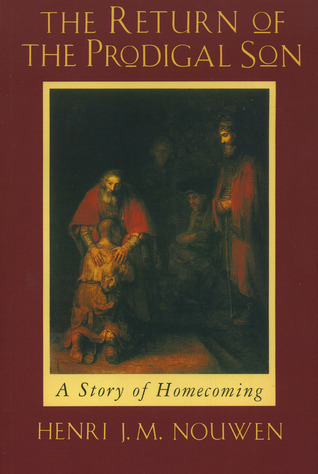
A chance encounter with a reproduction of Rembrandt's painting, The Return of the Prodigal Son, catapulted Henri Nouwen into a long spiritual adventure. In his highly-acclaimed book of the same title, he shares the deeply personal meditation that led him to discover the place within which God has chosen to dwell. This Lent course, which has been adapted from the book, helps us to reflect on the meaning of the parable for our own lives. Divided into five sessions, the course moves through the parable exploring our reaction to the story: the younger son's leaving and return, the father's restoration of sonship, the elder son's resentment and the father's compassion. All of us who have experienced loneliness, dejection, jealousy or anger will respond to the persistent themes of homecoming, affirmation and reconciliation.

No. 3 in the 2002 Academy of Parish Clergy Top Ten Books of the Year!The city presents serious challenges that cry out for poverty, racism, human exploitation and government corruption. How can the church move ahead in the midst of these demands with the gospel of hope? Here, in one comprehensive volume, Harvie Conn and Manuel Ortiz, two noted scholars and proven practitioners of urban ministry, address the vital work of the church in the city. Their dual to understand the city and God's work in it.Through four great waves of development, Conn and Ortiz trace the history of the city around the world. Then they tackle the critical issue of a biblical basis for urban mission. How does the Bible view the city? Are we closer to God in the country than the city? Does the Bible have an anti-urban bias? These questions are given a thorough analysis that unveils God's urban mandate as reflected in both Old and New Testaments.From this foundation the authors unpack the multifaceted nature of the city as place, as process, as center, as power, and as a place of change and stability. They move us beyond fragmented stereotypes to a new way of seeing that is holistic enough for a fully biblical ministry to develop. In addition, Conn and Ortiz lay out what the social sciences have to offer urban mission, including ethnographic and demographic studies and they focus on the particular issues and needs of urban leadership, including a plan for developing and mentoring leaders while equipping the laity for ministry in the city.This is the essential text for bringing God's kingdom to the city through the people of God. Now in paperback!

Focusing on the ground-breaking and often controversial science of Charles Darwin, the author seeks to bridge the gulf between science and religion on the subject of human evolution.

“My work has been motivated,” Wendell Berry has written, “by a desire to make myself responsibly at home in this world and in my native and chosen place.” In Home Economics , a collection of fourteen essays, Berry explores this process and continues to discuss what it means to make oneself “responsibly at home.”His title reminds us that the very root of economics is stewardship, household management. To paraphrase Confucius, a healthy planet is made up of healthy nations that are simply healthy communities sharing common ground, and communities are gatherings of households. A measure of the health of the planet is economics—the health of its households. Any process of destruction or healing must begin at home. Berry speaks of the necessary coherence of the “Great Economy,” as he argues for clarity in our lives, our conceptions, and our communications. To live is not to pass time, but to spend time.Whether as critic or as champion, Wendell Berry offers careful insights into our personal and national situation in a prose that is ringing and clear.

The works of the Buddha can feel vast, and it is sometimes difficult for even longtime students to know where to look, especially since the Buddha never explicitly defined the framework behind his teachings. Designed to provide just such a framework, In the Buddha's Words is an anthology of the Buddha's works that has been specifically compiled by a celebrated scholar and translator. For easy reference, the book is arrayed in ten thematic sections ranging from "The Human Condition" to "Mastering the Mind" to "The Planes of Realization." Each section comes with introductions, notes, and essays to help beginners and experts alike draw greater meaning from the Buddha's words. The book also features a general introduction by the author that fully lays out how and why he has arranged the Buddha's teachings in this volume. This thoughtful compilation is a valuable resource for both teachers and those who want to read the Buddha on their own.

Mephistopheles is the fourth and final volume of a critically acclaimed history of the concept of the Devil. The series constitutes the most complete historical study ever made of the figure that has been called the second most famous personage in Christianity.In his first three volumes Jeffrey Burton Russell brought the history of Christian diabology to the end of the Middle Ages, showing the development of a degree of consensus, even in detail, on the concept of the Devil. Mephistopheles continues the story from the Reformation to the present, tracing the fragmentation of the tradition. Using examples from theology, philosophy, art, literature, and popular culture, he describes the great changes effected in our idea of the Devil by the intellectual and cultural developments of modem times.Emphasizing key figures and movements, Russell covers the apogee of the witch craze in the Renaissance and Reformation, the effects of the Enlightenment's rationalist philosophy, the Romantic image of Satan, and the cynical or satirical literary treatments of the Devil in the late nineteenth century. He concludes that although today the Devil may seem an outworn metaphor, the very real horrors of the twentieth century suggest the continuing need for some vital symbol of radical evil.A work of great insight and learning, Mephistopheles deepens our understanding of the ways in which people in Western societies have dealt with the problem of evil.

With over a million copies in print, John Baillie’s classic collection of scripture and prayers is a beautiful daily devotional, the perfect companion guide to any Christian seeking to enrich their life through growth in prayer.In this book of personal devotions, noted theologian Dr. John Baillie offers personal prayers for people who are seeking a better understanding of God and themselves. Intermingling adoring and meditative thoughts about God with a concern for the social and individual good, these daily invocations help and inspire us to search within our inner selves and find the deep religious beliefs that lie within.

This book is for anyone who has ever wept and wondered, "Why?" Peter Kreeft observes that our world is full of billions of normal lives that have been touched by apparently pointless and random suffering. This account of a real and honest personal quest is both engaging and convincing. Written from a deep well of wisdom derived from experience and careful observation, Making Sense Out of Suffering is a book for empty hearts, not full ones. Read it if you are hungry for insight into the mystery of suffering. A Servant Book.

This enduring collection of twenty-one sermons by D. Martyn Lloyd-Jones, each originally delivered at Westminster Chapel in London, carefully and compassionately analyzes an undeniable feature of modern society from which Christians have not escaped -- spiritual depression."Christian people," writes Lloyd-Jones, "too often seem to be perpetually in the doldrums and too often give this appearance of unhappiness and of lack of freedom and absence of joy. There is no question at all but that this is the main reason why large numbers of people have ceased to be interested in Christianity."Believing the Christian joy was one of the most potent factors in the spread of Christianity in the early centuries, Lloyd-Jones not only lays bare the causes that have robbed many Christians of spiritual vitality but also points the way to the cure that is found through the mind and spirit of Christ.

In partnership with the Dutch Reformed Translation Society, Baker Academic is proud to offer the first volume of Herman Bavinck's complete Reformed Dogmatics in English for the very first time. Bavinck's approach throughout is meticulous. As he discusses the standard topics of dogmatic theology, he stands on the shoulders of giants such as Augustine, John Calvin, Francis Turretin, and Charles Hodge. This masterwork will appeal to scholars and students of theology, research and theological libraries, and pastors and laity who read serious works of Reformed theology.

The timeliness of this book, first published in 1901, is shown by the fact that a great number of academic texts quote from it. "The Certainty of Faith" is one of the small but powerful classics written by one of the greatest theologians Holland has ever produced. Bavinck examines the difference between the certainty of science and that of religion historically, biblically, and theologically.

For over 40 years, J. I. Packer's classic has been an important tool to help Christians around the world discover the wonder, the glory and the joy of knowing God. In 2006, Christianity Today voted this title one of the top 50 books that have shaped evangelicals. This edition is updated with Americanized language and spelling and a new preface by the author. Stemming from Packer's profound theological knowledge, Knowing God brings together two important facets of the Christian faith: 1. Knowing about God and 2. Knowing God through the context of a close relationship with the person of Jesus Christ. Written in an engaging and practical tone, this thought-provoking work seeks to transform and enrich the Christian understanding of God. Explaining both who God is and how we can relate to him, Packer divides his book into three sections: The first directs our attention to how and why we know God, the second to the attributes of God and the third to the benefits enjoyed by a those who know him intimately. This guide leads readers into a greater understanding of God while providing advice to gaining a closer relationship with him as a result.

This popular and bestselling book of the renowned Franciscan challenges people to move beyond the comfort of a settled life toward an understanding of themselves that is rooted in their connection to God. Only when they rest in God can they find the certainty and the freedom to become all that they can be. Contemplation has its place at the heart of Christianity, a place that allows people to experience how “everything belongs.”

In this series of notes, opinions, experiences, and reflections, Thomas Merton examines some of the most urgent questions of our age. With his characteristic forcefulness and candor, he brings the reader face-to-face with such provocative and controversial issues as the “death of God,” politics, modern life and values, and racial strife–issues that are as relevant today as they were fifty years ago.Conjectures of a Guilty Bystander is Merton at his best–detached but not unpassionate, humorous yet sensitive, at all times alive and searching, with a gift for language which has made him one of the most widely read and influential spiritual writers of our time.

Charles Rice, professor of the jurisprudence of St. Thomas Aquinas for the last twenty years at Notre Dame Law School, presents a very readable book on the natural law as seen through the teachings of Aquinas and their foundations in reason and Revelation. Reflecting on the most persistent questions asked by his students over the years, Rice shows how the natural law works and how it is rooted in the nature of the human person whose Creator provided this law as a sure and knowable guide for man to achieve his end of eternal happiness. This book presents the teachings of the Catholic Church in her role as arbiter of the applications of the natural law on issues involving the right to live, bioethics, the family and the economy. Charles Rice has produced a firmly grounded and accessible handbook which touches on the most important topics regarding natural law that will benefit readers of all backgrounds.

In his discussion of natural theology (arguments to prove the existence of God) and natural atheology (arguments for the falsehood of theistic belief) Plantinga focuses on two of the traditional arguments: the ontological argument as an example of natural theology, and the problem of evil as the most important representative of natural atheology. Accessible to serious general readers.

An examination of the influence of the Bible on Western art and literature and on the Western creative imagination in general. Frye persuasively presents the Bible as a unique text distinct from all other epics and sacred writings. “No one has set forth so clearly, so subtly, or with such cogent energy as Frye the literary aspect of our biblical heritage” (New York Times Book Review). Indices.


The end of the Cold War has brought about more than the triumph of some political ideologies and the disappearance of others. In fact, the collapse of communism has created a vacuum quickly being filled by various alternative visions, ranging from ethnic nationalism to individualistic liberalism. But political ideologies are not merely a matter of governmental efficacy. Rather, political ideologies are intrinsically and inescapably religious --each carries certain assumptions about the nature of reality, individuals and society, as well as a particular vision for the common good. These fundamental beliefs transcend the political sphere, and the astute Christian observer should thus discern the subtle ways in which ideologies are rooted in idolatrous worldviews. In this comprehensive study, political scientist David Koyzis surveys the key political ideologies of our era, including liberalism, conservatism, nationalism, democracy and socialism. Each philosophy is given careful analysis and fair critique, unpacking the worldview issues inherent to each and pointing out essential strengths and weaknesses. Koyzis concludes by proposing alternative models that flow out of Christianity's historic engagement with the public square, retrieving approaches that hold promise for the complex political realities of the twenty-first century. Writing with broad, international perspective and keen analytical insight, Koyzis offers a sound guide for Christians working in the public square, culture watchers, political pundits and all students of modern political thought.

The path from Jesus to Christianity is not as straight as we might think. Now, for the first time, L. Michael White, one of the world's foremost scholars on the origins of Christianity, provides the complete, astonishing story of how Christianity grew from the personal vision of a humble Jewish peasant living in a remote province of the Roman Empire into the largest organized religion in the world. Many take for granted that the New Testament is a single book representing God's coherent, unwavering word on Jesus and his church. A closer reading reveals not one story, but many. The New Testament is a collection of books -- the result of a variety of influences on a number of faithful but very human visionaries, preachers, and storytellers. The texts contain a wealth of biographies, histories, novels, letters, sermons, hymns, church manuals, and apocalypses, providing a spectrum of views of Jesus, his message, and his movement. Given this diversity of people, stories, and drastically different points of view, how did Christianity ever become what we know it as today? White draws on the most current scholarship to bring alive these ancient people and their debates, showing in depth how their stories were formed into what the world has come to know as the New Testament. Rather than reading the New Testament straight through in its traditional order -- Matthew, Mark, Luke, John, and so on -- White takes a historical approach, looking at the individual books in the sequence in which they were actually written. He explores what these books divulge about the disagreements, shared values, and unifying mission of the earliest Christian communities. White digs through layers of archaeological excavations, sifts through buried fragments of largely unknown texts, and examines historical sources to discover what we can know of Jesus and his early followers. It is this early, hidden history that shaped Christianity as it grew from an errant, messianic movement to a state religion and then into a world religion that has lasted for over two thousand years. White shows how the early debates spurred the evolution of Christianity as we know it. He delves into the arguments over how to understand Jesus as both human and divine, the role of women in the church, the diversity of beliefs among Christian communities, the Gnostic influences, and the political disputes that raged over which books would ultimately be included in the New Testament. Complete with illustrations, photos, charts, and maps, From Jesus to Christianity presents the fullest picture yet of the beginnings of what became the most popular religion on earth.

Most scholars studying the first five books of the Bible either attempt to dissect it into various pre-pentateuchal documents or, at the very least, analyze Genesis, Exodus, Leviticus, Numbers, and Deuteronomy as separate, self-contained documents. The Pentateuch As Narrative focuses on the narrative and literary continuity of the Pentateuch as a whole. It seeks to disclose how the original Jewish readers may have viewed this multivolume work of Moses. Its central thesis is that the Pentateuch was written from the perspective of one who had lived under the Law of the Covenant established at Mount Sinai and had seen its failure to produce genuine trust in the Lord God of Israel. In this context, the Pentateuch pointed the reader forward to the hope of the New Covenant, based on divine faithfulness. Throughout the commentary Dr. Sailhamer pays close attention to and interacts with a wide range of classical and contemporary literature on the Pentateuch, written by Jews, Catholics, and Protestants.

The Hidden Manna has become a classic on Eucharistic teaching. Now in a second edition, accompanied by a new introduction by Fr. Kenneth Baker, a new preface from the author, new material from John Paul II, and the original foreword by Cardinal John O'Connor, this in-depth study lets the breadth and richness of the Church's Tradition speak for itself.Fr. O'Connor presents and comments on substantial excerpts from the major sources of the Church's Tradition extending all the way back to apostolic times. Focusing on the doctrine of the Real Presence, he follows the earliest witnesses through the challenge in the Middle Ages of Berengarius through the Protestant Reformation and modern disputes."Father James O'Connor gives us nothing less than a comprehensive study of the Church's meditation on the Mystery of the Eucharist... The Hidden Manna is a superb work."�Cardinal John O'Connor"...We owe a debt of gratitude to Fr. James O'Connor for writing this beautiful treatise on �the Sacrament of Sacraments'. The Hidden Manna is a remarkable accomplishment of Catholic scholarship."�Fr. Kenneth Baker, S.J.

"Perhaps the greatest testament of personal devotion published in this century." — The New York Times A powerful journal of poems and spiritual meditations recorded over several decades by a universally known and admired peacemaker. A dramatic account of spiritual struggle, Markings has inspired hundreds of thousands of readers since it was first published in 1964. Markings is distinctive, as W.H. Auden remarks in his foreword, as a record of "the attempt by a professional man of action to unite in one life the via activa and the via contemplativa ." It reflects its author's efforts to live his creed, his belief that all men are equally the children of God and that faith and love require of him a life of selfless service to others. For Hammarskjöld, "the road to holiness necessarily passes through the world of action." Markings is not only a fascinating glimpse of the mind of a great man, but also a moving spiritual classic that has left its mark on generations of readers.

The Holy Bible, Christian Literature & Studies, Religious Studies

A contemporary treatment of the traditional theme of chastity that shows that a mature chastity can be loving, peaceful and fulfilled. †

Maximus is called the Confessor because of his sufferings and labors for the true faith. During the seventh century when the monothelite heresy (belief that Christ had only one will-----a divine one) plagued the Church, Maximus eloquently demonstrated that Christ had both human and divine natures. Writing in the introduction to this volume Jaroslav Pelikan highlights the relevance of Maximus' writings for today: "It was the genius of Maximus Confessor that, in a measure that has been granted only to a few, he was fully bilingual, affirming by means of negation and speaking both the language of spirituality and the language of theology with equal fluency. From the looks of things within both Western and Eastern Christendom-------and beyond------that gift of being bilingual is one that people of faith will need more than ever in the years to come."

Howard Thurman writes about building community. He calls us at once to affirm our own identity, but also to look beyond that identity to that which we have in common with all of life.

Those who practice the Muslim faith have resisted examinations of their religion. They are extremely guarded about their religion, and what they consider blasphemous acts by skeptical Muslims and non-Muslims alike has only served to pique the world's curiosity. This critical examination reveals an unflattering picture of the faith and its practitioners. Nevertheless, it is the truth, something that has either been deliberately concealed by modern scholars or buried in obscure journals accessible only to a select few.

Ladd's magisterial work on New Testament theology has well served thousands of seminary students since its publication in 1974. Enhanced and updated here by Donald A Hagner, this comprehensive, standard evangelical text now features augmented bibliographies and two completely new chapters on subjects that Ladd himself wanted to treat in a revised edition―the theology of each of the Synoptic Evangelists and the issue of unity and diversity in the New Testament―written, respectively, by R. T. France and David Wenham.

This is the most comprehensive anthology of Soren Kierkegaard's works ever assembled in English. Drawn from the volumes of Princeton's authoritative Kierkegaard's Writings series by editors Howard and Edna Hong, the selections represent every major aspect of Kierkegaard's extraordinary career. They reveal the powerful mix of philosophy, psychology, theology, and literary criticism that made Kierkegaard one of the most compelling writers of the nineteenth century and a shaping force in the twentieth. With an introduction to Kierkegaard's writings as a whole and explanatory notes for each selection, this is the essential one-volume guide to a thinker who changed the course of modern intellectual history.The anthology begins with Kierkegaard's early journal entries and traces the development of his work chronologically to the final The Changelessness of God. The book presents generous selections from all of Kierkegaard's landmark works, including Either/Or, Fear and Trembling, Works of Love, and The Sickness unto Death, and draws new attention to a host of such lesser-known writings as Three Discourses on Imagined Occasions and The Lily of the Field and the Bird of the Air. The selections are carefully chosen to reflect the unique character of Kierkegaard's work, with its shifting pseudonyms, its complex dialogues, and its potent combination of irony, satire, sermon, polemic, humor, and fiction. We see the esthetic, ethical, and ethical-religious ways of life initially presented as dialogue in two parallel series of pseudonymous and signed works and later in the "second authorship" as direct address. And we see the themes that bind the whole together, in particular Kierkegaard's overarching concern with, in his own words, "What it means to exist; . . . what it means to be a human being.?Together, the selections provide the best available introduction to Kierkegaard's writings and show more completely than any other book why his work, in all its creativity, variety, and power, continues to speak so directly today to so many readers around the world.

This book presents the major teachings of Mah y na Buddhism in a precise, dramatic, and even humorous form. For two millennia this S tra, called the jewel of the Mah y na S tras, has enjoyed immense popularity among Mah y na Buddhists in India, central and southeast Asia, Japan, and especially China, where its incidents were the basis for a style in art and literature prevalent during several centuries.Robert Thurman s translation makes available in relatively nontechnical English the Tibetan version of this key Buddhist scripture, previously known to the English-speaking world only through translations from Chinese texts. The Tibetan version is generally conceded to be more faithful to the original Sanskrit than are the Chinese texts. The Tibetan version also is clearer, richer, and more precise in its philosophical and psychological expression. The twelve books of the S tra are accompanied by an introduction and an epilogue by Dr. Thurman and by three glossaries: Sanskrit terms, numerical categories, and technical terms."

In this prize-winning book Nathan O. Hatch offers a provocative reassessment of religion and culture in the early days of the American republic, arguing that during this period American Christianity was democratized and common people became powerful actors on the religious scene. Hatch examines five distinct traditions or mass movements that emerged early in the nineteenth century—the Christian movement, Methodism, the Baptist movement, the black churches, and the Mormons—showing how all offered compelling visions of individual potential and collective aspiration to the unschooled and unsophisticated. "Rarely do works of scholarship deserve as much attention as this one. The so-called Second Great Awakening was the shaping epoch of American Protestantism, and this book is the most important study of it ever published."—James Turner, Journal of Interdisciplinary History "The most powerful, informed, and complex suggestion yet made about the religious, political, and psychic 'opening' of American life from Jefferson to Jackson. . . . Hatch's reconstruction of his five religious mass movements will add popular religious culture to denominationalism, church and state, and theology as primary dimensions of American religious history."—Robert M. Calhoon, William and Mary Quarterly "Hatch's revisionist work asks us to put the religion of the early republic in a radically new perspective. . . . He has written one of the finest books on American religious history to appear in many years."—James H. Moorhead, Theology Today The manuscript version of this book was awarded the 1988 Albert C. Outler Prize in Ecumenical Church History from the American Society of Church History Awarded the 1989 book prize of the Society for Historians of the Early American Republic for the best book in the history of the early republic (1789-1850) Co-winner of the 1990 John Hope Franklin Publication Prize given by the American Studies Association for the best book in American Studies Nathan O. Hatch is professor of history and vice president for Graduate Studies and Research at the University of Notre Dame.

Written with love, humility, and faith, this brief but poignant volume was first published in 1961 and concerns the death of C. S. Lewis's wife, the American-born poet Joy Davidman. In her introduction to this new edition, Madeleine L'Engle writes: "I am grateful to Lewis for having the courage to yell, to doubt, to kick at God in angry violence. This is a part of a healthy grief which is not often encouraged. It is helpful indeed that C. S. Lewis, who has been such a successful apologist for Christianity, should have the courage to admit doubt about what he has so superbly proclaimed. It gives us permission to admit our own doubts, our own angers and anguishes, and to know that they are part of the soul's growth."Written in longhand in notebooks that Lewis found in his home, A Grief Observed probes the "mad midnight moments" of Lewis's mourning and loss, moments in which he questioned what he had previously believed about life and death, marriage, and even God. Indecision and self-pity assailed Lewis. "We are under the harrow and can't escape," he writes. "I know that the thing I want is exactly the thing I can never get. The old life, the jokes, the drinks, the arguments, the lovemaking, the tiny, heartbreaking commonplace." Writing A Grief Observed as "a defense against total collapse, a safety valve," he came to recognize that "bereavement is a universal and integral part of our experience of love."Lewis writes his statement of faith with precision, humor, and grace. Yet neither is Lewis reluctant to confess his continuing doubts and his awareness of his own human frailty. This is precisely the quality which suggests that A Grief Observed may become "among the great devotional books of our age."

One of the most famous books ever written about a man’s search for faith and peace.The Seven Storey Mountain tells of the growing restlessness of a brilliant and passionate young man, who at the age of twenty-six, takes vows in one of the most demanding Catholic orders—the Trappist monks. At the Abbey of Gethsemani, "the four walls of my new freedom," Thomas Merton struggles to withdraw from the world, but only after he has fully immersed himself in it. At the abbey, he wrote this extraordinary testament, a unique spiritual autobiography that has been recognized as one of the most influential religious works of our time. Translated into more than twenty languages, it has touched millions of lives.

Analysis of the Encounter between Contemporary Faiths and Archaic Realities

While its tone is playful and frivolous, this book poses tough questions over the nature of religion and belief.Religion provides comfortable responses to the questions that have always beset humankind - why are we here, what is the point of being alive, how ought we to behave? Russell snatches that comfort away, leaving us instead with other, more troublesome alternatives: responsibility, autonomy, self-awareness. He tells us that the time to live is now, the place to live is here, and the way to be happy is to ensure others are happy.

In Grace (Eventually): Thoughts on Faith, the author of the bestsellers Traveling Mercies and Plan B delivers a poignant, funny, and bittersweet primer of faith, as we come to discover what it means to be fully alive.In Grace (Eventually): Thoughts on Faith, Lamott examines the ways we're caught in life's most daunting predicaments: love, mothering, work, politics, and maybe toughest of all, evolving from who we are to who we were meant to be. This is a complicated process for most of us, and Lamott turns her wit and honesty inward to describe her own intimate, bumpy, and unconventional road to grace and faith."I wish grace and healing were more abracadabra kinds of things," she writes in one of her essays, "that delicate silver bells would ring to announce grace's arrival. But no, it's clog and slog and scootch, on the floor, in silence, in the dark."Whether she's writing about her unsuccessful efforts to get her money back from an obstinate carpet salesman, grappling with the tectonic shifts in her relationship with her son as he matures, trying to maintain her faith and humor during politically challenging times, or helping a close friend die with dignity, Lamott seeks out both the divinity and the humanity in herself and everything around her. Throughout these essays, she writes of her struggle to find the essence of her faith, which she uncovers in the unlikeliest places.

Rage, resentment, envy, jealousy, and hatred― these emotions seem to dominate our times. They rule our highways, our workplaces, our homes, and our hearts. In this provocative book of essays, writer Garret Keizer considers anger in all its baffling forms. Poignantly aware of his own temper, and of his ties to a religion that glorifies meekness, the author looks at anger as a paradox in our struggle to remain human in the midst of an infuriating world. Interweaving personal anecdotes, mythological stories, sacred texts, and Keizer's insightful observations, The Enigma of Anger will prove a welcome companion for anyone who has ever wrestled with wrath-or wished to make better use of it.

The Diamond Sutra, composed in India in the 4th century CE, is one of the most treasured works of Buddhist literature & is the oldest existing printed book in the world. It's known as the Diamond Sutra because its teachings are said to be like diamonds that cut away all dualistic thought, releasing one from the attachment to objects & bringing one to the further shore of enlightenment. The format of this important sutra is presented as a conversation between the Buddha & one of his disciples. The Sutra of Hui-neng, also known as the Platform Sutra, contains the autobiography of a pivotal figure in Zen history & some of the most profound passages of Zen literature. Hui-neng was the 6th patriarch of Zen in China, but is often regarded as the true father of the Zen tradition. He was a poor, illiterate woodcutter who is said to have attained enlightenment upon hearing a recitation of the Diamond Sutra. Together, these two scriptures present the central teaching of the Zen Buddhist tradition & are essential reading for all students of Buddhism.

Hailed by many as the best modern book on Christian spirituality, Celebration of Discipline has helped more than one million seekers discover a richer spiritual life infused with joy, peace, and a deeper understanding of God. Celebration of Discipline explores the 'classic disciplines,' or central spiritual practices, of the Christian faith. Along the way, Foster shows that it is only by and through these practices that the true path to spiritual growth can be found. Dividing the disciplines into three movements of the Spirit, Foster shows how each of these areas contribute to a more balanced spiritual life. The inward disciplines of meditation, prayer, fasting, and study offer avenues of personal examination and change. The outward disciplines of simplicity, solitude, submission, and service help prepare us to make the world a better place. The corporate disciplines of confession, worship, guidance, and celebration bring us nearer to one another and to God. Foster provides a wealth of examples demonstrating how these disciplines can become part of our daily activities--and how they can help us shed our superficial habits and 'bring the abundance of God into our lives.' He offers crucial new insights on simplicity, demonstrating how the biblical view of simplicity, properly understood and applied, brings joy and balance to our inward and outward lives and 'sets us free to enjoy the provision of God as a gift that can be shared with others.' The discussion of celebration, often the most neglected of the disciplines, shows its critical importance, for it stands at the heart of the way to Christ. Celebration of discipline will help motivate Christians everywhere to embark on a journey of prayer and spiritual growth.

Deification in the Greek patristic tradition was the fulfillment of the destiny for which humanity was created - not merely salvation from sin but entry into the fullness of the divine life of the Trinity. This book, the first on the subject for over sixty years, traces the history of deification from its birth as a second-century metaphor with biblical roots to its maturity as a doctrine central to the spiritual life of the Byzantine Church. Drawing attention to the richness and diversity of the patristic approaches from Irenaeus to Maximus the Confessor, Norman Russell offers a full discussion of the background and context of the doctrine, at the same time highlighting its distinctively Christian character.

In this book, Dr. Jung, who has been the author of some of the most provocative hypotheses in modern psychology, describes what he regards as an authentic religious function in the unconscious mind. Using a wealth of material from ancient and medieval gnostic, alchemistic, and occultistic literature, he discusses the religious symbolism of unconscious processes and the possible continuity of religious forms that have appeared and reappeared through the centuries.

At his death in 1990, Walker Percy left a considerable legacy of uncollected nonfiction. Assembled in Signposts in a Strange Land, these essays on language, literature, philosophy, religion, psychiatry, morality, and life and letters in the South display the imaginative versatility of an author considered by many to be one the greatest modern American writers.

A revised edition for students at the divinity school level who study the origins of modern Baptists in 17th Century England, bibliology of the 18th and 19th century Baptists of England and America, and the sources for present-day uncertainties in the field of bibliology, especially as it relates to the Southern Baptist Convention as well as the Northern Baptist Convention. An excellent tool for researchers, scholars, as well as laymen.

The establishment of South Africa's Truth and Reconciliation Commission was a pioneering international event. Never had any country sought to move forward from despotism to democracy both by exposing the atrocities committed in the past and achieving reconciliation with its former oppressors. At the center of this unprecedented attempt at healing a nation has been Archbishop Desmond Tutu, whom President Nelson Mandela named as Chairman of the Truth and Reconciliation Commission. With the final report of the Commission just published, Archbishop Tutu offers his reflections on the profound wisdom he has gained by helping usher South Africa through this painful experience.In No Future Without Forgiveness, Tutu argues that true reconciliation cannot be achieved by denying the past. But nor is it easy to reconcile when a nation "looks the beast in the eye." Rather than repeat platitudes about forgiveness, he presents a bold spirituality that recognizes the horrors people can inflict upon one another, and yet retains a sense of idealism about reconciliation. With a clarity of pitch born out of decades of experience, Tutu shows readers how to move forward with honesty and compassion to build a newer and more humane world.

Jung has never pursued the "psychology of religion" apart from general psychology. The unique importance of his work lies rather in his discovery and treatment of religious, or potentially religious, factors in his investigation into the unconscious as a whole and in his general therapeutic practice. In Answer to Job, first published in Zurich in 1952, Jung employs the familiar language of theological discourse. Such terms as "God," "wisdom," and "evil" are the touchstones of his argument. And yet, Answer to Job, perhaps Jung's most controversial work, is not an essay in theology as much as it is an examination of the symbolic role that theological concepts play in a person's psychic life.

The classic Weight of Glory by C.S. Lewis, the most important Christian writer of the 20th century, contains nine sermons delivered by Lewis during World War Two. The nine addresses in Weight of Glory offer guidance, inspiration, and a compassionate apologetic for the Christian faith during a time of great doubt.

Originally published in 1947, The Uneasy Conscience of Modern Fundamentalism has since served as the manifesto of evangelical Christians serious about bringing the fundamentals of the Christian faith to bear in contemporary culture. In this classic book Carl F. H. Henry, the father of modern fundamentalism, pioneered a path for active Christian engagement with the world -- a path as relevant today as when it was first staked out.Now available again and featuring a new foreword by Richard J. Mouw, The Uneasy Conscience of Modern Fundamentalism offers a bracing world-and-life view that calls for boldness on the part of the evangelical community. Henry argues that a reformation is imperative within the ranks of conservative Christianity, one that will result in an ecumenical passion for souls and in the power to meaningfully address the social and intellectual needs of the world.

Saint Irenaeus was the first great Christian theologian. Born in Asia Minor in about 130 A.D., he became Bishop of Lyons and died as a martyr early in the third century. His main work, Adversus Haereses (Against the Heresies), is as relevant today as it was eighteen hundred years ago. It is a critique of Gnosticism, the 'anti-body' heresy, which, far from dying out, continues to flourish as the main threat to the Christian faith in our own day. With serenity and good humor, Irenaeus unfolds the unity of God's purpose in creation and redemption, in Old and New Testaments. The flesh and blood which Gnosticism so despised has been assumed by God in the womb of the Virgin Mary, and glorified in the Resurrection and the Eucharist. In this book, quotations from Saint Irenaeus have been arranged thematically in order to show the unity of his Christian view of the world. The texts have been selected and are introduced by the late Hans Urs von Balthasar, who is widely regarded as one of the greatest Catholic theologians of this century. They are translated by John Saward. "Everything in Irenaeus is bathed in a warm and radiant joy, a wise and majestic gentleness. His words of struggle are hard as iron and crystal clear, ... so penetrating that they cannot fail to enlighten the unbiased observer."— Hans Urs von Balthasar

This book is meant to be a companion to "Heretics," and to put the positive side in addition to the negative. Many critics complained of the book because it merely criticised current philosophies without offering any alternative philosophy. This book is an attempt to answer the challenge. It is the purpose of the writer to attempt an explanation, not of whether the Christian Faith can be believed, but of how he personally has come to believe it. The book is therefore arranged upon the positive principle of a riddle and its answer. It deals first with all the writer's own solitary and sincere speculations and then with the startling style in which they were all suddenly satisfied by the Christian Theology. The writer regards it as amounting to a convincing creed. But if it is not that it is at least a repeated and surprising coincidence.

John Owen was an English minister. Owen, born and raised a Puritan in Oxfordshire, studied at Queen's College and became ordained there. After becoming ordained Owen was a pastor at a couple different parishes. Owen would later return to Oxford and become the academic administrator. Owens also was a good friend of Oliver Cromwell and gave many sermons before Parliament. After Cromwell died Owen became more active in politics and joined the Wallingford House party. Throughout his life Owen wrote on a variety of topics including the defense of Calvinism in A Display of Arminianism.

Esta edición especial corresponde al Décimo Aniversario de su publicación original y nos proporciona una mirada fresca a un libro atesorado por la esperanza que comunica. Pensada para una nueva generación, revisada, aumentada, y mejorada con video digital en línea, incluye toda la sabiduría contenida en el texto original, además de dos capítulos nuevos. Se trata de perspectivas frescas que Rick Warren ha recopilado desde que escribió lo que se convertiría en el libro de contenido cristiano más vendido en el mundo. El lector descubrirá el asombroso plan de Dios para su presente y su eternidad conforme recorre una jornada espiritual que transformará su respuesta a la pregunta más importante de la vida: ¿Para qué estoy aquí en la tierra?

Rushdoony's study tells us an important part of American exactly what has public education been trying to accomplish? Before the 1830s and Horace Mann, no schools in the U.S. were state supported or state controlled. They were local, parent-teacher enterprises, supported without taxes, and taking care of all children. They were remarkably high in standard and were Christian. From Mann to the present, the state has used education to socialize the child. The school's basic purpose, according to its own philosophers, is not education in the traditional sense of the 3 R's. Instead, it is to promote 'democracy' and 'equality,' not in their legal or civic sense, but in terms of the engineering of a socialized citizenry. Public education became the means of creating a social order of the educator's design. Such men saw themselves and the school in messianic terms. This book was instrumental in launching the Christian school and homeschool movements.

In the classic text The Sacred and the Profane, famed historian of religion Mircea Eliade observes that even moderns who proclaim themselves residents of a completely profane world are still unconsciously nourished by the memory of the sacred. Eliade traces manifestations of the sacred from primitive to modern times in terms of space, time, nature, and the cosmos. In doing so he shows how the total human experience of the religious man compares with that of the nonreligious. This book of great originality and scholarship serves as an excellent introduction to the history of religion, but its perspective also encompasses philosophical anthropology, phenomenology, and psychology. It will appeal to anyone seeking to discover the potential dimensions of human existence.

Banned in Russia, Tolstoy's The Kingdom of God Is Within You was deemed a threat to church and state. The culmination of a lifetime's thought, it espouses a commitment to Jesus's message of turning the other cheek. In a bold and original manner, Tolstoy shows his readers clearly why they must reject violence of any sort—even that sanctioned by the state or the church—and urges them to look within themselves to find the answers to questions of morality.In 1894, one of the first English translations of this book found its way into the hands of a young Gandhi. Inspired by its message of nonresistance to evil, the Mahatma declared it a source of "independent thinking, profound morality, and truthfulness." Much of this work's emotional and moral appeal lies in its emphasis on fair treatment of the poor and working class. Its view of Christianity, not as a mystic religion but as a workable philosophy originating from the words of a remarkable teacher, extends its appeal to secular and religious readers alike.

God Is Not Great makes the ultimate case against religion. In a series of acute readings of the major religious texts, Christopher Hitchens demonstrates the ways in which religion is man-made, dangerously sexually repressive, and distorts the very origins of the cosmos. Above all, Hitchens argues that the concept of an omniscient God has profoundly damaged humanity, and proposes that the world might be a great deal better off without "him."

In the second edition of this major work, Dominican theologian Aidan Nichols provides a systematic account of the origins, development and recent history—now updated—of the relations between Rome and all separated Eastern Christians. By the end of the twentieth century, events in Eastern Europe, notably the conflict between the Orthodox and Uniate Churches in the Ukraine and Rumania, the tension between Rome and the Moscow patriarchate over the re-establishment of a Catholic hierarchy in the Russian Federation, and the civil war in the then federal People’s Republic of Yugoslavia, brought attention to the fragile relations between Catholicism and Orthodoxy, which once had been two parts of a single Communion. At the start of the twenty-first century, in the pontificate of Benedict XVI, a papal visit to Russia—at the symbolic level, a major step forward in the ‘healing of memories’— appears at last a realistic hope. In addition, the schisms separating Rome from the two lesser, but no less interesting, Christian families, the Assyrian (Nestorian) and Oriental Orthodox (Monophysite) Churches, are examined. The book also contains an account of the origins and present condition of the Eastern Catholic Churches—a deeper knowledge of which, by their Western brethren, was called for at the Second Vatican Council as well as by subsequent synods and popes. Providing both historical and theological explanations of these divisions, this illuminating and thought-provoking book chronicles the recent steps taken to mend them in the Ecumenical Movement and offers a realistic assessment of the difficulties (theological and political) which any reunion would experience.

“Advent is not about a sentimental waiting for the Baby Jesus”—Richard Rohr Advent is a time to focus our expectation and anticipation on “the adult Christ, the Cosmic Christ,” who challenges us to empty ourselves, to lose ourselves, to surrender. Preparing for Christmas offers daily meditations, prayers, Scripture readings, and questions for reflection for each day of Advent.

Hardcover classic pew Bible contains pronunciation guide, a list of words that have changed in meaning, and guides to reading the Bible.

Tolerance currently occupies a very high place in Western it is considered gauche, even boorish, to question it. In The Intolerance of Tolerance , however, questioning tolerance -- or, at least, contemporary understandings of tolerance -- is exactly what D. A . Carson does.Carson traces the subtle but enormous shift in the way we have come to understand tolerance over recent years -- from defending the rights of those who hold different beliefs to affirming all beliefs as equally valid and correct. He looks back at the history of this shift and discusses its implications for culture today, especially its bearing on democracy, discussions about good and evil, and Christian truth claims.Using real-life examples that will sometimes arouse laughter and sometimes make the blood boil, Carson argues not only that the "new tolerance" is socially dangerous and intellectually debilitating but also that it actually leads to genuine intolerance of all who struggle to hold fast to their beliefs.

The author of The Reformation returns with the definitive history of Christianity for our time. Once in a generation a historian will redefine his field, producing a book that demands to be read--a product of electrifying scholarship conveyed with commanding skill. Diarmaid MacCulloch's Christianity is such a book. Ambitious, it ranges back to the origins of the Hebrew Bible and covers the world, following the three main strands of the Christian faith. Christianity will teach modern readers things that have been lost in time about how Jesus' message spread and how the New Testament was formed. It follows the Christian story to all corners of the globe, filling in often neglected accounts of conversions and confrontations in Africa and Asia. It discovers the roots of the faith that galvanized America, charting the rise of the evangelical movement from its origins in Germany and England. This book encompasses all of intellectual history--we meet monks and crusaders, heretics and saints, slave traders and abolitionists, and discover Christianity's essential role in driving the Enlightenment and the age of exploration, and shaping the course of WWI and WWII.We live in a time of tremendous religious awareness, when both believers & non-believers are engaged by questions of religion and tradition, seeking to understand the violence sometimes perpetrated in the name of God. The son of an Anglican clergyman, MacCulloch writes with feeling about faith. His last book, The Reformation, was chosen by dozens of publications as Best Book of the Year & won the Nat'l Book Critics Circle Award. This inspiring follow-up is a landmark new history of the faith that continues to shape the world.

We want to demonstrate to all the pious children of God, who from their hearts pray for the future of the kingdom of Christ, our own duty in this so deplorable scattering of the church.The fact that all people have been made by God and are God s creatures should therefore be reason enough for us to go to them, seeking with the utmost faithfulness to bring them to eternal life.This is why we have undertaken the writing of this little book concerning all these matters, inserting various quotations from the word of God and, insofar as the Lord has given us grace, explaining them. From these every Christian can thoroughly learn what sort of fellowship the church of Christ is, how Christ the Lord alone rules, what ministry he requires in that rule and how this ministry is to be ordered and performed, in relation to all those who are brought to the church of Christ and wish to be kept and built up in it.We have throughout set out the spiritual quotations, so that the Christian reader can himself see the foundation of the word, consider it and lay it up in his heart. For there are not a few who, as soon as anything is said about church discipline and order, are always crying out that we want to bring back the traditions and bondage of men; and so we do not wish to put forward anything other than the obvious and certain teaching and clear undoubted command of our Lord Jesus Christ.

Jonathan Edwards dissertation concerning the ultimate reason that God made the world. One of several pieces written by the brilliant theologian so that a large number readers might understand complicated theological issues. Jonathan Edwards (1703-1758) is a towering figure in American history. A controversial theologian and the author of the famous sermon Sinners in the Hands of an Angry God, he ignited the momentous Great Awakening of the eighteenth century.

In Falling Upward , Fr. Richard Rohr seeks to help readers understand the tasks of the two halves of life and to show them that those who have fallen, failed, or "gone down" are the only ones who understand "up." Most of us tend to think of the second half of life as largely about getting old, dealing with health issues, and letting go of life, but the whole thesis of this book is exactly the opposite. What looks like falling down can largely be experienced as "falling upward." In fact, it is not a loss but somehow actually a gain, as we have all seen with elders who have come to their fullness. This important book explores the counterintuitive message that we grow spiritually much more by doing wrong than by doing right--a fresh way of thinking about spirituality that grows throughout life.

This is a reproduction of a book published before 1923. This book may have occasional imperfections such as missing or blurred pages, poor pictures, errant marks, etc. that were either part of the original artifact, or were introduced by the scanning process. We believe this work is culturally important, and despite the imperfections, have elected to bring it back into print as part of our continuing commitment to the preservation of printed works worldwide. We appreciate your understanding of the imperfections in the preservation process, and hope you enjoy this valuable book.

What difference does it make that Jesus was Jewish? In Walking in the Dust of Rabbi Jesus , Lois Tverberg challenges readers to follow their Rabbi more closely by re-examining his words in the light of their Jewish context. Doing so will provide a richer, deeper understanding of his ministry, compelling us to live differently, to become more Christ-like. We'll begin to understand why his first Jewish disciples abandoned everything to follow him, to live out his commands.What wisdom can we glean from Jesus' Eastern, biblical attitude toward life? How can knowing him within this context shed light on his teachings for us today? In Walking in the Dust of Rabbi Jesus we'll journey back in time to consider how hearing Rabbi Jesus with the ears of a first-century disciple can bring new meaning to our faith.