
Jeffrey Burton Russell
Jeffrey Burton Russell was an American historian of medieval Europe and religious studies scholar.
30 Books Written

Mephistopheles: The Devil in the Modern World
by Jeffrey Burton Russell
Rating: 4.1 ⭐
• 2 recommendations ❤️
Mephistopheles is the fourth and final volume of a critically acclaimed history of the concept of the Devil. The series constitutes the most complete historical study ever made of the figure that has been called the second most famous personage in Christianity.In his first three volumes Jeffrey Burton Russell brought the history of Christian diabology to the end of the Middle Ages, showing the development of a degree of consensus, even in detail, on the concept of the Devil. Mephistopheles continues the story from the Reformation to the present, tracing the fragmentation of the tradition. Using examples from theology, philosophy, art, literature, and popular culture, he describes the great changes effected in our idea of the Devil by the intellectual and cultural developments of modem times.Emphasizing key figures and movements, Russell covers the apogee of the witch craze in the Renaissance and Reformation, the effects of the Enlightenment's rationalist philosophy, the Romantic image of Satan, and the cynical or satirical literary treatments of the Devil in the late nineteenth century. He concludes that although today the Devil may seem an outworn metaphor, the very real horrors of the twentieth century suggest the continuing need for some vital symbol of radical evil.A work of great insight and learning, Mephistopheles deepens our understanding of the ways in which people in Western societies have dealt with the problem of evil.

Drawing comparisons between modern sorcery and that of the ancient world, the book shows how the European witch craze in the sixteenth and seventeenth centuries developed out of a combination of ancient sorcery and medieval Christian heresy, paganism, folklore, scholastic theology, and inquisitorial trials. Whether the diabolical witchcraft for which men and women went to the stake ever existed is open to question. What matters more is that it was believed to exist by intellectuals and peasants alike.
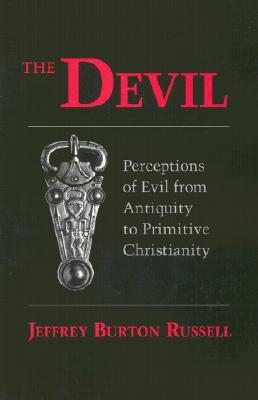
The Devil: Perceptions of Evil from Antiquity to Primitive Christianity
by Jeffrey Burton Russell
Rating: 4.0 ⭐
"Evil―the infliction of pain upon sentient beings―is one of the most long-standing and serious problems of human existence. Frequently and in many cultures evil has been personified. This book is a history of the personification of evil, which for the sake of clarity I have called 'the Devil.' I am a medievalist, but when I began some years ago to work with the concept of the Devil in the eleventh and twelfth centuries, I came to see that I could not understand the medieval Devil except in terms of its historical antecedents. More important, I realized that I could not understand the Devil at all except in the context of the problem of evil. I needed to face the issue of evil squarely, both as a historian and as a human being."―from the Preface This lively and learned book traces the history of the concept of evil from its beginnings in ancient times to the period of the New Testament. A remarkable work of synthesis, it draws upon a vast number of sources in addressing a major historical and philosophical problem over a broad span of time and in a number of diverse cultures, East and West. Jeffrey Burton Russell probes the roots of the idea of evil, treats the development of the idea in the Ancient Near East, and then examines the concept of the Devil as it was formed in late Judaism and early Christianity. Generously illustrated with fifty black-and-white photographs, this book will appeal to a wide range of readers, from specialists in religion, theology, sociology, history, psychology, anthropology, and philosophy to anyone with an interest in the demonic, the supernatural, and the question of good and evil.

The Prince of Darkness: Radical Evil and the Power of Good in History
by Jeffrey Burton Russell
Rating: 3.9 ⭐
The Devil, Satan, Lucifer, Mephistopheles - throughout history the Prince of Darkness, the Western world's most powerful symbol of evil, has taken many names and shapes. Jeffrey Burton Russell here chronicles the remarkable story of the Devil from antiquity to the present. While recounting how past generations have personified evil, he deepens our understanding of the ways in which people have dealt with the enduring problem of radical evil.After a compelling essay on the nature of evil, Russell uncovers the origins of the concept of the Devil in various early cultures and then traces its evolution in Western thought from the time of the ancient Hebrews through the first centuries of the Christian era. Next he turns to the medieval view of the Devil, focusing on images found in folklore, scholastic thought, art, literature, mysticism, and witchcraft. Finally, he follows the Devil into our own era, where he draws on examples from theology, philosophy, art, literature, and popular culture to describe the great changes in this traditional notion of evil brought about by the intellectual and cultural developments of modern times.Is the Devil an outmoded superstition, as most educated people today believe? Or do the horrors of the twentieth century and the specter of nuclear war make all too clear the continuing need for some vital symbol of radical evil? A single-volume distillation of Russell's epic tetralogy on the nature and personifcation of evil from ancient times to the present (published by Cornell University Press between 1977 and 1986), The Prince of Darkness invites readers to confront these and other critical questions as they explore the past faces of that figure who has been called the second most famous personage in Christianity.

Evil is an intrinsically fascinating topic. In Lucifer, Jeffrey Burton Russell continues his compelling study of the personification of evil in the figure of the Devil. The previous two volumes in this remarkable tertalogy--The Devil and Satan--trace the history of the concept of the devil comparatively as it emerged in diverse cultures and followed its development in Western thought from the ancient Hebrew religion through the first five centuries of the Christian era.The present volume charts the evolution of the concept of the devil from the fifth century through the fifteenth. Drawing on an impressive array of sources from popular religion, art, literature, and drama, as well as from scholastic philosophy, mystical theology, homiletics, and hagiography, Russell provides a detailed treatment of Christian diabology in the Middle Ages. Although he focuses primarily on Western Christian thought, Russell also includes, for the sake of comparison, material on the concept of the devil in Greek Orthodoxy during the Byzantine period as well as in Muslim thought.Russell recounts how the Middle Ages saw a refinement in detail rather than a radical alteration of diabological theory. He shows that the medieval concept of the devil, fundamentally unchanged over the course of the centuries, eventually gave rise to the unyielding beliefs that resulted in the horrifying cruelties of the witch-hunting craze in the 1500s and 1600s. This major contribution to the history of the Middle Ages and to the history of religion will enlighten scholars and students alike and will appeal to anyone concerned with the problem of evil in our world.

Undeniably, evil exists in our world; we ourselves commit evil acts. How can one account for evil's ageless presence, its attraction, and its fruits? The question is one that Jeffrey Burton Russell addresses in his history of the concept of the Devil the personification of evil itself. In the predecessor to this book, The Devil: Perceptions of Evil from Antiquity to Primitive Christianity, Russell traced the idea of the Devil in comparative religions and examined its development in Western thought through ancient Hebrew religion and the New Testament. This volume follows its course over the first five centuries of the Christian era.Like most theological problems, the question of evil was largely ignored by the primitive Christian community. The later Christian thinkers who wrestled with it for many centuries were faced with a seemingly irreconcilable paradox: If God is benevolent and omnipotent, why does He permit evil? How, on the other hand, can God be all-powerful if one adopts a dualist stance, and posits two divine forces, one good and one evil?Drawing upon a rich variety of literary sources as well as upon the visual arts, Russell discusses the apostolic fathers, the apologetic fathers, and the Gnostics. He goes on to treat the thought of Irenaeus and Tertullian, and to describe the diabology of the Alexandrian fathers, Clement and Origen, as well as the dualist tendencies in Lactantius and in the monastic fathers. Finally he addresses the syntheses of the fifth century, especially that of Augustine, whose view of the Devil has been widely accepted in the entire Christian community ever since.Satan is both a revealing study of the compelling figure of the Devil and an imaginative and persuasive inquiry into the forces that shape a concept and ensure its survival."

All the known theories and incidents of witchcraft in Western Europe from the fifth to the fifteenth century are brilliantly set forth in this engaging and comprehensive history. Building on a foundation of newly discovered primary sources and recent secondary interpretations, Professor Russell first establishes the facts and then explains the phenomenon of witchcraft in terms of its social and religious environment, particularly in relation to medieval heresies. He treats European witchcraft as a product of Christianity, grounded in heresy more than in the magic and sorcery that have existed in other societies. Skillfully blending narration with analysis, he shows how social and religious changes nourished the spread of witchcraft until large portions of medieval Europe were in its grip―"from the most illiterate peasant to the most skilled philosopher or scientist." A significant chapter in the history of ideas and their repression is illuminated by this book. Our growing fascination with the occult gives the author's affirmation that witchcraft arises at times and in areas afflicted with social tensions a special quality of immediacy.
Neither Christopher Columbus nor his contemporaries thought the earth was flat. Yet this curious illusion persists today, firmly established with the help of the media, textbooks, teachers--even noted historians. Inventing the Flat Earth is Russell's attempt to set the record straight. He begins with a discussion of geographical knowledge in the Middle Ages, examining what Columbus and his contemporaries actually did believe, and then moves to a look at how the error was first propagated in the 1820s and 1830s and then snowballed to outrageous proportions by the late 19th century. But perhaps the most intriguing focus of the book is the reason why we allow this error to persist. Do we prefer to languish in a comfortable and familiar error rather than exert the effort necessary to discover the truth? This uncomfortable question is engagingly answered. along with a discussion about the implications of this for historical knowledge and scholarly honesty.

'História da Bruxaria' baseia-se na última edição deste livro de conteúdo histórico, que agora vem acrescido de novos capítulos, abordando, principalmente, o ressurgimento de rituais religiosos no mundo moderno. O autor Jeffrey B. Russel aliou-se a Brooks Alexander para produzir esta compilação histórica que, freqüentemente, é listada como uma das obras referenciais para o estudo da bruxaria no mundo.

Exposing Myths About Christianity: A Guide to Answering 145 Viral Lies and Legends
by Jeffrey Burton Russell
Rating: 3.7 ⭐
Renowned historian, Jeffrey Burton Russell, famous for his studies of medieval history, turns to the serious questions that confront Christianity in contemporary culture. Russell examines a wide array of common mispercerptions, characterizations, stereotypes, caricatures and outright myths about Christianity that circulate heavily within today's society, and are even believed by many Christians. In a succinct and engaging manner, Russell discusses these errors and provides thoughtful, even-handed, carefully researched and sharp-witted responses. The author sets the record straight against the New Atheists and other cultural critics who charge Christianity with being outdated, destructive, superstitious, unenlightened, racist, colonialist, based on fabrication, and other significant false accusations.

Well-known for his historical accounts of Satan and hell, Jeffrey Burton Russell here explores the brighter side of heaven. Dispensing with the cliché images of goodness that can make even heaven seem unbearable, the author stimulates our imagination with a history of how the joy of paradise has been conceived by writers, philosophers, and artists for whom heaven was an imminent reality. Russell not only explores concepts found among the ancient Jews, Greeks, and Romans as well as early and medieval Christians, but also addresses the intellectual problems heaven how does time "pass" in eternity? is heaven a place or a state? who is in and who is not? what happens to the body and soul between death and Judgment Day? Russell stresses that the best way to approach the logic-defying concept of a place occupying neither space nor time is through poetry and paradox, and through the visions of such mystics as Bernard, Julian of Norwich, and Eckhart.After the Revelation of Saint John the Divine, the most sublime and encompassing portrait of heaven to date has come not from a theologian but from a poet--Dante Alighieri in his Divine Comedy . Russell's history of heaven culminates in a lively analysis of how Dante described the glories of the indescribable. The unsurpassed images of light, movement, and community that Dante uses so skillfully to convey the presence of God are rooted in the Jewish picture of heaven as a garden or court and in the Greek picture of the Elysian Fields.Using current scholarly insights together with a vast store of knowledge gathered from the past, Russell takes the idea of heaven as valid and important in itself--something to be understood from the point of view of those believing in it. His very use of language immerses us in the thoughts of those who have sought heaven and provides rich material for contemplation.

This volume, a general history of the church in the Middle Ages, pays close attention to the spiritual, intellectual, and institutional aspects of medieval Christianity. From its beginnings, the church has existed in a state of tension between two the spirit of order and the spirit of prophecy. The spirit of order attempts to reform humanity and human institutions; the spirit of prophecy attempts to transform them into the world of God. This tension created a balance within the church that kept it from forgetting the nature of basic religious experience while continuing to remain sensitive to the needs of society.

Paradise Mislaid: How We Lost Heaven--and How We Can Regain It
by Jeffrey Burton Russell
Rating: 3.9 ⭐
The Christian concept of heaven flourished for almost two millennia, but it has lost much of its power in the last hundred years. Indeed today even theologians tend to avoid the topic. But heaven has always been a central tenet of the Christian faith, writes Jeffrey Burton Russell. If there is no heaven, no resurrection of the dead, the entire Christian story makes no sense.In this stimulating book, Russell sets out to rehabilitate heaven by forcefully attacking a series of ideas that have made belief in heaven, not to mention belief in God, increasingly difficult for modern people. Russell provides elegant and persuasive refutations of arguments ranging from the idea that science has disproved the existence of the supernatural, to the notion that biblical criticism has emptied the scripture of meaning. Along the way, as Russell looks at the ideas of Charles Darwin and Herbert Spencer, Mark Twain and Alfred Lord Tennyson, Marx and Freud, and a host of others, he sheds light not only on the history of Christian thought, but on the process of secularization in the West. One by one, Russell refutes these anti-religious ideologies, pinpointing the deficiencies of their reasoning.Throughout the book, Russell invites the reader, whatever his or her beliefs, to take the concept of heaven seriously both as a worldview in itself and as one with enormous influence on the world. It is a book that will be welcomed by thinking Christians, who often feel beleaguered by the forces of modernity and sometimes find it hard to defend their own beliefs.

Dissent and Order in the Middle Ages: The Search for Legitimate Authority
by Jeffrey Burton Russell
Rating: 3.8 ⭐
The study of the conflict between religious orthodoxy and heresy in the Middle Ages has long been a controversial field. Though the sectarian differences of the past have faded in intensity, the varieties of academic correctness that today inform historical studies are quite likely to give rise to a number of interpretations, sometimes providing more information about the sympathies of contemporary historians than the beliefs, feelings, and actions of Medieval people.In this book, Jeffrey Burton Russell provides a fresh overview of the subject from the Council of Chalcedon (451 A.D.) to the eve of the Protestant Reformation. The fruit of many years of thought and scholarship, Dissent and Order in the Middle Ages is a concise introduction to the full range of religious and social phenomena encompassed by the book's title. While tracing the intellectual battles that raged between the champions of orthodoxy and the partisans of dissent, Russell grounds these conflicts, which often seem rather recondite to the modern reader, in the evolving social context of Medieval Europe. In addition to discussing conflicts within Christianity, Russell sheds new light on such vexing topics as the origin of antisemitism and the persecution of alleged witches.More than just an overview, Russell's study is also an original interpretation of a complex subject. Russell sees the conflict between dissent and order not as a war of binary opposites, but rather as an ongoing dialectic, a "creative tension" that, despite the excesses it entailed on both sides, was essential to the development of Christianity. Without this creative tension, Russell argues, Christianity might well have stagnated and possibly died. Dissent and order, then, are perhaps best seen as symbiotically joined aspects of a single living, healthy organism.Dissent and Order in the Middle Ages will appeal to, and challenge, all readers interested in European history, from beginning students to seasoned scholars, as well as those concerned with Christianity's past--and future.

From the The conceptual boundaries of this study...include all varieties of religious dissent, nonconformity, and tension. The chronological limits are from about 700 to about 1150. Before the eighth century dissent was, in the tradition of the heresy of the early Church, theological and priestly. After the middle of the twelfth century the increasing influence of Eastern dualism under the name of Catharism changed the whole emphasis and style of medieval dissent. Between 700 and the mid-twelfth century, however, dissent was typically medieval in its moral and popular emphasis without yet being adulterated by currents from the East. In this period it was closely connected with the growing intensity and diversification of movements of moral and intellectual reform. With these movements and as part of them, dissent was one of the elements shaping medieval civilization.

From the This book is intended as an investigation of the civilization of western Europe from the third to the fifteenth centuries. It presents not only the results, but some of the important problems, of contemporary scholarship in medieval history. It follows a topical treatment of economic, social, political, and cultural history within a chronological framework. Rather than trying to achieve consistently detailed coverage of every aspect of medieval civilization, I have concentrated upon individual or collective examples of important ideas, attitudes, institutions, or events. Discussions of the sources appear in each chapter, and the sources are quoted frequently in the body of the text in order to permit the reader to feel, as well as intellectually to grasp, the nature of medieval life. Pictures and maps are integrated with the text as illustrations of the topics discussed.

Libro usado en buenas condiciones, por su antiguedad podria contener señales normales de uso
Paperback. Very good. Previous owner's stamp, laminated wrappers.

145 misconceptions about Christianity are argued against in an accessible and philosophical way.Myth Busted! is a unique and engaging work of apologetics that seeks to convince readers about the claims of Christianity whilst debunking the layers of myths and assumptions that might have grown around its kernel. An encyclopaedic attempt at getting to answers to the questions that often get in the way.'This is Christian apologetics at its best - compelling, readable, convincing and informed. Distortions, myths and lazy assumptions are all challenged. Encyclopaedic in scope, all the major questions are considered. Jeffrey Burton Russell demonstrates exceptional competence and mastery of the literature. What C.S. Lewis's Mere Christianity did in the 1940s, Jeffrey Burton Russell has done for us. For those seeking and for those who doubt, this is a must-read book.'Ian Markham, president and professor of theology, Virginia Theological Seminary, USA

Witchcraft in the Middle Ages.
by Jeffrey Burton Russell
Lucifer: The Devil in the Middle Ages (Cornell Paperbacks) by Jeffrey Burton Russell
by Jeffrey Burton Russell
Il diavolo nel Medioevo
by Jeffrey Burton Russell
Il diavolo nel mondo moderno
by Jeffrey Burton Russell
HISTORY AND TRUTH
by Jeffrey Burton Russell


KIT Deusas e Bruxas
by Jeffrey Burton Russell

Kötülüğün Tarihi Seti
by Jeffrey Burton Russell
Paperback. 13,50 / 19,50 cm. In Turkish. 1744 p. Seytan Antikiteden Ilkel Hiristiyanliga Kötülük Algilari Kötülügün kaynagi nedir? Ve dünyada neden bunca kötülük vardir? Basitçe, hisseden varliklara aci verme olarak tanimlanabilecek kötülük, insanligin en esk

魔術の歴史
by Jeffrey Burton Russell