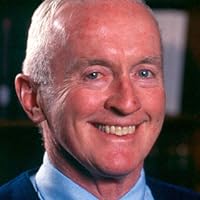
Charles E. Rice
Charles Edward Rice was Professor Emeritus at the University of Notre Dame law School. His areas of specialization were constitutional law and jurisprudence. He taught “Morality and the Law” at Notre Dame. Professor Rice was born in 1931, received the B.A. degree from the College of the Holy Cross, the J.D., from Boston College Law School and the LL.M. and J.S.D. from New York University. He served in the United States Marine Corps and is a Lt. Col. in the Marine Corps Reserve (Ret.). He practiced law in New York City and taught at New York University Law School and Fordham Law School before joining, in 1969, the faculty of law at Notre Dame. He served for eight years as State Vice-Chairman of the New York State Conservative Party. From 1981 to 1993, Professor Rice was a member of the Education Appeal Board of the U.S. Department of Education. He has served as a consultant to the U.S. Commission on Civil Rights and to various Congressional committees on constitutional issues and is an editor of the American Journal of Jurisprudence. Among his books are Freedom of Association; The Supreme Court and Public Prayer, The Vanishing Right to Live; Authority and Rebellion; Beyond Abortion: The Theory and Practice of the Secular State; No Exception: A Pro-Life Imperative; 50 Questions on the Natural Law; and The Winning Side: Questions on Living the Culture of Life. His latest books are Where Did I Come From? Where Am I Going? How Do I Get There?, (2nd ed.) co-authored with Dr. Theresa Farnan, and What Happened to Notre Dame?, both published by St. Augustine’s Press in 2009. He was a faculty advisor and assistant coach of the Notre Dame Boxing Club. He and his wife, Mary, have ten children and they resided in Mishawaka, Indiana. (Source: http://law.nd.edu/directory/charles-r...)
20 Books Written

50 Questions on The Natural Law: What It Is and Why We Need It
by Charles E. Rice
Rating: 4.0 ⭐
• 2 recommendations ❤️
Charles Rice, professor of the jurisprudence of St. Thomas Aquinas for the last twenty years at Notre Dame Law School, presents a very readable book on the natural law as seen through the teachings of Aquinas and their foundations in reason and Revelation. Reflecting on the most persistent questions asked by his students over the years, Rice shows how the natural law works and how it is rooted in the nature of the human person whose Creator provided this law as a sure and knowable guide for man to achieve his end of eternal happiness. This book presents the teachings of the Catholic Church in her role as arbiter of the applications of the natural law on issues involving the right to live, bioethics, the family and the economy. Charles Rice has produced a firmly grounded and accessible handbook which touches on the most important topics regarding natural law that will benefit readers of all backgrounds.

When the University of Notre Dame announced that President Barack Obama would speak at its 2009 Commencement and would receive an honorary doctor of laws degree, the reaction was more than anyone expected. Students, faculty, alumni, and friends of Notre Dame denounced the honoring of Obama, who is the most relentlessly pro-abortion public official in the world. Beyond abortion, Obama has taken steps to withdraw from health-care professionals the right of conscientious objection. Among them are thousands of Notre Dame alumni who will be forced to choose between continuing their profession and participating in activities they view as immoral, including the execution of the unborn. And they will be forced to that choice by the politician upon whom their alma mater confers its highest honors. (Mary Ann Glendon, distinguished Harvard law professor and former ambassador to the Vatican, felt obliged to turn down the prestigious Laetare Medal because of this.) Notre Dame’s honoring of Obama is not merely a “Catholic” thing. Many thousands of citizens with no Catholic or Notre Dame connections have protested it. They see it as a capitulation of faith to expedience and the pursuit of vain prestige. Obama’s record and stated purposes are hostile to the most basic truths of faith and the natural law affirmed by the Catholic Church and by many others. Four decades ago, in 1967, the major “Catholic” universities declared their “autonomy” from the Catholic Church in the Land O’Lakes Declaration. The honoring of Obama reflects the replacement by those universities of the benign authority of the Church with the politically correct standards of the secular academic establishment and, especially, of the government. There is a lesson here for all Americans. Notre Dame fell into relativism and expediency because it rejected the Church as the authentic interpreter of the moral law. In this post-Christian era, American culture is following a similar path by reducing morality to the unguided consensus of individual choices. If no code of right and wrong has moral authority – not even the Ten Commandments – then society is ruled by the conflict of interests, and might makes right. The jurisprudence of such relativism is legal positivism in which no law can be criticized as unjust because no one can know what is “just.” What Happened to Notre Dame? by Charles E. Rice, with a Preface by Ralph McInerny and Introduction by Alfred Freddoso – three of Notre Dame’s most distinguished scholars, who together have served the University 124 years – first recounts the details of Notre Dame’s honoring of President Obama. It then examines the succession of fall-back excuses offered by the Notre Dame President Rev. John I. Jenkins, c.s.c., and University publicists to justify Notre Dame’s defiance of the nation’s bishops and of Catholic teaching. But Rice is not content with mere reportage. What Happened to Notre Dame? diagnoses the problem’s roots by first providing an overview of the Land O’Lakes Declaration, its inception and its aftermath, including the ways in which its false autonomy from the Church has led to an erosion of the Catholic identity of Notre Dame and other Catholic universities. Then, it offers a cure. Christ, who is God, is the author of the divine law and the natural law. The book presents reasons why an acknowledged interpreter of these laws is necessary, and why that interpreter has to be the Pope exercising the Magisterium, or teaching authority of the Church. And it shows why it is so important that we have such a moral interpreter for all citizens and not just for Catholics. The alternative is what Pope Benedict XVI calls the “dictatorship of relativism,” which the book analyzes. Even for those who do not share the Catholic faith, our reason leads us to conclude that the natural law is the only moral code that makes entire sense and points to the conclusion that the Vicar of Christ is uniquely suited to give authoritative interpretation to that law. In the final chapter Rice shows why great good can come out of Notre Dame’s blunder in rendering its highest honors to such an implacable foe. Notre Dame got itself into such a mess because it attempted to be Catholic without the Church and ended up defying the Church and disgracing itself. But good can result from the lesson here that roll-your-own morality is no more tenable than roll-your-own Catholicism. Rice shows why what happened to Notre Dame is symptomatic of what’s happening in other Catholic colleges, indeed colleges with non-Catholic religious affiliations. He shows how the abandonment of principle at the college level spills over to the general culture, with devastating effect, as religious standards get pushed out of the public square. And, finally, he shows why people who have never seen the Golden Dome, never rooted for the Fighting Irish, and never graced a Catholic Church, also have a stake in what happened to Notre Dame.

In this insightful book, Charles E. Rice, a Notre Dame Law School professor, argues that the widespread acceptance of contraception has set the stage for religious persecution. He contends that contraception isn't merely about sex, but a First Commandment issue, challenging our understanding of God's role. The Anglican Lambeth Conference of 1930 first allowed contraception as a moral choice, and its widespread use, following the introduction of the Pill in the 1960s, led to a shift in moral authority from God to the state. Rice explores how this has put religious groups, particularly the Catholic Church, at odds with the state, as seen in the Obama administration's healthcare mandate. He delves into the 'main event' - the battle over LGBTQ rights - and analyzes the 2013 Supreme Court decision on same-sex marriage. Rice identifies underlying causes of the Church's persecution, including relativism, redefined conscience, and constitutional moral neutrality. He controversially presents contraception as an unacknowledged cause of persecution, detailing its consequences and the Church's response. The book offers speaking truth, trusting God, and praying. It's well-documented and thought-provoking.

Where Did I Come From? Where Am I Going? How Do I Get There?: Straight Answers For Young Catholics
by Charles E. Rice
Rating: 5.0 ⭐
Growing up in a world marked by wars, disasters, family troubles, and rampant secularism, today's Catholic teens and young adults need straight answers on their purpose in life. What better guide than a manual featuring the teachings of St. Thomas Aquinas and Pope John Paul II on who were are, presented by a world-class teacher and an experienced seminary instructor?

Book by Rice, Charles E.

Book by Rice, Charles E.

(The Grim Revival Series)Lucrio Destine is a low-life. He's weak. He's a good-for-nothing. He would sell his soul if he could. Yet, he just might be the key to the future for the country of Allsteel and the human race itself. There's only one problem; everyone else knows this as well. The secret is out. As he begins to discover who he is, an assassination company known as The Shadowcast Institution and their maniacal leader, Director Pollock, begin ruthlessly hunting him down. With the help of a stranger named Calvin LeClarre, Lucrio will try to untangle just exactly who he is, while learning how to cope with his recent discoveries. Will he find the answers to his questions? Will he struggle with his existence and succumb to Pollock's influence? Or will he learn to accept his fate?Enjoy Part. 1 of the ongoing series.
The Psychological Record: Volume 28, Number 3, Summer, 1978
by Charles E. Rice
Paperback in good condition. Covers are faintly shelfworn. Creases on spine. Small label on inside front cover; text is clear throughout. TS
Fifty Questions on Natural Law by Charles E. Rice
by Charles E. Rice
50 questions on abortion, euthanasia and related issues
by Charles E. Rice
The Pro-Life Movement: A Spiritual Perspective
by Charles E. Rice
Evaluate the status and prospects of the pro-life movement from a Catholic point of view.

Authority and Rebellion
by Charles E. Rice

Physical Model Studies of Head-Discharge Relationships for Steel Z-Section Water-Level Control Structures
by Charles E. Rice
The digital edition of all books may be viewed on our website before purchase. Excerpt from Physical Model Studies of Head-Discharge Relationships for Steel Z-Section Water-Level Control StructuresAbout the PublisherForgotten Books publishes hundreds of thousands of rare and classic books.This book is a reproduction of an important historical work. Forgotten Books uses state-of-the-art technology to digitally reconstruct the work, preserving the original format whilst repairing imperfections present in the aged copy. In rare cases, an imperfection in the original, such as a blemish or missing page, may be replicated in our edition. We do, however, repair the vast majority of imperfections successfully; any imperfections that remain are intentionally left to preserve the state of such historical works. This text has been digitally restored from a historical edition. Some errors may persist, however we consider it worth publishing due to the work's historical value.The digital edition of all books may be viewed on our website before purchase.

Open Channel Junctions With Supercritical Flow
by Charles E. Rice
Excerpt from Open Channel Junctions With Supercritical FlowCopies of this publication can be purchased from the National Technical Information Service, 5285 Port Royal Road, Springfield, Va. 22161.
Freedom of Association
by Charles E. Rice

Right or Wrong?: Forty Years inside Notre Dame
by Charles E. Rice

No Exception: A Pro-Life Imperative
by Charles E. Rice
Legalizing homosexual conduct: The role of the Supreme Court in the gay rights movement
by Charles E. Rice

The Winning Side: Why the Culture of Death Is Dying
by Charles E. Rice
Charles Rice argues that we can build a culture of life, and shows that the culture of death is itself dying. A teacher of constitutional law and jurisprudence for three decades, at Notre Dame and Ave Maria College, Rice traces legalized abortion and euthanasia to their origins. He argues that the American republic is dead and the Constitution cannot be restored to what it was in the beginning. Yet this is a hope-filled book, for he offers a blueprint for reform. Readers will find a challenge – and discomfort – in his answers on such subjects as abortion, euthanasia, contraception, public schools, and vouchers, Catholic universities, “gay rights,” pacifism, the death penalty, immigration, and even global free trade.