
Søren Kierkegaard
Søren Aabye Kierkegaard was a prolific 19th century Danish philosopher and theologian. Kierkegaard strongly criticised both the Hegelianism of his time and what he saw as the empty formalities of the Church of Denmark. Much of his work deals with religious themes such as faith in God, the institution of the Christian Church, Christian ethics and theology, and the emotions and feelings of individuals when faced with life choices. His early work was written under various pseudonyms who present their own distinctive viewpoints in a complex dialogue. Kierkegaard left the task of discovering the meaning of his works to the reader, because "the task must be made difficult, for only the difficult inspires the noble-hearted". Scholars have interpreted Kierkegaard variously as an existentialist, neo-orthodoxist, postmodernist, humanist, and individualist. Crossing the boundaries of philosophy, theology, psychology, and literature, he is an influential figure in contemporary thought.
30 Books Written

In Either/Or, using the voices of two characters - the aesthetic young man of part one, called simply 'A', and the ethical Judge Vilhelm of the second section - Kierkegaard reflects upon the search for a meaningful existence, contemplating subjects as diverse as Mozart, drama, boredom, and, in the famous Seducer's Diary, the cynical seduction and ultimate rejection of a young, beautiful woman. A masterpiece of duality, Either/Or is a brilliant exploration of the conflict between the aesthetic and the ethical - both meditating ironically and seductively upon Epicurean pleasures, and eloquently expounding the noble virtues of a morally upstanding life.

This is the most comprehensive anthology of Soren Kierkegaard's works ever assembled in English. Drawn from the volumes of Princeton's authoritative Kierkegaard's Writings series by editors Howard and Edna Hong, the selections represent every major aspect of Kierkegaard's extraordinary career. They reveal the powerful mix of philosophy, psychology, theology, and literary criticism that made Kierkegaard one of the most compelling writers of the nineteenth century and a shaping force in the twentieth. With an introduction to Kierkegaard's writings as a whole and explanatory notes for each selection, this is the essential one-volume guide to a thinker who changed the course of modern intellectual history.The anthology begins with Kierkegaard's early journal entries and traces the development of his work chronologically to the final The Changelessness of God. The book presents generous selections from all of Kierkegaard's landmark works, including Either/Or, Fear and Trembling, Works of Love, and The Sickness unto Death, and draws new attention to a host of such lesser-known writings as Three Discourses on Imagined Occasions and The Lily of the Field and the Bird of the Air. The selections are carefully chosen to reflect the unique character of Kierkegaard's work, with its shifting pseudonyms, its complex dialogues, and its potent combination of irony, satire, sermon, polemic, humor, and fiction. We see the esthetic, ethical, and ethical-religious ways of life initially presented as dialogue in two parallel series of pseudonymous and signed works and later in the "second authorship" as direct address. And we see the themes that bind the whole together, in particular Kierkegaard's overarching concern with, in his own words, "What it means to exist; . . . what it means to be a human being.?Together, the selections provide the best available introduction to Kierkegaard's writings and show more completely than any other book why his work, in all its creativity, variety, and power, continues to speak so directly today to so many readers around the world.

This anthology covers the whole of Kierkegaard's literary career. The selections range from the terse epigrams of the Journal through the famous -Diary of the Seducer- and the -Banquet- scene, in which Soren Kierkegaard reveals his great lyric and dramatic gifts, on to the philosophical and psychological works of his maturity. These are climaxed by the beautiful and moving religious discourses which accompany them; finally, there is the biting satire of his Attack upon -Christendom.-This is emphatically not a collection of -snippets, - but the cream of Kierkegaard, each selection interesting and intelligible in itself, and all ranking among his most important work. They are so arranged as to convey an idea of his remarkable intellectual development.Contents: A comprehensive anthology from the following works: Either/Or Fear and Trembling Stages on Life's Way Works of Love Concluding Unscientific Postscript Attack upon -Christendom- The Sickness Unto Death Philosophical Fragments and others

Soren Kierkegaard was a Danish philosopher, theologian, and religious author interested in human psychology. He is regarded as a leading pioneer of existentialism and one of the greatest philosophers of the 19th Century.In Fear and Trembling, Kierkegaard wanted to understand the anxiety that must have been present in Abraham when God commanded him to offer his son as a human sacrifice. Abraham had a choice to complete the task or to forget it. He resigned himself to the loss of his son, acting according to his faith. In other words, one must be willing to give up all his or her earthly possessions in infinite resignation and must also be willing to give up whatever it is that he or she loves more than God. Abraham had passed the test -- his love for God proved greater than anything else in him. And because a good and just Creator would not want a father to kill his son, God intervened at the last moment to prevent the sacrifice.

The Sickness Unto Death: A Christian Psychological Exposition for Upbuilding and Awakening
by Søren Kierkegaard
Rating: 4.1 ⭐
A companion piece to The Concept of Anxiety, this work continues Søren Kierkegaard’s radical and comprehensive analysis of human nature in a spectrum of possibilities of existence. Present here is a remarkable combination of the insight of the poet and the contemplation of the philosopher.In The Sickness unto Death, Kierkegaard moves beyond anxiety on the mental-emotional level to the spiritual level, where — in contact with the eternal — anxiety becomes despair. Both anxiety and despair reflect the misrelation that arises in the self when the elements of the synthesis — the infinite and the finite — do not come into proper relation to each other. Despair is a deeper expression for anxiety and is a mark of the eternal, which is intended to penetrate temporal existence.

The Seducer's Diary records Johannes's discovery of a girl with the Shakespearean name Cordelia, whom he sets out to control. Intricately, meticulously, cunningly, the seduction proceeds. No detail is too small to escape Johannes. "She sits on the sofa by the tea table and I sit on a chair at her side. This position has an intimate quality and at the same time a detaching dignity."Less erotic than an intellectual depiction of seduction, Diary of a Seducer shows the casuist Kierkegaard in what he characterized as the aesthetic mode.

Librarian's note: An alternate cover edition can be found herePresented here in a new translation, with a historical introduction by the translators, "Fear and Trembling and Repetition" are the most poetic and personal of Soren Kierkegaard's pseudonymous writings. Published in 1843 and written under the names Johannes de Silentio and Constantine Constantius, respectively, the books demonstrate Kierkegaard's transmutation of the personal into the lyrically religious.Each work uses as a point of departure Kierkegaard's breaking of his engagement to Regine Olsen--his sacrifice of "that single individual." From this beginning "Fear and Trembling" becomes an exploration of the faith that transcends the ethical, as in Abraham's willingness to sacrifice his son Isaac at God's command. This faith, which persists in the face of the absurd, is rewarded finally by the return of all that the faithful one is willing to sacrifice. "Repetition" discusses the most profound implications of unity of personhood and of identity within change, beginning with the ironic story of a young poet who cannot fulfill the ethical claims of his engagement because of the possible consequences of his marriage. The poet finally despairs of repetition (renewal) in the ethical sphere, as does his advisor and friend Constantius in the aesthetic sphere. The book ends with Constantius' intimation of a third kind of repetition--in the religious sphere.

The Concept of Anxiety: A Simple Psychologically Oriented Deliberation in View of the Dogmatic Problem of Hereditary Sin
by Søren Kierkegaard
Rating: 3.9 ⭐
First published in 1844, Soren Kierkegaard's concise treatise identified--long before Freud--anxiety as a profound human condition, portraying human existence largely as a constant struggle with our own spiritual identities. Brilliantly synthesizing human insights with Christian dogma, Kierkegaard presented The Concept of Anxiety as a landmark "psychological deliberation," suggesting that our only hope in overcoming anxiety was not through "powder and pills" but by embracing it with open arms. While Kierkegaard's Danish prose is surprisingly rich, previous translations--the most recent in 1980--have marginalized the work with alternately florid or slavishly wooden language. With a vibrancy never seen before in English, Alastair Hannay, the world's foremost Kierkegaard scholar, re-creates its natural rhythm, eager that this overlooked classic will not only become as celebrated as Fear and Trembling, The Sickness unto Death, and Either/Or but also be revivified as the seminal work of existentialism and moral psychology that it is.

The various kinds and conditions of love are a common theme for Kierkegaard, beginning with his early Either/Or , through "The Diary of the Seducer" and Judge William's eulogy on married love, to his last work, on the changelessness of God's love. Works of Love , the midpoint in the series, is also the monumental high point, because of its penetrating, illuminating analysis of the forms and sources of love. Love as feeling and mood is distinguished from works of love, love of the lovable from love of the unlovely, preferential love from love as the royal law, love as mutual egotism from triangular love, and erotic love from self-giving love.This work is marked by Kierkegaard's Socratic awareness of the reader, both as the center of awakened understanding and as the initiator of action. Written to be read aloud, the book conveys a keenness of thought and an insightful, poetic imagination that make such an attentive approach richly rewarding. Works of Love not only serves as an excellent place to begin exploring the writings of Kierkegaard, but also rewards many rereadings.

يعتبر كتاب شذرات فلسفية، او شذرة فلسفة، الذي صدر عام 1844، بقلم يوهانس كليماكوس ( وهو اسم مستعار ) واحد من الاعمال الفكرية المهمة التي تناول فيها سورن كيرككورد سؤلا جوهريا شغل بال العديد من الفلاسفة واللاهوتيين على مدى العصور ماهي العلاقي بين التاريخي والماورائي بين الانساني والالهي بين المسيح كحقيقة مطلقة لا نهائية وبين كونه انسانا محددا بالشروط الزمنية وبنشاطه الوجودي وبين العقلانية واللامعقول واذا كانت هناك حقا علاقة بينهما والتي تبدو مفارقة فهل يمكن للانسان ان يفهمها بواسطة العقل المخض ام انه بحاجة الى سلطة اعلى منه تعينه على بلوغ تلك المعرفة.

"Those who would know Kierkegaard, the intesely religious humorist, the irrepressibly witty critic of his age and ours, can do no better than to begin with this book. In it, we find the heart of Kierkagaard. It is not innocuous, not genteel, not comfortable. He does not invite the reader to relax and have a little laugh with him at the expense of other people or at his own foibles. Kierkegaard deliberately challenges the reader's whole existence. Nor does he merely challenge our existence; he also questions some ideas that had become well entrenched in his time and that are even more characteristic of the present age. Kierkegaard insists, for example, that Christianity was from the start essentially authoritarian --not just that the Catholic Church was, or that Calvin was, or Luther, or, regrettably, most of the Christian churches, but that Christ was-- and is. Indeed, though Kierkegaard was, and wished to be, an individual, and even said that on his tombstone he would like no other epitaph than 'That Individual, ' his protest against his age was centered in his lament over the loss of authority." --Walter Kaufman, in the Introduction

Søren Kierkegaard, the nineteenth-century Danish philosopher rediscovered in the twentieth century, is a major influence in contemporary philosophy, religion, and literature. He regarded Either/Or as the beginning of his authorship, although he had published two earlier works on Hans Christian Andersen and irony. The pseudonymous volumes of Either/Or are the writings of a young man (I) and of Judge William (II). The ironical young man's papers include a collection of sardonic aphorisms; essays on Mozart, modern drama, and boredom; and "The Seducer's Diary." The seeming miscellany is a reflective presentation of aspects of the "either," the esthetic view of life.Part II is an older friend's "or," the ethical life of integrated, authentic personhood, elaborated in discussions of personal becoming and of marriage. The resolution of the "either/or" is left to the reader, for there is no Part III until the appearance of Stages on Life's Way . The poetic-reflective creations of a master stylist and imaginative impersonator, the two men write in distinctive ways appropriate to their respective positions.
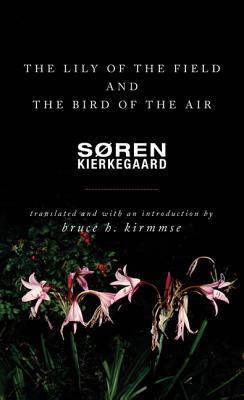
The Lily of the Field and the Bird of the Air: Three Godly Discourses
by Søren Kierkegaard
Rating: 4.2 ⭐
A masterful new translation of one of Kierkegaard's most engaging worksIn the Sermon on the Mount, Jesus tells his followers to let go of earthly concerns by considering the lilies of the field and the birds of the air. Søren Kierkegaard's short masterpiece on this famous gospel passage draws out its vital lessons for readers in a rapidly modernizing and secularizing world. Trenchant, brilliant, and written in stunningly lucid prose, The Lily of the Field and the Bird of the Air (1849) is one of Kierkegaard's most important books. Presented here in a fresh new translation with an informative introduction, this profound yet accessible work serves as an ideal entrée to an essential modern thinker.The Lily of the Field and the Bird of the Air reveals a less familiar but deeply appealing side of the father of existentialism―unshorn of his complexity and subtlety, yet supremely approachable. As Kierkegaard later wrote of the book, "Without fighting with anybody and without speaking about myself, I said much of what needs to be said, but movingly, mildly, upliftingly."This masterful edition introduces one of Kierkegaard's most engaging and inspiring works to a new generation of readers.
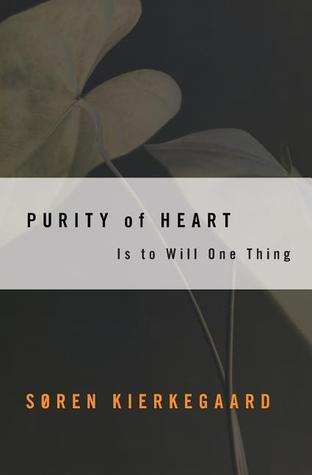
Purity of Heart is to Will One Thing: Spiritual Preparation for the Office of Confession
by Søren Kierkegaard
Rating: 4.2 ⭐
Crossing the boundaries of philosophy, theology, psychology, and literature, the Danish writer Soren Kierkegaard is regarded as one of the most significant and influential figures in contemporary thought. In Kierkegaard's view, faith is the most essential task of life. Faith is not a matter of dogmatic adherence, but rather of subjective passion. In "Purity of Heart", Kierkegaard discusses different aspects of living, particularly the responsibility of single-minded spiritual seeking and ethical integrity, offering clues to the nature of the good while insisting that each reader must work this out for themselves.

Walter Lowrie's classic, bestselling translation of Søren Kierkegaard's most important and popular books remains unmatched for its readability and literary quality. Fear and Trembling and The Sickness Unto Death established Kierkegaard as the father of existentialism and have come to define his contribution to philosophy. Lowrie's translation, first published in 1941 and later revised, was the first in English, and it has introduced hundreds of thousands of readers to Kierkegaard's thought. Kierkegaard counted Fear and Trembling and The Sickness Unto Death among "the most perfect books I have written," and in them he introduces two terms--"the absurd" and "despair"--that have become key terms in modern thought. Fear and Trembling takes up the story of Abraham and Isaac to explore a faith that transcends the ethical, persists in the face of the absurd, and meets its reward in the return of all that the faithful one is willing to sacrifice, while The Sickness Unto Death examines the spiritual anxiety of despair.

Un texte du célèbre philosophe danois du XIXe siècle, dans lequel il songe à reprendre ses relations avec Régine Olsen, son ancienne fiancée.
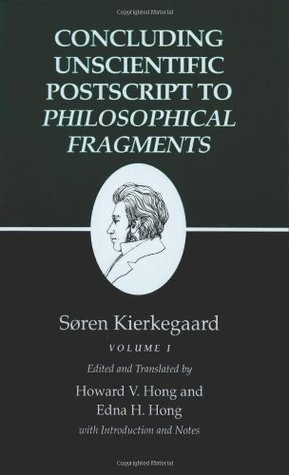
Concluding Unscientific Postscript to Philosophical Fragments, Volume 1
by Søren Kierkegaard
Rating: 4.3 ⭐
In Philosophical Fragments the pseudonymous author Johannes Climacus explored the question: What is required in order to go beyond Socratic recollection of eternal ideas already possessed by the learner? Written as an afterword to this work, Concluding Unscientific Postscript is on one level a philosophical jest, yet on another it is Climacus's characterization of the subjective thinker's relation to the truth of Christianity. At once ironic, humorous, and polemical, this work takes on the "unscientific" form of a mimical-pathetical-dialectical compilation of ideas. Whereas the movement in the earlier pseudonymous writings is away from the aesthetic, the movement in Postscript is away from speculative thought. Kierkegaard intended Postscript to be his concluding work as an author. The subsequent "second authorship" after The Corsair Affair made Postscript the turning point in the entire authorship. Part One of the text volume examines the truth of Christianity as an objective issue, Part Two the subjective issue of what is involved for the individual in becoming a Christian, and the volume ends with an addendum in which Kierkegaard acknowledges and explains his relation to the pseudonymous authors and their writings. The second volume contains the scholarly apparatus, including a key to references and selected entries from Kierkegaard's journals and papers.

Of the many works he wrote during 1848, his "richest & most fruitful year," Kierkegaard specified "Practice in Christianity" as "the most perfect & truest thing." In his reflections on such topics as Christ's invitation to the burdened, the imitatio Christi, the possibility of offense & the exalted Christ, he takes as his theme the requirement of Christian ideality in the context of divine grace. Addressing clergy & laity alike, Kierkegaard asserts the need for institutional & personal admission of the accommodation of Christianity to the culture & to the individual misuse of grace. As a corrective defense, the book is an attempt to find, ideally, a basis for the established order, which would involve the order's ability to acknowledge the Christian requirement, confess its own distance from it, & resort to grace for support in its continued existence. At the same time the book can be read as the beginning of Kierkegaard's attack on Christendom. Because of the high ideality of the contents & in order to prevent the misunderstanding that he himself represented that ideality, Kierkegaard writes under a new pseudonym, Anti-Climacus.

Provocations contains a little of everything from Kierkegaard's prodigious his famously cantankerous (yet wryly humorous) attacks on what he calls the ''mediocre shell'' of conventional Christianity, his brilliantly pithy parables, his wise (and witty) sayings. Most significantly, it brings to a new generation a man whose writings pare away the fluff of modern spirituality to reveal the basics of the Christ-centered decisiveness, obedience, and recognition of the truth.

Søren Kierkegaard, the nineteenth-century Danish philosopher rediscovered in the twentieth century, is a major influence in contemporary philosophy, religion, and literature. He regarded Either/Or as the beginning of his authorship, although he had published two earlier works on Hans Christian Andersen and irony. The pseudonymous volumes of Either/Or are the writings of a young man (I) and of Judge William (II). The ironical young man's papers include a collection of sardonic aphorisms; essays on Mozart, modern drama, and boredom; and "The Seducer's Diary." The seeming miscellany is a reflective presentation of aspects of the "either," the esthetic view of life.Part II is an older friend's "or," the ethical life of integrated, authentic personhood, elaborated in discussions of personal becoming and of marriage. The resolution of the "either/or" is left to the reader, for there is no Part III until the appearance of Stages on Life's Way . The poetic-reflective creations of a master stylist and imaginative impersonator, the two men write in distinctive ways appropriate to their respective positions.

MAdrid. 18 cm. 286 p. Encuadernación en tapa blanda de editorial ilustrada. Colección 'Ediciones de bolsillo ; ', numero coleccion(428). Kierkegaard, Søren ( 1813-1855). La repetición .. Este libro es de segunda mano y tiene o puede tener marcas y señales de su anterior propietario. 8425074282

Soren Kierkegaard, who was born in Denmark and died there at the age of 42, is regarded by many as the father of existentialist thinking. This diary covers the important elements of Kierkegaard's life, including his childhood, his relationship with his father, the influence of other writers on him, his broken engagement (which had a far-reaching effect on the rest of his life), and his celebrated quarrel with the Church. **Lightning Print On Demand Title

The description for this book, Parables of Kierkegaard, will be forthcoming.
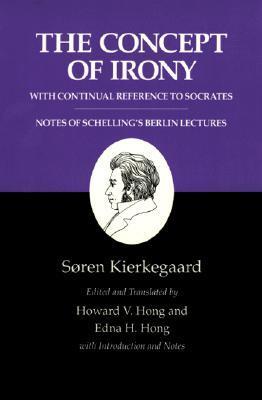
The Concept of Irony: With Continual Reference to Socrates/Notes of Schelling's Berlin Lectures
by Søren Kierkegaard
Rating: 4.0 ⭐
A work that "not only treats of irony but is irony," wrote a contemporary reviewer of "The Concept of Irony, with Continual Reference to Socrates." Presented here with Kierkegaard's notes of the celebrated Berlin lectures on "positive philosophy" by F.W.J. Schelling, the book is a seedbed of Kierkegaard's subsequent work, both stylistically and thematically. Part One concentrates on Socrates, the master ironist, as interpreted by Xenophon, Plato, and Aristophanes, with a word on Hegel and Hegelian categories. Part Two is a more synoptic discussion of the concept of irony in Kierkegaard's categories, with examples from other philosophers and with particular attention given to A. W. Schlegel's novel "Lucinde" as an epitome of romantic irony."The Concept of Irony" and the "Notes of Schelling's Berlin Lectures" belong to the momentous year 1841, which included not only the completion of Kierkegaard's university work and his sojourn in Berlin, but also the end of his engagement to Regine Olsen and the initial writing of "Either/Or."
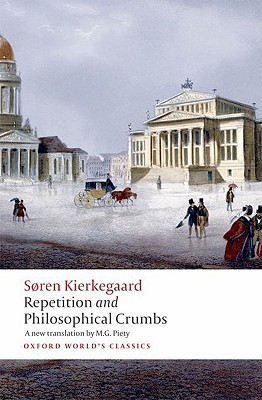
"The love of repetition is in truth the only happy love." So says Constantine Constantius on the first page of Kierkegaard's Repetition. Life itself, according to Kierkegaard's pseudonymous narrator, is a repetition, and in the course of this witty, playful work Constantius explores the nature of love and happiness, the passing of time and the importance of moving forward (and backward). The ironically entitled Philosophical Crumbs pursues the investigation of faith and love and their tense relationship with reason. Written only a year apart, these two short works are a perfect introduction to Kierkegaard's philosophy: playful and profound, they explore notions of love and time, selfhood and Christianity, and pave the way for his later major works. These are the first English translations to convey both the philosophical precision of the originals and their literary quality. Edward F. Mooney's Introduction deftly guides the reader through Kierkegaard's key arguments and concepts, while helpful notes identify references and allusions and clarify difficulties in the texts.

Stages on Life's Way, the sequel to Either/Or, is an intensely poetic example of Kierkegaard's vision of the three stages, or spheres, of existence: the esthetic, the ethical, and the religious. With characteristic love for mystification, he presents the work as a bundle of documents fallen by chance into the hands of "Hilarius Bookbinder, " who prepared them for printing. The book begins with a banquet scene patterned on Plato's Symposium. (George Brandes maintained that "one must recognize with amazement that it holds its own in this comparison.") Next is a discourse by "Judge William" in praise of marriage "in answer to objections." The remainder of the volume, almost two-thirds of the whole, is the diary of a young man, discovered by "Frater Taciturnus, " who was deeply in love but felt compelled to break his engagement. The work closes with a letter to the reader from Taciturnus on the three "existence-spheres" represented by the three parts of the book. Stages on Life's Way not only repeats themes, characters, and pseudonymous authors of the earlier works but also goes beyond them and points to further development of central ideas in Concluding Unscientific Postscript.

For Self-Examination and its companion piece Judge for Yourself! are the culmination of Søren Kierkegaard's "second authorship," which followed his Concluding Unscientific Postscript . Among the simplest and most readily comprehended of Kierkegaard's books, the two works are part of the signed direct communications, as distinguished from his earlier pseudonymous writings. The lucidity and pithiness, and the earnestness and power, of For Self-Examination and Judge for Yourself! are enhanced when, as Kierkegaard requested, they are read aloud. They contain the well-known passages on Socrates' defense speech, how to read, the lover's letter, the royal coachman and the carriage team, and the painter's relation to his painting. The aim of awakening and inward deepening is signaled by the opening section on Socrates in For Self-Examination and is pursued in the context of the relations of Christian ideality, grace, and response. The secondary aim, a critique of the established order, links the works to the final polemical writings that appear later after a four-year period of silence.

Soren Kierkegaard was a 19th Century Danish philosopher. The Crowd Is Untruth is a very short essay, not a book.

A religious diatribe written from within the Church against the established order of things in a presumably "Christian" land.
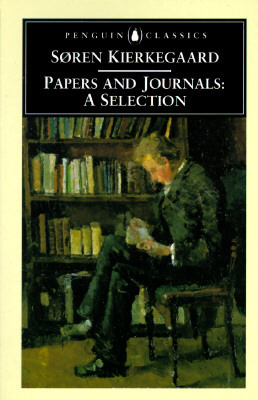
One of the greatest thinkers of the nineteenth century, Søren Kierkegaard (1814-55) often expressed himself through pseudonyms and disguises. Taken from his personal writings, these private reflections reveal the development of his own thought and personality, from his time as a young student to the deep later internal conflict that formed the basis for his masterpiece of duality Either/Or and beyond. Expressing his beliefs with a freedom not seen in works he published during his lifetime, Kierkegaard here rejects for the first time his father's conventional Christianity and forges the revolutionary idea of the 'leap of faith' required for true religious belief. A combination of theoretical argument, vivid natural description and sharply honed wit, the Papers and Journals reveal to the full the passionate integrity of his lifelong efforts 'to find a truth which is truth for me'.