
C.G. Jung
Carl Gustav Jung (/jʊŋ/; German: [ˈkarl ˈɡʊstaf jʊŋ]), often referred to as C. G. Jung, was a Swiss psychiatrist and psychotherapist who founded analytical psychology. Jung proposed and developed the concepts of extraversion and introversion; archetypes, and the collective unconscious. His work has been influential in psychiatry and in the study of religion, philosophy, archeology, anthropology, literature, and related fields. He was a prolific writer, many of whose works were not published until after his death. The central concept of analytical psychology is individuation—the psychological process of integrating the opposites, including the conscious with the unconscious, while still maintaining their relative autonomy. Jung considered individuation to be the central process of human development. Jung created some of the best known psychological concepts, including the archetype, the collective unconscious, the complex, and synchronicity. The Myers-Briggs Type Indicator (MBTI), a popular psychometric instrument, has been developed from Jung's theory of psychological types. Though he was a practising clinician and considered himself to be a scientist, much of his life's work was spent exploring tangential areas such as Eastern and Western philosophy, alchemy, astrology, and sociology, as well as literature and the arts. Jung's interest in philosophy and the occult led many to view him as a mystic, although his ambition was to be seen as a man of science. His influence on popular psychology, the "psychologization of religion", spirituality and the New Age movement has been immense.
32 Books Written

In the spring of 1957, when he was eighty-one years old, C. G. Jung undertook the telling of his life story. At regular intervals he had conversations with his colleague and friend Aniela Jaffé, and collaborated with her in the preparation of the text based on these talks. On occasion, he was moved to write entire chapters of the book in his own hand, and he continued to work on the final stages of the manuscript until shortly before his death on June 6, 1961.This edition of Memories, Dreams, Reflections includes Jung's VII Sermones ad Mortuos . It is a fully corrected edition. From the Trade Paperback edition.

Essays which state the fundamentals of Jung's psychological system: "On the Psychology of the Unconscious" and "The Relations Between the Ego and the Unconscious," with their original versions in an appendix.

Jung was intrigued from early in his career with coincidences, especially those surprising juxtapositions that scientific rationality could not adequately explain. He discussed these ideas with Albert Einstein before World War I, but first used the term "synchronicity" in a 1930 lecture, in reference to the unusual psychological insights generated from consulting the I Ching. A long correspondence and friendship with the Nobel Prize-winning physicist Wolfgang Pauli stimulated a final, mature statement of Jung's thinking on synchronicity, originally published in 1952 and reproduced here. Together with a wealth of historical and contemporary material, this essay describes an astrological experiment Jung conducted to test his theory. Synchronicity reveals the full extent of Jung's research into a wide range of psychic phenomena. This paperback edition of Jung's classic work includes a new foreword by Sonu Shamdasani, Philemon Professor of Jung History at University College London.
A provocative and enlightening look at spiritual unease and its contribution to the void in modern civilization Considered by many to be one of the most important books in the field of psychology, Modern Man in Search of a Soul is a comprehensive introduction to the thought of Carl Gustav Jung. In this book, Jung examines some of the most contested and crucial areas in the field of analytical psychology, including dream analysis, the primitive unconscious, and the relationship between psychology and religion. Additionally, Jung looks at the differences between his theories and those of Sigmund Freud, providing a valuable basis for anyone interested in the fundamentals of psychoanalysis.

Aion: Researches into the Phenomenology of the Self, originally published in German in 1951, is one of the major works of Jung's later life. The central theme of the volume is the symbolic representation of the psychic totality thru the concept of the Self, whose traditional historical equivalent is the figure of Christ. Jung demonstrates his thesis by an investigation of the Allegoria Christi, especially the fish symbol, but also of gnostic & alchemical symbolism, which he treats as phenomena of cultural assimilation. The first four chapters, on the ego, the shadow & the anima/us, provide a valuable summation of these key concepts in his psychological system.

Answer to Job: (From Vol. 11 of the Collected Works of C. G. Jung)
by C.G. Jung
Rating: 4.1 ⭐
• 2 recommendations ❤️
Considered one of Jung's most controversial works, Answer to Job also stands as Jung's most extensive commentary on a biblical text. Here, he confronts the story of the man who challenged God, the man who experienced hell on earth and still did not reject his faith. Job's journey parallels Jung's own experience--as reported in The Red Liber Novus --of descending into the depths of his own unconscious, confronting and reconciling the rejected aspects of his soul.This paperback edition of Jung's classic work includes a new foreword by Sonu Shamdasani, Philemon Professor of Jung History at University College London. Described by Shamdasani as "the theology behind The Red Book ," Answer to Job examines the symbolic role that theological concepts play in an individual's psychic life.
Jung's last major work, completed in his 81st year, on the synthesis of the opposites in alchemy and psychology.

A study of the analogies between alchemy, Christian dogma, and psychological symbolism. Revised translation, with new bibliography and index.

In this book, Dr. Jung, who has been the author of some of the most provocative hypotheses in modern psychology, describes what he regards as an authentic religious function in the unconscious mind. Using a wealth of material from ancient and medieval gnostic, alchemistic, and occultistic literature, he discusses the religious symbolism of unconscious processes and the possible continuity of religious forms that have appeared and reappeared through the centuries.
Esta es la versión completa y definitiva de una de las obras más revolucionarias y centrales de C. G. Jung. A partir de la reconstrucción y examen de los procesos semiconscientes e inconscientes del caso de una joven, Jung muestra que la psicología no puede prescindir de la historia del espíritu humano. La fantasía creadora dispone del espíritu primitivo, con sus imágenes específicas, que se manifiestan en las mitologías de todos los pueblos y épocas e integran lo inconsciente colectivo.

Bollingen Series XX'Collected Works, The Symbolic Life' has 160 items representative of the author's numerous interests, his wide circle of professional & personal acquaintance, & his inquiring mind. Its contents span 60 years; they include forewords to books by pupils & colleagues, replies to journalistic questionnaires, encyclopedia articles, occasional addresses & letters on technical subjects.

This volume has become known as perhaps the best introduction to Jung's work. In these famous essays. "The Relations between the Ego and the Unconscious" and "On the Psychology of the Unconscious," he presented the essential core of his system. Historically, they mark the end of Jung's intimate association with Freud and sum up his attempt to integrate the psychological schools of Freud and Adler into a comprehensive framework.This is the first paperback publication of this key work in its revised and augmented second edition of 1966. The earliest versions of the Two Essays, "New Paths in Psychology" (1912) and "The Structure of the Unconscious" (1916), discovered among Jung's posthumous papers, are published in an appendix, to show the development of Jung's thought in later versions. As an aid to study, the index has been comprehensively expanded.

Cette œuvre est une des plus importantes de Carl Gustav Jung. Concise, allant à l'essentiel, elle se situe au centre même de la pensée du savant qui, avec Freud, puis par-delà Freud, oriente la vie psychologique et mentale de l'humanité dans des voies nouvelles. Son sujet est la clé de la vie intérieure.Tout le monde nouveau des profondeurs humaines, exploré par Jung, est axé sur un dialogue, ou plus précisément une «dialectique entre le Moi et l'inconscient», dont le Moi a émergé.C.G. Jung montre combien le jeu dynamique entre le Moi et l'inconscient constitue le flux et le reflux fondamental de la vie et combien l'inconscient peut receler de messages essentiels.Aider les êtres à s'y retrouver, et ainsi à se construire eux-mêmes, n'est pas seulement une révolution humaine et médicale. C'est l'aventure qu'à travers toutes les autres l'être recherche depuis toujours.

The Red Book: A Reader's Edition
by C.G. Jung
An audio edition of the famous Red Book text and essay.The Red Book, published to wide acclaim in 2009, contains the nucleus of C. G. Jung's later works. It was here that he developed his principal theories of the archetypes, the collective unconscious, and the process of individuation that would transform psychotherapy from treatment of the sick into a means for the higher development of the personality.As Sara Corbett wrote in the New York Times, The creation of one of modern history's true visionaries, The Red Book is a singular work, outside of categorization. As an inquiry into what it means to be human, it transcends the history of psychoanalysis and underscores Jung's place among revolutionary thinkers like Marx, Orwell and, of course, Freud.The Red A Reader's Edition features Sonu Shamdasani's introductory essay and the full translation of Jung's vital work in one audiobook. The Red Book is skillfully narrated by Mike Fraser. Produced and published by Echo Point Books & Media, an independent bookseller in Brattleboro, Vermont.
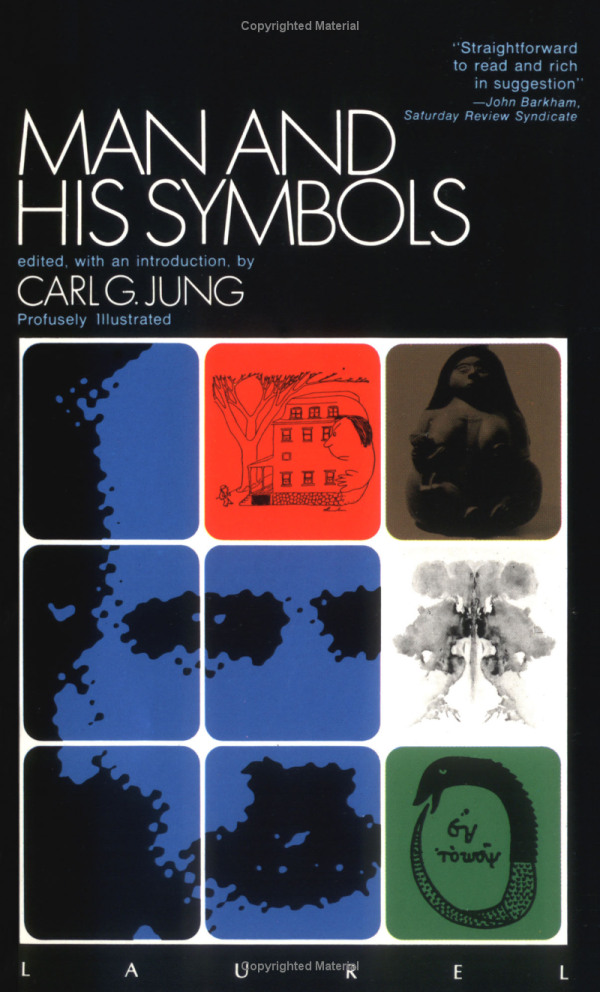
Man and His Symbols owes its existence to one of Jung's own dreams. The great psychologist dreamed that his work was understood by a wide public, rather than just by psychiatrists, and therefore he agreed to write and edit this fascinating book. Here, Jung examines the full world of the unconscious, whose language he believed to be the symbols constantly revealed in dreams. Convinced that dreams offer practical advice, sent from the unconscious to the conscious self, Jung felt that self-understanding would lead to a full and productive life. Thus, the reader will gain new insights into himself from this thoughtful volume, which also illustrates symbols throughout history. Completed just before his death by Jung and his associates, it is clearly addressed to the general reader.

One of the world's greatest psychiatrists reveals how to embrace our own humanity and resist the pressures of an ever-changing world. In this challenging and provocative work, Dr. Carl Jung—one of history's greatest minds—argues that civilization's future depends on our ability as individuals to resist the collective forces of society. Only by gaining an awareness and understanding of one's unconscious mind and true, inner nature—"the undiscovered self"—can we as individuals acquire the self-knowledge that is antithetical to ideological fanaticism. But this requires that we face our fear of the duality of the human psyche—the existence of good and the capacity for evil in every individual. In this seminal book, Jung compellingly argues that only then can we begin to cope with the dangers posed by mass society—"the sum total of individuals"—and resist the potential threats posed by those in power.

When Carl Jung embarked on an extended self-exploration he called it his “confrontation with the unconscious,” the heart of it was The Red Book, a large, illuminated volume he created between 1914 and 1930. Here he developed his principle theories—of the archetypes, the collective unconscious, and the process of individuation—that transformed psychotherapy from a practice concerned with treatment of the sick into a means for higher development of the personality. While Jung considered The Red Book to be his most important work, only a handful of people have ever seen it. Now, in a complete facsimile and translation, it is available to scholars and the general public. It is an astonishing example of calligraphy and art on a par with The Book of Kells and the illuminated manuscripts of William Blake. This publication of The Red Book is a watershed that will cast new light on the making of modern psychology. 212 color illustrations.

One of the most important of Jung's longer works, and probably the most famous of his books, Psychological Types appeared in German in 1921 after a "fallow period" of eight years during which Jung had published little. He called it "the fruit of nearly twenty years' work in the domain of practical psychology," and in his autobiography he wrote: "This work sprang originally from my need to define the ways in which my outlook differed from Freud's and Adler's. In attempting to answer this question, I came across the problem of types; for it is one's psychological type which from the outset determines and limits a person's judgment. My book, therefore, was an effort to deal with the relationship of the individual to the world, to people and things. It discussed the various aspects of consciousness, the various attitudes the conscious mind might take toward the world, and thus constitutes a psychology of consciousness regarded from what might be called a clinical angle."In expounding his system of personality types Jung relied not so much on formal case data as on the countless impressions and experiences derived from the treatment of nervous illnesses, from intercourse with people of all social levels, "friend and foe alike," and from an analysis of his own psychological nature. The book is rich in material drawn from literature, aesthetics, religion, and philosophy. The extended chapters that give general descriptions of the types and definitions of Jung's principal psychological concepts are key documents in analytical psychology.

This comprehensive collection of writings by the epoch-shaping Swiss psychoanalyst was edited by Joseph Campbell, himself the most famous of Jung's American followers. It comprises Jung's pioneering studies of the structure of the psyche - including the works that introduced such notions as the collective unconscious, the Shadow, Anima and Animus - as well as inquries into the psychology of spirituality and creativity, and Jung's influential "On Synchronicity," a paper whose implications extend from the I Ching to quantum physics. Campbell's introduction completes this compact volume, placing Jung's astonishingly wide-ranging oeuvre within the context of his life and times.

Extracted from Volumes 4, 8, 12, and 16. Includes "The Analysis of Dreams," 'On the Significance of Number Dreams," "General Aspects of Dream Psychology," "On the Nature of Dreams," "Individual Dream Symbolism in Relation to Alchemy," and "The Practical Use of Dream-Analysis."

This volume presents the essentials of Jung's thought in his own words. To familiarize readers with the ideas for which Jung is best known, the British psychiatrist and writer Anthony Storr has selected extracts from Jung's writings that pinpoint his many original contributions and relate the development of his thought to his biography. Dr. Storr has prefaced each extract with explanatory notes. These notes link the extracts, and with Dr. Storr's introduction, they show the progress and coherence of Jung's ideas, including such concepts as the collective unconscious, the archetypes, introversion and extroversion, individuation, and Jung's view of integration as the goal of the development of the personality.

The concept of the archetype is crucial to Jung's radical interpretation of the human mind. Jung believed that every person partakes of a universal or collective unconscious that persists through generations. The origins of the concept can be traced to his very first publication in 1902 and it remained central to his thought throughout his life. As well as explaining the theoretical background behind the idea, in Four Archetypes Jung describes the four archetypes that he considers fundamental to the psychological make-up of every mother, rebirth, spirit and trickster. Exploring their role in myth, fairytale and scripture, Jung engages the reader in discoveries that challenge and enlighten the ways we perceive ourselves and others.

In this, his most famous and influential work, Carl Jung made a dramatic break from the psychoanalytic tradition established by his mentor, Sigmund Freud. Rather than focusing on psychopathology and its symptoms, the Swiss psychiatrist studied dreams, mythology, and literature to define the universal patterns of the psyche.In Psychology of the Unconscious , Jung seeks a symbolic meaning and purpose behind a given set of symptoms, placing them within the larger context of the psyche. The 1912 text examines the fantasies of a patient whose poetic and vivid mental images helped Jung redefine libido as psychic energy, arising from the unconscious and manifesting itself consciously in symbolic form. Jung's commentary on his patient's fantasies offers a complex study of symbolic psychiatry and foreshadows his development of the theory of collective unconscious and its constituents, the archetypes.The author's role in the development of analytical psychology, a therapeutic process that promotes creativity and psychological development, makes this landmark in psychoanalytic methodology required reading for students and others interested in the practice and process of psychology.

Together for the first time in one paperback volume are two of Jung's major late works, in the version published in The Collected Works of C. G. Jung, as rendered by Jung's official translator. "The Undiscovered Self" (1957) integrates many of Jung's lifelong social and psychological concerns and addresses the uneasy relation between the individual and mass society. The survival of civilization, he maintains, depends on individual awareness of both the conscious and unconscious aspects of the human psyche. The exploration of the unconscious, in particular, leads to self-knowledge and with it recognition of the duality of human natureits potential for evil as well as for good. Jung believes that it is this self-knowledge that enables the individual to resist the collective power of mass society and the state and to cope with their possible threats. Jung's reflections on self-knowledge and the exploration of the unconscious carry over into his essay "Symbols and the Interpretation of Dreams," completed shortly before his death in 1961. (It is the original version of his introduction to the symposium Man and His Symbols, conceived as a popular presentation of Jungian ideas.) Describing dreams as communications from the unconscious--as expressions of aspects of the individual that have been neglected or unrealized--Jung explains how the symbols that occur in dreams compensate for repressed emotions and intuitions. In a world dehumanized, in Jung's view, by scientific "progress" and the loss of emotional participation in natural events, symbols recall our original nature, its instincts and peculiar way of thinking. This essay brings together Jung's fully evolved thoughts on the analysis of dreams and the healing of the rift between consciousness and the unconscious, in the context of his system of psychology.

Includes papers on child psychology, education, and individuation, underlining the overwhelming importance of parents and teachers in the genesis of the intellectual, feeling, and emotional disorders of childhood. This title includes final paper that deals with marriage as an aid or obstacle to self-realization.

Founded in 1955 under the editorship of Michael Fordham and with the encouragement of C. G. Jung, The Journal of analytical Psychology is the leading international Jungian journal. The ^Journal explores the practice as well as the theory of Jung's ideas and is dedicated to the comprehensive and in-depth presentation of current thinking among Jungian analysts. As well as important contributions to clinical practice, the Journal includes explorations of the arts, philosophy, theology and religion; trends in psychoanalysis; and the relationship between analytical psychology and social sciences.

Gli scritti raccolti nel primo volume delle Opere di C.G.Jung risalgono agli anni 1900-05. Sono gli anni del Burghölzli, l’ospedale per malattie mentali diretto da Bleuler, in cui Jung svolse un’intensa attività psichiatrica, fondata sulla ricerca di una comprensione dall’interno della personalità squilibrata.Questi scritti dimostrano quanto sia inesatto il rimprovero, talora mosso a Jung, di scarsa fedeltà ai dati sperimentali. A partire dalla sua tesi di laurea sulla Psicologia e patologia dei cosiddetti fenomeni occulti, Jung si dimostra «osservatore e terapeuta in un senso originalissimo, ancorato saldamente a un metodo empirico accogliente qualsiasi acca-dimento psichico con una disponibilità e un rispetto totali e mai prigioniero d’una funzione pùramente descrittiva».Tra i saggi qui raccolti ricordiamo: Psicologia e patologia dei cosiddetti fenomeni occulti (1902), Simulazione di malattia mentale (1903) e La diagnostica psicologica del fatto (1905).

While Jung is known mainly for his theories on the nature of the unconscious mind, he did have an interest in the paranormal. In this essay, Jung applies his analytical skills to the UFO phenomenon. Rather than assuming that the modern prevalence of UFO sightings are due to extraterrestrial craft, Jung reserves judgment on their origin & connects UFOs with archetypal imagery, concluding that they have become a "living myth." This essay is intriguing in its methodology & implications as to the nature of UFOs & their relation to the human psyche.

While never losing sight of the rational, cultured mind, Jung speaks for the natural mind, source of the evolutionary experience and accumulated wisdom of our species. Through his own example, Jung shows how healing our own living connection with Nature contributes to the whole.

"Kundalini yoga presented Jung with a model of something that was almost completely lacking in Western psychology--an account of the development phases of higher consciousness.... Jung's insistence on the psychogenic and symbolic significance of such states is even more timely now than then. As R. D. Laing stated... 'It was Jung who broke the ground here, but few followed him.'"--From the introduction by Sonu ShamdasaniJung's seminar on Kundalini yoga, presented to the Psychological Club in Zurich in 1932, has been widely regarded as a milestone in the psychological understanding of Eastern thought and of the symbolic transformations of inner experience. Kundalini yoga presented Jung with a model for the developmental phases of higher consciousness, and he interpreted its symbols in terms of the process of individuation. With sensitivity toward a new generation's interest in alternative religions and psychological exploration, Sonu Shamdasani has brought together the lectures and discussions from this seminar. In this volume, he re-creates for today's reader the fascination with which many intellectuals of prewar Europe regarded Eastern spirituality as they discovered more and more of its resources, from yoga to tantric texts. Reconstructing this seminar through new documentation, Shamdasani explains, in his introduction, why Jung thought that the comprehension of Eastern thought was essential if Western psychology was to develop. He goes on to orient today's audience toward an appreciation of some of the questions that stirred the minds of Jung and his seminar group: What is the relation between Eastern schools of liberation and Western psychotherapy? What connection is there between esoteric religious traditions and spontaneous individual experience? What light do the symbols of Kundalini yoga shed on conditions diagnosed as psychotic? Not only were these questions important to analysts in the 1930s but, as Shamdasani stresses, they continue to have psychological relevance for readers on the threshold of the twenty-first century. This volume also offers newly translated material from Jung's German language seminars, a seminar by the indologist Wilhelm Hauer presented in conjunction with that of Jung, illustrations of the cakras, and Sir John Woodroffe's classic translation of the tantric text, the Sat-cakra Nirupana. ?

Nine essays, written between 1922 and 1941, on Paracelsus, Freud, Picasso, the sinologist Richard Wilhelm, Joyce's Ulysses, artistic creativity generally, and the source of artistic creativity in archetypal structures.

In exploring the manifestations of human spiritual experience both in the imaginative activities of the individual and in the formation of mythologies and of religious symbolism in various cultures, C. G. Jung laid the groundwork for a psychology of the spirit. The excerpts here illuminate the concept of the unconscious, the central pillar of his work, and display ample evidence of the spontaneous spiritual and religious activities of the human mind. This compact volume will serve as an ideal introduction to Jung's basic concepts.