
Bart D. Ehrman
Bart Denton Ehrman is an American New Testament scholar focusing on textual criticism of the New Testament, the historical Jesus, and the origins and development of early Christianity. He has written and edited 30 books, including three college textbooks. He has also authored six New York Times bestsellers. He is the James A. Gray Distinguished Professor of Religious Studies at the University of North Carolina at Chapel Hill.
28 Books Written

Misquoting Jesus: The Story Behind Who Changed the Bible and Why
by Bart D. Ehrman
Rating: 3.9 ⭐
• 1 recommendation ❤️
For almost 1,500 years, the New Testament manuscripts were copied by hand––and mistakes and intentional changes abound in the competing manuscript versions. Religious and biblical scholar Bart Ehrman makes the provocative case that many of our widely held beliefs concerning the divinity of Jesus, the Trinity, and the divine origins of the Bible itself are the results of both intentional and accidental alterations by scribes.In this compelling and fascinating book, Ehrman shows where and why changes were made in our earliest surviving manuscripts, explaining for the first time how the many variations of our cherished biblical stories came to be, and why only certain versions of the stories qualify for publication in the Bibles we read today. Ehrman frames his account with personal reflections on how his study of the Greek manuscripts made him abandon his once ultra–conservative views of the Bible.

Jesus, Interrupted: Revealing the Hidden Contradictions in the Bible & Why We Don't Know About Them
by Bart D. Ehrman
Rating: 3.9 ⭐
Picking up where Bible expert Bart Ehrman's New York Times bestseller Misquoting Jesus left off, Jesus, Interrupted addresses the larger issue of what the New Testament actually teaches—and it's not what most people think. Here Ehrman reveals what scholars have unearthed:•The authors of the New Testament have diverging views about who Jesus was and how salvation works•The New Testament contains books that were forged in the names of the apostles by Christian writers who lived decades later•Jesus, Paul, Matthew and John all represented fundamentally different religions•Established Christian doctrines—such as the suffering messiah, the divinity of Jesus and the trinity—were the inventions of still later theologiansThese aren't idiosyncratic perspectives of just one scholar. They've been the standard widespread views of scholars across a full spectrum of denominations and traditions. Why is it most people have never heard such things? This is the book that pastors, educators and anyone interested in the Bible have been waiting for—a compelling account of the central challenges faced when attempting to reconstruct Jesus' life and message.

How Jesus Became God: The Exaltation of a Jewish Preacher from Galilee
by Bart D. Ehrman
Rating: 4.1 ⭐
New York Times bestselling author and Bible expert Bart Ehrman reveals how Jesus’s divinity became dogma in the first few centuries of the early church.The claim at the heart of the Christian faith is that Jesus of Nazareth was, and is, God. But this is not what the original disciples believed during Jesus’s lifetime—and it is not what Jesus claimed about himself. How Jesus Became God tells the story of an idea that shaped Christianity, and of the evolution of a belief that looked very different in the fourth century than it did in the first.A master explainer of Christian history, texts, and traditions, Ehrman reveals how an apocalyptic prophet from the backwaters of rural Galilee crucified for crimes against the state came to be thought of as equal with the one God Almighty, Creator of all things. But how did he move from being a Jewish prophet to being God? In a book that took eight years to research and write, Ehrman sketches Jesus’s transformation from a human prophet to the Son of God exalted to divine status at his resurrection. Only when some of Jesus’s followers had visions of him after his death—alive again—did anyone come to think that he, the prophet from Galilee, had become God. And what they meant by that was not at all what people mean today.Written for secular historians of religion and believers alike, How Jesus Became God will engage anyone interested in the historical developments that led to the affirmation at the heart of Christianity: Jesus was, and is, God.

Lost Christianities: The Battles for Scripture and the Faiths We Never Knew
by Bart D. Ehrman
Rating: 4.1 ⭐
The early Christian Church was a chaos of contending beliefs. Some groups of Christians claimed that there was not one God but two or twelve or thirty. Some believed that the world had not been created by God but by a lesser, ignorant deity. Certain sects maintained that Jesus was human but not divine, while others said he was divine but not human.In Lost Christianities, Bart D. Ehrman offers a fascinating look at these early forms of Christianity and shows how they came to be suppressed, reformed, or forgotten. All of these groups insisted that they upheld the teachings of Jesus and his apostles, and they all possessed writings that bore out their claims, books reputedly produced by Jesus's own followers. Modern archaeological work has recovered a number of key texts, and as Ehrman shows, these spectacular discoveries reveal religious diversity that says much about the ways in which history gets written by the winners. Ehrman's discussion ranges from considerations of various "lost scriptures"--including forged gospels supposedly written by Simon Peter, Jesus's closest disciple, and Judas Thomas, Jesus's alleged twin brother--to the disparate beliefs of such groups as the Jewish-Christian Ebionites, the anti-Jewish Marcionites, and various "Gnostic" sects. Ehrman examines in depth the battles that raged between "proto-orthodox Christians"--those who eventually compiled the canonical books of the New Testament and standardized Christian belief--and the groups they denounced as heretics and ultimately overcame.Scrupulously researched and lucidly written, Lost Christianities is an eye-opening account of politics, power, and the clash of ideas among Christians in the decades before one group came to see its views prevail.
God's Problem: How the Bible Fails to Answer Our Most Important Question - Why We Suffer
by Bart D. Ehrman
Rating: 3.9 ⭐
In times of questioning and despair, people often quote the Bible to provide answers. Surprisingly, though, the Bible does not have one answer but many "answers" that often contradict one another. Consider these competing explanations for suffering put forth by various biblical writers:The prophets: suffering is a punishment for sinThe book of Job, which offers two different answers: suffering is a test, and you will be rewarded later for passing it; and suffering is beyond comprehension, since we are just human beings and God, after all, is GodEcclesiastes: suffering is the nature of things, so just accept itAll apocalyptic texts in both the Hebrew Bible and the New Testament: God will eventually make right all that is wrong with the worldFor renowned Bible scholar Bart Ehrman, the question of why there is so much suffering in the world is more than a haunting thought. Ehrman's inability to reconcile the claims of faith with the facts of real life led the former pastor of the Princeton Baptist Church to reject Christianity.In God's Problem, Ehrman discusses his personal anguish upon discovering the Bible's contradictory explanations for suffering and invites all people of faith—or no faith—to confront their deepest questions about how God engages the world and each of us.

A New York Times bestselling historian of early Christianity takes on two of the most gripping questions of human existence: where did the ideas of heaven and hell come from, and why do they endure?What happens when we die? A recent Pew Research poll showed that 72% of Americans believe in a literal heaven, 58% in a literal hell. Most people who hold these beliefs are Christian and assume they are the age-old teachings of the Bible. But eternal rewards and punishments are found nowhere in the Old Testament and are not what Jesus or his disciples taught. So where did the ideas come from? In clear and compelling terms, Bart Ehrman recounts the long history of the afterlife, ranging from The Epic of Gilgamesh up to the writings of Augustine, focusing especially on the teachings of Jesus and his early followers. He discusses ancient guided tours of heaven and hell, in which a living person observes the sublime blessings of heaven for those who are saved and the horrifying torments of hell for the damned. Some of these accounts take the form of near death experiences, the oldest on record, with intriguing similarities to those reported today. One of Ehrman’s startling conclusions is that there never was a single Greek, Jewish, or Christian understanding of the afterlife, but numerous competing views. Moreover, these views did not come from nowhere; they were intimately connected with the social, cultural, and historical worlds out of which they emerged. Only later, in the early Christian centuries, did they develop into the notions of eternal bliss or damnation widely accepted today. As a historian, Ehrman obviously cannot provide a definitive answer to the question of what happens after death. In Heaven and Hell, he does the next best thing: by helping us reflect on where our ideas of the afterlife come from, he assures us that even if there may be something to hope for when we die, there is certainly nothing to fear.

Forged: Writing in the Name of God—Why the Bible's Authors Are Not Who We Think They Are
by Bart D. Ehrman
Rating: 4.0 ⭐
Bart D. Ehrman, the New York Times bestselling author of Jesus, Interrupted and God’s Problem reveals which books in the Bible’s New Testament were not passed down by Jesus’s disciples, but were instead forged by other hands—and why this centuries-hidden scandal is far more significant than many scholars are willing to admit. A controversial work of historical reporting in the tradition of Elaine Pagels, Marcus Borg, and John Dominic Crossan, Ehrman’s Forged delivers a stunning explication of one of the most substantial—yet least discussed—problems confronting the world of biblical scholarship.

The “marvelous” (Reza Aslan, bestselling author of Zealot), New York Times bestselling story of how Christianity became the dominant religion in the West.How did a religion whose first believers were twenty or so illiterate day laborers in a remote part of the empire became the official religion of Rome, converting some thirty million people in just four centuries? In The Triumph of Christianity, early Christian historian Bart D. Ehrman weaves the rigorously-researched answer to this question “into a vivid, nuanced, and enormously readable narrative” (Elaine Pagels, National Book Award-winning author of The Gnostic Gospels), showing how a handful of charismatic characters used a brilliant social strategy and an irresistible message to win over hearts and minds one at a time. This “humane, thoughtful and intelligent” book (The New York Times Book Review) upends the way we think about the single most important cultural transformation our world has ever seen—one that revolutionized art, music, literature, philosophy, ethics, economics, and law.
While most people think that the twenty-seven books of the New Testament are the only sacred writings of the early Christians, this is not at all the case. A companion volume to Bart Ehrman's Lost Christianities, this book offers an anthology of up-to-date and readable translations of many non-canonical writings from the first centuries after Christ--texts that have been for the most part lost or neglected for almost two millennia.Here is an array of remarkably varied writings from early Christian groups whose visions of Jesus differ dramatically from our contemporary understanding. Readers will find Gospels supposedly authored by the apostle Philip, James the brother of Jesus, Mary Magdalen, and others. There are Acts originally ascribed to John and to Thecla, Paul's female companion; there are Epistles allegedly written by Paul to the Roman philosopher Seneca. And there is an apocalypse by Simon Peter that offers a guided tour of the afterlife, both the glorious ecstasies of the saints and the horrendous torments of the damned, and an Epistle by Titus, a companion of Paul, which argues page after page against sexual love, even within marriage, on the grounds that physical intimacy leads to damnation.In all, the anthology includes fifteen Gospels, five non-canonical Acts of the Apostles, thirteen Epistles, a number of Apocalypses and Secret Books, and several Canon lists. Ehrman has included a general introduction, plus brief introductions to each piece. This important anthology gives readers a vivid picture of the range of beliefs that battled each other in the first centuries of the Christian era.

For years Bart Ehrman has been routinely bombarded with one question: Did Jesus Exist? As a leading Bible expert, fans and critics alike have sent letters, emails, posted blogs, and questioned Ehrman during interviews wanting his opinion about this nagging question that has become a conspiracy theorist cottage industry the world over. The idea that the character of Jesus was an invention of the early churchs time to put the issue to rest. Yes, the historical Jesus of Nazareth did exist. Known as a master explainer with deep knowledge of the field, Ehrman methodically demolishes both the scholarly and popular arguments against the existence of Jesus. Marshaling evidence from within the Bible and the wider historical record of the ancient world, Ehrman tackles the key issues that surround the popular mythologies associated with Jesus and the early Christian movement. Throughout Did Jesus Exist? Ehrman establishes the criterion for any genuine historical investigation and provides a robust defense of the methods required to discover the Jesus of history.

Jesus Before the Gospels: How the Earliest Christians Remembered, Changed, and Invented Their Stories of the Savior
by Bart D. Ehrman
Rating: 3.9 ⭐
The bestselling author of Misquoting Jesus , one of the most renowned and controversial Bible scholars in the world today examines oral tradition and its role in shaping the stories about Jesus we encounter in the New Testament—and ultimately in our understanding of Christianity. Throughout much of human history, our most important stories were passed down orally—including the stories about Jesus before they became written down in the Gospels. In this fascinating and deeply researched work, leading Bible scholar Bart D. Ehrman investigates the role oral history has played in the New Testament—how the telling of these stories not only spread Jesus’ message but helped shape it. A master explainer of Christian history, texts, and traditions, Ehrman draws on a range of disciplines, including psychology and anthropology, to examine the role of memory in the creation of the Gospels. Explaining how oral tradition evolves based on the latest scientific research, he demonstrates how the act of telling and retelling impacts the story, the storyteller, and the listener—crucial insights that challenge our typical historical understanding of the silent period between when Jesus lived and died and when his stories began to be written down. As he did in his previous books on religious scholarship, debates on New Testament authorship, and the existence of Jesus of Nazareth, Ehrman combines his deep knowledge and meticulous scholarship in a compelling and eye-opening narrative that will change the way we read and think about these sacred texts.

The Lost Gospel of Judas Iscariot: A New Look at Betrayer and Betrayed
by Bart D. Ehrman
Rating: 3.8 ⭐
The recent National Geographic special on the Gospel of Judas was a major media event, introducing to millions of viewers one of the most important biblical discoveries of modern times. Now, a leading historian of the early church, Bart Ehrman, offers a comprehensive account of the newly discovered Gospel of Judas, revealing what this legendary lost gospel contains and why it's so important for our understanding of Christianity. Ehrman, a featured commentator in the National Geographic special, describes how he first saw the Gospel of Judas—surprisingly, in a small room above a pizza parlor in a Swiss town near Lake Geneva—and he recounts the fascinating story of where and how this ancient papyrus document was discovered, how it moved around among antiquities dealers in Egypt, the USA, & Switzerland, and how it came to be restored & translated. More important, Ehrman gives a complete and clear account of what the book teaches and he shows how it relates to other Gospel texts—both those inside the New Testament & those outside of it, most notably, the Gnostic texts of early Christianity. Finally, he describes what we now can say about the historical Judas himself as well as his relationship with Jesus, suggesting that one needs to read between the lines of the early Gospels to see exactly what Judas did & why he did it. The Gospel of Judas presents an entirely new view of Jesus, his disciples and the man who allegedly betrayed him. It raises many questions and Ehrman provides illuminating and authoritative answers, in a book that will interest anyone curious about the New Testament, the life of Jesus and the history of Christianity after his death.

A “humane, thoughtful, and intelligent” (The New York Times Book Review) bestselling Biblical scholar reveals why our popular understanding of the Apocalypse is all wrong—and why that matters.You’ll find nearly everything the Bible says about the end in the Book of Revelation: a mystifying prophecy filled with bizarre symbolism, violent imagery, mangled syntax, confounding contradictions, and very firm ideas about the horrors that await us all. But no matter what you think Revelation reveals—whether you read it as a literal description of what will soon come to pass, interpret it as a metaphorical expression of hope for those suffering now, or only recognize its highlights from pop culture—you’re almost certainly wrong. In Armageddon, acclaimed New Testament authority Bart D. Ehrman delves into the most misunderstood—and possibly most dangerous—book of the Bible, on a “vigilantly persuasive” (The Washington Post) tour through three millennia of Judeo-Christian thinking about how our world will end. With wit and verve, he explores the alarming social and political consequences of expecting an imminent apocalypse, considers whether the message of Revelation may be at odds with the teachings of Jesus, and offers inspiring insight into how to live in the face of an uncertain future. By turns hilarious, moving, troubling, and provocative, Armageddon is nothing short of revelatory in its account of what the Bible really says about the end.

In this highly accessible discussion, Bart Ehrman examines the most recent textual and archaeological sources for the life of Jesus, along with the history of first-century Palestine, drawing a fascinating portrait of the man and his teachings.Ehrman shows us what historians have long known about the Gospels and the man who stands behind them. Through a careful evaluation of the New Testament (and other surviving sources, including the more recently discovered Gospels of Thomas and Peter), Ehrman proposes that Jesus can be best understood as an apocalyptic prophet--a man convinced that the world would end dramatically within the lifetime of his apostles and that a new kingdom would be created on earth. According to Ehrman, Jesus' belief in a coming apocalypse and his expectation of an utter reversal in the world's social organization not only underscores the radicalism of his teachings but also sheds light on both the appeal of his message to society's outcasts and the threat he posed to Jerusalem's established leadership.

The New Testament: A Historical Introduction to the Early Christian Writings
by Bart D. Ehrman
Rating: 4.3 ⭐
This new edition of Bart Ehrman's highly successful introduction approaches the New Testament from a consistently historical and comparative perspective, emphasizing the rich diversity of the earliest Christian literature. Rather than shying away from the critical problems presented by these books, Ehrman addresses the historical and literary challenges they pose and shows why scholars continue to argue over such significant issues as how the books of the New Testament came into being, what they mean, how they relate to contemporary Christian and non-Christian literature, and how they came to be collected into a canon of Scripture. Distinctive to this study is its emphasis on the historical, literary, and religious milieu of the Greco-Roman world, including early Judaism. As part of its historical orientation, this text also discusses works by other Christian writers who were roughly contemporary with the New Testament, such as the Gospel of Thomas , the Apocalypse of Peter , and the letters of Ignatius. The volume is enhanced by two color inserts, one on illuminated manuscripts and the other on archaeology.New to this · Additional material on archaeology, including a new eight-page color insert· "What to Expect" and "At a Glance" boxes that provide summaries of the material covered in each chapter· A Website Study Guide at offering chapter summaries, glossary terms, guides for reading, and self-quizzes for students.· Several new "Something to Think About" and "Some More Information" boxes· More extensive treatments of Judaism and of the role of women in the history of early Christianity· Nine new illustrations· An Instructor's Manual containing chapter summaries, discussion questions, and possible examination questionsIdeal for undergraduate and seminary classes in the New Testament, Biblical Studies, and Christian Origins, The New A Historical Introduction to the Early Christian Writings, 3/e , is an accessible, clearly written introduction that encourages students to consider the historical issues surrounding these writings.

Peter, Paul & Mary Magdalene: The Followers of Jesus in History & Legend
by Bart D. Ehrman
Rating: 3.9 ⭐
Bart Ehrman, author of the highly popular Truth and Fiction in The Da Vinci Code and Lost Christianities , here takes readers on another engaging tour of the early Christian church, illuminating the lives of three of Jesus' most intriguing Simon Peter, Paul of Tarsus, and MaryMagdalene.What do the writings of the New Testament tell us about each of these key followers of Christ? What legends have sprung up about them in the centuries after their deaths? Was Paul bow-legged and bald? Was Peter crucified upside down? Was Mary Magdalene a prostitute? In this lively work,Ehrman separates fact from fiction, presenting complicated historical issues in a clear and informative way and relating vivid anecdotes culled from the traditions of these three followers. He notes, for instance, that historians are able to say with virtual certainty that Mary, the follower ofJesus, was from the fishing village of Magdala on the shore of the Sea of Galilee (this is confirmed by her name, Mary Magdalene, reported in numerous independent sources); but there is no evidence to suggest that she was a prostitute (this legend can be traced to a sermon preached by Gregory theGreat five centuries after her death), and little reason to think that she was married to Jesus. Similarly, there is no historical evidence for the well-known tale that Peter was crucified upside down. Ehrman also argues that the stories of Paul's miracle working powers as an apostle are legendaryaccounts that celebrate his importance.A serious book but vibrantly written and leavened with many colorful stories, Peter, Paul, and Mary Magdalene will appeal to anyone curious about the early Christian church and the lives of these important figures.

Truth and Fiction in The Da Vinci Code: A Historian Reveals What We Really Know About Jesus, Mary Magdalene, and Constantine
by Bart D. Ehrman
Rating: 3.7 ⭐
In his staggeringly popular work of fiction, Dan Brown states up front that the historical information in the The Da Vinci Code is all factually accurate. But is this claim true? As historian Bart D. Ehrman shows in this informative and witty book, The Da Vinci Code is filled with numerous historical mistakes.Did the ancient church engage in a cover-up to make the man Jesus into a divine figure? Did Emperor Constantine select for the New Testament--from some 80 contending Gospels--the only four Gospels that stressed that Jesus was divine? Was Jesus Christ married to Mary Magdalene? Did the Church suppress Gospels that told the secret of their marriage? Bart Ehrman thoroughly debunks all of these claims. But the book is not merely a laundry list of Brown's misreading of history. Throughout, Ehrman offers a wealth of fascinating background information--all historically accurate--on early Christianity. He describes, for instance, the discovery of the Dead Sea Scrolls ; outlines in simple terms how scholars of early Christianity determine which sources are most reliable; and explores the many other Gospels that have been found in the last half century. In his engaging book, Ehrman separates fact from fiction, the historical realities from the flights of literary fancy. Anyone who would liketo know the truth about the beginnings of Christianity and the real truth behind The Da Vinci Code will find this book riveting.

What different kinds of books are in the New Testament? When, how, and why were they written? And why did some books, and not others, come to be collected into what Christians came to consider the canon of scripture that would define their belief for all time? With these 12 lectures, get a fast-moving yet thorough introduction to these and other key issues in the development of Christianity. Designed to deepen the understanding of both Christians and non-Christians alike, this lecture series takes as its perspective the historical, rather than the theological, issues behind the development of the Bible. And it's an illuminating perspective, indeed, ranging across issues of language, oral history, the physical limitations of spreading the written word at a time when the printing press lay far in the future, and, of course, the theological forces that were shaping Christianity, molding a commonly accepted canon from the various expressions of the faith spreading across the ancient world. Professor Ehrman recreates the context of the times in which the canon was being assembled so that you can understand what the message of each written work would have meant to ancient Christians. You'll come to see how the diverse books of the New Testament were gathered together into the form we now know, whether it's the four canonical Gospels (whose authorship was only attributed by later Christians), the book of Acts, the 21 Epistles, or the book of Revelation (sometimes called the Apocalypse of John). These lectures are a compelling introduction not only to the development of the Christian canon, but to all of the forces that would play a role in early Christian history.

Who was Jesus of Nazareth? What was he like?For more than 2,000 years, people and groups of varying convictions have pondered these questions and done their best to answer them. The significance of the subject is apparent. From the late Roman Empire all the way to our own time, no continuously existing institution or belief system has wielded as much influence as Christianity, no figure as much as Jesus.Worshiped around the globe by more than a billion people today, he is undoubtedly the single most important figure in the story of Western civilization and one of the most significant in world history altogether.Everyone who has even the faintest knowledge of Jesus has an opinion about him, says Professor Bart D. Ehrman, and these opinions vary widely.Those differences are visible not only among laypeople but even among professional scholars who have devoted their lives to the task of reconstructing what the historical Jesus was probably like and what he most likely said and did.In this course, you learn what the best historical evidence seems to indicate as you listen to lectures developed with no intention of affirming or denying any particular theological beliefs.Professor Ehrman—who created this course as a companion to his 24-lecture Teaching Company course on The New Testament—approaches the question from a purely historical perspective. He explains why it has proven so difficult to know about this "Jesus of history." And he reveals the kinds of conclusions modern scholars have drawn about him.

Course Lecture Titles1. The Birth of Christianity2. The Religious World of Early Christianity3. The Historical Jesus4. Oral and Written Traditions about Jesus5. The Apostle Paul6. The Beginning of Jewish-Christian Relations7. The Anti-Jewish Use of the Old Testament8. The Rise of Christian Anti-Judaism9. The Early Christian Mission10. The Christianization of the Roman Empire11. The Early Persecutions of the State12. The Causes of Christian Persecution13. Christian Reactions to Persecution14. The Early Christian Apologists15. The Diversity of Early Christian Communities16. Christianities of the Second Century17. The Role of Pseudepigrapha18. The Victory of the Proto-Orthodox19. The New Testament Canon20. The Development of Church Offices21. The Rise of Christian Liturgy22. The Beginnings of Normative Theology23. The Doctrine of the Trinity24. Christianity and the Conquest of Empire

audio course taught by Professor Bart D. Ehrman, U. North CarolinaWhether taken as a book of faith or a cultural artifact, the New Testament is among the most significant writings the world has ever known, its web of meaning relied upon by virtually every major writer in the last 2,000 years. Yet the New Testament is not only one of Western civilization's most believed books, but also one of its most widely disputed, often maligned, and least clearly understood, with a vast number of people unaware of how it was written and transmitted. But now a distinguished religious scholar is available to help you gain a carefully reasoned understanding of not only the New Testament itself, but of the individuals and communities who created its texts. Drawing on modern biblical scholarship, recent archaeological discoveries, and careful literary analysis - and approaching his subject purely as a historian, with belief or disbelief suspended - Professor Ehrman has crafted a series of 24 fascinating lectures that trace the history of the New Testament and the early Christian faith community. He discusses not only the 27 books included in the New Testament, but also many of the significant texts that were excluded as he addresses key historical questions around the issues of authorship, circumstance, audience, content, meaning, and historical accuracy. "Our ultimate goal," he notes, "is to come to a fuller appreciation and understanding of these books that have made such an enormous impact on the history of Western civilization and that continue to play such an important role for people today."
The Orthodox Corruption of Scripture: The Effect of Early Christological Controversies on the Text of the New Testament
by Bart D. Ehrman
Rating: 4.1 ⭐
Victors not only write they also reproduce the texts. Bart Ehrman explores the close relationship between the social history of early Christianity and the textual tradition of the emerging New Testament, examining how early struggles between Christian "heresy" and "orthodoxy" affectedthe transmission of the documents over which many of the debates were waged. He makes a crucial contribution to our understanding of the social and intellectual history of early Christianity and raises intriguing questions about the relationship of readers to their texts, especially in an age whenscribes could transform the documents they reproduced. This edition includes a new afterword surveying research in biblical interpretation over the past twenty years.

Without the presence of Christianity, our world would be considerably different. Whether we view it in religious, social, or political terms, Christianity has deeply and integrally influenced the Western worldview and way of life. Yet, throughout Christian history, compelling controversies have existed surrounding the faith's first three centuries, when it grew from a persecuted sect into a powerful religion. These controversies bring into question many commonly accepted beliefs about Christianity. In this course, an award-winning professor and New York Times best-selling author offers a penetrating investigation of the 24 most pivotal controversies, shedding light on fallacies that obscure an accurate view of the religion and how it evolved into what it is today. In each lecture, you'll delve into a key issue in Christianity's early development: Did the Jews Kill Jesus? Was Jesus Raised from the Dead? Did the Disciples Write the Gospels? Did Early Christians Accept the Trinity? Is the Book of Revelation about Our Future? Who Chose the Books of the New Testament? You'll delve into the conception of the meshiach (messiah) in Jewish tradition, and the basis for the core Christian claim that a suffering messiah was predicted in the Jewish scriptures. In grasping Paul's role in the early faith, you contemplate the key differences between the teachings of Jesus himself and the Christian view of his death and resurrection. And you trace the ambiguous role in early Christianity of the Jewish scriptures, and how these books came to be accepted as the Christian Old Testament. Explore these and other intriguing questions in this unique inquiry into the core of Christian tradition.
Lost Christianities: Christian Scriptures and the Battles Over Authentication
by Bart D. Ehrman
Rating: 4.2 ⭐
12 Audio CDs(24 lectures, 30 minutes/lecture)Course Lecture Titles1. The Diversity of Early Christianity 2. Christians Who Would Be Jews 3. Christians Who Refuse To Be Jews 4. Early Gnostic ChristianityOur Sources 5. Early Christian GnosticismAn Overview 6. The Gnostic Gospel of Truth 7. Gnostics Explain Themselves 8. The Coptic Gospel of Thomas 9. Thomas' Gnostic Teachings 10. Infancy Gospels 11. The Gospel of Peter 12. The Secret Gospel of Mark 13. The Acts of John 14. The Acts of Thomas 15. The Acts of Paul and Thecla 16. Forgeries in the Name of Paul 17. The Epistle of Barnabas 18. The Apocalypse of Peter 19. The Rise of Early Christian Orthodoxy 20. Beginnings of the Canon 21. Formation of the New Testament Canon 22. Interpretation of Scripture 23. Orthodox Corruption of Scripture 24. Early Christian Creeds
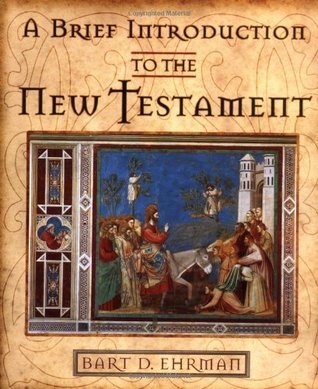
A Brief Introduction to the New Testament is a concise and more pedagogical version of Bart D. Ehrman's best-selling The New A Historical Introduction to the Early Christian Writings, 3/e . Retaining the approach of the longer textbook while condensing and simplifying much of itsmaterial, this volume looks at the New Testament from a consistently historical and comparative perspective and emphasizes the rich diversity of the earliest Christian literature. Rather than shying away from the critical problems presented by these books, Ehrman addresses the historical andliterary challenges they pose. He shows why scholars continue to argue over such significant issues as how the books of the New Testament came into being, what they mean, and how they relate to contemporary Christian and non-Christian literature. Distinctive to this study is its emphasis on thehistorical, literary, and religious milieu of the Greco-Roman world, including early Judaism.Features :* Covers the fundamentals of New Testament scholarship in an engaging style, making challenging material easily understandable to undergraduates in introductory courses* Retains the numerous pedagogical devices from the longer "What to Expect" and "At a Glance" boxes introduce and provide summaries of the material covered in each chapter"Something to Think About" and "Some More Information" boxes offer thought-provoking asides* Adds new study aids :Key Terms (each appearing in boldface the first time it is used), Questions for Study and Reflection , and a greatly expanded Glossary* Offers streamlined coverage--this volume is nine chapters shorter than The New A Historical Introduction to the New Testament, 3/e* Includes a full-color eight-page insert on archaeology* A Student Website contains chapter summaries, guides for reading, and self-quizzesAn Instructor's Manual provides chapter summaries, student reading guides, pedagogical suggestions, and exam questions and answersIdeal for undergraduate and seminary classes in the New Testament, Biblical Studies, and Christian Origins, A Brief Introduction to the New Testament is an accessible, clearly written introduction that encourages students to consider the historical issues surrounding these writings.

Forgery and Counter-forgery: The Use of Literary Deceit in Early Christian Polemics
by Bart D. Ehrman
Rating: 4.2 ⭐
"Arguably the most distinctive feature of the early Christian literature," writes Bart Ehrman, "is the degree to which it was forged." The Homilies and Recognitions of Clement; Paul's letters to and from Seneca; Gospels by Peter, Thomas, and Philip; Jesus' correspondence with Abgar, letters by Peter and Paul in the New Testament--all forgeries. To cite just a few examples.Forgery and Counterforgery is the first comprehensive study of early Christian pseudepigrapha ever produced in English. In it, Ehrman argues that ancient critics--pagan, Jewish, and Christian--understood false authorial claims to be a form of literary deceit, and thus forgeries. Ehrman considers the extent of the phenomenon, the "intention" and motivations of ancient Greek, Roman, and Jewish forgers, and reactions to their work once detected. He also assesses the criteria ancient critics applied to expose forgeries and the techniques forgers used to avoid detection. With the wider practices of the ancient world as backdrop, Ehrman then focuses on early Christian polemics, as various Christian authors forged documents in order to lend their ideas a veneer of authority in literary battles waged with pagans, Jews, and, most importantly, with one another in internecine disputes over doctrine and practice. In some instances a forger directed his work against views found in another forgery,creating thereby a "counter-forgery." Ehrman's evaluation of polemical forgeries starts with those of the New Testament (nearly half of whose books make a false authorial claim) up through the Pseudo-Ignatian epistles and the Apostolic Constitutions at the end of the fourth century.Shining light on an important but overlooked feature of the early Christian world, Forgery and Counterforgery explores the possible motivations of the deceivers who produced these writings, situating their practice within ancient Christian discourses on lying and deceit.

Journeys to Heaven and Hell: Tours of the Afterlife in the Early Christian Tradition
by Bart D. Ehrman
Rating: 3.8 ⭐
A New York Times bestselling scholar’s illuminating exploration of the earliest Christian narrated journeys to heaven and hell “[An] illuminating deep dive . . . An edifying origin story for contemporary Christian conceptions of the afterlife.”— Publishers Weekly From classics such as the Odyssey and the Aeneid to fifth-century Christian apocrypha, narratives that described guided tours of the afterlife played a major role in shaping ancient notions of morality and ethics. In this new account, acclaimed author Bart Ehrman contextualizes early Christian narratives of heaven and hell within the broader intellectual and cultural worlds from which they emerged. He examines how fundamental social experiences of the early Christian communities molded the conceptions of the afterlife that eventuated into the accepted doctrines of heaven, hell, and purgatory. Drawing on Greek and Roman epic poetry, early Jewish writings such as the Book of Watchers, and apocryphal Christian stories including the Acts of Thomas , the Gospel of Nicodemus , and the Apocalypse of Peter , Ehrman demonstrates that ancient tours of the afterlife promoted reflection on matters of ethics, faith, ambition, and life’s meaning, the fruit of which has been codified into Christian belief today.

A lecture series on the topic in the title.