
William James
Librarian Note: There is more than one author in the Goodreads database with this name. William James (January 11, 1842 – August 26, 1910) was an American philosopher and psychologist who was also trained as a physician. The first educator to offer a psychology course in the United States, James was one of the leading thinkers of the late nineteenth century and is believed by many to be one of the most influential philosophers the United States has ever produced, while others have labelled him the "Father of American psychology". Along with Charles Sanders Peirce and John Dewey, he is considered to be one of the greatest figures associated with the philosophical school known as pragmatism, and is also cited as one of the founders of the functional psychology. He also developed the philosophical perspective known as radical empiricism. James' work has influenced intellectuals such as Émile Durkheim, W. E. B. Du Bois, Edmund Husserl, Bertrand Russell, Ludwig Wittgenstein, Hilary Putnam, and Richard Rorty. Born into a wealthy family, James was the son of the Swedenborgian theologian Henry James Sr and the brother of both the prominent novelist Henry James, and the diarist Alice James. James wrote widely on many topics, including epistemology, education, metaphysics, psychology, religion, and mysticism. Among his most influential books are Principles of Psychology, which was a groundbreaking text in the field of psychology, Essays in Radical Empiricism, an important text in philosophy, and The Varieties of Religious Experience, which investigated different forms of religious experience. William James was born at the Astor House in New York City. He was the son of Henry James Sr., a noted and independently wealthy Swedenborgian theologian well acquainted with the literary and intellectual elites of his day. The intellectual brilliance of the James family milieu and the remarkable epistolary talents of several of its members have made them a subject of continuing interest to historians, biographers, and critics. James interacted with a wide array of writers and scholars throughout his life, including his godfather Ralph Waldo Emerson, his godson William James Sidis, as well as Charles Sanders Peirce, Bertrand Russell, Josiah Royce, Ernst Mach, John Dewey, Macedonio Fernández, Walter Lippmann, Mark Twain, Horatio Alger, Jr., Henri Bergson and Sigmund Freud. William James received an eclectic trans-Atlantic education, developing fluency in both German and French. Education in the James household encouraged cosmopolitanism. The family made two trips to Europe while William James was still a child, setting a pattern that resulted in thirteen more European journeys during his life. His early artistic bent led to an apprenticeship in the studio of William Morris Hunt in Newport, Rhode Island, but he switched in 1861 to scientific studies at the Lawrence Scientific School of Harvard University. In his early adulthood, James suffered from a variety of physical ailments, including those of the eyes, back, stomach, and skin. He was also tone deaf. He was subject to a variety of psychological symptoms which were diagnosed at the time as neurasthenia, and which included periods of depression during which he contemplated suicide for months on end. Two younger brothers, Garth Wilkinson (Wilky) and Robertson (Bob), fought in the Civil War. The other three siblings (William, Henry, and Alice James) all suffered from periods of invalidism. He took up medical studies at Harvard Medical School in 1864. He took a break in the spring of 1865 to join naturalist Louis Agassiz on a scientific expedition up the Amazon River, but aborted his trip after eight months, as he suffered bouts of severe seasickness and mild smallpox. His studies were interrupted once again due to illness in April 1867. He traveled to Germany in search of a cure and remained there until November 1868; at that time he was 26 years old. During this period, he
30 Books Written

The Varieties of Religious A Study in Human Nature is a book by the Harvard psychologist and philosopher William James comprising 20 lectures given at the University of Edinburgh in Scotland. These lectures concerned the nature of religion and the neglect of science, in James' view, in the academic study of religion. Soon after its publication, the book found its way into the canon of psychology and philosophy, and has remained in print for over a century. James was most interested in direct religious experiences. Theology and the organizational aspects of religion were of secondary interest. He believed that religious experiences were simply human "Religious happiness is happiness. Religious trance is trance." He believed that religious experiences can have "morbid origins" in brain pathology and can be irrational but nevertheless are largely positive. Get Your Copy Now.
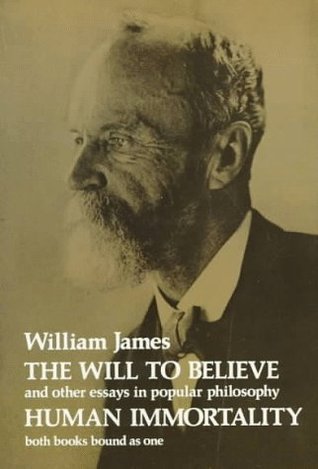
The Will to Believe, Human Immortality and Other Essays in Popular Philosophy
by William James
Rating: 4.1 ⭐
• 1 recommendation ❤️
The work of William James contributed greatly to the burgeoning fields of psychology, particularly in the areas of education, religion, mysticism and pragmatism. The brother of novelist Henry James and of diarist Alice James, William wrote several powerful essays expressing his ideas on the pragmatic theory of truth, sentience, and human beings' right to believe. In "The Will to Believe", James suggests that what a person holds to be true or attainable may exist through that person's belief in them, regardless of a lack of physical evidence. In a sense, he advocates the theory of self-fulfilling prophesies. "Human Immortality" was a speech delivered during the annual Ingersoll Lectureship, given in memory of George Goldthwait Ingersoll, in 1897 at Harvard University. These works are a prime example of the powerful influence William James has had on modern psychology, and are still recognized today for their brilliance and revolutionary impacts on the field.

A profoundly influential figure in American psychology, William James (1842–1910) was also a philosopher of note, who used Charles S. Peirce's theories of pragmatism as a basis for his own conception of that influential philosophy. For James, this meant an emphasis on "radical empiricism" and the concept that the meaning of any idea — philosophical, political, social, or otherwise — has validity only in terms of its experiential and practical consequences.James propounded his theories of pragmatism in this book, one of the most important in American philosophy. In a sense, he wished to test competing systems of thought in the "marketplace of actual experience" to determine their validity, i.e. whether adopting a particular philosophical theory or way of looking at the world makes an actual difference in individual conduct or in how we perceive and react to the varieties of experience. In these pages, James not only makes a strong case for his own ideas, but mounts a powerful attack against the transcendental and rationalist tradition.For anyone interested in William James or the history of American philosophical thought, Pragmatism is an essential and thought provoking reference. In this handy, inexpensive edition, it will challenge and stimulate any thinking person.

This is the first inexpensive edition of the complete Long Course in Principles of Psychology, one of the great classics of modern Western literature and science and the source of the ripest thoughts of America’s most important philosopher. As such, it should not be confused with the many abridgements that omit key sections.The book presents lucid descriptions of human mental activity, with detailed considerations of the stream of thought, consciousness, time perception, memory, imagination, emotions, reason, abnormal phenomena, and similar topics. In its course it takes into account the work of Berkeley, Binet, Bradley, Darwin, Descartes, Fechner, Galton, Green, Helmholtz, Herbart, Hume, Janet, Kant, Lange, Lotze, Locke, Mill, Royce, Schopenhauer, Spinoza, Wundt, and scores of others. It examines contrasting interpretations of mental phenomena, treating introspective analysis, philosophical interpretations, and experimental research.It remains unsurpassed today as a brilliantly written survey of William James’ timeless view of psychology.

The writings of William James represent one of America's most original contributions to the history of ideas. Ranging from philosophy and psychology to religion and politics, James composed the most engaging formulation of American pragmatism. 'Pragmatism' grew out of a set of lectures and the full text is included here along with 'The Meaning of Truth', 'Psychology', 'The Will to Believe', and 'Talks to Teachers on Psychology'.

Writings 1902-1910: The Varieties of Religious Experience / Pragmatism / A Pluralistic Universe / The Meaning of Truth / Some Problems of Philosophy / Essays
by William James
Rating: 4.2 ⭐
Philosopher and psychologist William James was the best known and most influential American thinker of his time. The five books and nineteen essays collected in this Library of America volume represent all his major work from 1902 until his death in 1910. Most were originally written as lectures addressed to general audiences as well as philosophers and were received with great enthusiasm. His writing is clear, energetic, and unpretentious, and is marked by the devotion to literary excellence he shared with his brother, Henry James. In these works William James champions the value of individual experience with an eloquence and enthusiasm that has placed him alongside Emerson and Whitman as a classic exponent of American democratic culture.In The Varieties of Religious Experience (1902) James explores “the very inner citadel of human life” by focusing on intensely religious individuals of different cultures and eras. With insight, compassion, and open-mindedness, he examines and assesses their beliefs, seeking to measure religion’s value by its contributions to individual human lives.In Pragmatism (1907) James suggests that the conflicting metaphysical positions of “tender-minded” rationalism and “tough-minded” empiricism be judged by examining their actual consequences. Philosophy, James argues, should free itself from unexamined principles and closed systems and confront reality with complete openness.In A Pluralistic Universe (1909) James rejects the concept of the absolute and calls on philosophers to respond to “the real concrete sensible flux of life.” Through his discussion of Kant, Hegel, Henri Bergson, and religion, James explores a universe viewed not as an abstract “block” but as a rich “manyness-in-oneness,” full of independent yet connected events.The Meaning of Truth (1909) is a polemical collection of essays asserting that ideas are made true not by inherent qualities but by events. James delights in intellectual combat, stating his positions with vigor while remaining open to opposing ideas.Some Problems of Philosophy (1910) was intended by James to serve both as a historical overview of metaphysics and as a systematic statement of his philosophical beliefs. Though unfinished at his death, it fully demonstrates the psychological insight and literary vividness James brought to philosophy.Among the essays included are the anti-imperialist “Address on the Philippine Question,” “On Some Mental Effects of the Earthquake,” a candid personal account of the 1906 California disaster, and “The Moral Equivalent of War,” a call for the redirection of martial energies to peaceful ends, as well as essays on Emerson, the role of university in intellectual life, and psychic research.

Preeminent American philosopher and educator John Dewey (1859-1952) rejected Hegelian idealism for the pragmatism of William James.In this collection of informal, highly readable essays, originally published between 1897 and 1909, Dewey articulates his now classic philosophical concepts of knowledge and truth and the nature of reality. Here Dewey introduces his scientific method and uses critical intelligence to reject the traditional ways of viewing philosophical discourse. Knowledge cannot be divorced from experience; it is gradually acquired through interaction with nature. Philosophy, therefore, has to be regarded as itself a method of knowledge and not as a repository of disembodied, pre-existing absolute truths.

Alternate cover edition of ISBN 9780674706255

Volume 2 of the famous long course, complete and unabridged. Covers stream of thought, time perception, memory, and experimental methods. Total in set: 94 figures.
One of the founders of psychology offers his classic exposition of the need for faith in the modern age, accompanied by several other of his most important works in a handy pocket edition.

This book was converted from its physical edition to the digital format by a community of volunteers. You may find it for free on the web. Purchase of the Kindle edition includes wireless delivery.

This is a pre-1923 historical reproduction that was curated for quality. Quality assurance was conducted on each of these books in an attempt to remove books with imperfections introduced by the digitization process. Though we have made best efforts - the books may have occasional errors that do not impede the reading experience. We believe this work is culturally important and have elected to bring the book back into print as part of our continuing commitment to the preservation of printed works worldwide.

The influential philosopher's preoccupation with ultimate reality and his turn toward a metaphysical system are the focus of Essays in Radical Empiricism. Originally published in journals between 1884 and 1906, these 12 essays were selected by William James to illustrate the doctrine he called "radical empiricism" — a concept that made him the center of a new philosophic approach.Proclaiming experience to be the ultimate reality, James explores the applications of experience to the problem of relations, the role of feeling in experience, and the nature of truth. He argues in favor of a pluralistic universe, denying that experience can be defined in terms of an absolute force determining the relationships between things and events. Relationships, regardless of whether they hold things together or apart, are as real as the things themselves — their functions are real, and there are no hidden factors responsible for life's harmonies and dissonances.Seminal essays in this collection include "Does Consciousness Exist?: "The Essence of Humanism," and "Absolutism and Empiricism." In addition, this edition features a new translation of "On the Notion of Consciousness" — the first English rendering of the essay, which was written in French. Indispensable to an understanding of the great philosopher's other works, this systematic and compact treatment functions equally well in and out of the classroom.

Talks to Teachers on Psychology and to Students on Some of Life's Ideals
by William James
Rating: 3.9 ⭐
This Elibron Classics book is a reprint of a 1899 edition by Longmans, Green & Company, London, New York, Bombay.

Condensed and reworked from James's monumental Principles of Psychology, this classic text examines habit; stream of consciousness; self and the sense of personal identity; discrimination and association; the sense of time; memory; perception; imagination; reasoning; emotions, instincts; the will and voluntary acts; and much more. This edition omits the outdated first nine chapters.

William James's strong beliefs in a pragmatic theory of truth - that truth is only as relevant as its effect on us - lead to these absorbing essays on fact and belief. Within them is a fascinating theory of reality that suggests nothing is truly 'real' without examination through human empathy and experience.Throughout history, some books have changed the world. They have transformed the way we see ourselves - and each other. They have inspired debate, dissent, war and revolution. They have enlightened, outraged, provoked and comforted. They have enriched lives - and destroyed them. Now Penguin brings you the works of the great thinkers, pioneers, radicals and visionaries whose ideas shook civilization and helped make us who we are.

The habits to which there is an innate tendency are called instincts; some of those due to education would by most persons be called acts of reason. It appears that habit covers a very large part of life, and that one engaged in studying the objective manifestations of mind is bound at the very outset to define clearly just what its limits are. This volume illustrates the principles surrounding habit and its structure.

In his introduction to this collection, John McDermott presents James's thinking in all its manifestations, stressing the importance of radical empiricism and placing into perspective the doctrines of pragmatism and the will to believe. The critical periods of James's life are highlighted to illuminate the development of his philosophical and psychological thought.The anthology features representive selections from The Principles of Psychology, The Will to Believe , and The Variety of Religious Experience in addition to the complete Essays in Radical Empiricism and A Pluralistic Universe . The original 1907 edition of Pragmatism is included, as well as classic selections from all of James's other major works. Of particular significance for James scholarship is the supplemented version of Ralph Barton Perry's Annotated Bibliography of the Writings of William James , with additions bringing it up to 1976.

Writings 1878–1899: Psychology: Briefer Course / The Will to Believe / Talks to Teachers and to Students / Essays
by William James
Rating: 4.2 ⭐
In this Library of America volume are the brilliant, engagingly written works of the early and middle years of William James, a member of America’s most illustrious intellectual family. Widely acclaimed as the country’s foremost philosopher, the first of its psychologists, and a champion of religious pluralism, his influence on American thought is as strong now as it has ever been.James’s emphasis on the creative power of faith, will, and action, his opening up of philosophy to the fresh air of ordinary experience, his fascination with alternative forms of belief and states of consciousness, and his impatience with dogmas of any kind all make him a defender of individual experience and earn him a place beside Emerson and Whitman as an exponent of American democratic culture.Psychology: Briefer Course (1892) is far more than a shortened version of his monumental Principles of Psychology. It significantly revises parts of the earlier work and adds important new materials. (Students liked to call the longer book “James” and the shorter one “Jimmy.”) James’s new psychology moved away from discussions of the soul, morality, and logic, and focused instead on instinct, will, and the importance of action and habit. Passages comparing human consciousness to “a wonderful stream” inspired the “stream of consciousness” in the future work of Joyce, Woolf, and Gertrude Stein, a student of James’s at Harvard.The Will to Believe and Other Essays in Popular Philosophy (1897) advances the argument that each of us has the right to believe in hypotheses that are not susceptible to proof, and that such beliefs might actually change the world. The conversational style of theses essays reflects their origin in public lectures, as well as James’s conviction that truth can be discovered as much in the course of everyday life as in the activities of science or of philosophical speculation.Talks to Teachers and to Students (1899), also drawn from lectures, helped transform the emerging science of education. Here James applies his new psychology to classroom theory and conduct, especially for the primary grades. This immensely influential book has never gone out of print. It emphasizes the role in learning of instinct, play, and habit, along with the importance of engaging the voluntary interests of students. James’s warm and sympathetic nature informs his treatment of children, who can best be taught by those who respect the child’s autonomy and who avoid what he calls “hammering in.”“Human Immortality” (1897) defends the possibility of life after death; eight more of James’s most important essays round out this volume devoted to a writer called by John Dewey, “almost a Columbus of the inner world.”

The Moral Equivalent of War, the last public utterance of William James, is significant as expressing the opinions of a practical psychologist on a question of growing popular interest. For the past fifteen years the movement for promoting international peace has been enlisting the support of organizations and individuals the world over. That this is a question on which much may be said for the opposition, James, though a pacificist, admits with his usual fair-mindedness, pointing out that militarism is the sole nourisher of certain human virtues that the world cannot let die, and that until the peace party devises some substitute, some moral equivalent, for the disciplinary value of war, their utopian goal is neither desirable nor possible. His own solution is advanced not as a practical measure, but merely as an illustration to show that the world is full of opportunities for the peaceful development and continuation of the martial qualities of human life. This essay was written for general dissemination as a publication of the American Association for International Conciliation, February, 1910. As it not only presents a peace program but defines as well the most familiar arguments of the war party, no militarist article has been included, although it may be mentioned that a suggestive apology for war is to be found among De Quincey’s Essays and also in Ruskin’s Crown of Wild Olive. Additional documents on conciliation, approaching the question from innumerable points of view, are published by the Association mentioned above. (Summary by Harrison Ross Steeves and Frank Humphrey Ristine, editors.)
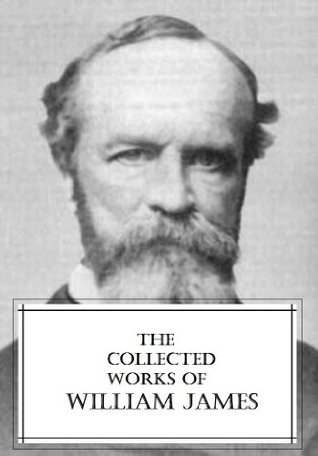
This collection contains dozens of lectures from William James, the American pioneer of psychology and philosophy. It includes an active table of contents, as well as an active TOC for each work to allow smooth navigation. The Collection includes:The Will to Believe and other Essays in Popular Philosophy (1897)Talks to Teachers on Psychology and to Students on Some of Life’s Ideals (1899)The Varieties of Religious Experience (1902)Pragmatism: A New Name for Some Old Ways of Thinking (1907)A Pluralistic Universe (1909)The Meaning of Truth: A Sequel to Pragmatism (1909)Memories and Studies (1911)Essays in Radical Empiricism (1912)

Pragmatism is the most famous single work of American philosophy. Its sequel, The Meaning of Truth , is its imperative and inevitable companion. The definitive texts of both works are here available for the first time in one volume, with an introduction by the distinguished contemporary philosopher A. J. Ayer.In Pragmatism , William James attacked the transcendental, rationalist tradition in philosophy and tried to clear the ground for the doctrine he called radical empiricism. When first published, the book caused an uproar. It was greeted with praise, hostility, ridicule. Determined to clarify his views, James collected nine essays he had written on this subject before he wrote Pragmatism and six written later in response to criticisms by Bertrand Russell and others. He published The Meaning of Truth in 1909, the year before his death.These two works show James at his best full of verve and good humor. Intent upon making difficult ideas clear, he is characteristically vigorous in his effort to make them prevail.

The Hafner Library of Classics is a refreshing approach to the study of major Western philosophers. Introductory essays by noted scholars enliven each volume with insights into the human side of the great thinkers, & provide authoritative discussions of the historical background, evolution & importance of their ideas. Highly recommended as classroom texts. The seven papers brought together in this volume provide an introduction to the philosophy of Wm James. The 1st & 6th deal with questions of method, asks what philosophy is & how it should go about its job. The remaining five deal with free will, morals, science & religion, his own views in religion & the nature of truth. It would be difficult to suggest more persistent problems in philosophy. These papers introduce a reader to James. They do more than that. Few authors are better able to communicate the spirit of humane philosophizing. These papers therefore provide a valuable introduction to American philosophy & to philosophy itself. To the extent that there is a perennial philosophy, concerning itself with humans as rational animals, James, like Plato, provides a genial & colorful introduction to many of its problems & arguments. These papers were written between 1879 & 1907. Darwinism was 20 years in the air when James wrote The Sentiment of Rationality, & WWI was just seven years around the corner when Pragmatism was published. These papers express the interests of an alert & sensitive mind during one of the most critical quarter centuries in modern history. Darwin & Spencer, Newman & Huxley, Arnold & Pater, Tolstoy & Dostoyevsky, Ibsen & Zola, Marx & Nietzsche formed the climate of opinion within which James' ideas took shape. They were the elder statesmen. James' 1879 paper has the character of a manifesto addressed by a younger man to the world of their making. During the quarter century which followed new intellectual leaders arrived, James himself among them. They included Bergson & Poincarg, Butler & Shaw, Bradley & Royce, Wells & Chesterton, Santayana & Croce, Dewey & Schiller, Belloc & Babbitt, Kipling & Anatole France. These were his contemporaries. Hi 1907 volume, Pragmatism, has the character of a testament addressed to them by way of challenge or confirmation.

""Is Life Worth Living?"" is a philosophical work written by the renowned American philosopher and psychologist, William James. In this book, James explores the fundamental question of whether life has any meaning or purpose. He delves into the human experience and examines the various ways in which people find meaning in life, whether it be through religion, philosophy, or science. James also discusses the concept of free will and the role it plays in determining the meaning of life. Throughout the book, he draws on his extensive knowledge of psychology, philosophy, and spirituality to offer insights into the human condition and the search for meaning. This book is a thought-provoking and insightful exploration of the most fundamental question of human existence.THIS 38 PAGE ARTICLE WAS EXTRACTED FROM THE Will to Believe and Other Essays in Popular Philosophy, by William James. To purchase the entire book, please order ISBN 0766174417.This scarce antiquarian book is a facsimile reprint of the old original and may contain some imperfections such as library marks and notations. Because we believe this work is culturally important, we have made it available as part of our commitment for protecting, preserving, and promoting the world's literature in affordable, high quality, modern editions, that are true to their original work.

The Energies of Men is a collection of essays written by American philosopher and psychologist, William James. The book explores the concept of human energy and its impact on various aspects of life including creativity, productivity, and motivation. James argues that energy is not just physical, but also mental and emotional, and that it is essential for achieving success and happiness in life. He examines the role of energy in different activities such as sports, art, and religion, and discusses the factors that affect energy levels such as diet, exercise, and emotional states. The book also delves into the idea of willpower and how it can be harnessed to increase energy levels and achieve goals. Overall, The Energies of Men is a thought-provoking and insightful read that offers practical advice on how to maximize one's energy and potential.This scarce antiquarian book is a facsimile reprint of the old original and may contain some imperfections such as library marks and notations. Because we believe this work is culturally important, we have made it available as part of our commitment for protecting, preserving, and promoting the world's literature in affordable, high quality, modern editions, that are true to their original work.

Some Problems of Philosophy: A Beginning of an Introduction to Philosophy
by William James
Rating: 3.7 ⭐
With the clarity that James deemed obligatory, Some Problems of Philosophy outlines his theory of perception. The early chapters expose the defects of intellectualism and monism and the advantages of empiricism and pluralism. The novelty that enters into concrete perceptual experience, and that is disallowed by the rationalizing intellect, suggests exciting possibilities. Denied any absolute truth in an ever-changing world, privy to only a piece of the truth at any given moment, the individual can, with faith and good will, help create order out of chaos. Some Problems in Philosophy, published posthumously, represents an important advance in William James’s thought.

A compelling collection of the life-changing writings of William JamesWilliam James―psychologist, philosopher, and spiritual seeker―is one of those rare writers who can speak directly and powerfully to anyone about life’s meaning and worth, and whose ideas not only change how people think, but how they live. The thinker who helped found the philosophy of pragmatism and inspire Alcoholics Anonymous, James famously asked “is life worth living?” Bringing together many of his best and most popular essays, talks, and other writings, this anthology presents James’s answer to that and other existential questions, in his own unique manner―caring, humorous, eloquent, incisive, humble, and forever on the trail of the “ever not quite.”Here we meet a James perfectly attuned to the concerns of today―one who argues for human freedom, articulates a healthy-minded psychology, urges us to explore the stream of consciousness, presents a new definition of truth based on its practical consequences, and never forecloses the possibility of mystical transcendence. Introduced by John Kaag and Jonathan van Belle, these compelling and accessible selections reveal why James is one of the great guides to the business of living.

On the one hundredth anniversary of the death of William James, Robert Richardson, author of the magisterial "William James: In the Maelstrom of American Modernism," assembles a wide-ranging selection of essays and writings that reveal the evolution of James s thought over time, especially as it was continually being shaped by the converging influences of psychology, philosophy, and religion throughout his life.Proceeding chronologically, the volume begins with What Is an Emotion, James s early, notable, and still controversial argument that many of our emotions follow from (rather than cause) physical or physiological reactions. The book concludes with The Moral Equivalent of War, one of the greatest anti-war pieces ever written, perhaps even more relevant now than when it was first published. In between, in essays on The Dilemma of Determinism, The Hidden Self, Habit, and The Will; in chapters from The Principles of Psychology and The Varieties of Religious Experience; and in such pieces as On a Certain Blindness in Human Beings, What Makes a Life Significant, and Philosophical Conceptions and Practical Results, we witness the evolution of James s philosophical thinking, his pragmatism, and his radical empiricism. Throughout, Richardson s deeply informed introductions place James s work in its proper biographical, historical, and philosophical context.In essay after essay, James calls us to live a fuller, richer, better life, to seek out and use our best energies and sympathies. As every day is the day of creation and judgment, so every age was once the new age and as this book makes abundantly clear, William James s writings are still the gateway to many a new world.

I should say first of all that the only emotions I propose expressly to consider here are those that have a distinct bodily expression. That there are feelings of pleasure and displeasure, of interest and excitement, bound up with mental operations, but having no obvious bodily expression for their consequence, would, I suppose, be held true by most readers. Certain arrangements of sounds, of lines, of colours, are agreeable, and others the reverse, without the degree of the feeling being sufficient to quicken the pulse or breathing, or to prompt to movements of either the body or the face. Certain sequences of ideas charm us as much as others tire us. It is a real intellectual delight to get a problem solved, and a real intellectual torment to have to leave it unfinished. The first set of examples, the sounds, lines, and colours, are either bodily sensations, or the images of such. The second set seem to depend on processes in the ideational centres exclusively. --William James

Originally a lecture given at Harvard as part of the Ingersoll Lecture on Immortality, this small volume is psychologist William James's updated second edition, which addresses criticisms levied against his original work on the nature of human immortality. James sees the individual soul as part of a greater soul, hidden behind the veil of death. And that greater soul, perhaps God, perhaps an essence that defies description, is eternal. James brings together modern science and mysticism to show his audience that the two are not as incompatible as they might have believed. Spiritual seekers, religious individuals, and even skeptics will find this discussion on the possibility of immortality thought-provoking and electric. American psychologist and philosopher WILLIAM JAMES (1842-1910), brother of novelist Henry James, was a groundbreaking researcher at Harvard University and one of the most popular thinkers of the 19th century. Among his many works are Principles of Psychology (1890) and The Varieties of Religious Experience: A Study in Human Nature (1902).