
C.S. Lewis
Librarian Note: There is more than one author in the Goodreads database with this name. Clive Staples Lewis was one of the intellectual giants of the twentieth century and arguably one of the most influential writers of his day. He was a Fellow and Tutor in English Literature at Oxford University until 1954. He was unanimously elected to the Chair of Medieval and Renaissance Literature at Cambridge University, a position he held until his retirement. He wrote more than thirty books, allowing him to reach a vast audience, and his works continue to attract thousands of new readers every year. His most distinguished and popular accomplishments include Mere Christianity, Out of the Silent Planet, The Great Divorce, The Screwtape Letters, and the universally acknowledged classics The Chronicles of Narnia. To date, the Narnia books have sold over 100 million copies and been transformed into three major motion pictures. Lewis was married to poet Joy Davidman. W.H. Lewis was his elder brother]
29 Books Written

They open a door and enter a world NARNIA...the land beyond the wardrobe, the secret country known only to Peter, Susan, Edmund, and Lucy...the place where the adventure begins. Lucy is the first to find the secret of the wardrobe in the professor's mysterious old house. At first, no one believes her when she tells of her adventures in the land of Narnia. But soon Edmund and then Peter and Susan discover the Magic and meet Aslan, the Great Lion, for themselves. In the blink of an eye, their lives are changed forever.

A masterpiece of satire, this classic has entertained and enlightened readers the world over with its sly and ironic portrayal of human life from the vantage point of Screwtape, a senior tempter in the service of "Our Father Below." At once wildly comic, deadly serious, and strikingly original, C. S. Lewis gives us the correspondence of the worldly-wise old devil to his nephew Wormwood, a novice demon in charge of securing the damnation of an ordinary young man. The Screwtape Letters is the most engaging and humorous account of temptation—and triumph over it—ever written.Now, for the first time, The Screwtape Letters is presented with its full text alongside helpful annotations provided by Lewis enthusiast and dramatist Paul McCusker. The notes include literary, theological, and biographical information to enhance Lewis's core themes and demystify complex ideas. McCusker also guides readers to concepts and references from the beloved author's other treasured volumes to deepen and enrich this timeless classic. The annotated edition is the ultimate guide for understanding the heavenly truths buried in these epistles from below.

Mere Christianity is C.S. Lewis's forceful and accessible doctrine of Christian belief. First heard as informal radio broadcasts and then published as three separate books - The Case for Christianity, Christian Behavior, and Beyond Personality - Mere Christianity brings together what Lewis saw as the fundamental truths of the religion. Rejecting the boundaries that divide Christianity's many denominations, C.S. Lewis finds a common ground on which all those who have Christian faith can stand together, proving that "at the centre of each there is something, or a Someone, who against all divergences of belief, all differences of temperament, all memories of mutual persecution, speaks the same voice."

The hardcover boxed set of C. S. Lewis's classic fantasy series The Chronicles of Narnia, with cover art by three-time Caldecott Medal-winning illustrator David Wiesner and the full black-and-white original interior art by Pauline Baynes.Journeys into magical realms, battles between good and evil, talking creatures, and more, await readers of all ages in The Chronicles of Narnia.This timeless box set includes all seven titles—The Magician's Nephew; The Lion, the Witch and the Wardrobe; The Horse and His Boy; Prince Caspian; The Voyage of the Dawn Treader; The Silver Chair; and The Last Battle—with interior black-and-white art by Pauline Baynes, the original illustrator.

Selected from sermons delivered by C. S. Lewis during World War II, these nine addresses offer guidance and inspiration in a time of great doubt. These are ardent and lucid sermons that provide a compassionate vision of Christianity.Addressing some of the most difficult issues we face in our day-to-day lives, C.S. Lewis's ardent and timeless words provide an unparalleled path to greater spiritual understanding. Considered by many to be his most moving address, "The Weight of Glory" extols a compassionate vision of Christianity and includes lucid and compelling discussions on forgiveness and faith.

Written with love, humility, and faith, this brief but poignant volume was first published in 1961 and concerns the death of C. S. Lewis's wife, the American-born poet Joy Davidman. In her introduction to this new edition, Madeleine L'Engle writes: "I am grateful to Lewis for having the courage to yell, to doubt, to kick at God in angry violence. This is a part of a healthy grief which is not often encouraged. It is helpful indeed that C. S. Lewis, who has been such a successful apologist for Christianity, should have the courage to admit doubt about what he has so superbly proclaimed. It gives us permission to admit our own doubts, our own angers and anguishes, and to know that they are part of the soul's growth."Written in longhand in notebooks that Lewis found in his home, A Grief Observed probes the "mad midnight moments" of Lewis's mourning and loss, moments in which he questioned what he had previously believed about life and death, marriage, and even God. Indecision and self-pity assailed Lewis. "We are under the harrow and can't escape," he writes. "I know that the thing I want is exactly the thing I can never get. The old life, the jokes, the drinks, the arguments, the lovemaking, the tiny, heartbreaking commonplace." Writing A Grief Observed as "a defense against total collapse, a safety valve," he came to recognize that "bereavement is a universal and integral part of our experience of love."Lewis writes his statement of faith with precision, humor, and grace. Yet neither is Lewis reluctant to confess his continuing doubts and his awareness of his own human frailty. This is precisely the quality which suggests that A Grief Observed may become "among the great devotional books of our age."

The secret passage to the house next door leads to a fascinating adventure.Narnia... a land where the woods are thick and cold, where Talking Beasts come to life—an entirely new world where adventure begins.One cold, wet summer in London, Digory and Polly meet and become fast friends. Their lives take a sudden turn when Digory’s Uncle Andrew, who fancies himself a magician, sends them hurtling to... somewhere else. They arrive in Narnia, just as it is born from the song of the great Lion, Aslan. Along the way, they encounter the evil sorceress Jadis, whose dark magic threatens everything. After a whirlwind adventure, they finally find their way back home.

NARNIA... the world of wicked dragons and magic spells, where the very best is brought out of even the worst people, where anything can happen (and most often does)... and where the adventure begins.The Dawn Treader is the first ship Narnia has seen in centuries. King Caspian has built it for his voyage to find the seven lords, good men whom his evil uncle Miraz banished when he usurped the throne. The journey takes Edmund, Lucy, and their cousin Eustace to the Eastern Islands, beyond the Silver Sea, toward Aslan's country at the End of the World.

Illustrations in this ebook appear in vibrant full color on a full color ebook device, and in rich black and white on all other devices. Narnia . . . where animals talk . . . where trees walk . . . where a battle is about to begin. A prince denied his rightful throne gathers an army in a desperate attempt to rid his land of a false king. But in the end, it is a battle of honor between two men alone that will decide the fate of an entire world. Prince Caspian is the fourth book in C.S. Lewis’s The Chronicles of Narnia, a series that has become part of the canon of classic literature, drawing readers of all ages into a magical land with unforgettable characters for over fifty years. This is a stand-alone novel, but if you would like to see more of Lucy and Edmund’s adventures, read The Voyage of the Dawn Treader, the fifth book in The Chronicles of Narnia.

The Horse and his Boy is a stirring and dramatic fantasy story that finds a young boy named Shasta on the run from his homeland with the talking horse, Bree. When the pair discover a deadly plot by the Calormen people to conquer the land of Narnia, the race is on to warn the inhabitants of the impending danger and to rescue them all from certain death.

Jill and Eustace must rescue the Prince from the evil Witch.NARNIA...where owls are wise, where some of the giants like to snack on humans, where a prince is put under an evil spell...and where the adventure begins.Eustace and Jill escape from the bullies at school through a strange door in the wall, which, for once, is unlocked. It leads to the open moor...or does it? Once again Aslan has a task for the children, and Narnia needs them. Through dangers untold and caverns deep and dark, they pursue the quest that brings them face to face with the evil Witch. She must be defeated if Prince Rillian is to be saved.

NARNIA... where dwarfs are loyal and tough and strong—or are they? ...where you must say goodbye... and where the adventure begins again.The unicorn says that humans are brought to Narnia when Narnia is stirred and upset. And Narnia is in trouble now: A false Aslan roams the land. Narnia's only hope is that Eustace and Jill, old friends to Narnia, will be able to find the true Aslan and restore peace to the land. Their task is a difficult one because, as the Centaur says, "The stars never lie, but Men and Beasts do." Who is the real Aslan and who is the imposter?

Alternative cover for ISBN: 978-0-00-746123-3C.S. Lewis’ The Great Divorce is a classic Christian allegorical tale about a bus ride from hell to heaven. An extraordinary meditation upon good and evil, grace and judgment, Lewis’s revolutionary idea in the The Great Divorce is that the gates of Hell are locked from the inside. Using his extraordinary descriptive powers, Lewis’ The Great Divorce will change the way we think about good and evil.
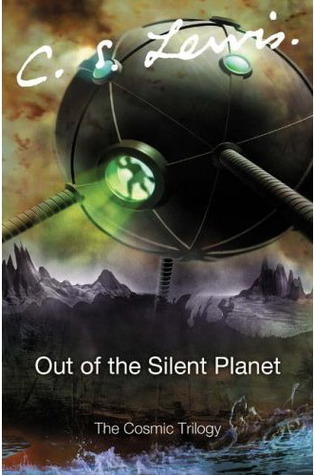
In the first novel of C.S. Lewis's classic science fiction trilogy, Dr Ransom, a Cambridge academic, is abducted and taken on a spaceship to the red planet of Malacandra, which he knows as Mars. His captors are plotting to plunder the planet's treasures and plan to offer Ransom as a sacrifice to the creatures who live there. Ransom discovers he has come from the 'silent planet' – Earth – whose tragic story is known throughout the universe...

A retelling of Cupid and Psyche, "Till We Have Faces" is retold through the eyes of Psyche’s oldest sister, Orual.Orual was born ugly and even though she’s a princess, she struggles with the death of her mother and the friction between her sisters. There are two lights in Orual’s life. One is her tutor, the Fox, a Greek slave captured through war. The other is her much younger sister Istra, later nicknamed Psyche, born from Orual’s father’s second marriage. Istra is beautiful and sweet and good but far from being jealous of her, Orual loves her as a daughter. When the priest of Ungit says that Psyche’s great beauty is an insult to the goddess and she must be sacrificed, Orual fights to prevent this. When Orual expects to find her sister dead, she finds her well and thriving. But, why can’t Orual see what everyone else sees? Blinded by her jealous love, Orual casts blame on the duplicity of gods. What is the truth? What is real?Lewis’s novel is a brilliant examination of envy, loss, betrayal, blame, grief, guilt, and conversion. Why must holy places be dark places? Lewis reminds us of our own fallibility and the role of a higher power in our lives.

For centuries people have been tormented by one question above all: If God is good and all-powerful, why does he allow his creatures to suffer pain? And what of the suffering of animals, who neither deserve pain nor can be improved by it?The greatest Christian thinker of our time sets out to disentangle this knotty issue. With his signature wealth of compassion and insight, C. S. Lewis offers answers to these crucial questions and shares his hope and wisdom to help heal a world hungry for a true understanding of human nature.

A repackaged edition of the revered author's classic work that examines the four types of human love: affection, friendship, erotic love, and the love of God—part of the C. S. Lewis Signature Classics series.C.S. Lewis—the great British writer, scholar, lay theologian, broadcaster, Christian apologist, and bestselling author of Mere Christianity, The Screwtape Letters, The Great Divorce, The Chronicles of Narnia, and many other beloved classics—contemplates the essence of love and how it works in our daily lives in one of his most famous works of nonfiction. Lewis examines four varieties of human love: affection, the most basic form; friendship, the rarest and perhaps most insightful; Eros, passionate love; charity, the greatest and least selfish. Throughout this compassionate and reasoned study, he encourages readers to open themselves to all forms of love—the key to understanding that brings us closer to God.

Surprised by Joy: The Shape of My Early Life is a partial autobiography describing Lewis' conversion to Christianity. The book overall contains less detail concerning specific events than typical autobiographies. This is because his purpose in writing wasn't primarily historical. His aim was to identify & describe the events surrounding his accidental discovery of & consequent search for the phenomenon he labelled "Joy". This word was the best translation he could make of the German idea of Sehnsucht, longing. That isn't to say the book is devoid of information about his life. He recounts his early years with a measure of amusement sometimes mixed with pain. However, while he does describe his life, the principal theme of the book is Joy as he defined it. This Joy was a longing so intense for something so good & so high up it couldn't be explained with words. He's struck with "stabs of joy" throughout life. He finally finds what it's for at the end. He writes about his experiences at Malvern College in 1913, aged 15. Though he described the school as "a very furnace of impure loves" he defended the practice as being "the only chink left thru which something spontaneous & uncalculating could creep in." The book's last two chapters cover the end of his search as he moves from atheism to theism & then from theism to Christianity. He ultimately discovers the true nature & purpose of Joy & its place in his own life. The book isn't connected with his unexpected marriage in later life to Joy Gresham. The marriage occurred long after the period described, though not long after the book was published. His friends were quick to notice the coincidence, remarking he'd really been "Surprised by Joy". "Surprised by Joy" is also an allusion to Wordsworth's poem, "Surprised by Joy-Impatient As The Wind", relating an incident when Wordsworth forgot the death of his beloved daughter.

The second book in C. S. Lewis's acclaimed Space Trilogy, which also includes Out of the Silent Planet and That Hideous Strength, Perelandra continues the adventures of the extraordinary Dr. Ransom. Pitted against the most destructive of human weaknesses, temptation, the great man must battle evil on a new planet Perelandra when it is invaded by a dark force. Will Perelandra succumb to this malevolent being, who strives to create a new world order and who must destroy an old and beautiful civilization to do so? Or will it throw off the yoke of corruption and achieve a spiritual perfection as yet unknown to man? The outcome of Dr. Ransom's mighty struggle alone will determine the fate of this peace-loving planet.

The third novel in the science-fiction trilogy by C.S. Lewis. This final story is set on Earth, and tells of a terrifying conspiracy against humanity.The story surrounds Mark and Jane Studdock, a newly married couple. Mark is a Sociologist who is enticed to join an organisation called N.I.C.E. which aims to control all human life. His wife, meanwhile, has bizarre prophetic dreams about a decapitated scientist, Alcasan. As Mark is drawn inextricably into the sinister organisation, he discovers the truth of his wife’s dreams when he meets the literal head of Alcasan which is being kept alive by infusions of blood.Jane seeks help concerning her dreams at a community called St Anne’s, where she meets their leader – Dr Ransom (the main character of the previous two titles in the trilogy). The story ends in a final spectacular scene at the N.I.C.E. headquarters where Merlin appears to confront the powers of Hell.

Alternative cover for ISBN: 978-0060652944The Abolition of Man, Lewis uses his graceful prose, delightful humor, and keen understanding of the human mind to challenge our notions about how to best teach our children--and ourselves--not merely reading and writing, but also a sense of morality.
‘The central miracle asserted by Christians is the Incarnation. They say that God became Man. Every other miracle prepares the way for this, or results from this.’This is the key statement of ‘Miracles’, in which C. S. Lewis shows that a Christian must not only accept but rejoice in miracles as a testimony of the unique personal involvement of God in his creation.Using his characteristic lucidity and wit to develop his argument, Lewis challenges the rationalists, agnostics and deists on their own grounds and provides a poetic and joyous affirmation that miracles really do occur in our everyday lives

Space Trilogy: Out of the Silent Planet / Perelandra / That Hideous Strength
by C.S. Lewis
Rating: 4.1 ⭐
The Cosmic Trilogy relates the interplanetary travels of Ransom, C.S. Lewis's ill-informed and terrified victim who leaves Earth much against his will and who, in the first book of the trilogy, Out of the Silent Planet, published by the Bodley Head in 1938, encounters the imaginary and delightful world of Macalandra. In the second book, Perelandra (1943), Ransom is transported to a world of sweet smells and delicious tastes, a new Garden of Eden in which is enacted, with a difference, the story of Temptation. That Hideous Strength (1945) completes the trilogy and finds Dr Ransom returned from his travels in space and living in an English university town - where the Senior Common Room is given a mysterious depth, a more than earthly dimension which such things, in the author's view, always have in life.C.S. Lewis believed that popular science was the new mythology of his age, and in The Cosmic Trilogy he ransacks the uncharted territory of space and makes that mythology the medium of his spiritual imagination.

The first book written by C. S. Lewis after his conversion, The Pilgrim's Regress is, in a sense, the record of Lewis s own search for meaning and spiritual satisfaction—a search that eventually led him to Christianity.Here is the story of the pilgrim John and his odyssey to an enchanting island which has created in him an intense longing—a mysterious, sweet desire. John s pursuit of this desire takes him through adventures with such people as Mr. Enlightenment, Media Halfways, Mr. Mammon, Mother Kirk, Mr. Sensible, and Mr. Humanist and through such cities as Thrill and Eschropolis as well as the Valley of Humiliation.Though the dragons and giants here are different from those in Bunyan s Pilgrim s Progress, Lewis s allegory performs the same function of enabling the author to say simply and through fantasy what would otherwise have demanded a full-length philosophy of religion.

"Lewis struck me as the most thoroughly converted man I ever met," observes Walter Hooper in the preface to this collection of essays by C. S. Lewis. "His whole vision of life was such that the natural and the supernatural seemed inseparably combined."It is precisely this pervasive Christianity which is demonstrated in the forty-eight essays comprising God in the Dock. Here Lewis addresses himself both to theological questions and to those which Hooper terms "semi-theological," or ethical. But whether he is discussing "Evil and God," "Miracles," "The Decline of Religion," or "The Humanitarian Theory of Punishment," his insight and observations are thoroughly and profoundly Christian. Drawn from a variety of sources, the essays were designed to meet a variety of needs, and among other accomplishments they serve to illustrate the many different angles from which we are able to view the Christian religion. They range from relatively popular pieces written for newspapers to more learned defenses of the faith which first appeared in The Socratic Digest. Characterized by Lewis's honesty and realism, his insight and conviction, and above all his thoroughgoing commitments to Christianity, these essays make God in the Dock very much a book for our time.
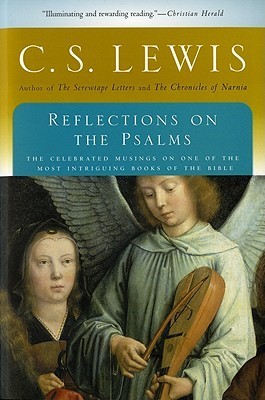
Lewis writes here about the difficulties he has met or the joys he has gained in reading the Psalms. He points out that the Psalms are poems, intended to be sung, not doctrinal treatises or sermons. Proceeding with his characteristic grace, he guides readers through both the form and the meaning of these beloved passages in the Bible.

Since THE SCREWTAPE LETTERS was first published in 1943, half a million copies have been sold in the United States alone.This edition includes a substantial new preface from the author who tells the reader something of the writing of the book, and answers the question often raised as to whether he "really believes in devils." The answer involves discussion of devils and angels in literature, art and life. "My symbol for hell is something like the bureaucracy of a police state or a thoroughly nasty business office." The edition also includes a new Screwtape piece, "Screwtape Proposes a Toast," and should find a new generation of readers for the wittiest piece of writing the 20th century has yet produced to stimulate the ordinary man to godliness.

The Magician's Nephew / The Lion, The Witch and the Wardrobe / The Horse and His Boy
by C.S. Lewis
Rating: 4.5 ⭐
The Magician's Nephew opens the doorway to themagical land of Narnia for the first time...In The Lion, the Witch and the Wardrobe, Peter,Edmund, Susan and Lucy stumble upon the world ofNarnia. Here, Winter and the White Witch are thegreatest threats and the children must join forces with thegreat lion, Aslan, to battle against the evil enchantment.In The Horse and His Boy, Shasta, the slave boy,meets Bree, a talking horse, and together they flee on awild and dangerous journey through strange cities,eerie tombs and harsh deserts - in search of Narnia,where there is freedom and safety.This volume brings together the first three booksof the timeless fantasy series.

In the form of warm, relaxed letters to a close friend, Lewis meditates on many puzzling questions concerning the intimate dialogue between man and God. Lewis also considers practical and metaphysical aspects of private prayer, petitionary prayer, the Lord’s Prayer, and other forms of prayer.“A beautifully executed and deeply moving book” (Saturday Review).