
Dalai Lama XIV
Jetsun Jamphel Ngawang Lobsang Yeshe Tenzin Gyatso (born Lhamo Döndrub), the 14th Dalai Lama, is a practicing member of the Gelug School of Tibetan Buddhism and is influential as a Nobel Peace Prize laureate, the world's most famous Buddhist monk, and the leader of the exiled Tibetan government in India. Tenzin Gyatso was the fifth of sixteen children born to a farming family. He was proclaimed the tulku (an Enlightened lama who has consciously decided to take rebirth) of the 13th Dalai Lama at the age of two. On 17 November 1950, at the age of 15, he was enthroned as Tibet's ruler. Thus he became Tibet's most important political ruler just one month after the People's Republic of China's invasion of Tibet on 7 October 1950. In 1954, he went to Beijing to attempt peace talks with Mao Zedong and other leaders of the PRC. These talks ultimately failed. After a failed uprising and the collapse of the Tibetan resistance movement in 1959, the Dalai Lama left for India, where he was active in establishing the Central Tibetan Administration (the Tibetan Government in Exile) and in seeking to preserve Tibetan culture and education among the thousands of refugees who accompanied him. Tenzin Gyatso is a charismatic figure and noted public speaker. This Dalai Lama is the first to travel to the West. There, he has helped to spread Buddhism and to promote the concepts of universal responsibility, secular ethics, and religious harmony. He was awarded the Nobel Peace Prize in 1989, honorary Canadian citizenship in 2006, and the United States Congressional Gold Medal on 17 October 2007.
37 Books Written

The Book of Joy: Lasting Happiness in a Changing World
by Dalai Lama XIV
Rating: 4.4 ⭐
• 7 recommendations ❤️
Two great spiritual masters share their own hard-won wisdom about living with joy even in the face of adversity. The occasion was a big birthday. And it inspired two close friends to get together in Dharamsala for a talk about something very important to them. The friends were His Holiness the Dalai Lama and Archbishop Desmond Tutu. The subject was joy. Both winners of the Nobel Prize, both great spiritual masters and moral leaders of our time, they are also known for being among the most infectiously happy people on the planet.From the beginning the book was envisioned as a three-layer birthday cake: their own stories and teachings about joy, the most recent findings in the science of deep happiness, and the daily practices that anchor their own emotional and spiritual lives. Both the Dalai Lama and Archbishop Tutu have been tested by great personal and national adversity, and here they share their personal stories of struggle and renewal. Now that they are both in their eighties, they especially want to spread the core message that to have joy yourself, you must bring joy to others.Most of all, during that landmark week in Dharamsala, they demonstrated by their own exuberance, compassion, and humor how joy can be transformed from a fleeting emotion into an enduring way of life.

Cent éléphants sur un brin d'herbe: Enseignements de sagesse
by Dalai Lama XIV
Rating: 3.5 ⭐
• 2 recommendations ❤️
Cent éléphants sur un brin d’herbe Sur le ton chaleureux et confidentiel qui lui est naturel même en présence de nombreux interlocuteurs, le Dalaï-Lama livre le fruit de ses réflexions sur l’homme, sur l’environnement, sur la société, les institutions, la politique, les religions. Que propose-t-il ? « Sagesse, compassion, amour des êtres », répond celui dont le nom signifie « Océan de sagesse ». À travers ces conférences dans des universités et des instituts divers, cette figure lumineuse livre son secret, qui n’est autre que la sagesse immémoriale du bouddhisme. Mais plus qu’une doctrine dont il connaît toutes les subtilités, ce « simple moine » venu du Tibet veut apprendre aux hommes la pratique de la sagesse et promouvoir la paix par la compassion concrètement vécue. Il a reçu, en 1989, le prix Nobel de la paix. Traduit de l’anglais et présenté par Lise Médini

The Good Heart: A Buddhist Perspective on the Teachings of Jesus
by Dalai Lama XIV
Rating: 4.0 ⭐
• 2 recommendations ❤️
This landmark of interfaith dialogue will inspire readers of all faiths. In The Good Heart, The Dalai Lama provides an extraordinary Buddhist perspective on the teachings of Jesus. His Holiness comments on well-known passages from the four Christian Gospels, including the Sermon on the Mount, the parable of the mustard seed, the Resurrection, and others. Drawing parallels between Jesus and the Buddha — and the rich traditions from which they hail — the Dalai Lama delivers a profound affirmation of the sacred in all religions. Readers will be uplifted by the exploration of each tradition’s endless merits and the common humanity they share.

The Dalai Lama lays out the Buddhist approach to matters of faith and devotion that is based on the highest spirit of critical inquiry.The Dalai Lama opens The Middle Way with an elegant argument for the power of compassion in cultivating a happy life. From there, he connects core ideas of Buddhist philosophy to the truths of our shared condition. His Holiness delivers a sparklingly clear teaching on how the Buddhist ideas of emptiness and interdependency relate to personal experience and bring a deeper understanding of the world around us. In down-to-earth style, this book sets forth a comprehensive explanation of the foundational teachings of the Mahayana tradition based on the works of two of Buddhism’s most revered figures. Using Nagarjuna’s Middle Way, the Dalai Lama explores Buddhist understandings of selflessness, dependent origination, and the causal processes that lock us in cycles of suffering. He grounds these heady philosophical discussions using Tsongkhapa’s Three Principal Aspects of the Path, presenting a brief explanation of how to put ethical discipline, wisdom, and compassion into practice. Through these beautifully complementary teachings, His Holiness urges us to strive, “with an objective mind, endowed with a curious skepticism, to engage in careful analysis and seek the reasons behind our beliefs.”

An updated edition of a beloved classic, the original book on happiness, with new material from His Holiness the Dalai Lama and Dr. Howard Cutler.Nearly every time you see him, he's laughing, or at least smiling. And he makes everyone else around him feel like smiling. He's the Dalai Lama, the spiritual and temporal leader of Tibet, a Nobel Prize winner, and a hugely sought-after speaker and statesman. Why is he so popular? Even after spending only a few minutes in his presence you can't help feeling happier.If you ask him if he's happy, even though he's suffered the loss of his country, the Dalai Lama will give you an unconditional yes. What's more, he'll tell you that happiness is the purpose of life, and that the very motion of our life is toward happiness. How to get there has always been the question. He's tried to answer it before, but he's never had the help of a psychiatrist to get the message across in a context we can easily understand.The Art of Happiness is the book that started the genre of happiness books, and it remains the cornerstone of the field of positive psychology.Through conversations, stories, and meditations, the Dalai Lama shows us how to defeat day-to-day anxiety, insecurity, anger, and discouragement. Together with Dr. Howard Cutler, he explores many facets of everyday life, including relationships, loss, and the pursuit of wealth, to illustrate how to ride through life's obstacles on a deep and abiding source of inner peace. Based on 2,500 years of Buddhist meditations mixed with a healthy dose of common sense, The Art of Happiness is a book that crosses the boundaries of traditions to help readers with difficulties common to all human beings. After being in print for ten years, this book has touched countless lives and uplifted spirits around the world.

Blending common sense and modern psychiatry, The Art of Happiness in a Troubled World applies Buddhist tradition to twenty-first-century struggles in a relevant way. The result is a wise approach to dealing with human problems that is both optimistic and realistic, even in the most challenging times.How can we expect to find happiness and meaning in our lives when the modern world seems such an unhappy place?His Holiness the Dalai Lama has suffered enormously throughout his life, yet he always seems to be smiling and serene. How does he do it? In The Art of Happiness in a Troubled World , Dr. Cutler walks readers through the Dalai Lama's philosophy on how to achieve peace of mind and come to terms with life's inherent suffering. Together, the two examine the roots of many of the problems facing the world and show us how we can approach these calamities in a way that alleviates suffering, and helps us along in our personal quests to be happy. Through stories, meditations, and in-depth conversations, the Dalai Lama teaches readers to identify the cultural influences and ways of thinking that lead to personal unhappiness, making sense of the hardships we face personally, as well as the afflictions suffered by others.
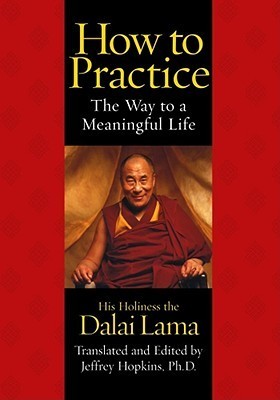
As human beings, we all share the desire for happiness and meaning in our lives. According to His Holiness the Dalai Lama, the ability to find true fulfillment lies within each of us. In this very special book, the spiritual and temporal leader of Tibet, Nobel Prize winner, and bestselling author helps readers embark upon the path to enlightenment with a stunning illumination of the timeless wisdom and an easy-access reference for daily practice. Divided into a series of distinct steps that will lead spiritual seekers toward enlightenment, How to Practice is a constant companion in the quest to practice morality, meditation, and wisdom. This accessible book will guide you toward opening your heart, refraining from doing harm, and maintiaining mentaltranquility as the Dalai Lama shows you how to overcome everyday obstacles, from feelings of anger and mistrust to jealousy, insecurity, and counterproductive thinking. Imbued with His Holiness' vivacious spirit and sense of playfulness, How to Practice offers sage and practical insight into the human psyche and into the deepest aspirations that bind us all together.

The Universe in a Single Atom: The Convergence of Science and Spirituality
by Dalai Lama XIV
Rating: 4.0 ⭐
Galileo, Copernicus, Newton, Niels Bohr, Einstein. Their insights shook our perception of who we are and where we stand in the world, and in their wake have left an uneasy coexistence: science vs. religion, faith vs. empirical inquiry. Which is the keeper of truth? Which is the true path to understanding reality?After forty years of study with some of the greatest scientific minds, as well as a lifetime of meditative, spiritual, and philosophic study, the Dalai Lama presents a brilliant analysis of why all avenues of inquiry—scientific as well as spiritual—must be pursued in order to arrive at a complete picture of the truth. Through an examination of Darwinism and karma, quantum mechanics and philosophical insight into the nature of reality, neurobiology and the study of consciousness, the Dalai Lama draws significant parallels between contemplative and scientific examinations of reality.This breathtakingly personal examination is a tribute to the Dalai Lama’s teachers—both of science and spirituality. The legacy of this book is a vision of the world in which our different approaches to understanding ourselves, our universe, and one another can be brought together in the service of humanity.
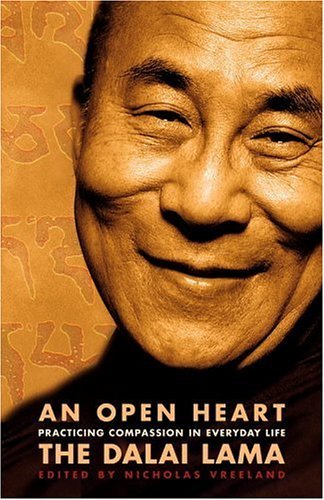
The Dalai Lama shares some of his key teachings on the practice of compassion, presenting a collection of meditations designed to help readers open their hearts when dealing with others, and introduces the fundamental philosophy of Buddhism and its core concepts. 300,000 first printing.

In this astonishingly frank autobiography, the Dalai Lama reveals the remarkable inner strength that allowed him to master both the mysteries of Tibetan Buddhism and the brutal realities of Chinese Communism.

An unprecedented event: a beloved world religious leader proposes a way to lead an ethical, happy, and spiritual life beyond religion and offers a program of mental training for cultivating key human valuesTen years ago, in his best-selling Ethics for a New Millennium, His Holiness the Dalai Lama first proposed an approach to ethics based on universal rather than religious principles. Now, in Beyond Religion, the Dalai Lama, at his most compassionate and outspoken, elaborates and deepens his vision for the nonreligious way. Transcending the mere “religion wars,” he outlines a system of ethics for our shared world, one that gives full respect to religion. With the highest level of spiritual and intellectual authority, the Dalai Lama makes a stirring appeal for what he calls a “third way,” a path to an ethical and happy life and to a global human community based on understanding and mutual respect. Beyond Religion is an essential statement from the Dalai Lama, a blueprint for all those who may choose not to identify with a religious tradition, yet still yearn for a life of spiritual fulfillment as they work for a better world.

Don't miss His Holiness the Dalai Lama's classic book, The Art of Happiness, or his newest, The Book of Joy, named one of Oprah's Favorite Things. In a difficult, uncertain time, it takes a person of great courage, such as the Dalai Lama, to give us hope. Regardless of the violence and cynicism we see on television and read about in the news, there is an argument to be made for basic human goodness. The number of people who spend their lives engaged in violence and dishonesty is tiny compared to the vast majority who would wish others only well. According to the Dalai Lama, our survival has depended and will continue to depend on our basic goodness. Ethics for the New Millennium presents a moral system based on universal rather than religious principles. Its ultimate goal is happiness for every individual, irrespective of religious beliefs. Though he himself a practicing Buddhist, the Dalai Lama's teachings and the moral compass that guides him can lead each and every one of us—Muslim, Christian, Jew, Buddhist, or atheist—to a happier, more fulfilling life.

Like the two wings of a bird, love and insight work cooperatively to bring about enlightenment, says a fundamental Buddhist teaching. According to His Holiness the Dalai Lama, we each possess the ability to achieve happiness and a meaningful life, but the key to realizing that goal is self-knowledge. In "How to See Yourself As You Really Are, " the world's foremost Buddhist leader and recipient of the Nobel Peace Prize shows readers how to recognize and dispel misguided notions of self and embrace the world from a more realistic -- and loving -- perspective.Step-by-step exercises help readers shatter their false assumptions and ideas and see the world as it actually exists. By directing our attention to the false veneer that so bedazzles our senses and our thoughts, His Holiness sets the stage for discovering the reality behind appearances. But getting past one's misconceptions is only a prelude to right action, and the book's final section describes how to harness the power of meditative concentration to the service of love, and vice versa, so that true altruistic enlightenment is attained.Enlivened by personal anecdotes and intimate accounts of the Dalai Lama's own life experiences, "How to See Yourself As You Really Are" is an inspirational and empowering guide to achieving self-awareness that can be read and enjoyed by spiritual seekers of all faiths.

Inspirational words from one of the leading spiritual figures of our timeHis Holiness the Dalai Lama, the exiled spiritual leader of the Tibetan people, offers simple advice to all those who want to bring more wisdom, understanding and compassion into their lives. With humour and a down-to-earth approach, this book will become your indispensable guide to life.This book is based on the Dalai Lama's bestselling book, The Power of Compassion.

In this elegant self-portrait, the world’s most outspoken and influential spiritual leader recounts his epic and engaging life story. The Dalai Lama’s most accessible and intimate book, My Spiritual Journey is an excellent introduction to the larger-than-life leader of Tibetan Buddhism—perfect for anyone curious about Eastern religion, invested in the Free Tibet movement, or simply seeking a richer spiritual life. The Dalai Lama’s riveting, deeply insightful meditations on life will resonate strongly with readers of Pema Chodron, Thich Nhat Hanh, or the His Holiness’s own The Art of Happiness and Ethics for the New Millennium.

Following the massive success of THE ART OF HAPPINESS, the Dalai Lama & Howard Cutler now bring their bestselling message to our working lives. Of the many Dalai Lama titles on sale, THE ART OF HAPPINESS - written with western psychiatrist Howard Cutler - is by far the biggest bestseller of them all. A huge international success, it has sold over 2 million copies worldwide, with nearly 300,000 of these in the UK alone. Now, this inspirational new book brings the successful East-meets-West pairing together again to provide a practical application of Tibetan Buddhist spiritual values to the world of work. In this wise and practical book, the Dalai Lama shows us how to place our working lives into the context of our lives as a whole. Rather than striving to find a role which suits us, we should allow our work to arise naturally from who we are - and what is most important to us. From here we reach a pathway that can lead us to true life fulfilment and purpose.

THE INTERNATIONAL BESTSELLER * A LIBRARY JOURNAL BEST BOOK OF THE YEAR * A SPIRITUALITY & PRACTICE BOOK AWARD WINNER * A NAUTILUS BOOK AWARD WINNERA Landmark Message from His Holiness the Dalai Are we ready to hear it? Are we ready to act?I call on you to confront the challenges of our era by rising up and embarking upon a revolution that has no precedent in human historyThis eloquent, urgent manifesto is possibly the most important message the Dalai Lama can give us about the future of our world. It’s his rallying cry, full of solutions for our chaotic, aggressive, divided no less than A CALL FOR REVOLUTION.

My Land and My People: The Original Autobiography of His Holiness the Dalai Lama of Tibet
by Dalai Lama XIV
Rating: 4.3 ⭐
Schooled behind ancient palace walls to become the leader of Tibet, the Dalai Lama has become a spiritual leader to the world and a leading civil rights advocate. My Land and My People tells the story of his life.

An Appeal by the Dalai Lama to the World: Ethics Are More Important Than Religion
by Dalai Lama XIV
Rating: 4.3 ⭐
In his appeal to the world, the Dalai Lama outlines a new secular ethics as the foundation of a peaceful century. The answer will come not from religions, but from people embracing an ethics that spans all differences. A provocative and emboldening piece of writing by a humble and eminent man of our times.

Emotional Awareness: Overcoming the Obstacles to Psychological Balance and Compassion
by Dalai Lama XIV
Rating: 4.1 ⭐
Two leading thinkers engage in a landmark conversation about human emotions and the pursuit of psychological fulfillmentAt their first meeting, a remarkable bond was sparked between His Holiness the Dalai Lama, one of the world's most revered spiritual leaders, and the psychologist Paul Ekman, whose groundbreaking work helped to define the science of emotions. Now these two luminaries share their thinking about science and spirituality, the bonds between East and West, and the nature and quality of our emotional lives.In this unparalleled series of conversations, the Dalai Lama and Ekman prod and push toward answers to the central questions of emotional experience. What are the sources of hate and compassion? Should a person extend her compassion to a torturer—and would that even be biologically possible? What does science reveal about the benefits of Buddhist meditation, and can Buddhism improve through engagement with the scientific method? As they come to grips with these issues, they invite us to join them in an unfiltered view of two great traditions and two great minds.Accompanied by commentaries on the findings of emotion research and the teachings of Buddhism, their interplay—amusing, challenging, eye-opening, and moving—guides us on a transformative journey in the understanding of emotions.

#1 INTERNATIONAL BESTSELLER • FEATURES EXCLUSIVE NEW MATERIAL ON THE TRUMP PRESIDENCY "Makes the case for unity in a world rife with divisions." —New York Times Book ReviewIn this brief yet profound address to global humanity, His Holiness the Dalai Lama of Tibet reveals that we all hold the seeds of world peace within “I see with ever greater clarity that our spiritual well-being depends,” the Nobel Peace Prize winner writes, “on our innate human nature, our natural affinity for goodness, compassion, and caring for others.”Already a major international bestseller, An Appeal to the World, the new book by one of the most revered spiritual leaders of our time, outlines both the inward and outward paths to peace, addressing a wide range of contemporary topics—from the rise of nationalism, Trump presidency, refugee crisis, climate catastrophes, and materialism to meditation, universal ethics, and even neuroscience. Here is a small book that can truly change the world.

The extraordinary documentation of the evolving friendship between the Dalai Lama and the man who followed him across Ireland and Eastern Europe, on a pilgrimage to India's holy sites, and through the Dalai Lama's near fatal illness. On this remarkable journey Victor Chan was awarded an insight into His Holiness-his life, his fears, his faith, his compassion, his day-to-day practice-that no one has reported before. We've heard the public voice of His Holiness--now we are invited to listen in on his personal explorations, and to take instruction on the Tibetan art of living.

In July 1996, for the first time in the West, His Holiness the Dalai Lama gave two exclusive days of teaching in London on The Four Noble Truths - the heart of the Buddha's teachings.The Four Noble Truths - the truth of suffering, the truth of the origin of suffering, the truth of the cessation of suffering and the truth of the path leading to this cessation - was the first sermon the Buddha gave after he was enlightened. As well as elucidating these teachings, His Holiness the Dalai Lama also explains the relationship between relative and absolute compassion."Whenever I have been given the opportunity to introduce Buddhism I always make it a point to explain Buddhism in terms of two principles. One is the development of a philosophical viewpoint based on the understanding of the interdependent nature of reality. And the second principle is that of non-violence which is the actual action of a Buddhist practitioner and which derives from that view of the interdependent nature of reality." - His Holiness the Dalai Lama

In Becoming Enlightened , His Holiness the Dalai Lama powerfully explores the foundation of Buddhism, laying out an accessible and practical approach to age-old How can we live free from suffering? How can we achieve lasting happiness and peace?Drawing from traditional Buddhist meditative practices as well as penetrating examples from today's troubled planet, he presents step-by-step exercises designed to expand the reader's capacity for spiritual growth, along with clear milestones to mark the reader's progress. By following the spiritual practices outlined in Becoming Enlightened , we can learn how to replace troublesome feelings with positive attitudes and embark on a path to achieving an exalted state -- within ourselves and within the larger world.Full of personal anecdotes and intimate accounts of the Dalai Lama's experiences as a lifelong student, thinker, political leader, and Nobel Peace Prize Laureate, Becoming Enlightened gives readers all the wisdom, support, guidance, and inspiration they need to become successful and fulfilled in their spiritual lives.This is a remarkable and empowering book that can be read and enjoyed by seekers of all faiths. Readers at every stage of their spiritual development will be captivated by His Holiness the Dalai Lama's loving and direct teaching style.

In Stages of Meditation, His Holiness offers his highly practical views on the subject of meditation: how to meditate, the various different procedures and approaches we can take, what we and others may gain from it. He explains how we can develop a spiritual path in a proper sequence rather than in a scattered, piecemeal fashion. He also shows the importance of building up both method and wisdom, as well as cultivating compassion and 'special insight' as we train our minds. This impressive and stimulating book will not only bring the Dalai Lama - one of the world's most popular and pragmatic spiritual leaders - to a huge new audience but, because so many people round the globe are now practising meditation, from a basis of religious faith or none, this is a work which will doubtless be in print for many years to come.

This little book contains the core teaching on Buddhism by the Dalai Lama. It includes thought-provoking quotations about the importance of love and compassion, and the need for individual responsibility, fuses ancient wisdom with an awareness of the problems of everyday life.In addition to containing the essence of Buddhism, this book offers practical wisdom for daily life. The goal of this small gift book is to improve the reader's state of mind and to discover the deep peace that exists within.Here are pithy reflections on the need to rid oneself of preoccupations with mundane concerns and to find refuge in Buddha, Dharma, and Sangha.

Heart to Heart: A Timely Tale of Healing, Hope, and Change from His Holiness the Dalai Lama and Mutt's Cartoonist Patrick McDonnell
by Dalai Lama XIV
Rating: 4.5 ⭐
From His Holiness the Dalai Lama and Mutt’s cartoonist and award-winning author Patrick McDonnell comes a powerful and timely gem of a book on how to heal our relationship with the planet and each other.At the Dalai Lama’s residence in Dharamsala, India, an unusual visitor has arrived. His Holiness interrupts his morning meditation to greet a troubled Giant Panda who has travelled many miles to see him. Welcoming him as a friend, His Holiness invites the Panda on a walk through a cedar forest. There in the shadow of the Himalayas, surrounded by beauty, they discuss matters great and small . . .With a galvanizing message about the future of our planet—text by His Holiness accompanied by McDonnell’s masterful illustrations—Heart to Heart calls for a Compassionate Revolution, reminding us that “we are indeed all members of a single family, sharing one little house.” Told with whimsy, wisdom, and warmth, this beautiful book is deceptively simple in its approach and all the more powerful for it, as it elegantly and decisively conveys a message of joy, hope and change.“There are only two days in the year that nothing can be done. One is called Yesterday, and one is called Tomorrow.”
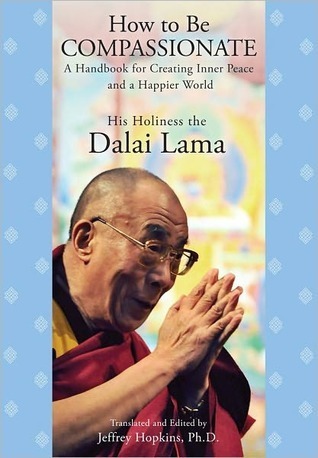
How to Be Compassionate: a Handbook for Creating Inner Peace and a Happier World
by Dalai Lama XIV
Rating: 4.2 ⭐
Each one of us is responsible for all of humankind, and for the environment in which we live. . . . We must seek to lessen the suffering of others. Rather than working solely to acquire wealth, we need to do something meaningful, something seriously directed toward the welfare of humanity as a whole. To do this, you need to recognize that the whole world is part of you. —from How to Be Compassionate The surest path to true happiness lies in being intimately concerned with the welfare of others. Or, as His Holiness the Dalai Lama would say, in compassion. In How to Be Compassionate, His Holiness reveals basic mistakes of attitude that lead us to inner turmoil, and how we can correct them to achieve a better tomorrow. He demonstrates precisely how opening our hearts and minds to other people is the best way to overcome the misguided ideas that are at the root of all our problems. He shows us how compassion can be a continuous wellspring of happiness in our own lives and how our newfound happiness can extend outward from us in ever wider and wider circles. As we become more compassionate human beings, our friends, family, neighbors, loved ones—and even our enemies—will find themselves less frequently in the thrall of destructive emotions like anger, jealousy, and fear, prompting them to become more warmhearted, kind, and harmonious forces within their own circles. With simple language and startling clarity, His Holiness makes evident as never before that the path to global harmony begins in the hearts of individual women and men. Enlivened by personal anecdotes and intimate accounts of the Dalai Lama’s experiences as a student, thinker, political leader, and Nobel Peace Prize Laureate, How to Be Compassionate gives seekers of all faiths the keys to overcoming anger, hatred, and selfishness— the primary obstacles to happiness—and to becoming agents of positive transformation in our communities and the world at large.
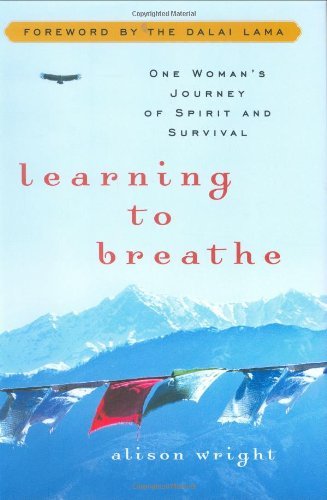
A searing and uplifting account of one woman’s spiritual journey from surviving a terrible accident to a triumphant ascent of Kilimanjaro On the second day of this century, world- renowned photojournalist Alison Wright was traveling on a windy mountain road in Laos when the bus she was riding in collided with a logging truck and was severed in half. As Alison waited for help to arrive—in excruciating pain and believing she was moments from death—she drew upon her years of meditation practice and concentrated on every breath as if it were her last. Learning to Breathe is an extraordinary spiritual memoir about the will to survive. After the bus collision, Alison spent fourteen hours without proper medical attention (her arm was first sewn up by a boy with a needle and thread) and endured months of surgeries and grueling physical therapy. She struggled to remain positive while doctors discouraged her from expecting a return to her previous life. Never one to accept defeat, Alison set herself a goal: to climb Mt. Kilimanjaro. Alison did climb Kilimanjaro, reaching the summit on the morning of her fortieth birthday. Gasping for air once again, she stood at the highest point in Africa, thankful for every moment she’d had since the accident and determined to never again take one single breath for granted. Bringing the story full circle, she retraces her steps in Laos to thank those who helped her, and she has since resumed traveling the world photographing children and the underprivileged.

The Essence of the Heart Sutra: The Dalai Lama's Heart of Wisdom Teachings
by Dalai Lama XIV
Rating: 4.2 ⭐
For more than two thousand years, the Heart Sutra has been part of the daily life of millions of Buddhists. This concise text, so rich and laden with meaning, concentrates the very heart of Buddhism into a powerful and evocative teaching on the interdependence of all reality.In Essence of the Heart Sutra , the Dalai Lama masterfully unpacks the Heart Sutra so that any reader can benefit from its teachings - teachings meant to help us release ourselves from suffering and live with true compassion. Comprised of his "Heart of Wisdom" talks, originally delivered to thousands of listeners in 2001, the book offers the Dalai Lama's commentary as well as his easy-to-follow overview of Buddhist philosophy that places the sutra within its historical and philosophical context. With additional contributions by scholar and translator Thupten Jinpa, Essence of the Heart Sutra is the authoritative presentation of a text seminal to the world's religious heritage.

This practical introduction to Buddhism focuses on the application of Buddhist psychology to modern life. Thubten Chodron, an American Buddhist nun, presents the basic points of this path for understanding ourselves and improving the quality of our lives. In a straightforward style and with warmth and humor, Chodron gives us the fundamental points of the Buddha's teaching on transforming habitual attitudes and realizing our full human potential.

Love and compassion are beneficial both for you and for others. Through your kindness toward others, your mind and heart will open to peace. Expanding peace to the larger community around you will bring unity, harmony, and cooperation. Expanding peace further still to nations and then to the world will bring mutual trust, mutual respect, sincere communication, and finally successful joint efforts to solve the world's problems. All this is possible once you learn HOW TO EXPAND LOVE With this illuminating and instructive handbook, His Holiness the Dalai Lama, winner of the Nobel Peace Prize, offers sensible, everyday guidelines for transforming self-centered energy into outwardly directed compassion. Drawing on exercises and techniques established in Tibetan monasteries more than a thousand years ago, the Dalai Lama describes a seven-step, self-directed program to help us open our hearts and minds to the experience of unlimited love, transforming every relationship in our lives -- and guiding us ever closer to wisdom and enlightenment.

Nelle prime ore del mattino del 10 gennaio 2021 quasi un milione di persone, da ogni parte del mondo, si sono sintonizzate sullo streaming del primo incontro tra Sua Santità il Dalai Lama e l’attivista per il clima Greta Thunberg. Organizzato dal Mind & Life Institute, che il Dalai Lama ha contribuito a fondare trent’anni fa, l’evento ruotava attorno a una tematica ben i cicli di feedback climatici. Insieme a scienziati di fama mondiale, Greta e il Dalai Lama si sono confrontati per discutere e approntare un piano che coinvolga tutti, giovani e non, in tutti i Paesi del mondo.L’imminente minaccia a cui siamo esposti è legata al modo in cui abbiamo organizzato la nostra società industriale, lo sviluppo economico, i sistemi agricoli e di trasporto, i sistemi di credenze, lo stile di vita. La maggior parte di noi l’ha intuito da tempo. Avendo compreso questa realtà, non possiamo fare a meno di cosa dobbiamo fare? Che tipo di persona dobbiamo essere? Come possiamo vivere con questa consapevolezza, oggi, domani e per il resto dei nostri giorni? Partendo da quell’incontro, questo libro ci aiuterà a rispondere a queste domande, ad allontanarci dall’abisso della distruzione assoluta, a risanare e ricostruire questo pianeta, per farlo tornare a essere un luogo abitabile per ciascuno di noi e per tutti gli esseri viventi con cui lo condividiamo.

A Future We Can Love: Wie wir mit Herz und Verstand den Weg aus der Klimakrise finden können - Inspiriert durch das Gespräch zwischen dem Dalai Lama und Greta Thunberg
by Dalai Lama XIV
Rating: 3.0 ⭐
Greta Thunberg und der Dalai Lama im Gespräch über die Zukunft unseres PlanetenGreta Thunberg und der Dalai Lama widmen sich der größten Herausforderung, vor der die Menschheit je stand. Drehen sich die Kreisläufe des Klimawandels zu lange, können wir sie selbst dann nicht mehr stoppen, wenn wir jede CO2-Emission einstellen. Dieses Buch zeigt eindrucksvoll, dass es noch Hoffnung gibt und bietet konkret umsetzbare Schritte, um positive Veränderungen zu bewirken. So können wir • den Umgang mit der Klimakrise in unseren Familien und Freundeskreisen als gemeinsames Projekt definieren,• neue Hoffnung schöpfen und Klimaangst überwinden,• die Kreisläufe des Klimawandels zurücksetzen.Denn sie haben auch eine gute Wir können die Kreisläufe des Klimawandels nicht nur stoppen, wir können sie sogar umdrehen und damit die Erde und ihre Atmosphäre wieder in ihren ursprünglichen natürlichen Zustand versetzen.

Agir pour le climat
by Dalai Lama XIV

Kreisläufe des Klimawandels: Wie Klima Feedback Loops die Welt zerstören oder retten werden
by Dalai Lama XIV
Greta Thunberg und der Dalai Lama trafen sich, um das größte Problem, vor dem die Menschheit je stand, zu besprechen. Das Thema der beiden großen Lichtgestalten unserer Zeitwaren die sogenannten Klima-Feedback-Loops, also sich selbst verstärkende Kreisläufe, die den Planeten zerstören, aber auch retten können. Aus ihrem Gespräch, das sie gemeinsam mit einigen der renommiertesten KlimaforscherInnen der Welt führten, entstand dieses Buch. Sein Inhalt ist aufschlussreich, präzise, dramatisch und dennoch optimistisch, denn es zeigt auch, was wir alle jetzt noch tun können.

Explore the common ground underlying the diverse expressions of the Buddha's teachings with two of Tibetan Buddhism's bestselling authors.Buddhism is practiced by hundreds of millions of people worldwide, from Tibetan caves to Tokyo temples to redwood retreats. To an outside viewer, it might be hard to see what they all have in common. In Buddhism , His Holiness the Dalai Lama and American Buddhist nun Thubten Chodron map out with clarity the convergences and the divergences between the two major strains of Buddhism--the Sanskrit traditions of Tibet and East Asia and the Pali traditions of Sri Lanka and Southeast Asia. Especially deep consideration is given to the foundational Indian traditions and their respective treatment of such central tenets asthe four noble truthsthe practice of meditationthe meaning of nirvanaenlightenment.The authors seek harmony and greater understanding among Buddhist traditions worldwide, illuminating the rich benefits of respectful dialogue and the many ways that Buddhists of all stripes share a common heritage and common goals.