
D.A. Carson
Donald A. Carson is research professor of New Testament at Trinity Evangelical Divinity School in Deerfield, Illinois. He has been at Trinity since 1978. Carson came to Trinity from the faculty of Northwest Baptist Theological Seminary in Vancouver, British Columbia, where he also served for two years as academic dean. He has served as assistant pastor and pastor and has done itinerant ministry in Canada and the United Kingdom. Carson received the Bachelor of Science in chemistry from McGill University, the Master of Divinity from Central Baptist Seminary in Toronto, and the Doctor of Philosophy in New Testament from the University of Cambridge. Carson is an active guest lecturer in academic and church settings around the world. He has written or edited about sixty books. He is a founding member and currently president of The Gospel Coalition. Carson and his wife, Joy, reside in Libertyville, Illinois. They have two adult children.
30 Books Written

Tolerance currently occupies a very high place in Western societies: it is considered gauche, even boorish, to question it. In The Intolerance of Tolerance, however, questioning tolerance -- or, at least, contemporary understandings of tolerance -- is exactly what D. A . Carson does.Carson traces the subtle but enormous shift in the way we have come to understand tolerance over recent years -- from defending the rights of those who hold different beliefs to affirming all beliefs as equally valid and correct. He looks back at the history of this shift and discusses its implications for culture today, especially its bearing on democracy, discussions about good and evil, and Christian truth claims.Using real-life examples that will sometimes arouse laughter and sometimes make the blood boil, Carson argues not only that the "new tolerance" is socially dangerous and intellectually debilitating but also that it actually leads to genuine intolerance of all who struggle to hold fast to their beliefs.

Carson calls believers to revolt against superficiality and find again the deeper knowledge of God at Paul's school of prayer. Strong expositional study.
Updated explanations of the "sins" of interpretation teach sound grammatical, lexical, cultural, theological, and historical Bible study practices.

At first thought, understanding the doctrine of the love of God seems simple compared to trying to fathom other doctrines like that of the Trinity or predestination. Especially since the overwhelming majority of those who believe in God view Him as a loving being. That is precisely what makes this doctrine so difficult. The only aspect of God's character the world still believes in is His love. His holiness, His sovereignty, His wrath are often rejected as being incompatible with a "loving" God. Because pop culture has so distorted and secularized God's love, many Christians have lost a biblical understanding of it and, in turn, lost a vital means to knowing who God is. The Difficult Doctrine of the Love of God seeks to restore what we have lost. In this treatment of many of the Bible's passages regarding divine love, noted evangelical scholar D. A. Carson not only critiques sentimental ideas such as "God hates the sin but loves the sinner," but provides a compelling perspective on the nature of God and why He loves as He does. Carson blends his discourse with discussion of how God's sovereignty and holiness complete the biblical picture of who He is and how He loves. In doing away with trivialities and cliches, this work gets to the heart of this all-important doctrine from an unflinching evangelical perspective. Yet it does so without losing its personal for in understanding more of the comprehensive nature of God's love as declared in His Word, you will come to understand God and His unending love for you more completely.
Grasp the message of the New Testament by focusing on the essentials. An Introduction to the New Testament focuses on historical questions dealing with authorship, date, sources, purpose, destination, and so forth, ensuring that the New Testament books will be accurately understood within historical settings. For each New Testament document, the authors also provide a substantial summary of the book's content, discuss the book's theological contribution to the overall canon, and give an account of current studies on the book, including recent literary and social-science approaches to interpretation. This second edition reflects significant revision and expansion from the original, making this highly acclaimed text even more valuable. This new edition is an ideal textbook for seminary students and will help a new generation better grasp the message of the New Testament.

How are Christians to approach the central gospel teachings concerning the death and resurrection of Jesus? The Bible firmly establishes the historicity of these events and doesn't leave their meanings ambiguous or open to interpretation. Even so, there is an irony and surprising strangeness to the cross. Carson shows that this strange irony has deep implications for our lives as he examines the history and theology of Jesus's crucifixion and resurrection. Scandalous highlights important theological truths in accessible and applicable ways. Both amateur theologians and general readers will appreciate how Carson deftly preserves weighty theology while simultaneously noting the broader themes of Jesus' death and resurrection. Through exposition of five primary passages of Scripture, Carson helps us to more fully understand and appreciate the scandal of the cross.

Eminent evangelical theologian provides a basic introduction to the faith that traces the story of redemption through the Bible.

In this solid evangelical commentary on John's Gospel, a respected Scripture expositor makes clear the flow of the text, engages a small but representative part of the massive secondary literature on John, shows how the Fourth Gospel contributes to biblical and systematic theology, and offers a consistent exposition of John as an evangelistic Gospel. The comprehensive introduction treats such matters as the authenticity, authorship, purpose, and structure of the Gospel.

First published by Baker Books in 1993, The Cross and Christian Ministry presents a comprehensive view of what the death of Christ means in preaching and pastoring God's people. It sets forth workable principles for dynamic, cross-centered leadership. Now available in paperback.

D. A. Carson's father was a pioneering church-planter and pastor in Quebec. But still, an ordinary pastor-except that he ministered during the decades that brought French Canada from the brutal challenges of persecution and imprisonment for Baptist ministers to spectacular growth and revival in the 1970s.It is a story, and an era, that few in the English-speaking world know anything about. But through Tom Carson's journals and written prayers, and the narrative and historical background supplied by his son, readers will be given a firsthand account of not only this trying time in North American church history, but of one pastor's life and times, dreams and disappointments. With words that will ring true for every person who has devoted themselves to the Lord's work, this unique book serves to remind readers that though the sacrifices of serving God are great, the sweetness of living a faithful, obedient life is greater still.
This clear and accessible treatment of key biblical themes related to human suffering and evil is written by one of the most respected evangelical biblical scholars alive today. Carson brings together a close, careful exposition of key biblical passages with helpful pastoral applications. The second edition has been updated throughout.

For the Love of God: A Daily Companion for Discovering the Riches of God's Word, Volume 1
by D.A. Carson
Rating: 4.5 ⭐
In a world that views absolute truth, right and wrong, and salvation as being subject to individual interpretation, the Bible's unwavering proclamations and miraculous stories seem obsolete in modern times. But it is not God's Word that has changed. Indeed, its relevancy and its power to transform lives are intact. What has changed is the number of people who consult it. Now more than ever the need to read the Bible, to understand the big picture of its storyline, and to grasp the relevance this has for your life is critical. As with its companion volume, For the Love of God-Volume 2 , this devotional contains a systematic 365-day plan, based on the M'Cheyne Bible-reading schedule, that will in the course of a year guide you through the New Testament and Psalms twice and the rest of the Old Testament once. In an effort to help preserve biblical thinking and living, D. A. Carson has also written thought-provoking comments and reflections regarding each day's scriptural passages. And, most uniquely, he offers you perspective that places each reading into the larger framework of history and God's eternal plan to deepen your understanding of his sovereignty-and the unity and power of his Word.

Called to live in the world, but not to be of it, Christians must maintain a balancing act that becomes more precarious the further our culture departs from its Judeo-Christian roots. How should members of the church interact with such a culture, especially as deeply enmeshed as most of us have become? D. A. Carson applies his masterful touch to this problem. He begins by exploring the classic typology of H. Richard Niebuhr with its five Christ-culture options. Carson proposes that these disparate options are in reality one still larger vision. Using the Bible's own story line and the categories of biblical theology, he clearly lays out that unifying vision. Carson acknowledges the helpfulness of Niebuhr's grid and similar matrices but warns against giving them canonical force. More than just theoretical, Christ and Culture Revisited is also designed practically to help Christians untangle current messy debates on living in the world. Carson emphasizes that the relation between Christ and culture is not limited to an either/or cultural paradigm -- Christ against culture or Christtransforming culture. Instead Carson offers his own paradigm in which all the categories of biblical theology must be kept in mind simultaneously to inform the Christian worldview. While many other books on culture interact with Niebuhr, none of them takes anything like the biblical-theological approach adopted here. Groundbreaking and challenging, Christ and Culture Revisited is a tour de force.

The Gold Medallion Award -winning book that presents a persuasive case for Christ as the only way to God in light of contemporary religious pluralism. A great majority of social commentators attempting to define modern Western culture land on a common pluralism. This isn't unique to secular culture. Many modern approaches to Christian hermeneutics, or biblical interpretation, have given credence to contemporary pluralism. What began as a refreshing restraint and humility in modern theology has fallen more and more into irresoluteness. It's no secret that the contemporary challenges to Christianity are complex and serious. Yet, far from simple fear-mongering, or cultural warmongering, The Gagging of God takes a hard look at the background and intricacy—of pluralism, postmodernity, and hermeneutics—and equips thoughtful Christians to have intelligent, culturally sensitive, and passionate fidelity to the gospel of Jesus Christ. In his contemplative, even-handed approach, Carson provides a structure of Christian thought capable of facing the philosophies of today and piercing their surface. It invites Christians to grapple responsibly with urgent questions of biblically-grounded theology, spirituality, and the defining lines of Christianity, along with its range of challenges from without and within. The Gagging of God offers an in-depth look at the big picture, shows how the many ramifications of pluralism are all parts of a whole, and provides a systematic Christian response.

An exposition of Philippians that considers Paul's instruction on consistent integrity and the cross as the center of life.

Becoming Conversant with the Emerging Church: Understanding a Movement and Its Implications
by D.A. Carson
Rating: 3.7 ⭐
A careful and informed assessment of the “emerging church” by a respected author and scholarThe “emerging church” movement has generated a lot of excitement and exerts an astonishingly broad influence. Is it the wave of the future or a passing fancy? Who are the leaders and what are they saying? The time has come for a mature assessment. D. A. Carson not only gives those who may be unfamiliar with it a perceptive introduction to the emerging church movement, but also includes a skillful assessment of its theological views. Carson addresses some troubling weaknesses of the movement frankly and thoughtfully, while at the same time recognizing that it has important things to say to the rest of Christianity. The author strives to provide a perspective that is both honest and fair.Anyone interested in the future of the church in a rapidly changing world will find this an informative and stimulating read.D. A. Carson (Ph.D., University of Cambridge) is research professor of New Testament at Trinity Evangelical Divinity School in Deerfield, Illinois. He is the author of over 45 books, including the Gold Medallion Award-winning book The Gagging of God, and is general editor of Telling the Truth and Worship by the Book. He has served as a pastor and is an active guest lecturer in church and academic settings around the world.

For the Love of God: Volume Two: A Daily Companion for Discovering the Riches of God's Word: 2
by D.A. Carson
Rating: 4.6 ⭐
In a world that views absolute truth, right and wrong, and salvation as being subject to individual interpretation, the Bible's unwavering proclamations and miraculous stories seem obsolete in modern times. But it is not God's Word that has changed. Indeed, its relevancy and its power to transform lives are intact. What has changed is the number of people who consult it. Now more than ever the need to read the Bible, to understand the big picture of its storyline, and to grasp the relevance this has for your life is critical. As with its companion volume, For the Love of God-Volume 1 , this devotional contains a systematic 365-day plan, based on the M'Cheyne Bible-reading schedule, that will in the course of a year guide you through the New Testament and Psalms twice and the rest of the Old Testament once. In so doing, D. A. Carson completes the work he began in the first book. In an effort to help preserve biblical thinking and living, D. A. Carson has also written thought-provoking comments and reflections regarding each day's scriptural passages. And, most uniquely, he offers you perspective that places each reading into the larger framework of history and God's eternal plan to deepen your understanding of his sovereignty-and the unity and power of his Word.

Partisans on both sides of charismatic issues are challenged by the even-handed consideration of nuances in the Greek text in these three crucial chapters.

Jesus the Son of God: A Christological Title Often Overlooked, Sometimes Misunderstood, and Currently Disputed
by D.A. Carson
Rating: 4.2 ⭐
Although it is a foundational confession for all Christians, much of the theological significance of Jesus’s identity as “the Son of God” is often overlooked or misunderstood. Moreover, this Christological concept stands at the center of today’s Bible translation debates and increased ministry efforts to Muslims. New Testament scholar D. A. Carson sheds light on this important issue with his usual exegetical clarity and theological insight, first by broadly surveying Jesus’s biblical name as “the Son of God," and then by focusing on two key texts that speak of Christ’s sonship. The book concludes with the implications of Jesus’s divine sonship for how modern Christians think and speak about Christ, especially in relation to Bible translation and missionary engagement with Muslims across the globe.

The author addresses laypeople and pastors with a concise explanation of the science of textual criticism and refutes the proposition that the King James Version is superior to contemporary translations.

Shepherds After My Own Heart: Pastoral Traditions and Leadership in the Bible (Volume 20)
by D.A. Carson
Rating: 4.1 ⭐
Scripture says, "I will give you shepherds after my own heart, who will lead you with knowledge and understanding" (Jeremiah 3:15). Most of Israel's pastoral imagery is grounded in two traditions: Moses as God's under-shepherd and David as shepherd-king. These traditions, explains author Timothy S. Laniak, provided prototypes for leaders that followed, and formed the background for the ministry of Jesus, the good shepherd. The pastoral role was central to the ongoing life of local churches in the Christian movement, and today's pastors are still called to be shepherds after God's own heart, to lead his people, living on the margins of settled society, to their eternal home. In this New Studies in Biblical Theology volume, Laniak draws on a wide range of Old and New Testament texts to develop the biblical theology of "shepherd" imagery, and concludes with some principles and implications for contemporary pastoral ministry. A wonderful resource for pastors, teachers and seminary students, as well as readers interested in the study of biblical imagery. Addressing key issues in biblical theology, the works comprising New Studies in Biblical Theology are creative attempts to help Christians better understand their Bibles. The NSBT series is edited by D. A. Carson, aiming to simultaneously instruct and to edify, to interact with current scholarship and to point the way ahead.

This much-anticipated sixth edition of New Testament Commentary Survey offers students and pastors an updated look into available resources on the New Testament. Pastors, seminarians, and theology students will eagerly welcome this invaluable tool into their biblical studies libraries. In this succinct yet thorough survey, Carson examines sets, one-volume commentaries, and New Testament introductions and theologies, before offering extensive comments on the available offerings for each New Testament book, noting intended audience, levels of difficulty, and theological perspective. He records the publisher, price, and current publication status, identifies those texts he considers overpriced, and advises readers when to delay purchase for forthcoming works. The book concludes with a useful "Best Buys" section where Carson indicates the most valuable works for each individual New Testament book.
Jesus' Sermon on the Mount and His Confrontation with the World: An Exposition of Matthew 5-10
by D.A. Carson
Rating: 4.3 ⭐
A popular explanation of the teaching of Jesus in his Sermon on the Mount and the events that follow.

Many Christians share the assumption that preaching the word of God is at the heart of God's plans for the gospel in our age, that it is vital for the church's health, and that it is the central task of the pastor-teacher. Many helpful books on preaching are available. The vast majority are concerned with "how-to," but relatively few focus primarily on the character and theology of preaching according to Scripture. Two key, interrelated questions need to be addressed. First, is there such a thing as "preaching" that is mandated in the post-apostolic context―and, if there is, how is it defined and characterized? Second, how does post-apostolic "preaching" relate to the preaching of the Old Testament prophets and of Jesus and his apostles? In this New Studies in Biblical Theology volume Jonathan Griffiths seeks answers to these questions in the New Testament. In Part One he gives an overview of the theology of the Word of God, surveys Greek terms related to preaching, and looks at teaching concerning the scope and character of other word ministries in the life of the church. In Part Two his exegetical studies concentrate on teaching that relates especially to the post-apostolic context. In Part Three he summarizes the exegetical findings, sets them within the context of biblical theology, and proposes a number of broader theological implications. Griffiths's accessible, scholarly investigation will be of value to scholars, pastors, preachers, and Bible teachers. Addressing key issues in biblical theology, the works comprising New Studies in Biblical Theology are creative attempts to help Christians better understand their Bibles. The NSBT series is edited by D. A. Carson, aiming to simultaneously instruct and to edify, to interact with current scholarship, and to point the way ahead.
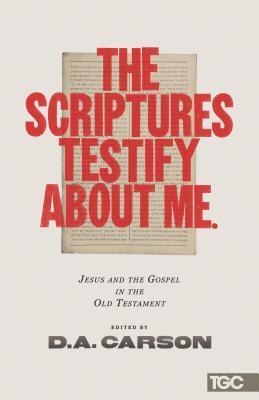
Eight prominent evangelical pastors and scholars team up to demonstrate what it looks like to faithfully preach Christ from a variety of Old Testament texts.

With the Clouds of Heaven: The Book of Daniel in Biblical Theology (Volume 32)
by D.A. Carson
Rating: 4.2 ⭐
"And behold, with the clouds of heaven there came one like a son of man, and he came to the Ancient of Days and was presented before him. And to him was given dominion and glory and a kingdom." (Daniel 7:13-14 ESV). Perceiving a hole in evangelical biblical theology that should be filled with a robust treatment of the book of Daniel, James Hamilton takes this chance to delve into the book's rich contribution to the Bible's unfolding redemptive-historical storyline. By setting Daniel in the broader context of biblical theology, this canonical study helps move us toward a clearer understanding of how we should live today in response to its message. First, Hamilton shows how the book's literary structure contributes to its meaning, and then addresses key questions and issues, concluding by examining typological patterns. This New Studies in Biblical Theology volume argues that the four kingdoms prophesied by Daniel are both historical and symbolic―that the "one like a son of man" seen by Daniel is identified with and distinguished from the Ancient of Days in a way that would be mysterious until Jesus came as both the son of David and God incarnate. He elaborates that the interpretations of Daniel in early Jewish literature attest to strategies similar to those employed by New Testament authors and exposes that those authors provide a Spirit-inspired interpretation of Daniel that was learned from Jesus. He also highlights how the book of Revelation uses Daniel's language, imitates his structure, points to the fulfillment of his prophecies and clarifies the meaning of his "seventieth week." Addressing key issues in biblical theology, the works comprising New Studies in Biblical Theology are creative attempts to help Christians better understand their Bibles. The NSBT series is edited by D. A. Carson, aiming to simultaneously instruct and to edify, to interact with current scholarship and to point the way ahead.

Five Festal Garments: Christian Reflections on the Song of Songs, Ruth, Lamentations, Ecclesiastes and Esther (Volume 10)
by D.A. Carson
Rating: 4.2 ⭐
These five Old Testament books, traditionally known simply as "the Scrolls," are among the most neglected parts of the Christian Bible. In Judaism, the Song of Songs, Ruth, Lamentations, Ecclesiastes and Esther were eventually adopted as lectionary readings for five of the major festivals. In Christian tradition, however, no consensus has emerged about their proper use. Each book presents particular difficulties with regard to how it relates to the rest of Scripture and how it should be understood as the Word of God for us today. In this New Studies in Biblical Theology volume, Barry Webb offers a Christian interpretation of these problematic writings. He allows each book to set its own agenda, and then examines each in relation to the wider Old Testament and to the New Testament gospel with its basic structure of promise and fulfillment. In this way, Webb presents fresh and illuminating perspectives on these five "festal garments" of love, kindness, suffering, vexation and deliverance. Addressing key issues in biblical theology, the works comprising New Studies in Biblical Theology are creative attempts to help Christians better understand their Bibles. The NSBT series is edited by D. A. Carson, aiming to simultaneously instruct and to edify, to interact with current scholarship and to point the way ahead.

"After this I looked and there before me was a great multitude that no one could count, from every nation, tribe, people and language . . ." (Revelation 7:9). The visions in the book of Revelation give a glimpse of the people of God at the consummation of history―a multiethnic congregation gathered together in worship around God's throne. Its racial diversity is expressed in a fourfold formula that first appears in Genesis 10. The theme of race runs throughout Scripture, constantly pointing to the global and multiethnic dimensions inherent in the overarching plan of God. In response to the neglect of this theme in much evangelical biblical scholarship, J. Daniel Hays offers this thorough exegetical work in the New Studies in Biblical Theology series. As well as focusing on texts which have a general bearing on race, Hays demonstrates that black Africans from Cush (Ethiopia) play an important role in both Old and New Testament history. This careful, nuanced analysis provides a clear theological foundation for life in contemporary multiracial cultures and challenges churches to pursue racial unity in Christ. Addressing key issues in biblical theology, the works comprising New Studies in Biblical Theology are creative attempts to help Christians better understand their Bibles. The NSBT series is edited by D. A. Carson, aiming to simultaneously instruct and to edify, to interact with current scholarship and to point the way ahead.
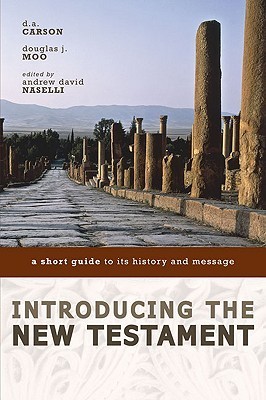
Abridgement of An Introduction to the New Testament. This abridged edition of an established major textbook brings the best of New Testament scholarship to the church and makes it accessible to the average reader. Focusing on historical questions dealing with authorship, date, sources, purpose, and destination of the New Testament books, this book will help a new generation of students and church leaders better grasp the message of the New Testament.
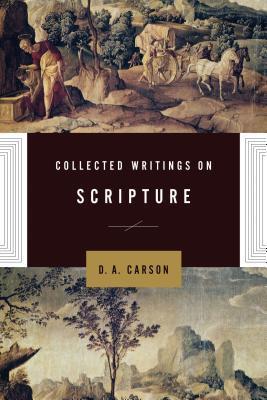
God’s Word has always had enemies, but in recent years the inspiration and authority of Scripture have been attacked with renewed vigor. Respected scholar D. A. Carson has written widely on the nature of Scripture over the past thirty years, and here presents a timely collection of his work in two parts. In part 1, Carson selects essays written on such themes as how to interpret the Bible, recent developments in the doctrine of Scripture, unity and diversity in the New Testament, and redaction criticism. Presenting a theologically balanced and confessional perspective, Carson defines the terms of a number of debates, critiques interpretive methods and theories, and suggests positive guidelines for future action. Part 2 presents critical reviews of nine books dealing with the inspiration and authority of Scripture. Though substantial in content, Carson’s detailed reviews will foster careful thought and perspective in those who are relatively new to the debates surrounding biblical inspiration and authority. This volume is a diverse collection that will prove to be a helpful resource to both seasoned pastors and scholars and those who are just starting serious study of the Bible.