Loading genres...
Explore the best books about Historical genre.
In this illuminating and thoughtful book, Will and Ariel Durant have succeeded in distilling for the reader the accumulated store of knowledge and experience from their four decades of work on the ten monumental volumes of "The Story of Civilization." The result is a survey of human history, full of dazzling insights into the nature of human experience, the evolution of civilization, the culture of man. With the completion of their life's work they look back and ask what history has to say about the nature, the conduct and the prospects of man, seeking in the great lives, the great ideas, the great events of the past for the meaning of man's long journey through war, conquest and creation - and for the great themes that can help us to understand our own era.To the Durants, history is "not merely a warning reminder of man's follies and crimes, but also an encouraging remembrance of generative souls ... a spacious country of the mind wherein a thousand saints, statesman, inventors, scientists, poets, artists, musicians, lovers, and philosophers still live and speak, teach and carve and sing..."Designed to accompany the ten-volume set of "The Story of Civilization, The Lessons of History" is, in its own right, a profound and original work of history and philosophy.
Benjamin Franklin is the Founding Father who winks at us. An ambitious urban entrepreneur who rose up the social ladder, from leather-aproned shopkeeper to dining with kings, he seems made of flesh rather than of marble. In bestselling author Walter Isaacson's vivid and witty full-scale biography, we discover why Franklin seems to turn to us from history's stage with eyes that twinkle from behind his new-fangled spectacles. By bringing Franklin to life, Isaacson shows how he helped to define both his own time and ours.He was, during his 84-year life, America's best scientist, inventor, diplomat, writer, and business strategist, and he was also one of its most practical—though not most profound—political thinkers. He proved by flying a kite that lightning was electricity, and he invented a rod to tame it. He sought practical ways to make stoves less smoky and commonwealths less corrupt. He organized neighborhood constabularies and international alliances, local lending libraries and national legislatures. He combined two types of lenses to create bifocals and two concepts of representation to foster the nation's federal compromise. He was the only man who shaped all the founding documents of America: the Albany Plan of Union, the Declaration of Independence, the treaty of alliance with France, the peace treaty with England, and the Constitution. And he helped invent America's unique style of homespun humor, democratic values, and philosophical pragmatism.But the most interesting thing that Franklin invented, and continually reinvented, was himself. America's first great publicist, he was, in his life and in his writings, consciously trying to create a new American archetype. In the process, he carefully crafted his own persona, portrayed it in public, and polished it for posterity.Through it all, he trusted the hearts and minds of his fellow "leather-aprons" more than he did those of any inbred elite. He saw middle-class values as a source of social strength, not as something to be derided. His guiding principle was a "dislike of everything that tended to debase the spirit of the common people." Few of his fellow founders felt this comfort with democracy so fully, and none so intuitively.In this colorful and intimate narrative, Isaacson provides the full sweep of Franklin's amazing life, from his days as a runaway printer to his triumphs as a statesman, scientist, and Founding Father. He chronicles Franklin's tumultuous relationship with his illegitimate son and grandson, his practical marriage, and his flirtations with the ladies of Paris. He also shows how Franklin helped to create the American character and why he has a particular resonance in the twenty-first century.

How did Einstein's mind work? What made him a genius? Isaacson's biography shows how his scientific imagination sprang from the rebellious nature of his personality. His fascinating story is a testament to the connection between creativity and freedom.Based on the newly released personal letters of Albert Einstein, Walter Isaacson explores how an imaginative, impertinent patent clerk -- a struggling father in a difficult marriage who couldn't get a teaching job or a doctorate -- became the mind reader of the creator of the cosmos, the locksmith of the mysteries of the atom and the universe. His success came from questioning conventional wisdom and marveling at mysteries that struck others as mundane. This led him to embrace a morality and politics based on respect for free minds, free spirits, and free individuals.These traits are just as vital for this new century of globalization, in which our success will depend on our creativity, as they were for the beginning of the last century, when Einstein helped usher in the modern age.

Cryptonomicon zooms all over the world, careening conspiratorially back and forth between two time periods—World War II and the present. Our 1940s heroes are the brilliant mathematician Lawrence Waterhouse, crypt analyst extraordinaire, and gung-ho, morphine-addicted marine Bobby Shaftoe. They're part of Detachment 2702, an Allied group trying to break Axis communication codes while simultaneously preventing the enemy from figuring out that their codes have been broken. Their job boils down to layer upon layer of deception. Dr. Alan Turing is also a member of 2702, and he explains the unit's strange workings to Waterhouse. "When we want to sink a convoy, we send out an observation plane first... Of course, to observe is not its real duty—we already know exactly where the convoy is. Its real duty is to be observed... Then, when we come round and sink them, the Germans will not find it suspicious."All of this secrecy resonates in the present-day story line, in which the grandchildren of the WWII heroes—inimitable programming geek Randy Waterhouse and the lovely and powerful Amy Shaftoe—team up to help create an offshore data haven in Southeast Asia and maybe uncover some gold once destined for Nazi coffers. To top off the paranoiac tone of the book, the mysterious Enoch Root, key member of Detachment 2702 and the Societas Eruditorum, pops up with an unbreakable encryption scheme left over from WWII to befuddle the 1990s protagonists with conspiratorial ties.

The definitive biography of the founder of history's greatest empire. In 25 years, Genghis Khan and his Mongol armies conquered more than the Romans had in four centuries, founding the most extensive empire humankind has ever seen. Born Temujin, a pariah from the steppes, the man destined to make history as the Great Khan of the Mongols conquered every territory he held, from Georgia and Armenia to Korea. Genghis Khan emerged as an unexpected leader, abolishing torture, guaranteeing religious freedom, and destroying feudal systems based on aristocratic privilege. When he was born, holding a blood clot in his hand, his mother predicted that the child would change the course of the world. Thus, Genghis Khan united all the Mongol tribes of the steppes and transformed their way of life. He created the most efficient army of the Middle Ages, opened trade routes that connected the known world, and founded an empire that stretched from Europe to East Asia. His successors were kings, khans, and emperors in China, India, and Russia, and his legacy was enduring. From the early life of Genghis Khan and his rise and transformation from the tribal world of the steppes to the civilizing explosion of the Mongol Empire, this brilliant essay by Jack Weatherford, an anthropologist specializing in Mongol history, tells the epic story of how the modern world was forged.

Written initially to guide his son, Benjamin Franklin’s autobiography is a lively, spellbinding account of his unique and eventful life, now a classic of world literature that is sure to inspire and delight readers everywhere.Few men could compare to Benjamin Franklin. Virtually self-taught, he excelled as an athlete, a man of letters, a printer, a scientist, a wit, an inventor, an editor, and a writer, and he was probably the most successful diplomat in American history. David Hume hailed him as the first great philosopher and great man of letters in the New World.

Fifty years after its original publication, Catch-22 remains a cornerstone of American literature and one of the funniest—and most celebrated—books of all time. In recent years it has been named to “best novels” lists by Time, Newsweek, the Modern Library, and the London Observer.Set in Italy during World War II, this is the story of the incomparable, malingering bombardier, Yossarian, a hero who is furious because thousands of people he has never met are trying to kill him. But his real problem is not the enemy—it is his own army, which keeps increasing the number of missions the men must fly to complete their service. Yet if Yossarian makes any attempt to excuse himself from the perilous missions he’s assigned, he’ll be in violation of Catch-22, a hilariously sinister bureaucratic rule: a man is considered insane if he willingly continues to fly dangerous combat missions, but if he makes a formal request to be removed from duty, he is proven sane and therefore ineligible to be relieved.This fiftieth-anniversary edition commemorates Joseph Heller’s masterpiece with a new introduction by Christopher Buckley; a wealth of critical essays and reviews by Norman Mailer, Alfred Kazin, Anthony Burgess, and others; rare papers and photos from Joseph Heller’s personal archive; and much more. Here, at last, is the definitive edition of a classic of world literature.

Librarian's note: An alternate cover edition can be found hereTwo-time winner of the Pulitzer Prize David McCullough tells the dramatic story-behind-the-story about the courageous brothers who taught the world how to fly: Wilbur and Orville Wright.On a winter day in 1903, in the Outer Banks of North Carolina, two unknown brothers from Ohio changed history. But it would take the world some time to believe what had happened: the age of flight had begun, with the first heavier-than-air, powered machine carrying a pilot.Who were these men and how was it that they achieved what they did?David McCullough, two-time winner of the Pulitzer Prize, tells the surprising, profoundly American story of Wilbur and Orville Wright.Far more than a couple of unschooled Dayton bicycle mechanics who happened to hit on success, they were men of exceptional courage and determination, and of far-ranging intellectual interests and ceaseless curiosity, much of which they attributed to their upbringing. The house they lived in had no electricity or indoor plumbing, but there were books aplenty, supplied mainly by their preacher father, and they never stopped reading.When they worked together, no problem seemed to be insurmountable. Wilbur was unquestionably a genius. Orville had such mechanical ingenuity as few had ever seen. That they had no more than a public high school education, little money and no contacts in high places, never stopped them in their mission to take to the air. Nothing did, not even the self-evident reality that every time they took off in one of their contrivances, they risked being killed.In this thrilling book, master historian David McCullough draws on the immense riches of the Wright Papers, including private diaries, notebooks, scrapbooks, and more than a thousand letters from private family correspondence to tell the human side of the Wright Brothers' story, including the little-known contributions of their sister, Katharine, without whom things might well have gone differently for them.

A Tale of Two Cities is Charles Dickens’s great historical novel, set against the violent upheaval of the French Revolution. The most famous and perhaps the most popular of his works, it compresses an event of immense complexity to the scale of a family history, with a cast of characters that includes a bloodthirsty ogress and an antihero as believably flawed as any in modern fiction. Though the least typical of the author’s novels, A Tale of Two Cities still underscores many of his enduring themes—imprisonment, injustice, social anarchy, resurrection, and the renunciation that fosters renewal.

The mega-bestseller with more than 2 million readers—Now a Paramount+ with Showtime series starring Ewan McGregor as Count Alexander RostovFrom the #1 New York Times-bestselling author of The Lincoln Highway and Rules of Civility, a beautifully transporting novel about a man who is ordered to spend the rest of his life inside a luxury hotel In 1922, Count Alexander Rostov is deemed an unrepentant aristocrat by a Bolshevik tribunal, and is sentenced to house arrest in the Metropol, a grand hotel across the street from the Kremlin. Rostov, an indomitable man of erudition and wit, has never worked a day in his life, and must now live in an attic room while some of the most tumultuous decades in Russian history are unfolding outside the hotel’s doors. Unexpectedly, his reduced circumstances provide him entry into a much larger world of emotional discovery.Brimming with humor, a glittering cast of characters, and one beautifully rendered scene after another, this singular novel casts a spell as it relates the count’s endeavor to gain a deeper understanding of what it means to be a man of purpose.

"He was history's most creative genius. What secrets can he teach us? The author of the acclaimed bestsellers Steve Jobs, Einstein, and Benjamin Franklin brings Leonardo da Vinci to life in this exciting new biography. Based on thousands of pages from Leonardo's astonishing notebooks and new discoveries about his life and work, Walter Isaacson weaves a narrative that connects his art to his science. He shows how Leonardo's genius was based on skills we can improve in ourselves, such as passionate curiosity, careful observation, and an imagination so playful that it flirted with fantasy. He produced the two most famous paintings in history, The Last Supper and the Mona Lisa. But in his own mind, he was just as much a man of science and technology. With a passion that sometimes became obsessive, he pursued innovative studies of anatomy, fossils, birds, the heart, flying machines, botany, geology, and weaponry. His ability to stand at the crossroads of the humanities and the sciences, made iconic by his drawing of Vitruvian Man, made him history's most creative genius"--

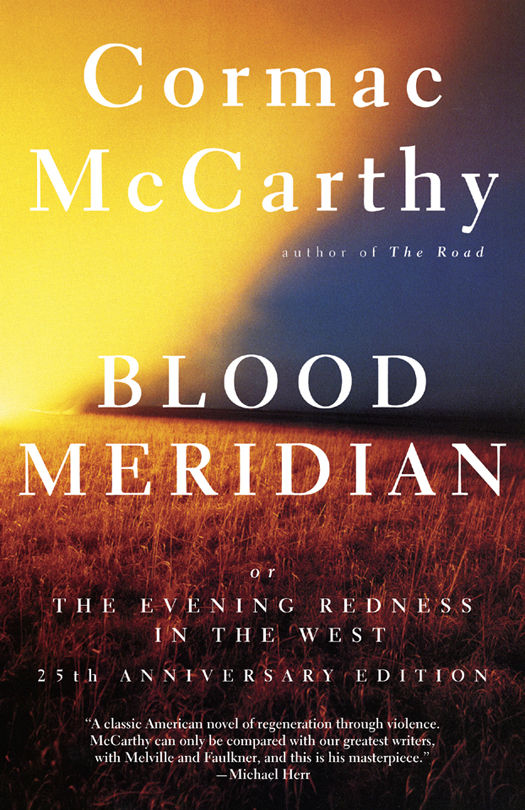
Blood Meridian is an epic novel of the violence and depravity that attended America's westward expansion, brilliantly subverting the conventions of the Western novel and the mythology of the Wild West. Based on historical events that took place on the Texas-Mexico border in the 1850s, it traces the fortunes of the Kid, a fourteen-year-old Tennesseean who stumbles into a nightmarish world where Indians are being murdered and the market for their scalps is thriving.

Bill Bryson describes himself as a reluctant traveller, but even when he stays safely at home he can't contain his curiosity about the world around him. "A Short History of Nearly Everything" is his quest to understand everything that has happened from the Big Bang to the rise of civilisation - how we got from there, being nothing at all, to here, being us. The ultimate eye-opening journey through time and space, revealing the world in a way most of us have never seen it before.

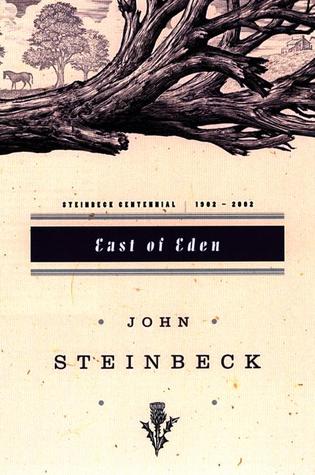
In his journal, Nobel Prize winner John Steinbeck called East of Eden “the first book,” and indeed it has the primordial power and simplicity of myth. Set in the rich farmland of California’s Salinas Valley, this sprawling and often brutal novel follows the intertwined destinies of two families—the Trasks and the Hamiltons—whose generations helplessly reenact the fall of Adam and Eve and the poisonous rivalry of Cain and Abel.Adam Trask came to California from the East to farm and raise his family on the new rich land. But the birth of his twins, Cal and Aaron, brings his wife to the brink of madness, and Adam is left alone to raise his boys to manhood. One boy thrives nurtured by the love of all those around him; the other grows up in loneliness enveloped by a mysterious darkness.First published in 1952, East of Eden is the work in which Steinbeck created his most mesmerizing characters and explored his most enduring themes: the mystery of identity, the inexplicability of love, and the murderous consequences of love's absence. A masterpiece of Steinbeck's later years, East of Eden is a powerful and vastly ambitious novel that is at once a family saga and a modern retelling of the Book of Genesis.

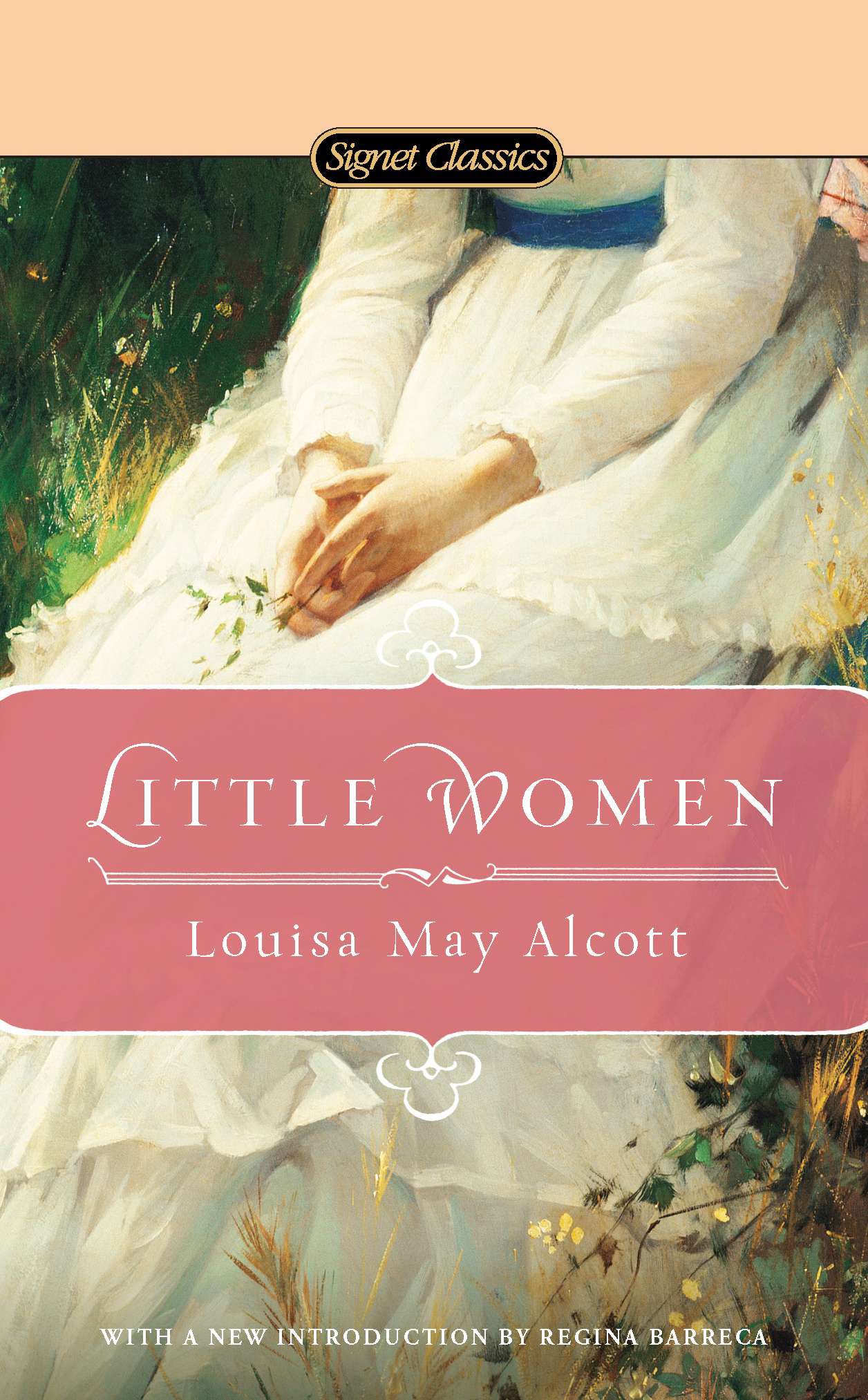
This is an alternate cover edition of ISBN 9780451529305.Generations of readers young and old, male and female, have fallen in love with the March sisters of Louisa May Alcott’s most popular and enduring novel, Little Women. Here are talented tomboy and author-to-be Jo, tragically frail Beth, beautiful Meg, and romantic, spoiled Amy, united in their devotion to each other and their struggles to survive in New England during the Civil War.It is no secret that Alcott based Little Women on her own early life. While her father, the freethinking reformer and abolitionist Bronson Alcott, hobnobbed with such eminent male authors as Emerson, Thoreau, and Hawthorne, Louisa supported herself and her sisters with "woman’s work,” including sewing, doing laundry, and acting as a domestic servant. But she soon discovered she could make more money writing. Little Women brought her lasting fame and fortune, and far from being the "girl’s book” her publisher requested, it explores such timeless themes as love and death, war and peace, the conflict between personal ambition and family responsibilities, and the clash of cultures between Europe and America.

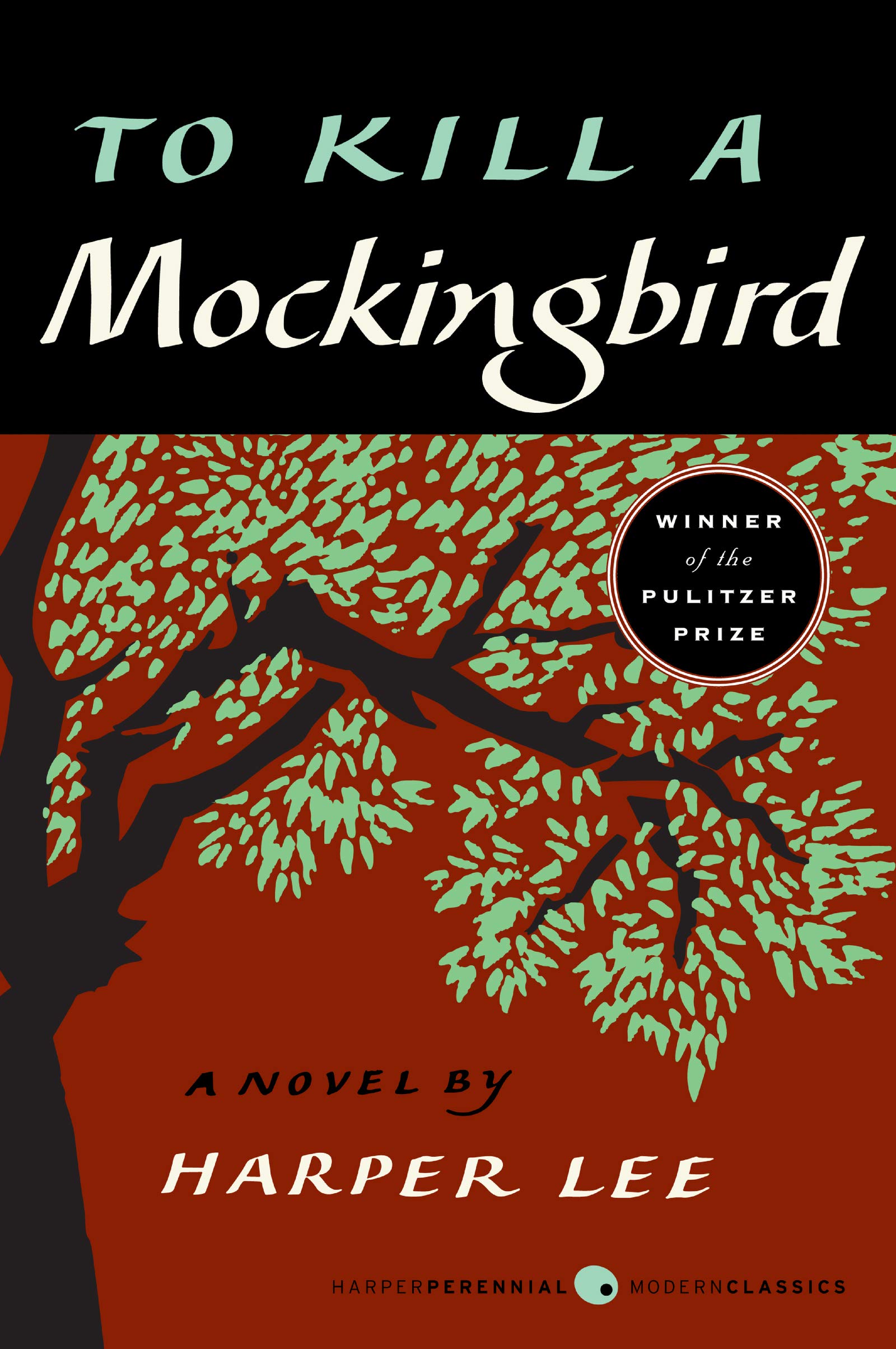
One of the best-loved stories of all time, To Kill a Mockingbird has been translated into more than forty languages, sold more than forty million copies worldwide, served as the basis for an enormously popular motion picture, and was voted one of the best novels of the twentieth century by librarians across the country. A gripping, heart-wrenching, and wholly remarkable coming-of-age tale in a South poisoned by virulent prejudice, it views a world of great beauty and savage iniquities through the eyes of a young girl, as her father — a crusading local lawyer — risks everything to defend a black man unjustly accused of a terrible crime.

The Pulitzer Prize–winning, bestselling author of The Warmth of Other Suns examines the unspoken caste system that has shaped America and shows how our lives today are still defined by a hierarchy of human divisions.“As we go about our daily lives, caste is the wordless usher in a darkened theater, flashlight cast down in the aisles, guiding us to our assigned seats for a performance. The hierarchy of caste is not about feelings or morality. It is about power—which groups have it and which do not.”In this brilliant book, Isabel Wilkerson gives us a masterful portrait of an unseen phenomenon in America as she explores, through an immersive, deeply researched narrative and stories about real people, how America today and throughout its history has been shaped by a hidden caste system, a rigid hierarchy of human rankings.Beyond race, class, or other factors, there is a powerful caste system that influences people’s lives and behavior and the nation’s fate. Linking the caste systems of America, India, and Nazi Germany, Wilkerson explores eight pillars that underlie caste systems across civilizations, including divine will, bloodlines, stigma, and more. Using riveting stories about people—including Martin Luther King, Jr., baseball’s Satchel Paige, a single father and his toddler son, Wilkerson herself, and many others—she shows the ways that the insidious undertow of caste is experienced every day. She documents how the Nazis studied the racial systems in America to plan their out-cast of the Jews; she discusses why the cruel logic of caste requires that there be a bottom rung for those in the middle to measure themselves against; she writes about the surprising health costs of caste, in depression and life expectancy, and the effects of this hierarchy on our culture and politics. Finally, she points forward to ways America can move beyond the artificial and destructive separations of human divisions, toward hope in our common humanity.

At the height of WWI, history’s most lethal influenza virus erupted in an army camp in Kansas, moved east with American troops, then exploded, killing as many as 100 million people worldwide. It killed more people in twenty-four months than AIDS killed in twenty-four years, more in a year than the Black Death killed in a century. But this was not the Middle Ages, and 1918 marked the first collision of science and epidemic disease. Magisterial in its breadth of perspective and depth of research and now revised to reflect the growing danger of the avian flu, The Great Influenza is ultimately a tale of triumph amid tragedy, which provides us with a precise and sobering model as we confront the epidemics looming on our own horizon. John M. Barry has written a new afterword for this edition that brings us up to speed on the terrible threat of the avian flu and suggest ways in which we might head off another flu pandemic.

The classic samurai novel about the real exploits of the most famous swordsman. Miyamoto Musashi was the child of an era when Japan was emerging from decades of civil strife. Lured to the great Battle of Sekigahara in 1600 by the hope of becoming a samurai-without really knowing what it meant-he regains consciousness after the battle to find himself lying defeated, dazed and wounded among thousands of the dead and dying. On his way home, he commits a rash act, becomes a fugitive and brings life in his own village to a standstill-until he is captured by a weaponless Zen monk. The lovely Otsu, seeing in Musashi her ideal of manliness, frees him from his tortuous punishment, but he is recaptured and imprisoned. During three years of solitary confinement, he delves into the classics of Japan and China. When he is set free again, he rejects the position of samurai and for the next several years pursues his goal relentlessly, looking neither to left nor to right. Ever so slowly it dawns on him that following the Way of the Sword is not simply a matter of finding a target for his brute strength. Continually striving to perfect his technique, which leads him to a unique style of fighting with two swords simultaneously, he travels far and wide, challenging fighters of many disciplines, taking nature to be his ultimate and severest teacher and undergoing the rigorous training of those who follow the Way. He is supremely successful in his encounters, but in the Art of War he perceives the way of peaceful and prosperous governance and disciplines himself to be a real human being. He becomes a reluctant hero to a host of people whose lives he has touched and been touched by. And, inevitably, he has to pit his skill against the naked blade of his greatest rival.

First of a 3-volume social history, Parting the Waters is more than a biography of the Rev. Martin Luther King Jr. during the decade preceding his emergence as a national figure. This 1000-page effort, which won the Pulitzer Prize as well as the National Book Critics Circle Award for General Nonfiction, profiles the key players & events that helped shape the American social landscape following WWII but before the civil-rights movement of the 60s reached its climax. Branch then goes a step further, endeavoring to explain how the struggles evolved as they did by probing the influences of the main actors while discussing the manner in which events conspired to create fertile ground for change. Also analyzing the beginnings of black self-consciousness, this book maps the structure of segregation & bigotry in America between '54 & '63. The author considers the constantly changing behavior of those in Washington with regard to the injustice of offical racism operating in many states at this time.Forerunner: Vernon Johns Rockefeller and Ebenezer Niebuhr and the Pool TablesFirst Trombone The Montgomery Bus BoycottA Taste of the World The Quickening Shades of PoliticsA Pawn of HistoryThe Kennedy TransitionBaptism on Wheels The Summer of Freedom RidesMoses in McComb, King in Kansas City Almost Christmas in Albany Hoover's Triangle and King's MachineThe Fireman's Last Reprieve The Fall of Ole MissTo Birmingham Greenwood and Birmingham JailThe Children's Miracle Firestorm The March on Washington Crossing Over: Nightmares and Dreams

"A wonderful, splendid book--a book that should be ready by every American, student or otherwise, who wants to understand his country, its true history, and its hope for the future." --Howard FastWith a new introduction by Anthony Arnove, this edition of the classic national bestseller chronicles American history from the bottom up, throwing out the official narrative taught in schools—with its emphasis on great men in high places—to focus on the street, the home and the workplace.Known for its lively, clear prose as well as its scholarly research, A People's History of the United States is the only volume to tell America's story from the point of view of—and in the words of—America's women, factory workers, African-Americans, Native Americans, the working poor, and immigrant laborers. As historian Howard Zinn shows, many of our country's greatest battles—the fights for a fair wage, an eight-hour workday, child-labor laws, health and safety standards, universal suffrage, women's rights, racial equality—were carried out at the grassroots level, against bloody resistance.Covering Christopher Columbus's arrival through President Clinton's first term, A People's History of the United States features insightful analysis of the most important events in our history.

In 1937 Ernest Hemingway traveled to Spain to cover the civil war there for the North American Newspaper Alliance. Three years later he completed the greatest novel to emerge from "the good fight," For Whom the Bell Tolls. The story of Robert Jordan, a young American in the International Brigades attached to an antifascist guerilla unit in the mountains of Spain, it tells of loyalty and courage, love and defeat, and the tragic death of an ideal. In his portrayal of Jordan's love for the beautiful Maria and his superb account of El Sordo's last stand, in his brilliant travesty of La Pasionaria and his unwillingness to believe in blind faith, Hemingway surpasses his achievement in The Sun Also Rises and A Farewell to Arms to create a work at once rare and beautiful, strong and brutal, compassionate, moving and wise. "If the function of a writer is to reveal reality," Maxwell Perkins wrote to Hemingway after reading the manuscript, "no one ever so completely performed it." Greater in power, broader in scope, and more intensely emotional than any of the author's previous works, it stands as one of the best war novels of all time.

John Steinbeck's Pulitzer Prize-winning epic of the Great Depression follows the western movement of one family & a nation in search of work & human dignity. Perhaps the most American of American classics. The novel focuses on the Joads, a poor family of sharecroppers driven from their Oklahoma home by drought, economic hardship, & changes in financial & agricultural industries. Due to their nearly hopeless situation, & in part because they were trapped in the Dust Bowl, the Joads set out for California. Along with thousands of other "Okies", they sought jobs, land, dignity & a future. When preparing to write the novel, Steinbeck wrote: "I want to put a tag of shame on the greedy bastards who are responsible for this [the Great Depression & its effects]." The book won Steinbeck a large following among the working class, perhaps due to the book's sympathy to the workers' movement & its accessible prose style.This edition is printed by the Folio Society. Set in Palatino with Kabel Heavy display. Bound in full brown cloth (second edition) with a design by the artist.

The unforgettable, heartbreaking story of the unlikely friendship between a wealthy boy and the son of his father's servant, The Kite Runner is a beautifully crafted novel set in a country that is in the process of being destroyed. It is about the power of reading, the price of betrayal, and the possibility of redemption; and an exploration of the power of fathers over sons—their love, their sacrifices, their lies.A sweeping story of family, love, and friendship told against the devastating backdrop of the history of Afghanistan over the last thirty years, The Kite Runner is an unusual and powerful novel that has become a beloved, one-of-a-kind classic.The 10th anniversary edition of the New York Times bestseller and international classic loved by millions of readers.

In Russia's struggle with Napoleon, Tolstoy saw a tragedy that involved all mankind. War and Peace broadly focuses on Napoleon’s invasion of Russia in 1812 and follows three of the most well-known characters in literature: Pierre Bezukhov, the illegitimate son of a count who is fighting for his inheritance and yearning for spiritual fulfillment; Prince Andrei Bolkonsky, who leaves his family behind to fight in the war against Napoleon; and Natasha Rostov, the beautiful young daughter of a nobleman who intrigues both men.As Napoleon’s army invades, Tolstoy brilliantly follows characters from diverse backgrounds—peasants and nobility, civilians and soldiers—as they struggle with the problems unique to their era, their history, and their culture. And as the novel progresses, these characters transcend their specificity, becoming some of the most moving—and human—figures in world literature.Tolstoy gave his personal approval to this translation, published here in a new single volume edition, which includes an introduction by Henry Gifford, and Tolstoy's important essay `Some Words about War and Peace'.

A landmark reconsideration of the iconoclastic war leader, based on extensive new material, from private letters to war cabinet meetings, by the bestselling, award-winning author of Napoleon and The Storm of War.When we seek an example of unalloyed courage, the man who comes to mind is Winston Churchill: the visionary leader, immune from the consensus of the day, who stood firmly for his beliefs when everyone doubted him. But how did young Winston become Churchill? What gave him the strength to take on the superior force of Nazi Germany when bombs rained on London and so many others had caved? In The Storm of War, Andrew Roberts gave us a tantalizing glimpse of Churchill the war leader. Now, at last, we have the full and definitive biography, as personally revealing as it is compulsively readable, about one of the great leaders of all time.Roberts was granted exclusive access to extensive new material: the transcripts of war cabinet meetings - the equivalent of the Nixon and JFK tapes - diaries, letters, unpublished memoirs, and detailed notes taken by the king after their bi-weekly meetings. Having read every one of Churchill's letters, including deeply personal ones that Churchill's son Randolph had previously chosen to withhold, and spoken to more than one hundred people who knew or worked with him, Roberts identifies the hidden forces fueling Churchill's drive. Churchill put his faith in the British Empire and fought as hard to preserve it as he did to defend London. Having started his career in India and South Africa, he understood better than most idealists how hard it can be to pacify reluctant people far from home.We think of Churchill as a hero of the age of mechanized warfare, but Roberts's masterwork reveals that he has as much to teach us about the challenges we face today and the fundamental values of courage, tenacity, leadership, and moral conviction.

Are leaders born or made? Where does ambition come from? How does adversity affect the growth of leadership? Does the leader make the times or do the times make the leader? In Leadership, Goodwin draws upon the four presidents she has studied most closely—Abraham Lincoln, Theodore Roosevelt, Franklin D. Roosevelt, and Lyndon B. Johnson (in civil rights)—to show how they recognized leadership qualities within themselves and were recognized as leaders by others. By looking back to their first entries into public life, we encounter them at a time when their paths were filled with confusion, fear, and hope.Leadership tells the story of how they all collided with dramatic reversals that disrupted their lives and threatened to shatter forever their ambitions. Nonetheless, they all emerged fitted to confront the contours and dilemmas of their times. No common pattern describes the trajectory of leadership. Although set apart in background, abilities, and temperament, these men shared a fierce ambition and a deep-seated resilience that enabled them to surmount uncommon hardships. At their best, all four were guided by a sense of moral purpose. At moments of great challenge, they were able to summon their talents to enlarge the opportunities and lives of others.

Covers a seventy year span in chronological essays. Includes end notes and master index.

In the final decades of the nineteenth century, three brilliant and visionary titans of America’s Gilded Age—Thomas Edison, Nikola Tesla, and George Westinghouse—battled bitterly as each vied to create a vast and powerful electrical empire. In Empires of Light , historian Jill Jonnes portrays this extraordinary trio and their riveting and ruthless world of cutting-edge science, invention, intrigue, money, death, and hard-eyed Wall Street millionaires. At the heart of the story are Thomas Alva Edison, the nation’s most famous and folksy inventor, creator of the incandescent light bulb and mastermind of the world’s first direct current electrical light networks; the Serbian wizard of invention Nikola Tesla, elegant, highly eccentric, a dreamer who revolutionized the generation and delivery of electricity; and the charismatic George Westinghouse, Pittsburgh inventor and tough corporate entrepreneur, an industrial idealist who in the era of gaslight imagined a world powered by cheap and plentiful electricity and worked heart and soul to create it.Edison struggled to introduce his radical new direct current (DC) technology into the hurly-burly of New York City as Tesla and Westinghouse challenged his dominance with their alternating current (AC), thus setting the stage for one of the eeriest feuds in American corporate history, the War of the Electric Currents. The battlegrounds: Wall Street, the 1893 Chicago World’s Fair, Niagara Falls, and, finally, the death chamber—Jonnes takes us on the tense walk down a prison hallway and into the sunlit room where William Kemmler, convicted ax murderer, became the first man to die in the electric chair.Empires of Light is the gripping history of electricity, the “mysterious fluid,” and how the fateful collision of Edison, Tesla, and Westinghouse left the world utterly transformed.

Gore Vidal's Narratives of Empire series spans the history of the United States from the Revolution to the post-World War II years. With their broad canvas and large cast of fictional and historical characters, the novels in this series present a panorama of the American political and imperial experience as interpreted by one of its most worldly, knowing, and ironic observers.To most Americans, Abraham Lincoln is a monolithic figure, the Great Emancipator and Savior of the Union, beloved by all. In Gore Vidal's Lincoln we meet Lincoln the man and Lincoln the political animal, the president who entered a besieged capital where most of the population supported the South and where even those favoring the Union had serious doubts that the man from Illinois could save it. Far from steadfast in his abhorrence of slavery, Lincoln agonizes over the best course of action and comes to his great decision only when all else seems to fail. As the Civil War ravages his nation, Lincoln must face deep personal turmoil, the loss of his dearest son, and the harangues of a wife seen as a traitor for her Southern connections. Brilliantly conceived, masterfully executed, Gore Vidal's Lincoln allows the man to breathe again.

In his own book, Wartime, Paul Fussell called With the Old Breed "one of the finest memoirs to emerge from any war." John Keegan referred to it in The Second World War as "one of the most arresting documents in war literature." And Studs Terkel was so fascinated with the story he interviewed its author for his book, "The Good War." What has made E.B. Sledge's memoir of his experience fighting in the South Pacific during World War II so devastatingly powerful is its sheer honest simplicity and compassion.Now including a new introduction by Paul Fussell, With the Old Breed presents a stirring, personal account of the vitality and bravery of the Marines in the battles at Peleliu and Okinawa. Born in Mobile, Alabama in 1923 and raised on riding, hunting, fishing, and a respect for history and legendary heroes such as George Washington and Daniel Boone, Eugene Bondurant Sledge (later called "Sledgehammer" by his Marine Corps buddies) joined the Marines the year after the bombing of Pearl Harbor and from 1943 to 1946 endured the events recorded in this book. In those years, he passed, often painfully, from innocence to experience.Sledge enlisted out of patriotism, idealism, and youthful courage, but once he landed on the beach at Peleliu, it was purely a struggle for survival. Based on the notes he kept on slips of paper tucked secretly away in his New Testament, he simply and directly recalls those long months, mincing no words and sparing no pain. The reality of battle meant unbearable heat, deafening gunfire, unimaginable brutality and cruelty, the stench of death, and, above all, constant fear. Sledge still has nightmares about "the bloody, muddy month of May on Okinawa." But, as he also tellingly reveals, the bonds of friendship formed then will never be severed.Sledge's honesty and compassion for the other marines, even complete strangers, sets him apart as a memoirist of war. Read as sobering history or as high adventure, With the Old Breed is a moving chronicle of action and courage.

With a compassionate realism and narrative sweep that recall the work of Charles Dickens, this magnificent novel captures all the cruelty and corruption, dignity and heroism, of India. The time is 1975. The place is an unnamed city by the sea. The government has just declared a State of Emergency, in whose upheavals four strangers--a spirited widow, a young student uprooted from his idyllic hill station, and two tailors who have fled the caste violence of their native village--will be thrust together, forced to share one cramped apartment and an uncertain future. As the characters move from distrust to friendship and from friendship to love, A Fine Balance creates an enduring panorama of the human spirit in an inhuman state.

Winner of the Pulitzer for History, No Ordinary Time is a chronicle of one of the most vibrant & revolutionary periods in US history. With an extraordinary collection of details, Goodwin weaves together a number of story lines—the Roosevelt’s marriage & partnership, Eleanor’s life as First Lady, & FDR’s White House & its impact on America as well as on a world at war. Goodwin melds these into an intimate portrait of Eleanor & Franklin Roosevelt & of the time during which a new, modern America was born.Preface"The decisive hour has come" "A few nice boys with BB guns""Back to the Hudson" "Living here is very oppressive""No ordinary time" "I am a juggler" "I can't do anything about her" "Arsenal of democracy" "Business as usual" "A great hour to live""A completely changed world""Two little boys playing soldier""What can we do to help?" "By god, if it ain't Old Frank!""We are striking back" "The greatest man I have ever known" "It is blood on your hands" "It was a sight I will never forget""I want to sleep and sleep" "Suspended in space" "The old master still had it""So darned busy" "It is good to be home" "Everybody is crying" "A new country is being born"AfterwordNotesBibliographyAcknowledgmentsIndexAfterword

At once an incredible adventure narrative and a penetrating biographical portrait, The River of Doubt is the true story of Theodore Roosevelt’s harrowing exploration of one of the most dangerous rivers on earth.The River of Doubt—it is a black, uncharted tributary of the Amazon that snakes through one of the most treacherous jungles in the world. Indians armed with poison-tipped arrows haunt its shadows; piranhas glide through its waters; boulder-strewn rapids turn the river into a roiling cauldron.After his humiliating election defeat in 1912, Roosevelt set his sights on the most punishing physical challenge he could find, the first descent of an unmapped, rapids-choked tributary of the Amazon. Together with his son Kermit and Brazil’s most famous explorer, Cândido Mariano da Silva Rondon, Roosevelt accomplished a feat so great that many at the time refused to believe it. In the process, he changed the map of the western hemisphere forever.Along the way, Roosevelt and his men faced an unbelievable series of hardships, losing their canoes and supplies to punishing whitewater rapids, and enduring starvation, Indian attack, disease, drowning, and a murder within their own ranks. Three men died, and Roosevelt was brought to the brink of suicide. The River of Doubt brings alive these extraordinary events in a powerful nonfiction narrative thriller that happens to feature one of the most famous Americans who ever lived.From the soaring beauty of the Amazon rain forest to the darkest night of Theodore Roosevelt’s life, here is Candice Millard’s dazzling debut.

In 1913, a young unschooled Indian clerk wrote a letter to G H Hardy, begging the pre-eminent English mathematician's opinion on several ideas he had about numbers. Realising the letter was the work of a genius, Hardy arranged for Srinivasa Ramanujan to come to England. Thus began one of the most improbable and productive collaborations ever chronicled. With a passion for rich and evocative detail, Robert Kanigel takes us from the temples and slums of Madras to the courts and chapels of Cambridge University, where the devout Hindu Ramanujan, 'the Prince of Intuition,' tested his brilliant theories alongside the sophisticated and eccentric Hardy, 'the Apostle of Proof'. In time, Ramanujan's creative intensity took its he died at the age of thirty-two and left behind a magical and inspired legacy that is still being plumbed for its secrets today.

Upon its original publication, Plagues and Peoples was an immediate critical and popular success, offering a radically new interpretation of world history as seen through the extraordinary impact--political, demographic, ecological, and psychological--of disease on cultures. From the conquest of Mexico by smallpox as much as by the Spanish, to the bubonic plague in China, to the typhoid epidemic in Europe, the history of disease is the history of humankind. With the identification of AIDS in the early 1980s, another chapter has been added to this chronicle of events, which William McNeill explores in his new introduction to this updated editon.Thought-provoking, well-researched, and compulsively readable, Plagues and Peoples is that rare book that is as fascinating as it is scholarly, as intriguing as it is enlightening. "A brilliantly conceptualized and challenging achievement" (Kirkus Reviews), it is essential reading, offering a new perspective on human history.

In 480 B.C., two million Persian invaders come to the mountain pass of Thermopylae in eastern Greece, where they are met by 300 of Sparta's finest warriors. The Greek loyalists battle for six days in a prelude to their ultimate victory.

Longitude is the dramatic human story of an epic scientific quest. The "longitude problem" was the thorniest dilemma of the eighteenth century. Lacking the ability to measure longitude, sailors throughout the great ages of exploration had been literally lost at sea.At the heart of Dava Sobel's fascinating brief history of astronomy, navigation and horology stands the figure of John Harrison, self-taught Yorkshire clockmaker, and his forty-year obsession with building the perfect timekeeper. Battling against the establishment, Harrison stood alone in pursuit of his solution and the £20,000 reward offered by Parliament.

This tells the poignant tale of a Chinese farmer and his family in old agrarian China. The humble Wang Lung glories in the soil he works, nurturing the land as it nurtures him and his family. Nearby, the nobles of the House of Hwang consider themselves above the land and its workers; but they will soon meet their own downfall.Hard times come upon Wang Lung and his family when flood and drought force them to seek work in the city. The working people riot, breaking into the homes of the rich and forcing them to flee. When Wang Lung shows mercy to one noble and is rewarded, he begins to rise in the world, even as the House of Hwang falls.

The narrative drive of Stowe's classic novel is often overlooked in the heat of the controversies surrounding its anti-slavery sentiments. In fact, it is a compelling adventure story with richly drawn characters and has earned a place in both literary and American history. Stowe's religious beliefs show up in the novel's final, overarching theme—the exploration of the nature of Christianity and how Christian theology is fundamentally incompatible with slavery.

One by one the boys begin to fall…In 1914 a room full of German schoolboys, fresh-faced and idealistic, are goaded by their schoolmaster to troop off to the ‘glorious war’. With the fire and patriotism of youth they sign up. What follows is the moving story of a young ‘unknown soldier’ experiencing the horror and disillusionment of life in the trenches.

Niall Ferguson follows the money to tell the human story behind the evolution of finance, from its origins in ancient Mesopotamia to the latest upheavals on what he calls Planet Finance. Bread, cash, dosh, dough, loot, lucre, moolah, readies, the wherewithal: Call it what you like, it matters. To Christians, love of it is the root of all evil. To generals, it’s the sinews of war. To revolutionaries, it’s the chains of labor. But in The Ascent of Money, Niall Ferguson shows that finance is in fact the foundation of human progress. What’s more, he reveals financial history as the essential backstory behind all history. With the clarity and verve for which he is known, Ferguson elucidates key financial institutions and concepts by showing where they came from. What is money? What do banks do? What’s the difference between a stock and a bond? Why buy insurance or real estate? And what exactly does a hedge fund do? This is history for the present. Ferguson travels to post-Katrina New Orleans to ask why the free market can’t provide adequate protection against catastrophe. He delves into the origins of the subprime mortgage crisis.

Alternate cover edition of ISBN 9780743246989The story of three generations in twentieth-century China that blends the intimacy of memoir and the panoramic sweep of eyewitness history—a bestselling classic in thirty languages with more than ten million copies sold around the world, now with a new introduction from the author.An engrossing record of Mao’s impact on China, an unusual window on the female experience in the modern world, and an inspiring tale of courage and love, Jung Chang describes the extraordinary lives and experiences of her family members: her grandmother, a warlord’s concubine; her mother’s struggles as a young idealistic Communist; and her parents’ experience as members of the Communist elite and their ordeal during the Cultural Revolution. Chang was a Red Guard briefly at the age of fourteen, then worked as a peasant, a “barefoot doctor,” a steelworker, and an electrician. As the story of each generation unfolds, Chang captures in gripping, moving—and ultimately uplifting—detail the cycles of violent drama visited on her own family and millions of others caught in the whirlwind of history.

Alternate editions can be found here and here.A gothic masterpiece of tempestuous passions and dark secrets, Charlotte Brontë's Jane Eyre is edited with an introduction and notes by Stevie Davis in Penguin Classics.Charlotte Brontë tells the story of orphaned Jane Eyre, who grows up in the home of her heartless aunt, enduring loneliness and cruelty. This troubled childhood strengthens Jane's natural independence and spirit - which prove necessary when she finds employment as a governess to the young ward of Byronic, brooding Mr Rochester. As her feelings for Rochester develop, Jane gradually uncovers Thornfield Hall's terrible secret, forcing her to make a choice. Should she stay with Rochester and live with the consequences, or follow her convictions - even if it means leaving the man she loves? A novel of intense power and intrigue, Jane Eyre dazzled readers with its passionate depiction of a woman's search for equality and freedom.

How Do You Write a Love Story? THE STORY GRID WILL TEACH YOU The Story Grid is a writing tool that... 1. Tells you if your Story “works” or “doesn’t work.” 2. Pinpoints Story problems without abusing you, the writer. The Story Grid asserts that you are not the problem. The problem is the problem. 3. Reveals—in very specific terms—what you must do to fix your Story’s problems. 4. Guides you in re-envisioning and resuscitating a seemingly irredeemable pile of paper you’ve stuck in an attic drawer. 5. Helps to inspire an original creation. Why Is Pride and Prejudice the Consummate Love Story? THE STORY GRID WILL SHOW YOU You’ve read Jane Austen’s classic Love Story and you aspire to write one yourself. What do you do now? In a magical world, Jane Austen would sit down with you and explain how she wrote a novel that sells approximately 400,000 copies a year...more than two centuries after it was published! In the real world, Pride and Prejudice, The Story Grid Edition is the next best thing. By transforming the reading experience into writing inspiration, it breaks down how Jane Austen abided by the five commandments of storytelling in each and every scene of her novel. And it shows you how she delivered the obligatory scenes and conventions of the Love Story genre. Pride and Prejudice, The Story Grid Edition details the craft behind the dazzling storytelling and shows you how to tell your own best Love Story.

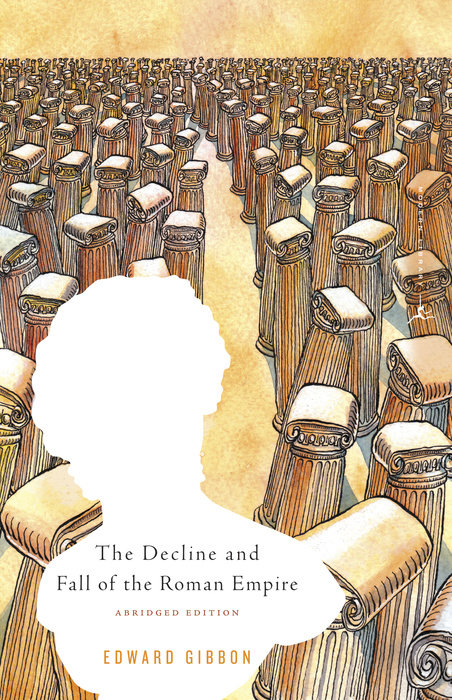
The History of the Decline and Fall of the Roman Empire (sometimes shortened to Fall of the Roman Empire) is a book of history written by the English historian Edward Gibbon. It traces the trajectory of Western civilization (as well as the Islamic and Mongolian conquests) from the height of the Roman Empire to the fall of Byzantium. The work covers the history of the Roman Empire, Europe, and the Catholic Church from 98 to 1590 and discusses the decline of the Roman Empire in the East and West. Because of its relative objectivity and heavy use of primary sources, unusual at the time, its methodology became a model for later historians. This led to Gibbon being called the first "modern historian of ancient Rome" This version includes working footnotes unobtrusively placed at the back of the book with active links for easy navigation, maps from the original book, modern maps, and links to audiobook of all volumes.

Mariam is only fifteen when she is sent to Kabul to marry the troubled and bitter Rasheed, who is thirty years her senior. Nearly two decades later, in a climate of growing unrest, tragedy strikes fifteen-year-old Laila, who must leave her home and join Mariam's unhappy household. Laila and Mariam are to find consolation in each other, their friendship to grow as deep as the bond between sisters, as strong as the ties between mother and daughter. With the passing of time comes Taliban rule over Afghanistan, the streets of Kabul loud with the sound of gunfire and bombs, life a desperate struggle against starvation, brutality and fear, the women's endurance tested beyond their worst imaginings. Yet love can move people to act in unexpected ways, lead them to overcome the most daunting obstacles with a startling heroism. In the end it is love that triumphs over death and destruction. A Thousand Splendid Suns is a portrait of a wounded country and a story of family and friendship, of an unforgiving time, an unlikely bond, and an indestructible love.

This epic tale about the effects of the Russian Revolution and its aftermath on a bourgeois family was not published in the Soviet Union until 1987. One of the results of its publication in the West was Pasternak's complete rejection by Soviet authorities; when he was awarded the Nobel Prize for Literature in 1958 he was compelled to decline it. The book quickly became an international best-seller.Dr. Yury Zhivago, Pasternak's alter ego, is a poet, philosopher, and physician whose life is disrupted by the war and by his love for Lara, the wife of a revolutionary. His artistic nature makes him vulnerable to the brutality and harshness of the Bolsheviks. The poems he writes constitute some of the most beautiful writing featured in the novel.

Ken Follett is known worldwide as the master of split-second suspense, but his most beloved and bestselling book tells the magnificent tale of a twelfth-century monk driven to do the seemingly impossible: build the greatest Gothic cathedral the world has ever known.Everything readers expect from Follett is here: intrigue, fast-paced action, and passionate romance. But what makes The Pillars of the Earth extraordinary is the time the twelfth century; the place feudal England; and the subject the building of a glorious cathedral. Follett has re-created the crude, flamboyant England of the Middle Ages in every detail. The vast forests, the walled towns, the castles, and the monasteries become a familiar landscape. Against this richly imagined and intricately interwoven backdrop, filled with the ravages of war and the rhythms of daily life, the master storyteller draws the reader irresistibly into the intertwined lives of his characters into their dreams, their labors, and their loves: Tom, the master builder; Aliena, the ravishingly beautiful noblewoman; Philip, the prior of Kingsbridge; Jack, the artist in stone; and Ellen, the woman of the forest who casts a terrifying curse. From humble stonemason to imperious monarch, each character is brought vividly to life.The building of the cathedral, with the almost eerie artistry of the unschooled stonemasons, is the center of the drama. Around the site of the construction, Follett weaves a story of betrayal, revenge, and love, which begins with the public hanging of an innocent man and ends with the humiliation of a king.For the TV tie-in edition with the same ISBN go to this Alternate Cover Edition

This is an alternative cover edition for ISBN 9780007230181England in the 1520s is a heartbeat from disaster. If the king dies without a male heir, the country could be destroyed by civil war. Henry VIII wants to annul his marriage of twenty years and marry Anne Boleyn. The pope and most of Europe opposes him. Into this impasse steps Thomas Cromwell: a wholly original man, a charmer and a bully, both idealist and opportunist, astute in reading people, and implacable in his ambition. But Henry is volatile: one day tender, one day murderous. Cromwell helps him break the opposition, but what will be the price of his triumph?

Alternate cover edition of ISBN 9780062060624.Achilles, "the best of all the Greeks," son of the cruel sea goddess Thetis and the legendary king Peleus, is strong, swift, and beautiful, irresistible to all who meet him. Patroclus is an awkward young prince, exiled from his homeland after an act of shocking violence. Brought together by chance, they forge an inseparable bond, despite risking the gods' wrath.They are trained by the centaur Chiron in the arts of war and medicine, but when word comes that Helen of Sparta has been kidnapped, all the heroes of Greece are called upon to lay siege to Troy in her name. Seduced by the promise of a glorious destiny, Achilles joins their cause, and torn between love and fear for his friend, Patroclus follows. Little do they know that the cruel Fates will test them both as never before and demand a terrible sacrifice.

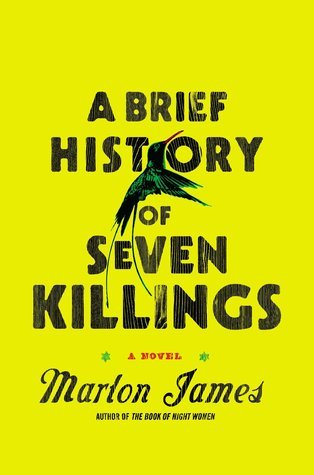
On December 3, 1976, just before the Jamaican general election and two days before Bob Marley was to play the Smile Jamaica Concert, gunmen stormed his house, machine guns blazing. The attack nearly killed the Reggae superstar, his wife, and his manager, and injured several others. Marley would go on to perform at the free concert on December 5, but he left the country the next day, not to return for two years.Deftly spanning decades and continents and peopled with a wide range of characters—assassins, journalists, drug dealers, and even ghosts—A Brief History of Seven Killings is the fictional exploration of that dangerous and unstable time and its bloody aftermath, from the streets and slums of Kingston in the 70s, to the crack wars in 80s New York, to a radically altered Jamaica in the 90s. Brilliantly inventive and stunningly ambitious, this novel is a revealing modern epic that will secure Marlon James’ place among the great literary talents of his generation.

From the #1 New York Times bestselling author and master of narrative nonfiction comes the enthralling story of the sinking of the LusitaniaOn May 1, 1915, a luxury ocean liner as richly appointed as an English country house sailed out of New York, bound for Liverpool, carrying a record number of children and infants. The passengers were anxious. Germany had declared the seas around Britain to be a war zone, and for months, its U-boats had brought terror to the North Atlantic. But the Lusitania was one of the era's great transatlantic "Greyhounds" and her captain, William Thomas Turner, placed tremendous faith in the gentlemanly strictures of warfare that for a century had kept civilian ships safe from attack. He knew, moreover, that his ship - the fastest then in service - could outrun any threat. Germany, however, was determined to change the rules of the game, and Walther Schwieger, the captain of Unterseeboot-20, was happy to oblige. Meanwhile, an ultra-secret British intelligence unit tracked Schwieger's U-boat, but told no one. As U-20 and the Lusitania made their way toward Liverpool, an array of forces both grand and achingly small - hubris, a chance fog, a closely guarded secret, and more--all converged to produce one of the great disasters of history. It is a story that many of us think we know but don't, and Erik Larson tells it thrillingly, switching between hunter and hunted while painting a larger portrait of America at the height of the Progressive Era. Full of glamour, mystery, and real-life suspense, Dead Wake brings to life a cast of evocative characters, from famed Boston bookseller Charles Lauriat to pioneering female architect Theodate Pope Riddle to President Wilson, a man lost to grief, dreading the widening war but also captivated by the prospect of new love. Gripping and important, Dead Wake captures the sheer drama and emotional power of a disaster that helped place America on the road to war.

New York, 1888. Gas lamps still flicker in the city streets, but the miracle of electric light is in its infancy. The person who controls the means to turn night into day will make history--and a vast fortune. A young untested lawyer named Paul Cravath, fresh out of Columbia Law School, takes a case that seems impossible to win. Paul's client, George Westinghouse, has been sued by Thomas Edison over a billion-dollar question: Who invented the light bulb and holds the right to power the country? The case affords Paul entry to the heady world of high society--the glittering parties in Gramercy Park mansions, and the more insidious dealings done behind closed doors. The task facing him is beyond daunting. Edison is a wily, dangerous opponent with vast resources at his disposal--private spies, newspapers in his pocket, and the backing of J. P. Morgan himself. Yet this unknown lawyer shares with his famous adversary a compulsion to win at all costs. How will he do it?In obsessive pursuit of victory, Paul crosses paths with Nikola Tesla, an eccentric, brilliant inventor who may hold the key to defeating Edison, and with Agnes Huntington, a beautiful opera singer who proves to be a flawless performer on stage and off. As Paul takes greater and greater risks, he'll find that everyone in his path is playing their own game, and no one is quite who they seem.

In the early 1900s, teenaged Sunja, the adored daughter of a crippled fisherman, falls for a wealthy stranger at the seashore near her home in Korea. He promises her the world, but when she discovers she is pregnant—and that her lover is married—she refuses to be bought. Instead, she accepts an offer of marriage from a gentle, sickly minister passing through on his way to Japan. But her decision to abandon her home, and to reject her son's powerful father, sets off a dramatic saga that will echo down through the generations. Richly told and profoundly moving, Pachinko is a story of love, sacrifice, ambition, and loyalty. From bustling street markets to the halls of Japan's finest universities to the pachinko parlors of the criminal underworld, Lee's complex and passionate characters—strong, stubborn women, devoted sisters and sons, fathers shaken by moral crisis—survive and thrive against the indifferent arc of history.

In the house of Helios, god of the sun and mightiest of the Titans, a daughter is born. But Circe is a strange child--neither powerful like her father nor viciously alluring like her mother. Turning to the world of mortals for companionship, she discovers that she does possess power: the power of witchcraft, which can transform rivals into monsters and menace the gods themselves.Threatened, Zeus banishes her to a deserted island, where she hones her occult craft, tames wild beasts, and crosses paths with many of the most famous figures in all of mythology, including the Minotaur, Daedalus and his doomed son Icarus, the murderous Medea, and, of course, wily Odysseus.But there is danger, too, for a woman who stands alone, and Circe unwittingly draws the wrath of both men and gods, ultimately finding herself pitted against one of the most terrifying and vengeful of the Olympians. To protect what she loves most, Circe must summon all her strength and choose, once and for all, whether she belongs with the gods she is born from or with the mortals she has come to love.

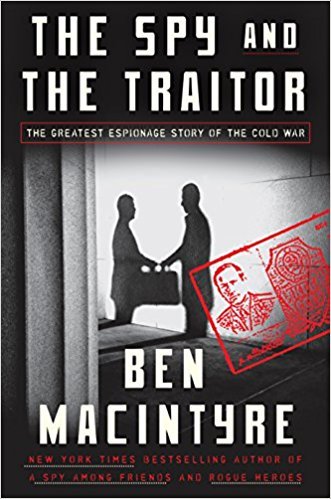
If anyone could be considered a Russian counterpart to the infamous British double-agent Kim Philby, it was Oleg Gordievsky. The son of two KGB agents and the product of the best Soviet institutions, the savvy, sophisticated Gordievsky grew to see his nation’s communism as both criminal and philistine.He took his first posting for Russian intelligence in 1968 and eventually became the Soviet Union’s top man in London, but from 1973 on he was secretly working for MI6. For nearly a decade, as the Cold War reached its twilight, Gordievsky helped the West turn the tables on the KGB, exposing Russian spies and helping to foil countless intelligence plots, as the Soviet leadership grew increasingly paranoid at the United States’s nuclear first-strike capabilities and brought the world closer to the brink of war. Desperate to keep the circle of trust close, MI6 never revealed Gordievsky’s name to its counterparts in the CIA, which in turn grew obsessed with figuring out the identity of Britain’s obviously top-level source. Their obsession ultimately doomed Gordievsky: the CIA officer assigned to identify him was none other than Aldrich Ames, the man who would become infamous for secretly spying for the Soviets.Unfolding the delicious three-way gamesmanship between America, Britain, and the Soviet Union, and culminating in the gripping cinematic beat-by-beat of Gordievsky’s nail-biting escape from Moscow in 1985, Ben Macintyre has crafted an electrifying account of an international hero. Like the greatest novels of John le Carré, The Spy and the Traitor brings readers deep into a world of treachery and betrayal, where the lines bleed between the personal and the professional, and one man’s hatred of communism had the power to change the future of nations.

The only English translation authorized by Aleksandr Solzhenitsyn First published in the Soviet journal Novy Mir in 1962, One Day in the Life of Ivan Denisovich stands as a classic of contemporary literature. The story of labor-camp inmate Ivan Denisovich Shukhov, it graphically describes his struggle to maintain his dignity in the face of communist oppression. An unforgettable portrait of the entire world of Stalin's forced work camps, One Day in the Life of Ivan Denisovich is one of the most extraordinary literary documents to have emerged from the Soviet Union and confirms Solzhenitsyn's stature as "a literary genius whose talent matches that of Dosotevsky, Turgenev, Tolstoy"--Harrison SalisburyThis unexpurgated 1991 translation by H. T. Willetts is the only authorized edition available, and fully captures the power and beauty of the original Russian.

In revealing conversations with our greatest historians, cofounder of The Carlyle Group and patriotic philanthropist David M. Rubenstein takes listeners on a sweeping journey across the grand arc of the American story.These lively dialogues present some of the biggest names in American history exploring the subjects they intimately know and understand. You’ll hear live recordings —David McCullough on John Adams —Ron Chernow on Alexander Hamilton —Walter Isaacson on Benjamin Franklin —Cokie Roberts on Founding Mothers —Doris Kearns Goodwin on Abraham Lincoln —A. Scott Berg on Charles Lindbergh —Jay Winik on Franklin D. Roosevelt and 1944 —Jean Edward Smith on Dwight D. Eisenhower —Taylor Branch on Martin Luther King —Bob Woodward on Richard Nixon —H.W. Brands on Ronald Reagan —And a special conversation with Chief Justice John Roberts Through his popular program The David Rubenstein Show, David Rubenstein has established himself as one of today’s most thoughtful interviewers. Now, in The American Story, David shares almost a dozen interviews that capture the brilliance of today’s most esteemed historians, as well as the souls of their subjects. The audiobook presents archival recordings of these interviews and features new introductions by Rubenstein as well as a foreword by Librarian of Congress Carla Hayden, the first woman and the first African American to lead our national library. Through these captivating exchanges, these bestselling and Pulitzer Prize–winning authors offer fresh insight on pivotal moments from the Founding Era to the late 20th century.

Ann Patchett, the #1 New York Times bestselling author of Commonwealth, delivers her most powerful novel to date: a richly moving story that explores the indelible bond between two siblings, the house of their childhood, and a past that will not let them go. The Dutch House is the story of a paradise lost, a tour de force that digs deeply into questions of inheritance, love and forgiveness, of how we want to see ourselves and of who we really are.At the end of the Second World War, Cyril Conroy combines luck and a single canny investment to begin an enormous real estate empire, propelling his family from poverty to enormous wealth. His first order of business is to buy the Dutch House, a lavish estate in the suburbs outside of Philadelphia. Meant as a surprise for his wife, the house sets in motion the undoing of everyone he loves.The story is told by Cyril’s son Danny, as he and his older sister, the brilliantly acerbic and self-assured Maeve, are exiled from the house where they grew up by their stepmother. The two wealthy siblings are thrown back into the poverty their parents had escaped from and find that all they have to count on is one another. It is this unshakeable bond between them that both saves their lives and thwarts their futures.Set over the course of five decades, The Dutch House is a dark fairy tale about two smart people who cannot overcome their past. Despite every outward sign of success, Danny and Maeve are only truly comfortable when they’re together. Throughout their lives they return to the well-worn story of what they’ve lost with humor and rage. But when at last they’re forced to confront the people who left them behind, the relationship between an indulged brother and his ever-protective sister is finally tested.

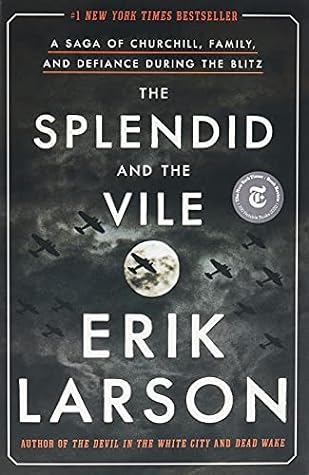
"The #1 New York Times bestselling author of The Devil in the White City and Dead Wake delivers a fresh and compelling portrait of Winston Churchill and London during the Blitz. On Winston Churchill's first day as prime minister, Hitler invaded Holland and Belgium. Poland and Czechoslovakia had already fallen, and the Dunkirk evacuation was just two weeks away. For the next twelve months, Hitler would wage a relentless bombing campaign, killing 45,000 Britons. It was up to Churchill to hold the country together and persuade President Franklin Roosevelt that Britain was a worthy ally-and willing to fight to the end. In The Splendid and the Vile, Erik Larson shows, in cinematic detail, how Churchill taught the British people "the art of being fearless." It is a story of political brinkmanship, but it's also an intimate domestic drama set against the backdrop of Churchill's prime-ministerial country home, Chequers; his wartime retreat, Ditchley, where he and his entourage go when the moon is brightest and the bombing threat is highest; and of course 10 Downing Street in London. Drawing on diaries, original archival documents, and once-secret intelligence reports-some released only recently-Larson provides a new lens on London's darkest year through the day-to-day experience of Churchill and his wife, Clementine; their youngest daughter, Mary, who chafes against her parents' wartime protectiveness; their son, Randolph, and his beautiful, unhappy wife, Pamela; Pamela's illicit lover, a dashing American emissary; and the cadre of close advisers who comprised Churchill's "Secret Circle," including his lovestruck private secretary, John Colville; newspaper baron Lord Beaverbrook; and the Rasputin-like Frederick Lindemann. The Splendid and the Vile takes readers out of today's political dysfunction and back to a time of true leadership, when-in the face of unrelenting horror-Churchill's eloquence, courage, and perseverance bound a country, and a family, together."--

From Neanderthal string to 3D knitting, an “expansive” global history that highlights “how textiles truly changed the world” (Wall Street Journal)The story of humanity is the story of textiles—as old as civilization itself. Since the first thread was spun, the need for textiles has driven technology, business, politics, and culture.In The Fabric of Civilization, Virginia Postrel synthesizes groundbreaking research from archaeology, economics, and science to reveal a surprising history. From Minoans exporting wool colored with precious purple dye to Egypt, to Romans arrayed in costly Chinese silk, the cloth trade paved the crossroads of the ancient world. Textiles funded the Renaissance and the Mughal Empire; they gave us banks and bookkeeping, Michelangelo’s David and the Taj Mahal. The cloth business spread the alphabet and arithmetic, propelled chemical research, and taught people to think in binary code. Assiduously researched and deftly narrated, The Fabric of Civilization tells the story of the world’s most influential commodity.“We are taken on a journey as epic, and varying, as the Silk Road itself.… [The Fabric of Civilization is] like a swatch of a Florentine Renaissance brocade: carefully woven, the technique precise, the colors a mix of shade and shine and an accurate representation of the whole cloth."—New York Times“Textile-making hasn’t gotten enough credit for its own sophistication, and for all the ways it undergirds human technological innovation—an error Virginia Postrel’s erudite and complete book goes a long way toward correcting at last.”—Wired

The bestselling author of A Gentleman in Moscow and Rules of Civility and master of absorbing, sophisticated fiction returns with a stylish and propulsive novel set in 1950s AmericaIn June, 1954, eighteen-year-old Emmett Watson is driven home to Nebraska by the warden of the work farm where he has just served a year for involuntary manslaughter. His mother long gone, his father recently deceased, and the family farm foreclosed upon by the bank, Emmett’s intention is to pick up his eight-year-old brother and head west where they can start their lives anew. But when the warden drives away, Emmett discovers that two friends from the work farm have hidden themselves in the trunk of the warden’s car. Together, they have hatched an altogether different plan for Emmett’s future.Spanning just ten days and told from multiple points of view, Towles’s third novel will satisfy fans of his multi-layered literary styling while providing them an array of new and richly imagined settings, characters, and themes.

In December 1937, the Japanese army invaded the ancient city of Nanking, systematically raping, torturing, and murdering more than 300,000 Chinese civilians. This book tells the story from three perspectives: of the Japanese soldiers who performed it, of the Chinese civilians who endured it, and of a group of Europeans and Americans who refused to abandon the city and were able to create a safety zone that saved many.

David Hackett Fischer, one of our most prominent historians, has garnered a reputation for making history come alive--even stories as familiar as Paul Revere's ride, or as complicated as the assimilation of British culture in North America. Now, in The Great Wave, Fischer has done it again, marshaling an astonishing array of historical facts in lucid and compelling prose to outline a history of prices--"the history of change," as Fischer puts it--covering the dazzling sweep of Western history from the medieval glory of Chartres to the modern day. Going far beyond the economic data, Fischer writes a powerful history of the people of the Western world: the economic patterns they lived in, and the politics, culture, and society that they created as a result. As he did in Albion's Seed and Paul Revere's Ride, two of the most talked-about history books in recent years, Fischer combines extensive research and meticulous scholarship with wonderfully evocative writing to create a book for scholars and general readers alike.Records of prices are more abundant than any other quantifiable data, and span the entire range of history, from tables of medieval grain prices to the overabundance of modern statistics. Fischer studies this wealth of data, creating a narrative that encompasses all of Western culture. He describes four waves of price revolutions, each beginning in a period of equilibrium: the High Middle Ages, the Renaissance, the Enlightenment, and finally the Victorian Age. Each revolution is marked by continuing inflation, a widening gap between rich and poor, increasing instability, and finally a crisis at the crest of the wave that is characterized by demographic contraction, social and political upheaval, and economic collapse. The most violent of these climaxes was the catastrophic fourteenth century, in which war, famine, and the Black Death devastated the continent--the only time in Europe's history that the population actually declined.Fischer also brilliantly illuminates how these long economic waves are closely intertwined with social and political events, affecting the very mindset of the people caught in them. The long periods of equilibrium are marked by cultural and intellectual movements--such as the Renaissance, the Enlightenment, and the Victorian Age-- based on a belief in order and harmony and in the triumph of progress and reason. By contrast, the years of price revolution created a melancholy culture of despair.Fischer suggests that we are living now in the last stages of a price revolution that has been building since the turn of the century. The destabilizing price surges and declines and the diminished expectations the United States has suffered in recent years--and the famines and wars of other areas of the globe--are typical of the crest of a price revolution. He does not attempt to predict what will happen, noting that "uncertainty about the future is an inexorable fact of our condition." Rather, he ends with a brilliant analysis of where we might go from here and what our choices are now. This book is essential reading for anyone concerned about the state of the world today.

In this groundbreaking work of science, history, and archaeology, Charles C. Mann radically alters our understanding of the Americas before the arrival of Columbus in 1492.Contrary to what so many Americans learn in school, the pre-Columbian Indians were not sparsely settled in a pristine wilderness; rather, there were huge numbers of Indians who actively molded and influenced the land around them. The astonishing Aztec capital of Tenochtitlan had running water and immaculately clean streets, and was larger than any contemporary European city. Mexican cultures created corn in a specialized breeding process that it has been called man’s first feat of genetic engineering. Indeed, Indians were not living lightly on the land but were landscaping and manipulating their world in ways that we are only now beginning to understand. Challenging and surprising, this a transformative new look at a rich and fascinating world we only thought we knew.

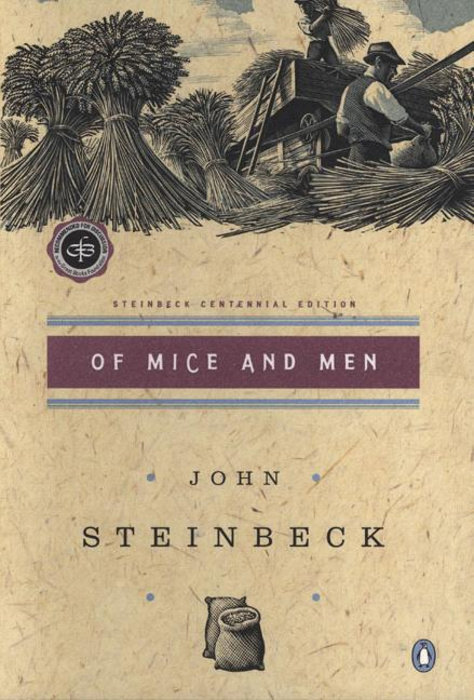
“I got you to look after me, and you got me to look after you, and that's why.” They are an unlikely pair: George is "small and quick and dark of face"; Lennie, a man of tremendous size, has the mind of a young child. Yet they have formed a "family," clinging together in the face of loneliness and alienation. Laborers in California's dusty vegetable fields, they hustle work when they can, living a hand-to-mouth existence. But George and Lennie have a plan: to own an acre of land and a shack they can call their own.While the powerlessness of the laboring class is a recurring theme in Steinbeck's work of the late 1930s, he narrowed his focus when composing Of Mice and Men, creating an intimate portrait of two men facing a world marked by petty tyranny, misunderstanding, jealousy, and callousness. But though the scope is narrow, the theme is universal: a friendship and a shared dream that makes an individual's existence meaningful.A unique perspective on life's hardships, this story has achieved the status of timeless classic due to its remarkable success as a novel, a Broadway play, and three acclaimed films.

Selected by The Modern Library as one of the 100 best nonfiction books of all timeThis classic biography is the story of seven men—a naturalist, a writer, a lover, a hunter, a ranchman, a soldier, and a politician—who merged at age forty-two to become the youngest President in history.The Rise of Theodore Roosevelt begins at the apex of his international prestige. That was on New Year’s Day, 1907, when TR, who had just won the Nobel Peace Prize, threw open the doors of the White House to the American people and shook 8,150 hands. One visitor remarked afterward, “You go to the White House, you shake hands with Roosevelt and hear him talk—and then you go home to wring the personality out of your clothes.”The rest of this book tells the story of TR’s irresistible rise to power. During the years 1858–1901, Theodore Roosevelt transformed himself from a frail, asthmatic boy into a full-blooded man. Fresh out of Harvard, he simultaneously published a distinguished work of naval history and became the fist-swinging leader of a Republican insurgency in the New York State Assembly. He chased thieves across the Badlands of North Dakota with a copy of Anna Karenina in one hand and a Winchester rifle in the other. Married to his childhood sweetheart in 1886, he became the country squire of Sagamore Hill on Long Island, a flamboyant civil service reformer in Washington, D.C., and a night-stalking police commissioner in New York City. As assistant secretary of the navy, he almost single-handedly brought about the Spanish-American War. After leading “Roosevelt’s Rough Riders” in the famous charge up San Juan Hill, Cuba, he returned home a military hero, and was rewarded with the governorship of New York. In what he called his “spare hours” he fathered six children and wrote fourteen books. By 1901, the man Senator Mark Hanna called “that damned cowboy” was vice president. Seven months later, an assassin’s bullet gave TR the national leadership he had always craved.His is a story so prodigal in its variety, so surprising in its turns of fate, that previous biographers have treated it as a series of haphazard episodes. This book, the only full study of TR’s pre-presidential years, shows that he was an inevitable chief executive. “It was as if he were subconsciously aware that he was a man of many selves,” the author writes, “and set about developing each one in turn, knowing that one day he would be President of all the people.”

Cry, the Beloved Country, the most famous and important novel in South Africa’s history, was an immediate worldwide bestseller in 1948. Alan Paton’s impassioned novel about a black man’s country under white man’s law is a work of searing beauty.Cry, the beloved country, for the unborn child that is the inheritor of our fear. Let him not love the earth too deeply. Let him not laugh too gladly when the water runs through his fingers, nor stand too silent when the setting sun makes red the veld with fire. Let him not be too moved when the birds of his land are singing, nor give too much of his heart to a mountain or valley. For fear will rob him of all if he gives too much.The eminent literary critic Lewis Gannett wrote, “We have had many novels from statesmen and reformers, almost all bad; many novels from poets, almost all thin. In Alan Paton’s Cry, the Beloved Country the statesman, the poet and the novelist meet in a unique harmony.” Cry, the Beloved Country is the deeply moving story of the Zulu pastor Stephen Kumalo and his son, Absalom, set against the background of a land and a people riven by racial injustice. Remarkable for its lyricism, unforgettable for character and incident, Cry, the Beloved Country is a classic work of love and hope, courage and endurance, born of the dignity of man.

Challenging conventional history, Amity Shlaes offers a reinterpretation of the Great Depression. She shows how both Presidents Hoover and Roosevelt failed to understand the prosperity of the 1920s and heaped massive burdens on the country that more than offset the benefit of New Deal programs.

Undoubtedly the most famous work of military history of the nineteenth century, Edward S. Creasy's Fifteen Decisive Battles of the World has been read and re-read for close to 150 years. It is not only the authoritative account of each battle that makes Creasy's work such a classic--it is his command of narrative, his interest in human struggle, his profound deductions as to effects of the battles, and his striving after truth. Furthermore, his selections seem as wise and well-considered today as when Fifteen Decisive Battles first appeared in 1851: Nobody since has made better ones, nor given us better accounts.Apart from the scholarship and literary skill of Creasy's book, there is another reason it has Creasy was essentially fair-minded. He had been a judge, and when he became England's great military critic and historian, he maintained a thoroughly judicial attitude. He was not a British partisan, nor French, nor German--he was a cosmopolitan observer of great events.Out of 2300 years, Creasy only found fifteen battles which he called decisive in the highest sense. He chose them not for the number of killed and wounded, nor for their status in myth and lore, but because they fundamentally changed the course of world history. In doing so, he made his book a miniature military history of the western world, a classic that will repay continued study for generations to come, as it has for generations.

An alternative cover edition for this ISBN can be found hereThrown in prison for a crime he has not committed, Edmond Dantes is confined to the grim fortress of If. There he learns of a great hoard of treasure hidden on the Isle of Monte Cristo and becomes determined not only to escape but to unearth the treasure and use it to plot the destruction of the three men responsible for his incarceration. A huge popular success when it was first serialized in the 1840s, Dumas was inspired by a real-life case of wrongful imprisonment when writing his epic tale of suffering and retribution.

The classic 1940 study of con men and con games that Luc Sante in Salon called “a bonanza of wild but credible stories, told concisely with deadpan humor, as sly and rich in atmosphere as anything this side of Mark Twain.” “Of all the grifters, the confidence man is the aristocrat,” wrote David Maurer, a proposition he definitely proved in The Big Con, one of the most colorful, well-researched, and entertaining works of criminology ever written. A professor of linguistics who specialized in underworld argot, Maurer won the trust of hundreds of swindlers, who let him in on not simply their language but their folkways and the astonishingly complex and elaborate schemes whereby unsuspecting marks, hooked by their own greed and dishonesty, were “taken off” – i.e. cheated—of thousands upon thousands of dollars. The Big Con is a treasure trove of American lingo (the write, the rag, the payoff, ropers, shills, the cold poke, the convincer, to put on the send) and indelible characters (Yellow Kid Weil, Barney the Patch, the Seldom Seen Kid, Limehouse Chappie, Larry the Lug). It served as the source for the Oscar-winning film The Sting.

Plutarch's Lives, written at the beginning of the second century A.D., is a social history of the ancient world by one of the greatest biographers and moralists of all time. In what is by far his most famous and influential work, Plutarch reveals the character and personality of his subjects and how they led ultimately to tragedy or victory. Richly anecdotal and full of detail, Volume I contains profiles and comparisons of Romulus and Theseus, Numa and Lycurgus, Fabius and Pericles, and many more powerful figures of ancient Greece and Rome. The present translation, originally published in 1683 in conjunction with a life of Plutarch by John Dryden, was revised in1864 by the poet and scholar Arthur Hugh Clough, whose notes and preface are also included in this edition. Publisher: Modern Library 2001 Author: Plutarch Translated by: John Dryden Volume: 1 Format: 816 pages, paperback ISBN: 9780375756764Theseus, Romulus, Lycurgus, Numa, Solon, Poplicola, Themistocles, Camillus, Pericles, Fabius, Alcibiadas, Coriolanes, Timoleon, Aemilius Paulus, Pelopidas, Marcellus, Aristides, Marcus Cato, Philopoemen, Flaminius, Pyrrhus, Caius Marius, Lysander, Sylla, Cimon, Lucullus, Nicias, Crassus

At the height of his fame Thomas Alva Edison was hailed as “the Napoleon of invention” and blazed in the public imagination as a virtual demigod. Newspapers proclaimed his genius in glowing personal profiles and quipped that “the doctor has been called” because the great man “has not invented anything since breakfast.” Starting with the first public demonstrations of the phonograph in 1878 and extending through the development of incandescent light, a power generation and distribution system to sustain it, and the first motion picture cameras—all achievements more astonishing in their time than we can easily grasp today—Edison’s name became emblematic of all the wonder and promise of the emerging age of technological marvels.But as Randall Stross makes clear in this critical biography of the man who is arguably the most globally famous of all Americans, Thomas Edison’s greatest invention may have been his own celebrity. Edison was certainly a technical genius, but Stross excavates the man from layers of myth-making and separates his true achievements from his almost equally colossal failures. How much credit should Edison receive for the various inventions that have popularly been attributed to him—and how many of them resulted from both the inspiration and the perspiration of his rivals and even his own assistants? How much of Edison’s technical skill helped him overcome a lack of business acumen and feel for consumers’ wants and needs?This bold reassessment of Edison’s life and career answers these and many other important questions while telling the story of how he came upon his most famous inventions as a young man and spent the remainder of his long life trying to conjure similar success. We also meet his partners and competitors, presidents and entertainers, his close friend Henry Ford, the wives who competed with his work for his attention, and the children who tried to thrive in his shadow—all providing a fuller view of Edison’s life and times than has ever been offered before. The Wizard of Menlo Park reveals not only how Edison worked, but how he managed his own fame, becoming the first great celebrity of the modern age.

2,300 years ago an unbeaten army of the West invaded the homeland of a fierce Eastern tribal foe. This is one soldier’s story . . .The bestselling novelist of ancient warfare returns with a riveting historical novel that re-creates Alexander the Great’s invasion of the Afghan kingdoms in 330 b.c.In a story that might have been ripped from today’s combat dispatches, Steven Pressfield brings to life the confrontation between an invading Western army and fierce Eastern warriors determined at all costs to defend their homeland. Narrated by an infantryman in Alexander’s army, The Afghan Campaign explores the challenges, both military and moral, that Alexander and his soldiers face as they embark on a new type of war and are forced to adapt to the methods of a ruthless foe that employs terror and insurgent tactics. An edge-of-your-seat adventure, The Afghan Campaign once again demonstrates Pressfield’s profound understanding of the hopes and desperation of men in battle and of the historical realities that continue to influence our world.

Christopher R. Browning’s shocking account of how a unit of average middle-aged Germans became the cold-blooded murderers of tens of thousands of Jews—now with a new afterword and additional photographs. Ordinary Men is the true story of Reserve Police Battalion 101 of the German Order Police, which was responsible for mass shootings as well as round-ups of Jewish people for deportation to Nazi death camps in Poland in 1942. Browning argues that most of the men of RPB 101 were not fanatical Nazis but, rather, ordinary middle-aged, working-class men who committed these atrocities out of a mixture of motives, including the group dynamics of conformity, deference to authority, role adaptation, and the altering of moral norms to justify their actions. Very quickly three groups emerged within the battalion: a core of eager killers, a plurality who carried out their duties reliably but without initiative, and a small minority who evaded participation in the acts of killing without diminishing the murderous efficiency of the battalion whatsoever.While this book discusses a specific Reserve Unit during WWII, the general argument Browning makes is that most people succumb to the pressures of a group setting and commit actions they would never do of their own volition. Ordinary Men is a powerful, chilling, and important work, with themes and arguments that continue to resonate today.

Staring unflinchingly into the abyss of slavery, this spellbinding novel transforms history into a story as powerful as Exodus and as intimate as a lullaby. Sethe, its protagonist, was born a slave and escaped to Ohio, but eighteen years later she is still not free. She has too many memories of Sweet Home, the beautiful farm where so many hideous things happened. And Sethe's new home is haunted by the ghost of her baby, who died nameless and whose tombstone is engraved with a single word: Beloved. Filled with bitter poetry and suspense as taut as a rope, Beloved is a towering achievement by Nobel Prize laureate Toni Morrison.

An original history of man's greatest adventure: his search to discover the world around him.

In 1918 the Great Flu Epidemic killed an estimated 40 million people virtually overnight. If such a plague returned today, taking a comparable percentage of the U.S. population with it, 1.5 million Americans would die.The fascinating, true story of the world's deadliest disease.In 1918, the Great Flu Epidemic felled the young and healthy virtually overnight. An estimated forty million people died as the epidemic raged. Children were left orphaned and families were devastated. As many American soldiers were killed by the 1918 flu as were killed in battle during World War I. And no area of the globe was safe. Eskimos living in remote outposts in the frozen tundra were sickened and killed by the flu in such numbers that entire villages were wiped out.Scientists have recently rediscovered shards of the flu virus frozen in Alaska and preserved in scraps of tissue in a government warehouse. Gina Kolata, an acclaimed reporter for "The New York Times," unravels the mystery of this lethal virus with the high drama of a great adventure story. Delving into the history of the flu and previous epidemics, detailing the science and the latest understanding of this mortal disease, Kolata addresses the prospects for a great epidemic recurring, and, most important, what can be done to prevent it.

A powerful and impassioned historical account of the largest successful revolt by enslaved people in the Haitian Revolution of 1791–1803“One of the seminal texts about the history of slavery and abolition.... Provocative and empowering.” — The New York Times Book ReviewThe Black Jacobins, by Trinidadian historian C. L. R. James, was the first major analysis of the uprising that began in the wake of the storming of the Bastille in France and became the model for liberation movements from Africa to Cuba. It is the story of the French colony of San Domingo, a place where the brutality of plantation owners toward enslaved people was horrifyingly severe.And it is the story of a charismatic and barely literate enslaved person named Toussaint L’Ouverture, who successfully led the Black people of San Domingo against successive invasions by overwhelming French, Spanish, and English forces—and in the process helped form the first independent post-colonial nation in the Caribbean.With a new introduction (2023) by Professor David Scott.

With an introduction by Rory Stewart Winner of the Guardian First Book award, a first-hand account one of the defining outrages of modern history. All at once, as it seemed, something we could have only imagined was upon us - and we could still only imagine it. This is what fascinates me most in existence: the peculiar necessity of imagining what is, in fact, real. In 1994, the Rwandan government orchestrated a campaign of extermination, in which everyone in the Hutu majority was called upon to murder everyone in the Tutsi minority. Close to a million people were slaughtered in a hundred days, and the rest of the world did nothing to stop it. A year later, Philip Gourevitch went to Rwanda to investigate the most unambiguous genocide since Hitler's war against the Jews. Hailed by the Guardian as one of the hundred greatest nonfiction books of all time, We Wish To Inform You That Tomorrow We Will Be Killed With Our Families is a first-hand account one of the defining outrages of modern history, an unforgettable anatomy of Rwanda's decimation. As riveting as it is moving, it is a profound reckoning with humanity's betrayal and its perseverance.

The armies of Persia -- a vast horde greater than any the world has ever known -- are poised to crush Greece, an island of reason and freedom in a sea of madness and tyranny. Standing between Greece and this tidal wave of destruction are a tiny detachment of but three hundred warriors. Frank Miller's epic retelling of history's supreme moment of battlefield valor is finally collected in a glorious hardcover volume in its intended format -- each two-page spread from the original comics is presented as a single undivided page.Collects: 300 #1-5

Through six turbulent months of 1934, 17-year-old Cassandra Mortmain keeps a journal, filling three notebooks with sharply funny yet poignant entries about her home, a ruined Suffolk castle, and her eccentric and penniless family. By the time the last diary shuts, there have been great changes in the Mortmain household, not the least of which is that Cassandra is deeply, hopelessly, in love.

For this novel, Scott moved far away from the setting of his own turbulent time. He went back to the late 12th century, and to England rather than the Scottish settings of all his previous novels. He connected his writing Ivanhoe with his concerns about contemporary events.Scott drew together the apparently opposing themes of historical reality and chivalric romance, social realism and high adventure, past and present.

On October 3, 1993, about a hundred U.S. soldiers were dropped by helicopter into a teeming market in the heart of Mogadishu, Somalia, to abduct two top lieutenants of a Somali warlord. The action was supposed to take an hour. Instead, they spent a long and terrible night fighting thousands of armed Somalis. By morning, eighteen Americans were dead, and more than seventy badly injured. Mark Bowden's gripping narrative is one of the most exciting accounts of modern war ever written--a riveting story that captures the heroism, courage and brutality of battle.

Both an exploration of character and a reflection on the meaning of history, Memoirs of Hadrian has received international acclaim since its first publication in France in 1951. In it, Marguerite Yourcenar reimagines the Emperor Hadrian's arduous boyhood, his triumphs and reversals, and finally, as emperor, his gradual reordering of a war-torn world, writing with the imaginative insight of a great writer of the twentieth century while crafting a prose style as elegant and precise as those of the Latin stylists of Hadrian's own era.

C'est sur un paquebot trop confortable, en route pour l'Amérique du Sud, que Stefan Zweig eut l'idée de cette odyssée biographique. Il songea aux conditions épouvantables des voyages d'autrefois, au parfum de mort salée qui flottait sur les bougres et les héros, à leur solitude. Il songea à Magellan, qui entreprit, le 20 septembre 1519, à 39 ans, le premier voyage autour du monde. Un destin exceptionnel... Sept ans de campagne militaire en Inde n'avaient rapporté à Magellan le Portugais qu'indifférence dans sa patrie. Il convainc alors le roi d'Espagne, Charles-Quint, d'un projet fou ; " Il existe un passage conduisant de l'océan Atlantique à l'océan Indien. Donnez-moi une flotte et je vous le montrerai et je ferai le tour de la terre en allant de l'est à l'ouest " (C'était compter sans l'océan Pacifique, inconnu à l'époque..). Jalousies espagnoles, erreurs cartographiques, rivalités, mutineries, désertions de ses seconds pendant la traversée, froids polaires, faim et maladies, rien ne viendra à bout de la détermination de Magellan, qui trouvera à l'extrême sud du continent américain le détroit qui porte aujourd'hui son nom. Partie de Séville avec cinq cotres et 265 hommes, l'expédition reviendra trois ans plus tard, réduite à 18 hommes sur un raffiot. Epuisée, glorieuse. Sans Magellan qui trouva une mort absurde lors d'une rixe avec des sauvages aux Philippines, son exploit accompli. Dans ce formidable roman d'aventures, Zweig exalte la volonté héroïque de Magellan, qui prouve qu'" une idée animée par le génie et portée par la passion est plus forte que tous les éléments réunis et que toujours un homme, avec sa petite vie périssable, peut faire de ce qui a paru un rêve à des centaines de générations une réalité et une vérité impérissables ".

A classic work of American literature that has not stopped changing minds and lives since it burst onto the literary scene, The Things They Carried is a ground-breaking meditation on war, memory, imagination, and the redemptive power of storytelling. The Things They Carried depicts the men of Alpha Company: Jimmy Cross, Henry Dobbins, Rat Kiley, Mitchell Sanders, Norman Bowker, Kiowa, and the character Tim O’Brien, who has survived his tour in Vietnam to become a father and writer at the age of forty-three. Taught everywhere—from high school classrooms to graduate seminars in creative writing—it has become required reading for any American and continues to challenge readers in their perceptions of fact and fiction, war and peace, courage and fear and longing. The Things They Carried won France's prestigious Prix du Meilleur Livre Etranger and the Chicago Tribune Heartland Prize; it was also a finalist for the Pulitzer Prize and the National Book Critics Circle Award.

A Simon & Schuster eBook. Simon & Schuster has a great book for every reader.

Hitler boasted that The Third Reich would last a thousand years. It lasted only 12. But those 12 years contained some of the most catastrophic events Western civilization has ever known.No other powerful empire ever bequeathed such mountains of evidence about its birth and destruction as the Third Reich. When the bitter war was over, and before the Nazis could destroy their files, the Allied demand for unconditional surrender produced an almost hour-by-hour record of the nightmare empire built by Adolph Hitler. This record included the testimony of Nazi leaders and of concentration camp inmates, the diaries of officials, transcripts of secret conferences, army orders, private letters—all the vast paperwork behind Hitler's drive to conquer the world.The famed foreign correspondent and historian William L. Shirer, who had watched and reported on the Nazis since 1925, spent five and a half years sifting through this massive documentation. The result is a monumental study that has been widely acclaimed as the definitive record of one of the most frightening chapters in the history of mankind.This worldwide bestseller has been acclaimed as the definitive book on Nazi Germany; it is a classic work.The accounts of how the United States got involved and how Hitler used Mussolini and Japan are astonishing, and the coverage of the war-from Germany's early successes to her eventual defeat-is must reading

A literary sensation and runaway bestseller, this brilliant novel presents with seamless authenticity and exquisite lyricism the true confessions of one of Japan's most celebrated geisha.In "Memoirs of a Geisha," we enter a world where appearances are paramount; where a girl's virginity is auctioned to the highest bidder; where women are trained to beguile the most powerful men; and where love is scorned as illusion. It is a unique and triumphant work of fiction - at once romantic, erotic, suspenseful - and completely unforgettable.

An alternative cover edition for this ISBN can be found here.Emily Brontë's only novel, a work of tremendous and far-reaching influence, the Penguin Classics edition of Wuthering Heights is the definitive edition of the text, edited with an introduction by Pauline Nestor. Lockwood, the new tenant of Thrushcross Grange, situated on the bleak Yorkshire moors, is forced to seek shelter one night at Wuthering Heights, the home of his landlord. There he discovers the history of the tempestuous events that took place years before; of the intense relationship between the gypsy foundling Heathcliff and Catherine Earnshaw; and how Catherine, forced to choose between passionate, tortured Heathcliff and gentle, well-bred Edgar Linton, surrendered to the expectations of her class. As Heathcliff's bitterness and vengeance at his betrayal is visited upon the next generation, their innocent heirs must struggle to escape the legacy of the past.

From Pulitzer Prize-winning author Taylor Branch, the second part of his epic trilogy on the American Civil Rights Movement.In the second volume of his three-part history, a monumental trilogy that began with Parting the Waters, winner of the Pulitzer Prize and the National Book Critics Circle Award, Taylor Branch portrays the Civil Rights Movement at its zenith, recounting the climactic struggles as they commanded the national stage.

Fair and long-legged, independent and articulate, Janie Crawford sets out to be her own person—no mean feat for a black woman in the '30s. Janie's quest for identity takes her through three marriages and into a journey back to her roots.