
Zora Neale Hurston
Novels, including Their Eyes Were Watching God (1937), and nonfiction writings of American folklorist Zora Neale Hurston give detailed accounts of African American life in the South. In 1925, Hurston, one of the leaders of the literary renaissance, happening in Harlem, produced the short-lived literary magazine Fire!! alongside Langston Hughes and Wallace Thurman shortly before she entered Barnard College. This literary movement developed into the Harlem renaissance. Hurston applied her Barnard ethnographic training to document African American folklore in her critically acclaimed book Mules and Men alongside fiction Their Eyes Were Watching God . She also assembled a folk-based performance dance group that recreated her Southern tableau with one performance on Broadway. People awarded a Guggenheim fellowship to Hurston to travel to Haiti and conduct research on conjure in 1937. Her significant work ably broke into the secret societies and exposed their use of drugs to create the Vodun trance, also a subject of study for fellow dancer-anthropologist Katherine Dunham, then at the University of Chicago. In 1954, the Pittsburgh Courier assigned Hurston, unable to sell her fiction, to cover the small-town murder trial of Ruby McCollum, the prosperous black wife of the local lottery racketeer, who had killed a racist white doctor. Hurston also contributed to Woman in the Suwanee County Jail , a book by journalist and civil rights advocate William Bradford Huie.
30 Books Written
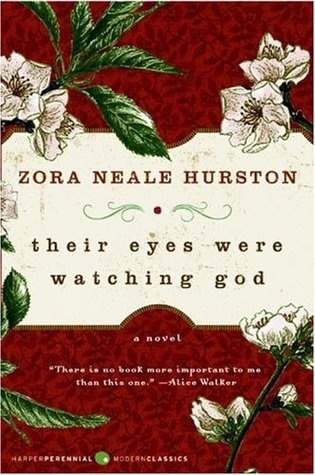
Fair and long-legged, independent and articulate, Janie Crawford sets out to be her own person—no mean feat for a black woman in the '30s. Janie's quest for identity takes her through three marriages and into a journey back to her roots.

In 1927, Zora Neale Hurston went to Plateau, Alabama, just outside Mobile, to interview eighty-six-year-old Cudjo Lewis. Of the millions of men, women, and children transported from Africa to America as slaves, Cudjo was then the only person alive to tell the story of this integral part of the nation's history. Hurston was there to record Cudjo's firsthand account of the raid that led to his capture and bondage fifty years after the Atlantic slave trade was outlawed in the United States.In 1931, Hurston returned to Plateau, the African-centric community three miles from Mobile founded by Cudjo and other former slaves from his ship. Spending more than three months there, she talked in depth with Cudjo about the details of his life. During those weeks, the young writer and the elderly formerly enslaved man ate peaches and watermelon that grew in the backyard and talked about Cudjo's past--memories from his childhood in Africa, the horrors of being captured and held in a barracoon for selection by American slavers, the harrowing experience of the Middle Passage packed with more than 100 other souls aboard the Clotilda, and the years he spent in slavery until the end of the Civil War.Based on those interviews, featuring Cudjo's unique vernacular, and written from Hurston's perspective with the compassion and singular style that have made her one of the preeminent American authors of the twentieth-century, Barracoon masterfully illustrates the tragedy of slavery and of one life forever defined by it. Offering insight into the pernicious legacy that continues to haunt us all, black and white, this poignant and powerful work is an invaluable contribution to our shared history and culture.

Dust Tracks on a Road is the bold, poignant, and funny autobiography of novelist, folklorist, and anthropologist Zora Neale Hurston, one of American literature's most compelling and influential authors. Hurston's powerful novels of the South--including Jonah's Gourd Vine and, most famously, Their Eyes Were Watching God--continue to enthrall readers with their lyrical grace, sharp detail, and captivating emotionality. First published in 1942, Dust Tracks on a Road is Hurston's personal story, told in her own words.
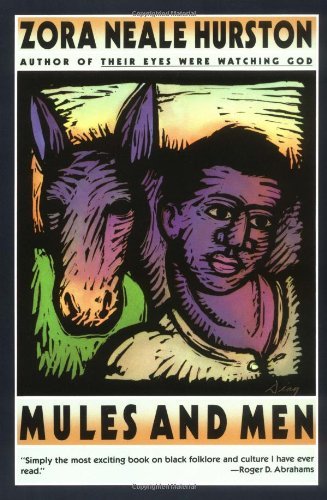
"Simply the most exciting book on black folklore and culture I have ever read." --Roger D. Abrahams Mules and Men is the first great collection of black America's folk world. In the 1930's, Zora Neale Hurston returned to her "native village" of Eatonville, Florida to record the oral histories, sermons and songs, dating back to the time of slavery, which she remembered hearing as a child. In her quest, she found herself and her history throughout these highly metaphorical folk-tales, "big old lies," and the lyrical language of song. With this collection, Zora Neale Hurston has come to reveal'and preserve'a beautiful and important part of American culture. Zora Neale Hurston (1901-1960) was a novelist, folklorist, anthropologist and playwright whose fictional and factual accounts of black heritage are unparalleled. She is also the author of Tell My Horse, Their Eyes Were Watching God, Dust Tracks on a Road, and Mule Bone . Ruby Dee , a member of the Theatre Hall of Fame, starred on Broadway in the original productions of A Raisin in the Sun and Purlie Victorious , and was featured in Spike Lee's Do the Right Thing . She is also an award-winning author and the producer of numerous television dramas.

Hitting a Straight Lick with a Crooked Stick: Stories from the Harlem Renaissance
by Zora Neale Hurston
Rating: 4.0 ⭐
A collection of remarkable stories, including eight “lost” Harlem Renaissance tales now available to a wide audience for the first time. In 1925, Barnard student Zora Neale Hurston—the sole black student at the college—was living in New York, “desperately striving for a toe-hold on the world.” During this period, she began writing short works that captured the zeitgeist of African American life and transformed her into one of the central figures of the Harlem Renaissance. Nearly a century later, this singular talent is recognized as one of the most influential and revered American artists of the modern period.Hitting a Straight Lick with a Crooked Stick is an outstanding collection of stories about love and migration, gender and class, racism and sexism that proudly reflect African American folk culture. Brought together for the first time in one volume, they include eight of Hurston’s “lost” Harlem stories, which were found in forgotten periodicals and archives. These stories challenge conceptions of Hurston as an author of rural fiction and include gems that flash with her biting, satiric humor, as well as more serious tales reflective of the cultural currents of Hurston’s world. All are timeless classics that enrich our understanding and appreciation of this exceptional writer’s voice and her contributions to America’s literary traditions.

I Love Myself When I Am Laughing And Then Again When I Am Looking Mean & Impressive
by Zora Neale Hurston
Rating: 4.4 ⭐
The most prolific African-American woman author from 1920 to 1950, Hurston was praised for her writing and condemned for her independence, arrogance, and audaciousness. This unique anthology, with fourteen superb examples of her fiction, journalism, folklore, and autobiography, rightfully establishes her as the intellectual and spiritual leader of the next generation of black writers. The original commentary by Alice Walker and Mary Helen Washington, two African-American writers in the forefront of the Hurston revival, provide illuminating insights into Hurston—the writer, and the person—as well as into American social and cultural history.

A firsthand account of the weird mysteries and horrors of voodoo. Tell My Horse is an invaluable resource and fascinating guide. Based on Zora Neale Hurston’s personal experience in Haiti and Jamaica, where she participated as an initiate rather than just an observer of voodoo practices during her visits in the 1930s, this travelogue into a dark world paints a vividly authentic picture of ceremonies and customs and superstitions of great cultural interest.

The first novel by the noted black novelist, folklorist, and anthropologist. Originally published in 1934, it was praised by Carl Sandburg as "a bold and beautiful book, many a page priceless and unforgettable."

In this 1939 novel based on the familiar story of the Exodus, Zora Neale Hurston blends the Moses of the Old Testament with the Moses of black folklore and song to create a compelling allegory of power, redemption, and faith. Narrated in a mixture of biblical rhetoric, black dialect, and colloquial English, Hurston traces Moses' life from the day he Is launched into the Nile river in a reed basket, to his development as a great magician, to his transformation into the heroic rebel leader, the Great Emancipator. From his dramatic confrontations with Pharaoh to his fragile negotiations with the wary Hebrews, this very human story is told with great humor, passion, and psychological insight--the hallmarks of Hurston as a writer and champion of black culture.

Now frequently anthologized, Zora Neale Hurston's short story "Sweat" was first published in Fire!!, a legendary literary magazine of the Harlem Renaissance, whose sole issue appeared in November 1926. Among contributions by Gwendolyn Bennett, Countee Cullen, Langston Hughes, and Wallace Thurman, "Sweat" stood out both for its artistic accomplishment and its exploration of rural Southern black life. In "Sweat" Hurston claimed the voice that animates her mature fiction, notably the 1937 novel Their Eyes Were Watching God; the themes of marital conflict and the development of spiritual consciousness were introduced as well. "Sweat" exemplifies Hurston's lifelong concern with women's relation to language and the literary possibilities of black vernacular.This casebook for the story includes an introduction by the editor, a chronology of the author's life, the authoritative text of "Sweat," and a second story, "The Gilded Six-Bits." Published in 1932, this second story was written after Hurston had spent years conducting fieldwork in the Southern United States. The volume also includes Hurston's groundbreaking 1934 essay, "Characteristics of Negro Expression," and excerpts from her autobiography, Dust Tracks on a Road. An article by folklorist Roger Abrahams provides additional cultural contexts for the story, as do selected blues and spirituals. Critical commentary comes from Alice Walker, who led the recovery of Hurston's work in the 1970s, Robert Hemenway, Henry Louis Gates, Gayl Jones, John Lowe, Kathryn Seidel, and Mary Helen Washington.

A landmark gathering of short fiction, spanning the career of Zora Neale Hurston, author of Their Eyes Were Watching God , and "one of the greatest writers of our time."--Toni Morrison

This novel of turn-of-the-century white "Florida Crackers" marks a daring departure for the author famous for her complex accounts of black culture and heritage. Full of insights into the nature of love, attraction, faith, and loyalty, Seraph on the Suwanee is the compelling story of two people at once deeply in love and deeply at odds. The heroine, young Arvay Henson, is convinced she will never find true love and happiness, and defends herself from unwanted suitors by throwing hysterical fits and professing religious fervor. Arvay meets her match, however, in handsome Jim Meserve, a bright, enterprising young man who knows that Arvay is the woman for him, and refuses to allow her to convince him otherwise. With the same passion and understanding that have made Their Eyes Were Watching God a classic, Hurston explores the evolution of a marriage full of love but very little communication and the desires of a young woman In search of herself and her place in the world.
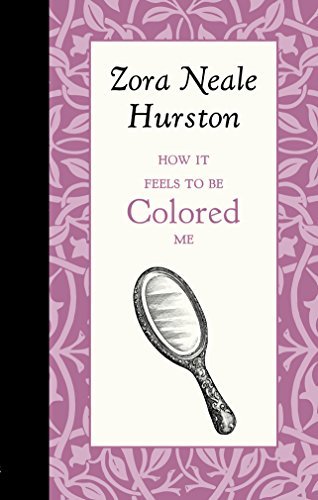
'Ik voel me het meest van kleur wanneer ik tegen een schrille witte achtergrond word geworpen.' In 1928 publiceerde auteur en antropoloog Zora Neale Hurston het essay ‘How It Feels To Be Colored Me’. Met humor en een scherpe pen schreef Hurston over haar identiteit als vrouw van kleur. Bijna honderd jaar later spreken haar woorden nog steeds tot de verbeelding van veel jonge schrijvers van kleur wiens verhalen gelezen worden als reactie op de gevestigde literaire norm. 'Soms voel ik me gediscrimineerd, maar dat maakt mij niet kwaad. Hoe kan iemand zichzelf het plezier van mijn gezelschap ontzeggen?’ In deze eerste Nederlandse vertaling van Hurstons essay worden haar provocatieve ideeën opnieuw belicht vanuit het heden door een briefwisseling tussen Simone Atangana Bekono (Hoe de eerste vonken zichtbaar waren) en de Amerikaanse dichter Kristina Kay Robinson (Mixed Company). Op weergaloze wijze verweven de twee schrijvers hun eigen verhalen. In een ontroerende reactie op Hurstons woorden vloeit er een uitwisseling voort over gemeenschap en over thuishoren, maar vooral over identiteit als een eindeloos, onvoltooid gesprek.

Spanning more than 35 years of work, the first comprehensive collection of essays, criticism, and articles by the legendary author of the Harlem Renaissance, Zora Neale Hurston, showcasing the evolution of her distinctive style as an archivist and author.You Don't Know Us Negroes is the quintessential gathering of provocative essays from one of the world's most celebrated writers, Zora Neale Hurston. Spanning more than three decades and penned during the backdrop of the birth of the Harlem Renaissance, Montgomery bus boycott, desegregation of the military, and school integration, Hurston's writing articulates the beauty and authenticity of Black life as only she could. Collectively, these essays showcase the roles enslavement and Jim Crow have played in intensifying Black people's inner lives and culture rather than destroying it. She argues that in the process of surviving, Black people re-interpreted every aspect of American culture--modif[ying] the language, mode of food preparation, practice of medicine, and most certainly religion." White supremacy prevents the world from seeing or completely recognizing Black people in their full humanity and Hurston made it her job to lift the veil and reveal the heart and soul of the race. These pages reflect Hurston as the controversial figure she was--someone who stated that feminism is a mirage and that the integration of schools did not necessarily improve the education of Black students. Also covered is the sensational trial of Ruby McCollum, a wealthy Black woman convicted in 1952 for killing her lover, a white doctor.Demonstrating the breadth of this revered and influential writer's work, You Don't Know Us Negroes and Other Essays is an invaluable chronicle of a writer's development and a window into her world and mind.

Every Tongue Got to Confess is an extensive volume of African American folklore that Zora Neale Hurston collected on her travels through the Gulf States in the late 1920s.The bittersweet and often hilarious tales -- which range from longer narratives about God, the Devil, white folk, and mistaken identity to witty one-liners -- reveal attitudes about faith, love, family, slavery, race, and community. Together, this collection of nearly 500 folktales weaves a vibrant tapestry that celebrates African American life in the rural South and represents a major part of Zora Neale Hurston's literary legacy.

When she died in poverty and obscurity in 1960, all of Zora Neale Hurston's books were out of print. Today her groundbreaking works, suffused with the culture and traditions of African-Americans and the poetry of black speech, have won her recognition as one of the most significant African-American writers. This volume, with its companion, Zora Neale Hurston: Folklore, Memoirs & Other Writings brings together for the first time all of Hurston's best writings in one authoritative set. "Folklore is the arts of the people," Hurston wrote, "before they find out that there is any such thing as art."

Zora Neale Hurston's unpublished novel revealing the historical Herod the Great—not the demon the Bible makes him out to be but a religious and philosophical man who lived a life of adventure.In the 1950s, after the publication of Moses, Man of the Mountain, Zora Neale Hurston set out to write a novel that would set the record straight about one of history's most maligned figures. If Hurston's Moses challenges the Old Testament version of the ancient Hebrew leader by suggesting that Moses was actually an Egyptian, Hurston's Herod challenges the New Testament version of the tyrant who supposedly ordered the deaths of many children in order to save the Christ-child, as recorded in the book of Matthew, by suggesting that he was actually a forerunner of Christ.From the peaks of triumph to the depths of human misery, the historical Herod "seemed to have been singled out by some deity and especially endowed to attract the zigzag lightning of fate." The intimate friend of both Marc Antony and Julius Caesar, Herod lived in times of war and expansion, where political assassinations and bribery were commonplace as the old world gave way to the new. Breaking his legacy out of a single paragraph in the Bible and into the vivid, breathing world he lived in, Hurston's unfinished manuscript brings a full person with an adventurous life into view for the first time.Scholar and literary critic Deborah Plant brings this bold, spirited novel to readers for the first time with a new introduction and editorial additions that demonstrate Hurston's point about how reimagining figures from the past addresses the troubles we experience today.


A delightful collection portraying the energy and dynamism of black culture includes the noted author's early works and follows her evolution into a literary genius and contains such stories as Muttsy, Isis, Spunk, and more.These eight stories - which include intense love stories, stories of family relationships, and insightful pictures of black life in the South - were written between 1924 and 1942. The title story won several awards when it was published in 1925.

Barracoon: Adapted for Young Readers: The Story of the Last Black Cargo
by Zora Neale Hurston
Rating: 4.2 ⭐
In the first middle grade offering from Zora Neale Hurston and Ibram X. Kendi, young readers are introduced to the remarkable and true-life story of Cudjo Lewis, one of the last survivors of the Atlantic human trade, in an adaptation of the internationally bestselling and critically acclaimed Barracoon . This is the life story of Cudjo Lewis, as told by himself. Of the millions of men, women, and children transported from Africa to America to be enslaved, eighty-six-year-old Cudjo Lewis was then the only person alive to tell the story of his capture and bondage—fifty years after the Atlantic human trade was outlawed in the United States. Cudjo shared his firsthand account with legendary folklorist, anthropologist, and writer Zora Neale Hurston. Adapted with care and delivered with age-appropriate historical context by award-winning historian Ibram X. Kendi, Cudjo’s incredible story is now available for young readers and emerging scholars. With powerful illustrations by Jazzmen Lee-Johnson, this poignant work is an invaluable contribution to our shared history and culture.

The library of America is dedicated to publishing America's best and most significant writing in handsome, enduring volumes, featuring authoritative texts. Hailed as the "finest-looking, longest-lasting editions ever made" (The New Republic), Library of America volumes make a fine gift for any occasion. Now, with exactly one hundred volumes to choose from, there is a perfect gift for everyone.

“ I mean to live and die by my own mind,” Zora Neale Hurston told the writer Countee Cullen. Arriving in Harlem in 1925 with little more than a dollar to her name, Hurston rose to become one of the central figures of the Harlem Renaissance, only to die in obscurity. Not until the 1970s was she rediscovered by Alice Walker and other admirers. Although Hurston has entered the pantheon as one of the most influential American writers of the 20th century, the true nature of her personality has proven elusive.Now, a brilliant, complicated and utterly arresting woman emerges from this landmark book. Carla Kaplan, a noted Hurston scholar, has found hundreds of revealing, previously unpublished letters for this definitive collection; she also provides extensive and illuminating commentary on Hurston’s life and work, as well as an annotated glossary of the organizations and personalities that were important to it.From her enrollment at Baltimore’s Morgan Academy in 1917, to correspondence with Marjorie Kinnan Rawlings, Langston Hughes, Dorothy West and Alain Locke, to a final query letter to her publishers in 1959, Hurston’s spirited correspondence offers an invaluable portrait of a remarkable, irrepressible talent.

1990 Jonah's Gourd Vine, Mules and Men, Their Eyes Were Watching God (P) by Zora Neale Hurston ***ISBN-13: 9780965109062 ***207 Pages

“Kendi and Yangni collaborate to introduce young children to the African American folklore tradition and to Hurston’s importance within that tradition.” — The Horn Book A First Folktale from the creators of Magnolia Flower , Zora Neale Hurston and Ibram X. Kendi, about the origin of butterflies. The Creator wuz all finished and thru makin’ de world. But soon, the Creator finds themselves flying through the sky, making gorgeous butterflies of every color, shape, and size. Find out why butterflies were made in Zora Neale Hurston's stunning and layered African American folktale retold by #1 New York Times bestselling and National Book Award–winning author Ibram X. Kendi and illustrated by Kah Yangni. This accessible and sizable board book is perfect for introducing the youngest of readers to the beauty of Hurston's storytelling and will spark curiosity in children about how things in our world came to be.

What's the shortest man you ever seen?I seen a man so short, he had to get up on a box to look over a grain of sand.And the fastest?I seen a man run so hard that he lost his feets.Back in the day, there were liars who could lie so good, you didn't even want to know the truth. And we have Zora Neale Hurston to thank for collecting their stories. In Lies and Other Tall Tales, Caldecott Honor and Coretta Scott King Honor artist Christopher Myers has created expressive collages that are as bold and wild as the whoppers Hurston encountered on her travels in the Gulf States. Here's a visual treat that will tickle your funny bone.

Three Tales."Gutsy, gritty and often very funny ... irresistible theatricality." - Michael Kuchwara, Associated Press

Copyright 1981 Turtle Island Foundation

A short play about a group of men playing poker.

Zora Neale Hurston is best remembered today for her work as a novelist, but she was also an accomplished dramatist, short story writer, and folklorist. That range of interests and styles is on full display in this collection.In “Drenched in Light,” Hurston tells the tale of a plucky, life-affirming African American girl at odds with her irritable grandmother; “Spunk” follows the conflict between two men involved in a deadly love triangle; the prize-winning play “Color Struck” tracks the impact of colorism on a group of cakewalk competitors in the Jim Crow South; and “Sweat” portrays a woman in an abusive marriage who finds deliverance through a karmic twist of fate.With their explorations of class, racism, family dysfunction, and female empowerment, these works beautifully represent both the energy of the Harlem Renaissance and the unique voice of one of its most influential contributors.Revised Previously published as Drenched in Light, Spunk, Color Struck, Sweat, this edition of Collected Early Works (AmazonClassics Edition) includes editorial revisions.
