
Plutarch
Plutarch (later named, upon becoming a Roman citizen, Lucius Mestrius Plutarchus; AD 46–AD 120) was a Greek historian, biographer, and essayist, known primarily for his Parallel Lives and Moralia. He is classified as a Middle Platonist. Plutarch's surviving works were written in Greek, but intended for both Greek and Roman readers.
32 Books Written
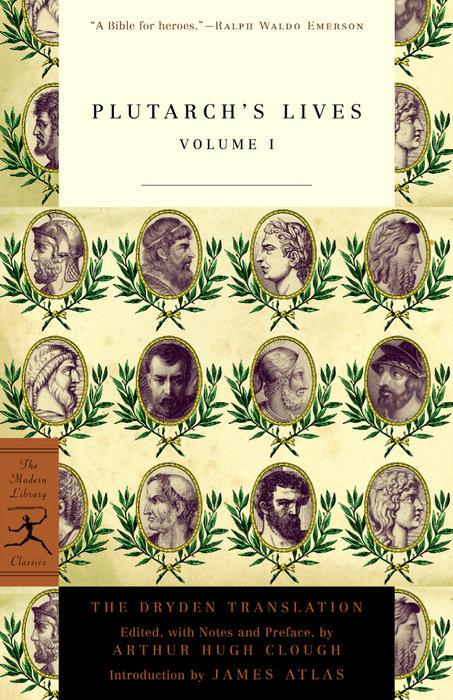
Plutarch's Lives, written at the beginning of the second century A.D., is a social history of the ancient world by one of the greatest biographers and moralists of all time. In what is by far his most famous and influential work, Plutarch reveals the character and personality of his subjects and how they led ultimately to tragedy or victory. Richly anecdotal and full of detail, Volume I contains profiles and comparisons of Romulus and Theseus, Numa and Lycurgus, Fabius and Pericles, and many more powerful figures of ancient Greece and Rome. The present translation, originally published in 1683 in conjunction with a life of Plutarch by John Dryden, was revised in1864 by the poet and scholar Arthur Hugh Clough, whose notes and preface are also included in this edition. Publisher: Modern Library 2001 Author: Plutarch Translated by: John Dryden Volume: 1 Format: 816 pages, paperback ISBN: 9780375756764Theseus, Romulus, Lycurgus, Numa, Solon, Poplicola, Themistocles, Camillus, Pericles, Fabius, Alcibiadas, Coriolanes, Timoleon, Aemilius Paulus, Pelopidas, Marcellus, Aristides, Marcus Cato, Philopoemen, Flaminius, Pyrrhus, Caius Marius, Lysander, Sylla, Cimon, Lucullus, Nicias, Crassus

Plutarch's Lives, written at the beginning of the second century A.D., is a brilliant social history of the ancient world by one of the greatest biographers and moralists of all time. In what is by far his most famous and influential work, Plutarch reveals the character and personality of his subjects and how they led ultimately to tragedy or victory. Richly anecdotal and full of detail, Volume I contains profiles and comparisons of Romulus and Theseus, Numa and Lycurgus, Fabius and Pericles, and many more powerful figures of ancient Greece and Rome.The present translation, originally published in 1683 in conjunction with a life of Plutarch by John Dryden, was revised in 1864 by the poet and scholar Arthur Hugh Clough, whose notes and preface are also included in this edition.

Selections from one of the greatest essayists of the Graeco-Roman worldPlutarch used an encyclopedic knowledge of the Roman Empire to produce a compelling and individual voice. In this superb selection from his writings, he offers personal insights into moral subjects that include the virtue of listening, the danger of flattery and the avoidance of anger, alongside more speculative essays on themes as diverse as God's slowness to punish man, the use of reason by supposedly "irrational" animals and the death of his own daughter. Brilliantly informed, these essays offer a treasure-trove of ancient wisdom, myth and philosophy, and a powerful insight into a deeply intelligent man.For more than seventy years, Penguin has been the leading publisher of classic literature in the English-speaking world. With more than 1,700 titles, Penguin Classics represents a global bookshelf of the best works throughout history and across genres and disciplines. Readers trust the series to provide authoritative texts enhanced by introductions and notes by distinguished scholars and contemporary authors, as well as up-to-date translations by award-winning translators.

Nine biographies that illuminate the careers, personalities and military campaigns of some of Rome's greatest statesmenThe lives of the statesmen featured in this collection span the earliest days of the Republic to the establishment of the Empire. Selected from Plutarch's Roman Lives , they include prominent figures who achieved fame for their pivotal roles in Roman history, such as soldierly Marcellus, eloquent Cato and cautious Fabius. Here too are vivid portraits of ambitious, hot-tempered Coriolanus; objective, principled Brutus and open-hearted Mark Anthony, who would later be brought to life by Shakespeare. In recounting the lives of these great leaders, Plutarch also explores the problems of statecraft and power and illustrates the Roman people's genius for political compromise, which led to their mastery of the ancient world.For more than seventy years, Penguin has been the leading publisher of classic literature in the English-speaking world. With more than 1,700 titles, Penguin Classics represents a global bookshelf of the best works throughout history and across genres and disciplines. Readers trust the series to provide authoritative texts enhanced by introductions and notes by distinguished scholars and contemporary authors, as well as up-to-date translations by award-winning translators.

Plutarch's vivid and engaging portraits of the Spartans and their customs are a major source of our knowledge about the rise and fall of this remarkable Greek city-state between the sixth and third centuries BC. Through his Lives of Sparta's leaders and his recording of memorable Spartan Sayings he depicts a people who lived frugally and mastered their emotions in all aspects of life, who also disposed of unhealthy babies in a deep chasm, introduced a gruelling regime of military training for boys, and treated their serfs brutally. Rich in anecdote and detail, Plutarch's writing brings to life the personalities and achievements of Sparta with unparalleled flair and humanity.Lives: Lycurgus, Agesilaus, Agis, Cleomenes. Sayings: sayings of Spartans, sayings of Spartan Women. Appendix: Xenephon: Spartan Society

Rome's famed historian illuminates the twilight of the old Roman Republic from 157 to 43 BC in succinct accounts of the greatest politicians and statesmen of the classical period. Includes a new introduction, a new essay on the revised Plutarch editions, notes, a glossary, and updated suggestions for further reading Marius, Sulla, Crassus, Pompey, Caesar, Cicero

The nine Lives in this selection trace a crucial phase in ancient history.Plutarch's Lives of the great Greek statesmen amd men of action were designed to pair with the now better-known Roman portraits and contain many of his finest descriptions of war, revolution and heroic achievement.Agesilaus, Pelopidas, Dion, Timoleon, Demosthenes, Phocion, Alexander, Demetrius, Pyrrhus

Plutarch's Parallel Lives is a series of biographies, arranged in pairs illuminating virtues & vices. Surviving Lives contain 23 pairs, each with a Greek & a Roman Life, & 4 unpaired Lives. As explained in the opening of his Life of Alexander, he wasn't concerned with history so much as the influence of character on life & destiny. Whereas sometimes he barely touched on great events, he devoted much space to anecdote & incidental triviality, this often telling more about his subjects than their famous accomplishments. He sought to provide rounded portraits, likening his craft to painting. Indeed, he went to great (often tenuous) length to draw parallels between physical appearance & character. He's amongst the earliest moral philosophers. Some of the Lives, like those of Heracles, Philip II of Macedon & Scipio Africanus, are lost. Many remaining Lives are truncated, contain lacunae or have been tampered with. Extant are those on Solon, Themistocles, Aristides, Pericles, Alcibiades, Nicias, Demosthenes, Pelopidas, Philopoemen, Timoleon, Dion of Syracuse, Alexander the Great, Pyrrhus of Epirus, Romulus, Numa Pompilius, Coriolanus, Theseus, Aemilius Paullus, Tiberius Gracchus, Gaius Gracchus, Gaius Marius, Sulla, Sertorius, Lucullus, Pompey, Julius Caesar, Cicero, Cato the Younger, Mark Antony & Marcus Junius Brutus.

Plutarch's Greek Lives can be seen as a summing up of the classical Greek age and its great writers.The nine Lives translated here and arranged in chronological order follow the history of Athens from the legendary times of Theseus, the city's founder, to its defeat at the hands of Lysander, its Spartan conqueror. Included in this selection are the biographies of Themistocles, a brilliant but heavy-handed naval commander, Aristides 'the Just' and Pericles, who was responsible for the buildings on the Acropolis. Plutarch's real interest in these men is not in the greatness of their victories or achievements but in their moral strengths, and for him responsibility for the eventual fall of Athens lay with the weakness and ambition of its great men.Varying in historical accuracy, these accounts are nevertheless rich in anecdote, and Plutarch's skill as a social historian and his fascination with personal idiosyncracies make them of timeless interest.

Le Vite non ambivano alla completezza ''monumentale'', propria della storiografia, ma alla comprensione etica dei personaggi, propria della biografia (dalla prefazione di Carlo Franco).

'I treat the narrative of the Lives as a kind of mirror...The experience is like nothing so much as spending time in their company and living with them: I receive and welcome each of them in turn as my guest.' In the eight lives of this collection Plutarch introduces the reader to the major figures and periods of classical Rome. He portrays virtues to be emulated and vices to be avoided, but his purpose is also implicitly to educate and warn those in his own day who wielded power. In prose that is rich, elegant and sprinkled with learned references, he explores with an extraordinary degree of insight the interplay of character and political action. While drawing chiefly on historical sources, he brings to biography a natural story-teller's ear for a good anecdote. Throughout the ages Plutarch's Lives have been valued for their historical value and their charm. This new translation will introduce new generations to his urbane erudition. The most comprehensive selection available, it is accompanied by a lucid introduction, explanatory notes, bibliographies, maps and indexes.Aemilius Paulus, Tiberius Gracchus and Gaius Grachus, Marius, Sulla, Pompey, Caesar, Marc Anthony

Here, Plutarch introduces the major figures and periods of classical Greece, detailing the lives of nine personages, including Lycurgus, Solon, Themistocles, Cimon, Alexander, Pericles, Nicias, Alcibiades, and Agesilaus. Oxford presents the most comprehensive selection available, superblytranslated and accompanied by a lucid introduction, explanatory notes, bibliographies, maps, and indexes.

Timeless advice on how to be a successful leader in any fieldThe ancient biographer and essayist Plutarch thought deeply about the leadership qualities of the eminent Greeks and Romans he profiled in his famous--and massive--Lives, including politicians and generals such as Pericles, Alexander the Great, Julius Caesar, and Mark Antony. Luckily for us, Plutarch distilled what he learned about wise leadership in a handful of essays, which are filled with essential lessons for experienced and aspiring leaders in any field today. In How to Be a Leader, Jefferey Beneker presents the most important of these essays in lively new translations accompanied by an enlightening introduction, informative notes, and the original Greek on facing pages.In "To an Uneducated Leader," "How to Be a Good Leader," and "Should an Old Man Engage in Politics?" Plutarch explains the characteristics of successful leaders, from being guided by reason and exercising self-control to being free from envy and the love of power, illustrating his points with memorable examples drawn from legendary Greco-Roman lives. He also explains how to train for leadership, persuade and deal with colleagues, manage one's career, and much more.Writing at the height of the Roman Empire, Plutarch suggested that people should pursue positions of leadership only if they are motivated by "judgment and reason"--not "rashly inspired by the vain pursuit of glory, a sense of rivalry, or a lack of other meaningful activities." His wise counsel remains as relevant as ever.

Plutarkhos (46-119?): Eserleri 16. yüzyıldan 19. yüzyıla kadar Avrupa’da tarih ve deneme yazımını büyük ölçüde etkileyen çok verimli bir yazardır. Plutarkhos’un Lamprias adlı kataloga göre 227 eseri vardı. Ahlak, din, doğa, politika ve sanat üzerine yazdıklarından günümüze ulaşanlar Ethika adıyla anılır. Yazar asıl ününü Yunan ve Romalı kahramanları birbiriyle karşılaştırdığı Paralel Hayatlar adlı biyografik eseriyle kazanmıştır. Bu eserde bir insanın kişiliğinin kendi kaderine ve başka insanların yaşamlarına olan etkilerini birbirine bağlanmaya çalışmıştır. Lykurgos’un Hayatı bu büyük eserin bir bölümüdür.Sabahattin Eyüboğlu (1909-1973); Hasan Âli Yücel’in kurduğu Tercüme Bürosu’nun başkan yardımcısı ve Cumhuriyet döneminin en önemli kültür insanlarından biridir.Vedat Günyol (1911-2004); Kültür tarihimizin Tercüme Bürosu ruhunu, sonraki dönemlerde yayıncısı olduğu Yeni Ufuklar dergisi ve Çan Yayınları’yla sürdüren en önemli aydınlarından biridir.

Miten löytää mielenrauha, kun maailma kuohuu ja elämässä voi tapahtua mitä tahansa? Kysymystä pohti kreikkalainen filosofi Plutarkhos kaksituhatta vuotta sitten. Juhana Torkin muinaiskreikasta suomentamat tekstit koskettavat vahvasti nykyihmistä. Miten ottaa viisaasti vastaan kohtalon kolhut? Miten hallita omia tunteitaan? Miten säilyttää mielenrauha tiedon tulvassa? Entä miten kestää koettelemuksista kovin, läheisen kuolema? Kun globaali maailma kuohuu ja etsii suuntaansa, viisaan ja lempeän filosofin opit ovat jopa ajankohtaisempia kuin kirjoitushetkellään.

This work has been selected by scholars as being culturally important, and is part of the knowledge base of civilization as we know it. This work was reproduced from the original artifact, and remains as true to the original work as possible. Therefore, you will see the original copyright references, library stamps (as most of these works have been housed in our most important libraries around the world), and other notations in the work.This work is in the public domain in the United States of America, and possibly other nations. Within the United States, you may freely copy and distribute this work, as no entity (individual or corporate) has a copyright on the body of the work.As a reproduction of a historical artifact, this work may contain missing or blurred pages, poor pictures, errant marks, etc. Scholars believe, and we concur, that this work is important enough to be preserved, reproduced, and made generally available to the public. We appreciate your support of the preservation process, and thank you for being an important part of keeping this knowledge alive and relevant.

“Plutarch regularly shows that great leaders transcend their own purely material interests and petty, personal vanities. Noble ideals actually do matter, in government as in life.” ―Michael Dirda, Washington Post Pompey, Caesar, Cicero, Brutus, Antony: the names still resonate across thousands of years. Major figures in the civil wars that brutally ended the Roman republic, their lives pose a question that haunts us still: how to safeguard a republic from the flaws of its leaders. This reader’s edition of Plutarch delivers a fresh translation of notable clarity, explanatory notes, and ample historical context in the Preface and Introduction. 5 maps

Qualsiasi discorso è nullo se non è ben inteso. L’ascolto, spesso sottovalutato, è infatti una metà fondamentale dell’atto della comunicazione.In questo manuale, tratto dai Moralia, Plutarco elargisce consigli di virtù, ma anche esempi di vizi che toccano uno degli aspetti più importanti della vita umana. Perché l'arroganza, l'odio, la presunzione e la smania di protagonismo inquinano la nostra disposizione verso l'altro e le sue ragioni. Dedicata a Nicandro, in occasione del suo ingresso nell’età virile, l'operetta si rivolge ai giovani, affinché sappiano maturare senza cedere al disordine delle emozioni, ma in ogni cosa cercando la pacatezza e la riflessione. Plutarco cita gli antichi filosofi, racconta aneddoti, riporta versi di Omero, mette in guardia contro le belle parole vuote, contro i discorsi apparentemente affascinanti ma privi di sostanza, usati per abbindolare gli ingenui e coloro, appunto, che non sanno ascoltare.

Great classics of philosophy revisited for an easier interpretation seriesWho among us does not have rivals? Plutarch writes about it as easily as only great communicators do, and explains how to treat those who are not on our side. In "De capienda former inimicis utilitate": "How to profit by one’s enemies," the great philosopher introduces his thought with irony but also with overwhelming logic, revealing an infallible system for winning in a confrontation with one’s enemies. Rules conceived long ago, but which are relevant more than ever. A great help to improve our relationships with others. THE AUTHOR Plutarch was a writer and philosopher in ancient Greece. He was born at Chaeronea, in Southern Greece sometime around AD, during the domination of the Roman Empire. Later, he moved to Athens and began his studies in philosophy and mathematics. He travelled a lot, in Asia and then Rome, where, thanks to his prestige, he gained honorary positions which he held once back in Greece. His works are numerous and they reveal his huge culture; Plutarch wrote about everything, driven by his curiosity and the desire to investigate human nature and the human mind from every angle. His subjects, still incredibly relevant today, inspired famous authors such as Shakespeare, Alfieri and De Montaigne.

This is a reproduction of a book published before 1923. This book may have occasional imperfections such as missing or blurred pages, poor pictures, errant marks, etc. that were either part of the original artifact, or were introduced by the scanning process. We believe this work is culturally important, and despite the imperfections, have elected to bring it back into print as part of our continuing commitment to the preservation of printed works worldwide. We appreciate your understanding of the imperfections in the preservation process, and hope you enjoy this valuable book.

A pesar de tener apariencias variadas y utilizar palabras diferentes, las religiones manifiestan una única verdad, común a todos los hombres. Tal es la concepción religiosa del neopitagórico Plutarco que con su De Iside et Osiride ha rescatado para la posteridad los secretos de los misterios iniciáticos de Isis y Osiris. Gran viajero, conoció Italia, Grecia y Egipto donde frecuentó las escuelas de misterios. Imprescindible para comprender el espíritu egipcio, esta obra se ha convertido en uno de los textos básicos del esoterismo occidental.

Plutarkhos (46-119?): Eserleri 16. yüzyıldan 19. yüzyıla kadar Avrupa’da tarih ve deneme yazımını büyük ölçüde etkileyen çok verimli bir yazardır. Plutarkhos’un Lamprias adlı kataloga göre 227 eseri vardı. Ahlak, din, doğa, politika ve sanat üzerine yazdıklarından günümüze ulaşanlar Ethika adıyla anılır. Plutarkhos asıl ününü Yunan ve Romalı kahramanları birbiriyle karşılaştırdığı Paralel Hayatlar adlı biyografik eseriyle kazanmıştır. Bu eserde bir insanın kişiliğinin kendi kaderine ve başka insanların yaşamlarına olan etkilerini birbirine bağlamaya çalışır. Demosthenes – Cicero ikilisinde tarihin en ünlü iki hatip devlet adamı ele alınır, kişilik özellikleri, yaşamları ve kaderleri karşılaştırılır.

Raccoglie tre trattatelli del classico greco: il primo espone la tesi che mangiare carne vada contro la natura dell'uomo; il secondo e il terzo, "Le bestie sono provviste di ragione", documentano la conoscenza del mondo animale propria degli antichi.

Plutarkhos (46-119?): Eserleri 16. yüzyıldan 19. yüzyıla kadar Avrupa'da tarih ve deneme yazımını büyük ölçüde etkileyen çok verimli bir yazardır. Plutarkhos'un Lamprias adlı kataloga göre 227 eseri vardı. Ahlak, din, doğa, politika ve sanat üzerine yazdıklarından günümüze ulaşanlar Ethika adıyla anılır.Plutarkhos asıl ününü Yunan ve Romalı kahramanları birbiriyle karşılaştırdığı Paralel Hayatlar adlı eseriyle kazanmıştır. Bu eserde bir insanın kişiliğinin kendi kaderine ve başka insanların yaşamlarına olan etkilerini birbirine bağlanmaya çalışmıştır. Atina'nın kurucusu Theseus ile Roma'nın kurucusu Romulus'u konu edinen ve karşılaştıran Theseus-Romulus çifti Paralel Hayatlar'ın en önemli bölümlerinden biridir.

Plutarch's Lives of Themistocles; Pericles; Aristides; Alcibiades and Coriolanus; Comparison of Alcibiades with Coriolanus; Demosthenes; and Cicero; Comparison of Demosthenes and Cicero; Caesar and Antony. In the translation called Dryden's corrected and revised by Arthur Hugh Clough with introductions and notes.

Romulus, Numa, Publicola, Coriolanus, Fabius Maximus, Marcellus, Philopoemen, Titus Flaminius, Elder Cato, Aemilius Paulus,The biographies collected in this volume bring together Plutarch's Lives of those great men who established the city of Rome and consolidated its supremacy, and his Comparisons with their notable Greek counterparts. Here he pairs Romulus, mythical founder of Rome, with Theseus, who brought Athens to power, and compares the admirable Numa and Lycurgus for bringing order to their communities, while Titus Flamininus and Philopoemen are portrayed as champions of freedom. As well as providing an illuminating picture of the first century AD, Plutarch depicts complex and nuanced heroes who display the essential virtues of Greek civilization - courage, patriotism, justice, intelligence and reason - that contributed to the rise of Rome.These new and revised translations by W. Jeffrey Tatum and Ian Scott-Kilvert capture Plutarch's elegant prose and narrative flair. This edition also includes a general introduction, individual introductions to each of the Lives and Comparisons, further reading and notes.The Rise of Rome is the penultimate title in Penguin Classics' complete revised Plutarch in six volumes. Other titles include Rome In Crisis, On Sparta, Fall of the Roman Republic, The Age of Alexander and The Rise and Fall of Athens (forthcoming 2014).

From an intimate and moving letter to his grieving wife on the death of their daughter, to elegant writings on morality, happiness and the avoidance of anger, Plutarch’s powerful words of consolation and inspiration still offer timeless wisdom and guidance today.Throughout history, some books have changed the world. They have transformed the way we see ourselves – and each other. They have inspired debate, dissent, war and revolution. They have enlightened, outraged, provoked and comforted. They have enriched lives – and destroyed them. Now Penguin brings you the works of the great thinkers, pioneers, radicals and visionaries whose ideas shook civilization and helped make us who we are.

Plutarch's classic biography of the legendary law giver. Translated by John Dryden.

Plutarch (Plutarchus), ca. 45–120 CE, was born at Chaeronea in Boeotia in central Greece, studied philosophy at Athens, and, after coming to Rome as a teacher in philosophy, was given consular rank by the emperor Trajan and a procuratorship in Greece by Hadrian. He was married and the father of one daughter and four sons. He appears as a man of kindly character and independent thought, studious and learned.Plutarch wrote on many subjects. Most popular have always been the 46 Parallel Lives, biographies planned to be ethical examples in pairs (in each pair, one Greek figure and one similar Roman), though the last four lives are single. All are invaluable sources of our knowledge of the lives and characters of Greek and Roman statesmen, soldiers and orators. Plutarch’s many other varied extant works, about 60 in number, are known as Moralia or Moral Essays. They are of high literary value, besides being of great use to people interested in philosophy, ethics, and religion.The Loeb Classical Library edition of the Lives is in eleven volumes.

Lives, Volume I: Theseus and Romulus. Lycurgus and Numa. Solon and Publicola
by Plutarch
Rating: 4.1 ⭐
Plutarch (Plutarchus), ca. 45–120 CE, was born at Chaeronea in Boeotia in central Greece, studied philosophy at Athens, and, after coming to Rome as a teacher in philosophy, was given consular rank by the emperor Trajan and a procuratorship in Greece by Hadrian. He was married and the father of one daughter and four sons. He appears as a man of kindly character and independent thought, studious and learned.Plutarch wrote on many subjects. Most popular have always been the 46 Parallel Lives, biographies planned to be ethical examples in pairs (in each pair, one Greek figure and one similar Roman), though the last four lives are single. All are invaluable sources of our knowledge of the lives and characters of Greek and Roman statesmen, soldiers and orators. Plutarch's many other varied extant works, about 60 in number, are known as Moralia or Moral Essays. They are of high literary value, besides being of great use to people interested in philosophy, ethics and religion.The Loeb Classical Library edition of the Lives is in eleven volumes.

Although Plutarch did not intend his Lives as a historical record, they sometimes furnish the best account we have of events in classical Greece. In many instances they are the only account available to those exploring ancient history through primary sources.In this compilation from Plutarch's Greek Lives, James Romm gathers the material of greatest historical significance from fifteen biographies, ranging from Theseus in earliest times to Phocion in the late fourth century BCE. While preserving the outlines of Plutarch's character portraits, Romm focuses on the central stories of classical Greece: the rivalry between Athens, Sparta, and Thebes, the rise of Macedon, and the conflicts between these European states and the Achaemenid Persian empire. Bridging Plutarch’s gaps with concise summaries, Romm creates a coherent narrative of the classical Greek world.This edition features the elegant new translation of Pamela Mensch. Footnotes provide the historical context often omitted by Plutarch and plentiful and detailed cross-references. Also included are a bibliography, maps, a chronological chart, a glossary, and an index.

Ces textes mettent en avant des valeurs et des vertus qui aident chacun à vivre et à prendre sa place, en toute plénitude, dans la société d'aujourd'hui. Une anthologie non exhaustive, mais pertinente, étonnante, accessible.