
William H. McNeill
William Hardy McNeill was a historian and author, noted for his argument that contact and exchange among civilizations is what drives human history forward, first postulated in The Rise of the West (1963). He was the Robert A. Milikan Distinguished Service Professor Emeritus of History at the University of Chicago, where he taught from 1947 until his retirement in 1987. In addition to winning the U.S. National Book Award in History and Biography in 1964 for The Rise of the West, McNeill received several other awards and honors. In 1985 he served as president of the American Historical Association. In 1996, McNeill won the prestigious Erasmus Prize, which the Crown Prince of the Netherlands Willem-Alexander presented to him at Amsterdam's Royal Palace. In 1999, Modern Library named The Rise of the West of the 100 Best Nonfiction Books of the 20th century. In 2009, he won the National Humanities Medal. In February 2010, President Barack Obama, a former University of Chicago professor himself, awarded McNeill the National Humanities Medal to recognize "his exceptional talent as a teacher and scholar at the University of Chicago and as an author of more than 20 books, including The Rise of the West: A History of the Human Community (1963), which traces civilizations through 5,000 years of recorded history".
28 Books Written

Upon its original publication, Plagues and Peoples was an immediate critical and popular success, offering a radically new interpretation of world history as seen through the extraordinary impact--political, demographic, ecological, and psychological--of disease on cultures. From the conquest of Mexico by smallpox as much as by the Spanish, to the bubonic plague in China, to the typhoid epidemic in Europe, the history of disease is the history of humankind. With the identification of AIDS in the early 1980s, another chapter has been added to this chronicle of events, which William McNeill explores in his new introduction to this updated editon.Thought-provoking, well-researched, and compulsively readable, Plagues and Peoples is that rare book that is as fascinating as it is scholarly, as intriguing as it is enlightening. "A brilliantly conceptualized and challenging achievement" (Kirkus Reviews), it is essential reading, offering a new perspective on human history.From the Trade Paperback edition.

The Rise of the West: A History of the Human Community; with a Retrospective Essay
by William H. McNeill
Rating: 4.1 ⭐
• 2 recommendations ❤️
The Rise of the West , winner of the National Book Award for history in 1964, is famous for its ambitious scope and intellectual rigor. In it, McNeill challenges the Spengler-Toynbee view that a number of separate civilizations pursued essentially independent careers, and argues instead that human cultures interacted at every stage of their history. The author suggests that from the Neolithic beginnings of grain agriculture to the present major social changes in all parts of the world were triggered by new or newly important foreign stimuli, and he presents a persuasive narrative of world history to support this claim.In a retrospective essay titled " The Rise of the West after Twenty-five Years," McNeill shows how his book was shaped by the time and place in which it was written (1954-63). He discusses how historiography subsequently developed and suggests how his portrait of the world's past in The Rise of the West should be revised to reflect these changes."This is not only the most learned and the most intelligent, it is also the most stimulating and fascinating book that has ever set out to recount and explain the whole history of mankind. . . . To read it is a great experience. It leaves echoes to reverberate, and seeds to germinate in the mind."—H. R. Trevor-Roper, New York Times Book Review

s/t: Technology, Armed Force & Society since AD 1000In this magnificent synthesis of military, technological, and social history, William H. McNeill explores a whole millennium of human upheaval and traces the path by which we have arrived at the frightening dilemmas that now confront us. McNeill moves with equal mastery from the crossbow—banned by the Church in 1139 as too lethal for Christians to use against one another—to the nuclear missile, from the sociological consequences of drill in the seventeenth century to the emergence of the military-industrial complex in the twentieth. His central argument is that a commercial transformation of world society in the eleventh century caused military activity to respond increasingly to market forces as well as to the commands of rulers. Only in our own time, suggests McNeill, are command economies replacing the market control of large-scale human effort. The Pursuit of Power does not solve the problems of the present, but its discoveries, hypotheses, and sheer breadth of learning do offer a perspective on our current fears and, as McNeill hopes, "a ground for wiser action." "No summary can do justice to McNeill's intricate, encyclopedic treatment. . . . McNeill's erudition is stunning, as he moves easily from European to Chinese and Islamic cultures and from military and technological to socio-economic and political developments. The result is a grand synthesis of sweeping proportions and interdisciplinary character that tells us almost as much about the history of butter as the history of guns. . . . McNeill's larger accomplishment is to remind us that all humankind has a shared past and, particularly with regard to its choice of weapons and warfare, a shared stake in the future."—Stuart Rochester, Washington Post Book World "Mr. McNeill's comprehensiveness and sensitivity do for the reader what Henry James said that Turgenev's conversation did for him: they suggest 'all sorts of valuable things.' This narrative of rationality applied to irrational purposes and of ingenuity cannibalizing itself is a work of clarity, which delineates mysteries. The greatest of them, to my mind, is why human beings have never learned to cherish their own species."—Naomi Bliven, The New Yorker

Global in scope, William McNeill's widely acclaimed one-volume history emphasizes the four Old World civilizations of the Middle East, India, China, and Europe, paying particular attention to their interaction across time as well as the impact on historical scholarship in light of the most recent archaeological discoveries. The engaging and informative narrative touches on all aspects of civilization, including geography, communication, and technological and artistic developments, and provides extensive coverage of the modern era. This new edition includes a thoroughly updated bibliographic essay and a new discussion of the most significant events in world history and civilization since 1976.

Could something as simple and seemingly natural as falling into step have marked us for evolutionary success? In Keeping Together in Time one of the most widely read and respected historians in America pursues the possibility that coordinated rhythmic movement--and the shared feelings it evokes--has been a powerful force in holding human groups together.As he has done for historical phenomena as diverse as warfare, plague, and the pursuit of power, William H. McNeill brings a dazzling breadth and depth of knowledge to his study of dance and drill in human history. From the records of distant and ancient peoples to the latest findings of the life sciences, he discovers evidence that rhythmic movement has played a profound role in creating and sustaining human communities. The behavior of chimpanzees, festival village dances, the close-order drill of early modern Europe, the ecstatic dance-trances of shamans and dervishes, the goose-stepping Nazi formations, the morning exercises of factory workers in Japan--all these and many more figure in the bold picture McNeill draws. A sense of community is the key, and shared movement, whether dance or military drill, is its mainspring. McNeill focuses on the visceral and emotional sensations such movement arouses, particularly the euphoric fellow-feeling he calls "muscular bonding." These sensations, he suggests, endow groups with a capacity for cooperation, which in turn improves their chance of survival.A tour de force of imagination and scholarship, Keeping Together in Time reveals the muscular, rhythmic dimension of human solidarity. Its lessons will serve us well as we contemplate the future of the human community and of our various local communities.

Renowned historian William H. McNeil provides a brilliant narrative chronology of the development of Western civilization, representing its socio-political as well as cultural aspects. This sixth edition includes new material for the twentieth-century period and completely revised bibliographies. An invaluable tool for the study of Western civilization, the Handbook is an essential complement to readings in primary and secondary sources such as those in the nine-volume University of Chicago Readings in Western Civilization .

Europe's Steppe Frontier, 1500-1800: A Study of the Eastward Movement in Europe
by William H. McNeill
Rating: 3.8 ⭐
In Europe’s Steppe Frontier , acclaimed historian William H. McNeill analyzes the process whereby the thinly occupied grasslands of southeastern Europe were incorporated into the bodies-social of three great the Ottoman, the Austrian, and the Russian. McNeill benefits from a New World detachment from the bitter nationality quarrels of the late nineteenth and early twentieth century which inspired but also blinded most of the historians of the region. Moreover, the unique institutional adjustments southeastern Europeans made to the frontier challenge cast indirect light upon the peculiarities of the North American frontier experience.

In this magisterial history, National Book Award winner William H. McNeill chronicles the interactions and disputes between Latin Christians and the Orthodox communities of eastern Europe during the period 1081â 1797. Concentrating on Venice as the hinge of European history in the late medieval and early modern period, McNeill explores the technological, economic, and political bases of Venetian power and wealth, and the cityâ s unique status at the frontier between the papal and Orthodox Christian worlds. He pays particular attention to Venetian influence upon southeastern Europe, and from such an angle of vision, the familiar pattern of European history changes shape.â No other historian would have been capable of writing a book as direct, as well-informed and as little weighed down by purple prose as this one. Or as impartial. McNeill has succeeded admirably.â â Fernand Braudel, Times Literary Supplementâ The book is serious, interesting, occasionally compelling, and always suggestive.â â Stanley Chojnacki, American Historical Review

AcknowledgmentsIntroductionKey Elements of the Greek TraditionAn Ecological History of Greek Society in 1941Public Affairs since 1941Village ExperiencesThe Texture of Life in Greek CitiesConclusionAppendixIndex

One of the most remarkable thinkers of this century, Arnold Toynbee won world-wide recognition as the author of the monumental ten-volume A Study of History. Its publication and phenomenal success brought him fame and the highest praise, as the reading public proclaimed him the mostrenowned scholar in the world. This thought-provoking, engaging study of Toynbee, written by one of today's most eminent historians, weaves together Toynee's intellectual accomplishments and the personal difficulties of his private life. Providing both an intimate portrait of a leading thinker and a judicious evaluation ofhis work and his legacy for the the study of history, William H. McNeill offers both a biography and a commentary on how to write and understand history. Along with an illuminating discussion of the strengths and weaknesses of A Study of History and the countless other works written by Toynbee,McNeill offers a compelling examination of the responses of other historians (including the devastating attack launched by Hugh Trevor-Roper) and Toynbee's attempts to modify his Study to answer these criticisms. McNeill also explores his tormented personal life, including his troubled marriage toRosalind Murray and the suicide of his son, Anthony. In this sympathetic depiction of a life, both triumphant and tragic, McNeill brings his skills to bear on one of the greatest figures in his field, illuminating a career of rare accomplishment.

William H. McNeill's seminal book The Rise of the West: A History of the Human Community (1963) received the National Book Award in 1964 and was later named one of the 100 best nonfiction books of the twentieth century by the Modern Library. From his post at the University of Chicago, McNeill became one of the first contemporary North American historians to write world history, seeking a broader interpretation of human affairs than prevailed in his youth. This candid, intellectual memoir from one of the most famous and influential historians of our era, The Pursuit of Truth charts the development of McNeill's thinking and writing over seven decades. At the core of his worldview is the belief that historical truth does not derive exclusively from criticizing, paraphrasing, and summarizing written documents, nor is history merely a record of how human intentions and plans succeeded or failed. Instead, McNeill believes that human lives are immersed in vast overarching processes of change. Ecological circumstances frame and limit human action, while in turn humans have been able to alter their environment more and more radically as technological skill and knowledge increased. McNeill believes that the human adventure on earth is unique, and that it rests on an unmatched system of communication. The web of human communication, whether spoken, written, or digital, has fostered both voluntary and involuntary cooperation and sustained behavioral changes, permitting a single species to spread over an entire planet and to alter terrestrial flows of energy and ideas to an extraordinary degree. Over the course of his career as a historian, teacher, and mentor, McNeill expounded the range of history and integrated it into an evolutionary worldview uniting physical, biological, and intellectual processes. Accordingly, The Pursuit of Truth explores the personal and professional life of a man who affected the way a core academic discipline has been taught and understood in America.

William H. McNeill is known for his ability to portray the grand sweep of history. Now two of his popular books and an essay previously unavailable in book form are brought together in this new paperback edition. In The Human Condition McNeill provides a provocative interpretation of history as a competition of parasites, both biological and human. In The Great Frontier he questions the notion of "frontier freedom" through an examination of European expansion. The concluding essay speculates on the role of catastrophe in our lives. About The Human "A remarkable tour de force . . . . An elegant, intelligent and scholarly essay."--J. H. Hexter, The New York Times Book Review "A brilliant new interpretation of world history."--David Graber, The Los Angeles Times Book Review About The Great There is virtually no one in the profession who can match McNeill as a synthesizer--or, for that matter, as an interdisciplinary historian. . . . There is more insight in this volume than in others of double or triple the length."--David Courtwright, Journal of Interdisciplinary History

s/t: An Ecological and Historical View
Cites key developments in the progress of European civilization since the time of the ancient Greek city-states

This essay explores the advent of gunpowder weapons and how the use of these weapons changed the balance of power in warfare, transforming global history by leading to a period of dominance by Western European powers. The essay compares European, Russian, Islamic, Chinese, and Japanese uses of gunpowder weapons and explores how these powers fit guns into their political, military, and cultural systems. William H. McNeill is Robert A. Millikan Distinguished Service Professor Emeritus of History at the University of Chicago.

Книгата на Уилям Макнийл „Възходът на Запада“, известна с амбициозния хронологически обхват и научна прецизност, печели Националната награда за историческо изследване през 1964 г. Авторът представя световната история като единно цяло – в духа на концепцията за взаимопроникването на културите, разработена от американските антрополози през 30-те години на ХХ век. Според него именно взаимодействията между отделните цивилизации определят посоката на историческото развитие и служат като двигател на социалните промени.В том 2 на това мащабно изследване се разглежда възраждането на Близкия изток и развитието на Китай и Далечния изток в периода 600–1000 г.; завоеванията на степните народи до 1500 г. и реакцията на ислямския свят, както и положението на индийци, християни и евреи под мюсюлманска власт; проследява се културният подем на Западна Европа през Късното средновековие и се изтъква уникалният характер на западноевропейската цивилизация.В последната, трета част на книгата се анализира епохата на господството на Запада от 1500 г. до наши дни: великите географски открития и тяхното световно значение; промененият облик на Европа и развитието на Северна и Южна Америка в периода 1500–1650 г.; проследява се динамиката в международните отношения между 1500–1700 г. вследствие на Иберийския кръстоносен поход, подема на Русия и конфликта между сунити и шиити; обръща се специално внимание на нестабилния световен баланс в периода 1700–1850 г.; усвояването на нови земи и разпространението на европейските заселници; реформите в Османската империя и въстанията на християните; разпадането на империята на Моголите в Индия и кризата в Далечния изток; възхода на Запада и промените в останалата част на света от 1850-а до 1950 г.Възходът на Запада е едно от най-важните исторически изследвания на развитието на човешката цивилизация, запазило своята актуалност и до днес.Уилям Харди Макнийл (1917–2016) е американски историк и автор, известен с теорията си, че контактът и взаимодействието между цивилизациите са движещата сила на човешката история, за пръв път постулирана във „Възходът на Запада“ (1963). Той е почетен професор по история на Чикагския университет, където преподава от 1947-а до пенсионирането си през 1987 г.

BİR SOLUKTA DÜNYANIN VE UYGARLIĞIN TARİHİ.Yazdığı yirmiden fazla kitap ve aldığı çok sayıda uluslararası ödülle adından söz ettiren, Dünya Tarihi kitabı Türkçenin yanı sıra pek çok dile tercüme edilen usta tarihçi William H. McNeill, okurlarının karşısına bu kez oğluyla birlikte kaleme aldığı Kısa Dünya Tarihi'yle çıkıyor.İnsanlık olarak daima geçmişimizi merak ederiz. İnsan türünün nasıl ortaya çıktığına, dünyayı nasıl etkilediğine ve dünyanın insanı nasıl etkilediğine dair sorular sorarız. Kimimiz bu soruların üzerinde pek durmazken, kimimiz ise ciddi araştırmalar yapar, yoğun şekilde çalışır ve cevaplar üretir. Ünlü tarihçiler William H. McNeill ve John R. McNeill da bu sorulara ciddi araştırmalarla cevap vermek isteyenlerden.İlk uygarlıklar nasıl, ne zaman ve nerede ortaya çıktılar?Yahudilik, Hıristiyanlık, Budizm ve İslam, doğdukları coğrafya ve ötelerinde nasıl birleştirici güç haline geldi?Neden tarım yedi kez, buhar makinesi ise bir kez icat edildi?Ticaretin ve etkileşimin artışı insanlığı nasıl geliştirdi?Baba-oğul iki önemli tarihçi, dünyaya batı odaklı bakmak yerine bu sorulara daha geniş pencereden özgün cevaplar bularak okuru Japon Takımadaları'ndan Meksika Körfezi'ne, Afrika savanalarından Sibirya'nın donmuş tundralarına eşsiz bir yolculuğa çıkarıyor. Kısa Dünya Tarihi, Gılgamış gibi antik krallardan Napolyon gibi şanlı imparatorlara, mucitlerden bilim adamlarına, Mezopotamya'dan Roma'ya, Rönesans'tan Fransız Devrimi'ne, Yüz Yıl Savaşları'ndan İkinci Dünya Savaşı'na insanlığın bugüne dek göçlerle, savaşlarla, büyük kıyımlarla, ticaretle ve devrimlerle etkileşime girdiği uygarlık noktalarına odaklanıyor ve yoğun bir okuma deneyimi sunuyor.Çevresel veya kültürel her türlü kalıptan kaçınan Kısa Dünya Tarihi, zengin, canlı ve sürükleyici anlatımıyla bizi dünya ve insanlık tarihinde keyifli bir yolculuğa çıkarıyor. Kısa Dünya Tarihi, insanlığın binlerce yıllık tarihini merak eden herkesin okuması gereken bir kitap.

"An integrated view of the history of our global community from a 21st-century perspective, with a focus on environmental and social issues. The 580 articles, edited and written by scholars around the world, examine connections and interactions made over time (and across cultures and locales) through trade, warfare, migration, religion, and diplomacy"--Provided by publisher.

This is a reproduction of a book published before 1923. This book may have occasional imperfections such as missing or blurred pages, poor pictures, errant marks, etc. that were either part of the original artifact, or were introduced by the scanning process. We believe this work is culturally important, and despite the imperfections, have elected to bring it back into print as part of our continuing commitment to the preservation of printed works worldwide. We appreciate your understanding of the imperfections in the preservation process, and hope you enjoy this valuable book.

An intellectually and stylistically unified overview of world history, this text draws a global portrait of the human past–showing how each part of the world fits into the overall balance in each successive age.

An intellectually and stylistically unified overview of world history, this text draws a global portrait of the human past—showing how each part of the world fits into the overall balance in each successive age.

Hutchins' University: A Memoir of the University of Chicago, 1929-1950
by William H. McNeill
Rating: 3.7 ⭐
The inauguration of Robert Maynard Hutchins as the fifth President of the University of Chicago in 1929 coincided with a drastically changed social and economic climate throughout the world. And Hutchins himself opened an era of tumultuous reform and debate within the University. In the midst of the changes Hutchins started and the intense feelings they stirred, William H. McNeill arrived at the University to pursue his education. In Hutchins' University he tells what it was like to come of age as a undergraduate in those heady times.Hutchins' scathing opposition to the departmentalization of learning and his resounding call for reforms in general education sparked controversy and fueled debate on campus and off. It became a struggle for the heart and soul of higher education—and McNeill, as a student and then as an instructor, was a participant. His account of the university's history is laced with personal reminiscences, encounters with influential fellow scholars such as Richard McKeon, R. S. Crane, and David Daiches, and details drawn from Hutchins' papers and other archives.McNeill sketches the interplay of personalities with changing circumstances of the Depression, war, and postwar eras. But his central concern is with the institutional life of the University, showing how student behavior, staff and faculty activity and even the Hyde Park neighborhood all revolved around the charismatic figure of Robert Maynard Hutchins—shaped by him and in reaction against him.Successive transformations of the College, and the tribulations of the ideal of general or liberal education are central to much of the story; but the memoir also explores how the University was affected by such events as Red scares, the remarkably successful Round Table radio broadcasts, theabolition of big time football, and the inauguration of the nuclear age under the west stands of Stagg Field in 1942.In short, Hutchins' University sketches an extraordinarily vibrant period for the University of Chicagoand for American higher education. It will revive old controversies among veterans from those times, and may provoke others to reflect anew about the proper role of higher education in American society.

Summers Long Ago: On Grandfather's Farm and in Grandmother's Kitchen
by William H. McNeill
Rating: 4.0 ⭐
This book is for families for grandparents to read aloud to their grandchildren, for beginning readers to read to their parents, and for parents and children to read together. It is also for teachers and young students who want to know what life was like on a family farm before furnaces, running water, and electricity changed housekeeping and before cars, trucks, and tractors changed work in the fields, a time when cows had to be milked by hand every day and when almost all of what chickens, pigs, cows, horses, and people ate came directly from the farm. These stories of a city boy s learning to fish for trout in the brook, gather wild blueberries and mushrooms in the back pasture, and dig clams on the shore are an introduction to a distant but still emotionally vibrant aspect of the human past.

The stories of humanity in detail.

Global in scope, William McNeill's widely acclaimed one-volume history emphasizes the four Old World civilizations of the Middle East, India, China, and Europe, paying particular attention to their interaction across time as well as the impact on historical scholarship in light of the most recent archaeological discoveries. The engaging and informative narrative touches on all aspects of civilization, including geography, communication, and technological and artistic developments, and provides extensive coverage of the modern era. This new edition includes a thoroughly updated bibliographic essay and a new discussion of the most significant events in world history and civilization since 1976.

Global in scope, William McNeill's widely acclaimed one-volume history emphasizes the four Old World civilizations of the Middle East, India, China, and Europe, paying particular attention to their interaction across time as well as the impact on historical scholarship in light of the most recent archaeological discoveries. The engaging and informative narrative touches on all aspects of civilization, including geography, communication, and technological and artistic developments, and provides extensive coverage of the modern era. This new edition includes a thoroughly updated bibliographic essay and a new discussion of the most significant events in world history and civilization since 1976.

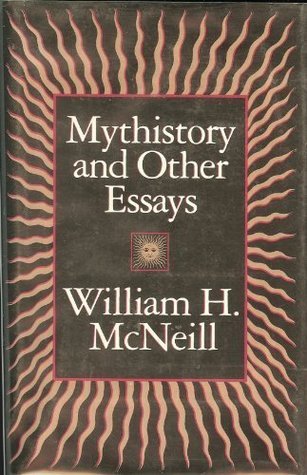
Collection of essays on World History. In fact an introduction to the work of William McNeill.Uitg. ter gelegenheid van de Praemium Erasmianum aan McNeil