
Philip Gourevitch
Gourevitch was born in Philadelphia, Pennsylvania, to painter Jacqueline Gourevitch and philosophy professor Victor Gourevitch, a translator of Jean Jacques Rousseau. He and his brother Marc, a physician, spent most of their childhood in Middletown, Connecticut, where their father taught at Wesleyan University from 1967 to 1995. Gourevitch graduated from Choate Rosemary Hall in Wallingford, Connecticut. Gourevitch knew that he wanted to be a writer by the time he went to college. He attended Cornell University. He took a break for three years in order to concentrate fully on writing. He eventually graduated in 1986. In 1992 he received a Masters of Fine Arts in fiction from the Writing Program at Columbia University. Gourevitch went on to publish some short fiction in literary magazines, before turning to non-fiction.
9 Books Written

We Wish to Inform You That Tomorrow We Will Be Killed with Our Families
by Philip Gourevitch
Rating: 4.2 ⭐
• 4 recommendations ❤️
In April of 1994, the government of Rwanda called on everyone in the Hutu majority to kill everyone in the Tutsi minority. Over the next three months, 800,000 Tutsis were murdered in the most unambiguous case of genocide since Hitler's war against the Jews. Philip Gourevitch's haunting work is an anatomy of the killings in Rwanda, a vivid history of the genocide's background, and an unforgettable account of what it means to survive in its aftermath.
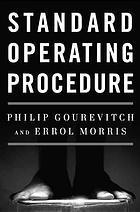
An utterly original literary and intellectual collaboration by two of our keenest moral and political observers has produced a nonfiction Heart of Darkness for our time: the first full reckoning of what actually happened at Abu Ghraib prison, based on hundreds of hours of exclusive interviews with the Americans involved.The Ballad of Abu Ghraib reveals the stories of the American soldiers who took and appeared in the iconic photographs of the Iraq war-the haunting digital snapshots from Abu Ghraib prison that shocked the world-and simultaneously illuminates and alters forever our understanding of those images and the events they depict. Drawing on more than two hundred hours of Errol Morris's startlingly frank and intimate interviews with Americans who served at Abu Ghraib and with some of their Iraqi prisoners, as well as on his own research, Philip Gourevitch has written a relentlessly surprising account of Iraq's occupation from the inside out-rendering vivid portraits of guards and prisoners ensnared in an appalling breakdown of command authority and moral order.What did we think we saw in the infamous photographs, and what were we, in fact, looking at? What did the people in the photographs think they were doing, and why did they take them? What was "standard operating procedure" and what was "being creative" when it came to making prisoners uncomfortable? Who was giving orders, and who was following them? Where does the line lie between humiliation and torture, and why and how does that matter? Was the true Abu Ghraib "scandal" a result of an expose or a cover-up?In exploring these questions, Gourevitch and Morris have crafted a nonfiction morality play that stands to endure as essential reading long after the current war in Iraq passes from the headlines. By taking us deep into the voices and characters of the men and women who lived the horror of Abu Ghraib, the authors force us, whatever our politics, to reexamine the pat explanations in which we have been offered-or sought-refuge, and to see afresh this watershed episode. Instead of a "few bad apples," we are confronted with disturbingly ordinary young American men and women who have been dropped into something out of Dante's Inferno.The Ballad of Abu Ghraib is a book that makes you think and makes you see-an essential contribution from two of our finest nonfiction artists working at the peak of their powers.

Stunning true-life Manhattan noir from a prize-winning author.

The year 2008 has witnessed a major shift in the way people across the world For the first time in human history more people live in cities than in rural areas. This triumph of the urban, however, does not entirely represent progress, as the number of people living in urban slums--often under abject conditions--will soon exceed one billion. From 2005 to 2007 Magnum photographer Jonas Bendiksen documented life in the slums of four different Nairobi, Kenya; Mumbai, India; Caracas, Venezuela; and Jakarta, Indonesia. His lyrical images capture the diversity of personal histories and outlooks found in these dense neighborhoods that, despite commonly held assumptions, are not simply places of poverty and misery. Of course, slum residents continuously face enormous challenges, such as the lack of health care, sanitation and electricity.Innovatively designed with 20 double gatefold images that unfold to configure the four walls of each individual's home, The Places We Live tells the story of the denizens within with unusual humanity. Through its inventive design and experiential approach, The Places We Live brings the modern-day Dickensian reality of these individuals into sharp focus.This volume includes an introduction by American author and journalist Philip Gourevitch , editor of The Paris Review and author of Standard Operating Procedure and We Wish to Inform You that Tomorrow We Will Be Killed With Our Stories From Rwanda . An accompanying exhibition will open at the Nobel Peace Center, Oslo in the summer of 2008, and then tour worldwide.A member of Magnum Photos, Jonas Bendiksen , born in Tønsberg, Norway in 1977, has received numerous awards, including the 2003 Infinity Award from the International Center of Photography and first prize in the Pictures of the Year International Awards. His photographs have appeared in National Geographic, Geo, Newsweek and the Sunday Times Magazine , among other publications. His bestselling first book, Photographs from the Fringes of the Former Soviet Union , was published in 2006 by Aperture. In 2007, the Paris Review received a National Magazine Award for The Places We Live .


You Hide That You Hate Me and I Hide That I Know: Living with It in Rwanda
by Philip Gourevitch
Rating: 3.4 ⭐
An unforgettable journey to Rwanda twenty years after the devastating genocide, from the author of the modern classic We Wish to Inform You That Tomorrow We Will Be Killed with Our FamiliesHis earth-shattering 1998 book, We Wish to Inform You That Tomorrow We Will Be Killed with Our Families , opened our eyes to Rwanda’s In one hundred days nearly a million people were murdered by their fellow citizens, and the world refused to stop it. Now, on the twentieth anniversary of the slaughter, Philip Gourevitch returns to Rwanda.A fiercely beautiful literary reckoning, You Hide That You Hate Me and I Hide That I Know explores with great insight and intimacy a society in which killers and survivors live again as neighbors, grappling with the burdens of memory and forgetting. You Hide That You Hate Me and I Hide That I Know plunges into the lives of a vast cast of from perpetrators and victims in tiny peasant communities to street kids, businessmen, artists, judges, the national cycling team to the country’s revolutionary leaders and their opponents. As Gourevitch weighs their accounts of Rwanda’s unexpected successes and its enduring weaknesses, he also revisits the wars of the genocide’s aftermath that continue in Congo. And he takes critical stock of how Western conventional wisdom—with its self-exculpations and its tendency to view African politics through the reductive lenses of humanitarian pity or punitive human rights absolutism—clashes with the defiant ethic of self-determination that has guided Rwanda’s reconstruction. Does the West know what is best for a traumatized and impoverished postcolonial state, seeking to create itself as if from scratch? Is it reasonable to judge such a state strictly by our own imperfectly achieved ideals? Gourevitch’s investigation of Rwanda’s unprecedented experiment in national reconstruction continually invites us to think again.Combining travelogue and investigative reportage, personal narratives and political debates, Gourevitch’s stories of life after genocide are at once as essential and as ultimate as classical myths. “You hide that you hate me and I hide that I know” is a stark Rwandan adage that describes the formula by which barbarism becomes civilization, and it is now a book about the challenges of forging a sane and habitable history after near annihilation.

Ha Jin on the Art of Fiction.An interview with Mary Karr: “In memoir, the only through-line is character represented by voice. So you better make a reader damn curious about who’s talking.”Poetry from James Schuyler and Robert Hass.A dispatch from the high plains of eastern Congo by Lieve Joris.New stories by Aimee Bender, Patricio Pron, and Carsten René Nielsen.Plus Benjamin Percy's encounters with the animal world; a folio of photographs by Massimo Vitali; winter poetry by Marianne Boruch, Cathy Park Hong, Dorothea Tanning; and more.

No exit: Nicolas Sarkozy - et la France - peuvent-ils trouver une issue à la crise européenne ? (La très petite collection)
by Philip Gourevitch
Rating: 3.0 ⭐
"Parce qu'il est petit et aspire à la grandeur ; parce qu'il pense que la France devrait mener l'Europe, et l'Europe, le monde ; parce qu'il est sans vergogne et impitoyable dans sa quête du pouvoir, et autocratique et éhonté dans sa façon de l'exercer ; parce qu'il aime se mettre en scène et qu'il est aussi exhibitionniste et opportuniste que stratège et adroit ; parce qu'il n'agit pas par idéologie, mais suit son instinct et ses impulsions, et parce qu'il se présente lui-même comme étant à la fois conservateur et réformateur, un républicain et l'incarnation même de la France dans la tradition de "l'État, c'est moi" ; parce qu'il n'est pas arrivé au pouvoir grâce à sa naissance ou à son statut social, mais qu'il l'a pris d'assaut, convaincu que son destin était d'entrer dans l'histoire en en changeant le cours ; parce qu'il se donne comme un homme d'action, qui méprise le snobisme des élites tout en brûlant d'envie de s'en faire accepter ; parce qu'il excelle en temps de crise mais s'embourbe facilement quand la pression se relâche ; et parce qu'il cherche à faire valoir l'influence de la France à l'étranger pour redorer sa propre image aux yeux de son pays, Nicolas Sarkozy est souvent décrit comme un Napoléon en puissance."

The Paris Review Interviews
by Philip Gourevitch