
David McCullough
David McCullough was a Yale-educated, two-time recipient of both the Pulitzer Prize (Truman; John Adams) and the National Book Award (The Path Between the Seas; Mornings on Horseback). His many other highly-acclaimed works of historical non-fiction include The Greater Journey, 1776, Brave Companions, The Great Bridge, The Wright Brothers, and The Johnstown Flood. He was honored with the National Book Foundation's Medal for Distinguished Contribution to American Letters, the National Humanities Medal, and the Presidential Medal of Freedom in addition to many other awards and honors. Mr. McCullough lived in Boston, Mass.
29 Books Written

On a winter day in 1903, on the remote Outer Banks of North Carolina, two brothers changed history. But it would take the world some time to believe that The age of flight had begun, with the first heavier-than-air powered machine carrying a pilot.Far more than a couple of Dayton bicycle mechanics who happened to hit on success, Wilbur and Orville Wright were men of exceptional ability, unyielding determination, and far-ranging intellectual interest and curiosity. Two-time Pulitzer Prize winner David McCullough tells the dramatic story of how these courageous brothers taught the world how to fly - and how their devoted sister, Katherine, played a far more important role than has been generally understood.
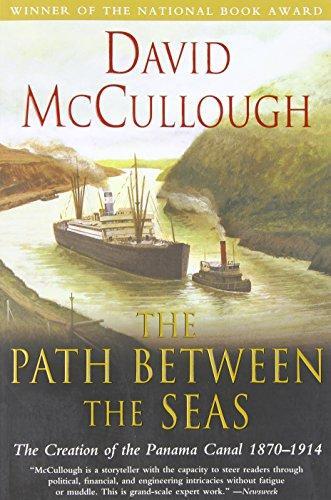
The Path Between the Seas: The Creation of the Panama Canal 1870-1914
by David McCullough
Rating: 4.3 ⭐
• 2 recommendations ❤️
The Path Between the Seas: The Creation of the Panama Canal 1870-1914 tells the story of the men and women who fought against all odds to fulfill the 400-year-old dream of constructing an aquatic passageway between the Atlantic and Pacific oceans. It is a story of astonishing engineering feats, tremendous medical accomplishments, political power plays, heroic successes, and tragic failures. Applying his remarkable gift for writing lucid, lively exposition, McCullough weaves the many strands of the momentous event into a comprehensive and captivating tale.

The enthralling, often surprising story of John Adams, one of the most important and fascinating Americans who ever lived.In this powerful, epic biography, David McCullough unfolds the adventurous life-journey of John Adams, the brilliant, fiercely independent, often irascible, always honest Yankee patriot -- "the colossus of independence," as Thomas Jefferson called him -- who spared nothing in his zeal for the American Revolution; who rose to become the second President of the United States and saved the country from blundering into an unnecessary war; who was learned beyond all but a few and regarded by some as "out of his senses"; and whose marriage to the wise and valiant Abigail Adams is one of the moving love stories in American history. Like his masterly, Pulitzer Prize-winning biography Truman, David McCullough's John Adams has the sweep and vitality of a great novel. It is both a riveting portrait of an abundantly human man and a vivid evocation of his time, much of it drawn from an outstanding collection of Adams family letters and diaries. In particular, the more than one thousand surviving letters between John and Abigail Adams, nearly half of which have never been published, provide extraordinary access to their private lives and make it possible to know John Adams as no other major American of his founding era. As he has with stunning effect in his previous books, McCullough tells the story from within -- from the point of view of the amazing eighteenth century and of those who, caught up in events, had no sure way of knowing how things would turn out. George Washington, Benjamin Franklin, John Jay, the British spy Edward Bancroft, Madame Lafayette and Jefferson's Paris "interest" Maria Cosway, Alexander Hamilton, James Madison, the scandalmonger James Callender, Sally Hemings, John Marshall, Talleyrand, and Aaron Burr all figure in this panoramic chronicle, as does, importantly, John Quincy Adams, the adored son whom Adams would live to see become President. Crucial to the story, as it was to history, is the relationship between Adams and Jefferson, born opposites -- one a Massachusetts farmer's son, the other a Virginia aristocrat and slaveholder, one short and stout, the other tall and spare. Adams embraced conflict; Jefferson avoided it. Adams had great humor; Jefferson, very little. But they were alike in their devotion to their country. At first they were ardent co-revolutionaries, then fellow diplomats and close friends. With the advent of the two political parties, they became archrivals, even enemies, in the intense struggle for the presidency in 1800, perhaps the most vicious election in history. Then, amazingly, they became friends again, and ultimately, incredibly, they died on the same day -- their day of days -- July 4, in the year 1826. Much about John Adams's life will come as a surprise to many readers. His courageous voyage on the frigate Boston in the winter of 1778 and his later trek over the Pyrenees are exploits that few would have dared and that few readers will ever forget. It is a life encompassing a huge arc -- Adams lived longer than any president. The story ranges from the Boston Massacre to Philadelphia in 1776 to the Versailles of Louis XVI, from Spain to Amsterdam, from the Court of St. James's, where Adams was the first American to stand before King George III as a representative of the new nation, to the raw, half-finished Capital by the Potomac, where Adams was the first President to occupy the White House. This is history on a grand scale -- a book about politics and war and social issues, but also about human nature, love, religious faith, virtue, ambition, friendship and betrayal, and the far-reaching consequences of noble ideas. Above all, John Adams is an enthralling, often surprising story of one of the most important and fascinating Americans who ever lived.

David McCullough: The Presidential Biographies: John Adams, Mornings on Horseback, and Truman
by David McCullough
Rating: 4.7 ⭐
From “one of our most gifted living writers” ( The Washington Post ), this collection includes David McCullough’s masterful biographies of three great John Adams, Harry S. Truman, and Theodore Roosevelt. Both John Adams and Truman won the Pulitzer Prize for biography.This boxed set will include the following three John AdamsThe Pulitzer Prize–winning, bestselling biography of America’s founding father and second president that was the basis for the acclaimed HBO series, John Adams reads like an epic historical novel, breathing fresh life into the history of the American Revolution and the birth of the young republic.TrumanThe Pulitzer Prize–winning biography of Harry S. Truman, whose presidency included momentous events from the atomic bombing of Japan to the outbreak of the Cold War and the Korean War.Mornings on HorsebackThe National Book Award–winning biography that tells the story of how young Teddy Roosevelt transformed himself from a sickly boy into the vigorous man who would become a war hero and ultimately president of the United States.

In this masterful book, David McCullough tells the intensely human story of those who marched with General George Washington in the year of the Declaration of Independence - when the whole American cause was riding on their success, without which all hope for independence would have been dashed and the noble ideals of the Declaration would have amounted to little more than words on paper.Based on extensive research in both American and British archives, 1776 is a powerful drama written with extraordinary narrative vitality. It is the story of Americans in the ranks, men of every shape, size, and color, farmers, schoolteachers, shoemakers, no-accounts, and mere boys turned soldiers. And it is the story of the King's men, the British commander, William Howe, an his highly disciplined redcoats who looked on their rebel foes with contempt and fought with a valor too little known.At the center of the drama, with Washington, are two young American patriots, who, at first, knew no more of war than what they had read in books - Nathaniel Green, a Quaker who was made a general at thirty-three, and Henry Knox, a twenty-five-year-old bookseller who had the preposterous idea of hauling the guns of Fort Ticonderoga overland to Boston in the dead of Winter.But it is the American commander-in-chief who stands foremost - Washington, who had never before led an army in battle. Written as a companion work to his celebrated biography of John Adams, David McCullough's 1776 is another landmark in the literature of American history.

The Pulitzer Prize–winning biography of Harry S. Truman, whose presidency included momentous events from the atomic bombing of Japan to the outbreak of the Cold War and the Korean War, told by America’s beloved and distinguished historian.The life of Harry S. Truman is one of the greatest of American stories, filled with vivid characters—Roosevelt, Churchill, Stalin, Eleanor Roosevelt, Bess Wallace Truman, George Marshall, Joe McCarthy, and Dean Acheson—and dramatic events. In this riveting biography, acclaimed historian David McCullough not only captures the man—a more complex, informed, and determined man than ever before imagined—but also the turbulent times in which he rose, boldly, to meet unprecedented challenges. The last president to serve as a living link between the nineteenth and the twentieth centuries, Truman’s story spans the raw world of the Missouri frontier, World War I, the powerful Pendergast machine of Kansas City, the legendary Whistle-Stop Campaign of 1948, and the decisions to drop the atomic bomb, confront Stalin at Potsdam, send troops to Korea, and fire General MacArthur. Drawing on newly discovered archival material and extensive interviews with Truman’s own family, friends, and Washington colleagues, McCullough tells the deeply moving story of the seemingly ordinary “man from Missouri” who was perhaps the most courageous president in our history.

Mornings on Horseback: The Story of an Extraordinary Family, a Vanished Way of Life, and the Unique Child Who Became Theodore Roosevelt is the brilliant biography of the young Theodore Roosevelt. Hailed as a masterpiece by Newsday, it also won the Los Angeles Times Book Prize for Biography. Now with a new introduction by the author, Mornings on Horseback is reprinted as a Simon & Schuster Classic Edition. Mornings on Horseback is about the world of the young Theodore Roosevelt. It is the story of a remarkable little boy, seriously handicapped by recurrent and nearly fatal attacks of asthma, and his struggle to manhood: an amazing metamorphosis seen in the context of the very uncommon household (and rarefied social world) in which he was raised. His father is the first Theodore Roosevelt, "Greatheart," a figure of unbounded energy, enormously attractive and selfless, a god in the eyes of his small, frail namesake. His mother, Mittie Bulloch Roosevelt, is a Southerner and celebrated beauty, but also considerably more, which the book makes clear as never before. There are sisters Anna and Corinne, brother Elliott (who becomes the father of Eleanor Roosevelt), and the lovely, tragic Alice Lee, Teddy Roosevelt's first love. And while such disparate figures as Abraham Lincoln, Mrs. John Jacob Astor, and Senator Roscoe Conkling play a part, it is this diverse and intensely human assemblage of Roosevelts, all brought to vivid life, which gives the book its remarkable power. The book spans seventeen years � from 1869 when little "Teedie" is ten, to 1886 when, as a hardened "real life cowboy," he returns from the West to pick up the pieces of a shattered life and begin anew, a grown man, whole in body and spirit. The story does for Teddy Roosevelt what Sunrise at Campobello did for FDR � reveals the inner man through his battle against dreadful odds. Like David McCullough's The Great Bridge, also set in New York, this is at once an enthralling story, with all the elements of a great novel, and a penetrating character study. It is brilliant social history and a work of important scholarship, which does away with several old myths and breaks entirely new ground. For the first time, for example, Roosevelt's asthma is examined closely, drawing on information gleaned from private Roosevelt family papers and in light of present-day knowledge of the disease and its psychosomatic aspects. At heart it is a book about life intensely lived...about family love and family loyalty...about courtship and childbirth and death, fathers and sons...about winter on the Nile in the grand manner and Harvard College...about gutter politics in washrooms and the tumultuous Republican Convention of 1884...about grizzly bears, grief and courage, and "blessed" mornings on horseback at Oyster Bay or beneath the limitless skies of the Badlands. "Black care rarely sits behind a rider whose pace is fast enough," Roosevelt once wrote. It is the key to his life and to much that is so memorable in this magnificent book.

The Pioneers: The Heroic Story of the Settlers Who Brought the American Ideal West
by David McCullough
Rating: 3.8 ⭐
Pulitzer Prize–winning historian David McCullough rediscovers an important and dramatic chapter in the American story—the settling of the Northwest Territory by dauntless pioneers who overcame incredible hardships to build a community based on ideals that would come to define our country.As part of the Treaty of Paris, in which Great Britain recognized the new United States of America, Britain ceded the land that comprised the immense Northwest Territory, a wilderness empire northwest of the Ohio River containing the future states of Ohio, Indiana, Illinois, Michigan, and Wisconsin. A Massachusetts minister named Manasseh Cutler was instrumental in opening this vast territory to veterans of the Revolutionary War and their families for settlement. Included in the Northwest Ordinance were three remarkable conditions: freedom of religion, free universal education, and most importantly, the prohibition of slavery. In 1788 the first band of pioneers set out from New England for the Northwest Territory under the leadership of Revolutionary War veteran General Rufus Putnam. They settled in what is now Marietta on the banks of the Ohio River.McCullough tells the story through five major characters: Cutler and Putnam; Cutler’s son Ephraim; and two other men, one a carpenter turned architect, and the other a physician who became a prominent pioneer in American science. They and their families created a town in a primeval wilderness, while coping with such frontier realities as floods, fires, wolves and bears, no roads or bridges, no guarantees of any sort, all the while negotiating a contentious and sometimes hostile relationship with the native people. Like so many of McCullough’s subjects, they let no obstacle deter or defeat them.
At the end of the last century, Johnstown, Pennsylvania, was a booming coal-and-steel town filled with hardworking families striving for a piece of the nation's burgeoning industrial prosperity. In the mountains above Johnstown, an old earth dam had been hastily rebuilt to create a lake for an exclusive summer resort patronized by the tycoons of that same industrial prosperity, among them Andrew Carnegie, Henry Clay Frick, and Andrew Mellon. Despite repeated warnings of possible danger, nothing was done about the dam. Then came May 31, 1889, when the dam burst, sending a wall of water thundering down the mountain, smashing through Johnstown, and killing more than 2,000 people. It was a tragedy that became a national scandal. Graced by David McCullough's remarkable gift for writing richly textured, sympathetic social history, The Johnstown Flood is an absorbing, classic portrait of life in nineteenth-century America, of overweening confidence, of energy, and of tragedy. It also offers a powerful historical lesson for our century and all times: the danger of assuming that because people are in positions of responsibility they are necessarily behaving responsibly.

The Greater Journey is the enthralling, inspiring - and until now, untold - story of the adventurous American artists, writers, doctors, politicians, architects, and others of high aspiration who set off for Paris in the years between 1830 and 1900, ambitious to excel in their work.After risking the hazardous journey across the Atlantic, these Americans embarked on a greater journey in the City of Light. Most had never left home, never experienced a different culture. None had any guarantee of success. That they achieved so much for themselves and their country profoundly altered American history. As David McCullough writes, "Not all pioneers went west." Elizabeth Blackwell, the first female doctor in America, was one of this intrepid band. Another was Charles Sumner, who enrolled at the Sorbonne because of a burning desire to know more about everything. There he saw black students with the same ambition he had, and when he returned home, he would become the most powerful, unyielding voice for abolition in the U.S. Senate, almost at the cost of his life. Two staunch friends, James Fenimore Cooper and Samuel F. B. Morse, worked unrelentingly every day in Paris, Cooper writing and Morse painting what would be his masterpiece. From something he saw in France, Morse would also bring home his momentous idea for the telegraph. Pianist Louis Moreau Gottschalk from New Orleans launched his spectacular career performing in Paris at age 15. George P. A. Healy, who had almost no money and little education, took the gamble of a lifetime and with no prospects whatsoever in Paris became one of the most celebrated portrait painters of the day. His subjects included Abraham Lincoln. Medical student Oliver Wendell Holmes wrote home of his toil and the exhilaration in "being at the center of things" in what was then the medical capital of the world. From all they learned in Paris, Holmes and his fellow "medicals" were to exert lasting influence on the profession of medicine in the United States. Writers Ralph Waldo Emerson, Nathaniel Hawthorne, Mark Twain, and Henry James were all "discovering" Paris, marveling at the treasures in the Louvre, or out with the Sunday throngs strolling the city's boulevards and gardens. "At last I have come into a dreamland," wrote Harriet Beecher Stowe, seeking escape from the notoriety Uncle Tom's Cabin had brought her. Almost forgotten today, the heroic American ambassador Elihu Washburne bravely remained at his post through the Franco-Prussian War, the long Siege of Paris and even more atrocious nightmare of the Commune. His vivid account in his diary of the starvation and suffering endured by the people of Paris (drawn on here for the first time) is one readers will never forget. The genius of sculptor Augustus Saint-Gaudens, the son of an immigrant shoemaker, and of painters Mary Cassatt and John Singer Sargent, three of the greatest American artists ever, would flourish in Paris, inspired by the examples of brilliant French masters, and by Paris itself. Nearly all of these Americans, whatever their troubles learning French, their spells of homesickness, and their suffering in the raw cold winters by the Seine, spent many of the happiest days and nights of their lives in Paris. McCullough tells this sweeping, fascinating story with power and intimacy, bringing us into the lives of remarkable men and women who, in Saint-Gaudens's phrase, longed "to soar into the blue." The Greater Journey is itself a masterpiece.

The Great Bridge: The Epic Story of the Building of the Brooklyn Bridge
by David McCullough
Rating: 4.2 ⭐
Published on the fortieth anniversary of its initial publication, this edition of the classic book contains a new Preface by David McCullough, “one of our most gifted living writers” (The Washington Post).Built to join the rapidly expanding cities of New York and Brooklyn, the Brooklyn Bridge was thought by many at the start to be an impossibility destined to fail if not from insurmountable technical problems then from political corruption. (It was the heyday of Boss Tweed in New York.) But the Brooklyn Bridge was at once the greatest engineering triumph of the age, a surpassing work of art, a proud American icon, and a story like no other in our history. Courage, chicanery, unprecedented ingenuity and plain blundering, heroes, rascals, all the best and worst in human nature played a part. At the center of the drama were the stricken chief engineer, Washington Roebling and his remarkable wife, Emily Warren Roebling, neither of whom ever gave up in the face of one heartbreaking setback after another. The Great Bridge is a sweeping narrative of a stupendous American achievement that rose up out of its era like a cathedral, a symbol of affirmation then and still in our time.

Alternate cover edition of ISBN 9780671792763From Alexander von Humboldt to Charles and Anne Lindbergh, these are stories of people of great vision and daring whose achievements continue to inspire us today, brilliantly told by master historian David McCullough.The bestselling author of Truman and John Adams, David McCullough has written profiles of exceptional men and women past and present who have not only shaped the course of history or changed how we see the world but whose stories express much that is timeless about the human condition. Here are Alexander von Humboldt, whose epic explorations of South America surpassed the Lewis and Clark expedition; Harriet Beecher Stowe, “the little woman who made the big war”; Frederic Remington; the extraordinary Louis Agassiz of Harvard; Charles and Anne Lindbergh, and their fellow long-distance pilots Antoine de Saint-Exupéry and Beryl Markham; Harry Caudill, the Kentucky lawyer who awakened the nation to the tragedy of Appalachia; and David Plowden, a present-day photographer of vanishing America. Different as they are from each other, McCullough’s subjects have in common a rare vitality and sense of purpose. These are brave companions: to each other, to David McCullough, and to the reader, for with rare storytelling ability McCullough brings us into the times they knew and their very uncommon lives.

A New York Times BestsellerA timely collection of speeches by David McCullough, the most honored historian in the United States—winner of two Pulitzer Prizes, two National Book Awards, and the Presidential Medal of Freedom, among many others—that reminds us of fundamental American principles.Over the course of his distinguished career, David McCullough has spoken before Congress, the White House, colleges and universities, historical societies, and other esteemed institutions. Now, at a time of self-reflection in America following a bitter election campaign that has left the country divided, McCullough has collected some of his most important speeches in a brief volume designed to identify important principles and characteristics that are particularly American. The American Spirit reminds us of core American values to which we all subscribe, regardless of which region we live in, which political party we identify with, or our ethnic background. This is a book about America for all Americans that reminds us who we are and helps to guide us as we find our way forward.

Forty years after his first book, David McCullough wrote and presented his speech, The Course of Human Events, in the 2003 Jefferson Lecture in the Humanities, in which he divulges his philosophy on writing, speaking, and history in his masterful storytelling style.In this Jefferson Lecture in the Humanities, David McCullough draws on his personal experience as a historian to acknowledge the crucial importance of writing in history’s enduring impact and influence, and he affirms the significance of history in teaching us about human nature through the ages.

Days after the Japanese attack on Pearl Harbor, British Prime Minister Winston Churchill and U.S. President Franklin D. Roosevelt met at the White House. It was Christmas Eve, 1941. As war raged throughout the world, the two leaders delivered a powerful message that still resonates today. Bestselling author and historian David McCullough relates a compelling story about the spirit of Christmas and the power of light in difficult, dangerous times. Beautifully designed with historic photographs that transport readers to the early days of World War II Includes a DVD of David McCullough s presentation of this story at the Mormon Tabernacle Choir s 2009 Christmas concert, to be featured nationally on PBS

In this posthumous collection of thought-provoking essays—many never published before—Pulitzer Prize–winning historian and bestselling author David McCullough affirms the value of history, how we can be guided by its lessons, and the enduring legacy of American ideals.History Matters brings together selected essays by beloved historian David McCullough, some published here for the first time, written at different points over the course of his long career but all focused on the subject of his lifelong the importance of history in understanding our present and future. Edited by McCullough’s daughter, Dorie McCullough Lawson, and his longtime researcher, Michael Hill, History Matters is a tribute to a master historian and offers fresh insights into McCullough’s enduring interests and writing life. The book also features a foreword by Jon Meacham. McCullough highlights the importance of character in political leaders, with Harry Truman and George Washington serving as exemplars of American values like optimism and determination. He shares his early influences, from the books he cherished in his youth to the people who mentored him. He also pays homage to those who inspired him, such as writer Paul Horgan and painter Thomas Eakins, illustrating the diverse influences on his writing as well as the influence of art. Rich with McCullough’s signature grace, curiosity, and narrative gifts, these essays offer vital lessons in viewing history through the eyes of its participants, a perspective that McCullough believed was crucial to understanding the present as well as the past. History Matters is testament to McCullough’s legacy as one of the great storytellers of this nation’s history and of the lasting promise of American ideals.

An intemperate general. An unpopular war. A military and diplomatic team in disarray. Those are the challenges President Obama has faced as he attempts to make a success of U.S involvement in Afghanistan. They are also the challenges President Truman surmounted in the winter of 1950 as he began managing a war in Korea that risked becoming bigger and more costly. It was the first significant armed conflict of the Cold United States troops under the command of General Douglas MacArthur came to the aid of the South Koreans after North Korea invaded. When Communist China entered the conflict on the side of the North Koreans, the crisis seemed on the verge of flaring into a world war. Truman was determined not to let that happen. MacArthur kept urging a widening of the war into China itself and ignoring his Commander in Chief. On April 11, 1951, after MacArthur had “shot his mouth off,” as one diplomat put it, one too many times, Truman fired him. The story of their showdown—one of the most dramatic in U.S. history between a Commander in Chief and his top soldier in the field—is captured in all its detail by David McCullough in his biography Truman, and presented here in a e-book called Truman Fires MacArthur (an excerpt of Truman, McCullough’s Pulitzer Prize-winning biography), which was the headline carried in many newspapers around the country the next day. Truman Fires MacArthur will continue to ride the headlines. It will go on sale as an ebook just as the Rolling Stone profile that exposed General Stanley McChrystal’s insurrection and forced his resignation hits newsstands, and media coverage of the showdown continues to draw historical analogies between Truman and Obama.

Scientifically research-based program supports state standards in literacy, science, mathematics, social studies, art and music to prepare children for Kindergarten. Teacher's Guides help build and assess children's cognitive skills, alphabet knowledge, and social-emotional development. Interactive charts with songs and activities inspire class discussion and build oral vocabulary. Big Books, Trade Books, and Little Books provide shared reading experiences and develop children's concepts of print. Book PaperbackPublication 1/1/2007 183Reading Age 10 and Up

In a second volume from a series of lectures by presidential scholars, the author of Truman sheds new light on Harry Truman, an ordinary American who became president in difficult times, and how he rose to become one of America's most extraordinary leaders.

good

This e-book box set includes the following American History-themed books by David McCullough: · John Adams: The magisterial, Pulitzer Prize-winning biography of the independent, irascible Yankee patriot, one of our nation’s founders and most important figures, who became our second president. · 1776: The riveting story of George Washington, the men who marched with him, and their British foes in the momentous year of American independence. · Truman: The Pulitzer Prize-winning biography of Harry Truman, the complex and courageous man who rose from modest origins to make momentous decisions as president, from dropping the atomic bomb to going to war in Korea. · Special Bonus: The Course of Human Events: In this Jefferson Lecture in the Humanities, David McCullough draws on his personal experience as a historian to acknowledge the crucial importance of writing in history’s enduring impact and influence, and he affirms the significance of history in teaching us about human nature through the ages.

David McCullough: John Adams/The Johnstown Flood/1776/The Path Between the Seas/The Course of Human Events
by David McCullough
Rating: 4.6 ⭐
This ISBN is for 4 paperbacks and one pamphlet in a slip John Adams, The Johnstown Flood, 1776, The Path Between the Seas, The Course of Human Events

David McCullough Library: 1776/Brave Companions/The Great Bridge/John Adams/The Johnstown Flood/Mornings on Horseback/Path Between the Seas/Truman/The Course of Human Events
by David McCullough
Rating: 4.4 ⭐
Perfect for David McCullough fans and history lovers alike, this ebook boxed set features all of his bestselling titles, from 1776 to Mornings on Horseback.This ebook box set includes all of David McCullough’s bestselling 1776 is the riveting story of George Washington, the men who marched with him, and their British foes in the momentous year of American independence. Brave Companions contains profiles of the exceptional men and women who shaped history, among them Alexander von Humboldt, Harriet Beecher Stowe, and Charles and Anne Lindbergh. The Great Bridge is the remarkable, enthralling story of the planning and construction of the Brooklyn Bridge, which linked two great cities and epitomized American optimism, skill, and determination. John Adams is the magisterial, Pulitzer Prize–winning biography of the independent, irascible Yankee patriot, one of our nation’s founders and most important figures, who became our second president. The Johnstown Flood is the classic history of an American tragedy that became a scandal in the age of the Robber Barons, the preventable flood that destroyed a town and killed 2,000 people. Mornings on Horseback is the brilliant National Book Award–winning biography of young Theodore Roosevelt’s metamorphosis from sickly child to a vigorous, intense man poised to become a national hero and then president. Path Between the Seas is the epic National Book Award–winning history of the heroic successes, tragic failures, and astonishing engineering and medical feats that made the Panama Canal possible. Truman is the Pulitzer Prize–winning biography of Harry Truman, the complex and courageous man who rose from modest origins to make momentous decisions as president, from dropping the atomic bomb to going to war in Korea. A special bonus is The Course of Human Events. In this Jefferson Lecture in the Humanities, David McCullough draws on his personal experience as a historian to acknowledge the crucial importance of writing in history’s enduring impact and influence, and he affirms the significance of history in teaching us about human nature through the ages.
s/t: The Creation of the Panama CanalA dramatic story of the politics, finance and engineering that combined to make the Panama Canal.

1. Theodore Roosevelt and Y1858-1919--Childhood Youth. 2. required-attribute (A description of the product, not the condition of your item for sale. 2000 characters) -United States--Biography. Simon and Schuster 1st Paperback Edition 2003.

David McCullough: Great Achievements in American History: The Great Bridge, The Path Between the Seas, and The Wright Brothers
by David McCullough
Rating: 4.2 ⭐
From “one of our most gifted living writers” ( The Washington Post ), three great stories of American accomplishment—the building of the Brooklyn Bridge, the construction of the Panama Canal, and the invention of flight—all collected in one volume.This boxed set includes the following three The Great BridgeThe dramatic and enthralling story of the building of the Brooklyn Bridge, the world’s longest suspension bridge at the time, a tale of greed, corruption, and obstruction but also of optimism, heroism, and determination.The Path Between the SeasThe National Book Award–winning epic chronicle of the creation of the Panama Canal, a first-rate drama of the bold and brilliant engineering feat that was filled with both tragedy and triumph.The Wright BrothersThe #1 New York Times bestseller—the dramatic story-behind-the-story about the courageous brothers who taught the world how to fly—Wilbur and Orville Wright.

Reader's Digest Condensed Books; Autumn 1968, Volume 75: The Johnstown Flood / Once an Eagle / Ammie, Come Home / Gone / Sarang
by David McCullough
Rating: 4.3 ⭐
Volume 75 - AutumnThe Johnstown Flood - David G. McCulloughOnce an Eagle - Anton MyrerAmmie, Come Home - Barbara MichaelsGone: A Trio of Short Stories - Rumer GoddenSarang - Roger A. Caras

Published on the fortieth anniversary of its initial publication, this edition of the classic book contains a new Preface by David McCullough, “one of our most gifted living writers” ( The Washington Post ). Built to join the rapidly expanding cities of New York and Brooklyn, the Brooklyn Bridge was thought by many at the start to be an impossibility destined to fail if not from insurmountable technical problems then from political corruption. (It was the heyday of Boss Tweed in New York.) But the Brooklyn Bridge was at once the greatest engineering triumph of the age, a surpassing work of art, a proud American icon, and a story like no other in our history. Courage, chicanery, unprecedented ingenuity and plain blundering, heroes, rascals, all the best and worst in human nature played a part. At the center of the drama were the stricken chief engineer, Washington Roebling and his remarkable wife, Emily Warren Roebling, neither of whom ever gave up in the face of one heartbreaking setback after another. The Great Bridge is a sweeping narrative of a stupendous American achievement that rose up out of its era like a cathedral, a symbol of affirmation then and still in our time.