Loading themes...
Explore the best books about Academic theme.

Practical English Usage is a major new reference guide for intermediate and advanced students of English (of all nationalities) and their teachers. It contains short clear articles on all the grammatical problems which regularly cause difficulty to foreign learners. In addition, it deals with selected points of vocabulary, idiom, style, pronunciation and spelling. The main differences between British and American usage are also dealt with. Each entry contains an explanation of a problem, examples of correct usage, and - when this is useful - examples of typical mistakes.Special features of this book include:- simple and practical presentation- alphabetical arrangement of numbered entries- detailed index and cross-reference system- distinction between formal and informal usageA hardback edition is also available.
The latest edition of this classic is updated with new problem sets and material The Second Edition of this fundamental textbook maintains the book's tradition of clear, thought-provoking instruction. Readers are provided once again with an instructive mix of mathematics, physics, statistics, and information theory.All the essential topics in information theory are covered in detail, including entropy, data compression, channel capacity, rate distortion, network information theory, and hypothesis testing. The authors provide readers with a solid understanding of the underlying theory and applications. Problem sets and a telegraphic summary at the end of each chapter further assist readers. The historical notes that follow each chapter recap the main points.The Second Edition features: * Chapters reorganized to improve teaching * 200 new problems * New material on source coding, portfolio theory, and feedback capacity * Updated referencesNow current and enhanced, the Second Edition of Elements of Information Theory remains the ideal textbook for upper-level undergraduate and graduate courses in electrical engineering, statistics, and telecommunications.

Famous the world over for the creative brilliance of his insights into the physical world, Nobel Prize-winning physicist Richard Feynman also possessed an extraordinary talent for explaining difficult concepts to the nonscientist. QED--the edited version of four lectures on quantum electrodynamics that Feynman gave to the general public at UCLA as part of the Alix G. Mautner Memorial Lecture series--is perhaps the best example of his ability to communicate both the substance and the spirit of science to the layperson.The focus, as the title suggests, is quantum electrodynamics (QED), the part of the quantum theory of fields that describes the interactions of the quanta of the electromagnetic field-light, X rays, gamma rays--with matter and those of charged particles with one another. By extending the formalism developed by Dirac in 1933, which related quantum and classical descriptions of the motion of particles, Feynman revolutionized the quantum mechanical understanding of the nature of particles and waves. And, by incorporating his own readily visualizable formulation of quantum mechanics, Feynman created a diagrammatic version of QED that made calculations much simpler and also provided visual insights into the mechanisms of quantum electrodynamic processes.In this book, using everyday language, spatial concepts, visualizations, and his renowned "Feynman diagrams" instead of advanced mathematics, Feynman successfully provides a definitive introduction to QED for a lay readership without any distortion of the basic science. Characterized by Feynman's famously original clarity and humor, this popular book on QED has not been equaled since its publication.

The aim of this groundbreaking new book is to bring general relativity into the undergraduate curriculum and make this fundamental theory accessible to all physics majors. Using a "physics first" approach to the subject, renowned relativist James B. Hartle provides a fluent and accessible introduction that uses a minimum of new mathematics and is illustrated with a wealth of exciting applications. The emphasis is on the exciting phenomena of gravitational physics and the growing connection between theory and observation. The Global Positioning System, black holes, X-ray sources, pulsars, quasars, gravitational waves, the Big Bang, and the large scale structure of the universe are used to illustrate the widespread role of how general relativity describes a wealth of everyday and exotic phenomena.

On its initial publication, Forgive and Remember emerged as the definitive study of the training and lives of young surgeons. Now with an extensive new preface, epilogue, and appendix by the author, reflecting on the changes that have taken place since the book's original publication, this updated second edition of Charles L. Bosk's classic study is as timely as ever.

In this extensive inquiry into the sources of modern selfhood, Charles Taylor demonstrates just how rich and precious those resources are. The modern turn to subjectivity, with its attendant rejection of an objective order of reason, has led—it seems to many—to mere subjectivism at the mildest and to sheer nihilism at the worst. Many critics believe that the modern order has no moral backbone and has proved corrosive to all that might foster human good. Taylor rejects this view. He argues that, properly understood, our modern notion of the self provides a framework that more than compensates for the abandonment of substantive notions of rationality.The major insight of Sources of the Self is that modern subjectivity, in all its epistemological, aesthetic, and political ramifications, has its roots in ideas of human good. After first arguing that contemporary philosophers have ignored how self and good connect, the author defines the modern identity by describing its genesis. His effort to uncover and map our moral sources leads to novel interpretations of most of the figures and movements in the modern tradition. Taylor shows that the modern turn inward is not disastrous but is in fact the result of our long efforts to define and reach the good. At the heart of this definition he finds what he calls the affirmation of ordinary life, a value which has decisively if not completely replaced an older conception of reason as connected to a hierarchy based on birth and wealth. In telling the story of a revolution whose proponents have been Augustine, Montaigne, Luther, and a host of others, Taylor's goal is in part to make sure we do not lose sight of their goal and endanger all that has been achieved. Sources of the Self provides a decisive defense of the modern order and a sharp rebuff to its critics.

This fresh book argues that the four Gospels are closely based on eyewitness testimony of those who knew Jesus. Noted New Testament scholar Richard Bauckham challenges the prevailing assumption that the accounts of Jesus circulated as “anonymous community traditions” instead asserting that they were transmitted in the name of the original eyewitness. To drive home this controversial point, Bauckham draws on internal literary evidence, study of personal names in the first century, and recent developments in the understanding of oral traditions. Jesus and the Eyewitnesses also taps into the rich resources of modern study of memory and cognitive psychology, refuting the conclusions of the form critics and calling New Testament scholarship to make a clean break with this long-dominant tradition. Finally, Bauckham challenges readers to end the classic division between the “historical Jesus” and the “Christ of faith” proposing the “Jesus of testimony” that is actually presented by Gospels. Sure to ignite heated debate on the precise character of the testimony about Jesus, Jesus and the Eyewitnesses will be valued by scholars, students and all who seek to understand the origins of the Gospels.

Drawing on more than 40 years of experience with policy analysis, best-selling authors Eugene Bardach and Eric M. Patashnik use real-world examples to teach you how to be effective, accurate, and persuasive policy analysts. The Sixth Edition of A Practical Guide for Policy Analysis presents dozens of concrete tips, new case studies, and step-by-step strategies for the budding analyst as well as the seasoned professional.

Qu'est-ce qui est scientifique et qu'est-ce qui ne l'est pas ? Comment vérifier une théorie ? Qu'est-ce qu'une hypothèse scientifique ? Comment la connaissance progresse-t-elle ? Chef-d'œuvre de Karl Popper, ce livre puissant défend l'idée que pour être scientifique une théorie doit être réfutable par l'expérience. Le célèbre philosophe y discute Einstein ou Bernoulli, Heisenberg ou Schrödinger, mais aussi Russell ou Wittgenstein ; il déploie plusieurs concepts cruciaux, tels ceux de corroboration, de falsifiabilité, ou de critère de démarcation, sur lequel repose toute connaissance scientifique ; et il aborde des thèmes comme la simplicité, l'incertitude, le hasard et la probabilité, les rapports entre théorie et expérience, entre science et métaphysique. Sir Karl R. Popper (1902-1994) est l'une des figures majeures de la philosophie du XX e siècle. Il est également l'auteur, aux Éditions Payot, de Conjectures et réfutations .
In this collection of writings, Nobel laureate Friedrich A. Hayek discusses topics from moral philosophy and the methods of the social sciences to economic theory as different aspects of the same central issue: free markets versus socialist planned economies. First published in the 1930s and 40s, these essays continue to illuminate the problems faced by developing and formerly socialist countries.F. A. Hayek, recipient of the Medal of Freedom in 1991 and winner of the Nobel Memorial Prize in Economics in 1974, taught at the University of Chicago, the University of London, and the University of Freiburg. Among his other works published by the University of Chicago Press is The Road to Serfdom, now available in a special fiftieth anniversary edition.

In On the Ideal Orator , ( De oratore ), Cicero, the greatest Roman orator and prosewriter of his day, gives his mature views on rhetoric, oratory, and philosophy. Cast in the lively, literary form of a dialogue, this classic work presents a daring view of the orator as the master of all language communication while still emphasizing his role at the heart of Roman society and politics. Cicero's conception of the ideal orator represents his own original synthesis of the positions of the philosophers and the rhetoricians in the age-old quarrel between these disciplines.The first translation of De oratore in over fifty years, this volume is ideal for courses on Cicero and on the history of rhetoric/oratory. James May and Jakob Wisse provide an accurate and accessible translation which is based on--and contributes to--recent advances in our understanding of De oratore and of the many aspects of ancient rhetoric, philosophy, and history relevant to it. Their translation reflects the many variations of Cicero's style, which are essential ingredients of the work. The volume includes extensive annotation, based on current scholarship and offering significant original contributions as well. It is also enhanced by a full introduction covering all important aspects of both the work and its historical background; appendices on Cicero's works, figures of thought and speech, and alternate manuscript readings; a glossary of terms from rhetoric and Roman life and politics; and a comprehensive index of names and places.

The first edition, published in 1973, has become a classic reference in the field. Now with the second edition, readers will find information on key new topics such as neural networks and statistical pattern recognition, the theory of machine learning, and the theory of invariances. Also included are worked examples, comparisons between different methods, extensive graphics, expanded exercises and computer project topics.An Instructor's Manual presenting detailed solutions to all the problems in the book is available from the Wiley editorial department.

Is your judgment influenced by personal biases?In situations requiring careful judgment, we're all influenced by our own biases to some extent. But, with Max Bazerman's Judgment in Managerial Decision Making, Sixth Edition, you can learn how to overcome those biases to make better managerial decisions.The text examines judgment in a variety of organizational contexts, and provides practical strategies for changing your decision-making processes and improving these processes so that they become part of your permanent behavior. Throughout, you'll findnumerous hands-on decision exercises and examples from the author's extensive executive training experience that will help you enhance the quality of your managerial judgment.Past editions have been used in top universities, in business schools, and in public policy, psychology, and economics classes. In addition, the text has been widely recognized by practitioners in the world of behavioral finance.Revised with two new chaptersThis Sixth Edition now adds chapters on bounded ethicality (Chapter 8) and bounded awareness (Chapter 11). Both of these chapters are based on Bazerman's recent writing with Dolly Chugh and Mahzarin Banaji.Max H. Bazerman is the Jesse Isidor Straus Professor of Business Administration at the Harvard Business School. In addition, Max is also formally affiliated with the Kennedy School of Government, the Psychology Department, and the Program on Negotiation at Harvard. He is the author or co-author of over 150 research articles and chapters, and the author of numerous other books. Max was named one of the top 30 authors, speakers, and teachers of management by Executive Excellence in each of their two most recent rankings.

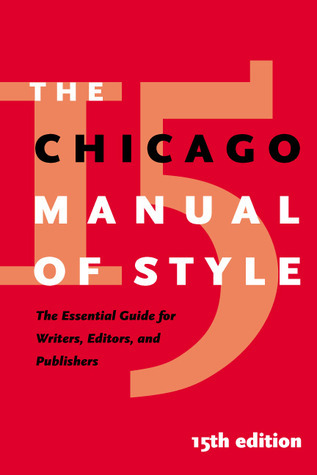
The 15th edition of The Chicago Manual of Style has been superseded by the 17th edition. In the 1890s, a proofreader at the University of Chicago Press prepared a single sheet of typographic fundamentals intended as a guide for the University community. That sheet grew into a pamphlet, and the pamphlet grew into a book—the first edition of the Manual of Style, published in 1906. Now in its fifteenth edition, The Chicago Manual of Style—the essential reference for authors, editors, proofreaders, indexers, copywriters, designers, and publishers in any field—is more comprehensive and easier to use than ever before.Those who work with words know how dramatically publishing has changed in the past decade, with technology now informing and influencing every stage of the writing and publishing process. In creating the fifteenth edition of the Manual, Chicago's renowned editorial staff drew on direct experience of these changes, as well as on the recommendations of the Manual's first advisory board, composed of a distinguished group of scholars, authors, and professionals from a wide range of publishing and business environments.Every aspect of coverage has been examined and brought up to date—from publishing formats to editorial style and method, from documentation of electronic sources to book design and production, and everything in between. In addition to books, the Manual now also treats journals and electronic publications. All chapters are written for the electronic age, with advice on how to prepare and edit manuscripts online, handle copyright and permissions issues raised by technology, use new methods of preparing mathematical copy, and cite electronic and online sources.A new chapter covers American English grammar and usage, outlining the grammatical structure of English, showing how to put words and phrases together to achieve clarity, and identifying common errors. The two chapters on documentation have been reorganized and updated: the first now describes the two main systems preferred by Chicago, and the second discusses specific elements and subject matter, with examples of both systems. Coverage of design and manufacturing has been streamlined to reflect what writers and editors need to know about current procedures. And, to make it easier to search for information, each numbered paragraph throughout the Manual is now introduced by a descriptive heading.Clear, concise, and replete with commonsense advice, The Chicago Manual of Style, fifteenth edition, offers the wisdom of a hundred years of editorial practice while including a wealth of new topics and updated perspectives. For anyone who works with words, whether on a page or computer screen, this continues to be the one reference book you simply must have.What's new in the Fifteenth Edition:* Updated material throughout to reflect current style, technology, and professional practice* Scope expanded to include journals and electronic publications* Comprehensive new chapter on American English grammar and usage by Bryan A. Garner (author of A Dictionary of Modern American Usage)* Updated and rewritten chapter on preparing mathematical copy* Reorganized and updated chapters on documentation, including guidance on citing electronic sources* Streamlined coverage of current design and production processes, with a glossary of key terms* Descriptive headings on all numbered paragraphs for ease of reference* New diagrams of the editing and production processes for both books and journals, keyed to chapter discussions* New, expanded Web site with special tools and features for Manual users at www.chicagomanualofstyle.org.

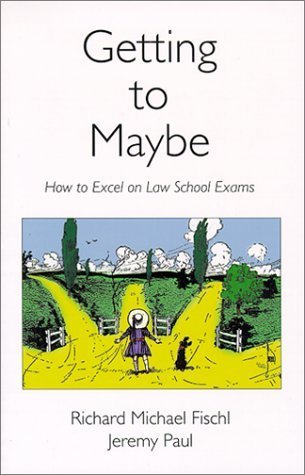
Professors Fischl and Paul explain law school exams in ways no one has before, all with an eye toward improving the reader's performance. The book begins by describing the difference between educational cultures that praise students for "right answers" and the law school culture that rewards nuanced analysis of ambiguous situations in which more than one approach may be correct. Enormous care is devoted to explaining precisely how and why legal analysis frequently produces such perplexing situations. But the authors don't stop with mere description. Instead, Getting to Maybe teaches how to excel on law school exams by showing the reader how legal analysis can be brought to bear on examination problems. The book contains hints on studying and preparation that go well beyond conventional advice. The authors also illustrate how to argue both sides of a legal issue without appearing wishy-washy or indecisive. Above all, the book explains why exam questions may generate feelings of uncertainty or doubt about correct legal outcomes and how the student can turn these feelings to his or her advantage. In sum, although the authors believe that no exam guide can substitute for a firm grasp of substantive material, readers who devote the necessary time to learning the law will find this book an invaluable guide to translating learning into better exam performance.

En 1970 Michel Foucault sucedió a Jean Hyppolite en el Collége de France, donde se hizo cargo de la cátedra de historia de los sistemas de pensamiento. El orden del discurso fue su lección inaugural del curso. Preocupado siempre por las complejas relaciones entre el saber y el origen del poder, Foucault resumió en este texto el núcleo de sus investigaciones y adelantó todo un programa futuro de trabajo. A través de un minucioso análisis de las variadas formas de acceso (o de las prohibiciones y tabúes) a la palabra, de la marginalidad de determinados discursos (la locura, la delincuencia) o la controvertida voluntad de verdad de la cultura occidental, este opúsculo consigue poner de manifiesto la inquietante fragilidad de categorías filosóficas aparentemente sacrosantas, como las del sujeto, conciencia e historia.

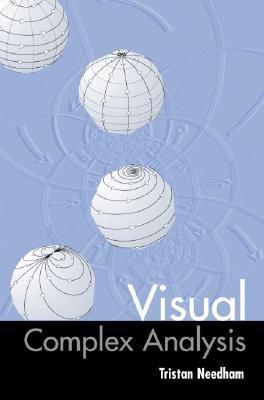
FROM THE Please do NOT buy this original 1997 edition! I have created a new, greatly improved (and cheaper!) edition, which was published on February 28th, 2023:Visual Complex 25th Anniversary Edition (with a new Foreword by Roger Penrose)**************************************************************************************************This radical first course on complex analysis brings a beautiful and powerful subject to life by consistently using geometry (not calculation) as the means of explanation. Aimed at undergraduate students in mathematics, physics, and engineering, the book's intuitive explanations, lack of advanced prerequisites, and consciously user-friendly prose style will help students to master the subject more readily than was previously possible. The key to this is the book's use of new geometric arguments in place of the standard calculational ones. These geometric arguments are communicated with the aid of hundreds of diagrams of a standard seldom encountered in mathematical works. A new approach to a classical topic, this work will be of interest to students in mathematics, physics, and engineering, as well as to professionals in these fields.

A Guide to Econometrics has established itself as the first-choice text for teachers and students throughout the world who require an intuitive introduction to the subject without the notation and technical detail that characterize most textbooks. This overview has enabled students to make sense more easily of what instruct

This informally written text provides students with a clear introduction into the subject of linear algebra. Topics covered include matrix multiplication, row reduction, matrix inverse, orthogonality and computation. The self-teaching book is loaded with examples and graphics and provides a wide array of probing problems, accompanying solutions, and a glossary. Chapter 1: Introduction to Vectors; Chapter 2: Solving Linear Equations; Chapter 3: Vector Spaces and Subspaces; Chapter 4: Orthogonality; Chapter 5: Determinants; Chapter 6: Eigenvalues and Eigenvectors; Chapter 7: Linear Transformations; Chapter 8: Applications; Chapter 9: Numerical Linear Algebra; Chapter 10: Complex Vectors and Matrices; Solutions to Selected Exercises; Final Exam. Matrix Factorizations. Conceptual Questions for Review. Glossary: A Dictionary for Linear Algebra Index Teaching Codes Linear Algebra in a Nutshell.

Every day we make intuitive decisions—from the mundane choice of what clothes to wear to more important issues such as which new car "feels right" or which person would be "good" for a particular job. To varying degrees, logic plays a role in these decisions, but at a certain point all of us rely on intuition, our sixth sense. Is this the right way to decide? Should we trust our gut feelings? When intuition conflicts with logic, what should we do?In Educating Intuition , Robin M. Hogarth lays bare this mysterious process so fundamental to daily life by offering the first comprehensive overview of what the science of psychology can tell us about intuition—where it comes from, how it works, whether we can trust it. From this literature and his own research, Hogarth finds that intuition is a normal and important component of thought that has its roots in processes of tacit learning. Environment, attention, experience, expertise, and the success of the scientific method all form part of Hogarth's perspective on intuition, leading him to the surprising—but natural—conclusion that we can educate our sixth sense. To this end he offers concrete suggestions and exercises to help readers develop their intuitive skills and habits for learning the "right" lessons from experience.Artfully and accessibly combining cognitive science, the latest research in psychology, and Hogarth's own observations, Educating Intuition eschews the vague approach to the topic that has become commonplace and provides instead a wholly engaging and practical guide to enhancing our intuitive skills.

What increasingly affects all of us, whether professional planners or individuals preparing for a better future, is not the tangibles of life—bottom-line numbers, for instance—but the intangibles: our hopes and fears, our beliefs and dreams. Only stories—scenarios—and our ability to visualize different kinds of futures adequately capture these intangibles.In The Art of the Long View, now for the first time in paperback and with the addition of an all-new User's Guide, Peter Schwartz outlines the "scenaric" approach, giving you the tools for developing a strategic vision within your business.Schwartz describes the new techniques, originally developed within Royal/Dutch Shell, based on many of his firsthand scenario exercises with the world's leading institutions and companies, including the White House, EPA, BellSouth, PG&E, and the International Stock Exchange.

The only guide to getting ahead once you’ve gotten in—proven strategies for making the most of your college years, based on winning secrets from the country's most successful students What does it take to be a standout student? How can you make the most of your college years—graduate with honors, choose exciting activities, build a head-turning resume, and gain access to the best post-college opportunities? Based on interviews with star students at universities nationwide, from Harvard to the University of Arizona, How to Win at College presents seventy-five simple rules that will rocket you to the top of the class. These college-tested—and often surprising—strategies include:• Don’t do all your reading• Drop classes every term• Become a club president• Care about your grades, Ignore your GPA• Never pull an all-nighter• Take three days to write a paper• Always be working on a “grand project”• Do one thing better than anyone else you knowProving that success has little to do with being a genius workaholic, and everything to do with playing the game, How to Win at College is the must-have guide for making the most of these four important years—and getting an edge on life after graduation.

Thomas Nagel's Mortal Questions explores some fundamental issues concerning the meaning, nature and value of human life. Questions about our attitudes to death, sexual behaviour, social inequality, war and political power are shown to lead to more obviously philosophical problems about personal identity, consciousness, freedom, and value. This original and illuminating book aims at a form of understanding that is both theoretical and personal in its lively engagement with what are literally issues of life and death.

Reviews from the First Edition:"An excellent text ... The postulates of quantum mechanics and the mathematical underpinnings are discussed in a clear, succinct manner." (American Scientist)"No matter how gently one introduces students to the concept of Dirac's bras and kets, many are turned off. Shankar attacks the problem head-on in the first chapter, and in a very informal style suggests that there is nothing to be frightened of." (Physics Bulletin)Reviews of the Second Edition:"This massive text of 700 and odd pages has indeed an excellent get-up, is very verbal and expressive, and has extensively worked out calculational details---all just right for a first course. The style is conversational, more like a corridor talk or lecture notes, though arranged as a text. ... It would be particularly useful to beginning students and those in allied areas like quantum chemistry." (Mathematical Reviews)R. Shankar has introduced major additions and updated key presentations in this second edition of Principles of Quantum Mechanics. New features of this innovative text include an entirely rewritten mathematical introduction, a discussion of Time-reversal invariance, and extensive coverage of a variety of path integrals and their applications. Additional highlights include:- Clear, accessible treatment of underlying mathematics- A review of Newtonian, Lagrangian, and Hamiltonian mechanics- Student understanding of quantum theory is enhanced by separate treatment of mathematical theorems and physical postulates- Unsurpassed coverage of path integrals and their relevance in contemporary physicsThe requisite text for advanced undergraduate- and graduate-level students, Principles of Quantum Mechanics, Second Edition is fully referenced and is supported by many exercises and solutions. The book's self-contained chapters also make it suitable for independent study as well as for courses in applied disciplines.

This study, first published in 1958, offers Michael Polanyis' epistemological insights. Polanyi, originally a chemist and chemical physicist, is widely acclaimed for his epistemology which opposes the prevailing positivist approaches. His discussion of tacit knowledge has proved to be influential in many fields from theology to artificial intelligence. This text represnts a contribution to 20th-century thought, and continues to make valuable insights to our understanding of how knowledge functions.

This text presents a critical survey of the burgeoning field of political ecology, an interdisciplinary area of research which connects politics and economy to problems of environmental control and ecological change.

David Ricardo (1772-1823), the founder of the classical school of economics, applied the deductive logic of the philosopher James Mill to the analysis of monetary principles. His chief work, Principles of Political Economy and Taxation, first published in 1817, had a profound impact and remains one of the groundworks of modern economics. Ricardo's labor theory of value, as well as his elaboration of the division of incomes, and the function of wages, rent, and trade, deeply influenced the economic philosophies of Karl Marx, John Stuart Mill, Alfred Marshall, and many others.

Adorno's literary and philosophical masterpiece, built from aphorisms and reflections.A reflection on everyday existence in the 'sphere of consumption of late Capitalism', this work is Adorno's literary and philosophical masterpiece. Built from aphorisms and reflections, he shifts in register from personal experience to the most general theoretical problems.

This little book is especially concerned with those portions of ”advanced calculus” in which the subtlety of the concepts and methods makes rigor difficult to attain at an elementary level. The approach taken here uses elementary versions of modern methods found in sophisticated mathematics. The formal prerequisites include only a term of linear algebra, a nodding acquaintance with the notation of set theory, and a respectable first-year calculus course (one which at least mentions the least upper bound (sup) and greatest lower bound (inf) of a set of real numbers). Beyond this a certain (perhaps latent) rapport with abstract mathematics will be found almost essential.

This one thousand year history of the civilization of western Europe has already been recognized in France as a scholarly contribution of the highest order and as a popular classic. Jacques Le Goff has written a book which will not only be read by generations of students and historians, but which will delight and inform all those interested in the history of medieval Europe. Part one, Historical Evolution, is a narrative account of the entire period, from the barbarian settlement of Roman Europe in the fifth, sixth and seventh centuries to the war-torn crises of Christian Europe in the fourteenth and fifteenth centuries.Part two, Medieval Civilization, is analytical, concerned with the origins of early medieval ideas of culture and religion, the constraints of time and space in a pre-industrial world and the reconstruction of the lives and sensibilities of the people during this long period. Medieval Civilization combines the narrative and descriptive power characteristic of Anglo-Saxon scholarship with the sensitivity and insight of the French historical tradition.

Edwin Hutchins combines his background as an anthropologist and an open ocean racing sailor and navigator in this account of how anthropological methods can be combined with cognitive theory to produce a new reading of cognitive science. His theoretical insights are grounded in an extended analysis of ship navigation -- its computational basis, its historical roots, its social organization, and the details of its implementation in actual practice aboard large ships. The result is an unusual interdisciplinary approach to cognition in culturally constituted activities outside the laboratory -- "in the wild."Hutchins examines a set of phenomena that have fallen in the cracks between the established disciplines of psychology and anthropology, bringing to light a new set of relationships between culture and cognition. The standard view is that culture affects the cognition of individuals. Hutchins argues instead that cultural activity systems have cognitive properties of their own that are different from the cognitive properties of the individuals who participate in them. Each action for bringing a large naval vessel into port, for example, is informed by culture: the navigation team can be seen as a cognitive and computational system.Introducing Navy life and work on the bridge, Hutchins makes a clear distinction between the cognitive properties of an individual and the cognitive properties of a system. In striking contrast to the usual laboratory tasks of research in cognitive science, he applies the principal metaphor of cognitive science -- cognition as computation (adopting David Marr's paradigm) -- to the navigation task. After comparing modern Western navigation with the method practiced in Micronesia, Hutchins explores the computational and cognitive properties of systems that are larger than an individual. He then turns to an analysis of learning or change in the organization of cognitive systems at several scales. Hutchins's conclusion illustrates the costs of ignoring the cultural nature of cognition, pointing to the ways in which contemporary cognitive science can be transformed by new meanings and interpretations. A Bradford Book

The modern approach of this text recognizes that econometrics has moved from a specialized mathematical description of economics to an applied interpretation based on empirical research techniques. It bridges the gap between the mechanics of econometrics and modern applications of econometrics by employing a systematic approach motivated by the major problems facing applied researchers today. Throughout the text, the emphasis on examples gives a concrete reality to economic relationships and allows treatment of interesting policy questions in a realistic and accessible framework.

". . . Nothing less than a major contribution to the scientific culture of this world." — The New York Times Book ReviewThis major survey of mathematics, featuring the work of 18 outstanding Russian mathematicians and including material on both elementary and advanced levels, encompasses 20 prime subject areas in mathematics in terms of their simple origins and their subsequent sophisticated developement. As Professor Morris Kline of New York University noted, "This unique work presents the amazing panorama of mathematics proper. It is the best answer in print to what mathematics contains both on the elementary and advanced levels."Beginning with an overview and analysis of mathematics, the first of three major divisions of the book progresses to an exploration of analytic geometry, algebra, and ordinary differential equations. The second part introduces partial differential equations, along with theories of curves and surfaces, the calculus of variations, and functions of a complex variable. It furthur examines prime numbers, the theory of probability, approximations, and the role of computers in mathematics. The theory of functions of a real variable opens the final section, followed by discussions of linear algebra and nonEuclidian geometry, topology, functional analysis, and groups and other algebraic systems.Thorough, coherent explanations of each topic are further augumented by numerous illustrative figures, and every chapter concludes with a suggested reading list. Formerly issued as a three-volume set, this mathematical masterpiece is now available in a convenient and modestly priced one-volume edition, perfect for study or reference."This is a masterful English translation of a stupendous and formidable mathematical masterpiece . . ." — Social Science

The Seventh Edition of Intermediate Microeconomics: A Modern Approach is distinguished by its remarkably up-to-date and rigorous yet accessible analytical approach. Professor Varian’s lucid prose guides students through the fundamentals of microeconomic analysis while emphasizing real-world economic problems and incorporating coverage of the most innovative subjects in the discipline. The Seventh Edition has been carefully updated and revised, adding a wealth of new applications and examples that analyze the important lessons offered by eBay, Google, Verizon, IBM, Microsoft, Bank of America, drug companies, the Yellow Pages, and more.

Brand New International Paper-back Edition Same as per description, **Economy edition, May have been printed in Asia with cover stating Not for sale in US. Legal to use despite any disclaimer on cover. Save Money. Contact us for any queries. Best Customer Support! All Orders shipped with Tracking Number

“An indispensable volume...published for the first time in paperback....More than 200 illustrations of hands and hundreds of images of arms, shoulders, heads, torsos, legs, knees, and feet.” — Library Journal. “It will...meet a deeply felt need to draw the human figure from a vantage point of understanding and visual acuity.”— Arts & Activities.

When this best-seller was published, it put the mother-daughter relationship and female psychology on the map. The Reproduction of Mothering was chosen by Contemporary Sociology as one of the ten most influential books of the past twenty-five years. With a new preface by the author, this updated edition is testament to the formative effect that Nancy Chodorow's work continues to exert on psychoanalysis, social science, and the humanities.

What are the links between environment and world view? Topophilia, the affective bond between people and place, is the primary theme of this book that examines environmental perceptions and values at different levels: the species, the group, and the individual.Yi-Fu Tuan holds culture and environment and topophilia and environment as distinct in order to show how they mutually contribute to the formation of values. Topophilia examines the search for environment in the city, suburb, countryside, and wilderness from a dialectical perspective, distinguishes different types of environmental experience, and describes their character.

'The life of man, solitary, poore, nasty, brutish, and short'Written during the chaos of the English Civil War, Thomas Hobbes' Leviathan asks how, in a world of violence and horror, can we stop ourselves from descending into anarchy? Hobbes' case for a 'common-wealth' under a powerful sovereign - or 'Leviathan' - to enforce security and the rule of law, shocked his contemporaries, and his book was publicly burnt for sedition the moment it was published. But his penetrating work of political philosophy - now fully revised and with a new introduction for this edition - opened up questions about the nature of statecraft and society that influenced governments across the world.

Already a classic, this landmark study of early Western thought now appears in a new edition with expanded coverage of the Middle Ages. This landmark study of Western thought takes a fresh look at the writings of the great thinkers of classic philosophy and questions many pieces of conventional wisdom. The book invites comparison with Bertrand Russell's monumental History of Western Philosophy, "but Gottlieb's book is less idiosyncratic and based on more recent scholarship" (Colin McGinn, Los Angeles Times). A New York Times Notable Book, a Los Angeles Times Best Book, and a Times Literary Supplement Best Book of 2001.

Examining how people want their democratic government to work, this study finds that Americans don't like many of the practices associated with democracy: the conflicts, the debates, the compromises. It finds that Americans don't want to have to see democracy in practice, nor do they want to be involved in politics. If American citizens had their way, political decisions would be made by unselfish decision-makers, lessening the need for monitoring government.

Ziva Kunda provides a comprehensive and accessible survey of research and theory about social cognition at a level appropriate for undergraduate and graduate students, as well as researchers in the field. How do we make sense of other people and of ourselves? What do we know about the people we encounter in our daily lives and about the situations in which we encounter them, and how do we use this knowledge in our attempt to understand, predict, or recall their behavior? Are our social judgments fully determined by our social knowledge, or are they also influenced by our feelings and desires? Social cognition researchers look at how we make sense of other people and of ourselves. In this book Ziva Kunda provides a comprehensive and accessible survey of research and theory about social cognition at a level appropriate for undergraduate and graduate students, as well as researchers in the field. The first part of the book reviews basic processes in social cognition, including the representation of social concepts, rules of inference, memory, "hot" cognition driven by motivation or affect, and automatic processing. The second part reviews three basic topics in social group stereotypes, knowledge of other individuals, and the self. A final chapter revisits many of these issues from a cross-cultural perspective.

The second edition of this seminal work includes the original text, first published in 1974, alongside two major new chapters. Power: A Radical View assesses the main debates about how to conceptualize and study power, including the influential contributions of Michel Foucault. Power Revisited reconsiders Steven Lukes' own views in light of these debates and of criticisms of his original argument.With a new introduction and bibliographical essay, this book has consolidated its reputation as a classic work and a major reference point within Social and Political Theory. It can be used on modules across the Social and Political Sciences dealing with the concept of power and its manifestation in the world. It is also essential reading for all undergraduate and postgraduates interested in the history of Social and Political Thought.

Calculus Made Easy by Silvanus P. Thompson and Martin Gardner has long been the most popular calculus primer.This major revision of the classic math text makes the subject at hand still more comprehensible to readers of all levels. With a new introduction, three new chapters, modernized language and methods throughout, and an appendix of challenging and enjoyable practice problems, Calculus Made Easy has been thoroughly updated for the modern reader.

Oliver Wendell Holmes, Jr. (1841–1935) is generally considered one of the two greatest justices of the United States Supreme Court, Chief Justice John Marshall being the other. In more than 2000 opinions, he delineated an impressive legal philosophy that profoundly influenced American jurisprudence, particularly in the area of civil liberties and judicial restraint. At the same time, his abilities as a prose stylist earned him a position among the literary elite.In The Common Law , derived from a series of lectures delivered at the Lowell Institute in Boston, Holmes systematized his early legal doctrines. The result was an enduring classic of legal philosophy that continues to be read and consulted over a century later. Beginning with historical forms of liability (thought to have originated in the desire for vengeance in ancient Roman and Germanic blood feuds), the book goes on to discuss criminal law, torts, bails, possession and ownership, contracts, successions, and many other aspects of civil and criminal law.Encompassing Holmes's profound, wide-ranging knowledge of the law in its historical aspects, yet written in a manner easily accessible to the layman, The Common Law provoked this observation from another famed jurist; "The book is a classic in the sense that its stock of ideas has been absorbed and become part of common juristic thought … they placed law in a perspective which legal scholarship ever since has merely confirmed." — Felix Frankfurter, Of Law and Men .Now the influential ideas and judicial theory of Oliver Wendell Holmes, Jr. can be studied and appreciated in this superb edition — the only one in print — of his magnum opus. This edition also features a new introduction by Professor Sheldon M. Novick, author of Honorable The Life of Oliver Wendell Holmes . First published in 1881, this book is still indispensable reading for lawyers, political scientists, historians, general readers — anyone interested in the origins, development, and continuing evolution of the laws that govern human society.

This volume has become known as perhaps the best introduction to Jung's work. In these famous essays. "The Relations between the Ego and the Unconscious" and "On the Psychology of the Unconscious," he presented the essential core of his system. Historically, they mark the end of Jung's intimate association with Freud and sum up his attempt to integrate the psychological schools of Freud and Adler into a comprehensive framework.This is the first paperback publication of this key work in its revised and augmented second edition of 1966. The earliest versions of the Two Essays, "New Paths in Psychology" (1912) and "The Structure of the Unconscious" (1916), discovered among Jung's posthumous papers, are published in an appendix, to show the development of Jung's thought in later versions. As an aid to study, the index has been comprehensively expanded.

The description for this book, Why Men Rebel, will be forthcoming.

Paperback book.

The leading textbook by the leading scholar.This text, the classic introduction to modern China for students and general readers, emerged from Spence’s highly successful introductory course at Yale, in which he traced the beginnings of modern China to internal developments beginning in the early 17th century. Strong on social and political history, as well as Chinese culture and its intersections with politics, this paperback is a longstanding leader in the survey course on modern China.

This book originated as lectures for a course on political philosophy that Rawls taught regularly at Harvard in the 1980s. In time the lectures became a restatement of his theory of justice as fairness, revised in light of his more recent papers and his treatise Political Liberalism (1993). As Rawls writes in the preface, the restatement presents "in one place an account of justice as fairness as I now see it, drawing on all [my previous] works." He offers a broad overview of his main lines of thought and also explores specific issues never before addressed in any of his writings.Rawls is well aware that since the publication of A Theory of Justice in 1971, American society has moved farther away from the idea of justice as fairness. Yet his ideas retain their power and relevance to debates in a pluralistic society about the meaning and theoretical viability of liberalism. This book demonstrates that moral clarity can be achieved even when a collective commitment to justice is uncertain.

Distinguished historian seeks to reconcile the doctrine of progress with the present state of the world in the light of modern concepts of dterminism, accident, causatio, objectivity, and the role of the individual in history

What difference did printing make? Although the importance of the advent of printing for the Western world has long been recognized, it was Elizabeth Eisenstein in her monumental, two-volume work, The Printing Press as an Agent of Change, who provided the first full-scale treatment of the subject. This illustrated and abridged edition provides a stimulating survey of the communications revolution of the fifteenth century. After summarizing the initial changes, and introducing the establishment of printing shops, it considers how printing effected three major cultural movements: the Renaissance, the Reformation, and the rise of modern science. First Edition Hb (1984) 0-521-25858-8 First Edition Pb (1984) 0-521-27735-3

Conceptual Physics, Tenth Edition helps readers connect physics to their everyday experiences and the world around them with additional help on solving more mathematical problems. Hewitt's text is famous for engaging readers with analogies and imagery from real-world situations that build a strong conceptual understanding of physical principles ranging from classical mechanics to modern physics. With this strong foundation, readers are better equipped to understand the equations and formulas of physics, and motivated to explore the thought-provoking exercises and fun projects in each chapter. Included in the package is the workbook. Mechanics, Properties of Matter, Heat, Sound, Electricity and Magnetism, Light, Atomic and Nuclear Physics, Relativity. For all readers interested in conceptual physics.

Peter Singer's remarkably clear and comprehensive Practical Ethics has become a classic introduction to applied ethics since its publication in 1979 and has been translated into many languages. For this second edition the author has revised all the existing chapters, added two new ones, and updated the bibliography. He has also added an appendix describing some of the deep misunderstanding of and consequent violent reaction to the book in Germany, Austria, and Switzerland where the book has tested the limits of freedom of speech. The focus of the book is the application of ethics to difficult and controversial social questions.

Defines symmetry through a discussion of its many uses in a wide variety of fields both academic and natural.

A single-volume edition of the three-part study of Marxism provides a comprehensive history of the origins, structure, and posthumous development of the Marxist thought system, tracing its intellectual foundations from Plotonius through the philosophies of such figures as Lenin, Sarte, and Mao, in an publication complemented by a new preface and epilogue.

Michel Foucault's lectures at the Collège de France in 1979, The Birth of Biopolitics, pursue and develop further the themes of his lectures from the previous year, Security, Territory, Population. Having shown how Eighteenth century political economy marks the birth of a new governmental rationality – seeking maximum effectiveness by governing less and in accordance with the naturalness of the phenomena to be governed – Michel Foucault undertakes the detailed analysis of this liberal governmentality. This involves describing the political rationality within which the specific problems of life and population were posed: "Studying liberalism as the general framework of biopolitics".What are the specific features of the liberal art of government as they were outlined in the Eighteenth century? What crisis of governmentality characterises the present world and what revisions of liberal government has it given rise to? This is the diagnostic task addressed by Foucault's study of the two major twentieth century schools of neo-liberalism: German ordo-liberalism and the neo-liberalism of the Chicago School. In the years he taught at the Collège de France, this was Michel Foucault's sole foray into the field of contemporary history. This course thus raises questions of political philosophy and social policy that are at the heart of current debates about the role and status of neo-liberalism in twentieth century politics. A remarkable feature of these lectures is their discussion of contemporary economic theory and practice, culminating in an analysis of the model of homo oeconomicus.Foucault's analysis also highlights the paradoxical role played by "society" in relation to government. "Society" is both that in the name of which government strives to limit itself, but it is also the target for permanent governmental intervention to produce, multiply, and guarantee the freedoms required by economic liberalism. Far from being opposed to the State, civil society is thus shown to be the correlate of a liberal technology of government.

The Conquest of America is a fascinating study of cultural confrontation in the New World, with implications far beyond sixteenth-century America. The book offers an original interpretation of the Spaniards’ conquest, colonization, and destruction of pre-Columbian cultures in Mexico and the Caribbean. Using sixteenth-century sources, the distinguished French writer and critic Tzvetan Todorov examines the beliefs and behavior of the Spanish conquistadors and of the Aztecs, adversaries in a clash of cultures that resulted in the near extermination of Mesoamerica’s Indian population.

I consider philosophy rather than arts and write not concerning manual but natural powers, and consider chiefly those things which relate to gravity, levity, elastic force, the resistance of fluids, and the like forces, whether attractive or impulsive; and therefore I offer this work as the mathematical principles of philosophy.In the third book I give an example of this in the explication of the System of the World. I derive from celestial phenomena the forces of gravity with which bodies tend to the sun and other planets.

Throughout history, rich and poor countries alike have been lending, borrowing, crashing--and recovering--their way through an extraordinary range of financial crises. Each time, the experts have chimed, "this time is different"--claiming that the old rules of valuation no longer apply and that the new situation bears little similarity to past disasters. With this breakthrough study, leading economists Carmen Reinhart and Kenneth Rogoff definitively prove them wrong. Covering sixty-six countries across five continents, This Time Is Different presents a comprehensive look at the varieties of financial crises, and guides us through eight astonishing centuries of government defaults, banking panics, and inflationary spikes--from medieval currency debasements to today's subprime catastrophe. Carmen Reinhart and Kenneth Rogoff, leading economists whose work has been influential in the policy debate concerning the current financial crisis, provocatively argue that financial combustions are universal rites of passage for emerging and established market nations. The authors draw important lessons from history to show us how much--or how little--we have learned. Using clear, sharp analysis and comprehensive data, Reinhart and Rogoff document that financial fallouts occur in clusters and strike with surprisingly consistent frequency, duration, and ferocity. They examine the patterns of currency crashes, high and hyperinflation, and government defaults on international and domestic debts--as well as the cycles in housing and equity prices, capital flows, unemployment, and government revenues around these crises. While countries do weather their financial storms, Reinhart and Rogoff prove that short memories make it all too easy for crises to recur. An important book that will affect policy discussions for a long time to come, This Time Is Different exposes centuries of financial missteps.

The laws of thermodynamics drive everything that happens in the universe. From the sudden expansion of a cloud of gas to the cooling of hot metal--everything is moved or restrained by four simple laws. Written by Peter Atkins, one of the world's leading authorities on thermodynamics, this powerful and compact introduction explains what these four laws are and how they work, using accessible language and virtually no mathematics. Guiding the reader a step at a time, Atkins begins with Zeroth (so named because the first two laws were well established before scientists realized that a third law, relating to temperature, should precede them--hence the jocular name zeroth), and proceeds through the First, Second, and Third Laws, offering a clear account of concepts such as the availability of work and the conservation of energy. Atkins ranges from the fascinating theory of entropy (revealing how its unstoppable rise constitutes the engine of the universe), through the concept of free energy, and to the brink, and then beyond the brink, of absolute zero. About the Series: Combining authority with wit, accessibility, and style, Very Short Introductions offer an introduction to some of life's most interesting topics. Written by experts for the newcomer, they demonstrate the finest contemporary thinking about the central problems and issues in hundreds of key topics, from philosophy to Freud, quantum theory to Islam.

NAMED BEST MARKETING BOOK OF 2011 BY THE AMERICAN MARKETING ASSOCIATION How organizations can deliver significant performance gains through strategic investment in marketingIn the new era of tight marketing budgets, no organization can continue to spend on marketing without knowing what's working and what's wasted. Data-driven marketing improves efficiency and effectiveness of marketing expenditures across the spectrum of marketing activities from branding and awareness, trail and loyalty, to new product launch and Internet marketing. Based on new research from the Kellogg School of Management, this book is a clear and convincing guide to using a more rigorous, data-driven strategic approach to deliver significant performance gains from your marketing.Explains how to use data-driven marketing to deliver return on marketing investment (ROMI) in any organization In-depth discussion of the fifteen key metrics every marketer should know Based on original research from America's leading marketing business school, complemented by experience teaching ROMI to executives at Microsoft, DuPont, Nisan, Philips, Sony and many other firms Uses data from a rigorous survey on strategic marketing performance management of 252 Fortune 1000 firms, capturing $53 billion of annual marketing spending In-depth examples of how to apply the principles in small and large organizations Free downloadable ROMI templates for all examples given in the book With every department under the microscope looking for results, those who properly use data to optimize their marketing are going to come out on top every time.

In spite of soaring tuition costs, more and more students go to college every year. A bachelor’s degree is now required for entry into a growing number of professions. And some parents begin planning for the expense of sending their kids to college when they’re born. Almost everyone strives to go, but almost no one asks the fundamental question posed by Academically Adrift: are undergraduates really learning anything once they get there?For a large proportion of students, Richard Arum and Josipa Roksa’s answer to that question is a definitive no. Their extensive research draws on survey responses, transcript data, and, for the first time, the state-of-the-art Collegiate Learning Assessment, a standardized test administered to students in their first semester and then again at the end of their second year. According to their analysis of more than 2,300 undergraduates at twenty-four institutions, 45 percent of these students demonstrate no significant improvement in a range of skills—including critical thinking, complex reasoning, and writing—during their first two years of college. As troubling as their findings are, Arum and Roksa argue that for many faculty and administrators they will come as no surprise—instead, they are the expected result of a student body distracted by socializing or working and an institutional culture that puts undergraduate learning close to the bottom of the priority list.Academically Adrift holds sobering lessons for students, faculty, administrators, policy makers, and parents—all of whom are implicated in promoting or at least ignoring contemporary campus culture. Higher education faces crises on a number of fronts, but Arum and Roksa’s report that colleges are failing at their most basic mission will demand the attention of us all.

Neo-liberal policies and institutional changes have produced a huge and growing number of people with sufficiently common experiences to be called an emerging class. In this book Guy Standing introduces what he calls the Precariat - a growing number of people across the world living and working precariously, usually in a series of short-term jobs, without recourse to stable occupational identities, stable social protection or protective regulations relevant to them. They include migrant workers, but also locals.Standing argues that this class of people could produce new instabilities in society. They are increasingly frustrated and dangerous because they have no voice, and hence they are vulnerable to the siren calls of extreme political parties. He outlines a new kind of good society, with more people actively involved in civil society and the precariat re-engaged. He goes on to consider one way to a new better society -- an unconditional basic wage for everyone, contributed by the state, which could be topped up through employment.This is a topical, and a radical book, which will appeal to a broad market concerned by the increasing problems of job insecurity and civic disengagement.Guy Standing, professor of development studies at the University of London, offers an unprecedented, necessary and articulate examination of a dominant, crucial consequence of globalization: the creation and maintenance of a seemingly permanent, worldwide, growing underclass of migrant, underpaid, exploited, short-term workers, the “precariat.” Their jobs and social positions are just that: precarious. This group includes millions of people from rural China who flock to the cities to work for low wages, women in many places working service jobs without contracts, and youth disenfranchised by a lack of opportunities for a career or even a stable job. Standing explains how globalization forced them into this way of life and argues for their reintegration into mainstream society. While always politically neutral, getAbstract recommends his important, eye-opening and groundbreaking report to students, NGO officials, policy makers, CEOs, HR personnel, and anyone delving into business, politics and the consequences of globalization.

Are you still the person who lived fifteen, ten or five years ago? Fifteen, ten or five minutes ago? Can you plan for your retirement if the you of thirty years hence is in some sense a different person? What and who is the real you? Does it remain constant over time and place, or is it something much more fragmented and fluid? Is it known to you, or are you as much a mystery to yourself as others are to you?With his usual wit, infectious curiosity and bracing scepticism, Julian Baggini sets out to answer these fundamental and unsettling questions. His fascinating quest draws on the history of philosophy, but also anthropology, sociology, psychology and neurology; he talks to theologians, priests, allegedly reincarnated Lamas, and delves into real-life cases of lost memory, personality disorders and personal transformation; and, candidly and engagingly, he describes his own experiences. After reading The Ego Trick, you will never see yourself in the same way again.

A Wall Street Journal Best Book of 2013A world-class physicist and a citizen scientist combine forces to teach Physics 101—the DIY wayThe Theoretical Minimum is a book for anyone who has ever regretted not taking physics in college—or who simply wants to know how to think like a physicist. In this unconventional introduction, physicist Leonard Susskind and hacker-scientist George Hrabovsky offer a first course in physics and associated math for the ardent amateur. Unlike most popular physics books—which give readers a taste of what physicists know but shy away from equations or math—Susskind and Hrabovsky actually teach the skills you need to do physics, beginning with classical mechanics, yourself. Based on Susskind's enormously popular Stanford University-based (and YouTube-featured) continuing-education course, the authors cover the minimum—the theoretical minimum of the title—that readers need to master to study more advanced topics.An alternative to the conventional go-to-college method, The Theoretical Minimum provides a tool kit for amateur scientists to learn physics at their own pace.

Once considered tedious, the field of statistics is rapidly evolving into a discipline Hal Varian, chief economist at Google, has actually called “sexy.” From batting averages and political polls to game shows and medical research, the real-world application of statistics continues to grow by leaps and bounds. How can we catch schools that cheat on standardized tests? How does Netflix know which movies you’ll like? What is causing the rising incidence of autism? As best-selling author Charles Wheelan shows us in Naked Statistics, the right data and a few well-chosen statistical tools can help us answer these questions and more.For those who slept through Stats 101, this book is a lifesaver. Wheelan strips away the arcane and technical details and focuses on the underlying intuition that drives statistical analysis. He clarifies key concepts such as inference, correlation, and regression analysis, reveals how biased or careless parties can manipulate or misrepresent data, and shows us how brilliant and creative researchers are exploiting the valuable data from natural experiments to tackle thorny questions.And in Wheelan’s trademark style, there’s not a dull page in sight. You’ll encounter clever Schlitz Beer marketers leveraging basic probability, an International Sausage Festival illuminating the tenets of the central limit theorem, and a head-scratching choice from the famous game show Let’s Make a Deal—and you’ll come away with insights each time. With the wit, accessibility, and sheer fun that turned Naked Economics into a bestseller, Wheelan defies the odds yet again by bringing another essential, formerly unglamorous discipline to life.

The “H” in the H factor stands for “Honesty-Humility,” and it’s one of only six basic dimensions of personality. People who have high levels of H are sincere and modest; people who have low levels are deceitful and pretentious. It isn’t intuitively obvious that traits of honesty and humility go hand in hand, and until very recently the H factor hadn’t been recognized as a personality dimension. But scientific evidence shows that honesty and humility belong to a unified group of personality characteristcs, separate from five other groups identified several decades ago.This book, written by the discoverers of the H factor, explores the importance of this personality dimension in various aspects of people’s lives: their approaches to money, power, and sex; their inclination to commit crimes or obey the law; their attitudes about society, politics, and religion; and their choice of friends and spouse. Finally, the book provides ways of identifying people who are low in the H factor, as well as advice on how to raise one’s own level of H.

Often calculus and mechanics are taught as separate subjects. It shouldn't be like that. Learning calculus without mechanics is incredibly boring. Learning mechanics without calculus is missing the point. This textbook integrates both subjects and highlights the profound connections between them.This is the deal. Give me 350 pages of your attention, and I'll teach you everything you need to know about functions, limits, derivatives, integrals, vectors, forces, and accelerations. This book is the only math book you'll need for the first semester of undergraduate studies in science.With concise, jargon-free lessons on topics in math and physics, each section covers one concept at the level required for a first-year university course. Anyone can pick up this book and become proficient in calculus and mechanics, regardless of their mathematical background.Visit http://minireference.com for more details.

Forty years in, the tough on crime turn in American politics has spurred a prison boom of historic proportions that disproportionately affects Black communities. It has also torn at the lives of those on the outside. As arrest quotas and high tech surveillance criminalize entire blocks, a climate of fear and suspicion pervades daily life, not only for young men entangled in the legal system, but for their family members and working neighbors. Alice Goffman spent six years in one Philadelphia neighborhood, documenting the routine stops, searches, raids, and beatings that young men navigate as they come of age. In the course of her research, she became roommates with Mike and Chuck, two friends trying to make ends meet between low wage jobs and the drug trade. Like many in the neighborhood, Mike and Chuck were caught up in a cycle of court cases, probation sentences, and low level warrants, with no clear way out. We observe their girlfriends and mothers enduring raids and interrogations, "clean" residents struggling to go to school and work every day as the cops chase down neighbors in the streets, and others eking out a living by providing clean urine, fake documents, and off the books medical care. This fugitive world is the hidden counterpoint to mass incarceration, the grim underside of our nation's social experiment in punishing Black men and their families. While recognizing the drug trade's damage, On The Run reveals a justice system gone awry: it is an exemplary work of scholarship highlighting the failures of the War on Crime, and a compassionate chronicle of the families caught in the midst of it."A remarkable feat of reporting . . . The level of detail in this book and Goffman's ability to understand her subjects' motivations are astonishing—and riveting."— The New York Times Book Review

Legendary community organizer Saul Alinsky inspired a generation of activists and politicians with Reveille for Radicals , the original handbook for social change. Alinsky writes both practically and philosophically, never wavering from his belief that the American dream can only be achieved by an active democratic citizenship. First published in 1946 and updated in 1969 with a new introduction and afterword, this classic volume is a bold call to action that still resonates today.

Between 1820 and 1990, the share of world income going to today's wealthy nations soared from twenty percent to almost seventy. Since then, that share has plummeted to where it was in 1900. As Richard Baldwin explains, this reversal of fortune reflects a new age of globalisation that is drastically different from the old.In the 1800s, globalisation leaped forward when steam power and international peace lowered the costs of moving goods across borders. This triggered a self-fueling cycle of industrial agglomeration and growth that propelled today's rich nations to dominance. That was the Great Divergence. The new globalisation is driven by information technology, which has radically reduced the cost of moving ideas across borders. This has made it practical for multinational firms to move labor-intensive work to developing nations. But to keep the whole manufacturing process in sync, the firms also shipped their marketing, managerial, and technical know-how abroad along with the offshored jobs. The new possibility of combining high tech with low wages propelled the rapid industrialisation of a handful of developing nations, the simultaneous deindustrialisation of developed nations, and a commodity supercycle that is only now petering out. The result is today's Great Convergence.Because globalisation is now driven by fast-paced technological change and the fragmentation of production, its impact is more sudden, more selective, more unpredictable, and more uncontrollable. As The Great Convergence shows, the new globalisation presents rich and developing nations alike with unprecedented policy challenges in their efforts to maintain reliable growth and social cohesion.

An inspiring account of ordinary teachers who are doing extraordinary things that could transform educationWhat School Could Be offers an inspiring vision of what our teachers and students can accomplish if trusted with the challenge of developing the skills and ways of thinking needed to thrive in a world of dizzying technological change.Innovation expert Ted Dintersmith took an unprecedented trip across America, visiting all fifty states in a single school year. He originally set out to raise awareness about the urgent need to reimagine education to prepare students for a world marked by innovation--but America's teachers one-upped him. All across the country, he met teachers in ordinary settings doing extraordinary things, creating innovative classrooms where children learn deeply and joyously as they gain purpose, agency, essential skillsets and mindsets, and real knowledge. Together, these new ways of teaching and learning offer a vision of what school could be—and a model for transforming schools throughout the United States and beyond. Better yet, teachers and parents don't have to wait for the revolution to come from above. They can readily implement small changes that can make a big difference.America's clock is ticking. Our archaic model of education trains our kids for a world that no longer exists, and accelerating advances in technology are eliminating millions of jobs. But the trailblazing of many American educators gives us reasons for hope.Capturing bold ideas from teachers and classrooms across America, What School Could Be provides a realistic and profoundly optimistic roadmap for creating cultures of innovation and real learning in all our schools.

Gradually since 2003, Turkey's autocratic leader Recep Tayyip Erdogan has sought to make Turkey a great power -- in the tradition of past Turkish leaders from the late Ottoman sultans to Ataturk, the founder of modern Turkey. Here the leading authority Soner Cagaptay, author of The New Sultan -- the first biography of President Erdogan -- provides a masterful overview of the power politics in the Middle East and Turkey's place in it.Erdogan has picked an unorthodox model in the context of recent Turkish history, attempting to cast his country as a stand-alone Middle Eastern power. In doing so Turkey has broken ranks with its traditional Western allies, including the United States and has embraced an imperial-style foreign policy which has aimed to restore Turkey's Ottoman-era reach into the Arabian Middle East and the Balkans.Today, in addition to a domestic crackdown on dissent and journalistic freedoms, driven by Erdogan's style of governance, Turkey faces a hostile world. Ankara has nearly no friends left in the Middle East, and it faces a threat from resurgent historic Russia and Iran. Furthermore, Turkey cannot rely on the unconditional support of its traditional Western allies. Can Erdogan deliver Turkey back to safety? What are the risks that lie ahead for him, and his country? How can Turkey truly become a great power, fulfilling a dream shared by many Turks, the sultans, Ataturk, and Erdogan himself?

The book investigates the misapplication of conventional statistical techniques to fat tailed distributions and looks for remedies, when possible. Switching from thin tailed to fat tailed distributions requires more than “changing the color of the dress.” Traditional asymptotics deal mainly with either n=1 or n=∞, and the real world is in between, under the “laws of the medium numbers”–which vary widely across specific distributions. Both the law of large numbers and the generalized central limit mechanisms operate in highly idiosyncratic ways outside the standard Gaussian or Levy-Stable basins of convergence. A few - The sample mean is rarely in line with the population mean, with effect on “naïve empiricism,” but can be sometimes be estimated via parametric methods. - The “empirical distribution” is rarely empirical. - Parameter uncertainty has compounding effects on statistical metrics. - Dimension reduction (principal components) fails. - Inequality estimators (Gini or quantile contributions) are not additive and produce wrong results. - Many “biases” found in psychology become entirely rational under more sophisticated probability distributions. - Most of the failures of financial economics, econometrics, and behavioral economics can be attributed to using the wrong distributions. This book, the first volume of the Technical Incerto, weaves a narrative around published journal articles.