
Tzvetan Todorov
In Bulgarian Цветан Тодоров. Todorov was a Franco-Bulgarian historian, philosopher and literary theoretician. Among his most influential works is his theory on the fantastic, the uncanny and marvellous.
29 Books Written

The Conquest of America: The Question of the Other
by Tzvetan Todorov
Rating: 4.0 ⭐
• 2 recommendations ❤️
The Conquest of America is a fascinating study of cultural confrontation in the New World, with implications far beyond sixteenth-century America. The book offers an original interpretation of the Spaniards’ conquest, colonization, and destruction of pre-Columbian cultures in Mexico and the Caribbean. Using sixteenth-century sources, the distinguished French writer and critic Tzvetan Todorov examines the beliefs and behavior of the Spanish conquistadors and of the Aztecs, adversaries in a clash of cultures that resulted in the near extermination of Mesoamerica’s Indian population.

In The Fantastic, Tzvetan Todorov seeks to examine both generic theory and a particular genre, moving back and forth between a poetics of the fantastic itself and a metapoetics or theory of theorizing, even as he suggest that one must, as a critic, move back and forth between theory and history, between idea and fact. His work on the fantastic is indeed about a historical phenomenon that we recognize, about specific works that we may read, but it is also about the use and abuse of generic theory.As an essay in fictional poetics, The Fantastic is consciously structuralist in its approach to the generic subject. Todorov seeks linguistic bases for the structural features he notes in a variety of fantastic texts, including Potocki's The Sargasso Manuscript, Nerval's Aur lia, Balzac's The Magic Skin, the Arabian Nights, Cazotte's Le Diable Amoureux, Kafka's The Metamorphosis, and tales by E. T. A. Hoffman, Charles Perrault, Guy de Maupassant, Nicolai Gogol, and Edgar A. Poe.

La littérature en péril Une conception étriquée de la littérature, qui la coupe du monde dans lequel on vit, s'est imposée dans l'enseignement, dans la critique et même chez nombre d'écrivains. Le lecteur, lui, cherche dans les oeuvres de quoi donner sens à son existence. Et c'est lui qui a raison.

This brilliant and concise book from internationally renowned historian Tzvetan Todorov establishes the Enlightenment as the philosophical cornerstone of the modern world and argues that the wisdom of those times is just as relevant today. Although our liberal democracies are the offspring of the Enlightenment, they also illustrate the ways in which its ideas can be distorted and perverted. People living in these democracies today are often baffled by a host of phenomena which they don't know how to judge: globalisation and media omnipotence, state-sponsored torture and lies, moralism and the right of intervention, the domination of economics and the triumph of technology. Is it possible to distinguish between the Enlightenment' legitimate and illegitimate heirs? We cannot learn lessons from the past unless we know how to relate them to the present. In this brilliant and concise book, internationally renowned historian TT shows that what remains relevant to us today of the 18th-century debates is their spirit, as expressed in a number of crucial principles and values. 'It is by criticizing the Enlightenment that we remain faithful to it.'

The relationship between Western democracies and Islam, rarely entirely comfortable, has in recent years become increasingly tense. A growing immigrant population and worries about cultural and political assimilation—exacerbated by terrorist attacks in the United States, Europe, and around the world—have provoked reams of commentary from all parts of the political spectrum, a frustrating majority of it hyperbolic or even hysterical.In The Fear of Barbarians, the celebrated intellectual Tzvetan Todorov offers a corrective: a reasoned and often highly personal analysis of the problem, rooted in Enlightenment values yet open to the claims of cultural difference. Drawing on history, anthropology, and politics, and bringing to bear examples ranging from the murder of Theo van Gogh to the French ban on headscarves, Todorov argues that the West must overcome its fear of Islam if it is to avoid betraying the values it claims to protect. True freedom, Todorov explains, requires us to strike a delicate balance between protecting and imposing cultural values, acknowledging the primacy of the law, and yet strenuously protecting minority views that do not interfere with its aims. Adding force to Todorov's arguments is his own experience as a native of communist Bulgaria: his admiration of French civic identity—and Western freedom—is vigorous but non-nativist, an inclusive vision whose very flexibility is its core strength.The record of a penetrating mind grappling with a complicated, multifaceted problem, The Fear of Barbarians is a powerful, important book—a call, not to arms, but to thought.

رغم أن التقويم يثير إلى اندثار القرن العشرين، فإن أحداثه لا تزال تطرق باب الذاكرة. والكاتب عبر صفحات هذا الكتاب يتفحص وجوهاً عدة لهذه الذاكرة. وهوي تبع طريقتين متكاملتين، تصوير تحليلي للأحداث من جهة ورواية مصائر بعض الأفراد من جعة ثانية، وقد آثر المؤلف الوقوف مطولاً عند حدث كان له الأثر الأكبر في تاريخ القرن العشرين، إلا وهو صراع الشمولية ضد الديمقراطية وهو صراع لم يقتصر على مساحات القتال والمجالات الاقتصادية بل تعداه إلى مستوى المبادئ السياسية والأخلاقية التي تطال وجود كل نظام.ويلقي المؤلف الضوء على أحداث الماضي القريب وخصوصاً الحقبة الزمنية التي لحقت سقوط جدار برلين، لمعرفة المزيد. وإلى جانب دراسة عوامل الخير والشر الناتجة عن التيار الشمولي المهيمن على القرن، آثر المؤلف إدراك أمثلة لمصير بعض الأفراد الذين عانوا الكثير ولكنهم صمدوا أمام نظام الشمولية، لم يبين اختياره لهؤلاء الرجال والنساء لكونهم مختلفين عن غيرهم فهو ليسوا إبطالاً ولا قديسين ولا أبراراً، إنهم أناس غير معصومين عن الخطأ بل كان طريقهم مأساوياً ومعاناتهم الجسدية متشابهة. وهم ينتمون إلى جنسيات مختلفة فمنهم الروسي ومنهم الألماني والفرنسي والإيطالي.

The Nazi concentration camps and the Soviet gulag provide the context for this acclaimed examination of the human capacity for moral life. Drawing on a striking array of documents, Tzvetan Todorov reconstructs a vivid portrait of the conduct of those who ran the camps and those who suffered their outrages. Challenging the widespread view that moral life was extinguished in the extreme circumstances of the camps, he uncovers instead a rich moral universe, composed not of grand acts of heroism but of ordinary gestures of dignity and care, compassion and solidarity.A complex and profound study, Facing the Extreme restores a lost dimension to this anguished history, even as it offers an eloquent plea for the recognition of everyday virtues as a basis for contemporary morality.

Los enemigos íntimos de la democracia denuncia que los peligros que acechan a las democracias occidentales no son tanto externos, como se nos ha querido hacer creer invocando el terrorismo islamista, los extremismos religiosos o los regímenes dictatoriales, sino internos.Todorov argumenta que nadie pone tanto en peligro la democracia como tres tendencias crecientes en el mundo occidental, empezando por los Estados Unidos: el mesianismo(que dio lugar a la invasión de Irak y a otros intentos de imponer por la fuerza la democracia en el mundo), el ultraliberalismo(el imperio de la economía por encima de la política, el poder de los medios de comunicación, el desmantelamiento del estado del bienestar) y el populismo y la xenofobia(el miedo al extranjero, el aumento del nacionalismo excluyente).Así pues, el enemigo está en nosotros mismos. Todorov llama a resistir y propone la necesidad de una "primavera europea" que ponga fin a estas derivas desde el convencimiento de que quien decide nuestro destino nos es sino la suma de nuestras voluntades.

İnsan bilimleri ve edebiyat eleştirisinde birçok farklı eğilimin toplanma noktalarından birini temsil eder. Şklovski ve Tinyanov gibi Rus Biçimcilerinin, Roman Jakobson ve Prag Dilbilim Çevresinin, Roland Barthes ve Gerard Genette gibi yapısalcı ve postyapısalcı eleştirmenlerin yöntemleri, Todorov'un çalışmalarında bir senteze ulaşmaktadır. Poetika, tek tek yapıtlarla ilgilenmekten çok, bu yapıtları "yazınsal" kılan koşulları ve öğeleri araştırır. Todorov'un ve yapısalcı edebiyat araştırmalarının hedefi, "atomistik" diye nitelebilecek bir okuma tarzını eleştirmek ve aşmaktır. Her metin, sözlü ya da yazılı ve silik ya da belirgin başka metinlerle birlikte çok boyutlu bir anlam ağının içinde yer alır ve çeşitli eksenler üzerinde başka metinlerden ayrışır. Todorov'un Poetikaya Giriş'i, her iyi okurun kısmen bilinçli kısmen de bilinçsiz olarak gerçekleştirdiği bu işlemlerin bir ilk dökümünü sunmaktadır.

Briefly traces the life and career of Mikhail Bakhtin, a Russian critic, and discusses his writings about culture, texts, and meaning

Text: English, French (translation)

In Life in Common Tzvetan Todorov explores the construction of the self and offers new perspectives on current debates about otherness. Through the seventeenth century, solitude was considered the human condition in the Western philosophical tradition. The self was not dependent on others to perceive itself as complete. Todorov sees a reversal of this thinking beginning with the writings of Jean-Jacques Rousseau in the eighteenth century. For the first time the self was defined as incomplete without the other, and the gaze no longer served only to satisfy personal vanity but constituted the fundamental requisite for human identity. Todorov traces the far-reaching implications of Rousseau's new vision of the self and society through the political, philosophical, and psychoanalytical theories of Adam Smith, Georg Wilhelm Friedrich Hegel, Georges Bataille, Melanie Klein, and others, and the relevant literary works of Karl Philipp Moritz, the Marquis de Sade, and Marcel Proust. In an original study of the bond between parent and child, Todorov develops a compelling vision of the self as social.

"Au lendemain de la Révolution française, les idées des Lumières se répandent en Europe. Mais, en Espagne, elles sont revendiquées par l'armée de Napoléon, qui occupe le pays entre 1808 et 1813, ce qui ne va pas sans poser des questions - graves aux défenseurs du progrès. Faut-il imposer le bien par la force ? Peut-on contrôler la violence par la raison ? Quelle voie reste ouverte lorsque toutes les promesses ont été trahies ? Un homme est le témoin privilégié de ces bouleversements : le peintre Goya, qui fréquente les milieux éclairés de Madrid. Dès 1793, il entreprend une exploration de tout ce que les Lumières ont laissé dans l'ombre. Sa quête se poursuit jusqu'à sa mort en 1828. Elle lui fait découvrir les puissances nocturnes qui, non moins que la volonté et la raison, dirigent la vie des hommes, et peuvent conduire au meurtre et au viol, à la torture et à la folie. Les illuminations de Goya concernent aussi notre temps. Tzvetan Todorov, observateur lucide et inquiet des nouveaux désordres du monde, met en évidence la pensée puissante de cet artiste de génie. Quarante-deux images en noir et blanc et vingt-quatre images en couleur accompagnent ce récit passionnant." P. [4] of cover.
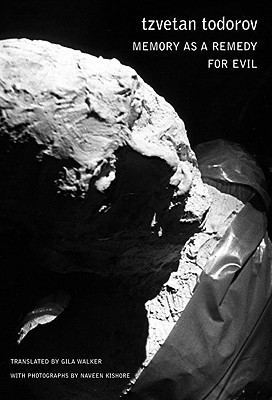
Can humanity be divided into good and evil? And if so, is it possible for the good to vanquish the evil, eradicating it from the face of the Earth by declaring war on evildoers and bringing them to justice? Can we overcome evil by the power of memory? In Memory as a Remedy for Evil , Tzvetan Todorov answers these questions in the negative, arguing that despite all our efforts to the contrary, we cannot be delivered from evil. In this work on evil, memory and justice, Todorov examines the uses of memory and the spate of memorial laws in France in order to show how memory has failed as a remedy against evil and how efforts to come to grips with past evil through trials and punitive justice have failed as well. Todorov locates the fatal flaw of all these approaches in our erroneous relationship with evil as alterity, the distinction that we draw between ourselves and others that allows us to imagine ourselves in the appealing role of hero and victim and confine others to the role of villain and criminal. Similarly, in his analysis of the South African Truth and Reconciliation Commission and Cambodia’s Khmer Rouge Tribunal, Todorov argues in favor of restorative justice, which “seeks not to punish but to restore relations that should never have been interrupted” between former perpetrators and former victims. Memory as a Remedy for Evil is a powerful and timely work that asks that we recognize the good and evil within each of us—and reminds us that it is only by coming to terms with evil and trying to understand it that we can hope to tame it.

Autre couverture. Même éditeur. Même isbn. Même contenu. Edition de 2004

Tzvetan Todorov, one of Europe’s leading intellectuals, explores the complex relations between art, politics, and ethics in the essays that make up The Limits of Art. In one essay, “Artists and Dictators,” Todorov traces the intimate relationship between avant-garde art and radical politics in pre-revolutionary Russia, pre-fascist Italy, and pre-Nazi Germany. Todorov sets forth the radical idea that the project of totalitarian dictators and avant-garde artists actually “emerged from the same womb”: both artists and dictators set out to make it new—be it art or society.Further troubling the role of art in the world at large, in “Art and Ethics” Todorov re-examines the age-old question of what can be expected from art and whether it should be emancipated from ethics. Must art be morally instructive, or should it be self-sufficient and concept-free? The answer is not an either/or to Todorov, who believes, like Baudelaire, that art has both cognitive and ethical aspects to it—even if it is presented as art for art’s sake.Throughout the essays in The Limits of Art, Todorov insists on the essential need for artists to recognize, understand, and even love the world outside.“Todorov harbors no illusions about the mix of good and bad that enters into the fabric of all that is human. . . . He speaks throughout in his own voice, with rare breadth of sympathy and with a fine eye for the complexities of human experience.”—New Republic“Like the authors he focuses on, Todorov is tolerant, understanding and wise.”—Observer

This illuminating analysis by one of the world's leading intellectuals addresses fundamental questions about the new world disorder exemplified by the war on terrorism, the Iraq conflict and its aftermath and the current state of transatlantic relations.In eight concise chapters, Todorov discusses the use of force versus diplomacy, the emergence of new powers and the reactions of different players such as the UK, France, Poland and the United Nations, to the imperialist turn in US foreign policy. He argues that a new Europe is capable of reducing its dependence on the United States and assuming more responsibilities in the area of foreign affairs, would be the most effective way of counter-balancing America's current dominance of global politics. Drawing on his vast knowledge of history and philosophy, Todorov has written an insightful and timely book that, without simplyfying the issues, is accessible to all.

Per millenni e millenni, gli esseri umani l'hanno chiamato «Dio». Poi ha preso anche altri nomi: «Nazione», «Classe», «Razza». Oggi molti non si riconoscono più in queste forme religiose o politiche, e tuttavia continuano a inseguire l'assoluto.Una delle strade che si possono seguire in questa ricerca è l'arte, l'aspirazione alla bellezza. Al centro della vita di Oscar Wilde, Rainer Maria Rilke e Marina Cvetaeva c'è proprio questa ossessione:questi tre grandissimi scrittori non si sono accontentati di creare opere d'arte sublimi, ma hanno posto la loro intera esistenza al servizio del bello e della perfezione. Fino alle estreme conseguenze: per Wilde, questo ha portato alla decadenza fisica e psichica; Rilke ha avuto come compagna costante la depressione; la Cvetaeva è arrivata addirittura al suicidio.Tzvetan Todorov racconta i loro destini, così appassionanti e tragici. E si interroga sul senso più profondo della loro esperienza di «avventurieri dell'assoluto». Per chiedersi in che cosa consista davvero una vita bella e scoprire il segreto dell'«arte della vita».

Available in English for the first time, Imperfect Garden is both an approachable intellectual history and a bracing treatise on how we should understand and experience our lives. In it, one of France's most prominent intellectuals explores the foundations, limits, and possibilities of humanist thinking. Through his critical but sympathetic excavation of humanism, Tzvetan Todorov seeks an answer to modernity's fundamental how to maintain our hard-won liberty without paying too dearly in social ties, common values, and a coherent and responsible sense of self.Todorov reads afresh the works of major humanists--primarily Montaigne, Rousseau, and Constant, but also Descartes, Montesquieu, and Toqueville. Each chapter considers humanism's approach to one major theme of human liberty, social life, love, self, morality, and expression. Discussing humanism in dialogue with other systems, Todorov finds a response to the predicament of modernity that is far more instructive than any offered by conservatism, scientific determinism, existential individualism, or humanism's other contemporary competitors. Humanism suggests that we are members of an intelligent and sociable species who can act according to our will while connecting the well-being of other members with our own. It is through this understanding of free will, Todorov argues, that we can use humanism to rescue universality and reconcile human liberty with solidarity and personal integrity.Placing the history of ideas at the service of a quest for moral and political wisdom, Todorov's compelling and no doubt controversial rethinking of humanist ideas testifies to the enduring capacity of those ideas to meditate on--and, if we are fortunate, cultivate--the imperfect garden in which we live.

En unos tiempos en que la ciudadanía europea vive cada vez más el desapego hacia sus representantes políticos al tiempo que crecen las incertidumbres, Tzvetan Todorov nos hace descubrir o redescubrir figuras que, cada una a su manera, lograron conciliar exigencia moral y acción pública. Vivieron en contextos diferentes, se enfrentaron a enemigos de distinta naturaleza y sus respuestas fueron diversas. Todos ellos, sin embargo, renunciaron al confort, pusieron en riesgo su libertad, en ocasiones su vida, rechazaron el sometimiento y tuvieron el coraje de resistir evitando a la vez sucumbir al odio y a la tentación de la venganza. Los nombres de los ocho Insumisos son más o menos Etty Hillesum, Germaine Tillion, Borís Pasternak, Aleksandr Solzhenitsyn, Nelson Mandela, Malcolm X, David Shulman y Edward Snowden. Pero sus opciones éticas no han tenido siempre la atención que merecen. Tzvetan Todorov viene a cubrir esa laguna y, fiel una vez más a su voluntad de reflexionar sobre los desafíos de nuestro mundo, nos ofrece con estos Insumisos una fuente apasionante de reflexión y de inspiración. No únicamente para formular nuestras reacciones como ciudadanos ante los debates públicos, sino también para responder a los desafíos más ordinarios de nuestra vida cotidiana.

The fall of the Berlin Wall marked the beginning of the collapse of the Soviet Union, as well as many other communist totalitarian regimes around the world. But it would be naive to assume that this historic, symbolic event and its aftermath have completely rid the world of totalitarianism. Instead, we should ask, what is the totalitarian experience and how does it survive today? This is the imposing question raised by acclaimed philosopher and writer Tzvetan Todorov in this compact, highly personal essay. Here, he recounts his own experiences with totalitarianism in his native Bulgaria and discusses the books he has written in the last twenty years that were devoted to examining such regimes, such as Voices from the Gulag , his influential analysis of Stalinist concentration camps. Through this retrospective investigation, Todorov offers a historical look at communism. He brings together and distills his extensive oeuvre to reveal the essence of totalitarian ideology, the characteristics of daily life under communism, and the irony of democratic messianism. Bringing his thoughts and insights up to the present, Todorov explores how economic ultraliberalism may be considered just another form of totalitarianism. And his conclusion leads us to ask ourselves another challenging Are liberal democratic societies actually totalitarian experiences in disguise? “In this honed, finely calibrated essay, Todorov refutes the notion that good can be imposed by force. More efficient is to embody one’s values and demonstrate their worth. . . . This is a concise and eloquent defence of what makes us truly human.”— Age , on Torture and the War on Terror

Sanatçı, ister bir dahi olsun ister bütün zamanların en büyük yaratıcısı, sonuçta aynı havayı soluduğumuz, benzer çelişkilerle boğuştuğumuz bir insandır. Sanat ve edebiyat filozofu Tzvetan Todorov, bir sanat eserinin ilettiği mesaj ile yaratıcısının hayat tarzı ve gündelik yaşamı arasındaki ilişkiyi irdeleyerek çoğu zaman unutulan bu basit ve temel gerçeği son derece yalın ve berrak bir dille hatırlatıyor.Genelde hepimiz gibi "geçinmek için" eser üretmek zorunda olan sanatçının gündelik yaşamla ilişkisini büyük ressam Rembrandt örneğini ele alarak aktaran Todorov, gerek ressamın tablo ve gravürlerinden bize uzanan insani değerleri gerekse sıradan bir hayat süren bu aynı kişinin eşleri, çocukları, yakınları ve komşularıyla arasındaki ilişkiyi gözler önüne seriyor. Ya Sanat Ya Hayat, aslında eserin de sanatçının da aynı hayatın içinden beslenerek karşımıza çıktığını gösterirken ikilemi tersine çeviriyor: Hem sanat hem hayat!Kitabın ikinci bölümünde ise, bu kez bambaşka bir noktadan, sanat ile ahlak arasındaki yüzlerce yıllık çatışmadan yola çıkan Todorov, Iris Murdoch üzerinden dünyaya, hayata duyulan sevginin hem sanatın hem de ahlakın temelinde yattığını gösterirken, yine hem sanat hem hayat demektedir.Bunca karmaşa ve kafa karışıklığı içinde yaşadığımız, sanatla hayatın bağını çoğu zaman kaçırdığımız günümüzde, ayakları sağlam bir zemine basan açık ve net çözümlemeler, yorumlar okumak, hayata ve sanata yeniden inanç duymak isteyen herkese...

Um livro de grande utilidade para os nossos estudiosos de literatura, pois, além de divulgar de modo claro e irrepreensível as ideias dos formalistas russos e do estruturalismo linguístico, dá ao leitor armas para descobrir as estruturas que existem subjacentes a toda narrativa e estabelecer um repertório de intrigas, de funções e de visões. Estes são alguns dos objetivos deste livro, que leva adiante as reflexões dos formalistas e as atualiza à luz da linguística contemporânea.

This is a collection in translation of recent essays by Tzvetan Todorov, one of the most eminent of contemporary literary critics. In the first section of this volume Todorov proposes definitions for the notions of literature, discourse and genre. Following is a general discussion of the two principal literary genres, fiction and poetry. Finally in the third section of essays Todorov examines works of individual authors as case studies; among them Poe, Dostoevsky, Conrad and James.

Focusing on theories of verbal symbolism, Tzvetan Todorov here presents a history of semiotics. From an account of the semiotic doctrines embodied in the works of classical rhetoric to an exploration of representative modern concepts of the symbol found in ethnology, psychoanalysis, linguistics, and poetics, Todorov examines the rich tradition of sign theory. In the course of his discussion Todorov treats the works of such writers as Aristotle, Cicero, Quintilian, Augustine, Condillac, Lessing, Diderot, Goethe, Novalis, the Schlegel brothers, Levy-Bruhl, Freud, Saussure, and Jakobson.

La Revolución rusa de 1917 es sin duda uno de los episodios más cruciales del siglo XX y dio origen al primer estado totalitario de la historia. Muchos fueron los artistas y escritores que saludaron la revolución y muchos también los que sufrieron la represión del totalitarismo que la siguió. En esta obra Tzvetan Todorov se fija en una serie de creadores y analiza su posición frente a la revolución.

Arraché à son milieu, tout homme commence par souffrir : il est plus agréable de vivre parmi les siens. Mais par la suite, le dépaysement peut fonder une expérience profitable. Il permet de ne plus confondre le réel avec l'idéal ou la culture avec la nature. L'homme dépaysé, pour peu qu'il sache surmonter le ressentiment né du mépris ou de l'hostilité, découvrira la curiosité et pratiquera la tolérance. Sa présence parmi les " autochtones " exerce à son tour un effet dépaysant : en troublant les habitudes mentales, en déconcertant par sa conduite et ses jugements, il favorise l'étonnement, premier pas obligé dans toute découverte de soi. Mon passage d'un pays à l'autre m'a enseigné tout à la fois le relatif et l'absolu. Le relatif, car je ne pouvais plus ignorer que tout ne devait pas se passer partout comme dans mon pays d'origine. L'absolu aussi, car le régime totalitaire dans lequel j'avais grandi pouvait me servir, en toute circonstance, d'étalon du mal. De là, sans doute, mon aversion simultanée pour le relativisme moral - tout se vaut - et le manichéisme du noir et du blanc.

Eloge du quotidien: Essai sur la peinture hollandaise du XVIIe siècle
by Tzvetan Todorov
Rating: 3.5 ⭐
Rayon : Art Editeur : Adam Biro Date de parution : 1993 Description : In-4, 192 pages, relié entoilé avec jaquette parfaite dans son emboîtage parfait, dédicaces d'amis en page de garde, occasion, très bon état. Envois quotidiens du mardi au samedi. Les commandes sont adressées sous enveloppes bulles. Photos supplémentaires de l'ouvrage sur simple demande. Réponses aux questions dans les 12h00. ATTENTION : Les expéditions de plus de 2 kilos se voient appliquer un supplément de port. Un envoi en Mondial Relay est possible en France et en Europe. IMPORTANT : Le service économique d'envoi de livres à l'international "livres et brochures" prendra fin au 1er juillet 2025. Clients internationaux, profitez des derniers mois de ce tarif très avantageux. N'hésitez pas à vous renseigner avant de passer commande. Librairie Le Piano-Livre. Merci. Référence catalogue X15679. Please let us know if you have any questions. Thanks

Considerado junto con Ronald Barthes el escritor mas prolijo del circulo de los estructuralistas franceses, Tzvetan Todorov cuestiona en el presente libro el uso que hace el critico, frente a la literatura, de la libertad. Se trata casi de una autoinculpacion que no se conforma con desentranar y cuestionar la labor critica y sus autores, sino que propone, fundamentalmente, una nueva manera de abordar la literatura mediante el dialogo: un dialogo con la unica opcion valida para la vida el hombre mismo que, en lugar de ir en busca de definiciones de la realidad del lenguaje o del lenguaje de la realidad, deja de lado las mascaras conceptuales y acaba trazando un atractivo panorama de la critica del siglo XX, un analisis del pensamiento teorico de Sartre y Blanchot, de Do?=n y Brecht, de Jakobson y Bajtin, de Barthes y Frye, de Watt y Benichou. De este modo, el texto va adquiriendo densidad a medida que avanza, es decir, a medida que rastrea nombres y estilos, vivencias en definitiva, convirtiendose asi en el relato de un aprendizaje, el del autor, lleno de amores y decepciones. A la vez programa de la critica dialogica en los dos ultimos capitulos los autores comentados acaban tomando la palabra y participacion en el debate ideologico, este libro supera la antinomia entre el dogmatismo clasico y el relativismo moderno abriendo una puerta hacia un porvenir incierto, pero atractivo.