
Silvanus Phillips Thompson
Silvanus Phillips Thompson FRS was a professor of physics at the City and Guilds Technical College in Finsbury, England. He was known for his work as an electrical engineer and as an author. Thompson is one of the individuals represented on the Engineers Walk in Bristol, England. Thompson was elected a Fellow of the Royal Society in 1891 and was elected a member of the Royal Swedish Academy of Sciences in 1894.
30 Books Written
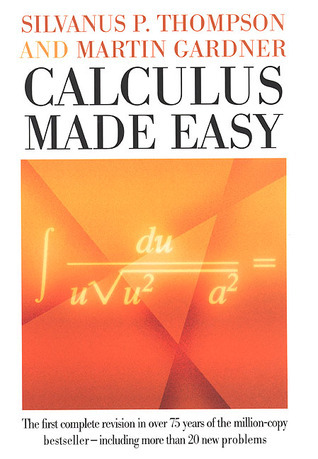
Calculus Made Easy by Silvanus P. Thompson and Martin Gardner has long been the most popular calculus primer.This major revision of the classic math text makes the subject at hand still more comprehensible to readers of all levels. With a new introduction, three new chapters, modernized language and methods throughout, and an appendix of challenging and enjoyable practice problems, Calculus Made Easy has been thoroughly updated for the modern reader.

Book by Thompson, Silvanus Phillips

This Elibron Classics edition is a facsimile reprint of a 1901 edition by Cassell and Company, Ltd., London, Paris, New York & Melbourne.

A short biography of Charles Wheatstone, prolific English inventor. Among his more popular inventions are the first practical telegraph and the English concertina.

Lovers of the Occult and the unusual will love this book. It gives a deep insight into the ancient Japanese tradition of magic mirrors and their connection to the Sun Goddess. In Japan mirrors had a peculiar place in society and spirituality. Mirrors were often decorated and surrounded with flowers like we see icons from the West decorated, and some of them are told to have magical properties. This book digs into the special properties. It seems that due to an old technique some Japanese mirrors can present patterns or images, not to the onlooker but at the mirror's reflection in the room, if the light source is just right.

An important component of a biography of any great scientist is that the biographer also have deep scientific knowledge. This holds true for Silvanus P. Thompson, a scientist of distinction who authored this biography of Lord Kelvin. Thompson was a Fellow of the Royal Society, President of the Physical Society, President of the Institution of Electrical Engineers, and President of the Illuminating Engineering Society--all within a six year span. He also held the office of president for other scientific organizations. This biography was begun in 1906 and published in 1910. It was re-issued in 1976 by Chelsea Publishing. The work is considered the definitive biography of Lord Kelvin. It includes Kelvin's personal recollections and data. His death in 1907 affected the project by extending the scope of the original work. He left letters, diaries, and other documents that supplemented the existing information. These documents would allow Thompson to create a much more comprehensive account of Kelvin's career than was previously possible. From the Preface by ``It has been the author's desire to let documents and letters speak as far as possible for themselves; and if he has not always been able to avoid letting his own views tinge these pages, he has at least endeavoured to avoid attributing to others that which is only his own. Doubtless there are many of Lord Kelvin's former pupils who will find gaps in the presentation of his life and character, as must needs be when the author can himself claim no nearer association than that of disciple. But the disciple of one who was himself conspicuously faithful in little things, must at least try to be faithful. The peculiar and affectionate admiration, amounting in some almost to worship, which characterizes those who had the high privilege of that more intimate association, spreads far beyond their circle to the disciple. Let it be hoped that the affectionate admiration which he too shares may not have warped his judgment.''
Light Visible And Invisible: A Series Of Lectures Delivered At The Royal Institution Of Great Britain, At Christmas, 1896, With Additional Lectures
by Silvanus Phillips Thompson
Rating: 5.0 ⭐
This work has been selected by scholars as being culturally important, and is part of the knowledge base of civilization as we know it. This work was reproduced from the original artifact, and remains as true to the original work as possible. Therefore, you will see the original copyright references, library stamps (as most of these works have been housed in our most important libraries around the world), and other notations in the work.This work is in the public domain in the United States of America, and possibly other nations. Within the United States, you may freely copy and distribute this work, as no entity (individual or corporate) has a copyright on the body of the work.As a reproduction of a historical artifact, this work may contain missing or blurred pages, poor pictures, errant marks, etc. Scholars believe, and we concur, that this work is important enough to be preserved, reproduced, and made generally available to the public. We appreciate your support of the preservation process, and thank you for being an important part of keeping this knowledge alive and relevant.

This is a pre-1923 historical reproduction that was curated for quality. Quality assurance was conducted on each of these books in an attempt to remove books with imperfections introduced by the digitization process. Though we have made best efforts - the books may have occasional errors that do not impede the reading experience. We believe this work is culturally important and have elected to bring the book back into print as part of our continuing commitment to the preservation of printed works worldwide.

This work has been selected by scholars as being culturally important, and is part of the knowledge base of civilization as we know it. This work was reproduced from the original artifact, and remains as true to the original work as possible. Therefore, you will see the original copyright references, library stamps (as most of these works have been housed in our most important libraries around the world), and other notations in the work. This work is in the public domain in the United States of America, and possibly other nations. Within the United States, you may freely copy and distribute this work, as no entity (individual or corporate) has a copyright on the body of the work. As a reproduction of a historical artifact, this work may contain missing or blurred pages, poor pictures, errant marks, etc. Scholars believe, and we concur, that this work is important enough to be preserved, reproduced, and made generally available to the public. We appreciate your support of the preservation process, and thank you for being an important part of keeping this knowledge alive and relevant.

Excerpt from Design of DynamosIn the section on Armature Winding Schemes special attention is given to series-parallel windings, and to the doctrine of the equivalent ring.This book is a reproduction of an important historical work. Forgotten Books uses state-of-the-art technology to digitally reconstruct the work, preserving the original format whilst repairing imperfections present in the aged copy. In rare cases, an imperfection in the original, such as a blemish or missing page, may be replicated in our edition. We do, however, repair the vast majority of imperfections successfully; any imperfections that remain are intentionally left to preserve the state of such historical works.

A Not Impossible Religion
by Silvanus Phillips Thompson
Excerpt from A Not Impossible Religion Doubtless many passages would have been modified or altered by him, but it has seemed better to issue these papers substantially as he left them. In a very few cases one or two omissions or alterations have been made, and three chapters are withheld which do not seem necessary to the scheme of the book. It should be added that the various chapters were written, in some cases at an interval of years, in the midst of an exceptionally busy life, crowded with intellectual activity, and burdened with a heavy weight of work for others. In one or two cases they were prepared and delivered as separate addresses. In his intense love of truth and indignation with unreality and insincerity, Dr. Thompson has sometimes written severely of orthodoxy and its exponents. It must not be thought, however, that he did not love and cherish true religion everywhere, even when it found expression in the most orthodox language and way of worship. Two friends amongst those with whom he was accustomed to meet and discuss some of the deepest problems of life and religion, whom he regarded with especial love and veneration, were in the one case a devout Roman Catholic, and in the other an Anglican clergyman. Above all, it must be remembered that this book was not intended for men and women who are content with a creed and a worship which are accepted as orthodox.This book is a reproduction of an important historical work. Forgotten Books uses state-of-the-art technology to digitally reconstruct the work, preserving the original format whilst repairing imperfections present in the aged copy. In rare cases, an imperfection in the original, such as a blemish or missing page, may be replicated in our edition. We do, however, repair the vast majority of imperfections successfully; any imperfections that remain are intentionally left to preserve the state of such historical works.
This is a reproduction of a book published before 1923. This book may have occasional imperfections such as missing or blurred pages, poor pictures, errant marks, etc. that were either part of the original artifact, or were introduced by the scanning process. We believe this work is culturally important, and despite the imperfections, have elected to bring it back into print as part of our continuing commitment to the preservation of printed works worldwide. We appreciate your understanding of the imperfections in the preservation process, and hope you enjoy this valuable book.

This is a pre-1923 historical reproduction that was curated for quality. Quality assurance was conducted on each of these books in an attempt to remove books with imperfections introduced by the digitization process. Though we have made best efforts - the books may have occasional errors that do not impede the reading experience. We believe this work is culturally important and have elected to bring the book back into print as part of our continuing commitment to the preservation of printed works worldwide.

Recent Progress in Dynamo-Electric Machines: Being a Supplement to "Dynamo-Electric Machinery"
by Silvanus Phillips Thompson
Excerpt from Recent Progress in Dynamo-Electric Being a Supplement to "Dynamo-Electric Machinery"No preliminary explanation of the oh ject of these lectures can be considered necessary. The title is so explicit, the subject so important, and the author so well known, that explanations are ren dered superfluous.About the PublisherForgotten Books publishes hundreds of thousands of rare and classic books. Find more at www.forgottenbooks.comThis book is a reproduction of an important historical work. Forgotten Books uses state-of-the-art technology to digitally reconstruct the work, preserving the original format whilst repairing imperfections present in the aged copy. In rare cases, an imperfection in the original, such as a blemish or missing page, may be replicated in our edition. We do, however, repair the vast majority of imperfections successfully; any imperfections that remain are intentionally left to preserve the state of such historical works.
Dynamo-Electric Machinery : a Manual for Students of Electrotechnics. Volume 1 , Continuous-Current Machines / by Silvanus P. Thompson
by Silvanus Phillips Thompson

The Rose of the Winds: The Origin and Development of The Compass-card
by Silvanus Phillips Thompson
This work has been selected by scholars as being culturally important and is part of the knowledge base of civilization as we know it. This work is in the public domain in the United States of America, and possibly other nations. Within the United States, you may freely copy and distribute this work, as no entity (individual or corporate) has a copyright on the body of the work. Scholars believe, and we concur, that this work is important enough to be preserved, reproduced, and made generally available to the public. To ensure a quality reading experience, this work has been proofread and republished using a format that seamlessly blends the original graphical elements with text in an easy-to-read typeface. We appreciate your support of the preservation process, and thank you for being an important part of keeping this knowledge alive and relevant.

Dynamo-electric Machinery: Alternating-current Machines
by Silvanus Phillips Thompson
This work has been selected by scholars as being culturally important, and is part of the knowledge base of civilization as we know it. This work was reproduced from the original artifact, and remains as true to the original work as possible. Therefore, you will see the original copyright references, library stamps (as most of these works have been housed in our most important libraries around the world), and other notations in the work. This work is in the public domain in the United States of America, and possibly other nations. Within the United States, you may freely copy and distribute this work, as no entity (individual or corporate) has a copyright on the body of the work. As a reproduction of a historical artifact, this work may contain missing or blurred pages, poor pictures, errant marks, etc. Scholars believe, and we concur, that this work is important enough to be preserved, reproduced, and made generally available to the public. We appreciate your support of the preservation process, and thank you for being an important part of keeping this knowledge alive and relevant.

Dynamo-Electric Machinery: A Manual for Students of Electrotechnics
by Silvanus Phillips Thompson
Excerpt from Dynamo-Electric Machinery: A Manual for Students of ElectrotechnicsSince 1892, when the fourth edition of this work appeared, much has been done in the development of the subject, chiefly in the domain of Alternate-current Machinery. To make room for the newer matter the earlier part of the book has been considerably compressed. Much of the chapter relating to the Magnetic Properties Of Iron has been trans ferred to the author's work on. T lze Electromagnat. The chapter on Alternators has been rewritten, as has that on Transformers. The subject of Alternate-current Motors has been divided into two parts, the first being now devoted to Synchronous Motors, the second to Asynchronous Motors but the latter has been briefly handled, Owing to the recent publication of the author's work on Palm/tare Electric Currents, in which polyphase methods, both for generators and for motors, are discussed in detail. The subject of Motor-generators now constitutes a separate chapter.About the PublisherForgotten Books publishes hundreds of thousands of rare and classic books. Find more at www.forgottenbooks.comThis book is a reproduction of an important historical work. Forgotten Books uses state-of-the-art technology to digitally reconstruct the work, preserving the original format whilst repairing imperfections present in the aged copy. In rare cases, an imperfection in the original, such as a blemish or missing page, may be replicated in our edition. We do, however, repair the vast majority of imperfections successfully; any imperfections that remain are intentionally left to preserve the state of such historical works.

Gilbert, of Colchester: An Elizabethan Magnetizer
by Silvanus Phillips Thompson
This early works is a fascinating look at the life of William Gilbert, who, founded the theory of the Mariner's compass by his brilliant discovery of the magnetism of the globe. Many of the earliest books, particularly those dating back to the 1900's and before, are now extremely scarce and increasingly expensive. We are republishing these classic works in affordable, high quality, modern editions, using the original text and artwork.

Cálculo infinitesimal al alcance de todos
by Silvanus Phillips Thompson
Buenos Aires. 21 cm. 287 p. il. Encuadernación en tapa dura de editorial. Thompson, Silvanus Phillips 1851-1916. Versión española de la última edición inglesa por T. Rodríguez Bachiller. Talls. Ra-Da. Título Calculus made easy .. Este libro es de segunda mano y tiene o puede tener marcas y señales de su anterior propietario.

Dynamo-Electric Machinery: A Manual for Students of Electrotechnics; Volume 2
by Silvanus Phillips Thompson
This work has been selected by scholars as being culturally important, and is part of the knowledge base of civilization as we know it. This work was reproduced from the original artifact, and remains as true to the original work as possible. Therefore, you will see the original copyright references, library stamps (as most of these works have been housed in our most important libraries around the world), and other notations in the work. This work is in the public domain in the United States of America, and possibly other nations. Within the United States, you may freely copy and distribute this work, as no entity (individual or corporate) has a copyright on the body of the work. As a reproduction of a historical artifact, this work may contain missing or blurred pages, poor pictures, errant marks, etc. Scholars believe, and we concur, that this work is important enough to be preserved, reproduced, and made generally available to the public. We appreciate your support of the preservation process, and thank you for being an important part of keeping this knowledge alive and relevant.
Electrical Tables and Memoranda
by Silvanus Phillips Thompson
Excerpt from Electrical Tables and MemorandaFormulae and Tables for the Strength of Mate rials. Roofs, Water Supply, Drainage. Gas, and other matters useful to Architects and Builders Information connwted with Sanitary Engineer ing — Memoranda on the several Trades used in Building, including a description of Materials and Analyses of Prices for Builders' Work — The Prac tice of Builders' Measurement — Mensuration and the Division of land-tables of the Weights of Iron and other Building Materials — Constants of Labour — Valuation of Property — Summary of the Practice in Dilapidations — Scale of Professional Charges for Architects and Surveyors — Tables of English and French Weights and Measures....

The Quest for Truth
by Silvanus Phillips Thompson
This work has been selected by scholars as being culturally important, and is part of the knowledge base of civilization as we know it. This work was reproduced from the original artifact, and remains as true to the original work as possible. Therefore, you will see the original copyright references, library stamps (as most of these works have been housed in our most important libraries around the world), and other notations in the work.This work is in the public domain in the United States of America, and possibly other nations. Within the United States, you may freely copy and distribute this work, as no entity (individual or corporate) has a copyright on the body of the work.As a reproduction of a historical artifact, this work may contain missing or blurred pages, poor pictures, errant marks, etc. Scholars believe, and we concur, that this work is important enough to be preserved, reproduced, and made generally available to the public. We appreciate your support of the preservation process, and thank you for being an important part of keeping this knowledge alive and relevant.

The Manufacture of Light; a Lecture Delivered at the Meeting of the British Association at York
by Silvanus Phillips Thompson
This work has been selected by scholars as being culturally important, and is part of the knowledge base of civilization as we know it. This work was reproduced from the original artifact, and remains as true to the original work as possible. Therefore, you will see the original copyright references, library stamps (as most of these works have been housed in our most important libraries around the world), and other notations in the work.This work is in the public domain in the United States of America, and possibly other nations. Within the United States, you may freely copy and distribute this work, as no entity (individual or corporate) has a copyright on the body of the work.As a reproduction of a historical artifact, this work may contain missing or blurred pages, poor pictures, errant marks, etc. Scholars believe, and we concur, that this work is important enough to be preserved, reproduced, and made generally available to the public. We appreciate your support of the preservation process, and thank you for being an important part of keeping this knowledge alive and relevant.

1837, My Connection With It
by Silvanus Phillips Thompson
This work has been selected by scholars as being culturally important, and is part of the knowledge base of civilization as we know it. This work was reproduced from the original artifact, and remains as true to the original work as possible. Therefore, you will see the original copyright references, library stamps (as most of these works have been housed in our most important libraries around the world), and other notations in the work.This work is in the public domain in the United States of America, and possibly other nations. Within the United States, you may freely copy and distribute this work, as no entity (individual or corporate) has a copyright on the body of the work.As a reproduction of a historical artifact, this work may contain missing or blurred pages, poor pictures, errant marks, etc. Scholars believe, and we concur, that this work is important enough to be preserved, reproduced, and made generally available to the public. We appreciate your support of the preservation process, and thank you for being an important part of keeping this knowledge alive and relevant.

The Life of William Thomson, Baron Kelvin of Largs (Cambridge Library Collection - Physical Sciences)
by Silvanus Phillips Thompson
The mathematician and physicist William Thomson, 1st Baron Kelvin, (1824–1907) was one of Britain's most influential scientists, famous for his work on the first and second laws of thermodynamics and for devising the Kelvin scale of absolute temperature. Silvanus P. Thompson (1851–1916) began this biography with the co-operation of Kelvin in 1906, but the project was interrupted by Kelvin's death the following year. Thompson, himself a respected physics lecturer and scientific writer, decided that a more comprehensive biography would be needed and spent several years reading through Kelvin's papers in order to complete these two volumes, published in 1910. Volume 1 covers Kelvin's life to 1871, including his student days, his election (aged 22) as professor in Glasgow, his ground-breaking theoretical research on thermodynamics, his applied work on telegraphs including the Atlantic cable, and his involvement in a geological controversy about the age of the earth.

Cantor Lectures on the Electromagnet
by Silvanus Phillips Thompson
Excerpt from Cantor Lectures on the ElectromagnetOther electro-mechanical contrivances, come within the purview of the electrical engineer. In every one of these, and in many more of the useful applications of electricity, the central organ is an electromagnet. By means of this simple and familiar contrivance - an iron core surrounded by a copper-wire coil - mechanical ao tions are produced at will, at a distance, under control, by the agency of electric currents. These mechanical actions are known to vary with the mass, form, and quality of the iron core, the quantity and disposition of the copper wire wound upon it, the quantity of electric current circulating around it, the form, quality, and distance of the iron armature upon which it acts. But the laws which govern the mechanical action in re lation to these various matters are by no means well known, and, indeed, several of them have long been a matter of dispute. Gradually, however, that which has been vague and indeterminate becomes clear and pre cise. The laws of the steady circulation of electric cur rents, atone time altogether obscure, were cleared up by the discovery of the famous law of Ohm. Their ex tension to the case of rapidly interrupted currents, such as are used in telegraphic working, was discovered by Helmholtz; while to Maxwell is due their future exten sion to alternating, or, as they are sometimes called, undulatory currents. All this was purely electric work. But the law of the electromagnet was still undiscovered; the magnetic part of the problem was still buried in obscurity. The only exact reasoning about magnetism dealt with problems of another kind; it was couched in language of a misleading character for the practical.This book is a reproduction of an important historical work. Forgotten Books uses state-of-the-art technology to digitally reconstruct the work, preserving the original format whilst repairing imperfections present in the aged copy. In rare cases, an imperfection in the original, such as a blemish or missing page, may be replicated in our edition. We do, however, repair the vast majority of imperfections successfully; any imperfections that remain are intentionally left to preserve the state of such historical works.

The Life of William Thomson, Baron Kelvin of Largs, 2 Volume Set
by Silvanus Phillips Thompson
The mathematician and physicist William Thomson, 1st Baron Kelvin, (1824 1907) was one of Britain's most influential scientists, famous for his work on the first and second laws of thermodynamics and for devising the Kelvin scale of absolute temperature. Silvanus P. Thompson (1851 1916) began this biography with the co-operation of Kelvin in 1906, but the project was interrupted by Kelvin's death the following year. Thompson, himself a respected physics lecturer and scientific writer, decided that a more comprehensive biography would be needed and spent several years reading through Kelvin's papers in order to complete these two volumes, published in 1910. Volume 1 covers Kelvin's early career, his research in thermodynamics, and his applied work on telegraphs and cables. Volume 2 deals with Kelvin's later career, aspects of his personal life including his enthusiasm for sailing and music, and the relationship between his scientific discoveries and his religious beliefs."

Hand List of the Magnetic and Electrical Books in the Library of Silvanus Phillips Thompson
by Silvanus Phillips Thompson
Reprint of the 1914 edition. Oversized Octavo. vii, 119p. Silvanus Phillips Thompson, F.R.S., was born in York on 19th June 1851, the second of eight children of a Quaker schoolteacher. From 1870-75, he taught at the school where his father was senior master. He went to Flounders Institute - a training school for teachers, where he took the London B.Sc. degree in 1869. He was a recognized authority on electricity, magnetism and acoustics and his writings are numerous. In 1884, he published his epoch-making work 'Dynamo-electric a Manual for Students of Electrotechnics'- practically every designer of electrical machines gleaned his first information on the subject from this work. In the 1900s, he was commissioned towrite the official biography of Lord Kelvin who was able to help him in the early stages of the work but died before it was completed. 'The Life of William Thomson, Baron Kelvin of Largs' was published in 1910. Thompson held many important positions in the world of science and received many British and International honors. As for hobbies, he was an avid book-collector and sometime President of the Sette of Odd Volumes, a dining club for bibliophiles; his remarkable library is now in the possession of the IEE [The Institution of Electrical Engineers]. This exceedingly rare bibliography of books in the Thompson's library has only 10 listings on OCLC. Besterman 1930 mentions one thousand books citations for this book.

Latest dynamo-electric machines
by Silvanus Phillips Thompson
Latest dynamo-electric machines. This book, "Latest dynamo-electric machines," by Silvanus Phillips Thompson, is a replication of a book originally published before 1897. It has been restored by human beings, page by page, so that you may enjoy it in a form as close to the original as possible.