
Ramamurti Shankar
Ramamurti Shankar (born April 28, 1947) is the John Randolph Huffman Professor of Physics at Yale University, in New Haven, Connecticut. His research is in theoretical condensed matter physics, although he is also known for his earlier work in theoretical particle physics. In 2009, Shankar was awarded the Julius Edgar Lilienfeld Prize from the American Physical Society for "innovative applications of field theoretic techniques to quantum condensed matter systems". He received his B. Tech in electrical engineering from the Indian Institute of Technology in Madras and his Ph.D. in theoretical particle physics from the University of California, Berkeley (1974). After three years at the Harvard Society of Fellows, he joined the Yale physics department, which he chaired between 2001-2007. He is a fellow of the American Academy of Arts and Sciences. He is dedicated to teaching and has published three texts: Principles of Quantum Mechanics, Basic Training in Mathematics: A Fitness Program for Science Students and Fundamentals of Physics.
6 Books Written
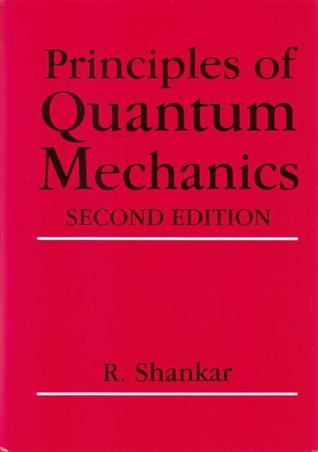
Reviews from the First Edition:"An excellent text ... The postulates of quantum mechanics and the mathematical underpinnings are discussed in a clear, succinct manner." (American Scientist)"No matter how gently one introduces students to the concept of Dirac's bras and kets, many are turned off. Shankar attacks the problem head-on in the first chapter, and in a very informal style suggests that there is nothing to be frightened of." (Physics Bulletin)Reviews of the Second Edition:"This massive text of 700 and odd pages has indeed an excellent get-up, is very verbal and expressive, and has extensively worked out calculational details---all just right for a first course. The style is conversational, more like a corridor talk or lecture notes, though arranged as a text. ... It would be particularly useful to beginning students and those in allied areas like quantum chemistry." (Mathematical Reviews)R. Shankar has introduced major additions and updated key presentations in this second edition of Principles of Quantum Mechanics. New features of this innovative text include an entirely rewritten mathematical introduction, a discussion of Time-reversal invariance, and extensive coverage of a variety of path integrals and their applications. Additional highlights include:- Clear, accessible treatment of underlying mathematics- A review of Newtonian, Lagrangian, and Hamiltonian mechanics- Student understanding of quantum theory is enhanced by separate treatment of mathematical theorems and physical postulates- Unsurpassed coverage of path integrals and their relevance in contemporary physicsThe requisite text for advanced undergraduate- and graduate-level students, Principles of Quantum Mechanics, Second Edition is fully referenced and is supported by many exercises and solutions. The book's self-contained chapters also make it suitable for independent study as well as for courses in applied disciplines.
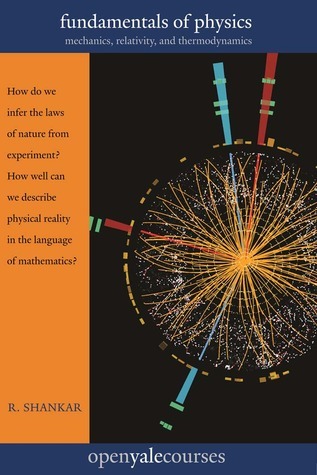
Professor R. Shankar, a well-known physicist and contagiously enthusiastic educator, was among the first to offer a course through the innovative Open Yale Course program. His popular online video lectures on introductory physics have been viewed over a million times. In this concise and self-contained book based on his online Yale course, Shankar explains the fundamental concepts of physics from Galileo’s and Newton’s discoveries to the twentieth-century’s revolutionary ideas on relativity and quantum mechanics. The book begins at the simplest level, develops the basics, and reinforces fundamentals, ensuring a solid foundation in the principles and methods of physics. It provides an ideal introduction for college-level students of physics, chemistry, and engineering, for motivated AP Physics students, and for general readers interested in advances in the sciences.Instructor resources--including problem sets and sample examinations--and more information about Professor Shankar's course are available at
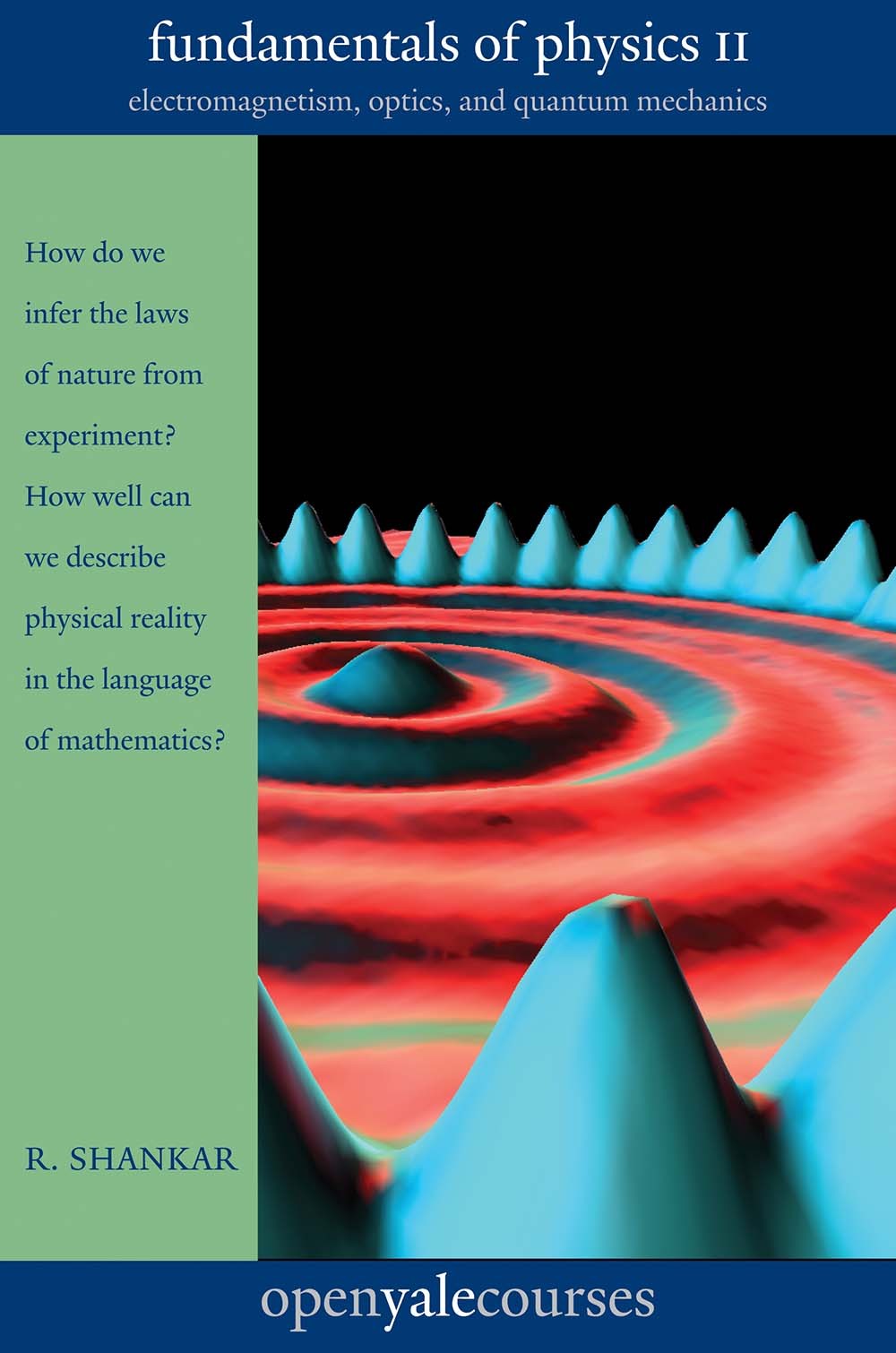
Fundamentals of Physics II: Electromagnetism, Optics, and Quantum Mechanics (Volume 2)
by Ramamurti Shankar
Rating: 4.4 ⭐
R. Shankar, a well-known physicist and contagiously enthusiastic educator, was among the first to offer a course through the innovative Open Yale Course program. His popular online video lectures on introductory physics have been viewed over a million times. In this second book based on his online Yale course, Shankar explains essential concepts, including electromagnetism, optics, and quantum mechanics. The book begins at the simplest level, develops the basics, and reinforces fundamentals, ensuring a solid foundation in the principles and methods of physics. It provides an ideal introduction for college-level students of physics, chemistry, and engineering; for motivated AP Physics students; and for general readers interested in advances in the sciences.
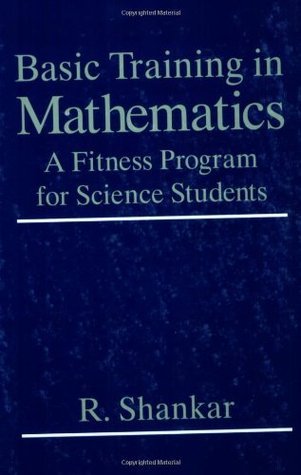
Basic Training in Mathematics: A Fitness Program for Science Students
by Ramamurti Shankar
Rating: 4.1 ⭐
Based on course material used by the author at Yale University, this practical text addresses the widening gap found between the mathematics required for upper-level courses in the physical sciences and the knowledge of incoming students. This superb book offers students an excellent opportunity to strengthen their mathematical skills by solving various problems in differential calculus. By covering material in its simplest form, students can look forward to a smooth entry into any course in the physical sciences.
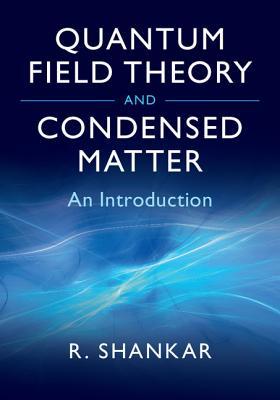
Providing a broad review of many techniques and their application to condensed matter systems, this book begins with a review of thermodynamics and statistical mechanics, before moving onto real and imaginary time path integrals and the link between Euclidean quantum mechanics and statistical mechanics. A detailed study of the Ising, gauge-Ising and XY models is included. The renormalization group is developed and applied to critical phenomena, Fermi liquid theory and the renormalization of field theories. Next, the book explores bosonization and its applications to one-dimensional fermionic systems and the correlation functions of homogeneous and random-bond Ising models. It concludes with Bohm–Pines and Chern–Simons theories applied to the quantum Hall effect. Introducing the reader to a variety of techniques, it opens up vast areas of condensed matter theory for both graduate students and researchers in theoretical, statistical and condensed matter physics.

Success in any walk of life is hard to achieve in this razor-edged highly competitive age. Besides knowledge; one has to be well versed in the art of forceful communication; an essential pre-requisite of a qualified man; lack of which renders him unfit for high posts in any sector. Participation in debating activities makes a man forceful communicator. Debating is an art and it can be mastered and developed by constant practice. Fluency in speech enables a man to express views effectively and convincingly.Debates are nowadays a regular feature in schools and colleges. Pupils are assigned debatable statements to argue either in favour or against the motion on occasions like Independence Day or Republic Day. Often inter-school competitions are organized on such eves and the best debater is conferred with prizes. In competitive as well as school tests; examinees are asked to put forward their pros and cons views against a debatable statement.The dearth of books on debatable topics is being felt seriously which could cater to the needs of participants. Most of the participants exhibit no interest due to lack of guidance and sufficient materials and prefer to remain mute spectators in the debating hall. Here relevant topics of general interests have been compiled and presented both ways—positively and negatively with a view to provide feedback to young debaters. School Debate Book by R Shankar : R Shankar likely presents a book that serves as a guide for school debates. This book may offer valuable resources, topics, and strategies for students and teachers involved in school-level debate competitions. Key Aspects of the Book "School Debate Book":Debate The book may provide techniques and tips for effective debating, helping students build their argumentative skills.Topics and R Shankar likely offers a collection of debate topics and ideas that can be used in school debates, fostering critical thinking and communication.Educational "School Debate Book" serves as an educational resource for schools and debate enthusiasts, supporting the development of debate skills. R Shankar is likely an author or educator dedicated to enhancing debating skills among students. This book reflects his commitment to promoting debate as an educational activity.