
Richard P. Feynman
Richard Phillips Feynman was an American physicist known for the path integral formulation of quantum mechanics, the theory of quantum electrodynamics and the physics of the superfluidity of supercooled liquid helium, as well as work in particle physics (he proposed the parton model). For his contributions to the development of quantum electrodynamics, Feynman was a joint recipient of the Nobel Prize in Physics in 1965, together with Julian Schwinger and Sin-Itiro Tomonaga. Feynman developed a widely used pictorial representation scheme for the mathematical expressions governing the behavior of subatomic particles, which later became known as Feynman diagrams. During his lifetime and after his death, Feynman became one of the most publicly known scientists in the world. He assisted in the development of the atomic bomb and was a member of the panel that investigated the Space Shuttle Challenger disaster. In addition to his work in theoretical physics, Feynman has been credited with pioneering the field of quantum computing, and introducing the concept of nanotechnology (creation of devices at the molecular scale). He held the Richard Chace Tolman professorship in theoretical physics at Caltech. -wikipedia See Ричард Фейнман
30 Books Written

"What Do You Care What Other People Think?": Further Adventures of a Curious Character
by Richard P. Feynman
Rating: 4.1 ⭐
• 5 recommendations ❤️
One of the greatest physicists of the twentieth century, Richard Feynman possessed an unquenchable thirst for adventure and an unparalleled ability to tell the stories of his life. "What Do You Care What Other People Think?" is Feynman's last literary legacy, prepared with his friend and fellow drummer, Ralph Leighton.Among the book's many tales we meet Feynman's first wife, Arlene, who taught him of love's irreducible mystery as she lay dying in a hospital bed while he worked nearby on the atomic bomb at Los Alamos. We are also given a fascinating narrative of the investigation of the space shuttle Challenger's explosion in 1986, and we relive the moment when Feynman revealed the disaster's cause by an elegant experiment: dropping a ring of rubber into a glass of cold water and pulling it out, misshapen.
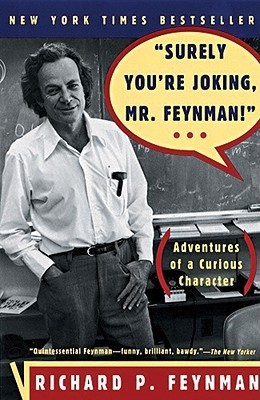
Surely You're Joking, Mr. Feynman!: Adventures of a Curious Character
by Richard P. Feynman
Rating: 4.3 ⭐
• 3 recommendations ❤️
Richard Feynman (1918-1988), winner of the Nobel Prize in physics, thrived on outrageous adventures. Here he recounts in his inimitable voice his experience trading ideas on atomic physics with Einstein and Bohr and ideas on gambling with Nick the Greek; cracking the uncrackable safes guarding the most deeply held nuclear secrets; painting a naked female toreador—and much else of an eyebrow-raising nature.In short, here is Feynman's life in all its eccentric glory—a combustible mixture of high intelligence, unlimited curiosity, and raging chutzpah.

The Pleasure of Finding Things Out: The Best Short Works of Richard P. Feynman
by Richard P. Feynman
Rating: 4.2 ⭐
• 2 recommendations ❤️
This collection from scientist and Nobel Peace Prize winner highlights the achievements of a man whose career reshaped the world's understanding of quantum electrodynamics.The Pleasure of Finding Things Out is a treasury of the best short works of Richard P. Feynman—from interviews and speeches to lectures and printed articles. From his ruminations on science in our culture to his Nobel Prize acceptance speech, this book will fascinate anyone interested in the world of ideas.
![Perfectly Reasonable Deviations from the Beaten Track [First Printing]](https://m.media-amazon.com/images/S/compressed.photo.goodreads.com/books/1348044468i/223459.jpg)
Perfectly Reasonable Deviations from the Beaten Track [First Printing]
by Richard P. Feynman
Rating: 4.2 ⭐
• 2 recommendations ❤️
A Nobel Prize-winning physicist, a loving husband and father, an enthusiastic teacher, a surprisingly accomplished bongo player, and a genius of the highest caliber---Richard P. Feynman was all these and more. Perfectly Reasonable Deviations From the Beaten Track--collecting over forty years' worth of Feynman's letters--offers an unprecedented look at the writer and thinker whose scientific mind and lust for life made him a legend in his own time. Containing missives to and from such scientific luminaries as Victor Weisskopf, Stephen Wolfram, James Watson, and Edward Teller, as well as a remarkable selection of letters to and from fans, students, family, and people from around the world eager for Feynman's advice and counsel, Perfectly Reasonable Deviations From the Beaten Track not only illuminates the personal relationships that underwrote the key developments in modern science, but also forms the most intimate look at Feynman yet available. Feynman was a man many felt close to but few really knew, and this collection reveals the full wisdom and private passion of a personality that captivated everyone it touched. Perfectly Reasonable Deviations From the Beaten Track is an eloquent testimony to the virtue of approaching the world with an inquiring eye; it demonstrates the full extent of the Feynman legacy like never before. Edited and with additional commentary by his daughter Michelle, it's a must-read for Feynman fans everywhere, and for anyone seeking to better understand one of the towering figures--and defining personalities--of the twentieth century.

Celebrated for his brilliantly quirky insights into the physical world, Nobel laureate Richard Feynman also possessed an extraordinary talent for explaining difficult concepts to the general public. Here Feynman provides a classic and definitive introduction to QED (namely, quantum electrodynamics), that part of quantum field theory describing the interactions of light with charged particles. Using everyday language, spatial concepts, visualizations, and his renowned "Feynman diagrams" instead of advanced mathematics, Feynman clearly and humorously communicates both the substance and spirit of QED to the layperson. A. Zee's introduction places Feynman's book and his seminal contribution to QED in historical context and further highlights Feynman's uniquely appealing and illuminating style.

Six Easy Pieces: Essentials of Physics Explained by Its Most Brilliant Teacher
by Richard P. Feynman
Rating: 4.2 ⭐
• 2 recommendations ❤️
Learn how to think like a physicist from a Nobel laureate and "one of the greatest minds of the twentieth century" ( New York Review of Books ) with these six classic and beloved lessons It was Richard Feynman's outrageous and scintillating method of teaching that earned him legendary status among students and professors of physics. From 1961 to 1963, Feynman delivered a series of lectures at the California Institute of Technology that revolutionized the teaching of physics around the world. Six Easy Pieces , taken from these famous Lectures on Physics, represent the most accessible material from the series. In these classic lessons, Feynman introduces the general reader to the following topics: atoms, basic physics, energy, gravitation, quantum mechanics, and the relationship of physics to other topics. With his dazzling and inimitable wit, Feynman presents each discussion with a minimum of jargon. Filled with wonderful examples and clever illustrations, Six Easy Pieces is the ideal introduction to the fundamentals of physics by one of the most admired and accessible physicists of modern times. "If one book was all that could be passed on to the next generation of scientists it would undoubtedly have to be Six Easy Pieces. "- John Gribbin, New Scientist

From 1983 to 1986, the legendary physicist and teacher Richard Feynman gave a course at Caltech called “Potentialities and Limitations of Computing Machines.”Although the lectures are over ten years old, most of the material is timeless and presents a “Feynmanesque” overview of many standard and some not-so-standard topics in computer science. These include computability, Turing machines (or as Feynman said, “Mr. Turing's machines”), information theory, Shannon's Theorem, reversible computation, the thermodynamics of computation, the quantum limits to computation, and the physics of VLSI devices. Taken together, these lectures represent a unique exploration of the fundamental limitations of digital computers.Feynman's philosophy of learning and discovery comes through strongly in these lectures. He constantly points out the benefits of playing around with concepts and working out solutions to problems on your own-before looking at the back of the book for the answers. As Feynman says in the lectures: “If you keep proving stuff that others have done, getting confidence, increasing complexities of your solutions-for the fun of it-then one day you'll turn around and discovers that nobody actually did that one! And that's the way to become a computer scientist.”
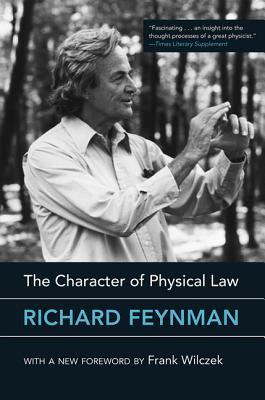
The Character of Physical Law, with new foreword
by Richard P. Feynman
Rating: 4.4 ⭐
• 2 recommendations ❤️
An introduction to modern physics and to Richard Feynman at his witty and enthusiastic best, discussing gravitation, irreversibility, symmetry, and the nature of scientific discovery.Richard Feynman was one of the most famous and important physicists of the second half of the twentieth century. Awarded the Nobel Prize for Physics in 1965, celebrated for his spirited and engaging lectures, and briefly a star on the evening news for his presence on the commission investigating the explosion of the space shuttle Challenger, Feynman is best known for his contributions to the field of quantum electrodynamics. The Character of Physical Law, drawn from Feynman's famous 1964 series of Messenger Lectures at Cornell, offers an introduction to modern physics—and to Feynman at his witty and enthusiastic best.In this classic book (originally published in 1967), Feynman offers an overview of selected physical laws and gathers their common features, arguing that the importance of a physical law is not “how clever we are to have found it out” but “how clever nature is to pay attention to it.” He discusses such topics as the interaction of mathematics and physics, the principle of conservation, the puzzle of symmetry, and the process of scientific discovery. A foreword by 2004 Physics Nobel laureate Frank Wilczek updates some of Feynman's observations—noting, however, “the need for these particular updates enhances rather than detracts from the book.” In The Character of Physical Law, Feynman chose to grapple with issues at the forefront of physics that seemed unresolved, important, and approachable.

The Meaning of It All: Thoughts of a Citizen-Scientist
by Richard P. Feynman
Rating: 4.0 ⭐
• 2 recommendations ❤️
Many appreciate Richard P. Feynman's contributions to twentieth-century physics, but few realize how engaged he was with the world around him -- how deeply and thoughtfully he considered the religious, political, and social issues of his day. Now, a wonderful book -- based on a previously unpublished, three-part public lecture he gave at the University of Washington in 1963 -- shows us this other side of Feynman, as he expounds on the inherent conflict between science and religion, people's distrust of politicians, and our universal fascination with flying saucers, faith healing, and mental telepathy. Here we see Feynman in top form: nearly bursting into a Navajo war chant, then pressing for an overhaul of the English language (if you want to know why Johnny can't read, just look at the spelling of "friend"); and, finally, ruminating on the death of his first wife from tuberculosis. This is quintessential Feynman -- reflective, amusing, and ever enlightening.
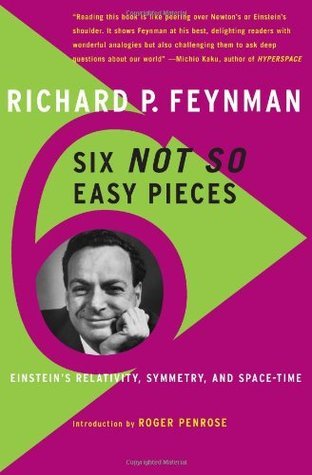
Six Not So Easy Pieces: Einstein's Relativity, Symmetry, and Space-Time
by Richard P. Feynman
Rating: 4.3 ⭐
No twentieth-century American scientist is better known to a wider spectrum of people than Richard P. Feynman (1918–1988)—physicist, teacher, author, and cultural icon. His autobiographies and biographies have been read and enjoyed by millions of readers around the world, while his wit and eccentricities have made him the subject of TV specials and even a theatrical film. The spectacular reception of the book and audio versions of Feynman’s Six Easy Pieces (published in 1995) resulted in a worldwide clamor for “More Feynman! More Feynman!” The outcome is these six additional lectures, drawn from the celebrated three-volume Lectures on Physics. Though slightly more challenging than the first six, these lectures are more focused, delving into the most revolutionary discovery in twentieth-century physics: Einstein’s Theory of Relativity. No single breakthrough in twentieth-century physics (with the possible exception of quantum mechanics) changed our view of the world more than that of Einstein’s discovery of relativity. The notions that the flow of time is not a constant, that the mass of an object depends on its velocity, and that the speed of light is a constant no matter what the motion of the observer, at first seemed shocking to scientists and laymen alike. But, as Feynman shows so clearly and so entertainingly in the lectures chosen for this volume, these crazy notions are no mere dry principles of physics, but are things of beauty and elegance. No one—not even Einstein himself—explained these difficult, anti-intuitive concepts more clearly, or with more verve and gusto, than Richard Feynman.
The revised edition of Feynman's legendary lectures includes extensive corrections and updates collated by Feynman and his colleagues. A new foreword by Kip Thorne, the current Richard Feynman Professor of Theoretical Physics at Caltech, discusses the relevance of the new edition to today's readers. This boxed set also includes Feynman's new Tips on Physics—the four previously unpublished lectures that Feynman gave to students preparing for exams at the end of his course. Thus, this 4-volume set is the complete and definitive edition of The Feynman Lectures on Physics. Packaged in a specially designed slipcase, this 4-volume set provides the ultimate legacy of Feynman's extraordinary contribution to students, teachers, researches, and lay readers around the world.
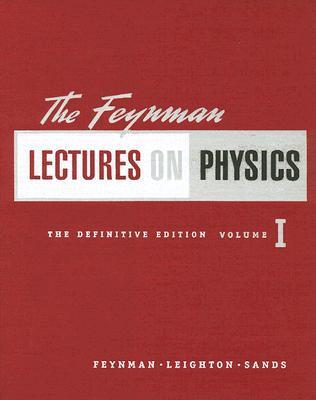
This revised edition of Feynman’s legendary lectures includes extensive corrections Feynman and his colleagues received and Caltech approved, making this the definitive edition of The Feynman Lectures on Physics . For all readers interested in physics.
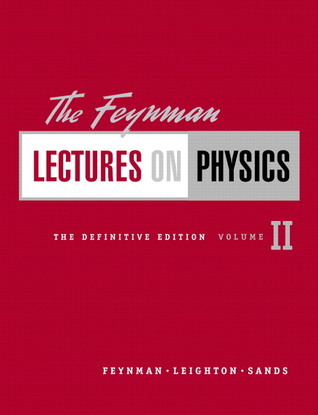
Paperback book in very good condition. Cover clean with slightly bent corners. Spine straight and binding tight. Pages clean without markings or highlights. Proceeds benefit our small rural Library in Oregon.
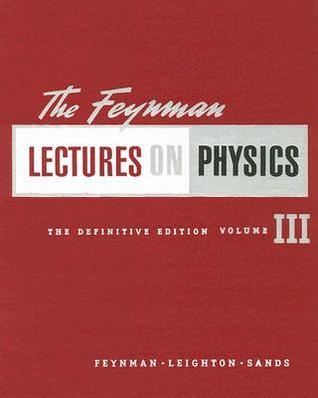
This revised edition of Feynman’s legendary lectures includes extensive corrections Feynman and his colleagues received and Caltech approved, making this the definitive edition of The Feynman Lectures on Physics . For all readers interested in physics.

An omnibus edition celebrating a great scientific mind and a legendary American original including a live recording. Richard Feynman (1918-1988) thrived on outrageous adventures. In the phenomenal national bestsellers "Surely You're Joking, Mr. Feynman!" and "What Do You Care What Other People Think?" the Nobel Prize-winning physicist recounted in an inimitable voice his adventures trading ideas on atomic physics with Einstein and Bohr and ideas on gambling with Nick the Greek, painting a naked female toreador, accompanying a ballet on his bongo drums, solving the mystery of the Challenger disaster, and much else of an eyebrow-raising, hugely entertaining, and astounding nature. One of the most influential and creative minds of recent history, Feynman also possessed an unparalleled ability as a storyteller, a delightful coincidence celebrated in this special omnibus edition of his classic stories. Now packaged with an hour-long audio CD of the 1978 "Los Alamos from Below" lecture, Classic Feynman offers readers a chance to finally hear a great tale in the orator's own voice.

Originally published in 1995, this volume comprises two collections of instructive essays on physics. Written for a general audience and keeping both technical language and mathematics to a minimum, the first collection introduces the basics of physics, atoms, energy, gravitation, quantum force, and the relationship of physics to other subjects. The second collection covers the major points in Einstein's theory of relativity. Feynman (1918-1988) won the 1965 Nobel Prize for his work in quantum electrodynamics. Annotation c. Book News, Inc., Portland, OR (booknews.com)
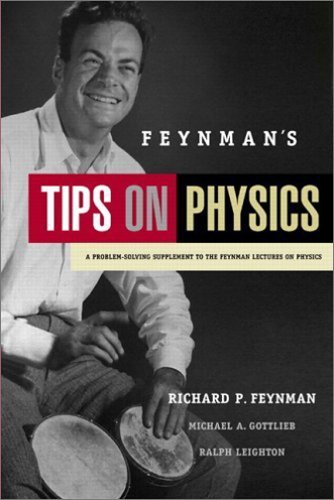
Tips on Physics: A Problem-Solving Supplement to the Feynman Lectures on Physics
by Richard P. Feynman
Rating: 4.3 ⭐
This new volume contains four previously unpublished lectures that Feynman gave to students preparing for exams. With characteristic flair, insight and humor, Feynman discusses topics students struggle with and offers valuable tips on solving physics problems. An illuminating memoir by Matthew Sands who originally conceived The Feynman Lectures on Physics gives a fascinating insight into the history of Feynman’s lecture series and the books that followed. This book is rounded off by relevant exercises and answers by R. B. Leighton and R. E. Vogt, originally developed to accompany the Lectures on Physics.

Surely You're Joking, Mr. Feynman/What Do You Care What Other People Think?
by Richard P. Feynman
Rating: 4.3 ⭐
[Transcribed by Ralph Leighton][Read by Raymond Todd]Nobel Prize-winning physicist Richard Feynman possessed an unquenchable thirst for adventure and an unparalleled ability to tell the stories of his life. In these two perennially popular, bestselling memoir collections, Feynman weaves his views on modern science together with his outrageous life experiences a combustible mixture of intelligence, curiosity, skepticism, and chutzpah.In Surely You're Joking, Mr. Feynman! , Feynman recounts his adventures trading ideas on atomic physics with Einstein and Bohr, gambling with Nick the Greek, painting a naked female toreador, and much else of an eyebrow-raising and hilarious nature.In What Do You Care What Other People Think? , Feynman introduces us to his first love, who lay dying in a nearby hospital while he worked on the atomic bomb at Los Alamos, and shares his brilliant experiment which revealed the cause of the space shuttle Challenger 's explosion.

quantum mechanics, shrodinger description, measurements and operators, perturbation method, transition elements, harmonic oscillators, QED, statistical mechainics, the variational method, other probability problems

Elementary Particles and the Laws of Physics: The 1986 Dirac Memorial Lectures
by Richard P. Feynman
Rating: 4.1 ⭐
Developing a theory that seamlessly combines relativity and quantum mechanics, the most important conceptual breakthroughs in twentieth century physics, has proved to be a difficult and ongoing challenge. This book details how two distinguished physicists and Nobel laureates have explored this theme in two lectures given in Cambridge, England, in 1986 to commemorate the famous British physicist Paul Dirac. Given for nonspecialists and undergraduates, the talks transcribed in Elementary Particles and the Laws of Physics focus on the fundamental problems of physics and the present state of our knowledge. Professor Feynman examines the nature of antiparticles, and in particular the relationship between quantum spin and statistics. Professor Weinberg speculates on how Einstein's theory of gravitation might be reconciled with quantum theory in the final law of physics. Highly accessible, deeply thought provoking, this book will appeal to all those interested in the development of modern physics.
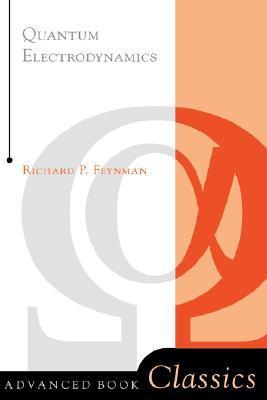
This text material constitutes notes on the third of a three-semester course in quantum mechanics given at the California Institute of Technology in 1953, presenting the main results and calculational procedures of quantum electrodynamics.

"Some people say, 'How can you live without knowing?' I do not know what they mean. I always live without knowing. That is easy. How you get to know is what I want to know."--Richard P. FeynmanNobel Prize-winning physicist Richard P. Feynman (1918-88) was that rarest of creatures--a towering scientific genius who could make himself understood by anyone and who became as famous for the wit and wisdom of his popular lectures and writings as for his fundamental contributions to science. "The Quotable Feynman" is a treasure-trove of this revered and beloved scientist's most profound, provocative, humorous, and memorable quotations on a wide range of subjects.Carefully selected by Richard Feynman's daughter, Michelle Feynman, from his spoken and written legacy, including interviews, lectures, letters, articles, and books, the quotations are arranged under two dozen topics--from art, childhood, discovery, family, imagination, and humor to mathematics, politics, science, religion, and uncertainty. These brief passages--about 500 in all--vividly demonstrate Feynman's astonishing yet playful intelligence, and his almost constitutional inability to be anything other than unconventional, engaging, and inspiring. The result is a unique, illuminating, and enjoyable portrait of Feynman's life and thought that will be cherished by his fans at the same time that it provides an ideal introduction to Feynman for readers new to this intriguing and important thinker.The book features a foreword in which physicist Brian Cox pays tribute to Feynman and describes how his words reveal his particular genius, a piece in which cellist Yo-Yo Ma shares his memories of Feynman and reflects on his enduring appeal, and a personal preface by Michelle Feynman. It also includes some previously unpublished quotations, a chronology of Richard Feynman's life, some twenty photos of Feynman, and a section of memorable quotations about Feynman from other notable figures.Features: Approximately 500 quotations, some of them previously unpublished, arranged by topicA foreword by Brian Cox, reflections by Yo-Yo Ma, and a preface by Michelle FeynmanA chronology of Feynman's lifeSome twenty photos of FeynmanA section of quotations about Feynman from other notable figures Some notable quotations of Richard P. Feynman: "The thing that doesn't fit is the most interesting.""Thinking is nothing but talking to yourself inside.""It is wonderful if you can find something you love to do in your youth which is big enough to sustain your interest through all your adult life. Because, whatever it is, if you do it well enough (and you will, if you truly love it), people will pay you to do what you want to do anyway.""I'd hate to die twice. It's so boring."

For more than thirty years, Richard P. Feynman's three-volume Lectures on Physics has been known worldwide as the classic resource for students and professionals alike. That text was based on transcriptions of the hundreds of hours of audio recordings made during Feynman's legendary classroom lectures. Now, for the first time on compact disc, the best of these recordings are available in digitally mastered quality. Ranging from the most basic principles of Newtonian physics through such formidable topics as Einstein's general relativity, superconductivity, and quantum mechanics, Feynman's lectures stand as a monument of clear exposition and deep insight. Timeless and collectible, these unabridged lectures are essential listening, not just for students of physics, but for anyone seeking an introduction to the field from the inimitable Richard Feynman. 6 CDs: Total playing time: Approx. 6 hours
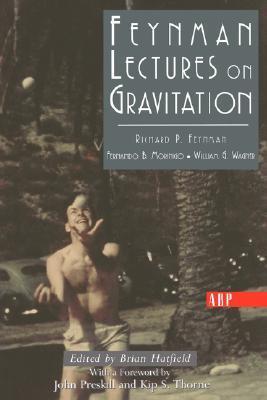
The Feynman Lectures on Gravitation are based on notes prepared during a course on gravitational physics that Richard Feynman taught at Caltech during the 1962-63 academic year. For several years prior to these lectures, Feynman thought long and hard about the fundamental problems in gravitational physics, yet he published very little. These lectures represent a useful record of his viewpoints and some of his insights into gravity and its application to cosmology, superstars, wormholes, and gravitational waves at that particular time. The lectures also contain a number of fascinating digressions and asides on the foundations of physics and other issues.Characteristically, Feynman took an untraditional non-geometric approach to gravitation and general relativity based on the underlying quantum aspects of gravity. Hence, these lectures contain a unique pedagogical account of the development of Einstein's general theory of relativity as the inevitable result of the demand for a self-consistent theory of a massless spin-2 field (the graviton) coupled to the energy-momentum tensor of matter. This approach also demonstrates the intimate and fundamental connection between gauge invariance and the principle of equivalence.

Combined into one volume for the first time, the updated and clarified Exercises for the Feynman Lectures on Physics provides comprehensive, hands-on practice in all the most important areas of physics -- from Newtonian mechanics through the theory of relativity and quantum mechanics.A perfect complement to The Feynman Lectures on Physics , these exercises have all been assigned in Caltech's mandatory two-year introductory physics course, either when Richard Feynman was teaching it, or during the nearly two decades that followed when The Feynman Lectures on Physics was used as the textbook. With this modern, easy-to-use volume, students of physics will have a chance to apply what they have learned in the Lectures and to enhance and reinforce the concepts taught by the inimitable Richard Feynman.
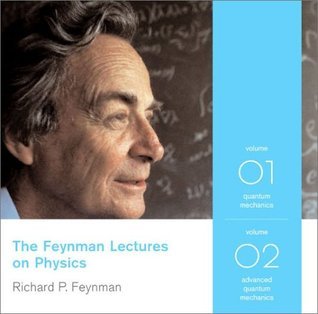
Basic Books is proud to announce the first volumes of the complete audio CD collection of the recorded lectures delivered by the late Richard P. Feynman, lectures originally delivered to his physics students at Caltech and later fashioned by the author into his classic textbook Lectures on Physics . Ranging from the most basic principles of Newtonian physics to such formidable theories as Einstein's general relativity, superconductivity, and quantum mechanics, Fenyman's lectures stand as a monument of clear exposition and deep insight.
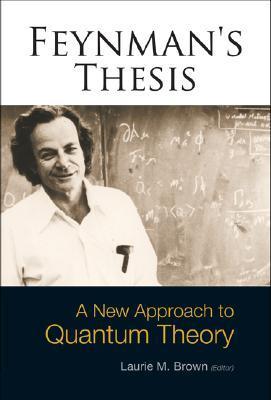
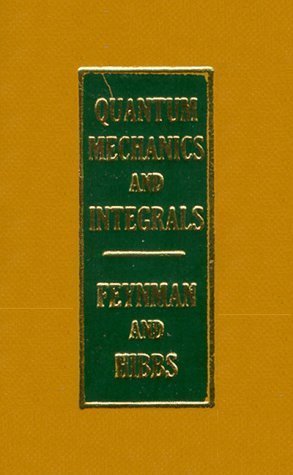
Richard Feynman's never previously published doctoral thesis formed the heart of much of his brilliant and profound work in theoretical physics. Entitled "The Principle of Least Action in Quantum Mechanics," its original motive was to quantize the classical action-at-a-distance electrodynamics. Because that theory adopted an overall space-time viewpoint, the classical Hamiltonian approach used in the conventional formulations of quantum theory could not be used, so Feynman turned to the Lagrangian function and the principle of least action as his points of departure. The result was the path integral approach, which satisfied -- and transcended -- its original motivation, and has enjoyed great success in renormalized quantum field theory, including the derivation of the ubiquitous Feynman diagrams for elementary particles. Path integrals have many other applications, including atomic, molecular, and nuclear scattering, statistical mechanics, quantum liquids and solids, Brownian motion, and noise theory. It also sheds new light on fundamental issues like the interpretation of quantum theory because of its new overall space-time viewpoint. The present volume includes Feynman's Princeton thesis, the related review article "Space-Time Approach to Non-Relativistic Quantum Mechanics" [ Reviews of Modern Physics 20 (1948), 367-387], Paul Dirac's seminal paper "The Lagrangian in Quantum Mechanics'' [ Physikalische Zeitschrift der Sowjetunion, Band 3, Heft 1 (1933)], and an introduction by Laurie M Brown.

This classic graduate lecture note volume on statistical mechanics focuses on Physics, rather than mathematics. It provides a concise introduction to basic concepts and a clear presentation of difficult topics, while challenging the student to reflect upon as yet unanswered questions.
