
Leonard Susskind
Leonard Susskind is the Felix Bloch Professor of Theoretical Physics at Stanford University. His research interests include string theory, quantum field theory, quantum statistical mechanics and quantum cosmology. He is a member of the National Academy of Sciences, and the American Academy of Arts and Sciences, an associate member of the faculty of Canada's Perimeter Institute for Theoretical Physics, and a distinguished professor of the Korea Institute for Advanced Study. read more: http://en.wikipedia.org/wiki/Leonard_...
11 Books Written

The Theoretical Minimum: What You Need to Know to Start Doing Physics
by Leonard Susskind
Rating: 4.2 ⭐
• 2 recommendations ❤️
A master teacher presents the ultimate introduction to classical mechanics for people who are serious about learning physics"Beautifully clear explanations of famously 'difficult' things," -- Wall Street JournalIf you ever regretted not taking physics in college -- or simply want to know how to think like a physicist -- this is the book for you. In this bestselling introduction to classical mechanics, physicist Leonard Susskind and hacker-scientist George Hrabovsky offer a first course in physics and associated math for the ardent amateur. Challenging, lucid, and concise, The Theoretical Minimum provides a tool kit for amateur scientists to learn physics at their own pace.

The Black Hole War: My Battle with Stephen Hawking to Make the World Safe for Quantum Mechanics
by Leonard Susskind
Rating: 4.1 ⭐
What happens when something is sucked into a black hole? Does it disappear? Three decades ago, a young physicist named Stephen Hawking claimed it did, and in doing so put at risk everything we know about physics and the fundamental laws of the universe. Most scientists didn't recognize the import of Hawking's claims, but Leonard Susskind and Gerard t'Hooft realized the threat, and responded with a counterattack that changed the course of physics.The Black Hole War is the thrilling story of their united effort to reconcile Hawking's revolutionary theories of black holes with their own sense of reality -- effort that would eventually result in Hawking admitting he was wrong, paying up, and Susskind and t'Hooft realizing that our world is a hologram projected from the outer boundaries of space.A brilliant book about modern physics, quantum mechanics, the fate of stars and the deep mysteries of black holes, Leonard Susskind's account of the Black Hole War is mind-bending and exhilarating reading.
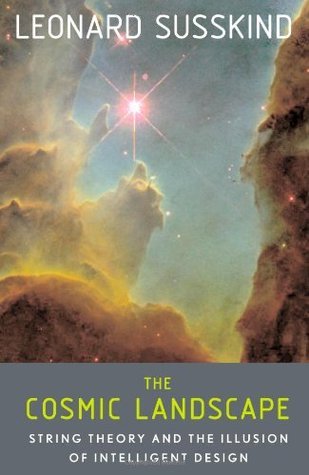
The Cosmic Landscape: String Theory and the Illusion of Intelligent Design
by Leonard Susskind
Rating: 4.2 ⭐
In his first book ever, the father of string theory reinvents the world's concept of the known universe and man's unique place within it. Line drawings.

From the bestselling author of The Theoretical Minimum, a DIY introduction to the math and science of quantum physicsFirst he taught you classical mechanics. Now, physicist Leonard Susskind has teamed up with data engineer Art Friedman to present the theory and associated mathematics of the strange world of quantum mechanics.In this follow-up to The Theoretical Minimum, Susskind and Friedman provide a lively introduction to this famously difficult field, which attempts to understand the behavior of sub-atomic objects through mathematical abstractions. Unlike other popularizations that shy away from quantum mechanics’ weirdness, Quantum Mechanics embraces the utter strangeness of quantum logic. The authors offer crystal-clear explanations of the principles of quantum states, uncertainty and time dependence, entanglement, and particle and wave states, among other topics, and each chapter includes exercises to ensure mastery of each area. Like The Theoretical Minimum, this volume runs parallel to Susskind’s eponymous Stanford University-hosted continuing education course.An approachable yet rigorous introduction to a famously difficult topic, Quantum Mechanics provides a tool kit for amateur scientists to learn physics at their own pace.
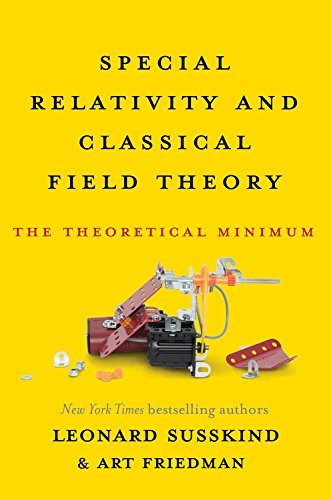
Special Relativity and Classical Field Theory: The Theoretical Minimum
by Leonard Susskind
Rating: 4.5 ⭐
The third volume in the bestselling physics series cracks open Einstein's special relativity and field theoryPhysicist Leonard Susskind and data engineer Art Friedman are back. This time, they introduce readers to Einstein's special relativity and Maxwell's classical field theory. Using their typical brand of real math, enlightening drawings, and humor, Susskind and Friedman walk us through the complexities of waves, forces, and particles by exploring special relativity and electromagnetism. It's a must-read for both devotees of the series and any armchair physicist who wants to improve their knowledge of physics' deepest truths.
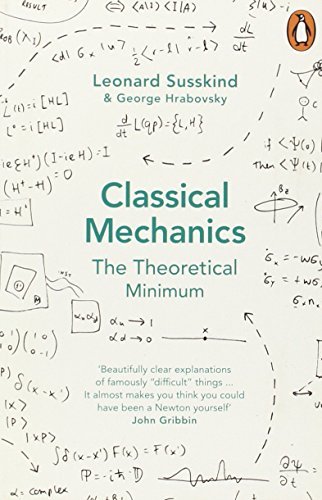
Contents:The nature of classical physicsSpaces, trigonometry, and vectorsMotionIntegral calculusDynamicsPartial differentiationSystems of more than one particleEnergyThe principle of least actionSymmetries and conservation lawsHamiltonian mechanics and time-translation invarianceThe phase space fluid and the Gibbs-Liouville TheoremPoisson brackets, angular momentum, and symmetriesElectric and magnetic forcesAppendix 1. Central forces and planetary orbits
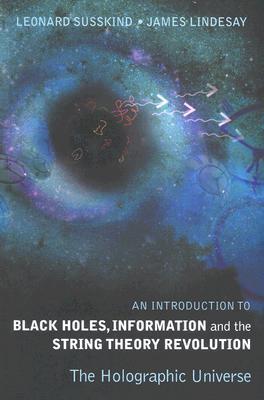
An Introduction to Black Holes, Information and the String Theory Revolution: The Holographic Universe
by Leonard Susskind
Rating: 4.1 ⭐
Over the last decade the physics of black holes has been revolutionized by developments that grew out of Jacob Bekenstein's realization that black holes have entropy. Stephen Hawking raised profound issues concerning the loss of information in black hole evaporation and the consistency of quantum mechanics in a world with gravity. For two decades these questions puzzled theoretical physicists and eventually led to a revolution in the way we think about space, time, matter and information. This revolution has culminated in a remarkable principle called "The Holographic Principle", which is now a major focus of attention in gravitational research, quantum field theory and elementary particle physics. Leonard Susskind, one of the co-inventors of the Holographic Principle as well as one of the founders of String theory, develops and explains these concepts.

The latest volume in the New York Times bestselling physics series explains Einstein's the general theory of relativityHe taught us classical mechanics, quantum mechanics, and special relativity. Now, physicist Leonard Susskind, assisted by a new collaborator, André Cabannes, returns to tackle Einstein's general theory of relativity. Starting from the equivalence principle and covering the necessary mathematics of Riemannian spaces and tensor calculus, Susskind and Cabannes explain the link between gravity and geometry. They delve into black holes, establish Einstein field equations, and solve them to describe gravity waves. The authors provide vivid explanations that, to borrow a phrase from Einstein himself, are as simple as possible (but no simpler).An approachable yet rigorous introduction to one of the most important topics in physics, General Relativity is a must-read for anyone who wants a deeper knowledge of the universe's real structure.
The first lecture describes the meaning of quantum complexity, the analogy between entropy and complexity, and the second law of complexity. Lecture two reviews the connection between the second law of complexity and the interior of black holes. The final lecture is about the thermodynamics of complexity, and 'uncomplexity' as a resource for doing computational work.

An Introduction to Black Holes, Information and the String Theory Revolution / Hawking on the Big Bang and Black Holes
by Leonard Susskind
The physics of black holes underwent a profound transformation starting with Jacob Bekenstein's recognition of black hole entropy. Stephen Hawking's collaboration with Roger Penrose highlighted the significance of spacetime singularities in the context of the big bang and black holes. His later work delved deeper into these topics, grappling with the profound implications of quantum mechanics and general relativity. His investigations into black hole radiation and the no-boundary condition on the origin of the universe have become pivotal in theoretical physics. These developments culminated in the emergence of "The Holographic Principle", a groundbreaking concept revolutionizing our understanding of space, time, matter, and information. Leonard Susskind, a key figure in this revolution and co-inventor of the Holographic Principle, elaborates on these concepts alongside his foundational work in string theory. Together, these works encapsulate decades of intellectual pursuit and paradigm-shifting discoveries.2 volumes:"An Introduction to Black Holes, Information and the String Theory Revolution," by Leonard Susskind and James Lindesay"Hawking on the Big Bang and Black Holes," by Stephen W. Hawking

The Theoretical Minimum 4-Book Set: The Theoretical Minimum, Quantum Mechanics, Special Relativity and Classical Field Theory, General Relativity
by Leonard Susskind
The Theoretical What You Need to Know to Start Doing Physics, 9780465075683 A master teacher presents the ultimate introduction to classical mechanics for people who are serious about learning physics "Beautifully clear explanations of famously 'difficult' things," -- Wall Street Journal If you ever regretted not taking physics in college -- or simply want to know how to think like a physicist -- this is the book for you. In this bestselling introduction to classical mechanics, physicist Leonard Susskind and hacker-scientist George Hrabovsky offer a first course in physics and associated math for the ardent amateur. Challenging, lucid, and concise, The Theoretical Minimum provides a tool kit for amateur scientists to learn physics at their own pace. Quantum The Theoretical Minimum, 9780465062904 In this follow-up to the New York Times best-selling The Theoretical Minimum, Susskind and Friedman provide a lively introduction to this famously difficult field, which attempts to understand the behavior of sub-atomic objects through mathematical abstractions. Unlike other popularizations that shy away from quantum mechanics' weirdness, Quantum Mechanics embraces the utter strangeness of quantum logic. The authors offer crystal-clear explanations of the principles of quantum states, uncertainty and time dependence, entanglement, and particle and wave states, among other topics, and each chapter includes exercises to ensure mastery of each area. Like The Theoretical Minimum, this volume runs parallel to Susskind's eponymous Stanford University-hosted continuing education course. An approachable yet rigorous introduction to a famously difficult topic, Quantum Mechanics provides a tool kit for amateur scientists to learn physics at their own pace. Special Relativity and Classical Field The Theoretical Minimum, 9781541674066 The third volume in the bestselling physics series cracks open Einstein's special relativity and field theory Physicist Leonard Susskind and data engineer Art Friedman are back. This time, they introduce readers to Einstein's special relativity and Maxwell's classical field theory. Using their typical brand of real math, enlightening drawings, and humor, Susskind and Friedman walk us through the complexities of waves, forces, and particles by exploring special relativity and electromagnetism. It's a must-read for both devotees of the series and any armchair physicist who wants to improve their knowledge of physics' deepest truths. General The Theoretical Minimum, 9781541601789 The latest volume in the New York Times-bestselling physics series explains Einstein's the general theory of relativity Now, physicist Leonard Susskind, assisted by a new collaborator, mathematician André Cabannes, returns to tackle Einstein's general theory of relativity. Starting from the equivalence principle and covering the necessary mathematics of Riemannian spaces and tensor calculus, Susskind and Cabannes explain the link between gravity and geometry. They delve into black holes, establish Einstein field equations, and solve them to describe gravity waves. The authors provide vivid explanations that, to borrow a phrase from Einstein himself, are as simple as possible (but no simpler). An approachable yet rigorous introduction to one of the most important topics in physics, General Relativity is a must-read for anyone who wants a deeper knowledge of the universe's real structure.