
Max H. Bazerman
Max H. Bazerman is the Jesse Isidor Straus Professor of Business Administration at the Harvard Business School and the Co-Director of the Center for Public Leadership at the Harvard Kennedy School. Max's research focuses on decision making, negotiation, and ethics. He is the author, co-author, or co-editor of twenty books and over 200 research articles and chapters. His latest book, The Power of Noticing: What the Best Leader See, is now available from Simon and Schuster.
27 Books Written
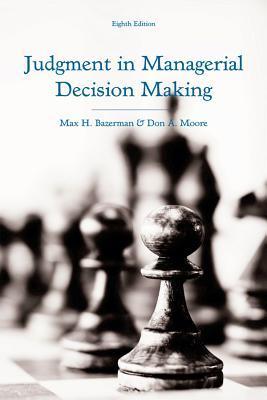
Behavioral decision research provides many important insights into managerial behavior. From negotiation to investment decisions, the authors weave behavioral decision research into the organizational realm by examining judgment in a variety of managerial contexts. Embedded with the latest research and theories, Managerial Decision Making 8 th Edition gives students the opportunity to understand their own decision-making tendencies, learn strategies for overcoming cognitive biases, and become better decision makers.
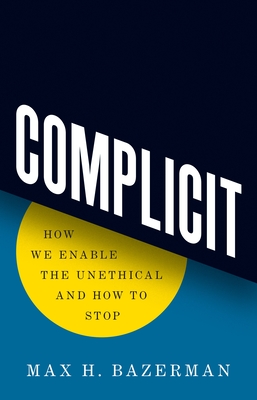
What all of us can do to fight the pervasive human tendency to enable wrongdoing in the workplace, the community, politics, and beyondIt is easy to condemn obvious wrongdoers such as Elizabeth Holmes, Adam Neumann, Harvey Weinstein, and the Sackler family. But we rarely think about the many people who supported their unethical or criminal behavior. In each case there was a supporting cast of complicitors: business partners, employees, investors, news organizations, and others. And, whether we're aware of it or not, almost all of us have been complicit in the unethical behavior of others. In Complicit, Harvard Business School professor Max Bazerman confronts our complicity head-on and offers strategies for recognizing and avoiding the psychological and other traps that lead us to ignore, condone, or actively support wrongdoing in our businesses, organizations, communities, politics, and more.Complicit tells compelling stories of those who enabled the Theranos and WeWork scandals, the opioid crisis, the sexual abuse that led to the #MeToo movement, and the January 6th U.S. Capitol attack. The book describes seven different behavioral profiles that can lead to complicity in wrongdoing, ranging from true partners to those who unknowingly benefit from systemic privilege, including white privilege, and it tells the story of Bazerman's own brushes with complicity. Complicit also offers concrete and detailed solutions, describing how individuals, leaders, and organizations can more effectively prevent complicity.By challenging the notion that a few bad apples are responsible for society's ills, Complicit implicates us all--and offers a path for creating a more ethical world.

Why do our government leaders continually make decisions and craft policies that everybody knows are foolish? Because they, like the rest of us, remain trapped in foolish and unproductive habits of thinking. "You Can't Enlarge the Pie" analyzes the unspoken assumptions that lead to bad policy, wasted resources, and lost lives, and shows exactly why they're wrong. With fascinating case studies and clear, compelling analysis, it dissects six psychological barriers to ineffective government:1. Do no harm. 2. Their gain is our loss.3. Competition is always good. 4. Support our group. 5. Live for the moment.6. No pain for us, no gain for them. By freeing ourselves from the narrow way we evaluate our government leaders, we can learn to judge their performance more as that of business leaders is judged: by the overall health of their organizations.

When confronted with an ethical dilemma, most of us like to think we would stand up for our principles. But we are not as ethical as we think we are. In Blind Spots , leading business ethicists Max Bazerman and Ann Tenbrunsel examine the ways we overestimate our ability to do what is right and how we act unethically without meaning to. From the collapse of Enron and corruption in the tobacco industry, to sales of the defective Ford Pinto, the downfall of Bernard Madoff, and the Challenger space shuttle disaster, the authors investigate the nature of ethical failures in the business world and beyond, and illustrate how we can become more ethical, bridging the gap between who we are and who we want to be.Explaining why traditional approaches to ethics don't work, the book considers how blind spots like ethical fading--the removal of ethics from the decision--making process--have led to tragedies and scandals such as the Challenger space shuttle disaster, steroid use in Major League Baseball, the crash in the financial markets, and the energy crisis. The authors demonstrate how ethical standards shift, how we neglect to notice and act on the unethical behavior of others, and how compliance initiatives can actually promote unethical behavior. They argue that scandals will continue to emerge unless such approaches take into account the psychology of individuals faced with ethical dilemmas. Distinguishing our "should self" (the person who knows what is correct) from our "want self" (the person who ends up making decisions), the authors point out ethical sinkholes that create questionable actions.Suggesting innovative individual and group tactics for improving human judgment, Blind Spots shows us how to secure a place for ethics in our workplaces, institutions, and daily lives.

From Harvard Business School Professor and Co-Director of the Harvard Kennedy School’s Center for Public A guide to making better decisions, noticing important information in the world around you, and improving leadership skills.Imagine your advantage in negotiations, decision-making, and leadership if you could teach yourself to see, and evaluate, information that others overlook. The Power of Noticing provides the blueprint for accomplishing precisely that. Max Bazerman, an expert in the field of applied behavioral psychology, draws on three decades of research and his experience instructing Harvard Business School MBAs and corporate executives to teach you how to notice and act on information that may not be immediately obvious.Drawing on a wealth of real-world examples, from the Challenger Space Shuttle disaster to Bernie Madoff’s Ponzi scheme, Bazerman diagnoses what information went ignored in these situations, and why. Using many of the same case studies and thought experiments designed in his executive MBA classes, he challenges readers to explore their cognitive blind spots, identify any salient details they are programmed to miss, and then take steps to ensure it won’t happen again. While many bestselling business books have explained how susceptible to manipulation our irrational cognitive blindspots make us, Bazerman helps you avoid the habits that lead to poor decisions and ineffective leadership in the first place. His book provides a step-by-step guide to breaking bad habits and spotting the hidden details that will change your decision-making and leadership skills for the better, teaching you pay attention to what didn’t happen; acknowledge self-interest; invent the third choice; and realize that what you see is not all there is.With The Power of Noticing at your side, you can learn how to notice what others miss, make better decisions, and lead more successfully.

In Negotiating Rationally , Max Bazerman and Margaret Neale explain how to avoid the pitfalls of irrationality and gain the upper hand in negotiations.For example, managers tend to be overconfident, to recklessly escalate previous commitments, and fail to consider the tactics of the other party. Drawing on their research, the authors show how we are prisoners of our own assumptions. They identify strategies to avoid these pitfalls in negotiating by concentrating on opponents’ behavior and developing the ability to recognize individual limitations and biases. They explain how to think rationally about the choice of reaching an agreement versus reaching an impasse. A must read for business professionals.

Better, Not Perfect: A Realist's Guide to Maximum Sustainable Goodness
by Max H. Bazerman
Rating: 3.4 ⭐
*** Distinguished Winner for the Responsible Research in Management Award *** Negotiation and decision-making expert Max Bazerman explores how we can make more ethical choices by aspiring to be better, not perfect. Every day, you make hundreds of decisions. They’re largely personal, but these choices have an ethical twinge as well; they value certain principles and ends over others. Bazerman argues that we can better balance both dimensions—and we needn’t seek perfection to make a real difference for ourselves and the world. Better, Not Perfect provides a deeply researched, prescriptive roadmap for how to maximize our pleasure and minimize pain. Bazerman shares a framework to be smarter and more efficient, honest and aware—to attain your “maximum sustainable goodness.” In Part Two, he identifies four training grounds to practice these newfound skills for outsized impact: how you think about equality and your tribe(s); waste—from garbage to corporate excess; the way you spend time; and your approach to giving—whether your attention or your money. Ready to nudge yourself toward better, Part Three trains your eye on how to extend what you’ve learned and positively influence others. Melding philosophy and psychology as never before, this down-to-earth guide will help clarify your goals, assist you in doing more good with your limited time on the planet, and see greater satisfaction in the process.

Predictable Surprises: The Disasters You Should Have Seen Coming, and How to Prevent Them
by Max H. Bazerman
Rating: 3.5 ⭐
Most events that catch us by surprise are both predictable and preventable, but we consistently miss (or ignore) the warning signs This book shows why such “predictable surprises” put us all at risk, and shows how we can understand, anticipate, and prevent them before disaster strikes. There is a universal fear factor surrounding this that society and the workplace are filled with disasters in the making that we could prevent if we only knew what to look for. This book plays on that fear and offers a positive, proactive resolution to it.

From the world’s leading expert on negotiation, an essential guide to negotiating in any situation—whether over Zoom, across political and cultural divides, or during a supply chain crisisThe world has changed dramatically in just the past few years—and so has the game of negotiation. COVID-19, Zoom, political polarization, the online economy, increasing economic globalization, and greater workplace diversity—all have transformed the who, what, where, and how of negotiation. Today, traditional negotiating tactics, while still effective, need to be tailored to vastly different situations and circumstances. In The Game Has Changed, legendary Harvard Business School professor Max Bazerman, a pioneer in the field of negotiation, shows you how to negotiate successfully today by adapting proven negotiation principles and strategies to the challenging new contexts you face—from negotiating across cultural and political differences to trying to reach an agreement over Zoom or during a supply chain crisis.Negotiation offers a groundbreaking new way of thinking about the importance of the unique context of any negotiation—and when and how it should influence how you negotiate. At the same time, the book provides a concise and expert overview of essential negotiating techniques for anyone new to the subject or who wants a refresher. The result is a must-read—a powerful toolkit for successfully negotiating in a world where the game of negotiation has changed.

Praise for Smart Money Decisions"If you need to negotiate anything . . . from a pay increase to buying or selling a house-this book covers all the bases. [Bazerman] has taught, tested, and proven his theories with thousands of executives and MBA students."-Donald P. Jacobs, Dean, J. L. Kellogg Graduate School of Management, Northwestern University"Max Bazerman provides a fascinating, easy-to-understand look at how we make money decisions and offers sound advice that will help you increase your net worth."-Roger E. Stricker, PhD, Vice President, Intellectual Property, Lucent Technologies"By holding a mirror up to our faces, Max Bazerman allows us to see all those dumb money mistakes each of us had no idea we were making."-Bill Bresnan, Financial Talk Show Host/AuthorWhen it comes to money matters, even the smartest of us make some pretty dumb decisions. This groundbreaking book gives you the necessary tools to think through financial issues practically and avoid costly blunders.A renowned expert in the field of decision-making and negotiation, Max Bazerman illustrates both how and why we make the decisions we do. He provides the essential understanding you need to identify your own approach to finances, recognize any inherent problems in your reasoning, and determine ways to overcome them. Packed with sound advice and expert recommendations, Smart Money Decisions is essential reading for anyone who has made the same mistake twice.

How fraud in a published paper about honesty roiled the world of social science.In 2012 Max Bazerman, along with four coauthors, published an influential paper showing that “signing first”—that is, promising to tell the truth before filling out a form—produced greater honesty than signing afterward. In 2021, academic sleuths revealed that two of the experiments in the paper were fraudulent, triggering what would become one of the most significant academic frauds of the twenty-first century.In Inside an Academic Scandal, Bazerman tells the sobering story of how fraud in a published paper about inducing honesty upended countless academic careers, caused havoc in organizations that had implemented the idea of “signing first,” and undermined faith in academic research and publication.This vivid account offers an inside look at the replicability crisis in social science today. In intriguing detail, the book explores recent conflicts and transformations underway in the field, considers the role of relationships and trust in enabling fraud in academic research, and describes Bazerman’s own part in the scandal—what he did and didn’t do to stop the fraud in the signing-first paper, what consequences he faced, and what hard lessons he learned in the process.A compelling story of fraud and betrayal, the book provides a deep and ultimately instructive look at how academic research works—and doesn’t—in social science.

We are all capable of achieving more than we think. We do not need to strive for perfection; we need to find balance and enjoy it for the rest of our lives. This book teaches you how negotiate and get the results that you want and turn each situation into a win-win.

This work has been selected by scholars as being culturally important, and is part of the knowledge base of civilization as we know it. This work was reproduced from the original artifact, and remains as true to the original work as possible. Therefore, you will see the original copyright references, library stamps (as most of these works have been housed in our most important libraries around the world), and other notations in the work.This work is in the public domain in the United States of America, and possibly other nations. Within the United States, you may freely copy and distribute this work, as no entity (individual or corporate) has a copyright on the body of the work.As a reproduction of a historical artifact, this work may contain missing or blurred pages, poor pictures, errant marks, etc. Scholars believe, and we concur, that this work is important enough to be preserved, reproduced, and made generally available to the public. We appreciate your support of the preservation process, and thank you for being an important part of keeping this knowledge alive and relevant.

The essays collected in this volume study negotiation within and between organizations. They go beyond analyzing the processes of the bargaining table to show negotiation at work in a wider range of joint decisions. Third party interventions, negotiation with the outside environment, and negotiation in specific settings are among the topics covered.
Integrative Bargaining in a Competitive Market: September 1983 (Classic Reprint) by Max H. Bazerman
by Max H. Bazerman
American Behavioral Scientist, Negotiation: Behavioral Perspectives
by Max H. Bazerman
Groups as mixed-motive negotiations
by Max H. Bazerman

Negociación: El mundo ha cambiado: las tácticas para negociar bien, también (Deusto)
by Max H. Bazerman
Una guía esencial para negociar en el mundo globalizado y online, de la mano del mayor experto mundial en negociaciónEn Negociación, Max Bazerman, pionero en el campo, muestra cómo negociar con éxito hoy en día adaptando principios y estrategias para los nuevos y desafiantes contextos a los que se enfrenta este sector. Brindando herramientas para negociar a través de diferencias culturales y políticas o durante períodos de crisis. Una visión concisa y experta de las técnicas esenciales de negociación para cualquier persona que se inicie en el tema o desee actualizarse a las nuevas tendencias.

Judgment and decision
by Max H. Bazerman
Judgment and decisionThis book is a theoretical book about judgment and decision in business administration. It is structured to be able to learn basic and overall contents of management decision making.

Manejā no tameno kōshō no ninchi shinrigaku
by Max H. Bazerman

バイアスを排除する経営意思決定―ビヘイビヤラル・ディシジョン・セオリー入門
by Max H. Bazerman
(WCS)Judgement 5th Edition w/ Study Tips SET
by Max H. Bazerman

Negotiator Cognition
by Max H. Bazerman
This work has been selected by scholars as being culturally important, and is part of the knowledge base of civilization as we know it. This work was reproduced from the original artifact, and remains as true to the original work as possible. Therefore, you will see the original copyright references, library stamps (as most of these works have been housed in our most important libraries around the world), and other notations in the work. This work is in the public domain in the United States of America, and possibly other nations. Within the United States, you may freely copy and distribute this work, as no entity (individual or corporate) has a copyright on the body of the work. As a reproduction of a historical artifact, this work may contain missing or blurred pages, poor pictures, errant marks, etc. Scholars believe, and we concur, that this work is important enough to be preserved, reproduced, and made generally available to the public. We appreciate your support of the preservation process, and thank you for being an important part of keeping this knowledge alive and relevant.

The Relevance of Kahneman and Tversky's Concept of Framing to Organization Behavior
by Max H. Bazerman
This work has been selected by scholars as being culturally important, and is part of the knowledge base of civilization as we know it. This work was reproduced from the original artifact, and remains as true to the original work as possible. Therefore, you will see the original copyright references, library stamps (as most of these works have been housed in our most important libraries around the world), and other notations in the work.This work is in the public domain in the United States of America, and possibly other nations. Within the United States, you may freely copy and distribute this work, as no entity (individual or corporate) has a copyright on the body of the work.As a reproduction of a historical artifact, this work may contain missing or blurred pages, poor pictures, errant marks, etc. Scholars believe, and we concur, that this work is important enough to be preserved, reproduced, and made generally available to the public. We appreciate your support of the preservation process, and thank you for being an important part of keeping this knowledge alive and relevant.

Excerpt from Judicial Decision Making in Interest Arbitration: Equity, Equality, or Anchoring? This study uses a simulation methodology to systematically analyze the explanatory power of three alternative distributive justice norms (equity, equality, and anchoring) in describing the judgments of arbitrators in conventional arbitration. Specifically, 69 experienced arbitrators determined a wage settlement for 25 simulated disputes. Each dispute was described by the same seven criteria, which provided data relevent to the three alternative norms of arbitration. The weightings of the criteria were determined for each arbitrator by regressing wage settlement on the seven criteria. In addition, clusters of arbitrators employing similar policies were Identified. Results indicated that arbitrators are very consistent in their judgments. However, they do not subjectively know the factors that affect their judgment. In addition, the results showed that the most common arbitration norm was anchoring; to maintain the status quo by simply adjusting the present wage by the average arbitrated increase in the industry. Equity (inflation rate, financial condition of the firm, average local wage) and equality (union and management final offers) factors were far less important in the judgment policies of arbitrators. In addition to investigating these issues, the discussion section critically examined the benefits and limitations of the developed simulation procedures for understanding and improving the arbitration process. About the Publisher Forgotten Books publishes hundreds of thousands of rare and classic books. Find more at www.forgottenbooks.com This book is a reproduction of an important historical work. Forgotten Books uses state-of-the-art technology to digitally reconstruct the work, preserving the original format whilst repairing imperfections present in the aged copy. In rare cases, an imperfection in the original, such as a blemish or missing page, may be replicated in our edition. We do, however, repair the vast majority of imperfections successfully; any imperfections that remain are intentionally left to preserve the state of such historical works.

Arbitrator Decision Making: When Are Final Offers Important?
by Max H. Bazerman
Excerpt from Arbitrator Decision Making: When Are Final Offers Important? This research was supported by National Science Foundation under grants No. Ses-8207703 and No. Bss-8107331. Farber was also supported by the Sloan Foundation as an Alfred P. Sloan Research Fellow. The authors would like to thank Harry Katz and participants in a workshop at Princeton University for helpful comments.