Loading themes...
Explore the best books about Neuroscience theme.
“Is Google making us stupid?” When Nicholas Carr posed that question, in a celebrated Atlantic Monthly cover story, he tapped into a well of anxiety about how the Internet is changing us. He also crystallized one of the most important debates of our time: As we enjoy the Net’s bounties, are we sacrificing our ability to read and think deeply?Now, Carr expands his argument into the most compelling exploration of the Internet’s intellectual and cultural consequences yet published. As he describes how human thought has been shaped through the centuries by “tools of the mind”—from the alphabet to maps, to the printing press, the clock, and the computer—Carr interweaves a fascinating account of recent discoveries in neuroscience by such pioneers as Michael Merzenich and Eric Kandel. Our brains, the historical and scientific evidence reveals, change in response to our experiences. The technologies we use to find, store, and share information can literally reroute our neural pathways.Building on the insights of thinkers from Plato to McLuhan, Carr makes a convincing case that every information technology carries an intellectual ethic—a set of assumptions about the nature of knowledge and intelligence. He explains how the printed book served to focus our attention, promoting deep and creative thought. In stark contrast, the Internet encourages the rapid, distracted sampling of small bits of information from many sources. Its ethic is that of the industrialist, an ethic of speed and efficiency, of optimized production and consumption—and now the Net is remaking us in its own image. We are becoming ever more adept at scanning and skimming, but what we are losing is our capacity for concentration, contemplation, and reflection.Part intellectual history, part popular science, and part cultural criticism, The Shallows sparkles with memorable vignettes—Friedrich Nietzsche wrestling with a typewriter, Sigmund Freud dissecting the brains of sea creatures, Nathaniel Hawthorne contemplating the thunderous approach of a steam locomotive—even as it plumbs profound questions about the state of our modern psyche. This is a book that will forever alter the way we think about media and our minds.

NEW YORK TIMES BESTSELLER • Our minds don’t work the way we think they do. Two renowned psychologists explain how and why our intuitions lead us astray, “[spinning] the plain world [we] know into a wonderment of surprising new insights” (Time). “A must-read for anyone who wants to better understand how the mind works.”—Associated Press In The Invisible Gorilla, Christopher Chabris and Daniel Simons, creators of one of psychology’s most famous experiments, use remarkable stories and counterintuitive scientific findings to demonstrate an important truth: We think we see ourselves and the world as they really are, but we’re actually missing a whole lot. Chabris and Simons combine the work of other researchers with their own findings on attention, perception, memory, and reasoning to reveal how faulty intuitions can lead us to make shocking, costly—even life-threatening—mistakes. In the process, they explain: • Why a company would spend billions to launch a product that its own analysts know will fail• Why award-winning movies are full of editing mistakes• What criminals have in common with chess masters• Why measles and other childhood diseases are making a comeback• Why money managers could learn a lot from weather forecastersThe Invisible Gorilla reveals the myriad ways that our intuitions can deceive us, but it’s much more than a catalog of human failings. Chabris and Simons explain why we succumb to these everyday illusions and what we can do to inoculate ourselves against their effects. Ultimately, the book provides a kind of x-ray vision into our own minds, making it possible to pierce the veil of illusions that clouds our thoughts and to think clearly for perhaps the first time.

How did we come to have minds? For centuries, poets, philosophers, psychologists, and physicists have wondered how the human mind developed its unrivaled abilities. Disciples of Darwin have explained how natural selection produced plants, but what about the human mind?In From Bacteria to Bach and Back, Daniel C. Dennett builds on recent discoveries from biology and computer science to show, step by step, how a comprehending mind could in fact have arisen from a mindless process of natural selection. A crucial shift occurred when humans developed the ability to share memes, or ways of doing things not based in genetic instinct. Competition among memes produced thinking tools powerful enough that our minds don’t just perceive and react, they create and comprehend.An agenda-setting book for a new generation of philosophers and scientists, From Bacteria to Bach and Back will delight and entertain all those curious about how the mind works.

Can we trust our senses to tell us the truth? Challenging leading scientific theories that claim that our senses report back objective reality, cognitive scientist Donald Hoffman argues that while we should take our perceptions seriously, we should not take them literally. How can it be possible that the world we see is not objective reality? And how can our senses be useful if they are not communicating the truth? Hoffman grapples with these questions and more over the course of this eye-opening work. Ever since Homo sapiens has walked the earth, natural selection has favored perception that hides the truth and guides us toward useful action, shaping our senses to keep us alive and reproducing. We observe a speeding car and do not walk in front of it; we see mold growing on bread and do not eat it. These impressions, though, are not objective reality. Just like a file icon on a desktop screen is a useful symbol rather than a genuine representation of what a computer file looks like, the objects we see every day are merely icons, allowing us to navigate the world safely and with ease. The real-world implications for this discovery are huge. From examining why fashion designers create clothes that give the illusion of a more “attractive” body shape to studying how companies use color to elicit specific emotions in consumers, and even dismantling the very notion that spacetime is objective reality, The Case Against Reality dares us to question everything we thought we knew about the world we see. 40 illustrations; 8 pages of color illustrations

Now in a third edition, Robert M. Sapolsky's acclaimed and successful Why Zebras Don't Get Ulcers features new chapters on how stress affects sleep and addiction, as well as new insights into anxiety and personality disorder and the impact of spirituality on managing stress.As Sapolsky explains, most of us do not lie awake at night worrying about whether we have leprosy or malaria. Instead, the diseases we fear—and the ones that plague us now—are illnesses brought on by the slow accumulation of damage, such as heart disease and cancer. When we worry or experience stress, our body turns on the same physiological responses that an animal's does, but we do not resolve conflict in the same way—through fighting or fleeing. Over time, this activation of a stress response makes us sick.

This exciting book by three pioneers in the new field of cognitive science discusses important discoveries about how much babies and young children know and learn, and how much parents naturally teach them. It argues that evolution designed us both to teach and learn, and that the drive to learn is our most important instinct. It also reveals as fascinating insights about our adult capacities and how even young children -- as well as adults -- use some of the same methods that allow scientists to learn so much about the world. Filled with surprise at every turn, this vivid, lucid, and often funny book gives us a new view of the inner life of children and the mysteries of the mind.

A Doctor's Revolutionary Research into the Biology of Near-Death & Mystical Experiences.A clinical psychiatrist explores the effects of DMT: A behind-the-scenes look at the cutting edge of psychedelic research.From 1990 to 1995 Dr. Rick Strassman conducted US DEA-approved clinical research at the University of New Mexico in which he injected 60 volunteers with DMT, one of the most powerful psychedelics known. His detailed account of those sessions is an inquiry into the nature of the human mind and the therapeutic potential of psychedelics. DMT, a plant-derived chemical that is also manufactured by the human brain, consistently produced near-death and mystical experiences. Many volunteers reported convincing encounters with intelligent nonhuman presences, especially "aliens." Nearly all felt that the sessions were among the most profound experiences of their lives.Strassman's research connects DMT with the pineal gland, considered by Hindus to be the site of the seventh chakra and by René Descartes to be the seat of the soul. DMT: The Spirit Molecule makes the case that DMT, naturally released by the pineal gland, facilitates the soul's movement in and out of the body and is an integral part of the birth and death experiences, as well as the highest states of meditation and even sexual transcendence. Strassman also believes that alien abduction experiences are brought on by accidental releases of DMT. If used wisely, DMT could trigger a period of remarkable progress in the scientific exploration of the most mystical regions of the human mind and soul.

Être rationnel, ce n'est pas se couper de ses émotions. Le cerveau qui pense, qui calcule, qui décide n'est pas autre chose que celui qui rit, qui pleure, qui aime, qui éprouve du plaisir et du déplaisir. Le coeur a ses raisons que la raison... est loin d'ignorer. Contre le vieux dualisme cartésien et contre tous ceux qui voudraient réduire le fonctionnement de l'esprit humain à de froids calculs dignes d'un super ordinateur, c'est en tout cas ce que révèlent les acquis récents de la neurologie : l'absence d'émotions et de sentiments empêche d'être vraiment rationnel. Antonio R. Damasio est professeur de psychologie, de neurosciences et de neurologie. Il est directeur de l'Institut pour l'étude neurologique de l'émotion, de la décision et de la créativité, à l'Université de Californie du Sud. Il est également l'auteur de Spinoza avait raison et du Sentiment même de soi.

From Chocolate to Morphine is the definitive guide to drugs and drug use from one of America’s most respected and best-known doctors. This enormously popular book — the best and most authoritative resource for unbiased information about how drugs affect the mind and the body — covers a wide range of available substances, from coffee to marijuana, antihistamines to psychedelics, steroids to smart drugs, and discusses likely effects, precautions, and alternatives. Now expanded and updated to cover such drugs as oxycontin, Ecstasy, Prozac, and ephedra and to address numerous ongoing issues, including the United States’ war on drugs, marijuana for therapeutic use, the overuse of drugs for children diagnosed with ADHD, and more, From Chocolate to Morphine is an invaluable resource.

Most of us have no idea what’s really going on inside our heads. Yet brain scientists have uncovered details every business leader, parent, and teacher should know—like the need for physical activity to get your brain working its best.How do we learn? What exactly do sleep and stress do to our brains? Why is multi-tasking a myth? Why is it so easy to forget—and so important to repeat new knowledge? Is it true that men and women have different brains?In Brain Rules , Dr. John Medina, a molecular biologist, shares his lifelong interest in how the brain sciences might influence the way we teach our children and the way we work. In each chapter, he describes a brain rule—what scientists know for sure about how our brains work—and then offers transformative ideas for our daily lives.Medina’s fascinating stories and infectious sense of humor breathe life into brain science. You’ll learn why Michael Jordan was no good at baseball. You’ll peer over a surgeon’s shoulder as he proves that most of us have a Jennifer Aniston neuron. You’ll meet a boy who has an amazing memory for music but can’t tie his own shoes.You will discover Every brain is wired differentlyExercise improves cognitionWe are designed to never stop learning and exploringMemories are volatileSleep is powerfully linked with the ability to learnVision trumps all of the other sensesStress changes the way we learnIn the end, you’ll understand how your brain really works—and how to get the most out of it.

This comprehensive new look at the hormonal roller coaster that rules women's lives down to the cellular level, "a user's guide to new research about the female brain and the neurobehavioral systems that make us women," offers a trove of information, as well as some stunning insights. Though referenced like a work of research, Brizedine's writing style is fully accessible. Brizendine provides a fascinating look at the life cycle of the female brain from birth ("baby girls will connect emotionally in ways that baby boys don't") to birthing ("Motherhood changes you because it literally alters a woman's brain-structurally, functionally, and in many ways, irreversibly") to menopause (when "the female brain is nowhere near ready to retire") and beyond. At the same time, Brizedine is not above reviewing the basics: "We may think we're a lot more sophisticated than Fred or Wilma Flintstone, but our basic mental outlook and equipment are the same." While this book will be of interest to anyone who wonders why men and women are so different, it will be particularly useful for women and parents of girls.

A successful Wall Street trader turned Cambridge neuroscientist reveals the biology of financial boom and bust, showing how risk-taking transforms our body chemistry, driving us to extremes of euphoria or stressed-out depression. The laws of financial boom and bust, it turns out, have a lot to do with male hormones. In a series of startling experiments, Canadian scientist Dr. John Coates identified a feedback loop between testosterone and success that dramatically lowers the fear of risk in men, especially young men; he has vividly dubbed the moment when traders transform into exuberant high flyers "the hour between dog and wolf." Similarly, intense failure leads to a rise in levels of cortisol, which dramatically lowers the appetite for risk. His book expands on his seminal research to offer lessons from the exploding new field studying the biology of risk. Coates's conclusions shed light on all types of high-pressure decision-making, from the sports field to the battlefield, and leaves us with a powerful to handle risk isn't a matter of mind over body, it's a matter of mind and body working together. We all have it in us to be transformed from dog to wolf; the only question is whether we can understand the causes and the consequences.

Belief in free will touches nearly everything that human beings value. It is difficult to think about law, politics, religion, public policy, intimate relationships, morality—as well as feelings of remorse or personal achievement—without first imagining that every person is the true source of his or her thoughts and actions. And yet the facts tell us that free will is an illusion.In this enlightening book, Sam Harris argues that this truth about the human mind does not undermine morality or diminish the importance of social and political freedom, but it can and should change the way we think about some of the most important questions in life.

Have you ever seen something that wasn’t really there? Heard someone call your name in an empty house? Sensed someone following you and turned around to find nothing? Hallucinations don’t belong wholly to the insane. Much more commonly, they are linked to sensory deprivation, intoxication, illness, or injury. People with migraines may see shimmering arcs of light or tiny, Lilliputian figures of animals and people. People with failing eyesight, paradoxically, may become immersed in a hallucinatory visual world. Hallucinations can be brought on by a simple fever or even the act of waking or falling asleep, when people have visions ranging from luminous blobs of color to beautifully detailed faces or terrifying ogres. Those who are bereaved may receive comforting “visits” from the departed. In some conditions, hallucinations can lead to religious epiphanies or even the feeling of leaving one’s own body. Humans have always sought such life-changing visions, and for thousands of years have used hallucinogenic compounds to achieve them. As a young doctor in California in the 1960s, Oliver Sacks had both a personal and a professional interest in psychedelics. These, along with his early migraine experiences, launched a lifelong investigation into the varieties of hallucinatory experience. Here, with his usual elegance, curiosity, and compassion, Dr. Sacks weaves together stories of his patients and of his own mind-altering experiences to illuminate what hallucinations tell us about the organization and structure of our brains, how they have influenced every culture’s folklore and art, and why the potential for hallucination is present in us all, a vital part of the human condition.

This riveting narrative explores the world of placebos, hypnosis, false memories, and neurology to reveal the groundbreaking science of our suggestible minds. Could the secrets to personal health lie within our own brains? Journalist Erik Vance explores the surprising ways our expectations and beliefs influence our bodily responses to pain, disease, and everyday events. Drawing on centuries of research and interviews with leading experts in the field, Vance takes us on a fascinating adventure from Harvard’s research labs to a witch doctor’s office in Catemaco, Mexico, to an alternative medicine school near Beijing (often called “China’s Hogwarts”). Vance’s firsthand dispatches will change the way you think—and feel. Continuing the success of National Geographic’s brain books and rounding out our pop science category, this book shows how expectations, beliefs, and self-deception can actively change our bodies and minds. Vance builds a case for our “internal pharmacy”—the very real chemical reactions our brains produce when we think we are experiencing pain or healing, actual or perceived. Supporting this idea is centuries of placebo research in a range of forms, from sugar pills to shock waves; studies of alternative medicine techniques heralded and condemned in different parts of the world (think crystals and chakras); and most recently, major advances in brain mapping technology. Thanks to this technology, we're learning how we might leverage our suggestibility (or lack thereof) for personalized medicine, and Vance brings us to the front lines of such study.From the Hardcover edition.

Why are we obsessed with the things we want and bored when we get them? Why is addiction "perfectly logical" to an addict? Why does love change so quickly from passion to indifference? Why are some people diehard liberals and others hardcore conservatives? Why are we always hopeful for solutions even in the darkest times--and so good at figuring them out? The answer is found in a single chemical in your brain: dopamine. Dopamine ensured the survival of early man. Thousands of years later, it is the source of our most basic behaviors and cultural ideas--and progress itself. Dopamine is the chemical of desire that always asks for more--more stuff, more stimulation, and more surprises. In pursuit of these things, it is undeterred by emotion, fear, or morality. Dopamine is the source of our every urge, that little bit of biology that makes an ambitious business professional sacrifice everything in pursuit of success, or that drives a satisfied spouse to risk it all for the thrill of someone new. Simply put, it is why we seek and succeed; it is why we discover and prosper. Yet, at the same time, it's why we gamble and squander. From dopamine's point of view, it's not the having that matters. It's getting something--anything--that's new. From this understanding--the difference between possessing something versus anticipating it--we can understand in a revolutionary new way why we behave as we do in love, business, addiction, politics, religion - and we can even predict those behaviors in ourselves and others. In The Molecule of More: How a Single Chemical in Your Brain Drives Love, Sex, and Creativity--and will Determine the Fate of the Human Race, George Washington University professor and psychiatrist Daniel Z. Lieberman, MD, and Georgetown University lecturer Michael E. Long present a potentially life-changing proposal: Much of human life has an unconsidered component that explains an array of behaviors previously thought to be unrelated, including why winners cheat, why geniuses often suffer with mental illness, why nearly all diets fail, and why the brains of liberals and conservatives really are different.

A bold new book that proves our bodies and surroundings know more than our brains doFor centuries, we've believed that our thoughts happen entirely inside our brains. But in the last decade, new research has revealed that our bodies, our gestures, and our surroundings dramatically impact our intelligence and mental health. For example, did you know that closing your eyes makes you smarter, that half an hour among trees is as effective as a dose of Ritalin at controlling ADHD, that certain hand gestures aid memory, and that negotiators win an average of 80 percent more value when on their own turf? Indeed, as Annie Murphy Paul shows, we are constantly thinking outside our brains.Like Howard Gardner's Multiple Intelligences or Daniel Goleman's Emotional Intelligence, Thinking Outside the Brain offers a dramatic new view of how our minds work, full of practical advice on how to think--and feel--better.

NEW YORK TIMES BESTSELLER"If you’ve ever wondered how you have the capacity to wonder, some fascinating insights await you in these pages.” —Adam Grant, New York Times bestselling author of OriginalsAs concise and enlightening as Seven Brief Lessons on Physics and Astrophysics for People in a Hurry, this mind-expanding dive into the mystery of consciousness is an illuminating meditation on the self, free will, and felt experience.What is consciousness? How does it arise? And why does it exist? We take our experience of being in the world for granted. But the very existence of consciousness raises profound questions: Why would any collection of matter in the universe be conscious? How are we able to think about this? And why should we?In this wonderfully accessible book, Annaka Harris guides us through the evolving definitions, philosophies, and scientific findings that probe our limited understanding of consciousness. Where does it reside, and what gives rise to it? Could it be an illusion, or a universal property of all matter? As we try to understand consciousness, we must grapple with how to define it and, in the age of artificial intelligence, who or what might possess it. Conscious offers lively and challenging arguments that alter our ideas about consciousness—allowing us to think freely about it for ourselves, if indeed we can.

Neuroscientist V.S. Ramachandran is internationally renowned for uncovering answers to the deep and quirky questions of human nature that few scientists have dared to address. His bold insights about the brain are matched only by the stunning simplicity of his experiments -- using such low-tech tools as cotton swabs, glasses of water and dime-store mirrors. In Phantoms in the Brain, Dr. Ramachandran recounts how his work with patients who have bizarre neurological disorders has shed new light on the deep architecture of the brain, and what these findings tell us about who we are, how we construct our body image, why we laugh or become depressed, why we may believe in God, how we make decisions, deceive ourselves and dream, perhaps even why we're so clever at philosophy, music and art. Some of his most notable cases:A woman paralyzed on the left side of her body who believes she is lifting a tray of drinks with both hands offers a unique opportunity to test Freud's theory of denial.A man who insists he is talking with God challenges us to ask: Could we be "wired" for religious experience?A woman who hallucinates cartoon characters illustrates how, in a sense, we are all hallucinating, all the time.Dr. Ramachandran's inspired medical detective work pushes the boundaries of medicine's last great frontier -- the human mind -- yielding new and provocative insights into the "big questions" about consciousness and the self.

"Know thyself," a precept as old as Socrates, is still good advice. But is introspection the best path to self-knowledge? What are we trying to discover, anyway? In an eye-opening tour of the unconscious, as contemporary psychological science has redefined it, Timothy D. Wilson introduces us to a hidden mental world of judgments, feelings, and motives that introspection may never show us.This is not your psychoanalyst's unconscious. The adaptive unconscious that empirical psychology has revealed, and that Wilson describes, is much more than a repository of primitive drives and conflict-ridden memories. It is a set of pervasive, sophisticated mental processes that size up our worlds, set goals, and initiate action, all while we are consciously thinking about something else.If we don't know ourselves―our potentials, feelings, or motives―it is most often, Wilson tells us, because we have developed a plausible story about ourselves that is out of touch with our adaptive unconscious. Citing evidence that too much introspection can actually do damage, Wilson makes the case for better ways of discovering our unconscious selves. If you want to know who you are or what you feel or what you're like, Wilson advises, pay attention to what you actually do and what other people think about you. Showing us an unconscious more powerful than Freud's, and even more pervasive in our daily life, Strangers to Ourselves marks a revolution in how we know ourselves.

This is a book about how we see: the environment around us (its surfaces, their layout, and their colors and textures); where we are in the environment; whether or not we are moving and, if we are, where we are going; what things are good for; how to do things (to thread a needle or drive an automobile); or why things look as they do. The basic assumption is that vision depends on the eye which is connected to the brain. The author suggests that natural vision depends on the eyes in the head on a body supported by the ground, the brain being only the central organ of a complete visual system. When no constraints are put on the visual system, people look around, walk up to something interesting and move around it so as to see it from all sides, and go from one vista to another. That is natural vision -- and what this book is about.

This original and lucid account of the complexities of love and its essential role in human well-being draws on the latest scientific research. Three eminent psychiatrists tackle the difficult task of reconciling what artists and thinkers have known for thousands of years about the human heart with what has only recently been learned about the primitive functions of the human brain.A General Theory of Love demonstrates that our nervous systems are not self-contained: from earliest childhood, our brains actually link with those of the people close to us, in a silent rhythm that alters the very structure of our brains, establishes life-long emotional patterns, and makes us, in large part, who we are. Explaining how relationships function, how parents shape their child’s developing self, how psychotherapy really works, and how our society dangerously flouts essential emotional laws, this is a work of rare passion and eloquence that will forever change the way you think about human intimacy.

In this nationally bestselling, compulsively readable account of what makes brain science a vital component of people's quest to know themselves, acclaimed science writer Steven Johnson subjects his own brain to a battery of tests to find out what's really going on inside. He asks:

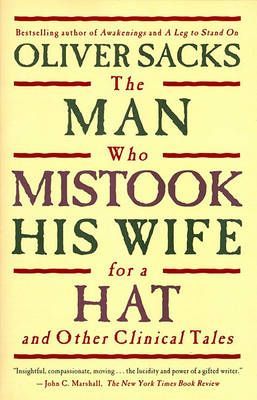
To these seven paradoxical tales of neurological disorder and creativity, Oliver Sacks brings the profound compassion and ceaseless curiosity that made "Awakenings" and "The Man Who Mistook His Wife for a Hat" international bestsellers. He transports us into the uncanny worlds of his subjects, including an artist who loses his ability to see (or even imagine) color; a surgeon who performs delicate operations in spite of the compulsive tics and outbursts of Tourette's syndrome; and an autistic professor who holds a Ph.D. in animal science but is so bewildered by the complexity of human emotion that she feels "like an anthropologist on Mars."Through these extraordinary people, Sacks explores what it is to feel, to sense, to remember - to be, ultimately, a coherent self in the world.

What happens inside our brains when we think about money? Quite a lot, actually, and some of it isn't good for our financial health. In Your Money and Your Brain, Jason Zweig explains why smart people make stupid financial decisions -- and what they can do to avoid these mistakes. Zweig, a veteran financial journalist, draws on the latest research in neuroeconomics, a fascinating new discipline that combines psychology, neuroscience, and economics to better understand financial decision making. He shows why we often misunderstand risk and why we tend to be overconfident about our investment decisions. Your Money and Your Brain offers some radical new insights into investing and shows investors how to take control of the battlefield between reason and emotion. Your Money and Your Brain is as entertaining as it is enlightening. In the course of his research, Zweig visited leading neuroscience laboratories and subjected himself to numerous experiments. He blends anecdotes from these experiences with stories about investing mistakes, including confessions of stupidity from some highly successful people. Then he draws lessons and offers original practical steps that investors can take to make wiser decisions. Anyone who has ever looked back on a financial decision and said, "How could I have been so stupid?" will benefit from reading this book.

The first of Erich Neumann's works to be translated into English, this eloquent book draws on a full range of world mythology to show that individual consciousness undergoes the same archetypal stages of development as has human consciousness as a whole. Neumann, one of Jung's most creative students and a renowned practitioner of analytical psychology in his own right, shows how the stages begin and end with the symbol of the Uroboros, or tail-eating serpent. The intermediate stages are projected in the universal myths of the World Creation, Great Mother, Separation of the World Parents, Birth of the Hero, Slaying of the Dragon, Rescue of the Captive, and Transformation and Deification of the Hero. Throughout the sequence the Hero is the evolving ego consciousness.

Jill Taylor was a 37-year-old Harvard-trained brain scientist when a blood vessel exploded in her brain. Through the eyes of a curious scientist, she watched her mind deteriorate whereby she could not walk, talk, read, write, or recall any of her life. Because of her understanding of the brain, her respect for the cells in her body, and an amazing mother, Jill completely recovered. In My Stroke of Insight, she shares her recommendations for recovery and the insight she gained into the unique functions of the two halves of her brain. When she lost the skills of her left brain, her consciousness shifted away from normal reality where she felt "at one with the universe." Taylor helps others not only rebuild their brains from trauma, but helps those of us with normal brains better understand how we can consciously influence the neural circuitry underlying what we think, how we feel and how we react to life's circumstances.

A leading contributor to artificial intelligence offers insight into the numerous ways in which the mind works to demonstrate how emotions and feelings are just different ways of thinking, in an account that poses controversial ideas about the potential for designing machines that are capable of thinking like humans. By the author of The Society of Mind.

A pioneering and revolutionary book that lays the foundation for a radical new psychology, based on an expanded cartography of the human unconsciousness. Famous for his lifelong research into psychedelic drugs, Dr. Grof constructs a comprehensive and helpful framework out of the bewildering welter of experiences triggered by LSD in patients and research subjects. Current research into the brain and ways of expanding consciousness give this seminal book, first published in 1979, new importance for the light it throws on many fundamental, but hitherto mysterious, human potentialities. Grof's theory of the human psyche transcends the personal and opens ways to a greater understanding of our inner selves.

"The last great mystery for science," consciousness has become a controversial topic. Consciousness: A Very Short Introduction challenges readers to reconsider key concepts such as personality, free will, and the soul. How can a physical brain create our experience of the world? What creates our identity? Do we really have free will? Could consciousness itself be an illusion? Exciting new developments in brain science are opening up these debates, and the field has now expanded to include biologists, neuroscientists, psychologists, and philosophers. This book clarifies the potentially confusing arguments and clearly describes the major theories, with illustrations and lively cartoons to help explain the experiments. Topics include vision and attention, theories of self, experiments on action and awareness, altered states of consciousness, and the effects of brain damage and drugs. This lively, engaging, and authoritative book provides a clear overview of the subject that combines the perspectives of philosophy, psychology, and neuroscience--and serves as a much-needed launch pad for further exploration of this complicated and unsolved issue.About the Series: Combining authority with wit, accessibility, and style, Very Short Introductions offer an introduction to some of life's most interesting topics. Written by experts for the newcomer, they demonstrate the finest contemporary thinking about the central problems and issues in hundreds of key topics, from philosophy to Freud, quantum theory to Islam.

Some investigators have argued that emotions, especially animal emotions, are illusory concepts outside the realm of scientific inquiry. However, with advances in neurobiology and neuroscience, researchers are demonstrating that this position is wrong as they move closer to a lasting understanding of the biology and psychology of emotion. In Affective Neuroscience, Jaak Panksepp provides the most up-to-date information about the brain-operating systems that organize the fundamental emotional tendencies of all mammals. Presenting complex material in a readable manner, the book offers a comprehensive summary of the fundamental neural sources of human and animal feelings, as well as a conceptual framework for studying emotional systems of the brain. Panksepp approaches emotions from the perspective of basic emotion theory but does not fail to address the complex issues raised by constructionist approaches. These issues include relations to human consciousness and the psychiatric implications of this knowledge. The book includes chapters on sleep and arousal, pleasure and fear systems, the sources of rage and anger, and the neural control of sexuality, as well as the more subtle emotions related to maternal care, social loss, and playfulness. Representing a synthetic integration of vast amounts of neurobehavioral knowledge, including relevant neuroanatomy, neurophysiology, and neurochemistry, this book will be one of the most important contributions to understanding the biology of emotions since Darwins The Expression of the Emotions in Man and Animals.

In this engaging book, Jerry Fodor argues against the widely held view that mental processes are largely computations, that the architecture of cognition is massively modular, and that the explanation of our innate mental structure is basically Darwinian. Although Fodor has praised the computational theory of mind as the best theory of cognition that we have got, he considers it to be only a fragment of the truth. In fact, he claims, cognitive scientists do not really know much yet about how the mind works (the book's title refers to Steve Pinker's How the Mind Works).Fodor's primary aim is to explore the relationship among computational and modular theories of mind, nativism, and evolutionary psychology. Along the way, he explains how Chomsky's version of nativism differs from that of the widely received New Synthesis approach. He concludes that although we have no grounds to suppose that most of the mind is modular, we have no idea how nonmodular cognition could work. Thus, according to Fodor, cognitive science has hardly gotten started.

A groundbreaking and fascinating investigation into the transformative effects of exercise on the brain, from the bestselling author and renowned psychiatrist John J. Ratey, MD.Did you know you can beat stress, lift your mood, fight memory loss, sharpen your intellect, and function better than ever simply by elevating your heart rate and breaking a sweat? The evidence is incontrovertible: Aerobic exercise physically remodels our brains for peak performance.In Spark, John J. Ratey, M.D., embarks upon a fascinating and entertaining journey through the mind-body connection, presenting startling research to prove that exercise is truly our best defense against everything from depression to ADD to addiction to aggression to menopause to Alzheimer's.Filled with amazing case studies (such as the revolutionary fitness program in Naperville, Illinois, which has put this school district of 19,000 kids first in the world of science test scores), Spark is the first book to explore comprehensively the connection between exercise and the brain. It will change forever the way you think about your morning run -- -or, for that matter, simply the way you think.

This book is a tour-de-force on how human consciousness may have evolved. From the "phantom pain" experienced by people who have lost their limbs to the uncanny faculty of "blindsight," Humphrey argues that raw sensations are central to all conscious states and that consciousness must have evolved, just like all other mental faculties, over time from our ancestors'bodily responses to pain and pleasure."Humphrey is one of that growing band of scientists who beat literary folk at their own game"-RICHARD DAWKINS"A wonderful bookbrilliant, unsettling, and beautifully written. Humphrey cuts bravely through the currents of contemporary thinking, opening up new vistas on old problems offering a feast of provocative ideas." -DANIEL DENNETT

The Divided Mind is the crowning achievement of Dr. John E. Sarno's distinguished career as a groundbreaking medical pioneer, going beyond pain to address the entire spectrum of psychosomatic (mindbody) disorders.The interaction between the generally reasonable, rational, ethical, moral conscious mind and the repressed feelings of emotional pain, hurt, sadness, and anger characteristic of the unconscious mind appears to be the basis for mindbody disorders. The Divided Mind traces the history of psychosomatic medicine, including Freud's crucial role, and describes the psychology responsible for the broad range of psychosomatic illness. The failure of medicine's practitioners to recognize and appropriately treat mindbody disorders has produced public health and economic problems of major proportions in the United States.One of the most important aspects of psychosomatic phenomena is that knowledge and awareness of the process clearly have healing powers. Thousands of people have become pain-free simply by reading Dr. Sarno's previous books. How and why this happens is a fascinating story, and is revealed in The Divided Mind.

An astonishing new science called neuroplasticity is overthrowing the centuries-old notion that the human brain is immutable. Psychiatrist and psychoanalyst, Norman Doidge, M.D., traveled the country to meet both the brilliant scientists championing neuroplasticity and the people whose lives they’ve transformed - people whose mental limitations or brain damage were seen as unalterable. We see a woman born with half a brain that rewired itself to work as a whole, blind people who learn to see, learning disorders cured, IQs raised, aging brains rejuvenated, stroke patients learning to speak, children with cerebral palsy learning to move with more grace, depression and anxiety disorders successfully treated, and lifelong character traits changed. Using these marvelous stories to probe mysteries of the body, emotion, love, sex, culture, and education, Dr. Doidge has written an immensely moving, inspiring book that will permanently alter the way we look at our brains, human nature, and human potential.

Intended for graduate students & upper level undergraduates, this textbook describes the interaction of hormones and behavior from diverse perspectives. It draws on a historical perspective, presenting current hypotheses and theories in context of their historical origins, and gives detailed information about the scientists who laid the foundation for modern studies. While the subject involves genetic, molecular, and cellular levels of analysis, Nelson (psychology & neuroscience, Ohio State U.) has kept discussion of endocrine physiology & biochemistry down to a minimum to make the text more accessible to a wider range of readers. Each chapter ends with a summary, questions for discussion, and a short list of suggested readings. Updates in this third edition include discussion of body mass regulation & circadian rhythm research. A student CD-ROM with tutorials & videos is included. Annotation ©2005 Book News, Inc., Portland, OR

The Emotional Brain investigates the origins of human emotions and explains that many exist as part of complex neural systems that evolved to enable us to survive.

Whether you load your iPod with Bach or Bono, music has a significant role in your life—even if you never realized it. Why does music evoke such powerful moods? The answers are at last be- coming clear, thanks to revolutionary neuroscience and the emerging field of evolutionary psychology. Both a cutting-edge study and a tribute to the beauty of music itself, This Is Your Brain on Music unravels a host of mysteries that affect everything from pop culture to our understanding of human nature, including: • Are our musical preferences shaped in utero? • Is there a cutoff point for acquiring new tastes in music? • What do PET scans and MRIs reveal about the brain’s response to music? • Is musical pleasure different from other kinds of pleasure?This Is Your Brain on Music explores cultures in which singing is considered an essential human function, patients who have a rare disorder that prevents them from making sense of music, and scientists studying why two people may not have the same definition of pitch. At every turn, this provocative work unlocks deep secrets about how nature and nurture forge a uniquely human obsession.

The Joyous Cosmology is Alan Watts’s exploration of the insight that the consciousness-changing drugs LSD, mescaline & psilocybin can facilitate “when accompanied with sustained philosophical reflection by a person who is in search, not of kicks, but of understanding.” More than an artifact, it is both a riveting memoir of Watts’s personal experiments & a profound meditation on our perennial questions about the nature of existence & the existence of the sacred.

The Mind of a Mnemonist is a rare phenomenon - a scientific study that transcends its data and, in the manner of the best fictional literature, fashions a portrait of an unforgettable human being."

Today a brain scan reveals our thoughts, moods, and memories as clearly as an X-ray reveals our bones. We can actually observe a person's brain registering a joke or experiencing a painful memory. Drawing on the latest imaging technology and the expertise of distinguished scientists, Rita Carter explores the geography of the human brain. Her writing is clear, accessible, witty, and the book's 150 illustrations—most in color—present an illustrated guide to that wondrous, coconut-sized, wrinkled gray mass we carry inside our heads.Mapping the Mind charts the way human behavior and culture have been molded by the landscape of the brain. Carter shows how our personalities reflect the biological mechanisms underlying thought and emotion and how behavioral eccentricities may be traced to abnormalities in an individual brain. Obsessions and compulsions seem to be caused by a stuck neural switch in a region that monitors the environment for danger. Addictions stem from dysfunction in the brain's reward system. Even the sense of religious experience has been linked to activity in a certain brain region. The differences between men and women's brains, the question of a "gay brain," and conditions such as dyslexia, autism, and mania are also explored.Looking inside the brain, writes Carter, we see that actions follow from our perceptions, which are due to brain activity dictated by a neuronal structure formed from the interplay between our genes and the environment. Without sidestepping the question of free will, Carter suggests that future generations will use our increasing knowledge of the brain to "enhance those mental qualities that give sweetness and meaning to our lives, and to eradicate those that are destructive."

Dr. Carl Sagan takes us on a great reading adventure, offering his vivid and startling insight into the brain of man and beast, the origin of human intelligence, the function of our most haunting legends—and their amazing links to recent discoveries.

Go beyond the headlines and the hype to get the newest findings in the burgeoning field of gender studies. Drawing on disciplines that include evolutionary science, anthropology, animal behavior, neuroscience, psychology, and endocrinology, Deborah Blum explores matters ranging from the link between immunology and sex to male/female gossip styles. The results are intriguing, startling, and often very amusing. For instance, did you know that. . .• Male testosterone levels drop in happy marriages; scientists speculate that women may use monogamy to control male behavior• Young female children who are in day-care are apt to be more secure than those kept at home; young male children less so• Anthropologists classify Western societies as "mildly polygamous"The Los Angeles Times has called Sex on the Brain "superbly crafted science writing, graced by unusual compassion, wit, and intelligence, that forms an important addition to the literature of gender studies."

The Neuropsychology of Anxiety first appeared in 1982 as the first volume in the Oxford Psychology Series, and it quickly established itself as the classic work on the subject. This completely updated and revised edition is essential for postgraduate students and researchers in experimental psychology and neuroscience, as well as for all clinical psychologists.

The Wisdom Paradox explores the aging of the mind from a unique, positive perspective. In an era of increasing fears about mental deterioration, world-renowned neuropsychologist Elkhonon Goldberg provides startling new evidence that though the brain diminishes in some tasks as it ages, it gains in many ways. Most notably, it increases in what he terms “wisdom”: the ability to draw upon knowledge and experience gained over a lifetime to make quick and effective decisions. Goldberg delves into the machinery of the mind, separating memory into two distinct singular (knowledge of a particular incident or fact) and generic (recognition of broader patterns). As the brain ages, the ability to use singular memory declines, but generic memory is unaffected—and its importance grows. As an individual accumulates generic memory, the brain can increasingly rely upon these stored patterns to solve problems effortlessly and instantaneously. Goldberg investigates the neurobiology of wisdom, and draws on historical examples of artists and leaders whose greatest achievements were realized late in life.

Have you ever fantasized about having more time-now, this minute, to accomplish everything you need and want to get done today? Or wondered why time flies when you are thoroughly engrossed in something? Or why minutes pass so slowly when you’re standing in line at the store or airport, or on hold waiting for a customer service rep to answer your call? Or how, simply, to find more time to relax and unwind?Now, with The Secret Pulse of Time, already a longstanding best seller in Germany, internationally best-selling and award-winning science writer Stefan Klein has crafted what amounts to “operating instructions” for time. “We are all taking part in a giant experiment in dealing with time,” Klein writes-and his aim with this book is to help us each to understand “the degree to which our experience of time hinges on our outlook on life.” With his journalist’s unerring eye for the telling detail, Stefan Klein effortlessly combines original investigation and reportage, personal revelation, and a wide-ranging, commanding presentation of scientific research among disciplines including brain physiology, social psychology, philosophy, and Einsteinian physics-with the goal of guiding us not only to better master time but also to understand why we so often fail to do so. Woven into his narrative are dozens of practical ways to make sense of and gain control over time, including: How not to lose your head when a deadline is quickly approaching How the present becomes a memory-and vice versa How to attune to your inner clock for more productive, satisfying days How to avoid becoming worn out by the fast tempo of modern life Popular science at its very best, The Secret Pulse of Time awakens us to and empowers us with the idea that time is far more at our disposal than we have ever before realized.

Now in its second edition, Brain Architecture is the continued exploration of how the brain works. At the very core of our existence, the brain generates our thoughts and feelings, directs our voluntary interactions with the environment, and coordinates all of the vital functions within the body itself. This long-overdue new edition explains this oftentimes daunting intricacy and exquisite detail. The first half of the book discusses the basic parts and how they work, presenting an overview of the nervous system at both the microscopic and macroscopic levels. The approach follows three classic lines of thought that proceed from simple to complex: the history of neuroscience research, the evolution of the nervous system, and the embryological development of the vertebrate central and peripheral nervous systems. The second half of the book outlines the basic wiring diagram of the brain and nervous system-how the parts are interconnected and how they control behavior and the internal state of the body. This is done within the framework of a new four-system network model that greatly simplifies understanding the structure-function organization of the nervous system. Written in clear and sparkling prose, beautifully illustrated, and thoroughly updated, Brain Architecture, Second Edition is must-read for anyone interested in the science of how the brain works.

In this extraordinary bestseller, Steven Pinker, one of the world's leading cognitive scientists, does for the rest of the mind what he did for language in his 1994 book, The Language Instinct. He explains what the mind is, how it evolved, and how it allows us to see, think, feel, laugh, interact, enjoy the arts, and ponder the mysteries of life. And he does it with the wit that prompted Mark Ridley to write in the New York Times Book Review, "No other science writer makes me laugh so much. . . . [Pinker] deserves the superlatives that are lavished on him." The arguments in the book are as bold as its title. Pinker rehabilitates some unfashionable ideas, such as that the mind is a computer and that human nature was shaped by natural selection, and challenges fashionable ones, such as that passionate emotions are irrational, that parents socialize their children, and that nature is good and modern society corrupting. Winner of the Los Angeles Times Book Prize A New York Times Notable Book of the Year and Publishers Weekly Best Book of 1997 Featured in Time magazine, the New York Times Magazine, The New Yorker, Nature, Science, Lingua Franca, and Science Times Front-page reviews in the Washington Post Book World, the Boston Globe Book Section, and the San Diego Union Book Review

An investigation into experiences of other realms of existence and contact with otherworldly beings • Examines how contact with alien life-forms can be obtained through the “inner space” dimensions of our minds • Presents evidence that other worlds experienced through consciousness-altering technologies are often as real as those perceived with our five senses • Correlates science fiction’s imaginal realms with psychedelic research For thousands of years, voyagers of inner space--spiritual seekers, shamans, and psychoactive drug users--have returned from their inner imaginal travels reporting encounters with alien intelligences. Inner Paths to Outer Space presents an innovative examination of how we can reach these other dimensions of existence and contact otherworldly beings. Based on their more than 60 combined years of research into the function of the brain, the authors reveal how psychoactive substances such as DMT allow the brain to bypass our five basic senses to unlock a multidimensional realm of existence where otherworldly communication occurs. They contend that our centuries-old search for alien life-forms has been misdirected and that the alien worlds reflected in visionary science fiction actually mirror the inner space world of our minds. The authors show that these “alien” worlds encountered through altered states of human awareness, either through the use of psychedelics or other methods, possess a sense of reality as great as, or greater than, those of the ordinary awareness perceived by our five senses.

"A brilliant, witty, and altogether satisfying book." — New York Times Book Review The classic work on the development of human language by the world’s leading expert on language and the mind In The Language Instinct , the world's expert on language and mind lucidly explains everything you always wanted to know about language: how it works, how children learn it, how it changes, how the brain computes it, and how it evolved. With deft use of examples of humor and wordplay, Steven Pinker weaves our vast knowledge of language into a compelling story: language is a human instinct, wired into our brains by evolution. The Language Instinct received the William James Book Prize from the American Psychological Association and the Public Interest Award from the Linguistics Society of America. This edition includes an update on advances in the science of language since The Language Instinct was first published.

Beginning with its first edition and through subsequent editions, Thinking and Deciding has established itself as the required text and important reference work for students and scholars of human cognition and rationality. In this, the fourth edition, Jonathan Baron retains the comprehensive attention to the key questions addressed in the previous editions - How should we think? What, if anything, keeps us from thinking that way? How can we improve our thinking and decision making? - and his expanded treatment of topics such as risk, utilitarianism, Baye's theorem, and moral thinking. With the student in mind, the fourth edition emphasizes the development of an understanding of the fundamental concepts in judgment and decision making. This book is essential reading for students and scholars in judgment and decision making and related fields, including psychology, economics, law, medicine, and business.

A revolutionary challenge to the widely held notion that intelligence is a single general capacity possessed by every individual to a greater or lesser extent. Gardner's trailblazing book revolutionized the worlds of education and psychology by positing that rather than a single type of intelligence, we have several--most of which are neglected by standard testing and educational methods.More than 200,00 copies of earlier editions have been sold; this reissue includes a new introduction by the author to mark the twenty-first birthday of this remarkable book.

What do we mean when we say “I”? Can thought arise out of matter? Can a self, a soul, a consciousness, an “I” arise out of mere matter? If it cannot, then how can you or I be here? I Am a Strange Loop argues that the key to understanding selves and consciousness is the “strange loop”—a special kind of abstract feedback loop inhabiting our brains. Deep down, a human brain is a chaotic seething soup of particles, on a higher level it is a jungle of neurons, and on a yet higher level it is a network of abstractions that we call “symbols.” The most central and complex symbol in your brain or mine is the one we both call “I.” The “I” is the nexus in our brain where the levels feed back into each other and flip causality upside down, with symbols seeming to have free will and to have gained the paradoxical ability to push particles around, rather than the reverse. For each human being, this “I” seems to be the realest thing in the world. But how can such a mysterious abstraction be real—or is our “I” merely a convenient fiction? Does an “I” exert genuine power over the particles in our brain, or is it helplessly pushed around by the all-powerful laws of physics? These are the mysteries tackled in I Am a Strange Loop, Douglas R. Hofstadter’s first book-length journey into philosophy since Gödel, Escher, Bach. Compulsively readable and endlessly thought-provoking, this is the book Hofstadter’s many readers have long been waiting for.

Awakenings is a 1973 non-fiction book by Oliver Sacks. It recounts the life histories of those who had been victims of the 1920s encephalitis lethargica epidemic. Sacks chronicles his efforts in the late 1960s to help these patients at the Beth Abraham Hospital in the Bronx, New York.

Kids are naturally curious, but when it comes to school it seems like their minds are turned off. Why is it that they can remember the smallest details from their favorite television program, yet miss the most obvious questions on their history test?Cognitive scientist Dan Willingham has focused his acclaimed research on the biological and cognitive basis of learning and has a deep understanding of the daily challenges faced by classroom teachers. this book will help teachers improve their practice by explaining how they and their students think and learn—revealing the importance of story, emotion, memory, context, and routine in building knowledge and creating lasting learning experiences.In this breakthrough book, Willingham has distilled his knowledge of cognitive science into a set of nine principles that are easy to understand and have clear applications for the classroom. Some of examples of his surprising findings are:“Learning styles” don't exist The processes by which different children think and learn are more similar than different.Intelligence is malleable Intelligence contributes to school performance and children do differ, but intelligence can be increased through sustained hard work.You cannot develop “thinking skills” in the absence of facts We encourage students to think critically, not just memorize facts. However thinking skills depend on factual knowledge for their operation.Why Don't Students Like School is a basic primer for every teacher who wants to know how their brains and their students’ brains work and how that knowledge can help them hone their teaching skills.

Elkhonon Goldberg's groundbreaking The Executive Brain was a classic of scientific writing, revealing how the frontal lobes command the most human parts of the mind. Now he offers a completely new book, providing fresh, iconoclastic ideas about the relationship between the brain and the mind. In The New Executive Brain, Goldberg paints a sweeping panorama of cutting-edge thinking in cognitive neuroscience and neuropsychology, one that ranges far beyond the frontal lobes. Drawing on the latest discoveries, and developing complex scientific ideas and relating them to real life through many fascinating case studies and anecdotes, the author explores how the brain engages in complex decision-making; how it deals with novelty and ambiguity; and how it addresses moral choices. At every step, Goldberg challenges entrenched assumptions. For example, we know that the left hemisphere of the brain is the seat of language--but Goldberg argues that language may not be the central adaptation of the left hemisphere. Apes lack language, yet many also show evidence of asymmetric hemispheric development. Goldberg also finds that a complex interaction between the frontal lobes and the amygdale--between a recently evolved and a much older part of the brain--controls emotion, as conscious thoughts meet automatic impulses. The author illustrates this observation with a personal the difficulty he experienced when trying to pick up a baby alligator he knew to be harmless, as his amygdala battled his effort to extend his hand. The New Executive Brain , Goldberg affirms Goldberg's place as one of our most creative and insightful scientists, offering lucid writing and bold, paradigm-shifting ideas.

In Your Brain at Work, David Rock takes readers inside the heads—literally—of a modern two-career couple as they mentally process their workday to reveal how we can better organize, prioritize, remember, and process our daily lives. Rock, the author of Quiet Leadership and Personal Best, shows how it’s possible for this couple, and thus the reader, not only to survive in today’s overwhelming work environment but succeed in it—and still feel energized and accomplished at the end of the day.

Two maverick neuroscientists use the world's largest psychology experiment-the Internet-to study the private activities of millions of men and women around the world, unveiling a revolutionary and shocking new vision of human desire that overturns conventional thinking. For his groundbreaking sexual research, Alfred Kinsey and his team interviewed 18,000 people, relying on them to honestly report their most intimate experiences. Using the Internet, the neuroscientists Ogas and Gaddam quietly observed the raw sexual behaviors of half a billion people. By combining their observations with neuroscience and animal research, these two young neuroscientists finally answer the long-disputed question: what do people really like? Ogas and Gaddam's findings are transforming the way scientists and therapists think about sexual desire. In their startling book, Ogas and Gaddam analyze a "billion wicked thoughts" on the Internet: a billion Web searches, a million individual search histories, a million erotic stories, a half-million erotic videos, a million Web sites, millions of online personal ads, and many other enormous sources of sexual data in order to understand the true differences between male and female desires, including: ?Men and women have hardwired sexual cues analogous to our hardwired tastes-there are sexual versions of sweet, sour, salty, savory, and bitter. But men and women are wired with different sets of cues. ?The male sexual brain resembles a reckless hunter, while the female sexual brain resembles a cautious detective agency. ?Men form their sexual interests during adolescence and rarely change. Women's sexual interests are plastic and change frequently. ?The male sexual brain is an "or gate": A single stimulus can arouse it. The female sexual brain is an "and gate": It requires many simultaneous stimuli to arouse it. ?When it comes to sexual arousal, men prefer overweight women to underweight women, and a significant number of men seek out erotic images of women in their 40s, 50s, and 60s. ?Women enjoy writing and sharing erotic stories with other women. The fastest growing genre of erotic stories for women are stories about two heterosexual men having sex. ?Though the male sexual brain is much more different from the female sexual brain than is commonly believed, the sexual brain of gay men is virtually identical to that of straight men. Featuring cutting-edge, jaw-dropping science, this wildly entertaining and controversial book helps readers understand their partner's sexual desires with a depth of knowledge unavailable from any other source. Its fascinating and occasionally disturbing findings will rock our modern understanding of sexuality, just as Kinsey's reports did sixty years ago.

What do sex and murder have to do with the meaning of life? Everything.In Sex, Murder, and the Meaning of Life, social psychologist Douglas Kenrick exposes the selfish animalistic underside of human nature, and shows how it is intimately connected to our greatest and most selfless achievements. Masterfully integrating cognitive science, evolutionary psychology, and complexity theory, this intriguing book paints a comprehensive picture of the principles that govern our lives. As Kenrick divulges, beneath our civilized veneer, human beings are a lot like howling hyenas and barking baboons, with heads full of homicidal tendencies and sexual fantasies. But, in his view, many ingrained, apparently irrational behaviors—such as inclinations to one-night stands, racial prejudices, and conspicuous consumption—ultimately manifest what he calls “Deep Rationality.”Although our heads are full of simple selfish biases that evolved to help our ancestors survive, modern human beings are anything but simple and selfish cavemen. Kenrick argues that simple and selfish mental mechanisms we inherited from our ancestors ultimately give rise to the multifaceted social lives that we humans lead today, and to the most positive features of humanity, including generosity, artistic creativity, love, and familial bonds. And out of those simple mechanisms emerge all the complexities of society, including international conflicts and global economic markets. By exploring the nuance of social psychology and the surprising results of his own research, Kenrick offers a detailed picture of what makes us caring, creative, and complex — that is, fully human. Illuminated with stories from Kenrick’s own colorful experiences — from his criminally inclined shantytown Irish relatives, his own multiple high school expulsions, broken marriages, and homicidal fantasies, to his eventual success as an evolutionary psychologist and loving father of two boys separated by 26 years — this book is an exploration of our mental biases and failures, and our mind’s great successes. Idiosyncratic, controversial, and fascinating, Sex, Murder, and the Meaning of Life uncovers the pitfalls and promise of our biological inheritance.

Are you still the person who lived fifteen, ten or five years ago? Fifteen, ten or five minutes ago? Can you plan for your retirement if the you of thirty years hence is in some sense a different person? What and who is the real you? Does it remain constant over time and place, or is it something much more fragmented and fluid? Is it known to you, or are you as much a mystery to yourself as others are to you?With his usual wit, infectious curiosity and bracing scepticism, Julian Baggini sets out to answer these fundamental and unsettling questions. His fascinating quest draws on the history of philosophy, but also anthropology, sociology, psychology and neurology; he talks to theologians, priests, allegedly reincarnated Lamas, and delves into real-life cases of lost memory, personality disorders and personal transformation; and, candidly and engagingly, he describes his own experiences. After reading The Ego Trick, you will never see yourself in the same way again.

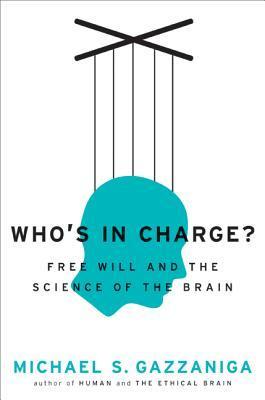
The author of Human, Michael S. Gazzaniga has been called the “father of cognitive neuroscience.” In his remarkable book, Who’s in Charge?, he makes a powerful and provocative argument that counters the common wisdom that our lives are wholly determined by physical processes we cannot control. His well-reasoned case against the idea that we live in a “determined” world is fascinating and liberating, solidifying his place among the likes of Oliver Sacks, Antonio Damasio, V.S. Ramachandran, and other bestselling science authors exploring the mysteries of the human brain

Based on Stanford University psychologist Kelly McGonigal's wildly popular course "The Science of Willpower," The Willpower Instinct is the first book to explain the science of self-control and how it can be harnessed to improve our health, happiness, and productivity .Informed by the latest research and combining cutting-edge insights from psychology, economics, neuroscience, and medicine, The Willpower Instinct explains exactly what willpower is, how it works, and why it matters. For example, readers will • Willpower is a mind-body response, not a virtue. It is a biological function that can be improved through mindfulness, exercise, nutrition, and sleep. • Willpower is not an unlimited resource. Too much self-control can actually be bad for your health. • Temptation and stress hijack the brain's systems of self-control, but the brain can be trained for greater willpower • Guilt and shame over your setbacks lead to giving in again, but self-forgiveness and self-compassion boost self-control. • Giving up control is sometimes the only way to gain self-control. • Willpower failures are contagious—you can catch the desire to overspend or overeat from your friends—but you can also catch self-control from the right role models.In the groundbreaking tradition of Getting Things Done, The Willpower Instinct combines life-changing prescriptive advice and complementary exercises to help readers with goals ranging from losing weight to more patient parenting, less procrastination, better health, and greater productivity at work.

Neuropsychedelia examines the revival of psychedelic science since the "Decade of the Brain." After the breakdown of this previously prospering area of psychopharmacology, and in the wake of clashes between counterculture and establishment in the late 1960s, a new generation of hallucinogen researchers used the hype around the neurosciences in the 1990s to bring psychedelics back into the mainstream of science and society. This book is based on anthropological fieldwork and philosophical reflections on life and work in two laboratories that have played key roles in this a human lab in Switzerland and an animal lab in California. It sheds light on the central transnational axis of the resurgence connecting American psychedelic culture with the home country of LSD. In the borderland of science and religion, Neuropsychedelia explores the tensions between the use of hallucinogens to model psychoses and to evoke spiritual experiences in laboratory settings. Its protagonists, including the anthropologist himself, struggle to find a place for the mystical under conditions of late-modern materialism.

Virtually Human explores what the not-too-distant future will look like when cyberconsciousness―simulation of the human brain via software and computer technology―becomes part of our daily lives. Meet Bina48, the world's most sentient robot, commissioned by Martine Rothblatt and created by Hanson Robotics. Bina48 is a nascent Mindclone of Martine's wife that can engage in conversation, answer questions, and even have spontaneous thoughts that are derived from multimedia data in a Mindfile created by the real Bina. If you're active on Twitter or Facebook, share photos through Instagram, or blogging regularly, you're already on your way to creating a Mindfile―a digital database of your thoughts, memories, feelings, and opinions that is essentially a back-up copy of your mind. Soon, this Mindfile can be made conscious with special software―Mindware―that mimics the way human brains organize information, create emotions and achieve self-awareness. This may sound like science-fiction A.I. (artificial intelligence), but the nascent technology already exists. Thousands of software engineers across the globe are working to create cyberconsciousness based on human consciousness and the Obama administration recently announced plans to invest in a decade-long Brain Activity Map project. Virtually Human is the only book to examine the ethical issues relating to cyberconsciousness and Rothblatt, with a Ph.D. in medical ethics, is uniquely qualified to lead the dialogue.

NEW YORK TIMES BESTSELLER The New York Times –bestselling author of The Brain That Changes Itself presents astounding advances in the treatment of brain injury and illness. Now in an updated and expanded paperback edition.Winner of the 2015 Gold Nautilus Book Award in Science & CosmologyIn his groundbreaking work The Brain That Changes Itself , Norman Doidge introduced readers to neuroplasticity—the brain’s ability to change its own structure and function in response to activity and mental experience. Now his revolutionary new book shows how the amazing process of neuroplastic healing really works. The Brain’s Way of Healin g describes natural, noninvasive avenues into the brain provided by the energy around us—in light, sound, vibration, and movement—that can awaken the brain’s own healing capacities without producing unpleasant side effects. Doidge explores cases where patients alleviated chronic pain; recovered from debilitating strokes, brain injuries, and learning disorders; overcame attention deficit and learning disorders; and found relief from symptoms of autism, multiple sclerosis, Parkinson’s disease, and cerebral palsy. And we learn how to vastly reduce the risk of dementia, with simple approaches anyone can use. For centuries it was believed that the brain’s complexity prevented recovery from damage or disease. The Brain’s Way of Healing shows that this very sophistication is the source of a unique kind of healing. As he did so lucidly in The Brain That Changes Itself , Doidge uses stories to present cutting-edge science with practical real-world applications, and principles that everyone can apply to improve their brain’s performance and health.

Scientific and philosophical concepts can change the way we solve problems by helping us to think more effectively about our behavior and our world. Surprisingly, despite their utility, many of these tools remain unknown to most of us.In Mindware , the world-renowned psychologist Richard E. Nisbett presents these ideas in clear and accessible detail, offering a tool kit for better thinking and wiser decisions. He has made a distinguished career of studying and teaching such powerful problem-solving concepts as the law of large numbers, statistical regression, cost-benefit analysis, sunk costs and opportunity costs, and causation and correlation, probing how best to teach others to use them effectively in their daily lives. In this groundbreaking book, he shows that a course in a given field--statistics or economics, for example--often doesn't work as well as a few minutes of more practical instruction in analyzing everyday situations. Mindware shows how to reframe common problems in such a way that these powerful scientific and statistical concepts can be applied to them. The result is an enlightening and practical guide to the most powerful tools of reasoning ever developed--tools that can easily be used to make better professional, business, and personal decisions.

Through the vivid, true stories of five people who journeyed into and out of addiction, a renowned neuroscientist explains why the "disease model" of addiction is wrong and illuminates the path to recovery.The psychiatric establishment and rehab industry in the Western world have branded addiction a brain disease. But in The Biology of Desire , cognitive neuroscientist and former addict Marc Lewis makes a convincing case that addiction is not a disease, and shows why the disease model has become an obstacle to healing.Lewis reveals addiction as an unintended consequence of the brain doing what it's supposed to do-seek pleasure and relief-in a world that's not cooperating. As a result, most treatment based on the disease model fails. Lewis shows how treatment can be retooled to achieve lasting recovery. This is enlightening and optimistic reading for anyone who has wrestled with addiction either personally or professionally.

A new theory of how the brain constructs emotions that could revolutionize psychology, health care, law enforcement, and our understanding of the human mind.Emotions feel automatic, like uncontrollable reactions to things we think and experience. Scientists have long supported this assumption by claiming that emotions are hardwired in the body or the brain. Today, however, the science of emotion is in the midst of a revolution on par with the discovery of relativity in physics and natural selection in biology—ans this paradigm shift has far-reaching implications for us all.Leading the charge is psychologist and neuroscientist Lisa Feldman Barrett, whose theory of emotion is driving a deeper understanding of the mind and brain, and shedding new light on what it means to be human. Her research overturns the widely held belief that emotions are housed in different parts of the brain and are universally expressed and recognized. Instead, she has shown that emotion is constructed in the moment, by core systems that interact across the whole brain, aided by a lifetime of learning. This new theory means that you play a much greater role in your emotional life than you ever thought. Its repercussions are already shaking the foundations not only of psychology but also of medicine, the legal system, child-rearing, meditation, and even airport security.Why do emotions feel automatic? Does rational thought really control emotion? How does emotion affect disease? How can you make your children more emotionally intelligent? How Emotions Are Made answers these questions and many more, revealing the latest research and intriguing practical applications of the new science of emotion, mind, and brain.

Growing up in the high desert of California, Jim Doty was poor, with an alcoholic father and a mother chronically depressed and paralyzed by a stroke. Today he is the director of the Center for Compassion and Altruism Research and Education (CCARE) at Stanford University, of which the Dalai Lama is a founding benefactor. But back then his life was at a dead end until at twelve he wandered into a magic shop looking for a plastic thumb. Instead he met Ruth, a woman who taught him a series of exercises to ease his own suffering and manifest his greatest desires. Her final mandate was that he keep his heart open and teach these techniques to others. She gave him his first glimpse of the unique relationship between the brain and the heart.Doty would go on to put Ruth’s practices to work with extraordinary results—power and wealth that he could only imagine as a twelve-year-old, riding his orange Sting-Ray bike. But he neglects Ruth’s most important lesson, to keep his heart open, with disastrous results—until he has the opportunity to make a spectacular charitable contribution that will virtually ruin him. Part memoir, part science, part inspiration, and part practical instruction, Into the Magic Shop shows us how we can fundamentally change our lives by first changing our brains and our hearts.

What is the mind? What is the experience of the self truly made of? How does the mind differ from the brain? Though the mind’s contents—its emotions, thoughts, and memories—are often described, the essence of mind is rarely, if ever, defined.In this book, noted neuropsychiatrist and New York Times best-selling author Daniel J. Siegel, MD, uses his characteristic sensitivity and interdisciplinary background to offer a definition of the mind that illuminates the how, what, when, where, and even why of who we are, of what the mind is, and what the mind’s self has the potential to become. MIND takes the reader on a deep personal and scientific journey into consciousness, subjective experience, and information processing, uncovering the mind’s self-organizational properties that emerge from both the body and the relationships we have with one another, and with the world around us. While making a wide range of sciences accessible and exciting—from neurobiology to quantum physics, anthropology to psychology—this book offers an experience that addresses some of our most pressing personal and global questions about identity, connection, and the cultivation of well-being in our lives.

Philosophers from Descartes to Kripke have struggled with the glittering prize of modern and contemporary philosophy: the mind-body problem. The brain is physical. If the mind is physical, we cannot see how. If we cannot see how the mind is physical, we cannot see how it can interact with the body. And if the mind is not physical, it cannot interact with the body. Or so it seems.In this book the philosopher Jonathan Westphal examines the mind-body problem in detail, laying out the reasoning behind the solutions that have been offered in the past and presenting his own proposal. The sharp focus on the mind-body problem, a problem that is not about the self, or consciousness, or the soul, or anything other than the mind and the body, helps clarify both problem and solutions.Westphal outlines the history of the mind-body problem, beginning with Descartes. He describes mind-body dualism, which claims that the mind and the body are two different and separate things, nonphysical and physical, and he also examines physicalist theories of mind; antimaterialism, which proposes limits to physicalism and introduces the idea of qualia; and scientific theories of consciousness.Finally, Westphal examines the largely forgotten neutral monist theories of mind and body, held by Ernst Mach, William James, and Bertrand Russell, which attempt neither to extract mind from matter nor to dissolve matter into mind. Westphal proposes his own version of neutral monism. This version is unique among neutral monist theories in offering an account of mind-body interaction.

Why do we do the things we do?More than a decade in the making, this game-changing book is Robert Sapolsky's genre-shattering attempt to answer that question as fully as perhaps only he could, looking at it from every angle. Sapolsky's storytelling concept is delightful but it also has a powerful intrinsic logic: he starts by looking at the factors that bear on a person's reaction in the precise moment a behavior occurs, and then hops back in time from there, in stages, ultimately ending up at the deep history of our species and its evolutionary legacy.And so the first category of explanation is the neurobiological one. A behavior occurs—whether an example of humans at our best, worst, or somewhere in between. What went on in a person's brain a second before the behavior happened? Then Sapolsky pulls out to a slightly larger field of vision, a little earlier in time: What sight, sound, or smell caused the nervous system to produce that behavior? And then, what hormones acted hours to days earlier to change how responsive that individual is to the stimuli that triggered the nervous system? By now he has increased our field of vision so that we are thinking about neurobiology and the sensory world of our environment and endocrinology in trying to explain what happened.Sapolsky keeps going: How was that behavior influenced by structural changes in the nervous system over the preceding months, by that person's adolescence, childhood, fetal life, and then back to his or her genetic makeup? Finally, he expands the view to encompass factors larger than one individual. How did culture shape that individual's group, what ecological factors millennia old formed that culture? And on and on, back to evolutionary factors millions of years old.The result is one of the most dazzling tours d'horizon of the science of human behavior ever attempted, a majestic synthesis that harvests cutting-edge research across a range of disciplines to provide a subtle and nuanced perspective on why we ultimately do the things we do ... for good and for ill. Sapolsky builds on this understanding to wrestle with some of our deepest and thorniest questions relating to tribalism and xenophobia, hierarchy and competition, morality and free will, and war and peace. Wise, humane, often very funny, Behave is a towering achievement, powerfully humanizing, and downright heroic in its own right.

The first definitive book exploring the science of self-awareness, the meta-skill of the 21st century, Insight is a fascinating journey into everyone's favorite topic: themselves. Do you know who you really are? Do you ever wonder how other people really see you? Though we are usually confident that we do, we are wrong more often than we think. And if we could see ourselves through others eyes, we might be really surprised. Yet regardless of our line of work or stage of life, success depends on understanding who we are and how we come across. Research shows that self-awareness means better work performance, smarter life choices, deeper, more meaningful relationships, and a more fulfilling career. There s just one problem: people can be remarkably poor judges of their behavior, performance, and impact on others. And despite the lip service given today to feedback, in the business world and beyond, it s rare to get candid, objective data on what we re doing well, and where we could stand to improve. Of course, at work and in life, we ve all come across people with a stunning lack of self-awareness but how often do we consider whether we might have the same problem? And if we did, how would we even know it? Drawing on her three-year, first-of-its-kind study of people who have dramatically improved their self-awareness, organizational psychologist Tasha Eurich reveals why we don t know ourselves as well as we think and what to do about it. Alongside her research, she integrates hundreds of academic studies and her 15 years of work with Fortune 500 clients, challenging conventional wisdom to reveal many surprising truths like why introspection is the enemy of insight, how experience isn t a bullet train to self-knowledge, and just how far others will go to avoid telling us the truth about ourselves. Readers will learn battle-tested techniques and tools to improve self-awareness and thus their work performance, leadership skills, interpersonal relationships, and more. Insight is a guide surviving and thriving in an unaware world."

The Strange Order of Things is a pathbreaking investigation into homeostasis, the condition that regulates human physiology within the range that makes possible not only survival but also the flourishing of life. Antonio Damasio makes clear that we descend biologically, psychologically, and even socially from a long lineage that begins with single living cells; that our minds and cultures are linked by an invisible thread to the ways and means of ancient unicellular existence and other primitive life-forms; and that inherent in our very chemistry is a powerful force, a striving toward life maintenance that governs life in all its guises, including the development of genes that help regulate and transmit life. The Strange Order of Things is a landmark reflection that spans the biological and social sciences, offering a new way of understanding the origins of life, feeling, and culture.

Two New York Times-bestselling authors unveil new research showing what meditation can really do for the brain.In the last twenty years, meditation and mindfulness have gone from being kind of cool to becoming an omnipresent Band-Aid for fixing everything from your weight to your relationship to your achievement level. Unveiling here the kind of cutting-edge research that has made them giants in their fields, Daniel Goleman and Richard Davidson show us the truth about what meditation can really do for us, as well as exactly how to get the most out of it.Sweeping away common misconceptions and neuromythology to open readers' eyes to the ways data has been distorted to sell mind-training methods, the authors demonstrate that beyond the pleasant states mental exercises can produce, the real payoffs are the lasting personality traits that can result. But short daily doses will not get us to the highest level of lasting positive change--even if we continue for years--without specific additions. More than sheer hours, we need smart practice, including crucial ingredients such as targeted feedback from a master teacher and a more spacious, less attached view of the self, all of which are missing in widespread versions of mind training. The authors also reveal the latest data from Davidson's own lab that point to a new methodology for developing a broader array of mind-training methods with larger implications for how we can derive the greatest benefits from the practice.Exciting, compelling, and grounded in new research, this is one of those rare books that has the power to change us at the deepest level.

At fourteen, Amber could boast of killing her guinea pig, threatening to burn down her home, and seducing men in exchange for gifts. She used the tools she had available to get what she wanted, and she didn't care about the damage she inflicted. A few miles away, Lenny Skutnik was so concerned about the life of a drowning woman that he jumped into an ice-cold river to save her. How could Amber care so little about others' lives while Lenny cared so much? Neuroscientist Abigail Marsh studied the brains of both psychopathic children and extreme altruists and found that the answer lies in humans' ability to recognize others' fear. By studying people who demonstrate heroic behavior and evil behavior, we can learn more about how human morality is coded in the brain. An enlightening read, The Fear Factor is essential for anyone seeking to understand the heights and depths of human nature.

The author of the acclaimed Proust and the Squid follows up with a lively, ambitious, and deeply informative book that considers the future of the reading brain and our capacity for critical thinking, empathy, and reflection as we become increasingly dependent on digital technologies.A decade ago, Maryanne Wolf’s Proust and the Squid revealed what we know about how the brain learns to read and how reading changes the way we think and feel. Since then, the ways we process written language have changed dramatically with many concerned about both their own changes and that of children. New research on the reading brain chronicles these changes in the brains of children and adults as they learn to read while immersed in a digitally dominated medium.Drawing deeply on this research, this book comprises a series of letters Wolf writes to us—her beloved readers—to describe her concerns and her hopes about what is happening to the reading brain as it unavoidably changes to adapt to digital mediums. Wolf raises difficult questions, including:Will children learn to incorporate the full range of "deep reading" processes that are at the core of the expert reading brain?Will the mix of a seemingly infinite set of distractions for children’s attention and their quick access to immediate, voluminous information alter their ability to think for themselves?With information at their fingertips, will the next generation learn to build their own storehouse of knowledge, which could impede the ability to make analogies and draw inferences from what they know?Will all these influences, in turn, change the formation in children and the use in adults of "slower" cognitive processes like critical thinking, personal reflection, imagination, and empathy that comprise deep reading and that influence both how we think and how we live our lives?Will the chain of digital influences ultimately influence the use of the critical analytical and empathic capacities necessary for a democratic society?How can we preserve deep reading processes in future iterations of the reading brain?Who are the "good readers" of every epoch?Concerns about attention span, critical reasoning, and over-reliance on technology are never just about children—Wolf herself has found that, though she is a reading expert, her ability to read deeply has been impacted as she has become, inevitably, increasingly dependent on screens.Wolf draws on neuroscience, literature, education, technology, and philosophy and blends historical, literary, and scientific facts with down-to-earth examples and warm anecdotes to illuminate complex ideas that culminate in a proposal for a biliterate reading brain. Provocative and intriguing, Reader, Come Home is a roadmap that provides a cautionary but hopeful perspective on the impact of technology on our brains and our most essential intellectual capacities—and what this could mean for our future.

"This groundbreaking new book from New York Times bestselling author Daniel J. Siegel, M.D., introduces readers to his pioneering, science-based meditation practice. Aware provides practical instruction for mastering the Wheel of Awareness, a life-changing tool for cultivating more focus, presence, and peace in one's day-to-day life. An in-depth look at the science that underlies meditation's effectiveness, this book teaches readers how to harness the power of the principle "Where attention goes, neural firing flows, and neural connection grows." Siegel reveals how developing a Wheel of Awareness practice to focus attention, open awareness, and cultivate kind intention can literally help you grow a healthier brain and reduce fear, anxiety, and stress in your life. Whether you have no experience with a reflective practice or are an experienced practitioner, Aware is a hands-on guide that will enable you to become more focused and present, as well as more energized and emotionally resilient in the face of stress and the everyday challenges life throws your way"--

The untold story of Dr. Oliver Sacks, his own most singular patient"[An] engrossing biographical memoir. This is Sacks at full on endless ward rounds, observing his post-encephalitic patients . . . exulting over horseshoe crabs and chunks of Iceland spar." ―Barbara Kiser, NatureThe author Lawrence Weschler began spending time with Oliver Sacks in the early 1980s, when he set out to profile the neurologist for his own new employer, The New Yorker . Almost a decade earlier, Dr. Sacks had published his masterpiece Awakenings― the account of his long-dormant patients’ miraculous but troubling return to life in a Bronx hospital ward. But the book had hardly been an immediate success, and the rumpled clinician was still largely unknown. Over the ensuing four years, the two men worked closely together until, for wracking personal reasons, Sacks asked Weschler to abandon the profile, a request to which Weschler acceded. The two remained close friends, however, across the next thirty years and then, just as Sacks was dying, he urged Weschler to take up the project once again. This book is the result of that entreaty.Weschler sets Sacks’s brilliant table talk and extravagant personality in vivid relief, casting himself as a beanpole Sancho to Sacks’s capacious Quixote. We see Sacks rowing and ranting and caring deeply; composing the essays that would form The Man Who Mistook His Wife for a Hat ; recalling his turbulent drug-fueled younger days; helping his patients and exhausting his friends; and waging intellectual war against a medical and scientific establishment that failed to address his greatest the spontaneous specificity of the individual human soul. And all the while he is pouring out a stream of glorious, ribald, hilarious, and often profound conversation that establishes him as one of the great talkers of the age. Here is the definitive portrait of Sacks as our preeminent romantic scientist, a self-described “clinical ontologist” whose entire practice revolved around the single fundamental question he effectively asked each of his How are you? Which is to say, How do you be ?A question which Weschler, with this book, turns back on the good doctor himself.

The brain is made up of 85 billion neurons, which are connected by over 100 trillion synapses. For over a century, a diverse array of researchers have been trying to find a language that can be used to capture the essence of what these neurons do and how they communicate – and how those communications create thoughts, perceptions and actions. The language they were looking for was mathematics, and we would not be able to understand the brain as we do today without it.In Models of the Mind, author and computational neuroscientist Grace Lindsay explains how mathematical models have allowed scientists to understand and describe many of the brain's processes, including decision-making, sensory processing, quantifying memory, and more. She introduces readers to the most important concepts in modern neuroscience, and highlights the tensions that arise when bringing the abstract world of mathematical modelling into contact with the messy details of biology.Each chapter focuses on mathematical tools that have been applied in a particular area of neuroscience, progressing from the simplest building block of the brain – the individual neuron – through to circuits of interacting neurons, whole brain areas and even the behaviours that brains command. Throughout Grace will look at the history of the field, starting with experiments done on neurons in frog legs at the turn of the twentieth century and building to the large models of artificial neural networks that form the basis of modern artificial intelligence. She demonstrates the value of describing the machinery of neuroscience using the elegant language of mathematics, and reveals in full the remarkable fruits of this endeavour.

From a leading philosopher of the mind comes this lucid, provocative argument that offers a radically new picture of human consciousness--panpsychism.Understanding how brains produce consciousness is one of the great scientific challenges of our age. Some philosophers argue that consciousness is something "extra," beyond the physical workings of the brain. Others think that if we persist in our standard scientific methods, our questions about consciousness will eventually be answered. Some suggest that the mystery is so deep that it will never be solved. Decades have been spent in trying to explain consciousness using our current scientific paradigm, but little progress has been made. Now, Philip Goff offers an exciting alternative that could pave the way forward. Rooted in an analysis of the philosophical underpinnings of modern science and based on the early 20th century work of Arthur Eddington and Bertrand Russell, Goff makes the case for panpsychism, a theory which posits that consciousness is not confined to biological entities but is a fundamental feature of all physical matter--from subatomic particles to the human brain. In Galileo's Error, he has provided the first step on a new path to the final theory of human consciousness.

Il y a 200 000 ans, depuis l'Afrique, l'Humanité partait à la conquête du monde. Elle détenait une arme secrète : son cerveau. Une machine à penser, à tirer parti de son environnement, à se reproduire et à dominer.Longtemps notre meilleur allié, notre cerveau risque aujourd'hui de causer notre perte. Car il existe un défaut de conception, un véritable bug, au cœur de cet organe extraordinaire : les neurones en charge d'assurer notre survie ne sont jamais rassasiés et réclament toujours plus de nourriture, de sexe et de pouvoir.Ainsi, nous sommes 8 milliards d'êtres humains sur Terre à rechercher encore et toujours la croissance dans tous les domaines. Pour ce faire, notre espèce hyper-consommatrice surexploite la planète, modifie son écosystème… et se met gravement en péril.Comment se fait-il que, ayant conscience de ce danger, nous ne parvenions pas à réagir ? Peut-on résoudre ce bug et redevenir maîtres de notre destin ? Oui, à condition d'analyser en chacun de nous et non plus seulement à l'échelon économique et politique ce mécanisme infernal qui pousse notre cerveau à en demander toujours plus.

Being You is not as simple as it sounds. Somehow, within each of our brains, billions of neurons work to create our conscious experience. How does this happen? Why do we experience life in the first person? After over twenty years researching the brain, world-renowned neuroscientist Anil Seth puts forward a radical new theory of consciousness and self. His unique theory of what it means to 'be you' challenges our understanding of perception and reality and it turns what you thought you knew about yourself on its head.

From the author of How Emotions Are Made, a myth-busting primer on the brain in the tradition of Seven Brief Lessons on Physics and Astrophysics for People in a HurryHave you ever wondered why you have a brain? Let renowned neuroscientist Lisa Feldman Barrett demystify that big gray blob between your ears. In seven short essays (plus a bite-size story about how brains evolved), this slim, entertaining, and accessible collection reveals mind-expanding lessons from the front lines of neuroscience research. You’ll learn where brains came from, how they’re structured (and why it matters), and how yours works in tandem with other brains to create everything you experience. Along the way, you’ll also learn to dismiss popular myths such as the idea of a “lizard brain” and the alleged battle between thoughts and emotions—or between nature and nurture—to determine your behavior. Sure to intrigue casual readers and scientific veterans alike, Seven and a Half Lessons About the Brain is full of surprises, humor, and important implications for human nature—a gift of a book that you will want to savor again and again.

A groundbreaking tour of the human mind that illuminates the biological nature of our inner worlds and emotions, through gripping, moving—and, at times, harrowing—clinical stories“[A] scintillating and moving analysis of the human brain and emotions.”— Nature“Beautifully connects the inner feelings within all human beings to deep insights from modern psychiatry and neuroscience.”—Robert Lefkowitz, Nobel LaureateKarl Deisseroth has spent his life pursuing truths about the human mind, both as a renowned clinical psychiatrist and as a researcher creating and developing the revolutionary field of optogenetics, which uses light to help decipher the brain’s workings. In Projections, he combines his knowledge of the brain’s inner circuitry with a deep empathy for his patients to examine what mental illness reveals about the human mind and the origin of human feelings—how the broken can illuminate the unbroken.Through cutting-edge research and gripping case studies from Deisseroth’s own patients, Projections tells a larger story about the material origins of human emotion, bridging the gap between the ancient circuits of our brain and the poignant moments of suffering in our daily lives. The stories of Deisseroth’s patients are rich with humanity and shine an unprecedented light on the self—and the ways in which it can break down. A young woman with an eating disorder reveals how the mind can rebel against the brain’s most primitive drives of hunger and thirst; an older man, smothered into silence by depression and dementia, shows how humans evolved to feel not only joy but also its absence; and a lonely Uighur woman far from her homeland teaches both the importance—and challenges—of deep social bonds.Illuminating, literary, and essential, Projections is a revelatory, immensely powerful work. It transforms our understanding not only of the brain but of ourselves as social beings—giving vivid illustrations through science and resonant human stories of our yearning for connection and meaning.

This book is about pleasure. It's also about pain. Most important, it's about how to find the delicate balance between the two, and why now more than ever finding balance is essential. We're living in a time of unprecedented access to high-reward, high-dopamine stimuli: drugs, food, news, gambling, shopping, gaming, texting, sexting, Facebooking, Instagramming, YouTubing, tweeting... The increased numbers, variety, and potency is staggering. The smartphone is the modern-day hypodermic needle, delivering digital dopamine 24/7 for a wired generation. As such we've all become vulnerable to compulsive overconsumption.In Dopamine Nation, Dr. Anna Lembke, psychiatrist and author, explores the exciting new scientific discoveries that explain why the relentless pursuit of pleasure leads to pain...and what to do about it. Condensing complex neuroscience into easy-to-understand metaphors, Lembke illustrates how finding contentment and connectedness means keeping dopamine in check. The lived experiences of her patients are the gripping fabric of her narrative. Their riveting stories of suffering and redemption give us all hope for managing our consumption and transforming our lives. In essence, Dopamine Nation shows that the secret to finding balance is combining the science of desire with the wisdom of recovery."Brilliant... riveting, scary, cogent, and cleverly argued."--Beth Macy, author of DopesickINSTANT NEW YORK TIMES and LOS ANGELES TIMES BESTSELLER“Brilliant… riveting, scary, cogent, and cleverly argued.”—Beth Macy, author of DopesickAs heard on Fresh Air