
Jason Zweig
Jason Zweig is an investing and personal finance columnist for The Wall Street Journal.
8 Books Written

Your Survival Guide to the Hades of Wall StreetThe Devil's Financial Dictionary skewers the plutocrats and bureaucrats who gave us exploding mortgages, freakish risks, and banks too big to fail. And it distills the complexities, absurdities, and pomposities of Wall Street into plain truths and aphorisms anyone can understand.An indispensable survival guide to the hostile wilderness of today's financial markets, The Devil's Financial Dictionary delivers practical insights with a scorpion's sting. It cuts through the fads and fakery of Wall Street and clears a safe path for investors between euphoria and despair.Staying out of financial purgatory has never been this fun.
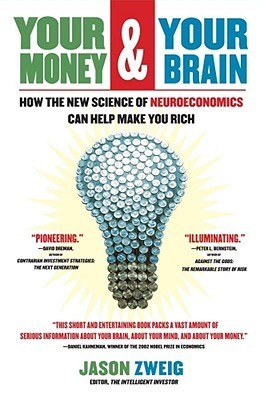
Drawing on the latest scientific research, Jason Zweig shows what happens in your brain when you think about money and tells investors how to take practical, simple steps to avoid common mistakes and become more successful.What happens inside our brains when we think about money? Quite a lot, actually, and some of it isn’t good for our financial health. In Your Money and Your Brain , Jason Zweig explains why smart people make stupid financial decisions—and what they can do to avoid these mistakes. Zweig, a veteran financial journalist, draws on the latest research in neuroeconomics, a fascinating new discipline that combines psychology, neuroscience, and economics to better understand financial decision making. He shows why we often misunderstand risk and why we tend to be overconfident about our investment decisions. Your Money and Your Brain offers some radical new insights into investing and shows investors how to take control of the battlefield between reason and emotion.Your Money and Your Brain is as entertaining as it is enlightening. In the course of his research, Zweig visited leading neuroscience laboratories and subjected himself to numerous experiments. He blends anecdotes from these experiences with stories about investing mistakes, including confessions of stupidity from some highly successful people. Then he draws lessons and offers original practical steps that investors can take to make wiser decisions.Anyone who has ever looked back on a financial decision and said, “How could I have been so stupid?” will benefit from reading this book.

The Little Book of Safe Money: How to Conquer Killer Markets, Con Artists, and Yourself
by Jason Zweig
Rating: 3.8 ⭐
One of today's most influential financial commentators offers his advice on keeping your money safe in an uncertain world The Little Book of Safe Money acts as a guide for those trying to make their way through today's down markets. The topics covered include everything from investing behavior-why our minds come with their own set of biases that often prove harmful-to the use of financial advisors. But this timely book goes one step further than the rest by questioning an investor's true appetite for risk. The Little Book of Safe Money also contradicts many of the myths that whirl around Wall Street with chapters like "Why Ultra-ETFs Are Mega-Dangerous" and "Hedge-Fund Hooey." Writing in the classic Little Book style, author Jason Zweig peels away layer after layer of buzz words, emotion, and myths to reveal what's really going on in today's financial markets. If you're serious about succeeding in today's turbulent markets, then The Little Book of Safe Money is what you should be reading.

Dans un marché imprévisible où les arnaques sont devenues monnaie courante, où même les banques, voire les pays, font faillite... comment faire fructifier son argent à l’abri du danger ?Quand on veut perdre du poids, il n’y a que deux règles à suivre : manger moins et bouger plus. C’est dans la pratique que ça se corse. Idem quand on veut investir. Les clés sont tout aussi simples : diversifier, réduire les frais, acheter et conserver. Mais la crainte de perdre de l’argent, les incitations persistantes des experts à se retirer d’un marché (ou à entrer dans un autre), l’envie de profiter d’un « bon tuyau »… voilà autant de raisons de dévier de la trajectoire. La vérité, c’est que, pour obtenir de bons rendements, il ne suffit pas de trouver les bons outils de placement. Il faut aussi combattre nos propres réflexes. Jason Zweig nous vient en aide sur les deux fronts.En 20 chapitres percutants, l’auteur traite de ce qu’on doit faire et des pièges à éviter pour faire fructifier son avoir et pour assurer sa sécurité financière, même dans un marché très volatil. De quoi transformer beaucoup de raisons de s’inquiéter en quelques comportements judicieux et payants.

Billig kaufen und teuer verkaufen, so macht man bekanntlich an der Börse die besten Gewinne. Doch Scharen von Anlegern handeln genau Sie kaufen wie wild, wenn die Kurse steigen, und stoßen ihre Wertpapiere panikartig ab, sobald sie Punkte verlieren. Die Neuroökonomie entschlüsselt, Hinter dem vermeintlich rationalen Anlegerverhalten wirken sehr archaische Kaum wittert das Anlegerhirn einen Gewinn, beginnen die gleichen neuronalen Schaltkreise zu feuern, die auch bei Sex und Drogenkonsum aktiv sind. Umgekehrt lösen Verluste Panik aus wie weiland der Säbelzahntiger. Der amerikanische Wirtschaftsjournalist Jason Zweig hat sich in den Forschungsstätten der Neuroökonomie umgeschaut, um besser zu verstehen, wie Menschen ticken, wenn sie geschäftliche Entscheidungen treffen müssen. Denn da ist es mit dem Homo oeconomicus nicht weit her. Das menschliche Gehirn, so Zweigs Fazit, kann hervorragend Probleme lösen, wie sie in der langen Entwicklungsgeschichte des Menschen gang und gäbe waren, doch beim Erkennen von langfristigen Trends oder komplexen Wirkungszusammenhängen versagt es leider allzu oft. Wer wirtschaftlichen Erfolg haben will, so Zweig, braucht ein gerüttelt Maß an Selbstdisziplin und Selbsterkenntnis. Und sollte sich stets die alte Weisheit vor Augen halten, dass Geld allein nicht glücklich macht. Auch dafür hält die Neuroökonomie verblüffende Erkenntnisse Zwar kann man sich von Geld kein Glück kaufen, aber umgekehrt wird ein Schuh daraus. Menschen nämlich, die guter Stimmung sind, sind nicht nur lernbereiter, kreativer und kooperativer als notorische Miesepeter. Sie verfolgen ihre Ziele auch beharrlicher, sehen Dinge eher in einem breiten Zusammenhang und schöpfen ihre Potenziale besser aus. Damit vereinen sie eine Reihe von Eigenschaften, die auf direktem Weg zu finanziellem Erfolg führen. Jason Zweigs "Je glücklicher Sie sind, desto länger und gesünder wird Ihr Leben wahrscheinlich sein - und desto mehr Geld werden Sie wahrscheinlich haben." -- changeX

Hombre inteligente, hombre rico/ Intelligent Men, Rich Men: Un Acercamiento a La Neuroeconomia, La Ciencia Que Lo Ayudara a Generar Riqueza
by Jason Zweig
Rating: 4.0 ⭐
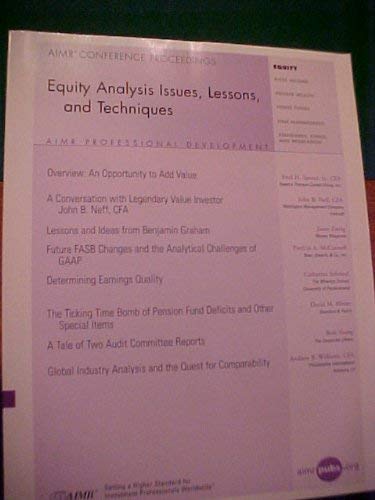
Equity Analysis Issues, Lessons and Techniques
by Jason Zweig
Equity Analysis Issues, Lessons, and Techniques highlights the importance of solid, enduring, fundamental equity analysis. Thus, the issues, lessons, and techniques presented in this proceedings are not fleeting fads but core principles that all equity analysts and investors should be aware of. Proceedings of the AIMR seminar "Equity Research and Valuation Techniques"

“¿CÓMO PUEDO SER TAN IDIOTA?” SI NUNCA te gritaste esa frase con furia, no eres un inversor. Puede que no haya nada en todo el espectro del esfuerzo humano que haga que tantas personas inteligentes se sientan tan estúpidas como al invertir.Es por eso que este libro explica, en términos que cualquier inversor pueda entender, qué sucede dentro del cerebro cuando tomas decisiones sobre el dinero. Para hacer el mejor uso de cualquier herramienta o máquina, es útil saber algo sobre cómo funciona; nunca maximizarás tu riqueza a menos que puedas optimizar tu mente.Al igual que las personas que hacen dieta y cambian de estrategia una y otra vez para terminar tan pesadas como comenzaron, los inversores suelen ser sus propios peores enemigos, incluso cuando saben máTodo el mundo sabe que debe comprar barato y vender caro y, sin embargo, con demasiada frecuencia, compramos caro y vendemos barato.Todo el mundo sabe que ganarle al mercado es casi imposible, pero casi todo el mundo piensa que puede hacerlo.Todo el mundo sabe que la venta en pánico es una mala idea, pero una empresa que anuncia que ganó 23 centavos por acción en lugar de 24 centavos puede perder 5 mil millones de valor de mercado en un minuto y medio.Todo el mundo sabe que los analistas de Wall Street no pueden predecir lo que el mercado está a punto de hacer, pero los inversores siguen pendientes de cada palabra de los expertos financieros que pronostican en programas de televisión.Todo el mundo sabe que perseguir acciones o fondos de moda es una forma segura de fracaso; sin embargo, millones de inversores vuelven a calentarse cada año. Muchos lo hacen a pesar de que juraron, solo uno o dos años antes, no volver a quemarse nunca más.Este libro te ayudará establecer objetivos realistas y alcanzables;obtener mayores rendimientos con mayor seguridad;convertirte en un inversor más tranquilo y paciente;utilizar las noticias y desconectar del ruido en el mercado;medir los límites de tu propia experiencia;minimizar el número y la gravedad de tus errores;dejar de fustigarte cuando cometes un error;centrarte en lo que puedas controlar y dejar ir todo lo demás.“Jason Zweig es uno de los mayores expertos mundiales en el proceso de inversión. Ha escrito el mejor libro hasta ahora sobre la ciencia emergente de la neuroeconomía. Cómprelo, léalo y conviértase en mejor inversor”. Bill Miller“Jason Zweig conoce tus demonios financieros, dónde viven, por qué te están empobreciendo y cómo puedes vencerlos. Te debes a ti mismo, a tu futuro y a tus herederos, leer Tu Dinero y tu Cerebro”. William Bernstein“Este libro trata sobre tu cerebro, pero el tuyo no es el único cerebro en este libro. Por suerte para ti, ese otro cerebro es el de Jason Zweig, y qué cerebro tan brillante, fascinante, esclarecedor, poderoso y único es ese. Escucha a Zweig con atención. He leído un millón de libros sobre inversiones, y ninguno de ellos se acerca a lo que tan generosamente Jason nos ha entregado aquí”. Peter L. Bernstein