
Howard Gardner
Howard Gardner is the John H. and Elisabeth A. Hobbs Professor of Cognition and Education at the Harvard Graduate School of Education. He also holds positions as Adjunct Professor of Psychology at Harvard University and Senior Director of Harvard Project Zero. Among numerous honors, Gardner received a MacArthur Prize Fellowship in 1981. He has received honorary degrees from 26 colleges and universities, including institutions in Bulgaria, Chile, Greece, Ireland, Israel, Italy, and South Korea. In 2005 and again in 2008, he was selected by Foreign Policy and Prospect magazines as one of the 100 most influential public intellectuals in the world. The author of 25 books translated into 28 languages, and several hundred articles, Gardner is best known in educational circles for his theory of multiple intelligences, a critique of the notion that there exists but a single human intelligence that can be adequately assessed by standard psychometric instruments. During the past two decades, Gardner and colleagues at Project Zero have been involved in the design of performance-based assessments; education for understanding; the use of multiple intelligences to achieve more personalized curriculum, instruction, and pedagogy; and the quality of interdisciplinary efforts in education. Since the middle 1990s, in collaboration with psychologist Mihaly Csikszentmihalyi and William Damon, Gardner has directed the GoodWork Project-- a study of work that is excellent, engaging, and ethical. More recently, with long time Project Zero colleagues Lynn Barendsen and Wendy Fischman, he has conducted reflection sessions designed to enhance the understanding and incidence of good work among young people. With Carrie James and other colleagues at Project Zero, he is also investigating the nature of trust in contemporary society and ethical dimensions entailed in the use of the new digital media. Among new research undertakings are a study of effective collaboration among non-profit institutions in education and a study of conceptions of quality, nationally and internationally, in the contemporary era. In 2008 he delivered a set of three lectures at New York's Museum of Modern Art on the topic "The True, The Beautiful, and The Good: econsiderations in a post-modern, digital era." from http://www.howardgardner.com/bio/bio....
29 Books Written

Frames of Mind: The Theory of Multiple Intelligences
by Howard Gardner
Rating: 4.0 ⭐
• 2 recommendations ❤️
The book that revolutionized our understanding of human intelligence.Howard Gardner's theory of multiple intelligences has been hailed by educators for decades and applied in hundreds of schools worldwide. In Frames of Mind , Gardner challenges the widely held notion that intelligence is a single general capacity possessed by every individual to a greater or lesser extent. Amassing a wealth of evidence, Gardner posits the existence of eight different intelligences, each as important as the next, that comprise a unique cognitive profile for each person. In this updated edition, the author reflects on thirty years of work on Multiple Intelligences theory and practice.

We live in a time of relentless change. The only thing that's certain is that new challenges and opportunities will emerge that are virtually unimaginable today. How can we know which skills will be required to succeed?In Five Minds for the Future , bestselling author Howard Gardner shows how we will each need to master "five minds" that the fast-paced future will · The disciplined mind, to learn at least one profession, as well as the major thinking (science, math, history, etc.) behind it· The synthesizing mind, to organize the massive amounts of information and communicate effectively to others· The creating mind, to revel in unasked questions—and uncover new phenomena and insightful apt answers· The respectful mind, to appreciate the differences between human beings - and understand and work with all persons· The ethical mind, to fulfill one's responsibilities as both a worker and a citizenWithout these "minds," we risk being overwhelmed by information, unable to succeed in the workplace, and incapable of the judgment needed to thrive both personally and professionally.Complete with a substantial new introduction, Five Minds for the Future provides valuable tools for those looking ahead to the next generation of leaders - and for all of us striving to excel in a complex world.Howard Gardner—cited by Foreign Policy magazine as one of the one hundred most influential public intellectuals in the world, and a MacArthur Fellowship recipient—is the Hobbs Professor of Cognition and Education at the Harvard Graduate School of Education.
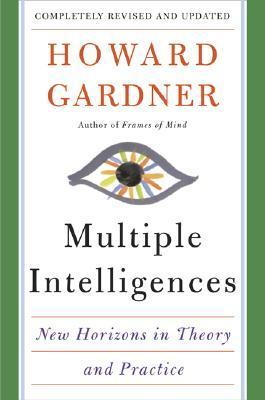
The most complete account of the theory and application of Multiple Intelligences available anywhere.Howard Gardner's brilliant conception of individual competence, known as Multiple Intelligences theory, has changed the face of education. Tens of thousands of educators, parents, and researchers have explored the practical implications and applications of this powerful notion, that there is not one type of intelligence but several, ranging from musical intelligence to the intelligence involved in self-understanding.Multiple Intelligences distills nearly three decades of research on Multiple Intelligences theory and practice, covering its central arguments and numerous developments since its introduction in 1983. Gardner includes discussions of global applications, Multiple Intelligences in the workplace, an assessment of Multiple Intelligences practice in the current conservative educational climate, new evidence about brain functioning, and much more.

本书是多元智能理论创始人美国教育心理学家霍华德.加德纳关于“心智”教育探讨的专业性著作的中文译著,重点探讨了“非受过学科训练的心智”相关理论、概念及其实践方法意义等,对于教育工作者、教育管理工作者,特别是学龄前教育如何思考和制订教育目标、进行教学实践等,具有一定的学术参考价值。本书以对幼童思维的研究为基础,研究发现:婴儿的大脑天生并非一块白板或者一团困惑,而是内在程序设计精密的生物体。因此,日后的学习必须建立在每一个正常而融先天的限制和偏见的基础上。所以作者推崇一种以儿童能够理解为目的的教育。博物馆中教学方法和学徒制其实更符合儿童的心智特点,可以作为学校教育学习的重要模式。

Creating Minds: An Anatomy of Creativity as Seen Through the Lives of Freud, Einstein, Picasso, Stravinsky, Eliot, Graham, and Gandhi
by Howard Gardner
Rating: 3.9 ⭐
Howard Gardner changed the way we think about intelligence. In his classic work Frames of Mind, he undermined the common notion that intelligence is a single capacity that every human being possesses to a greater or lesser extent. Now building on the framework he developed for understanding intelligence, Gardner gives us a path breaking view of creativity, along with riveting portraits of seven figures who each reinvented an area of human endeavor. Using as a point of departure his concept of seven “intelligences,” ranging from musical intelligence to the intelligence involved in understanding oneself, Gardner examines seven extraordinary individuals—Sigmund Freud, Albert Einstein, Pablo Picasso, Igor Stravinsky, T.S. Eliot, Martha Graham, and Mahatma Gandhi—each an outstanding exemplar of one kind of intelligence. Understanding the nature of their disparate creative breakthroughs not only sheds light on their achievements but also helps to elucidate the “modern era”—the times that formed these creators and which they in turn helped to define. While focusing on the moment of each creator’s most significant breakthrough, Gardner discovers patterns crucial to our understanding of the creative process. Not surprisingly, Gardner believes that a single variety of creativity is a myth. But he supplies evidence that certain personality configurations and needs characterize creative individuals in our time, and that numerous commonalities color the ways in which ideas are conceived, articulated, and disseminated to the public. He notes, for example, that it almost invariably takes ten years to make the initial creative breakthrough and another ten years for subsequent breakthroughs. Creative people feature unusual combinations of intelligence and personality, and Gardner delineates the indispensable role of the circumstances in which an individual works and the crucial reactions of the surrounding group of informed peers. He finds that an essential element of the creative process is the support of caring individuals who believe in the revolutionary ideas of the creators. And he documents the fact that extraordinary creativity almost always carries with it extraordinary costs in human terms.

Think about the last time you tried to change someone’s mind about something important: a voter’s political beliefs; a customer’s favorite brand; a spouse’s decorating taste. Chances are you weren’t successful in shifting that person’s beliefs in any way. In his book, Changing Minds, Harvard psychologist Howard Gardner explains what happens during the course of changing a mind – and offers ways to influence that process.Remember that we don’t change our minds overnight, it happens in gradual stages that can be powerfully influenced along the way. This book provides insights that can broaden our horizons and shape our lives.

Drawing on his groundbreaking work on intelligence and creativity, Harvard psychologist Howard Gardner, developer of the theory of Multiple Intelligences, offers fascinating revelations about the mind of the leader and his or her followers. He identifies six constant features of leadership as well as paradoxes that must be resolved for leadership to be effective using portraits of leaders from J. Robert Oppenheimer to Alfred P. Sloan, from Pope John XXIII to Mahatma Gandhi.

Harvard psychologist Howard Gardner has been acclaimed as the most influential educational theorist since John Dewey. His ideas about intelligence and creativity - explicated in such bestselling books as Frames of Mind and Multiple Intelligences (over 200,000 copies in print combined) - have revolutionized our thinking. In his groundbreaking 1983 book Frames of Mind , Howard Gardner first introduced the theory of multiple intelligences, which posits that intelligence is more than a single property of the human mind. That theory has become widely accepted as one of the seminal ideas of the twentieth century and continues to attract attention all over the world. Now in Intelligence Reframed , Gardner provides a much-needed report on the theory, its evolution and revisions. He offers practical guidance on the educational uses of the theory and responds to the critiques leveled against him. He also introduces two new intelligences (existential intelligence and naturalist intelligence) and argues that the concept of intelligence should be broadened, but not so absurdly that it includes every human virtue and value. Ultimately, argues Gardner, possessing a basic set of seven or eight intelligences is not only a unique trademark of the human species, but also perhaps even a working definition of the species. Gardner also offers provocative ideas about creativity, leadership, and moral excellence, and speculates about the relationship between multiple intelligences and the world of work in the future.

The Disciplined Mind: Beyond Facts and Standardized Tests, the K-12 Education That Every Child Deserves
by Howard Gardner
Rating: 3.9 ⭐
In The Disciplined Mind , Howard Gardner argues that K-12 education should strive for a deep understanding of three classical truth, beauty, and goodness. Such an understanding requires mastery of the major disciplines that human beings have created over the centuries. As powerful examples of his approach, Gardner describes an education that illuminates the theory of evolution, the music of Mozart, and the lessons of the Holocaust. Far from the standardized test mentality that has gripped both policy makers and the public, Gardner envisions an education that preserves the strengths of a traditional humane education while preparing younger generations for the challenges of the future.

What does it mean to carry out "good work"? What strategies allow people to maintain moral and ethical standards at a time when market forces have unprecedented power and work life is being radically altered by technological innovation? These questions lie at the heart of this eagerly awaited new book. Focusing on genetics and journalism-two fields that generate and manipulate information and thus affect our lives in myriad ways-the authors show how in their quest to build meaningful careers successful professionals exhibit "humane creativity," high-level performance coupled with social responsibility. Over the last five years the authors have interviewed over 100 people in each field who are engaged in cutting-edge work, probing their goals and visions, their obstacles and fears, and how they pass on their most cherished practices and values. They found sharp contrasts between the two fields. Until now, geneticists' values have not been seriously challenged by the demands of their work world, while journalists are deeply disillusioned by the conflict between commerce and ethics. The dilemmas these professionals face and the strategies they choose in their search for a moral compass offer valuable guidance on how all persons can transform their professions and their lives. Enlivened with stories of real people facing hard decisions, Good Work offers powerful insight into one of the most important issues of our time and, indeed, into the future course of science, technology, and communication.

Truth, Beauty, and Goodness Reframed: Educating for the Virtues in the Age of Truthiness and Twitter
by Howard Gardner
Rating: 3.4 ⭐
From ancient times, philosophers, theologians, and artists have attempted to describe and categorize the defining virtues of civilization. In , renowned education authority Howard Gardner explores the meaning of the title's three virtues in an age when vast technological advancement and relativistic attitudes toward human nature have deeply shaken our moral worldview. His incisive examination reveals that although these concepts are changing faster than ever before, they are -- and will remain, with our stewardship -- cornerstones of our society. Designed to appeal to a wide readership, is an approachable primer on the foundations of ethics in the modern age.

Extraordinary Minds: Portraits Of 4 Exceptional Individuals And An Examination Of Our Own Extraordinariness (Masterminds
by Howard Gardner
Rating: 3.6 ⭐
Fifteen years ago, psychologist and educator Howard Gardner introduced the idea of multiple intelligences, challenging the presumption that intelligence consists of verbal or analytic abilities only -- those intelligences that schools tend to measure. He argued for a broader understanding of the intelligent mind, one that embraces creation in the arts and music, spatial reasoning, and the ability to understand ourselves and others. Today, Gardner's ideas have become widely accepted -- indeed, they have changed how we think about intelligence, genius, creativity, and even leadership, and he is widely regarded as one of the most important voices writing on these subjects. Now, in Extraordinary Minds , a book as riveting as it is new, Gardner poses an important question: Is there a set of traits shared by all truly great achievers -- those we deem extraordinary -- no matter their field or the time period within which they did their important work? In an attempt to answer this question, Gardner first examines how most of us mature into more or less competent adults. He then examines closely four persons who lived unquestionably extraordinary lives -- Mozart, Freud, Woolf, and Gandhi -- using each as an exemplar of a different kind of extraordinariness: Mozart as the master of a discipline, Freud as the innovative founder of a new discipline, Woolf as the great introspect or, and Gandhi as the influencer. What can we learn about ourselves from the experiences of the extraordinary? Interestingly, Gardner finds that an excess of raw power is not the most impressive characteristic shared by superachievers; rather, these extraordinary individuals all have had a special talent for identifying their own strengths and weaknesses, for accurately analyzing the events of their own lives, and for converting into future successes those inevitable setbacks that mark every life. Gardner provides answers to a number of provocative questions, among them: How do we explain extraordinary times -- Athens in the fifth century B.C., the T'ang Dynasty in the eighth century, Islamic Society in the late Middle Ages, and New York at the middle of the century? What is the relation among genius, creativity, fame, success, and moral extraordinariness? Does extraordinariness make for a happier, more fulfilling life, or does it simply create a special onus?

The first full-scale history of cognitive science, this work addresses a central issue: What is the nature of knowledge?

In a provocative discussion of the sources of human creativity, Gardner explores all aspects of the subject, from the young child's ability to learn a new song through Mozart's conceiving a complete symphony.

A Synthesizing Mind: A Memoir from the Creator of Multiple Intelligences Theory
by Howard Gardner
Rating: 3.9 ⭐
An authority on the human mind reflects on his intellectual development, his groundbreaking work, and different types of intelligences—including his own. Howard Gardner's Frames of Mind was that rare publishing phenomenon—a mind-changer. Widely read by the general public as well as by educators, this influential book laid out Gardner's theory of multiple intelligences. It debunked the primacy of the IQ test and inspired new approaches to education; entire curricula, schools, museums, and parents' guides were dedicated to the nurturing of the several intelligences. In his new book, A Synthesizing Mind , Gardner reflects on his intellectual development and his groundbreaking work, tracing his evolution from bookish child to eager college student to disengaged graduate student to Harvard professor. Gardner discusses his mentors (including Erik Erikson and Jerome Bruner) and his collaborators (Mihaly Csikszentmihalyi, William Damon, and others). Comedian Groucho Marx makes a surprise (non-)appearance, declining Gardner's invitation to chat with Harvard College students, in favor of “making a living.” Throughout his career, Gardner has focused on human minds in general, or on the minds of particular creators and leaders. Reflecting now on his own mind, he concludes that his is a “synthesizing mind”—with the ability to survey experiences and data across a wide range of disciplines and perspectives. The thinkers he most admires—including historian Richard Hofstadter, biologist Charles Darwin, and literary critic Edmund Wilson—are exemplary synthesizers. Gardner contends that the synthesizing mind is particularly valuable at this time and proposes ways to cultivate a possibly unique human capacity.

Multiple Intelligences by Howard Gardner, pengarang Frames of Mind

The production and appreciation of art involves thought processes that have excluded from traditional measures of human intelligence. This book, written by a leading cognitive scientist, makes a compelling case for broadening these definitions and discusses the value other cultures place onartistic abilities. Gardner explores the function of art in human development as well as the strategies children employ in the process of constructing images.

The Arts And Human Development: A Psychological Study of the Artistic Process
by Howard Gardner
Rating: 3.9 ⭐
A revised edition of Gardner's classic on the development of creativity. Illustrated throughout with children's art, this book is a systematic examination of the relation between youthful participation in the arts and the ultimate craftsmanship attained by gifted artists.

Book about human brain damage.

Leading American psychologist and educator Howard Gardner has assembled his most important writings about education. Spanning over thirty years, this collection reveals the thinking, the concepts and the empirical research that have made Gardner one of the most respected and cited educational authorities of our time. Trained originally as a psychologist at Harvard University, Howard Gardner begins with personal sketches and tributes to his major teachers and mentors. He then presents the work for which he is best-known – the theory of multiple intelligences – including a summary of the original theory and accounts of how it has been updated over the years. Other seminal papers featured

Psychologists have long understood that the art works of children relate to their intellectual and emotional development but this is the first book to describe the developmental process of drawing. Gardner explores the vital links between children's art and their emotional, social, and cognitive development.

In this unique attempt to address the dilemma in contemporary education, the noted cognitive scientist weaves the lessons garnered from three vantage points: his own traditional education as an American child, his years of research on creativity at Harvard, and what he saw in modern Chinese classrooms—into a program that draws on the best of both modes, traditional and progressive.

Inteligencias Multiples/Multiple Intelligences: La teoria en parctica/The Theory in Practice (Transiciones)
by Howard Gardner
Rating: 4.1 ⭐
In this instructive and engaging book a noted psychologist explores the vital links between children's art and their emotional, social, cognitive development.

Discusses the ideas and works of the two leading structuralists on human behavior and mental functioning

Una mente sintética: Memorias del creador de la teoría de las inteligencias múltiples (Contextos)
by Howard Gardner
Rating: 3.6 ⭐
A lo largo de su carrera, Gardner se ha interesado por la mente humana en general, y por las mentes de creadores y líderes en concreto. Ahora, al reflexionar sobre la suya propia, concluye que posee una «mente sintética» que le ha conferido la habilidad de analizar experiencias y datos procedentes de un amplio abanico de disciplinas y perspectivas. Gardner plantea que la mente sintética es especialmente valiosa en los tiempos que corren, y propone formas de cultivar una capacidad que probablemente sea exclusivamente humana.En esta singular autobiografía, Gardner reflexiona sobre su propio desarrollo intelectual y sus revolucionarias aportaciones, al tiempo que repasa su evolución desde aquel niño enamorado de los libros que fue hasta convertirse en el renombrado profesor de Harvard que es, pasando también por sus épocas de universitario ambicioso y de estudiante de posgrado desilusionado.

Mind, Work, and Life: A Festschrift on the Occasion of Howard Gardner's 70th Birthday
by Howard Gardner
Rating: 4.5 ⭐
Howard Gardner, noted psychologist and educator, turned 70 in 2013. To commemorate this occasion, Mindy Kornhaber and Ellen Winner invited colleagues to contribute essays in Gardner’s honor. One hundred and sixteen scholarly colleagues—Gardner’s teachers, peers, fellow scholars, and former students—responded to this invitation. In essays that span the gamut from the arts and the brain, to intelligence, creativity, leadership, pedagogical theory, educational policy, ethics and ‘good work,’ the contributors react to Gardner’s work, describe their own lines of study, and in many cases comment on the deep, often decades-long relationships that they have had with Gardner.Upon reading this wide-ranging and remarkable collection, Gardner decided to respond to each of these essays in both a scholarly and a personal vein. Accordingly Mind, Work, and Life is a unique record, spanning a half century, of how scholars have communicated with one another—commencing in a pre-digital era and continuing in the age of the internet. And now, for the first time in history, readers all over the world will have the opportunity not only to peruse this correspondence but also to exchange their own views in a variety of formats and on a range of platforms.Mindy L. Kornhaber studied and worked with Howard Gardner at the Harvard Graduate School of Education. She is now an Associate Professor in the College of Education at the Pennsylvania State University. Her research explores how human potential may be more equitably developed.Ellen Winner is Professor and Chair of the Psychology Department at Boston College. She is married to Howard Gardner.Howard Gardner is the Hobbs Professor of Cognition and Education at the Harvard Graduate School of Education. The author of many books in psychology, social science, and education, he is the recipient of the MacArthur Prize Fellowship, the Prince of Asturias Prize in the Social Sciences, and twenty-nine honorary degrees.

Kreative Intelligenz: Was wir mit Mozart, Freud, Woolf und Gandhi gemeinsam haben
by Howard Gardner
Rating: 3.3 ⭐
With invoice - Shipment from Germany

Howard Gardner nos expone en esta obra uno de los capítulos más decisivos de la ciencia moderna, como son las investigaciones de la neurociencia para conocer cómo funciona la mente humana. A partir de sus investigaciones y de las de los más importantes científicos cognitivistas, el libro nos explica el auge de este ámbito científico, proporcionándonos un fascinante recorrido por los descubrimientos producidos durante los últimos años en la materia.