
Michael S. Gazzaniga
Michael S. Gazzaniga, one of the premiere doctors of neuroscience, was born on December 12, 1939 in Los Angeles. Educated at Dartmouth College and California Institute of Technology, he is a professor of psychology at the University of California, Santa Barbara, where he heads the new SAGE Center for the Study of the Mind. His early research examined the subject of epileptics who had undergone surgery to control seizures. He has also studied Alzheimer's and Parkinson's patients and reveals important findings in books such as Cognitive Neuroscience: The Biology of the Mind. While many of his writings are technical, he also educates and stimulates readers with discussions about the fascinating and mysterious workings of the brain. Books such as The Social Brain and The Mind's Past bring forth new information and theories regarding how the brain functions, interacts, and responds with the body and the environment.
26 Books Written

Who's in Charge?: Free Will and the Science of the Brain
by Michael S. Gazzaniga
Rating: 4.1 ⭐
• 2 recommendations ❤️
The author of Human, Michael S. Gazzaniga has been called the “father of cognitive neuroscience.” In his remarkable book, Who’s in Charge?, he makes a powerful and provocative argument that counters the common wisdom that our lives are wholly determined by physical processes we cannot control. His well-reasoned case against the idea that we live in a “determined” world is fascinating and liberating, solidifying his place among the likes of Oliver Sacks, Antonio Damasio, V.S. Ramachandran, and other bestselling science authors exploring the mysteries of the human brain

In this book we are trying to illuminate the persistent and nag ging questions of how mind, life, and the essence of being relate to brain mechanisms. We do that not because we have a commit ment to bear witness to the boring issue of reductionism but be cause we want to know more about what it's all about. How, in deed, does the brain work? How does it allow us to love, hate, see, cry, suffer, and ultimately understand Kepler's laws? We try to uncover clues to these staggering questions by con sidering the results of our studies on the bisected brain. Several years back, one of us wrote a book with that title, and the ap proach was to describe how brain and behavior are affected when one takes the brain apart. In the present book, we are ready to put it back together, and go beyond, for we feel that split-brain studies are now at the point of contributing to an understanding of the workings of the integrated mind. We are grateful to Dr. Donald Wilson of the Dartmouth Medi cal School for allowing us to test his patients. We would also like to thank our past and present colleagues, including Richard Naka mura, Gail Risse, Pamela Greenwood, Andy Francis, Andrea El berger, Nick Brecha, Lynn Bengston, and Sally Springer, who have been involved in various facets of the experimental studies on the bisected brain described in this book.

One of the world's leading neuroscientists explores how best to understand the human condition by examining the biological, psychological, and highly social nature of our species within the social context of our lives. What happened along the evolutionary trail that made humans so unique? In his widely accessible style, Michael Gazzaniga looks to a broad range of studies to pinpoint the change that made us thinking, sentient humans, different from our predecessors. Neuroscience has been fixated on the life of the psychological self for the past fifty years, focusing on the brain systems underlying language, memory, emotion, and perception. What it has not done is consider the stark reality that most of the time we humans are thinking about social processes, comparing ourselves to and estimating the intentions of others. In Human , Gazzaniga explores a number of related issues, including what makes human brains unique, the importance of language and art in defining the human condition, the nature of human consciousness, and even artificial intelligence.

The Consciousness Instinct: Unraveling the Mystery of How the Brain Makes the Mind
by Michael S. Gazzaniga
Rating: 3.8 ⭐
"The father of cognitive neuroscience" illuminates the past, present, and future of the mind-brain problem.How do neurons turn into minds? How does physical "stuff"-atoms, molecules, chemicals, and cells-create the vivid and various worlds inside our heads? The problem of consciousness has gnawed at us for millennia. In the last century, there have been massive breakthroughs that have rewritten the science of the brain, and yet the puzzles faced by the ancient Greeks are still present. In The Consciousness Instinct, the neuroscience pioneer Michael S. Gazzaniga puts the latest research in conversation with the history of human thinking about the mind, giving a big-picture view of what science has revealed about consciousness.The idea of the brain as a machine, first proposed centuries ago, has led to assumptions about the relationship between mind and brain that dog scientists and philosophers to this day. Gazzaniga asserts that this model has it backward--brains make machines, but they cannot be reduced to one. New research suggests the brain is actually a confederation of independent modules working together. Understanding how consciousness could emanate from such an organization will help define the future of brain science and artificial intelligence and close the gap between brain and mind.Captivating and accessible, with insights drawn from a lifetime at the forefront of the field, The Consciousness Instinct sets the course for the neuroscience of tomorrow.
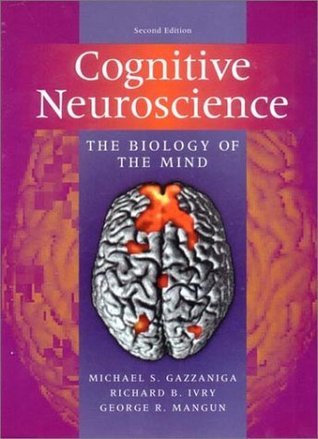
The second edition of Cognitive Neuroscience strengthens the text's interdisciplinary approach to understanding how the human mind works by introducing over 400 new citations and two new chapters. This volume also features increased coverage of computational modelling, discussions of prominent methodological advances and an enhanced art programme.

In Tales from Both Sides of the Brain, Gazzaniga tells the story of his life in science and his decades-long journey to understand how the separate spheres of our brains communicate and miscommunicate with their separate agendas. By turns humorous and moving, Tales from Both Sides of the Brain interweaves Gazzaniga’s scientific achievements with his reflections on the challenges and thrills of working as a scientist.

A provocative and fascinating look at new discoveries about the brain that challenge our ethicsThe rapid advance of scientific knowledge has raised ethical dilemmas that humankind has never before had to address. Questions about the moment when life technically begins and ends or about the morality of genetically designing babies are now relevant and timely. Our ever-increasing knowledge of the workings of the human brain can guide us in the formation of new moral principles in the twenty-first century. In The Ethical Brain, preeminent neuroscientist Michael S. Gazzaniga presents the emerging social and ethical issues arising out of modern-day brain science and challenges the way we look at them. Courageous and thought-provoking -- a work of enormous intelligence, insight, and importance -- this book explores the hitherto uncharted landscape where science and society intersect.

A dynamic, student-centered textbook that brings together the science of psychology and the science of learning. Michael Gazzaniga, Todd Heatherton, and new coauthor Diane Halpern present the latest developments in psychology in an engaging, visually stimulating format. The text enhances student understanding and stimulates active learning with Halpern’s unique science-of-learning pedagogical system; relevant, real world examples; and an art program tailored especially for visual learners. Instructors and students will benefit from the most integrated media package available for an introductory course.

Why does the human brain insist on interpreting the world and constructing a narrative? In this ground-breaking work, Michael S. Gazzaniga, one of the world's foremost cognitive neuroscientists, shows how our mind and brain accomplish the amazing feat of constructing our past―a process clearly fraught with errors of perception, memory, and judgment. By showing that the specific systems built into our brain do their work automatically and largely outside of our conscious awareness, Gazzaniga calls into question our everyday notions of self and reality. The implications of his ideas reach deeply into the nature of perception and memory, the profundity of human instinct, and the ways we construct who we are and how we fit into the world around us.Over the past thirty years, the mind sciences have developed a picture not only of how our brains are built but also of what they were built to do. The emerging picture is wonderfully clear and pointed, underlining William James's notion that humans have far more instincts than other animals. Every baby is born with circuits that compute information enabling it to function in the physical world. Even what helps us to establish our understanding of social relations may have grown out of perceptual laws delivered to an infant's brain. Indeed, the ability to transmit culture―an act that is only part of the human repertoire―may stem from our many automatic and unique perceptual-motor processes that give rise to mental capacities such as belief and culture.Gazzaniga explains how the mind interprets data the brain has already processed, making "us" the last to know. He shows how what "we" see is frequently an illusion and not at all what our brain is perceiving. False memories become a part of our experience; autobiography is fiction. In exploring how the brain enables the mind, Gazzaniga points us toward one of the greatest mysteries of human how we become who we are.

Each edition of this classic reference has proved to be a benchmark in the developing field of cognitive neuroscience. The third edition of The Cognitive Neurosciences continues to chart new directions in the study of the biologic underpinnings of complex cognition -- the relationship between the structural and physiological mechanisms of the nervous system and the psychological reality of the mind. Every chapter is new and each section has new participants. Features of the third edition include research that maps biological changes directly to cognitive changes; a new and integrated view of sensory systems and perceptual processes; the presentation of new developments in plasticity; recent research on the cognitive neuroscience of false memory, which reveals the constructive nature of memory retrieval; and new topics in the neuroscientific study of emotion, including the "social brain." The new final section, "Perspectives and New Directions," discusses a wide variety of topics that point toward the future of this vibrant and exciting field.

Nature's Mind: The Biological Roots of Thinking, Emotions, Sexuality, Language, and Intelligence
by Michael S. Gazzaniga
Rating: 3.6 ⭐
The co-discoverer of the “split brain” theory tells how science is recasting the age-old question of nature versus nurture to create a startling new view of human behavior. Recent discoveries suggest that natural selection affects not only physical characteristics but also mental processes, from learning to substance abuse.

Durante siglos, el pensamiento occidental ha alimentado la idea de que nuestra conducta y nuestros pensamientos son producto de una entidad unitaria -la «mente»- que reside en ese intrincado laberinto de conexiones neuronales que es el cerebro. Desentrañar la estructura oculta en la densa maraña cerebral es uno de los grandes desafíos de la ciencia moderna. Michael Gazzaniga -famoso por sus experimentos sobre el cerebro dividido- es uno de los exploradores que con más éxito se ha adentrado en este laberinto. El cerebro social es la crónica de sus viajes por las moradas de la mente, escrita en el lenguaje llano, asequible a todo el mundo y portadora de noticias la mítica mente unitaria y consciente no existe. Lo que se oculta en el interior del laberinto es una «sociedad» de sistemas relativamente independientes (módulos), capaces de funcionar unos al margen de otros, y de los que nuestra conciencia muchas veces no tiene noticia. En palabras de D. Dennet, este libro constituye «una apasionante introducción a una serie de formas nuevas y sorprendentes de pensar sobre la mente humana».
![Psychology in Your Life [with eText, InQuizitive, and Concept Videos]](https://m.media-amazon.com/images/S/compressed.photo.goodreads.com/books/1562004594i/43298781.jpg)
Psychology in Your Life [with eText, InQuizitive, and Concept Videos]
by Michael S. Gazzaniga
Rating: 3.6 ⭐
Integrated teaching, learning, and assessment tools, created by a master teacher Master teacher Sarah Grison has set the new standard for introductory psychology texts. Through a NEW study unit format based on learning research, concepts are presented in a pedagogically consistent, accessible way. Learning Goal Activities and InQuizitive, Norton’s adaptive quizzing tool, engage students in active learning. The NEW High Impact Practices (HIP): A Teaching Guide for Psychology provides research-based teaching. An innovative NEW collection of animated Concept Videos helps students visualize the most challenging topics.

Mind Matters: How Mind and Brain Interact to Create Our Conscious Lives
by Michael S. Gazzaniga
Rating: 3.5 ⭐
Examining mind-brain interactions in mental states such as anxiety, pain, dreams, depression, love, phobias, and obsessions, the author discusses the complicated way in which the mind interprets the chemical changes in the brain

Michael S. Gazzaniga, one of the most important neuroscientists of the twentieth century, gives us an exciting behind-the-scenes look at his seminal work on that unlikely couple, the right and left brain. Foreword by Steven Pinker.In the mid-twentieth century, Michael S. Gazzaniga, “the father of cognitive neuroscience,” was part of a team of pioneering neuroscientists who developed the now foundational split-brain brain theory: the notion that the right and left hemispheres of the brain can act independently from one another and have different strengths.In Tales from Both Sides of the Brain, Gazzaniga tells the impassioned story of his life in science and his decades-long journey to understand how the separate spheres of our brains communicate and miscommunicate with their separate agendas. By turns humorous and moving, Tales from Both Sides of the Brain interweaves Gazzaniga’s scientific achievements with his reflections on the challenges and thrills of working as a scientist. In his engaging and accessible style, he paints a vivid portrait not only of his discovery of split-brain theory, but also of his comrades in arms—the many patients, friends, and family who have accompanied him on this wild ride of intellectual discovery.

Consciousness is the integral phenomenon of human experience, so say the authors. Starting with a philosophical approach that establishes the naturalistic underpinnings of consciousness, they go on to examine the mental attributes, the brain's role and finally the bizarre perspectives on split-brain patients. The authors are experts in their fields and include Owen Flanagan, William Hirst, Ilya B. Farber, Patricia S. Cumberland and Michael S. Gazzaniga. 2 cassettes.

Winner of the 2002 William James Book Award presented by the Society for General Psychology, Division One of the American Psychological Association. This award is given for the best book which furthers the mission of the Society for General Psychology by bringing together researchers and ideas from the various subfields of neuroscience and psychology.The first edition of The Cognitive Neurosciences helped to define the field. The second edition reflects the many advances that have taken place-particularly in imaging and recording techniques. From the molecular level up to that of human consciousness, the contributions cover one of the most fascinating areas of science—the relationship between the structural and physiological mechanisms of the brain/nervous system and the psychological reality of mind. The majority of the chapters in this edition of The Cognitive Neurosciences are new, and those from the first edition have been completely rewritten and updated.This major reference work is now available online as part of MIT CogNet, The Cognitive and Brain Sciences Community online.Sections and section - Plasticity - Ira B. Black- Development - Pasko Rakic- Sensory Systems - J. Anthony Movshon and Colin Blakemore- Motor - Emilio Bizzi- Attention - Michael I. Posner- Memory - Endel Tulving- Language - Willem J. M. Levelt- Thought and Memory - Edward E. Smith and Stephen M. Kosslyn- Emotion - Joseph E. LeDoux- Evolution - Leda Cosmides and John Tooby- Consciousness - Daniel L. Schacter

Per indagare un'entità complessa quale è la mente, non si può progredire per compartimenti stagni, ma si deve operare seguendo un punto di vista prospettico quanto più ampio possibile. L'obiettivo finale è una maggiore comprensione dei meccanismi attraverso i quali la mente lavora, così come il modo in cui il cervello modera e media i processi dell'attività mentale, facendo rientrare fra tali processi la coscienza nella sua interezza, la moralità e l'etica. È questo lo scopo dell'attività scientifica di Michael S. Gazzaniga, il cui motto è contenuto nelle poche righe che descrivono il Sage Center da lui diretto: "Quando si comprende la mente, si comprende la condizione umana". La mente non è dunque un buco nero, ma una scatola nera, che può e deve essere interpretata e compresa.I libri di questa collana sono il risultato di approfondite discussioni con l'autore che, stimolato dalle nostre domande, simili a quelle che voi avreste voluto porre, sviluppa chiaramente la materia oggetto della sua ricerca


L'"io" è un'invenzione. La coscienza, uno straordinario artificio architettato dalle nostre cellule grigie. Questa è la provocatoria tesi del neurobiologo autore del libro, che vuole dimostrare come la maggioranza del lavoro del cervello si svolga mentre noi non ce ne accorgiamo; e come i meccanismi innati, selezionati tramite l'evoluzione, siano i veri responsabili delle nostre azioni.

Learning, Arts, and the Brain: The Dana Consortium Report on Arts and Cognition
by Michael S. Gazzaniga
Rating: 2.5 ⭐
The Dana Consortium Report on Arts and Cognition organized by Michael Gazzaniga. Contributors include Michael Posner, Mary K. Rothbart, Brad E. Sheese, Jessica Kieras, Elizabeth Spelke, Scott Grafton, and others. 133pp. Index.

Fundamentals of An Introduction focuses on issues that cut through the artificial boundaries commonly held in the study of behavior. The book reviews the nature of the organism in terms of basic neurology, including the neurological organization of the central nervous system and the general features of brain development. The author also examines the normal course of development of the visual systems. He discusses fixed patterns of behavior and the developmental processes that include emotional behavior, self-control, language use, perceptual, and cognitive development. The author then explains the use of statistical concept in psychological research, as well as the psychological methods of inquiry that involves variable manipulation and observation of effects. The author also discusses learning and motivation theory including the theories of Pavlov, Skinner, and Premack. He discusses the organism as an information processor using short- and long-term memory, and the mind as having physical aspects such as brain codes and a brain structure known as the corpus callosum. This book is helpful for psychiatrists, psychologists, behavioral scientists, students and professors in psychology.

Instynkt swiadomosci. Jak z mozgu wylania sie umysl
