
Timothy D. Wilson
Timothy D. Wilson is the Sherrell J. Aston Professor of Psychology at the University of Virginia. He has written for Science and The New York Times, among other publications and journals, and is the author of Strangers to Ourselves, which was named by New York Times Magazine as one of the Best 100 Ideas of 2002. Wilson is also the coauthor of the best-selling social psychology textbook, now in its seventh edition.
9 Books Written
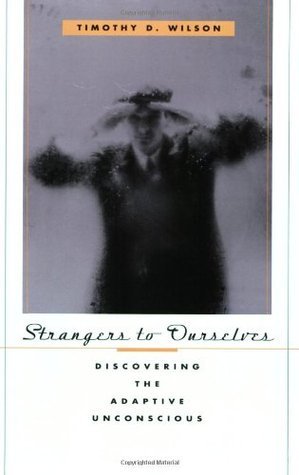
Strangers to Ourselves: Discovering the Adaptive Unconscious
by Timothy D. Wilson
Rating: 4.0 ⭐
• 3 recommendations ❤️
"Know thyself," a precept as old as Socrates, is still good advice. But is introspection the best path to self-knowledge? What are we trying to discover, anyway? In an eye-opening tour of the unconscious, as contemporary psychological science has redefined it, Timothy D. Wilson introduces us to a hidden mental world of judgments, feelings, and motives that introspection may never show us.This is not your psychoanalyst's unconscious. The adaptive unconscious that empirical psychology has revealed, and that Wilson describes, is much more than a repository of primitive drives and conflict-ridden memories. It is a set of pervasive, sophisticated mental processes that size up our worlds, set goals, and initiate action, all while we are consciously thinking about something else.If we don't know ourselves―our potentials, feelings, or motives―it is most often, Wilson tells us, because we have developed a plausible story about ourselves that is out of touch with our adaptive unconscious. Citing evidence that too much introspection can actually do damage, Wilson makes the case for better ways of discovering our unconscious selves. If you want to know who you are or what you feel or what you're like, Wilson advises, pay attention to what you actually do and what other people think about you. Showing us an unconscious more powerful than Freud's, and even more pervasive in our daily life, Strangers to Ourselves marks a revolution in how we know ourselves.

What if there were a magic pill that could make you happier, turn you into a better parent, solve a number of your teenager's behavior problems, reduce racial prejudice, and close the achievement gap in education? There is no such pill, but story editing -- the scientifically based approach described in Redirect -- can accomplish all of this.The world-renowned psychologist Timothy Wilson shows us how to redirect the stories we tell about ourselves and the world around us, with subtle prompts, in ways that lead to lasting change. Fascinating, groundbreaking, and practical, Redirect demonstrates the remarkable power small changes can have on the ways we see ourselves and our environment, and how we can use this in our everyday lives."There are few academics who write with as much grace and wisdom as Timothy Wilson. Redirect is a masterpiece." -- Malcolm Gladwell

Make research relevant through a storytelling approach. Social Psychology introduces the key concepts of the field through an acclaimed storytelling approach that makes research relevant to students. Drawing upon their extensive experience as researchers and teachers, Elliot Aronson, Tim Wilson, Robin Akert, and new co-author Sam Sommers present the classic studies that have driven the discipline alongside the cutting-edge research that is the future of social psychology.

This renowned text maintains its acclaimed storytelling approach to convey the science of social psychology while making research relevant to students. The authors bring the material under study to life through real-world examples that capture students' attention and motivate further exploration.

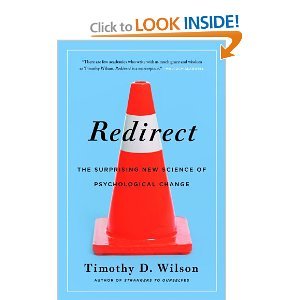
Redirect byWilson
by Timothy D. Wilson

Social Psychology 5th Edition B01_0769
by Timothy D. Wilson
"This is the International Edition. The content is in English, same as US version but different cover. Please DO NOT buy if you can not accept this difference. Ship from Shanghai China, please allow about 3 weeks on the way to US or Europe. Message me if you have any questions."
Left Eye Right Finger: Journey East Africa
by Timothy D. Wilson
Narrative in front followed by many high quality photos
(Redirect: The Surprising New Science of Psychological Change) By Wilson, Timothy D. (Author) compact disc on
by Timothy D. Wilson