
Alan W. Watts
Alan Wilson Watts was a British philosopher, writer and speaker, who held both a Master's in Theology and a Doctorate of Divinity. Famous for his research on comparative religion, he was best known as an interpreter and popularizer of Asian philosophies for a Western audience. He wrote over 25 books and numerous articles on subjects such as personal identity, the true nature of reality, higher consciousness, the meaning of life, concepts and images of God and the non-material pursuit of happiness. In his books he relates his experience to scientific knowledge and to the teachings of Eastern and Western religion and philosophy.
30 Books Written

The Joyous Cosmology: Adventures in the Chemistry of Consciousness
by Alan W. Watts
Rating: 4.2 ⭐
• 2 recommendations ❤️
In describing the effects of mescaline, Aldous Huxley’s The Doors of Perception literally opened a door. Watts walked through it with this classic account of the levels of insight consciousness-changing drugs can facilitate �when accompanied with sustained philosophical reflection by a person who is in search, not of kicks, but of understanding.” Watts and peers including foreword authors Timothy Leary and Richard Alpert (then Harvard professors) anticipated physicists recognizing the individual’s �inseparability from the rest of the world,” the work of New Age thinkers who combine scientific findings and spiritual experiences, and federally funded clinical trials utilizing psilocybin to treat a variety of conditions. More than an artifact, The Joyous Cosmology is both a riveting memoir of Watts’ personal experiments and a profound meditation on our perennial questions about the nature of existence and the existence of the sacred.

Who am I? Why am I here? What is the nature of the world around me?Alan Watts (1915 – 1973)—noted professor, graduate-school dean, Harvard University research fellow, and Episcopal priest—examines these fundamental questions from a Taoist perspective, learning to appreciate not just the bowl but the empty space within it. With down-to-earth writing he reveals our direct connection to the natural world and reminds us that we are not so much born into this world as grown out of it. This collection of eight of Watts' unique philosophical essays and an early piece written in 1953 has a brief introduction by Alan's son, Mark Watts, which gives the background of these pieces and their place in Alan Watts' life and work.

The Way of Zen begins as a succinct guide through the histories of Buddhism and Taoism leading up to the development of Zen Buddhism, which drew deeply from both traditions. It then goes on to paint a broad but insightful picture of Zen as it was and is practiced, both as a religion and as an element of diverse East Asian arts and disciplines. Watts's narrative clears away the mystery while enhancing the mystique of Zen. Since the first publication of this book in 1957, Zen Buddhism has become firmly established in the West. As Zen has taken root in Western soil, it has incorporated much of the attitude and approach set forth by Watts in The Way of Zen, which remains one of the most important introductory books in Western Zen.
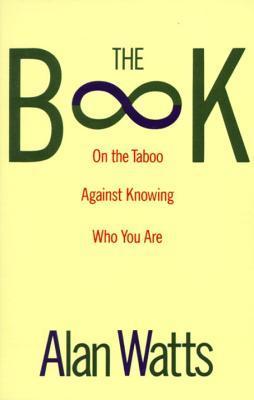
The Book: On the Taboo Against Knowing Who You Are
by Alan W. Watts
Rating: 4.2 ⭐
• 1 recommendation ❤️
At the root of human conflict is our fundamental misunderstanding of who we are. The illusion that we are isolated beings, unconnected to the rest of the universe, has led us to view the “outside” world with hostility, and has fueled our misuse of technology and our violent and hostile subjugation of the natural world. To help us understand that the self is in fact the root and ground of the universe, Watts has crafted a revelatory primer on what it means to be human—and a mind-opening manual of initiation into the central mystery of existence.In The Book, Alan Watts provides us with a much-needed answer to the problem of personal identity, distilling and adapting the Hindu philosophy of Vedanta. A revelatory primer on what it means to be human, from "the perfect guide for a course correction in life" (Deepak Chopra)—and a mind-opening manual of initiation into the central mystery of existence.

The Wisdom of Insecurity: A Message for an Age of Anxiety
by Alan W. Watts
Rating: 4.2 ⭐
• 1 recommendation ❤️
We live in an age of unprecedented anxiety. Spending all our time trying to anticipate and plan for the future and to lamenting the past, we forget to embrace the here and now. We are so concerned with tomorrow that we forget to enjoy today. Drawing from Eastern philosophy and religion, Alan Watts shows that it is only by acknowledging what we do not—and cannot—know that we can learn anything truly worth knowing. In The Wisdom of Insecurity, he shows us how, in order to lead a fulfilling life, we must embrace the present—and live fully in the now.

A lucid discussion of Taoism and the Chinese language . . . profound, reflective, and enlightening. --Boston GlobeAccording to Deepak Chopra, Watts was a spiritual polymatch, the first and possibly greatest. Drawing on ancient and modern sources, Watts treats the Chinese philosophy of Tao in much the same way as he did Zen Buddhism in his classic The Way of Zen. Critics agree that this last work stands as a perfect monument to the life and literature of Alan Watts.Perhaps the foremost interpreter of Eastern disciplines for the contemporary West, . . . Watts begins with scholarship and intellect and proceeds with art and eloquence to the frontiers of the spirit.--Los Angeles Times

"Become What You Are" is a selection of writings by Alan Watts dealing with the dilemma of man seeking to discover himself. This becomes possible only if we manage to see our life "as it is", freed from illusions and expectations. To immerse yourself in the harmony of life and its eternal now is to become what you are. It has been said that the highest wisdom consists in detachment—not regretting the past nor fearing the future, letting life take its course without attempting to interfere with its movements and changes, without seeking to prolong pleasant things or hasten the end of unpleasant ones. To do this is to enter time with life and be in complete harmony with its changing melody, which is called enlightenment. In short, it means detaching yourself from both the past and the future and living in the eternal now. Life exists only in this single moment, and it is precisely in this moment that it is infinite and eternal. Alan Watts is one of the foremost authorities on Eastern wisdom. It was he who, in the middle of the last century, built a bridge between the West and the East, introducing the Western reader to Eastern philosophy and culture. Alan Watts is a scholar of both Zen Buddhism and Indian and Chinese spiritual traditions.

In order to come to your senses, Alan Watts often said, you sometimes need to go out of your mind. Perhaps more than any other teacher in the West, this celebrated author, former Anglican priest, and self-described spiritual entertainer was responsible for igniting the passion of countless wisdom seekers to the spiritual and philosophical delights of Asia and India. Now, with Out of Your Mind: Essential Listening from the Alan Watts Audio Archives, you are invited to immerse yourself in 12 of this legendary thinker's pinnacle teaching sessions about how to break through the limits of the rational mind, and begin expanding your awareness and appreciation for the Great Game unfolding all around us.Carefully selected from hundreds of recordings by Alan Watts' son and archivist, Mark Watts, Out of Your Mind brings you six complete seminars that capture the true scope of this brilliant teacher in action. On these superb, digitally restored recordings, you will delve into Alan Watts' favorite pathways out of the trap of conventional awareness, including: The art of the controlled accident—what happens when you stop taking your life so seriously and start enjoying it with complete sincerity• How we come to believe the myth of myself that we are skin-encapsulated egos separate from the world around us, and how to transcend that illusion• Why we must fully embrace chaos and the void to find our deepest purpose• Unconventional and refreshing insights into the deeper principles of Buddhism, Hinduism, and Western philosophy, plus much, much moreWhether you're completely new to Alan Watts or familiar with his work, here is a rare opportunity to experience him at his best improvising brilliantly before a live audience on Out of Your Mind: Essential Listening from the Alan Watts Audio Archives.
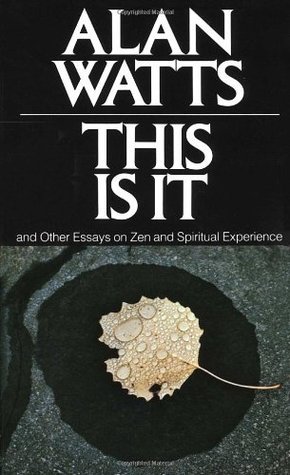
Six essays dealing with the relationship of mystical experience to ordinary life.

Mark Watts compiled this book from his father’s extensive journals and audiotapes of famous lectures he delivered across the country. In three parts, Alan Watts -- the author of The Way of Zen and The Joyous Cosmology -- explains the basic philosophy of meditation, how individuals can practice a variety of meditations, and how inner wisdom grows naturally.

From “perhaps the foremost interpreter of Eastern disciplines for the contemporary West—and an author who ‘had the rare gift of ‘writing beautifully the unwritable’” ( Los Angeles Times )—a guide that draws on Chinese Taoism to reexamine humanity’s place in the natural world and the relation between body and spirit.Western thought and culture have coalesced around a series of constructed ideas—that human beings stand separate from a nature that must be controlled; that the mind is somehow superior to the body; that all sexuality entails a seduction—that in some way underlie our exploitation of the earth, our distrust of emotion, and our loneliness and reluctance to love. Here, Watts fundamentally challenges these assumptions, drawing on the precepts of Taoism to present an alternative vision of man and the universe—one in which the distinctions between self and other, spirit and matter give way to a more holistic way of seeing.

This is a series of essays representing philosopher Alan Watts's most recent thinking on the astonishing problems of man's relations to his material environment. The basic theme is that civilized man confuses symbol with reality, his ways of describing and measuring the world with the world itself, and thus puts himself into the absurd situation of preferring money to wealth and eating the menu instead of the dinner.Thus, with his attention locked upon numbers and concepts, man is increasingly unconscious of nature and of his total dependence upon air, water, plants, animals, insects, and bacteria. He has been hallucinated into the notion that the so-called "external" world is a cluster of "objects" separate from himself, that he "encounters" it, that he comes into it instead of out of it. Consequently, our species is fouling its own nest and is in imminent danger of self-obliteration.Here, a philosopher whose works have been mainly concerned with mysticism and Oriental philosophy gets down to the "nitty-gritty" problems of economics, technology, clothing, cooking, and housing.

Over the course of nineteen essays, Alan Watts ("a spiritual polymatch, the first and possibly greatest" —Deepak Chopra) ruminates on the philosophy of nature, ecology, aesthetics, religion, and metaphysics .Assembled in the form of a “mountain journal,” written during a retreat in the foothills of Mount Tamalpais, CA, Cloud-Hidden, Whereabouts Unknown is Watts’s meditation on the art of feeling out and following the watercourse way of nature, known in Chinese as the Tao. Embracing a form of contemplative meditation that allows us to stop analyzing our experiences and start living in to them, the book explores themes such as the natural world, established religion, race relations, karma and reincarnation, astrology and tantric yoga, the nature of ecstasy, and much more.

In this new edition of his acclaimed autobiography — long out of print and rare until now — Alan Watts tracks his spiritual and philosophical evolution from a child of religious conservatives in rural England to a freewheeling spiritual teacher who challenged Westerners to defy convention and think for themselves. From early in this intellectual life, Watts shows himself to be a philosophical renegade and wide-ranging autodidact who came to Buddhism through the teachings of Christmas Humphreys and D. T. Suzuki. Told in a nonlinear style, In My Own Way wonderfully combines Watts’ own brand of unconventional philosophy and often hilarious accounts of gurus, celebrities, psychedelic drug experiences, and wry observations of Western culture. A charming foreword written by Watts’ father sets the tone of this warm, funny, and beautifully written story of a compelling figure who encouraged readers to “follow your own weird” — something he always did himself, as his remarkable account of his life shows.

In his later years, Alan Watts, noted author and respected authority on Zen and Eastern thought, turned his attention to Taoism. In this book, he draws on his own study and practice to give readers an overview of the concept of the Tao and guidance for experiencing it themselves. What Is Tao? explores the wisdom of understanding the way things are and letting life unfold without interference.

What is the common ground between Western psychiatry and Eastern philosophy, and what has each to learn from the other? Alan Watts found a common principle that, intentionally or otherwise, seems to be used wherever therapy is trying to overcome man's false sense of himself as an isolated ego -- an ego that traps him in a perpetual flight from death and loneliness. In varying ways and degrees, both Eastern philosophy and Western psychotherapy engage the individual in experiments that vividly reveal the fallacy of this conception and give him a new feeling of identity.
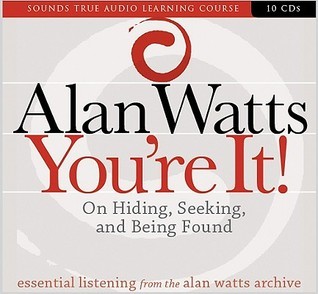
The Universe Is Playing Hide and Seek―and You’re It!Imagine you’re climbing a mountain path that will lead you to a paradise where all your needs are met and your questions answered. What do you find when you reach the top? A mirror. This is the great cosmic game, reveals Alan Watts―that everything you’re seeking through meditation, self-improvement, or spiritual practice is always hiding inside of you. On You’re It! , join this legendary “stand-up philosopher” for 15 classic talks on how to play your role in the divine drama of existence with a clear mind, open eyes, and an abiding sense of the joy in the game itself.See What Answers Are Hidden in Your Own ReflectionJust as you need a mirror to see your own face, the best way to see your own true nature is to let a teacher like Alan Watts reflect it back to you. Watts stands out as one of the 20th century’s most compelling voices because he is so adept at holding up this spiritual looking glass. With his unique combination of penetrating insight and playful irreverence, Watts illuminates the truth that unites all the great wisdom traditions from the East and West―that the universe is always expressing its full, delightful mystery through you.A 12-hour Audio Retreat with the Original Spiritual EntertainerThese restored audio sessions selected by Alan Watts’ son and archivist Mark Watts reveal the master in his element, performing a one-man “spiritual jam session” before a live audience. Whether he’s unraveling Taoist thought, poking fun at our modern myths, or exploring the subtle beauty of Japanese poetry, Alan Watts always returns to one all-important lesson―how to get out of your own way and live in the perfection that is always present.HIGHLIGHTSThe game of yes and no―how non-dual truths are revealed in the duality of Yin and Yang• Mysticism and morality―exploring the relationship between revelation and ethics• On Buddhism, Taoism, Hinduism, and their translation into Western thought• The beauty of the unenlightened state―why you don’t have to be “awakened” to play the great game• Mind over mind―the contradiction at the heart of all spiritual practice• The veil of thoughts―how to stop being bamboozled by your own brain• What is reality? Is the universe a ceramic pot, a clockwork engine, or something far more interesting?• Seventeen hours of philosophy, humor, and stunning insight from legendary spiritual entertainer Alan Watts

"For more than twenty years [circa 1977] Alan Watts earned a reputation as one of the foremost interpreters of Eastern philosophies to the West. Beginning at the age of 20, when he wrote The Spirit of Zen, he developed an audience of millions who were enriched by his book, tape recordings, radio, television, and public lectures.Just before his death he completed the project most dear to his heart. In the secluded and relaxed atmosphere aboard his ferryboat SS Vallejo and at his mountain retreat in Druid Heights he recorded the basic tenets of his philosophy.Revised by his son Mark here is the last original work of Alan Watts now combined with several classic pieces previously not available in book form, including the favorites "Work As Play" and "The Trickster Guru."This final volume is an outstanding introduction to Watts for those who do not know him and a valuable legacy for all." - from the back cover

The meaning of happiness: The quest for freedom of the spirit in modern psychology & the wisdom of the east
by Alan W. Watts
Rating: 4.0 ⭐
Life philosophy from the phenomenal Alan Watts

The widespread influence of Buddhism is due in part to the skill with which a way of liberation was refined by its teachers and became accessible to people of diverse cultures.In this dynamic series of lectures, Alan Watts takes us on an exploration of Buddhism, from its roots in India to the explosion of interest in Zen and the Tibetan tradition in the West. Watts traces the Indian beginnings of Buddhism, delineates differences between Buddhism and other religions, looks at the radical methods of the Mahayan Buddhist, and reviews the Four Noble Truths and The Eightfold Path

What Is Zen? examines Zen's religious roots, its influence on Eastern and Western culture, its transcendent moments, and the methods of Zen meditation that are currently practiced.

Alan Watts’s The Spirit of Zen was one of the first books to introduce the basic foundation of Zen Buddhism to English-speaking audiences. This volume still stands as one of the most lucid and concise explanations of the origins and defining principles of Zen, from its beginnings in ancient India and its later transmission to China and Japan, to Watts’s revealing portrait of life in a contemporary Japanese Zen monastery. In The Spirit of Zen, Watts describes, in plain language but without robbing the subject of its provocative subtlety, how one can prepare for a life of Zen. He explains the sacrifices and surrenders, the requisite self-control; the baffling set of spiritual exercises known as Koan, which take the form of verbal jigsaw puzzles; the importance of mental discipline; and the need to recognize the futility of mere intellectual haggling — all necessary steps along the road to Zen. Through text and illustrations, the author examines the tea ceremony, ink-drawing, landscaping, and swordsmanship, all Zen-infused aspects of Japanese life; they give an understanding not only of Zen, but of Eastern culture in general.

Just as groundbreaking today as it was when it first appeared in 1947, Behold the Spirit is philosopher Alan Watts’s timeless argument for the place of mystical religion in today’s world. Drawing on his experiences as a former priest, Watts skillfully explains how the intuition of Eastern religion—Zen Buddhism, in particular—can be incorporated into the doctrines of Western Christianity, allowing people of all creeds to enjoy a deeper, more meaningful relationship with the spiritual in our present troubled times.

Alan Watts introduced millions of Western readers to Zen and other Eastern philosophies, but he’s also recognized as a brilliant commentator on Judeo-Christian traditions as well as a celebrity philosopher who exemplified the ideas — and lifestyle — of the 1960s counterculture. In this compilation of controversial lectures, delivered at American universities throughout the decade, Watts challenges readers to reevaluate Western culture’s most hallowed constructs. Watts treads familiar ground, interpreting Eastern traditions, and also covers new territory, exploring the counterculture’s basis in the ancient tribal and shamanic cultures of Asia, Siberia, and the Americas. In the process, he addresses some of the era’s most important questions: What is the nature of reality? And how does an individual’s relationship to society affect this reality? Filled with his playful, provocative style, the talks show the remarkable scope of a philosopher in his prime, exploring and defining the '60s counterculture as only Alan Watts could.

Just So: An Odyssey Into the Cosmic Web of Connection, Play, and True Pleasure
by Alan W. Watts
Rating: 4.5 ⭐
If you were God, asked Alan Watts, what kind of universe would you create? A perfect one free of suffering and drama? Or one filled with surprise and delight? With Just So, the celebrated philosopher and self-described spiritual entertainer invites us to explore the hidden dimensions that shape both the cosmos and our personal experience of it. From the 1950s to the 1970s, Eastern spiritual philosophies ignited in the West profound new ways of perceiving ourselves and the mysteries of life. And from the beginning, Alan Watts was at the forefront sparking insight after insight at live gatherings and radio broadcasts. Today, Alan Watts books and recordings bring perennial delight to new readers and listeners of all ages and beliefs. Here, the luminary author and speaker explores three often-overlooked yet essential universal dynamics: connection, play, and pleasure. This exceptional collection of sessions includes three complementary seminars: The Cosmic Network a journey into the interconnected web of the personal and the infiniteEcological Awareness reflections on how humanity and nature evolve through discovery and purposeless playThe Pursuit of Pleasure how a true materialism connects us fully through our senses with others and to the natural flow of the cosmos. Along the way, you ll explore many other themes, at turns humorous, prophetic, and more relevant today than ever. What unfolds is a liberating view of life that arises from possibility and the unpredictable perfect and just so not in spite of its messy imperfections, but because of them."

From the luminary and prophetic Alan Watts, an invitation to embrace pleasure, play, and connection in our ever-evolving world“If you were God,” asked Alan Watts, “what kind of universe would you create? A perfect one free of suffering and drama? Or one filled with surprise and delight?” From the 1950s to the 1970s, Eastern spiritual philosophies sparked in the West profound new ways of perceiving ourselves, the mysteries of reality, and the unfolding destiny of humanity. And through his live gatherings and radio talks, Alan Watts was at the forefront—igniting astonishing insights into who we are and where we're heading. Based on a legendary series of seminars, Just So illuminates three fascinating domains: money versus real wealth, the spirituality of a deeper materialism, and how technology and spirituality are both guiding us to ever greater interconnection in the universe that we find ourselves in. Along the way, readers will explore many other themes, at turns humorous, prescient, and more relevant today than ever. What unfolds is a liberating view of humanity that arises from possibility and the unpredictable—perfect and “just so,” not in spite of its messy imperfections, but because of them.Book highlights:1. Going With- Theology and the Laws of Nature- Thinking Makes It So- Everything Is Context- Going With- What We Mean by Intelligence- Ecological Awareness- Of Gods and Puppets2. Civilizing Technology- The Problem of Abstractions- We Need a New Analogy- Working with the Field of Forces- Trust- Synergy and the One World Town- Privacy, Artificiality, and the Self- Groups and Crowds3. Money and Materialism- The Material Is the Spiritual- Money and the Good Life- True Materialism- Wiggles, Seriousness, and the Fear of Pleasure- The Failure of Money and Technology- The Problem of Guilt4. In Praise of Swinging- Rigidity and Identity- Now Is Where the World Begins- Are We Going to Make It? - Polarization and Contrast- No Escape5. What Is So of Itself- Spontaneity and the Unborn Mind- Relaxation, Religion, and Rituals- Saving the World

Do you do it ― that is, are you really in charge of your intentions, emotions, and actions? Or, as Alan Watts suggests, is the universe doing you ― manifesting the grandeur and wonder of the cosmos through the astonishing phenomenon known as "you"?On Do You Do It or Does It Do You?, legendary spiritual entertainer Alan Watts invites you to peek behind the curtain and learn that you are not just a performer in life's drama ― you are also the one who writes the script.Alan Watts' undeniable gift for startling audiences into deeper levels of insight made him the West's most celebrated ambassador of Eastern spirituality. Now, carefully chosen from the Watts audio archives, comes this teaching session that exemplifies his sublime vision, accessibility, and humor. Join Alan Watts as he illuminates such topics Which reveals the true nature of the universe, a telescope or a microscope? How to observe your life from both perspectives• The figure and the background―why you are, paradoxically, exactly everything you are not• Life is a symphony, not a foot race ― the art of living versus "getting things done"• What it means to "go with the flow" ― when all your decisions and actions are no longer forced, but arise naturally from your greater self, and moreDo You Do It or Does It Do You? is one of Alan Watts most engaging and profound seminars, bringing his trademark eloquence and mischievous insight to the possibility that we may be much more than who think we are. Includes rare guided-meditation sessions with Alan Watts.

There Is Never Anything but the Present: And Other Inspiring Words of Wisdom
by Alan W. Watts
Rating: 4.0 ⭐
A giftable collection of inspiring, uplifting, and enlightening words of wisdom from one of the most important voices in spirituality and self-help The perfect guide for a course correction in life. --Deepak ChopraFor decades, people have turned to the words of Alan Watts for guidance, support, and spiritual sustenance. In his classic works of philosophy--which helped to interpret and promote Buddhism, Taoism, and Hinduism to Western readers--Watts tapped into ancient ideas but presented them in ways that spoke to everyone.Possessed of "the rare gift of 'writing beautifully the unwritable'" (Los Angeles Times), Watts was a master of the pithy turn of phrase, and his writing is marked by an uncanny ability to make complicated ideas and advice accessible: "Problems that remain persistently insoluble should always be suspected as questions asked in the wrong way ... Unless one is able to live fully in the present, the future is a hoax ... Faith is not clinging but letting go."This collection brings together the best of Watts's timeless words of wisdom--to reflect upon, to live by, and to read for inspiration, knowledge, and growth.

Meditation is the way in which we come to feel our basic inseparability from the whole universe.Alan Watts has become known as the West's foremost interpreter of Eastern thought, and one of the most original philosophers of this century. Fortunately for us, he is also witty, articulate, insightful, very entertaining, and a pleasure to listen to.Alan Watts is also featured demonstrating the relationship of music and sound to meditation through the use of gongs, instruments, and the recitation of a mantra. The demonstration is designed to give the listener the opportunity to experience a mantra meditation with Alan Watts and a group of friends who were brought together especially for this recording.

The legendary author, speaker, and self-described "philosophical entertainer" Alan Watts delights us on audio with a wealth of illuminations into the spirit and art of meditation, spanning many traditions"What would it be like to see all as one?" Alan Watts asks. "We hear about attaining great states of consciousness. But the only way to have a real transformation is to stop thinking about it—and simply experience it."From the 1950s to the 1970s, this seminal teacher sparked the West's love for Eastern wisdom. Now, in these rare recorded gems, he inspires a new generation of inner explorers seeking deeper insights into meditation—its myriad forms, how they work, and what happens when we practice them.On the "artless art" of contemplative practice, Watts explores Buddhist and yogic paths, Zen koans, Hindu mantra chanting, deep listening, effortless awareness, and more. The key to all meditation, reflects Watts, is to give up trying to do it—to leave it be—and allow ourselves to be meditated by what is beyond our illusory self.For those looking for teachings seldom explored in the current tide of books on mindfulness, Buddhism, and yoga, Watts is here to enthrall us—as original, humorous, and relevant today as ever.