
Daniel C. Dennett
Daniel Clement Dennett III was a prominent philosopher whose research centered on philosophy of mind, science, and biology, particularly as they relate to evolutionary biology and cognitive science. He was the co-director of the Center for Cognitive Studies and the Austin B. Fletcher Professor of Philosophy at Tufts University. Dennett was a noted atheist, avid sailor, and advocate of the Brights movement. Dennett received his B.A. in philosophy from Harvard University in 1963, where he was a student of W.V.O. Quine. In 1965, he received his D.Phil. from Christ Church, Oxford, where he studied under the ordinary language philosopher Gilbert Ryle. Dennett gave the John Locke lectures at the University of Oxford in 1983, the Gavin David Young Lectures at Adelaide, Australia, in 1985, and the Tanner Lecture at Michigan in 1986, among many others. In 2001 he was awarded the Jean Nicod Prize, giving the Jean Nicod Lectures in Paris. He has received two Guggenheim Fellowships, a Fulbright Fellowship, and a Fellowship at the Center for Advanced Studies in Behavioral Science. He was elected to the American Academy of Arts and Sciences in 1987. He was the co-founder (1985) and co-director of the Curricular Software Studio at Tufts University, and has helped to design museum exhibits on computers for the Smithsonian Institution, the Museum of Science in Boston, and the Computer Museum in Boston. He was a Humanist Laureate of the International Academy of Humanism and a Fellow of the Committee for Skeptical Inquiry.
29 Books Written
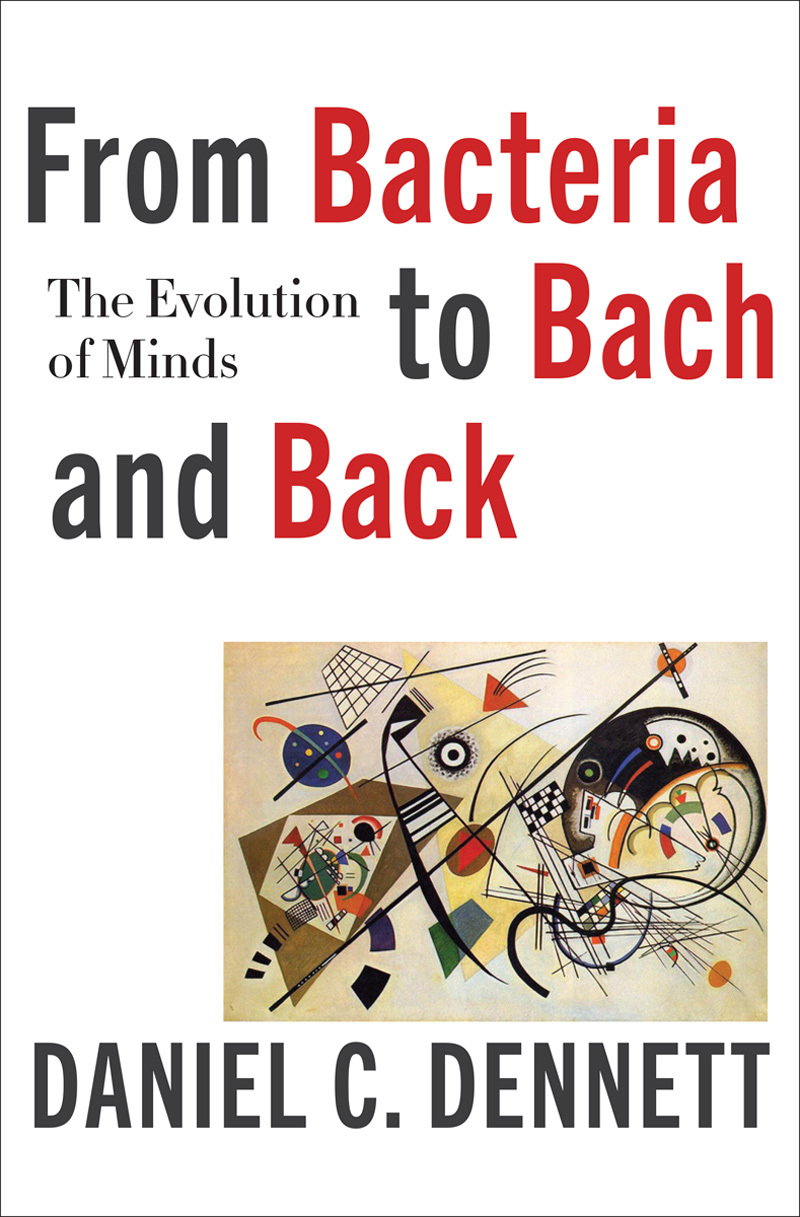
From Bacteria to Bach and Back: The Evolution of Minds
by Daniel C. Dennett
Rating: 3.7 ⭐
• 7 recommendations ❤️
How did we come to have minds?For centuries, this question has intrigued psychologists, physicists, poets, and philosophers, who have wondered how the human mind developed its unrivaled ability to create, imagine, and explain. Disciples of Darwin have long aspired to explain how consciousness, language, and culture could have appeared through natural selection, blazing promising trails that tend, however, to end in confusion and controversy. Even though our understanding of the inner workings of proteins, neurons, and DNA is deeper than ever before, the matter of how our minds came to be has largely remained a mystery.That is now changing, says Daniel C. Dennett. In From Bacteria to Bach and Back, his most comprehensive exploration of evolutionary thinking yet, he builds on ideas from computer science and biology to show how a comprehending mind could in fact have arisen from a mindless process of natural selection. Part philosophical whodunit, part bold scientific conjecture, this landmark work enlarges themes that have sustained Dennett’s legendary career at the forefront of philosophical thought.In his inimitable style—laced with wit and arresting thought experiments—Dennett explains that a crucial shift occurred when humans developed the ability to share memes, or ways of doing things not based in genetic instinct. Language, itself composed of memes, turbocharged this interplay. Competition among memes—a form of natural selection—produced thinking tools so well-designed that they gave us the power to design our own memes. The result, a mind that not only perceives and controls but can create and comprehend, was thus largely shaped by the process of cultural evolution.An agenda-setting book for a new generation of philosophers, scientists, and thinkers, From Bacteria to Bach and Back will delight and entertain anyone eager to make sense of how the mind works and how it came about.

Darwin's Dangerous Idea: Evolutions and the Meanings of Life
by Daniel C. Dennett
Rating: 4.0 ⭐
• 2 recommendations ❤️
This work assesses Darwin's theory of evolution and looks at why it arises such heated debate among scientists, philosophers and sociologists. The book aims to show that Darwinism does not devalue the miracles of life.

An innovative thinker tackles the controversial question of why we believe in God and how religion shapes our lives and our future.For a growing number of people, there is nothing more important than religion. It is an integral part of their marriage, child rearing, and community. In this daring new book, distinguished philosopher Daniel C. Dennett takes a hard look at this phenomenon and asks why. Where does our devotion to God come from and what purpose does it serve? Is religion a blind evolutionary compulsion or a rational choice? In "Breaking the Spell," Dennett argues that the time has come to shed the light of science on the fundamental questions of faith. In a spirited narrative that ranges widely through history, philosophy, and psychology, Dennett explores how organized religion evolved from folk beliefs and why it is such a potent force today. Deftly and lucidly, he contends that the "belief in belief" has fogged any attempt to rationally consider the existence of God and the relationship between divinity and human need."Breaking the Spell" is not an antireligious screed but rather an eyeopening exploration of the role that belief plays in our lives, our interactions, and our country. With the gulf between rationalists and adherents of "intelligent design" widening daily, Dennett has written a timely and provocative book that will be read and passionately debated by believers and nonbelievers alike.
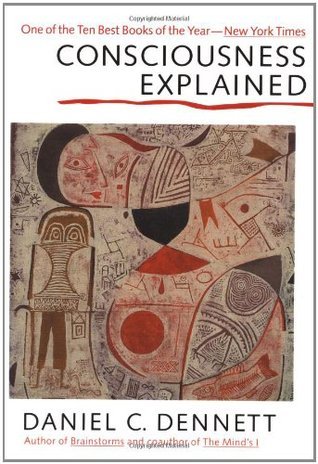
"Brilliant...as audacious as its title....Mr. Dennett's exposition is nothing short of brilliant." --George Johnson, New York Times Book ReviewConsciousness Explained is a a full-scale exploration of human consciousness. In this landmark book, Daniel Dennett refutes the traditional, commonsense theory of consciousness and presents a new model, based on a wealth of information from the fields of neuroscience, psychology, and artificial intelligence. Our current theories about conscious life-of people, animal, even robots--are transformed by the new perspectives found in this book.
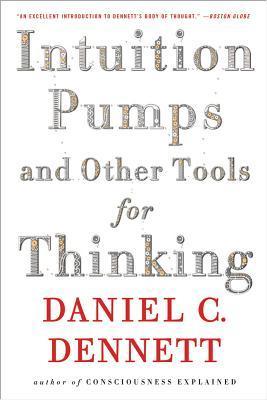
Over a storied career, Daniel C. Dennett has engaged questions about science and the workings of the mind. His answers have combined rigorous argument with strong empirical grounding. And a lot of fun.Intuition Pumps and Other Tools for Thinking offers seventy-seven of Dennett’s most successful "imagination-extenders and focus-holders" meant to guide you through some of life’s most treacherous subject matter: evolution, meaning, mind, and free will. With patience and wit, Dennett deftly deploys his thinking tools to gain traction on these thorny issues while offering readers insight into how and why each tool was built.Alongside well-known favorites like Occam’s Razor and reductio ad absurdum lie thrilling descriptions of Dennett’s own creations: Trapped in the Robot Control Room, Beware of the Prime Mammal, and The Wandering Two-Bitser. Ranging across disciplines as diverse as psychology, biology, computer science, and physics, Dennett’s tools embrace in equal measure light-heartedness and accessibility as they welcome uninitiated and seasoned readers alike. As always, his goal remains to teach you how to "think reliably and even gracefully about really hard questions."A sweeping work of intellectual seriousness that’s also studded with impish delights, Intuition Pumps offers intrepid thinkers—in all walks of life—delicious opportunities to explore their pet ideas with new powers.

Can there be freedom and free will in a deterministic world? Renowned philosopher Daniel Dennett emphatically answers "yes!" Using an array of provocative formulations, Dennett sets out to show how we alone among the animals have evolved minds that give us free will and morality. Weaving a richly detailed narrative, Dennett explains in a series of strikingly original arguments—drawing upon evolutionary biology, cognitive neuroscience, economics, and philosophy—that far from being an enemy of traditional explorations of freedom, morality, and meaning, the evolutionary perspective can be an indispensable ally. In Freedom Evolves, Dennett seeks to place ethics on the foundation it deserves: a realistic, naturalistic, potentially unified vision of our place in nature.

Combining ideas from philosophy, artificial intelligence, and neurobiology, Daniel Dennett leads the reader on a fascinating journey of inquiry, exploring such intriguing possibilities as: Can any of us really know what is going on in someone else's mind? What distinguishes the human mind from the minds of animals, especially those capable of complex behavior? If such animals, for instance, were magically given the power of language, would their communities evolve an intelligence as subtly discriminating as ours? Will robots, once they have been endowed with sensory systems like those that provide us with experience, ever exhibit the particular traits long thought to distinguish the human mind, including the ability to think about thinking? Dennett addresses these questions from an evolutionary perspective. Beginning with the macromolecules of DNA and RNA, the author shows how, step-by-step, animal life moved from the simple ability to respond to frequently recurring environmental conditions to much more powerful ways of beating the odds, ways of using patterns of past experience to predict the future in never-before-encountered situations. Whether talking about robots whose video-camera ”eyes” give us the powerful illusion that ”there is somebody in there” or asking us to consider whether spiders are just tiny robots mindlessly spinning their webs of elegant design, Dennett is a master at finding and posing questions sure to stimulate and even disturb.

Anyone who has wondered if free will is just an illusion or has asked 'could I have chosen otherwise?' after performing some rash deed will find this book an absorbing discussion of an endlessly fascinating subject. Daniel Dennett, whose previous books include "Brainstorms "and (with Douglas Hofstadter) "The Mind's I, " tackles the free will problem in a highly original and witty manner, drawing on the theories and concepts of several fields usually ignored by philosophers; not just physics and evolutionary biology, but engineering, automata theory, and artificial intelligence.In "Elbow Room," Dennett shows how the classical formulations of the problem in philosophy depend on misuses of imagination, and he disentangles the philosophical problems of real interest from the "family of anxieties' they get enmeshed in - imaginary agents, bogeymen, and dire prospects that seem to threaten our freedom. Putting sociobiology in its rightful place, he concludes that we can have free will and science too. "Elbow Room" begins by showing how we can be "moved by reasons" without being exempt from physical causation. It goes on to analyze concepts of control and self-control-concepts often skimped by philosophers but which are central to the questions of free will and determinism. A chapter on "self-made selves" discusses the idea of self or agent to see how it can be kept from disappearing under the onslaught of science. Dennett then sees what can be made of the notion of acting under the idea of freedomdoes the elbow room we think we have really exist? What is an opportunity, and how can anything in our futures be "up to us"? He investigates the meaning of "can" and "could have done otherwise," and asks why we want free will in the first place.We are wise, Dennett notes, to want free will, but that in itself raises a host of questions about responsibility. In a final chapter, he takes up the problem of how anyone can ever be guilty, and what the rationale is for holding people responsible and even, on occasion, punishing them."Elbow Room "is an expanded version of the John Locke Lectures which Dennett gave at Oxford University in 1983.

This collection of 17 essays by the author offers a comprehensive theory of mind, encompassing traditional issues of consciousness and free will. Using careful arguments and ingenious thought-experiments, the author exposes familiar preconceptions and hobbling institutions.This collection of 17 essays by the author offers a comprehensive theory of mind, encompassing traditional issues of consciousness and free will. Using careful arguments and ingenious thought-experiments, the author exposes familiar preconceptions and hobbling institutions. The essays are grouped into four sections: Intentional Explanation and Attributions of Mentality; The Nature of Theory in Psychology; Objects of Consciousness and the Nature of Experience; and Free Will and Personhood.

"How unfair for one man to be blessed with such a torrent of stimulating thoughts. Stimulating is an understatement." —Richard DawkinsA memoir by one of the greatest minds of our age, preeminent philosopher and cognitive scientist Daniel C. Dennett.Daniel C. Dennett, preeminent philosopher and cognitive scientist, has spent his career considering the thorniest, most fundamental mysteries of the mind. Do we have free will? What is consciousness and how did it come about? What distinguishes human minds from the minds of animals? Dennett’s answers have profoundly shaped our age of philosophical thought. In I’ve Been Thinking, he reflects on his amazing career and lifelong scientific fascinations.Dennett’s relentless curiosity has taken him from a childhood in Beirut and the classrooms of Harvard, Oxford, and Tufts, to “Cognitive Cruises” on sailboats and the fields and orchards of Maine, and to laboratories and think tanks around the world. Along the way, I’ve Been Thinking provides a master class in the dominant themes of twentieth-century philosophy and cognitive science—including language, evolution, logic, religion, and AI—and reveals both the mistakes and breakthroughs that shaped Dennett’s theories.Key to this journey are Dennett’s interlocutors—Douglas Hofstadter, Marvin Minsky, Willard Van Orman Quine, Gilbert Ryle, Richard Rorty, Thomas Nagel, John Searle, Gerald Edelman, Stephen Jay Gould, Jerry Fodor, Rodney Brooks, and more—whose ideas, even when he disagreed with them, helped to form his convictions about the mind and consciousness. Studded with photographs and told with characteristic warmth, I’ve Been Thinking also instills the value of life beyond the university, one enriched by sculpture, music, farming, and deep connection to family.Dennett compels us to What do I really think? And what if I’m wrong? This memoir by one of the greatest minds of our time will speak to anyone who seeks to balance a life of the mind with adventure and creativity.

Sweet Dreams: Philosophical Obstacles to a Science of Consciousness
by Daniel C. Dennett
Rating: 3.7 ⭐
In the years since Daniel Dennett's influential Consciousness Explained was published in 1991, scientific research on consciousness has been a hotly contested battleground of rival theories—"so rambunctious," Dennett observes, "that several people are writing books just about the tumult." With Sweet Dreams , Dennett returns to the subject for "revision and renewal" of his theory of consciousness, taking into account major empirical advances in the field since 1991 as well as recent theoretical challenges. In Consciousness Explained , Dennett proposed to replace the ubiquitous but bankrupt Cartesian Theater model (which posits a privileged place in the brain where "it all comes together" for the magic show of consciousness) with the Multiple Drafts Model. Drawing on psychology, cognitive neuroscience, and artificial intelligence, he asserted that human consciousness is essentially the mental software that reorganizes the functional architecture of the brain. In Sweet Dreams , he recasts the Multiple Drafts Model as the "fame in the brain" model, as a background against which to examine the philosophical issues that "continue to bedevil the field." With his usual clarity and brio, Dennett enlivens his arguments with a variety of vivid examples. He isolates the "Zombic Hunch" that distorts much of the theorizing of both philosophers and scientists, and defends heterophenomenology, his "third-person" approach to the science of consciousness, against persistent misinterpretations and objections. The old challenge of Frank Jackson's thought experiment about Mary the color scientist is given a new rebuttal in the form of "RoboMary," while his discussion of a famous card trick, "The Tuned Deck," is designed to show that David Chalmers's Hard Problem is probably just a figment of theorists' misexploited imagination. In the final essay, the "intrinsic" nature of "qualia" is compared with the naively imagined "intrinsic value" of a dollar in "Consciousness—How Much is That in Real Money?"

What is it like to be a preacher who can no longer believe the creed?In confidential interviews, clergy reveal how their lives of service are overshadowed by hypocrisy, as they contemplate taking a leap from their faith. As religious leaders struggle to adapt to the new transparency of the information age, the phenomenon of non-believing clergy portends surprising developments in the future of religious belief.

How are we able to understand each other in our daily interactions? Through the use of such "folk" concepts as belief, desire, intention, and expectation, Daniel Dennett asserts in this first full-scale presentation of a theory of intentionality that he has been developing for almost twenty years. We adopt a stance, a predictive strategy of interpretation that presupposes the rationality of the people - or other entities - we are hoping to understand and predict.The 10 essays included here represent the vanguard of Dennett's thought, push his theories into surprising new territory, and reveal fresh lines of inquiry into fundamental issues in psychology, artificial intelligence, and evolutionary theory as well as traditional issues in the philosophy of mind."Dennett's essays are vivid, witty and admirably provocative-"- P. N. Johnson-Laird, The London Review of Books"This is Dennett in action: reflecting, joking, clarifying, criticizing - and always stimulating... Anyone interested in the philosophy of mind will find both interest and excitement in these essays."- Margaret Boden, Sussex UniversityDaniel C. Dennett is Distinguished Arts and Sciences Professor at Tufts University and the author of Brainstorms and Elbow Room.

“Given the stature of its two protagonists, this book will become something of an instant classic, occupying a unique and special place in the literature on this topic, and enjoying wide and long-lasting readership and usefulness as a supplementary text.”— Gary Rosenkrantz, University of North Carolina at Greensboro“This engaging little book treats key issues of chance and design in the science-religion dialogue. It would be appropriate for courses in the philosophy of religion, religion and culture, and science and religion. I would be highly likely to adopt the book in my philosophy of science course because it us brief, clear, and to the point.”— Michael L. Peterson, Asbury CollegeOne of today's most controversial and heated issues is whether or not the conflict between science and religion can be reconciled. In Science and Religion: Are They Compatible?, renowned philosophers Daniel C. Dennett and Alvin Plantinga expand upon the arguments that they presented in an exciting live debate held at the 2009 American Philosophical Association Central Division conference.An enlightening discussion that will motivate students to think critically, Science and Religion: Are They Compatible? opens with Plantinga's assertion that Christianity is compatible with evolutionary theory because Christians believe that God created the living world, and it is entirely possible that God did so by using a process of evolution. Dennett vigorously rejects this argument, provoking a reply from Plantinga, another response from Dennett, and final statements from both sides. As philosophers, the authors possess expert skills in critical analysis; their arguments provide a model of dialogue between those who strongly disagree. Ideal for courses in philosophy of religion, science and religion, and philosophy of science, Science and Religion is also captivating reading for general readers.About the AuthorsDaniel C. Dennett is the Co-Director of the Center for Cognitive Studies, University Professor, and Austin B. Fletcher Professor of Philosophy at Tufts University. He is the author of Breaking the Spell: Religion as a Natural Phenomenon (2006), Freedom Evolves (2003), and Consciousness Explained (1991).Alvin Plantinga is John A. O'Brien Professor of Philosophy at the University of Notre Dame and author of Essays in the Metaphysics of Modality (OUP, 2003) and Warranted Christian Belief (OUP, 2000).

Minds are complex artifacts, partly biological and partly social; only a unified, multidisciplinary approach will yield a realistic theory of how they came into existence and how they work. One of the foremost workers in this multidisciplinary field is Daniel Dennett. This book brings together his essays on the philosophy of mind, artificial intelligence, and cognitive ethology that appeared in inaccessible journals from 1984 to 1996. Highlights include "Can Machines Think?", "The Unimagined Preposterousness of Zombies", "Artificial Life as Philosophy", and "Animal Consciousness: What Matters and Why". Collected in a single volume, the essays are now available to a wider audience.

One of the most bizarre tales of phillosofic SF at the height of Lem, Dick or Egan, it set out subjects as reality, identity and conexion body mind.

The concept of free will is profoundly important to our self-understanding, our interpersonal relationships, and our moral and legal practices. If it turns out that no one is ever free and morally responsible, what would that mean for society, morality, meaning, and the law?Just Deserts brings together two philosophers – Daniel C. Dennett and Gregg D. Caruso – to debate their respective views on free will, moral responsibility, and legal punishment. In three extended conversations, Dennett and Caruso present their arguments for and against the existence of free will and debate their implications. Dennett argues that the kind of free will required for moral responsibility is compatible with determinism – for him, self-control is key; we are not responsible for becoming responsible, but are responsible for staying responsible, for keeping would-be puppeteers at bay. Caruso takes the opposite view, arguing that who we are and what we do is ultimately the result of factors beyond our control, and because of this we are never morally responsible for our actions in the sense that would make us truly deserving of blame and praise, punishment and reward.Just Deserts introduces the concepts central to the debate about free will and moral responsibility by way of an entertaining, rigorous, and sometimes heated philosophical dialogue between two leading thinkers.

In this pioneering book, Daniel Dennett sets out clearly what he believed constituted a genuine analysis of the mind.

"Qualia" is an unfamiliar term for something that could not be more familiar to each of the ways things seem to us. As is so often the case with philosophical jargon, it is easier to give examples than to give a definition of the term. Look at a glass of milk at sunset; the way it looks to you--the particular, personal, subjective visual quality of the glass of milk is the quale of your visual experience at the moment. The way the milk tastes to you then is another, gustatory quale, and how it sounds to you as you swallow is an auditory quale; These various "properties of conscious experience" are prime examples of qualia. Nothing, it seems, could you know more intimately than your own qualia; let the entire universe be some vast illusion, some mere figment of Descartes' evil demon, and yet what the figment is made of (for you) will be the qualia of your hallucinatory experiences. Descartes claimed to doubt everything that could be doubted, but he never doubted that his conscious experiences had qualia, the properties by which he knew or apprehended them.

The nature of mind and the expansion of consciousness.


Daniel C. Dennett, one of the pioneers who laid the foundations of the field of cognitive science, continues to inform, challenge, and stimulate. This special boxed set includes all of Dennett's MIT Press/Bradford Books volumes. The set also includes a pamphlet containing a cross-referenced index. Philosophical Essays on Mind and Psychology (1980) :"One of the most important contributions to thinking about thinking yet written.... It is remarkably lucid and well written, refreshing and unpompous."— Douglas R. Hofstadter , The New York Review of BooksElbow The Varieties of Free Will Worth Wanting (1984):"What Dennett ends up with is common sense refined, deepened, and nudged ever so gently toward humane, engaged rationality."— George Scialabba , Voice Literary SupplementThe Intentional Stance (1987): How are we able to understand and anticipate each other in everyday life, in our daily interactions? We adopt a stance, Dennett argues, a predictive strategy of interpretation that presupposes the rationality of the people—or other entities—we hope to understand and predict."...should do much to silence those biologists who believe that philosophers never have anything useful to say to them."— Alun Anderson , Nature Essays on Designing Minds (1998): Thinking and research in cognitive science have broadened considerably since the publication of Daniel Dennett's earlier books with MIT Press. This book, which can be viewed as a kind of sequel to Brainstorms , collects Dennett's essays on the philosophy of mind, artificial intelligence, and cognitive ethology that appeared in relatively inaccessible journals from 1984 to 1996.
Kinds of Toward an Understanding of Consciousness

THE TANNER LECTURES ON HUMAN VALUESDelivered at The University of Michigan November 7 and 8, 1986 The invitation to deliver this lecture provided a great honor, and a bracing opportunity to indulge in what might be called “licensed poaching.” According to the letter of invitation, “The purpose of the Tanner Lectures is to advance and reflect upon the scholarly and scientific learning relating to human values and valuation.”Thus lured a little further into ethics—human values and valuation—than Dennett believes he belongs, he was nevertheless not an unwilling poacher, having long harbored dissatisfactions and skepticisms about the wildly unrealistic idealizations being used in the field of ethics, and taking this to be an occasion to express them.Having done the necessary homework, and concluded that the current salutary trend of reaction against the misuse of theoretical idealizations in ethics has not gone far enough in certain respects, what you are about to read is the somewhat misshapen product of time-pressured problem-solving. This lecture revises and expands on material presented in the Kathryn Fraser McKay Lecture, St. Lawrence University, September 1986; the George Brant Lecture, Montclair St. College, February 1986; a Distinguished Lecture to the MIT Laboratory for Computer Science, March 1986, published as “Information, Technology, and the Virtues of Ignorance,” Daedalus, Summer 1986, pp. 135–53; and a Humanities Lecture at the University of Kansas, November 1986.


We are living at the dawning of the age of computing. Most communities and individuals can accommodate gradual changes, but computing and the associated technologies of telephony and television, are increasingly driving fundamental changes, and in almost every aspect of our lives. Many of these developments are paradigm shifts requiring fundamental rethinking of attitudes that in some cases we have held for centuries.The cumulative effect will be daunting, or invigorating, according to ones point of view. While change is beneficial to the majority, a minority can often lose out, at least temporarily. Given the all embracing effect of computing on almost every aspect of our lives it would seem prudent for everyone to understand the rules of the game that computers play by.
What is it like to be a preacher or rabbi who no longer believes in God? In this expanded and updated edition of their groundbreaking study, Daniel C. Dennett and Linda LaScola comprehensively and sensitively expose an inconvenient truth that religious institutions face in the new transparency of the information age—the phenomenon of clergy who no longer believe what they publicly preach. In confidential interviews, clergy from across the ministerial spectrum—from liberal to literal—reveal how their lives of religious service and study have led them to a truth inimical to their professed beliefs and profession. Although their personal stories are as varied as the denominations they once represented, or continue to represent—whether Catholic, Baptist, Episcopalian, Methodist, Mormon, Pentecostal, or any of numerous others—they give voice not only to their own struggles but also to those who similarly suffer in tender and lonely silence. As this study poignantly and vividly reveals, their common journey has far-reaching implications not only for their families, their congregations, and their communities—but also for the very future of religion.