Loading genres...
Explore the best books about Sociology genre.
Yuval Noah Harari, author of the critically-acclaimed New York Times bestseller and international phenomenon Sapiens, returns with an equally original, compelling, and provocative book, turning his focus toward humanity’s future, and our quest to upgrade humans into gods.Over the past century humankind has managed to do the impossible and rein in famine, plague, and war. This may seem hard to accept, but, as Harari explains in his trademark style—thorough, yet riveting—famine, plague and war have been transformed from incomprehensible and uncontrollable forces of nature into manageable challenges. For the first time ever, more people die from eating too much than from eating too little; more people die from old age than from infectious diseases; and more people commit suicide than are killed by soldiers, terrorists and criminals put together. The average American is a thousand times more likely to die from binging at McDonalds than from being blown up by Al Qaeda.What then will replace famine, plague, and war at the top of the human agenda? As the self-made gods of planet earth, what destinies will we set ourselves, and which quests will we undertake? Homo Deus explores the projects, dreams and nightmares that will shape the twenty-first century—from overcoming death to creating artificial life. It asks the fundamental questions: Where do we go from here? And how will we protect this fragile world from our own destructive powers? This is the next stage of evolution. This is Homo Deus.With the same insight and clarity that made Sapiens an international hit and a New York Times bestseller, Harari maps out our future.

Something is going wrong on many college campuses in the last few years. Rates of anxiety, depression, and suicide are rising. Speakers are shouted down. Students and professors say they are walking on eggshells and afraid to speak honestly. How did this happen? First Amendment expert Greg Lukianoff and social psychologist Jonathan Haidt show how the new problems on campus have their origins in three terrible ideas that have become increasingly woven into American childhood and what doesn’t kill you makes you weaker; always trust your feelings; and life is a battle between good people and evil people. These three Great Untruths are incompatible with basic psychological principles, as well as ancient wisdom from many cultures. They interfere with healthy development. Anyone who embraces these untruths—and the resulting culture of safetyism—is less likely to become an autonomous adult able to navigate the bumpy road of life. Lukianoff and Haidt investigate the many social trends that have intersected to produce these untruths. They situate the conflicts on campus in the context of America’s rapidly rising political polarization, including a rise in hate crimes and off-campus provocation. They explore changes in childhood including the rise of fearful parenting, the decline of unsupervised play, and the new world of social media that has engulfed teenagers in the last decade. This is a book for anyone who is confused by what is happening on college campuses today, or has children, or is concerned about the growing inability of Americans to live, work, and cooperate across party lines.

The tipping point is that magic moment when an idea, trend, or social behavior crosses a threshold, tips, and spreads like wildfire. Just as a single sick person can start an epidemic of the flu, so too can a small but precisely targeted push cause a fashion trend, the popularity of a new product, or a drop in the crime rate. This widely acclaimed bestseller, in which Malcolm Gladwell explores and brilliantly illuminates the tipping point phenomenon, is already changing the way people throughout the world think about selling products and disseminating ideas.

Adam Smith's masterpiece, first published in 1776, is the foundation of modern economic thought and remains the single most important account of the rise of, and the principles behind, modern capitalism. Written in clear and incisive prose, The Wealth of Nations articulates the concepts indispensable to an understanding of contemporary society; and Robert Reich's Introduction both clarifies Smith's analyses and illuminates his overall relevance to the world in which we live. As Reich writes, "Smith's mind ranged over issues as fresh and topical today as they were in the late eighteenth century--jobs, wages, politics, government, trade, education, business, and ethics."Introduction by Robert Reich - Commentary by R. H. Campbell and A. S. Skinner - Includes a Modern Library Reading Group Guide

The book that started the Quiet RevolutionAt least one-third of the people we know are introverts. They are the ones who prefer listening to speaking; who innovate and create but dislike self-promotion; who favor working on their own over working in teams. It is to introverts—Rosa Parks, Chopin, Dr. Seuss, Steve Wozniak—that we owe many of the great contributions to society. In Quiet, Susan Cain argues that we dramatically undervalue introverts and shows how much we lose in doing so. She charts the rise of the Extrovert Ideal throughout the twentieth century and explores how deeply it has come to permeate our culture. She also introduces us to successful introverts—from a witty, high-octane public speaker who recharges in solitude after his talks, to a record-breaking salesman who quietly taps into the power of questions. Passionately argued, superbly researched, and filled with indelible stories of real people, Quiet has the power to permanently change how we see introverts and, equally important, how they see themselves.Now with Extra Libris material, including a reader’s guide and bonus content.

INSTANT NEW YORK TIMES BESTSELLER A NEW YORK TIMES NOTABLE BOOK OF 2018ONE OF THE ECONOMIST'S BOOKS OF THE YEAR"My new favorite book of all time." --Bill Gates If you think the world is coming to an end, think again: people are living longer, healthier, freer, and happier lives, and while our problems are formidable, the solutions lie in the Enlightenment ideal of using reason and science.Is the world really falling apart? Is the ideal of progress obsolete? In this elegant assessment of the human condition in the third millennium, cognitive scientist and public intellectual Steven Pinker urges us to step back from the gory headlines and prophecies of doom, which play to our psychological biases. Instead, follow the data: In seventy-five jaw-dropping graphs, Pinker shows that life, health, prosperity, safety, peace, knowledge, and happiness are on the rise, not just in the West, but worldwide. This progress is not the result of some cosmic force. It is a gift of the Enlightenment: the conviction that reason and science can enhance human flourishing.Far from being a naive hope, the Enlightenment, we now know, has worked. But more than ever, it needs a vigorous defense. The Enlightenment project swims against currents of human nature--tribalism, authoritarianism, demonization, magical thinking--which demagogues are all too willing to exploit. Many commentators, committed to political, religious, or romantic ideologies, fight a rearguard action against it. The result is a corrosive fatalism and a willingness to wreck the precious institutions of liberal democracy and global cooperation.With intellectual depth and literary flair, Enlightenment Now makes the case for reason, science, and humanism: the ideals we need to confront our problems and continue our progress.

A stevedore on the San Francisco docks in the 1940s, Eric Hoffer wrote philosophical treatises in his spare time while living in the railroad yards. The True Believer -- the first and most famous of his books -- was made into a bestseller when President Eisenhower cited it during one of the earliest television press conferences. Completely relevant and essential for understanding the world today, The True Believer is a visionary, highly provocative look into the mind of the fanatic and a penetrating study of how an individual becomes one.

Winner of the Pulitzer prize in 1974 and the culmination of a life's work, The Denial of Death is Ernest Becker's brilliant and impassioned answer to the "why" of human existence. In bold contrast to the predominant Freudian school of thought, Becker tackles the problem of the vital lie -- man's refusal to acknowledge his own mortality. In doing so, he sheds new light on the nature of humanity and issues a call to life and its living that still resonates more than twenty years after its writing.

As it was in Anna Karenina, Madame Bovary, and Othello, so it is in life. Most forms of private vice and public evil are kindled and sustained by lies. Acts of adultery and other personal betrayals, financial fraud, government corruption—even murder and genocide—generally require an additional moral defect: a willingness to lie.In Lying, best-selling author and neuroscientist Sam Harris argues that we can radically simplify our lives and improve society by merely telling the truth in situations where others often lie. He focuses on "white" lies—those lies we tell for the purpose of sparing people discomfort—for these are the lies that most often tempt us. And they tend to be the only lies that good people tell while imagining that they are being good in the process.

Sebastian Junger, the bestselling author of War and The Perfect Storm, takes a critical look at post-traumatic stress disorder and the many challenges today’s returning veterans face in modern society.There are ancient tribal human behaviors-loyalty, inter-reliance, cooperation-that flare up in communities during times of turmoil and suffering. These are the very same behaviors that typify good soldiering and foster a sense of belonging among troops, whether they’re fighting on the front lines or engaged in non-combat activities away from the action. Drawing from history, psychology, and anthropology, bestselling author Sebastian Junger shows us just how at odds the structure of modern society is with our tribal instincts, arguing that the difficulties many veterans face upon returning home from war do not stem entirely from the trauma they’ve suffered, but also from the individualist societies they must reintegrate into.A 2011 study by the Canadian Forces and Statistics Canada reveals that 78 percent of military suicides from 1972 to the end of 2006 involved veterans. Though these numbers present an implicit call to action, the government is only just taking steps now to address the problems veterans face when they return home. But can the government ever truly eliminate the challenges faced by returning veterans? Or is the problem deeper, woven into the very fabric of our modern existence? Perhaps our circumstances are not so bleak, and simply understanding that beneath our modern guises we all belong to one tribe or another would help us face not just the problems of our nation but of our individual lives as well.Well-researched and compellingly written, this timely look at how veterans react to coming home will reconceive our approach to veteran’s affairs and help us to repair our current social dynamic.

True fear is a gift.Unwarranted fear is a curse.Learn how to tell the difference.A date won't take "no" for an answer. The new nanny gives a mother an uneasy feeling. A stranger in a deserted parking lot offers unsolicited help. The threat of violence surrounds us every day. But we can protect ourselves, by learning to trust—and act on—our gut instincts.In this empowering book, Gavin de Becker, the man Oprah Winfrey calls the nation's leading expert on violent behavior, shows you how to spot even subtle signs of danger—before it's too late. Shattering the myth that most violent acts are unpredictable, de Becker, whose clients include top Hollywood stars and government agencies, offers specific ways to protect yourself and those you love, including how to act when approached by a stranger, when you should fear someone close to you, what to do if you are being stalked, how to uncover the source of anonymous threats or phone calls, the biggest mistake you can make with a threatening person, and more. Learn to spot the danger signals others miss. It might just save your life.

A good book may have the power to change the way we see the world, but a great book actually becomes part of our daily consciousness, pervading our thinking to the point that we take it for granted, and we forget how provocative and challenging its ideas once were—and still are. The Structure of Scientific Revolutions is that kind of book. When it was first published in 1962, it was a landmark event in the history and philosophy of science. Fifty years later, it still has many lessons to teach. With The Structure of Scientific Revolutions, Kuhn challenged long-standing linear notions of scientific progress, arguing that transformative ideas don’t arise from the day-to-day, gradual process of experimentation and data accumulation but that the revolutions in science, those breakthrough moments that disrupt accepted thinking and offer unanticipated ideas, occur outside of “normal science,” as he called it. Though Kuhn was writing when physics ruled the sciences, his ideas on how scientific revolutions bring order to the anomalies that amass over time in research experiments are still instructive in our biotech age. This new edition of Kuhn’s essential work in the history of science includes an insightful introduction by Ian Hacking, which clarifies terms popularized by Kuhn, including paradigm and incommensurability, and applies Kuhn’s ideas to the science of today. Usefully keyed to the separate sections of the book, Hacking’s introduction provides important background information as well as a contemporary context. Newly designed, with an expanded index, this edition will be eagerly welcomed by the next generation of readers seeking to understand the history of our perspectives on science.

21 Lessons For The 21st Century [Hardcover], Headspace Guide To Meditation And Mindfulness, Meditation For Fidgety Skeptics, 10% Happier 4 Books Collection Set. Description:- 21 Lessons for the 21st Century Yuval Noah Harari takes us on a thrilling journey through today’s most urgent issues. The golden thread running through his exhilarating new book is the challenge of maintaining our collective and individual focus in the face of constant and disorienting change. Are we still capable of understanding the world we have created? The Headspace Guide to Mindfulness & Meditation: 10 minutes can make the difference Demystifying meditation for the modern world: an accessible and practical route to improved health, happiness and well being, in as little as 10 minutes. Andy Puddicombe, founder of the celebrated Headspace, is on a mission: to get people to take 10 minutes out of their day to sit in the now. Here he shares his simple to learn, but highly effective techniques of meditation. Meditation For Fidgety Skeptics: A 10% Happier How-To Book ABC News anchor Dan Harris used to think that meditation was for people who collect crystals, play the pan pipes, and use the word namaste without irony. After he had a panic attack on live television, he went on a strange journey that ultimately led him to become one of meditation's most vocal public proponents. 10% Happier: How I Tamed the Voice in My Head, Reduced Stress Without Losing My Edge, and Found Self-Help That Actually Works After having a nationally televised panic attack, Harris knew he had to make some changes. A lifelong non-believer, he found himself on a bizarre adventure and realised that the sources of his problems was the very thing he always thought was his greatest asset.

• Why are lovers quicker to forgive their partners for infidelity than for leaving dirty dishes in the sink? • Why will sighted people pay more to avoid going blind than blind people will pay to regain their sight? • Why do dining companions insist on ordering different meals instead of getting what they really want? • Why do pigeons seem to have such excellent aim; why can’t we remember one song while listening to another; and why does the line at the grocery store always slow down the moment we join it? In this brilliant, witty, and accessible book, renowned Harvard psychologist Daniel Gilbert describes the foibles of imagination and illusions of foresight that cause each of us to mis-conceive our tomorrows and mis-estimate our satisfactions. Vividly bringing to life the latest scientific research in psychology, cognitive neuroscience, philosophy, and behavioral economics, Gilbert reveals what scientists have discovered about the uniquely human ability to imagine the future, and about our capacity to predict how much we will like it when we get there. With penetrating insight and sparkling prose, Gilbert explains why we seem to know so little about the hearts and minds of the people we are about to become.

'Mesmerizing' TimeAn art expert instantly spots a fake. A cop decides whether to shoot. A psychologist accurately predicts a couple's future in minutes. This book is about those moments when we 'know' something without knowing why. It shows that honing your instincts could change the way you think about thinking forever. 'Trust my snap judgement, buy this book: you'll be delighted' David Brooks, The New York Times'Fiendishly clever' Evening Standard'Provocative, fascinating, radical' Fergal Byrne, Financial Times

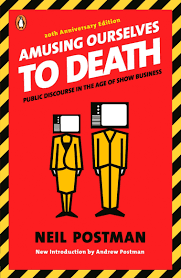
Television has conditioned us to tolerate visually entertaining material measured out in spoonfuls of time, to the detriment of rational public discourse and reasoned public affairs. In this eloquent, persuasive book, Neil Postman alerts us to the real and present dangers of this state of affairs, and offers compelling suggestions as to how to withstand the media onslaught. Before we hand over politics, education, religion, and journalism to the show business demands of the television age, we must recognize the ways in which the media shape our lives and the ways we can, in turn, shape them to serve out highest goals.

In this fascinating book, New Yorker business columnist James Surowiecki explores a deceptively simple idea: Large groups of people are smarter than an elite few, no matter how brilliant -- better at solving problems, fostering innovation, coming to wise decisions, even predicting the future.With boundless erudition and in delightfully clear prose, Surowiecki ranges across fields as diverse as popular culture, psychology, ant biology, behavioral economics, artificial intelligence, military history, and politics to show how this simple idea offers important lessons for how we live our lives, select our leaders, run our companies, and think about our world.

Una suggestiva indagine dei meccanismi profondi che regolano la nostra esistenza, le decisioni che prendiamo e i valori che condividiamo o che rifiutiamo. Da vent’anni, lo psicologo morale e filosofo Jonathan Haidt indaga i meccanismi profondi che regolano la nostra esistenza, le decisioni che prendiamo, i valori che crediamo universali, che condividiamo o che rifiutiamo. Secondo Haidt il giudizio morale è la bussola che, dalle piccole scelte quotidiane ai grandi temi della politica e della religione, orienta la tendenza naturale dell’uomo a riunirsi in tribù e a dividersi su ciò che si ritiene essere giusto o sbagliato. Arrivato ai vertici della classifica del “New York Times”, Menti tribali è un libro che propone una via alla convivenza e al dialogo, partendo dalla comprensione dei processi biologici ancestrali da cui nasce la nostra ricerca del bene.

In this indispensable guide to navigating the twenty-first century, two visionary thinkers reveal the unexpected ways power is changing--and how "new power" is reshaping politics, business, and life.Why do some leap ahead while others fall behind in our chaotic, connected age? In New Power, Jeremy Heimans and Henry Timms confront the biggest stories of our time--the rise of mega-platforms like Facebook and Uber; the out-of-nowhere victories of Obama and Trump; the unexpected emergence of movements like #MeToo--and reveal what's really behind them: the rise of "new power." For most of human history, the rules of power were clear: power was something to be seized and then jealously guarded. This "old power" was out of reach for the vast majority of people. But our ubiquitous connectivity makes possible a different kind of power. "New power" is made by many. It is open, participatory, and peer-driven. It works like a current, not a currency--and it is most forceful when it surges. The battle between old and new power is determining who governs us, how we work, and even how we think and feel. New Power shines fresh light on the cultural phenomena of our day, from #BlackLivesMatter to the Ice Bucket Challenge to Airbnb, uncovering the new power forces that made them huge. Drawing on examples from business, activism, and pop culture, as well as the study of organizations like Lego, NASA, Reddit, and TED, Heimans and Timms explain how to build new power and channel it successfully. They also explore the dark side of these forces: the way ISIS has co-opted new power to monstrous ends, and the rise of the alt-right's "intensity machine."In an era increasingly shaped by new power, this groundbreaking book offers us a new way to understand the world--and our role in it.

For women in tech, Silicon Valley is not a fantasyland where millions of dollars grow on trees. It's a "Brotopia," where men hold all the cards and make all the rules. Vastly outnumbered, women face toxic workplaces rife with discrimination and sexual harassment, where investors take meetings in hot tubs and network at sex parties.In this powerful exposé, Bloomberg TV journalist Emily Chang reveals how Silicon Valley got so sexist despite its utopian ideals, why bro culture endures despite decades of companies claiming the moral high ground (Don't Be Evil! Connect the World!)--and how women are finally starting to speak out and fight back.Drawing on her deep network of Silicon Valley insiders, Chang opens the boardroom doors of male-dominated venture capital firms like Kleiner Perkins, the subject of Ellen Pao's high-profile gender discrimination lawsuit, and Sequoia, where a partner once famously said they "won't lower their standards" just to hire women. Interviews with Facebook COO Sheryl Sandberg, YouTube CEO Susan Wojcicki, and former Yahoo! CEO Marissa Mayer--who got their start at Google, where just one in five engineers is a woman--reveal just how hard it is to crack the Silicon Ceiling. And Chang shows how women such as former Uber engineer Susan Fowler, entrepreneur Niniane Wang, and game developer Brianna Wu, have risked their careers and sometimes their lives to pave a way for other women.Silicon Valley's aggressive, misogynistic, work-at-all costs culture has shut women out of the greatest wealth creation in the history of the world. It's time to break up the boys' club. Emily Chang shows us how to fix this toxic culture--to bring down Brotopia, once and for all.

In this groundbreaking book, Former Surgeon General of the United States, Vivek Murthy argues that loneliness is the underpinning to the current crisis in mental wellness and is responsible for the upsurge in suicide, the opioid epidemic, the overuse of psych meds, the over-diagnosing and pathologizing of emotional and psychological struggle. The good news is that social connection is innate and a cure for loneliness. In Together, the former Surgeon General will address the importance of community and connection and offer viable and actionable solutions to this overlooked epidemic.

In his widely praised book, award-winning psychologist Jonathan Haidt examines the world’s philosophical wisdom through the lens of psychological science, showing how a deeper understanding of enduring maxims-like Do unto others as you would have others do unto you, or What doesn’t kill you makes you stronger-can enrich and even transform our lives.

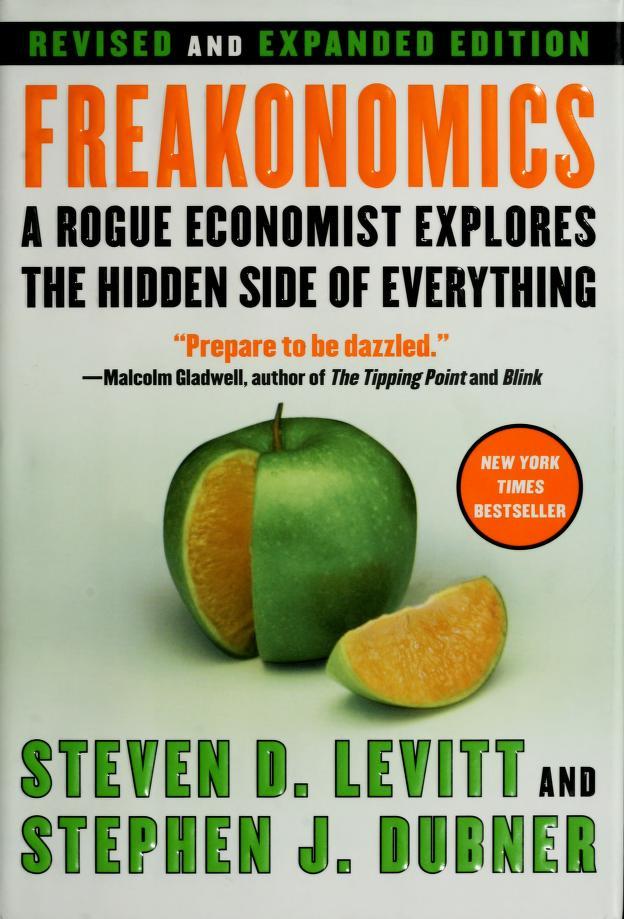
Which is more dangerous, a gun or a swimming pool? What do schoolteachers and sumo wrestlers have in common? Why do drug dealers still live with their moms? How much do parents really matter? What kind of impact did Roe v. Wade have on violent crime? Freakonomics will literally redefine the way we view the modern world.These may not sound like typical questions for an economist to ask. But Steven D. Levitt is not a typical economist. He is a much heralded scholar who studies the stuff and riddles of everyday life -- from cheating and crime to sports and child rearing -- and whose conclusions regularly turn the conventional wisdom on its head. He usually begins with a mountain of data and a simple, unasked question. Some of these questions concern life-and-death issues; others have an admittedly freakish quality. Thus the new field of study contained in this book: freakonomics.Through forceful storytelling and wry insight, Levitt and co-author Stephen J. Dubner show that economics is, at root, the study of incentives -- how people get what they want, or need, especially when other people want or need the same thing. In Freakonomics, they set out to explore the hidden side of ... well, everything. The inner workings of a crack gang. The truth about real-estate agents. The myths of campaign finance. The telltale marks of a cheating schoolteacher. The secrets of the Ku Klux Klan.What unites all these stories is a belief that the modern world, despite a surfeit of obfuscation, complication, and downright deceit, is not impenetrable, is not unknowable, and -- if the right questions are asked -- is even more intriguing than we think. All it takes is a new way of looking. Steven Levitt, through devilishly clever and clear-eyed thinking, shows how to see through all the clutter.Freakonomics establishes this unconventional premise: If morality represents how we would like the world to work, then economics represents how it actually does work. It is true that readers of this book will be armed with enough riddles and stories to last a thousand cocktail parties. But Freakonomics can provide more than that. It will literally redefine the way we view the modern world.(front flap)

Whether we’re buying a pair of jeans, selecting a long-distance carrier, choosing a doctor, or setting up a 401(k), everyday decisions—from the mundane to the profound challenges of balancing career, family, and individual needs—have become increasingly complex due to the overwhelming abundance of choice with which we are presented. We assume that more choice means better options and greater satisfaction. But beware of choice overload: it can make you question the decisions you make before you even make them, it can set you up for unrealistically high expectations, and it can make you blame yourself for any and all failures. In The Paradox of Choice , Barry Schwartz explains why too much of a good thing has proven detrimental to our psychological and emotional well-being. Synthesizing current research in the social sciences, he makes the counterintuitive case that eliminating choices can greatly reduce the stress, anxiety, and busyness of our lives. In accessible, engaging, and anecdotal prose, he offers practical steps for how to limit choices to a manageable number, have the discipline to focus on the important ones and ignore the rest, and, ultimately, derive greater satisfaction from the choices you do make. "An insightful study that winningly argues its subtitle." — Philadelphia Inquirer " The Paradox of Choice is genuine and useful. The book is well-reasoned and solidly researched." — New York Observer

Why do our headaches persist after taking a one-cent aspirin but disappear when we take a 50-cent aspirin?Why does recalling the Ten Commandments reduce our tendency to lie, even when we couldn't possibly be caught?Why do we splurge on a lavish meal but cut coupons to save twenty-five cents on a can of soup?Why do we go back for second helpings at the unlimited buffet, even when our stomachs are already full?And how did we ever start spending $4.15 on a cup of coffee when, just a few years ago, we used to pay less than a dollar?When it comes to making decisions in our lives, we think we're in control. We think we're making smart, rational choices. But are we?In a series of illuminating, often surprising experiments, MIT behavioral economist Dan Ariely refutes the common assumption that we behave in fundamentally rational ways. Blending everyday experience with groundbreaking research, Ariely explains how expectations, emotions, social norms, and other invisible, seemingly illogical forces skew our reasoning abilities.Not only do we make astonishingly simple mistakes every day, but we make the same "types" of mistakes, Ariely discovers. We consistently overpay, underestimate, and procrastinate. We fail to understand the profound effects of our emotions on what we want, and we overvalue what we already own. Yet these misguided behaviors are neither random nor senseless. They're systematic and predictable--making us "predictably" irrational.From drinking coffee to losing weight, from buying a car to choosing a romantic partner, Ariely explains how to break through these systematic patterns of thought to make better decisions. "Predictably Irrational" will change the way we interact with the world--one small decision at a time.

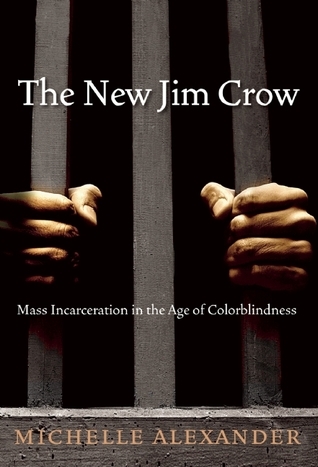
"Jarvious Cotton's great-great-grandfather could not vote as a slave. His great-grandfather was beaten to death by the Klu Klux Klan for attempting to vote. His grandfather was prevented from voting by Klan intimidation; his father was barred by poll taxes and literacy tests. Today, Cotton cannot vote because he, like many black men in the United States, has been labeled a felon and is currently on parole."As the United States celebrates the nation's "triumph over race" with the election of Barack Obama, the majority of young black men in major American cities are locked behind bars or have been labeled felons for life. Although Jim Crow laws have been wiped off the books, an astounding percentage of the African American community remains trapped in a subordinate status--much like their grandparents before them.In this incisive critique, former litigator-turned-legal-scholar Michelle Alexander provocatively argues that we have not ended racial caste in America: we have simply redesigned it. Alexander shows that, by targeting black men and decimating communities of color, the U.S. criminal justice system functions as a contemporary system of racial control, even as it formally adheres to the principle of color blindness. The New Jim Crow challenges the civil rights community--and all of us--to place mass incarceration at the forefront of a new movement for racial justice in America.

Since Darwin's day, we've been told that sexual monogamy comes naturally to our species. Mainstream science--as well as religious and cultural institutions--has maintained that men and women evolved in families in which a man's possessions and protection were exchanged for a woman's fertility and fidelity. But this narrative is collapsing. Fewer and fewer couples are getting married, and divorce rates keep climbing as adultery and flagging libido drag down even seemingly solid marriages.How can reality be reconciled with the accepted narrative? It can't be, according to renegade thinkers Christopher Ryan and Cacilda Jethá. While debunking almost everything we "know" about sex, they offer a bold alternative explanation in this provocative and brilliant book.Ryan and Jethá's central contention is that human beings evolved in egalitarian groups that shared food, child care, and, often, sexual partners. Weaving together convergent, frequently overlooked evidence from anthropology, archaeology, primatology, anatomy, and psychosexuality, the authors show how far from human nature monogamy really is. Human beings everywhere and in every era have confronted the same familiar, intimate situations in surprisingly different ways. The authors expose the ancient roots of human sexuality while pointing toward a more optimistic future illuminated by our innate capacities for love, cooperation, and generosity.With intelligence, humor, and wonder, Ryan and Jethá show how our promiscuous past haunts our struggles over monogamy, sexual orientation, and family dynamics. They explore why long-term fidelity can be so difficult for so many; why sexual passion tends to fade even as love deepens; why many middle-aged men risk everything for transient affairs with younger women; why homosexuality persists in the face of standard evolutionary logic; and what the human body reveals about the prehistoric origins of modern sexuality.In the tradition of the best historical and scientific writing, Sex at Dawn unapologetically upends unwarranted assumptions and unfounded conclusions while offering a revolutionary understanding of why we live and love as we do.

Sam Harris' first book, The End of Faith, ignited a worldwide debate about the validity of religion. In the aftermath, Harris discovered that most people - from religious fundamentalists to non-believing scientists - agree on one point: science has nothing to say on the subject of human values. Indeed, our failure to address questions of meaning and morality through science has now become the most common justification for religious faith. It is also the primary reason why so many secularists and religious moderates feel obligated to "respect" the hardened superstitions of their more devout neighbors.In this explosive new book, Sam Harris tears down the wall between scientific facts and human values, arguing that most people are simply mistaken about the relationship between morality and the rest of human knowledge. Harris urges us to think about morality in terms of human and animal well-being, viewing the experiences of conscious creatures as peaks and valleys on a "moral landscape." Because there are definite facts to be known about where we fall on this landscape, Harris foresees a time when science will no longer limit itself to merely describing what people do in the name of "morality"; in principle, science should be able to tell us what we ought to do to live the best lives possible.Bringing a fresh perspective to age-old questions of right and wrong and good and evil, Harris demonstrates that we already know enough about the human brain and its relationship to events in the world to say that there are right and wrong answers to the most pressing questions of human life. Because such answers exist, moral relativism is simply false - and comes at increasing cost to humanity. And the intrusions of religion into the sphere of human values can be finally repelled: for just as there is no such thing as Christian physics or Muslim algebra, there can be no Christian or Muslim morality.Using his expertise in philosophy and neuroscience, along with his experience on the front lines of our "culture wars," Harris delivers a game-changing book about the future of science and about the real basis of human cooperation.

In his #1 bestselling books The Tipping Point, Blink, and Outliers, Malcolm Gladwell has explored the ways we understand and change our world. Now he looks at the complex and surprising ways the weak can defeat the strong, the small can match up against the giant, and how our goals (often culturally determined) can make a huge difference in our ultimate sense of success. Drawing upon examples from the world of business, sports, culture, cutting-edge psychology, and an array of unforgettable characters around the world, David and Goliath is in many ways the most practical and provocative book Malcolm Gladwell has ever written.

An insider's groundbreaking investigation of how the global elite's efforts to "change the world" preserve the status quo and obscure their role in causing the problems they later seek to solve.Former New York Times columnist Anand Giridharadas takes us into the inner sanctums of a new gilded age, where the rich and powerful fight for equality and justice any way they can--except ways that threaten the social order and their position atop it. We see how they rebrand themselves as saviors of the poor; how they lavishly reward "thought leaders" who redefine "change" in winner-friendly ways; and how they constantly seek to do more good, but never less harm. We hear the limousine confessions of a celebrated foundation boss; witness an American president hem and haw about his plutocratic benefactors; and attend a cruise-ship conference where entrepreneurs celebrate their own self-interested magnanimity.Giridharadas asks hard questions: Why, for example, should our gravest problems be solved by the unelected upper crust instead of the public institutions it erodes by lobbying and dodging taxes? He also points toward an answer: Rather than rely on scraps from the winners, we must take on the grueling democratic work of building more robust, egalitarian institutions and truly changing the world. A call to action for elites and everyday citizens alike.

The Pulitzer Prize–winning, bestselling author of The Warmth of Other Suns examines the unspoken caste system that has shaped America and shows how our lives today are still defined by a hierarchy of human divisions.“As we go about our daily lives, caste is the wordless usher in a darkened theater, flashlight cast down in the aisles, guiding us to our assigned seats for a performance. The hierarchy of caste is not about feelings or morality. It is about power—which groups have it and which do not.”In this brilliant book, Isabel Wilkerson gives us a masterful portrait of an unseen phenomenon in America as she explores, through an immersive, deeply researched narrative and stories about real people, how America today and throughout its history has been shaped by a hidden caste system, a rigid hierarchy of human rankings.Beyond race, class, or other factors, there is a powerful caste system that influences people’s lives and behavior and the nation’s fate. Linking the caste systems of America, India, and Nazi Germany, Wilkerson explores eight pillars that underlie caste systems across civilizations, including divine will, bloodlines, stigma, and more. Using riveting stories about people—including Martin Luther King, Jr., baseball’s Satchel Paige, a single father and his toddler son, Wilkerson herself, and many others—she shows the ways that the insidious undertow of caste is experienced every day. She documents how the Nazis studied the racial systems in America to plan their out-cast of the Jews; she discusses why the cruel logic of caste requires that there be a bottom rung for those in the middle to measure themselves against; she writes about the surprising health costs of caste, in depression and life expectancy, and the effects of this hierarchy on our culture and politics. Finally, she points forward to ways America can move beyond the artificial and destructive separations of human divisions, toward hope in our common humanity.

From the creator of the wildly popular blog Wait But Why, a fun and fascinating deep dive into what the hell is going on in our strange, unprecedented modern times.Between 2013 and 2016, Tim Urban became one of the world’s most popular bloggers, writing dozens of viral, long-form articlesabout everything from AI to colonizing Mars to procrastination. Then, he turned his attention to a new topic: the society around him. Why was everything such a mess? Why was everyone acting like such a baby? When did things get so tribal? Why do humans do this stuff?This massive topic sent Tim tumbling down his deepest rabbit hole yet, through mountains of history, evolutionary psychology, political theory, neuroscience, and modern-day political movements, as he tried to figure out the answer to a simple question: What’s our problem?Six years later, he emerged from the hole holding this book. What’s Our Problem? is a deep and expansive analysis of our modern times, in the classic style of Wait But Why, packed with original concepts, sticky metaphors, and 300 drawings. The book provides an entirely new framework and language for thinking and talking about today’s complex world. Instead of focusing on the usual left-center-right horizontal political axis, which is all about what we think, the book introduces a verticalaxis that explores how we think, as individuals and as groups. Readers will find themselves on a delightful and fascinating journey that will ultimately change the way they see the world around them.Anyway he wanted to say a lot more about all of this but there was a word limit on this book description so just go read the book.

Hidden somewhere, in nearly every major city in the world, is an underground seduction lair. And in these lairs, men trade the most devastatingly effective techniques ever invented to charm women. This is not fiction. These men really exist. They live together in houses known as Projects. And Neil Strauss, the bestselling author and journalist, spent two years living among them, using the pseudonym Style to protect his real-life identity. The result is one of the most explosive and controversial books of the last decade—guaranteed to change the lives of men and transform the way women understand the opposite sex forever.On his journey from AFC (average frustrated chump) to PUA (pick-up artist) to PUG (pick-up guru), Strauss not only shares scores of original seduction techniques but also has unforgettable encounters with the likes of Tom Cruise, Britney Spears, Paris Hilton, Heidi Fleiss, and Courtney Love. And then things really start to get strange—and passions lead to betrayals lead to violence. The Game is the story of one man's transformation from frog to prince to prisoner in the most unforgettable book of this generation.

A classic work in political philosophy, intellectual and cultural history, and economics, The Road to Serfdom has inspired and infuriated politicians, scholars, and general readers for half a century. Originally published in England in the spring of 1944—when Eleanor Roosevelt supported the efforts of Stalin, and Albert Einstein subscribed lock, stock, and barrel to the socialist program—The Road to Serfdom was seen as heretical for its passionate warning against the dangers of state control over the means of production. For F. A. Hayek, the collectivist idea of empowering government with increasing economic control would inevitably lead not to a utopia but to the horrors of nazi Germany and fascist Italy.First published by the University of Chicago Press on September 18, 1944, The Road to Serfdom garnered immediate attention from the public, politicians, and scholars alike. The first printing of 2,000 copies was exhausted instantly, and within six months more than 30,000 were sold. In April of 1945, Reader's Digest published a condensed version of the book, and soon thereafter the Book-of-the-Month Club distributed this condensation to more than 600,000 readers. A perennial best-seller, the book has sold over a quarter of a million copies in the United States, not including the British edition or the nearly twenty translations into such languages as German, French, Dutch, Swedish, and Japanese, and not to mention the many underground editions produced in Eastern Europe before the fall of the iron curtain.After thirty-two printings in the United States, The Road to Serfdom has established itself alongside the works of Alexis de Tocqueville, John Stuart Mill, and George Orwell for its timeless meditation on the relation between individual liberty and government authority. This fiftieth anniversary edition, with a new introduction by Milton Friedman, commemorates the enduring influence of The Road to Serfdom on the ever-changing political and social climates of the twentieth century, from the rise of socialism after World War II to the Reagan and Thatcher "revolutions" in the 1980s and the transitions in Eastern Europe from communism to capitalism in the 1990s.F. A. Hayek (1899-1992), recipient of the Medal of Freedom in 1991 and co-winner of the Nobel Memorial Prize in Economics in 1974, was a pioneer in monetary theory and the principal proponent of libertarianism in the twentieth century.On the first American edition of The Road to Serfdom:"One of the most important books of our generation. . . . It restates for our time the issue between liberty and authority with the power and rigor of reasoning with which John Stuart Mill stated the issue for his own generation in his great essay On Liberty. . . . It is an arresting call to all well-intentioned planners and socialists, to all those who are sincere democrats and liberals at heart to stop, look and listen."—Henry Hazlitt, New York Times Book Review, September 1944"In the negative part of Professor Hayek's thesis there is a great deal of truth. It cannot be said too often—at any rate, it is not being said nearly often enough—that collectivism is not inherently democratic, but, on the contrary, gives to a tyrannical minority such powers as the Spanish Inquisitors never dreamt of."—George Orwell, Collected Essays

Toàn cầu hóa là chủ đề vốn phức tạp và thu hút sự quan tâm của dư luận với không ít những ý kiến trái ngược nhau, được Thomas L.Friedman phân tích một cách độc đáo, với lập luận trung tâm về quá trình “trở nên phẳng” của thế giới. Khái niệm “phẳng” ở đây đồng nghĩa với “sự kết nối”. Những dở bỏ rào cản về chính trị cùng với những tiến bộ vượt bậc của cách mạng số đang làm cho thế giới “phẳng ra” và không còn nhiều trở ngại về địa lý như trước. Điều này mở ra cho các nước những phương thức sản xuất kinh doanh, những tình thế địa chính trị và địa kinh tế hoàn toàn mới.Thông điệp Friedman chuyển tải không xa lạ đối với nhiều bạn độc giả. Toàn cầu hoá là hiện tượng khách quan, từng được biểu hiện lẻ tẻ có khi như một trạng huống, một tiến trình, nhưng giờ đây được nhìn nhận rõ nét và khái quát hơn, khi nó trỗi dậy trở thành một hệ thống quốc tế. Điểm mấu chốt ở đây là, đôi lúc dư luận có dấu hiệu sao nhãng đối với các đòi hỏi mang tính tất yếu để thúc đẩy toàn cầu hoá (do sự kiện 11/9, cuộc chiến tranh Irag hoặc các lý do tương tự), Friedman đã giống lên hồi chuông cảnh báo rằ Toàn cầu hoá 3.0 thực chất đang ở vào giai đoạn tăng tốc, nó làm cho thế giới chuyển từ cỡ nhỏ xuống cỡ siêu nhỏ và đồng thời san phẳng thế giới. Chúng ta đang sống trong một thế giới phẳng! Trong thế giới này, không chỉ các quốc gia, những tập đoàn kinh tế lớn như Dell, IBM, Wal-Mart, mà là các cá nhân ở khắp mọi nơi trên hành tinh này (chỉ cần kết nối internet và tiếp cận các công cụ của thế giới mới) có thể cộng với nhau trong những chuỗi cung toàn cầu để tạo ra những giá trị gia tăng lớn hơn. Chiếc “bánh” toàn cầu ngày càng trở nên to hơn nhưng đồng thời cũng khó chia hơn….Xu thế toàn cầu hóa đang là đặc điểm chi phối thời đại, như chính Nghị quyết Đại hội Đảng Cộng Sản Việt Nam lần thứ X đã khẳng định. Quá trình chúng ta chủ động hội nhập quốc tế, mà việc gia nhập WTO là một biểu hiện, có cả cơ hội lẫn thách thức. Chính vì thế, việc tiếp cận và tham khảo những tri thức đương đại từ những nước đã phát triển về sự chuyển động của thế giới (đang ở bước ngoặt từ “tròn” sang “phẳng”, như cách nói của tác giả) có lẽ sẽ giúp chúng ta có thêm những thông tin bổ ích để có sự chủ động trong quá trình hội nhập.Với mục đích cung cấp và cập nhật những thông tin đang là sự kiện dẫn đầu có giá trị tham khảo, xin giới thiệu tới bạn đọc bản dịch Việt ngữ của THE WORLD IS FLAT – tác phẩm được xếp vào danh mục sách bán chạy nhất ở Mỹ (kể từ lần xuất bản đầu tiên tháng 4/ 2005, và lần tái bản gần đây tháng 1/ 2006). Đây là bản dịch từ bản sách gốc mới nhất được cập nhật, bổ sung bởi chính tác giả.

The Red Queen compels us to rethink everything from the persistence of sexism to the endurance of romantic love.Referring to Lewis Carroll's Red Queen from Through the Looking-Glass, a character who has to keep running to stay in the same place, Matt Ridley demonstrates why sex is humanity's best strategy for outwitting its constantly mutating internal predators. The Red Queen answers dozens of other riddles of human nature and culture—including why men propose marriage, the method behind our maddening notions of beauty, and the disquieting fact that a woman is more likely to conceive a child by an adulterous lover than by her husband. The Red Queen offers an extraordinary new way of interpreting the human condition and how it has evolved.

Nudge est un véritable manifeste, utilisant les récentes recherches comportementales pour aider les particuliers comme les entreprises, ou des organismes gouvernementaux, à prendre de meilleures décisions. Il engage le lecteur à changer fondamentalement sa façon de penser, sans jamais aliéner sa liberté de choix.Chaque jour, nous prenons des décisions, qu’elles concernent des options professionnelles, les écoles des enfants ou la simple composition d’un repas. Malheureusement, nous faisons parfois les mauvais choix. Richard Thaler, l’inventeur de l’économie comportementale, nouvelle science qui intègre la recherche psychologique dans la théorie économique, et Cass Sunstein, l’un des plus grands juristes américains, nous invitent à entrer dans un monde inattendu ; un monde où l’on considère que l’humanité est un don et constitue une alternative au classique discours rationnel.Dans la veine d’un ouvrage comme Freakonomics , ce livre très drôle nous donne gentiment un coup de pouce (« Nudge » en anglais) sur des questions très sérieuses. Le prix Nobel d'économie 2017 vient d'être décerné à Richard H. Thaler.

In "59 Seconds," psychologist Professor Richard Wiseman presents a fresh approach to change that helps people achieve their aims and ambitions in minutes, not months. From mood to memory, persuasion to procrastination, and resilience to relationships, Wiseman outlines the research supporting this new science of rapid change, and describes how these quick and quirky techniques can be incorporated into everyday life. Think a little, change a lot."Discover why even thinking about going to the gym can help you keep in shape ""Learn how pot plants make you more creative ""Find out why putting a pencil between your teeth instantly makes you happier "" "'At last, a self-help guide that is based on proper research. Perfect for busy, curious, smart people' Simon Singh, author of Fermat's Last Theorem'A triumph of scientifically proven advice over misleading myths of self-help. Challenging, uplifting and long overdue' Derren Brown

“Every adult life could be said to be defined by two great love stories. The first—the story of our quest for sexual love—is well known and well charted. . . . The second—the story of our quest for love from the world—is a more secret and shameful tale. And yet this second love story is no less intense than the first.”This is a book about an almost universal anxiety that rarely gets mentioned an anxiety about what others think of us, about whether we’re judged a success or a failure, a winner or a loser. This is a book about status anxiety.Alain de Botton, best-selling author of The Consolations of Philosophy and The Art of Travel , asks—with lucidity and charm—where our worries about status come from and what, if anything, we can do to surmount them. With the help of philosophers, artists and writers, he examines the origins of status anxiety (ranging from the consequences of the French Revolution to our secret dismay at the success of our friends) before revealing ingenious ways in which people have been able to overcome their worries in the search for happiness. We learn about sandal-less philosophers and topless bohemians, about the benefits of putting skulls on our sideboards, and about looking at ancient ruins.The result is a book that isn’t just highly entertaining and thought-provoking, but that is genuinely wise and helpful, too.

You've seen it all before. A malicious online rumor costs a company millions. A political sideshow derails the national news cycle and destroys a candidate. Some product or celebrity zooms from total obscurity to viral sensation. What you don’t know is that someone is responsible for all this. Usually, someone like me. I’m a media manipulator. In a world where blogs control and distort the news, my job is to control blogs—as much as any one person can. IN TODAY’S CULTURE…Blogs like Gawker, BuzzFeed, and The Huffington Post drive the media agenda. Bloggers are slaves to money, technology, and deadlines. Manipulators wield these levers to shape everything you read, see, and hear— online and off. Why am I giving away these secrets? Because I’m tired of a world where blogs take indirect bribes, marketers help write the news, reckless journalists spread lies, and no one is accountable for any of it. I’m going to explain exactly how the media really works. What you choose to do with this information is up to you.

Audiobook: 8 hrs and 47 minsA surprising and intriguing examination of how scarcity—and our flawed responses to it—shapes our lives, our society, and our cultureWhy do successful people get things done at the last minute? Why does poverty persist? Why do organizations get stuck firefighting? Why do the lonely find it hard to make friends? These questions seem unconnected, yet Sendhil Mullainathan and Eldar Shafir show that they are all are examples of a mind-set produced by scarcity.Drawing on cutting-edge research from behavioral science and economics, Mullainathan and Shafir show that scarcity creates a similar psychology for everyone struggling to manage with less than they need. Busy people fail to manage their time efficiently for the same reasons the poor and those maxed out on credit cards fail to manage their money. The dynamics of scarcity reveal why dieters find it hard to resist temptation, why students and busy executives mismanage their time, and why sugarcane farmers are smarter after harvest than before. Once we start thinking in terms of scarcity and the strategies it imposes, the problems of modern life come into sharper focus.Mullainathan and Shafir discuss how scarcity affects our daily lives, recounting anecdotes of their own foibles and making surprising connections that bring this research alive. Their book provides a new way of understanding why the poor stay poor and the busy stay busy, and it reveals not only how scarcity leads us astray but also how individuals and organizations can better manage scarcity for greater satisfaction and success.http://us.macmillan.com/scarcity/Send...

What are the grand dynamics that drive the accumulation and distribution of capital? Questions about the long-term evolution of inequality, the concentration of wealth, and the prospects for economic growth lie at the heart of political economy. But satisfactory answers have been hard to find for lack of adequate data and clear guiding theories. In Capital in the Twenty-First Century, Thomas Piketty analyzes a unique collection of data from twenty countries, ranging as far back as the eighteenth century, to uncover key economic and social patterns. His findings will transform debate and set the agenda for the next generation of thought about wealth and inequality.Piketty shows that modern economic growth and the diffusion of knowledge have allowed us to avoid inequalities on the apocalyptic scale predicted by Karl Marx. But we have not modified the deep structures of capital and inequality as much as we thought in the optimistic decades following World War II. The main driver of inequality—the tendency of returns on capital to exceed the rate of economic growth—today threatens to generate extreme inequalities that stir discontent and undermine democratic values. But economic trends are not acts of God. Political action has curbed dangerous inequalities in the past, Piketty says, and may do so again.

The second volume of the bestselling landmark work on the history of the modern stateWriting in The Wall Street Journal, David Gress called Francis Fukuyama's Origins of Political Order "magisterial in its learning and admirably immodest in its ambition." In The New York Times Book Review, Michael Lind described the book as "a major achievement by one of the leading public intellectuals of our time." And in The Washington Post, Gerard DeGrott exclaimed "this is a book that will be remembered. Bring on volume two." Volume two is finally here, completing the most important work of political thought in at least a generation. Taking up the essential question of how societies develop strong, impersonal, and accountable political institutions, Fukuyama follows the story from the French Revolution to the so-called Arab Spring and the deep dysfunctions of contemporary American politics. He examines the effects of corruption on governance, and why some societies have been successful at rooting it out. He explores the different legacies of colonialism in Latin America, Africa, and Asia, and offers a clear-eyed account of why some regions have thrived and developed more quickly than others. And he boldly reckons with the future of democracy in the face of a rising global middle class and entrenched political paralysis in the West. A sweeping, masterful account of the struggle to create a well-functioning modern state, Political Order and Political Decay is destined to be a classic.

Feeling attention challenged? Even assaulted? American business depends on it. In nearly every moment of our waking lives, we face a barrage of messaging, advertising enticements, branding, sponsored social media, and other efforts to harvest our attention. Few moments or spaces of our day remain uncultivated by the "attention merchants," contributing to the distracted, unfocused tenor of our times. Tim Wu argues that this condition is not simply the byproduct of recent technological innovations but the result of more than a century's growth and expansion in the industries that feed on human attention. From the pre-Madison Avenue birth of advertising to the explosion of the mobile web; from AOL and the invention of email to the attention monopolies of Google and Facebook; from Ed Sullivan to celebritypower brandslike Oprah Winfrey, Kim Kardashian and Donald Trump, the basic business model of "attention merchants" has never changed: free diversion in exchange for a moment of your consideration, sold in turn to the highest-bidding advertiser. Wu describes the revolts that have risen against the relentless siege of our awareness, from the remote control to the creation of public broadcasting to Apple's ad-blocking OS. But he makes clear that attention merchants are always growing new heads, even as their means of getting inside our heads are changing our very nature--cognitive, social, political and otherwise--in ways unimaginable even a generation ago.

The routine traffic stop that ends in tragedy. The spy who spends years undetected at the highest levels of the Pentagon. The false conviction of Amanda Knox. Why do we so often get other people wrong? Why is it so hard to detect a lie, read a face or judge a stranger's motives?Through a series of encounters and misunderstandings - from history, psychology and infamous legal cases - Malcolm Gladwell takes us on an intellectual adventure into the darker side of human nature, where strangers are never simple and misreading them can have disastrous consequences.No one challenges our shared assumptions like Malcolm Gladwell. Here he uses stories of deceit and fatal errors to cast doubt on our strategies for dealing with the unknown, inviting us to rethink our thinking in these troubled times.

America is polarized by identity. Over the past fifty years in America, partisan identities have merged with racial, religious, geographic, ideological, and cultural identities, attaining a weight that is breaking much in politics and tearing at the bonds that hold the country together. Political analyst Ezra Klein shows how and why American politics polarized around identity in the twentieth century and what that polarization did to the way people see the world and one another. He traces the feedback loops—between polarized political identities and polarized political institutions—driving the system toward crisis.Why We’re Polarized reveals the structural and psychological forces behind America’s descent into division and dysfunction. Neither a polemic nor a lament, it offers a clear framework for understanding everything from Donald Trump’s rise to the Democratic Party’s leftward shift to the politicization of everyday culture.

Harvard University’s Joseph Henrich, Chair of the Department of Human Evolutionary Biology, delivers a bold, epic investigation into the development of the Western mind, global psychological diversity, and its impact on the worldPerhaps you are raised in a society that is Western, Educated, Industrialized, Rich, and Democratic. If so, you’re rather psychologically peculiar.Unlike much of the world today, and most people who have ever lived, WEIRD people are highly individualistic, self-obsessed, control-oriented, nonconformist, and analytical. They focus on themselves—their attributes, accomplishments, and aspirations—over their relationships and social roles. How did WEIRD populations become so psychologically distinct? What role did these psychological differences play in the industrial revolution and the global expansion of Europe during the last few centuries? Did these differences have an impact on the development of the laws, economic systems, and governments that now dominate the world?In W.E.I.R.D. Minds, Joseph Henrich draws on cutting-edge research in anthropology, psychology, economics, and evolutionary biology to explore these questions and more. He illuminates the origins and evolution of family structures, marriage, and religion, and the profound impact these cultural transformations had on human psychology. Mapping these shifts through ancient history and late antiquity, Henrich reveals that the most fundamental institutions of kinship and marriage changed dramatically under pressure from the Roman Catholic Church. It was these changes that gave rise to the WEIRD psychology that would coevolve with impersonal markets, occupational specialization, and free competition—laying the foundation for the modern world.Provocative and engaging in both its broad scope and its surprising details, W.E.I.R.D. Minds explores how culture, institutions, and psychology shape one another, and explains what this means for both our most personal sense of who we are as individuals and also the large-scale social, political, and economic forces that drive human history.

“A manifesto of sorts for anyone who makes art [and] cares for it.” —Zadie Smith“The best book I know of for talented but unacknowledged creators. . . . A masterpiece.” —Margaret Atwood“No one who is invested in any kind of art . . . can read The Gift and remain unchanged.” —David Foster WallaceBy now a modern classic, The Gift is a brilliantly orchestrated defense of the value of creativity and of its importance in a culture increasingly governed by money and overrun with commodities. This book is even more necessary today than when it first appeared.An illuminating and transformative book, and completely original in its view of the world, The Gift is cherished by artists, writers, musicians, and thinkers. It is in itself a gift to all who discover the classic wisdom found in its pages.

Ever since its first publication in 1992, the New York Times bestselling The End of History and the Last Man has provoked controversy and debate. "Profoundly realistic and important...supremely timely and cogent...the first book to fully fathom the depth and range of the changes now sweeping through the world." —The Washington Post Book WorldFrancis Fukuyama's prescient analysis of religious fundamentalism, politics, scientific progress, ethical codes, and war is as essential for a world fighting fundamentalist terrorists as it was for the end of the Cold War. Now updated with a new afterword, The End of History and the Last Man is a modern classic.

In Medieval Technology and Social Change, Lynn White considers the effects of technological innovation on the societies of medieval Europe: the slow collapse of feudalism with the development of machines and tools that introduced factories in place of cottage industries, and the development of the manorial system with the introduction of new kinds of plows and new methods of crop rotation. One invention of particular import, writes White, was the stirrup, which in turn introduced heavy, long-range cavalry to the medieval battlefield. The development thus escalated small-scale conflict to "shock combat." Cannons and flamethrowers followed, as did more peaceful inventions, such as watermills and reapers.

The Wealth and Poverty of Nations is David S. Landes's acclaimed, best-selling exploration of one of the most contentious and hotly debated questions of our time: Why do some nations achieve economic success while others remain mired in poverty? The answer, as Landes definitively illustrates, is a complex interplay of cultural mores and historical circumstance. Rich with anecdotal evidence, piercing analysis, and a truly astonishing range of erudition, The Wealth and Poverty of Nations is a "picture of enormous sweep and brilliant insight" (Kenneth Arrow) as well as one of the most audaciously ambitious works of history in decades.For the paperback edition, Landes has written a new epilogue, in which he takes account of Asian financial crisises and the international tension between overconfidence and reality.

Hayek gives the main arguments for the free-market case and presents his manifesto on the "errors of socialism." Hayek argues that socialism has, from its origins, been mistaken on factual, and even on logical, grounds and that its repeated failures in the many different practical applications of socialist ideas that this century has witnessed were the direct outcome of these errors. He labels as the "fatal conceit" the idea that "man is able to shape the world around him according to his wishes.""The achievement of The Fatal Conceit is that it freshly shows why socialism must be refuted rather than merely dismissed—then refutes it again."—David R. Henderson, Fortune."Fascinating. . . . The energy and precision with which Mr. Hayek sweeps away his opposition is impressive."—Edward H. Crane, Wall Street JournalF. A. Hayek is considered a pioneer in monetary theory, the preeminent proponent of the libertarian philosophy, and the ideological mentor of the Reagan and Thatcher "revolutions."

Examines the effects of rapid industrial and technological changes upon the individual, the family, and society.

Jean Liedloff, an American writer, spent two and a half years in the South American jungle living with Stone Age Indians. The experience demolished her Western preconceptions of how we should live and led her to a radically different view of what human nature really is. She offers a new understanding of how we have lost much of our natural well-being and shows us practical ways to regain it for our children and for ourselves.

В излязлата през 1996 г. книга „Сблъсъкът на цивилизациите” Хънтингтън развива своите идеи, изложени първоначално в лекция, изнесена в American Enterprise Institute през 1993 г. и в статия от 1996 г. в сп. „Форин Афеърс”. Основната теза на неговото изследване е, че бъдещети световни конфликти ще се основават не на политическа идеология, а на национално културните и религиозни различия на човечеството. „Историята на човечеството е история на цивилизациите... Всяка цивилизация разглежда себе си като център на света и пише собствената си история като основен драматичен сюжет в историята на човечеството.Пришпорена от модернизацията, световната политика се преструктурира съобразно културни критерии. Сближават се народи и страни със сходни култури. Народите и страните с различни култури се разединяват. Съюзи, дефинирани от идеологията и от отношенията между свръхсилите, отстъпват място на съюзи, основаващи се на обща култура и цивилизация. Политическите граници се преначертават така, че да съвпаднат с културните граници: етнически, религиозни и цивилизационни. Културни общности заменят блоковете от периода на Студената война, а разломите между цивилизациите се превръщат във фронтови линии на глобалната политика.”Самюъл Хънтингтън„Сблъсъкът на цивилииациите” е една от най-значимите книги, появили се след края на Студената война. ~Хенри Кисинджър„Върховно интелектуално постижение, смело, провокативно и наситено с въображение. Основополагащ и оригинален труд, който ще предизвика революция в представите ни за международна политика.” ~Збигнев Бжежински

A Brief History of Everything is an altogether friendly and accessible account of men and women's place in a universe of sex, soul, and spirit, written by an author of whom New York Times reporter Tony Schwartz "No one has described the path to wisdom better than Ken Wilber." Wilber examines the course of evolution as the unfolding manifestation of Spirit, from matter to life to mind, including the higher stages of spiritual development where Spirit becomes conscious of itself. In each of these domains, there are recurring patterns, and by looking closely at them, we can learn much about the predicament of our world—and the direction we must take if "global transformation" is to become a reality. Wilber offers a series of striking and original views on many topics of current interest and controversy, including the gender wars, modern liberation movements, multiculturalism, ecology and environmental ethics, and the conflict between this-worldly and otherworldly approaches to spirituality. The result is an extraordinary and exhilarating ride through the Kosmos in the company of one of the great thinkers of our time.

“Bernays’ honest and practical manual provides much insight into some of the most powerful and influential institutions of contemporary industrial state capitalist democracies.”— Noam Chomsky “The conscious and intelligent manipulation of the organized habits and opinions of the masses is an important element in democratic society. Those who manipulate this unseen mechanism of society constitute an invisible government which is the true ruling power of our country.”— Edward Bernays A seminal and controversial figure in the history of political thought and public relations, Edward Bernays (1891–1995), pioneered the scientific technique of shaping and manipulating public opinion, which he famously dubbed “engineering of consent.” During World War I, he was an integral part of the U.S. Committee on Public Information (CPI), a powerful propaganda apparatus that was mobilized to package, advertise and sell the war to the American people as one that would “Make the World Safe for Democracy.” The CPI would become the blueprint in which marketing strategies for future wars would be based upon. Bernays applied the techniques he had learned in the CPI and, incorporating some of the ideas of Walter Lipmann, as well as his uncle, Sigmund Freud, became an outspoken proponent of propaganda as a tool for democratic and corporate manipulation of the population. His 1928 bombshell Propaganda lays out his eerily prescient vision for using propaganda to regiment the collective mind in a variety of areas, including government, politics, art, science and education. To read this book today is to frightfully comprehend what our contemporary institutions of government and business have become in regards to organized manipulation of the masses.

In his bestselling The Moral Animal, Robert Wright applied the principles of evolutionary biology to the study of the human mind. Now Wright attempts something even more explaining the direction of evolution and human history–and discerning where history will lead us next.In The Logic of Human Destiny, Wright asserts that, ever since the primordial ooze, life has followed a basic pattern. Organisms and human societies alike have grown more complex by mastering the challenges of internal cooperation. Wright's narrative ranges from fossilized bacteria to vampire bats, from stone-age villages to the World Trade Organization, uncovering such surprises as the benefits of barbarian hordes and the useful stability of feudalism. Here is history endowed with moral significance–a way of looking at our biological and cultural evolution that suggests, refreshingly, that human morality has improved over time, and that our instinct to discover meaning may itself serve a higher purpose. Insightful, witty, profound, Nonzero offers breathtaking implications for what we believe and how we adapt to technology's ongoing transformation of the world.

An angry account of working class life in the 1930's and a call to embrace social equality. With an introduction by Amelia Gentleman. The Road to Wigan Pier is an insightful and powerful account of lives lived in poverty and deprivation in a time of low wages and meagre government support. Orwell describes dismal housing (including the lodging house where he stays), harsh working conditions and the devastating effects of unemployment. And he also vividly describes the courage and dignity of the people he meets. In the second half of the book, Orwell examines his own political and social affiliations with an impressive ability to provoke and to question. He defends middle class values whilst critiquing the failures of his own class, he advocates socialism whilst criticising the socialist movement in England.Part of the Macmillan Collector's Library, a series of stunning, pocket sized classics with ribbon markers. These beautiful books make perfect gifts or a treat for any book lover.

NATIONAL BESTSELLER. Discover the game-changing theory of the cycles of history and what past generations can teach us about living through times of upheaval—with deep insights into the roles that Boomers, Generation X, and Millennials have to play. First comes a High, a period of confident expansion. Next comes an Awakening, a time of spiritual exploration and rebellion. Then comes an Unraveling, in which individualism triumphs over crumbling institutions. Last comes a Crisis—the Fourth Turning—when society passes through a great and perilous gate in history. William Strauss and Neil Howe will change the way you see the world—and your place in it. With blazing originality, The Fourth Turning illuminates the past, explains the present, and reimagines the future. Most remarkably, it offers an utterly persuasive prophecy about how America's past will predict what comes next. Strauss and Howe base this vision on a provocative theory of American history. The authors look back five hundred years and uncover a distinct Modern history moves in cycles, each one lasting about the length of a long human life, each composed of four twenty-year eras—or "turnings"—that comprise history's seasonal rhythm of growth, maturation, entropy, and rebirth. Illustrating this cycle through a brilliant analysis of the post–World War II period, The Fourth Turning offers bold predictions about how all of us can prepare, individually and collectively, for this rendezvous with destiny.

In this classic work of economic history and social theory, Karl Polanyi analyzes the economic and social changes brought about by the "great transformation" of the Industrial Revolution. His analysis explains not only the deficiencies of the self-regulating market, but the potentially dire social consequences of untempered market capitalism. New introductory material reveals the renewed importance of Polanyi's seminal analysis in an era of globalization and free trade.

A scientific investigation and personal adventure story about zombis and the voudoun culture of Haiti by a Harvard scientist.In April 1982, ethnobotanist Wade Davis arrived in Haiti to investigate two documented cases of zombis—people who had reappeared in Haitian society years after they had been officially declared dead and had been buried. Drawn into a netherworld of rituals and celebrations, Davis penetrated the vodoun mystique deeply enough to place zombification in its proper context within vodoun culture. In the course of his investigation, Davis came to realize that the story of vodoun is the history of Haiti—from the African origins of its people to the successful Haitian independence movement, down to the present day, where vodoun culture is, in effect, the government of Haiti’s countryside.The Serpent and the Rainbow combines anthropological investigation with a remarkable personal adventure to illuminate and finally explain a phenomenon that has long fascinated Americans.

Renowned social psychologists Carol Tavris and Elliot Aronson take a compelling look into how the brain is wired for self-justification.Why is it so hard to say “I made a mistake”—and really believe it?When we make mistakes, cling to outdated attitudes, or mistreat other people, we must calm the cognitive dissonance that jars our feelings of self-worth. And so, unconsciously, we create fictions that absolve us of responsibility, restoring our belief that we are smart, moral, and right—a belief that often keeps us on a course that is dumb, immoral, and wrong. Backed by years of research, Mistakes Were Made (But Not by Me) offers a fascinating explanation of self-justification—how it works, the damage it can cause, and how we can overcome it.This updated edition concludes with an extended discussion of how we can live with dissonance; learn from it; and perhaps, eventually, forgive ourselves.

Fast food has hastened the malling of our landscape, widened the chasm between rich and poor, fueled an epidemic of obesity, and propelled American cultural imperialism abroad. That's a lengthy list of charges, but here Eric Schlosser makes them stick with an artful mix of first-rate reportage, wry wit, and careful reasoning.Schlosser's myth-shattering survey stretches from California's subdivisions where the business was born to the industrial corridor along the New Jersey Turnpike where many fast food's flavors are concocted. Along the way, he unearths a trove of fascinating, unsettling truths -- from the unholy alliance between fast food and Hollywood to the seismic changes the industry has wrought in food production, popular culture, and even real estate. (back cover)

“Is Google making us stupid?” When Nicholas Carr posed that question, in a celebrated Atlantic Monthly cover story, he tapped into a well of anxiety about how the Internet is changing us. He also crystallized one of the most important debates of our time: As we enjoy the Net’s bounties, are we sacrificing our ability to read and think deeply?Now, Carr expands his argument into the most compelling exploration of the Internet’s intellectual and cultural consequences yet published. As he describes how human thought has been shaped through the centuries by “tools of the mind”—from the alphabet to maps, to the printing press, the clock, and the computer—Carr interweaves a fascinating account of recent discoveries in neuroscience by such pioneers as Michael Merzenich and Eric Kandel. Our brains, the historical and scientific evidence reveals, change in response to our experiences. The technologies we use to find, store, and share information can literally reroute our neural pathways.Building on the insights of thinkers from Plato to McLuhan, Carr makes a convincing case that every information technology carries an intellectual ethic—a set of assumptions about the nature of knowledge and intelligence. He explains how the printed book served to focus our attention, promoting deep and creative thought. In stark contrast, the Internet encourages the rapid, distracted sampling of small bits of information from many sources. Its ethic is that of the industrialist, an ethic of speed and efficiency, of optimized production and consumption—and now the Net is remaking us in its own image. We are becoming ever more adept at scanning and skimming, but what we are losing is our capacity for concentration, contemplation, and reflection.Part intellectual history, part popular science, and part cultural criticism, The Shallows sparkles with memorable vignettes—Friedrich Nietzsche wrestling with a typewriter, Sigmund Freud dissecting the brains of sea creatures, Nathaniel Hawthorne contemplating the thunderous approach of a steam locomotive—even as it plumbs profound questions about the state of our modern psyche. This is a book that will forever alter the way we think about media and our minds.

NEW YORK TIMES BESTSELLER • Our minds don’t work the way we think they do. Two renowned psychologists explain how and why our intuitions lead us astray, “[spinning] the plain world [we] know into a wonderment of surprising new insights” (Time). “A must-read for anyone who wants to better understand how the mind works.”—Associated Press In The Invisible Gorilla, Christopher Chabris and Daniel Simons, creators of one of psychology’s most famous experiments, use remarkable stories and counterintuitive scientific findings to demonstrate an important truth: We think we see ourselves and the world as they really are, but we’re actually missing a whole lot. Chabris and Simons combine the work of other researchers with their own findings on attention, perception, memory, and reasoning to reveal how faulty intuitions can lead us to make shocking, costly—even life-threatening—mistakes. In the process, they explain: • Why a company would spend billions to launch a product that its own analysts know will fail• Why award-winning movies are full of editing mistakes• What criminals have in common with chess masters• Why measles and other childhood diseases are making a comeback• Why money managers could learn a lot from weather forecastersThe Invisible Gorilla reveals the myriad ways that our intuitions can deceive us, but it’s much more than a catalog of human failings. Chabris and Simons explain why we succumb to these everyday illusions and what we can do to inoculate ourselves against their effects. Ultimately, the book provides a kind of x-ray vision into our own minds, making it possible to pierce the veil of illusions that clouds our thoughts and to think clearly for perhaps the first time.

From Pulitzer Prize-winner Katherine Boo, a landmark work of narrative nonfiction that tells the dramatic and sometimes heartbreaking story of families striving toward a better life in one of the twenty-first century's great, unequal cities.In this brilliantly written, fast-paced book, based on three years of uncompromising reporting, a bewildering age of global change and inequality is made human. Annawadi is a makeshift settlement in the shadow of luxury hotels near the Mumbai airport, and as India starts to prosper, Annawadians are electric with hope. Abdul, a reflective and enterprising Muslim teenager, sees "a fortune beyond counting" in the recyclable garbage that richer people throw away. Asha, a woman of formidable wit and deep scars from a childhood in rural poverty, has identified an alternate route to the middle class: political corruption. With a little luck, her sensitive, beautiful daughter - Annawadi's "most-everything girl" - will soon become its first female college graduate. And even the poorest Annawadians, like Kalu, a fifteen-year-old scrap-metal thief, believe themselves inching closer to the good lives and good times they call "the full enjoy." But then Abdul the garbage sorter is falsely accused in a shocking tragedy; terror and a global recession rock the city; and suppressed tensions over religion, caste, sex, power and economic envy turn brutal. As the tenderest individual hopes intersect with the greatest global truths, the true contours of a competitive age are revealed. And so, too, are the imaginations and courage of the people of Annawadi. With intelligence, humor, and deep insight into what connects human beings to one another in an era of tumultuous change, Behind the Beautiful Forevers carries the reader headlong into one of the twenty-first century's hidden worlds, and into the lives of people impossible to forget.

In as little as a decade, artificial intelligence could match, then surpass human intelligence. Corporations & government agencies around the world are pouring billions into achieving AI’s Holy Grail—human-level intelligence. Once AI has attained it, scientists argue, it will have survival drives much like our own. We may be forced to compete with a rival more cunning, more powerful & more alien than we can imagine. Thru profiles of tech visionaries, industry watchdogs & groundbreaking AI systems, James Barrat's Our Final Invention explores the perils of the heedless pursuit of advanced AI. Until now, human intelligence has had no rival. Can we coexist with beings whose intelligence dwarfs our own? Will they allow us to?

Nothing "goes viral." If you think a popular movie, song, or app came out of nowhere to become a word-of-mouth success in today's crowded media environment, you're missing the real story. Each blockbuster has a secret history--of power, influence, dark broadcasters, and passionate cults that turn some new products into cultural phenomena. Even the most brilliant ideas wither in obscurity if they fail to connect with the right network, and the consumers that matter most aren't the early adopters, but rather their friends, followers, and imitators--the audience of your audience.In his groundbreaking investigation, The Atlantic senior editor Derek Thompson uncovers the hidden psychology of why we like what we like and reveals the economics of cultural markets that invisibly shape our lives. Shattering the sentimental myths of hit-making that dominate pop culture and business, Thompson shows that quality is insufficient for success; nobody has "good taste"; and some of the most popular products in history were one bad break away from utter failure. It may be a new world, but there are some enduring truths to what audiences and consumers want. People love a familiar surprise: a product that is bold yet sneakily recognizable.Every business, every artist, every person looking to promote themselves and their work wants to know what makes some works so successful while others disappear. Hit Makers is a magical mystery tour through the last century of pop culture blockbusters and the most valuable currency of the twenty-first century--people's attention. From the dawn of impressionist art to the future of Facebook, from small Etsy designers to the origin of Star Wars, Thompson leaves no Pet Rock unturned to tell the fascinating story of how culture happens and why things become popular.

Referring to the defensive moves that white people make when challenged racially, white fragility is characterized by emotions such as anger, fear, and guilt and by behaviors including argumentation and silence. These behaviors, in turn, function to reinstate white racial equilibrium and prevent any meaningful cross-racial dialogue. In this in-depth exploration, anti-racist educator Robin DiAngelo examines how white fragility develops, how it protects racial inequality, and what can be done to engage more constructively.

During Sarah Smarsh’s turbulent childhood in Kansas in the 1980s and 1990s, the forces of cyclical poverty and the country’s changing economic policies solidified her family’s place among the working poor. By telling the story of her life and the lives of the people she loves, Smarsh challenges us to look more closely at the class divide in our country and examine the myths about people thought to be less because they earn less. Her personal history affirms the corrosive impact intergenerational poverty can have on individuals, families, and communities, and she explores this idea as lived experience, metaphor, and level of consciousness. Smarsh was born a fifth generation Kansas wheat farmer on her paternal side and the product of generations of teen mothers on her maternal side. Through her experiences growing up as the daughter of a dissatisfied young mother and raised predominantly by her grandmother on a farm thirty miles west of Wichita, we are given a unique and essential look into the lives of poor and working class Americans living in the heartland. Combining memoir with powerful analysis and cultural commentary, Heartland is an uncompromising look at class, identity, and the particular perils of having less in a country known for its excess.

In The Second Mountain, David Brooks explores the four commitments that define a life of meaning and purpose: to a spouse and family, to a vocation, to a philosophy or faith, and to a community. Our personal fulfillment depends on how well we choose and execute these commitments. In The Second Mountain, Brooks looks at a range of people who have lived joyous, committed lives, and who have embraced the necessity of dependence. He gathers their wisdom on how to choose a partner, how to pick a vocation, how to live out a philosophy, and how we can begin to integrate our commitments into one overriding purpose.In short, this book is meant to help us all lead more meaningful lives. But it’s also a provocative social commentary. We live in a society, Brooks argues, that celebrates freedom, that tells us to be true to ourselves, at the expense of surrendering to a cause, rooting ourselves in a neighborhood, binding ourselves to others by social solidarity and love. We have taken individualism to the extreme—and in the process we have torn the social fabric in a thousand different ways. The path to repair is through making deeper commitments. In The Second Mountain, Brooks shows what can happen when we put commitment-making at the center of our lives.

One of the most salient features of our culture is that there is so much bullshit. Everyone knows this. Each of us contributes his share. But we tend to take the situation for granted. Most people are rather confident of their ability to recognize bullshit and to avoid being taken in by it. So the phenomenon has not aroused much deliberate concern. We have no clear understanding of what bullshit is, why there is so much of it, or what functions it serves. And we lack a conscientiously developed appreciation of what it means to us. In other words, as Harry Frankfurt writes, "we have no theory."Frankfurt, one of the world's most influential moral philosophers, attempts to build such a theory here. With his characteristic combination of philosophical acuity, psychological insight, and wry humor, Frankfurt proceeds by exploring how bullshit and the related concept of humbug are distinct from lying. He argues that bullshitters misrepresent themselves to their audience not as liars do, that is, by deliberately making false claims about what is true. In fact, bullshit need not be untrue at all.Rather, bullshitters seek to convey a certain impression of themselves without being concerned about whether anything at all is true. They quietly change the rules governing their end of the conversation so that claims about truth and falsity are irrelevant. Frankfurt concludes that although bullshit can take many innocent forms, excessive indulgence in it can eventually undermine the practitioner's capacity to tell the truth in a way that lying does not. Liars at least acknowledge that it matters what is true. By virtue of this, Frankfurt writes, bullshit is a greater enemy of the truth than lies are.

This reissue of Thomas Sowell's classic study of decision making, which includes a preface by the author, updates his seminal work in the context of The Vision of the Anointed. Sowell, one of America's most celebrated public intellectuals, describes in concrete detail how knowledge is shared and disseminated throughout modern society. He warns that society suffers from an ever-widening gap between firsthand knowledge and decision making--a gap that threatens not only our economic and political efficiency but our very freedom. This is because actual knowledge is being replaced by assumptions based on an abstract and elitist social vision of what ought to be. Knowledge and Decisions, a winner of the 1980 Law and Economics Center Prize, was heralded as a landmark work and selected for this prize "because of its cogent contribution to our understanding of the differences between the market process and the process of government." In announcing the award, the center acclaimed that the "contribution to our understanding of the process of regulation alone would make the book important, but in reemphasizing the diversity and efficiency that the market makes possible, [this] work goes deeper and becomes even more significant."

Controversies in politics arise from many sources, but the conflicts that endure for generations or centuries show a remarkably consistent pattern. In this classic work, Thomas Sowell analyzes this pattern. He describes the two competing visions that shape our debates about the nature of reason, justice, equality, and power: the "constrained" vision, which sees human nature as unchanging and selfish, and the "unconstrained" vision, in which human nature is malleable and perfectible. A Conflict of Visions offers a convincing case that ethical and policy disputes circle around the disparity between both outlooks.

"One of the most profound and illuminating studies of this century to have been published in recent decades." —John Gray, New York Times Book ReviewHailed as "a magisterial critique of top-down social planning" by the New York Times, this essential work analyzes disasters from Russia to Tanzania to uncover why states so often fail—sometimes catastrophically—in grand efforts to engineer their society or their environment, and uncovers the conditions common to all such planning disasters."Beautifully written, this book calls into sharp relief the nature of the world we now inhabit." —New Yorker"A tour de force." —Charles Tilly, Columbia University

Ambitiously tackling the nature of economic life and how to study it comparatively, Stone Age Economics includes six studies that reflect the author's ideas on revising traditional views of hunter-gatherer and so-called primitive societies, revealing them to be the original affluent society. When it was originally published in 1974, E. Evans-Pritchard of the Times Literary Supplement noted that this classic study of anthropological economics "is rich in factual evidence and in ideas, so rich that a brief review cannot do it justice; only another book could do that."

One of America’s pre-eminent economists offers a provocative critique of the failures of liberalismIn The Vision of the Anointed , Thomas Sowell presents a devastating critique of the mind-set behind the failed social policies of the past thirty years. Sowell sees what has happened during that time not as a series of isolated mistakes but as a logical consequence of a tainted vision whose defects have led to crises in education, crime, and family dynamics, and to other social pathologies. In this book, he describes how elites—the anointed—have replaced facts and rational thinking with rhetorical assertions, thereby altering the course of our social policy.

The Tuskegee Institute records the lynching of 3,436 blacks between 1882 and 1950. This is probably a small percentage of these murders, which were seldom reported, and led to the creation of the NAACP in 1909, an organization dedicated to passing federal anti-lynching laws. Through all this terror and carnage someone -- many times a professional photographer -- carried a camera and took pictures of the events. These lynching photographs were often made into postcards and sold as souvenirs to the crowds in attendance. These images are some of photography's most brutal, surviving to this day so that we may now look back on the terrorism unleashed on America's African-American community and perhaps know our history and ourselves better. The almost one hundred images reproduced here are a testament to the camera's ability to make us remember what we often choose to forget.

Just when the clamor over "traditional" marriage couldn’t get any louder, along comes this groundbreaking book to ask, "What tradition?" In Marriage, a History , historian and marriage expert Stephanie Coontz takes readers from the marital intrigues of ancient Babylon to the torments of Victorian lovers to demonstrate how recent the idea of marrying for love is—and how absurd it would have seemed to most of our ancestors. It was when marriage moved into the emotional sphere in the nineteenth century, she argues, that it suffered as an institution just as it began to thrive as a personal relationship. This enlightening and hugely entertaining book brings intelligence, perspective, and wit to today’s marital debate.

An astonishing work of cultural criticism, this book is widely recognized as a brilliant and devastating challenge to conventional views of literature, anthropology, religion, and psychoanalysis. In its scope and interest it can be compared with Freud's Totem and Taboo, the subtext Girard refutes with polemic daring, vast erudition, and a persuasiveness that leaves the reader compelled to respond, one way or another.This is the single fullest summation of Girard's ideas to date, the book by which they will stand or fall. In a dialogue with two psychiatrists (Jean-Michel Oughourlian and Guy Lefort), Girard probes an encyclopedic array of topics, ranging across the entire spectrum of anthropology, psychoanalysis, and cultural production.Girard's point o departure is what he calls 'mimesis,' the conflict that arises when human rivals compete to differentiate themselves from each other, yet succeed only in becoming more and more alike. At certain points in the life of a society, according to Girard, this mimetic conflict erupts into a crisis in which all difference dissolves in indiscriminate violence. In primitive societies, such crises were resolved by the 'scapegoating mechanism,' in which the community, en masse, turned on an unpremeditated victim. The repression of this collective murder and its repetition in ritual sacrifice then formed the foundations of both religion and the restored social order.How does Christianity, at once the most 'sacrificial' of religions and a faith with a non-violent ideology, fit into this scheme? Girard grants Freud's point, in Totem and Taboo, that Christianity is similar to primitive religion, but only to refute Freud—if Christ is sacrificed, Girard argues, it is not because God willed it, but because human beings wanted it.The book is not merely, or perhaps not mainly, biblical exegesis, for within its scope fall some of the most vexing problems of social history—the paradox that violence has social efficacy, the function of the scapegoat, the mechanism of anti-semitism.

The Evolution of Cooperation provides valuable insights into the age-old question of whether unforced cooperation is ever possible. Widely praised and much-discussed, this classic book explores how cooperation can emerge in a world of self-seeking egoists—whether superpowers, businesses, or individuals—when there is no central authority to police their actions. The problem of cooperation is central to many different fields. Robert Axelrod recounts the famous computer tournaments in which the “cooperative” program Tit for Tat recorded its stunning victories, explains its application to a broad spectrum of subjects, and suggests how readers can both apply cooperative principles to their own lives and teach cooperative principles to others.

The classic 1940 study of con men and con games that Luc Sante in Salon called “a bonanza of wild but credible stories, told concisely with deadpan humor, as sly and rich in atmosphere as anything this side of Mark Twain.” “Of all the grifters, the confidence man is the aristocrat,” wrote David Maurer, a proposition he definitely proved in The Big Con, one of the most colorful, well-researched, and entertaining works of criminology ever written. A professor of linguistics who specialized in underworld argot, Maurer won the trust of hundreds of swindlers, who let him in on not simply their language but their folkways and the astonishingly complex and elaborate schemes whereby unsuspecting marks, hooked by their own greed and dishonesty, were “taken off” – i.e. cheated—of thousands upon thousands of dollars. The Big Con is a treasure trove of American lingo (the write, the rag, the payoff, ropers, shills, the cold poke, the convincer, to put on the send) and indelible characters (Yellow Kid Weil, Barney the Patch, the Seldom Seen Kid, Limehouse Chappie, Larry the Lug). It served as the source for the Oscar-winning film The Sting.

The God That Failed is a classic work and crucial document of the Cold War that brings together essays by six of the most important writers of the twentieth century on their conversion to and subsequent disillusionment with communism. In describing their own experiences, the authors illustrate the fate of leftism around the world. André Gide (France), Richard Wright (the United States), Ignazio Silone (Italy), Stephen Spender (England), Arthur Koestler (Germany), and Louis Fischer, an American foreign correspondent, all tell how their search for the betterment of humanity led them to communism, and the personal agony and revulsion which then caused them to reject it. David Engerman's new foreword to this central work of our time recounts the tumultuous events of the era, providing essential background. It also describes the book's origins and impact, the influence of communism in American intellectual life, and how the events described in The God That Failed continue to affect public discourse today.

The city’s development from ancient times to the modern age. Winner of the National Book Award. “One of the major works of scholarship of the twentieth century” (Christian Science Monitor). Index; illustrations.

How much credit do parents deserve when their children turn out well? How much blame when they turn out badly? Judith Rich Harris has a message that will change parents' lives: The "nurture assumption"-- the belief that what makes children turn out the way they do, aside from their genes, is the way their parents raise them--is nothing more than a cultural myth. This electrifying book explodes some of our unquestioned beliefs about children and parents and gives us a radically new view of childhood.Harris examines with a fresh eye the lives of real children to show that it is what they experience outside the home, in the company of their peers, that matters most. Parents don't socialize children; children socialize children. With eloquence and humor, Judith Harris explains why parents have little power to determine the sort of people their children will become. The Nurture Assumption brings together insights from psychology, sociology, anthropology, primatology, and evolutionary biology to offer a startling new view of who we are and how we got that way.

Are men literally born to cheat? Does monogamy actually serve women's interests? These are among the questions that have made The Moral Animal one of the most provocative science books in recent years. Wright unveils the genetic strategies behind everything from our sexual preferences to our office politics--as well as their implications for our moral codes and public policies. Illustrations.

The greatest obstacle to sound economic policy is not entrenched special interests or rampant lobbying, but the popular misconceptions, irrational beliefs, and personal biases held by ordinary voters. This is economist Bryan Caplan's sobering assessment in this provocative and eye-opening book. Caplan argues that voters continually elect politicians who either share their biases or else pretend to, resulting in bad policies winning again and again by popular demand.Boldly calling into question our most basic assumptions about American politics, Caplan contends that democracy fails precisely because it does what voters want. Through an analysis of Americans' voting behavior and opinions on a range of economic issues, he makes the convincing case that noneconomists suffer from four prevailing biases: they underestimate the wisdom of the market mechanism, distrust foreigners, undervalue the benefits of conserving labor, and pessimistically believe the economy is going from bad to worse. Caplan lays out several bold ways to make democratic government work better--for example, urging economic educators to focus on correcting popular misconceptions and recommending that democracies do less and let markets take up the slack.The Myth of the Rational Voter takes an unflinching look at how people who vote under the influence of false beliefs ultimately end up with government that delivers lousy results. With the upcoming presidential election season drawing nearer, this thought-provoking book is sure to spark a long-overdue reappraisal of our elective system.

If contemporary culture were a school, with all the tasks and expectations meted out by modern life as its curriculum, would anyone graduate? In the spirit of a sympathetic teacher, Robert Kegan guides us through this tricky curriculum, assessing the fit between its complex demands and our mental capacities, and showing what happens when we find ourselves, as we so often do, in over our heads. In this dazzling intellectual tour, he completely reintroduces us to the psychological landscape of our private and public lives. A decade ago in The Evolving Self, Kegan presented a dynamic view of the development of human consciousness. Here he applies this widely acclaimed theory to the mental complexity of adulthood. As parents and partners, employees and bosses, citizens and leaders, we constantly confront a bewildering array of expectations, prescriptions, claims, and demands, as well as an equally confusing assortment of expert opinions that tell us what each of these roles entails. Surveying the disparate expert "literatures, " which normally take no account of each other, Kegan brings them together to reveal, for the first time, what these many demands have in common. Our frequent frustration in trying to meet these complex and often conflicting claims results, he shows us, from a mismatch between the way we ordinarily know the world and the way we are unwittingly expected to understand it. In Over Our Heads provides us entirely fresh perspectives on a number of cultural controversies - the "abstinence vs. safe sex" debate, the diversity movement, communication across genders, the meaning of postmodernism. What emerges in these pages is a theory of evolving ways of knowing that allows usto view adult development much as we view child development, as an open-ended process born of the dynamic interaction of cultural demands and emerging mental capabilities. If our culture is to be a good "school, " as Kegan suggests, it must offer, along with a challenging curriculu

For over twenty years, psychologist Professor Richard Wiseman has examined the quirky science of everyday life. In Quirkology , he navigates the backwaters of human behavior, discovering the tell-tale signs that give away a liar, the secret science behind speed-dating and personal ads, and what a person's sense of humor reveals about the innermost workings of their mind- all along paying tribute to others who have carried out similarly weird and wonderful work. Wiseman's research has involved secretly observing people as they go about their daily business, conducting unusual experiments in art exhibitions and music concerts, and even staging fake séances in allegedly haunted buildings. With thousands of research subjects from all over the world, including enamored couples, unwitting pedestrians, and guileless dinner guests, Wiseman presents a fun, clever, and unexpected picture of the human mind.

Note: This book was originally published as Not a Hazardous Sport. When British anthropologist Nigel Barley set up home among the Dowayo people in northern Cameroon, he knew how fieldwork should be conducted. Unfortunately, nobody had told the Dowayo. His compulsive, witty account of first fieldwork offers a wonderfully inspiring introduction to the real life of a cultural anthropologist doing research in a Third World area. Both touching and hilarious, Barley's unconventional story—in which he survived boredom, hostility, disaster, and illness—addresses many critical issues in anthropology and in fieldwork.

Intolerance and bigotry lie at the heart of all human suffering. So claims Bertrand Russell at the outset of In Praise of Idleness, a collection of essays in which he espouses the virtues of cool reflection and free inquiry; a voice of calm in a world of maddening unreason. From a devastating critique of the ancestry of fascism to a vehement defense of 'useless' knowledge, with consideration given to everything from insect pests to the human soul, this is a tour de force that only Bertrand Russell could perform.

Common wisdom has it that love is fragile, but leading psychoanalyst Stephen A. Mitchell argues that romance doesn't actually diminish in long-term relationships—it becomes increasingly dangerous. What we regard as the transience of love is really risk management. Mitchell shows that love can endure, if only we become aware of our self-destructive efforts to protect ourselves from its risks. "Those who read this book will love more wisely because of it."—Andrew Solomon, author of The Noonday Demon "[A] work on romance that is rich and multi-layered."—Publishers Weekly "Cheerful, open, and humane—you'd definitely have wanted him as your analyst."—Judith Shulevitz, The New York Times Book Review "[T]houghtful, compassionate, and profoundly optimistic."—JoAnn Gutin, Salon.com

If, as Darwin suggests, evolution relentlessly encourages the survival of the fittest, why are humans compelled to live in cooperative, complex societies? In this fascinating examination of the roots of human trust and virtue, a zoologist and former American editor of the Economist reveals the results of recent studies that suggest that self-interest and mutual aid are not at all incompatible. In fact, he points out, our cooperative instincts may have evolved as part of mankind's natural selfish behavior—by exchanging favors we can benefit ourselves as well as others.Brilliantly orchestrating the newest findings of geneticists, psychologists, and anthropologists, The Origins of Virtue re-examines the everyday assumptions upon which we base our actions towards others, whether in our roles as parents, siblings, or trade partners. With the wit and brilliance of The Red Queen , his acclaimed study of human and animal sexuality, Matt Ridley shows us how breakthroughs in computer programming, microbiology, and economics have given us a new perspective on how and why we relate to each other.

First published in 1971, Rules for Radicals is Saul Alinsky's impassioned counsel to young radicals on how to effect constructive social change and know “the difference between being a realistic radical and being a rhetorical one.” Written in the midst of radical political developments whose direction Alinsky was one of the first to question, this volume exhibits his style at its best. Like Thomas Paine before him, Alinsky was able to combine, both in his person and his writing, the intensity of political engagement with an absolute insistence on rational political discourse and adherence to the American democratic tradition.ContentsThe PurposeOf Means and EndsA Word about WordsThe Education of an OrganizerCommunicationIn the BeginningTacticsThe Genesis of Tactic ProxyThe Way Ahead