
Edward L. Bernays
Edward L. Bernays was an Austrian-American pioneer in the field of public relations and propaganda, referred to in his obituary as "the father of public relations".
30 Books Written
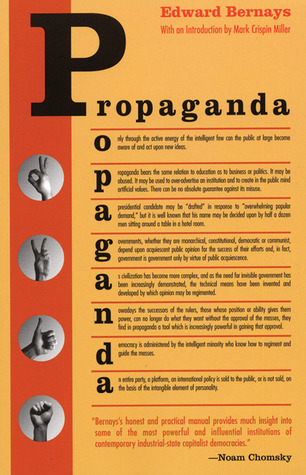
“Bernays’ honest and practical manual provides much insight into some of the most powerful and influential institutions of contemporary industrial state capitalist democracies.”— Noam Chomsky “The conscious and intelligent manipulation of the organized habits and opinions of the masses is an important element in democratic society. Those who manipulate this unseen mechanism of society constitute an invisible government which is the true ruling power of our country.”— Edward Bernays A seminal and controversial figure in the history of political thought and public relations, Edward Bernays (1891–1995), pioneered the scientific technique of shaping and manipulating public opinion, which he famously dubbed “engineering of consent.” During World War I, he was an integral part of the U.S. Committee on Public Information (CPI), a powerful propaganda apparatus that was mobilized to package, advertise and sell the war to the American people as one that would “Make the World Safe for Democracy.” The CPI would become the blueprint in which marketing strategies for future wars would be based upon. Bernays applied the techniques he had learned in the CPI and, incorporating some of the ideas of Walter Lipmann, as well as his uncle, Sigmund Freud, became an outspoken proponent of propaganda as a tool for democratic and corporate manipulation of the population. His 1928 bombshell Propaganda lays out his eerily prescient vision for using propaganda to regiment the collective mind in a variety of areas, including government, politics, art, science and education. To read this book today is to frightfully comprehend what our contemporary institutions of government and business have become in regards to organized manipulation of the masses.
1923. Bernays, regarded by many as the father of public relations, has tried to set down in this book the broad principles that govern the new profession of public relations counsel. Part I-Scope and The Scope of the Public Relations Counsel; The Public Relations Counsel; the Increased and Increasing Importance of the Profession; and The Function of a Special Pleader. Part II-The Group and the What Constitutes Public Opinion?; Is Public Opinion Stubborn or Malleable; The Interaction of Public Opinion with the Forces that Help Make It; The Power of Interacting Forces that Go to Make Up Public Opinion; An Understanding of the Fundamentals of Public Motivation is Necessary to the Work of the Public Relations Counsel; The Group and Herd are the Basic Mechanisms of Public Change; and The Application of These Principles. Part III-Technique and The Public Can Be Reached Only Through Established Mediums of Communication; The Interlapping Group Formations of Society, the Continuous Shifting of Groups, Changing Conditions and the Flexibility of Human Nature are all Aids to the Counsel on Public Relations; and An Outline of Methods Practicable in Modifying the Point of View of a Group. Part IV-Ethical A Consideration of the Press and Other Mediums of Communication in Their Relation to the Public Relations Counsel; and His Obligations to the Public as a Special Pleader. See other titles by this author available from Kessinger Publishing.

Written by publicist number one, Edward L. Bernays makes clear in this book that public relations is not publicity, press agentry, promotion, advertising, or a bag of tricks, but a continuing process of social integration. It is the field of adjusting private and public interest. This book is important to all of us because it tells us how to adjust ourselves to our publics by presenting a thorough analysis of public relations, its origin and development, its aims and responsibilities, and fixes its place in the modern world. Everyone engaged in any activity, and every student of man and society, will find in this book a challenge and opportunity to further both the public interest and his own interest.

A scientific approach to public relations.

The Edward Bernays Reader: From Propaganda to the Engineering of Consent
by Edward L. Bernays
Rating: 4.0 ⭐
Nicknamed “the father of public relations,” Edward Bernays (1891–1995) was a pioneer in the fields of propaganda and PR. Combining theories on crowd psychology with the psychoanalytical ideas of his uncle, Sigmund Freud, Bernays elucidated how corporations and politicians could manipulate public opinion. His seminal 1928 book, Propaganda laid out how propaganda could be used to regiment the collective mind in a variety of areas, including government, politics, art, science and education, while his 1923 classic, Crystallizing Public Opinion , set down the principles that business and government have used to influence public attitudes over the past century. The Edward Bernays From Propaganda to the Engineering of Consent , is the first comprehensive volume of the writings of this influential and controversial figure. In addition to featuring extended excerpts from Crystallizing Public Opinion and Propaganda , this book also includes the full text of Bernays’ classic 1947 essay, “The Engineering of Consent,” on the application of scientific principles and practices to the task of getting people to support ideas and programs, as well as extensive selections of his other writings on subjects including education, war propaganda, and polling. Taken together, the material in this book offers the most complete look to date at the work of a man whose ideas are considered the single most important influence on modern propaganda, public relations, and spin.

This scarce antiquarian book is a facsimile reprint of the original. Due to its age, it may contain imperfections such as marks, notations, marginalia and flawed pages. Because we believe this work is culturally important, we have made it available as part of our commitment for protecting, preserving, and promoting the world's literature in affordable, high quality, modern editions that are true to the original work.

Edward Bernays details his career as the father of public relations. Out-of-print.

Defines public relations and outlines opportunities in the field. Also discusses, the aptitudes and training necessary to the making of a good public relations practitioner.

Public Relations, Edward L. Bernays and the American Scene: Annotated Bibliography of and Reference Guide to Writings by and about Edward L. Bernays from 1917 to 1951
by Edward L. Bernays
Rating: 3.5 ⭐
Excerpt from Public Relations, Edward L. Bernays and the American Scene: Annotated Bibliography of and Reference Guide to Writings by and About Edward L. Bernays From 1917 to 1951Take Your Place At the Peace Table: What You Can Do to Win a Lasting United Nations Peace. N. Y: International Press, 1945. 6opp.About the PublisherForgotten Books publishes hundreds of thousands of rare and classic books. This book is a reproduction of an important historical work. Forgotten Books uses state-of-the-art technology to digitally reconstruct the work, preserving the original format whilst repairing imperfections present in the aged copy. In rare cases, an imperfection in the original, such as a blemish or missing page, may be replicated in our edition. We do, however, repair the vast majority of imperfections successfully; any imperfections that remain are intentionally left to preserve the state of such historical works.

First Line of Defense is a book written by Edward L. Bernays in 1941. The book discusses the importance of morale in times of war and how it can be used as a tool for propaganda. Bernays argues that morale is the first line of defense and that it can be used to boost the morale of soldiers and civilians alike. He also discusses the role of propaganda in shaping public opinion and how it can be used to influence morale. The book provides insights into the psychology of propaganda and how it can be used to manipulate people's perceptions and attitudes. Overall, First Line of Defense is a seminal work on the role of propaganda and morale in times of war and provides valuable insights into the psychology of persuasion.This scarce antiquarian book is a facsimile reprint of the old original and may contain some imperfections such as library marks and notations. Because we believe this work is culturally important, we have made it available as part of our commitment for protecting, preserving, and promoting the world's literature in affordable, high quality, modern editions, that are true to their original work.

Unlock the secrets of influence and persuasion with Edward Bernays' groundbreaking masterpiece, "Propaganda." As a timeless guide to the art of shaping public opinion, this book remains a cornerstone in understanding the power dynamics behind information dissemination.“Bernays’ honest and practical manual provides much insight into some of the most powerful and influential institutions of contemporary industrial state capitalist democracies.”—Noam ChomskyEver wonder how ideas take root in society? Bernays, hailed as the father of public relations, unveils the strategies and tactics that have shaped historical events and societal norms. Dive into the mind of a master manipulator as he explores the psychology of persuasion and the subtle techniques used to mold public opinion.In a world saturated with information, mastering the art of influence is essential. Bernays guides you through the intricacies of propaganda, illustrating how it has been harnessed for both good and ill throughout history. Learn the principles behind effective communication, strategic messaging, and the manipulation of collective consciousness.Discover why propaganda is not merely a tool for governments and corporations but a fundamental aspect of human interaction. Bernays challenges you to question your own perceptions and understand the mechanisms that drive decision-making on a grand scale.Key insights The Psychology of Uncover the subconscious triggers that drive human behavior and decision-making, and learn to wield them ethically.Strategic Craft compelling narratives that resonate with your audience and leave a lasting impact.Crisis Explore how propaganda can be a powerful tool in navigating and shaping public perception during times of crisis.Ethical Delve into the moral implications of influence and persuasion, and how to navigate the fine line between manipulation and genuine communication."Propaganda" is not just a book; it's a guide to understanding the underpinnings of societal influence. Whether you're a marketer, communicator, or simply a curious mind, this classic work provides invaluable insights into the art of shaping opinions and influencing the masses.Master the tools of persuasion and gain a deeper understanding of the forces that shape our world.Your journey into the realm of propaganda begins here!
Popular novel, first published in 1917.

Dive into the pioneering work of Edward Bernays, the father of public relations, with "Propaganda," a landmark publication that has shaped the field of mass communication and media studies. First published in 1928, this Edward Bernays book delves into the intricate mechanisms and ethical dilemmas of propaganda, offering insights that remain as relevant today as they were nearly a century ago."Propaganda" explores the complex interplay between public opinion, mass media, and the orchestration of public consciousness. Bernays, often referred to as the mastermind behind modern public relations strategies, presents a compelling argument about the necessity and methodology of guiding public thought in a democratic society.This book is essential reading for students and professionals in public relations, media studies, advertising, and sociology. It offers a critical look at the role of propaganda in shaping public opinion and the responsibility of those who wield it."Propaganda" by Edward Bernays is not just a book; it's a profound exploration of the human psyche and the power structures of society. It provides invaluable knowledge for understanding the dynamics of modern media and the ongoing importance of transparent and ethical communication practices.Whether you're a PR practitioner, a student of media studies, or simply intrigued by the influential power of communication, this Edward Bernays book is a must-have for your collection. Discover the roots of public relations and the timeless strategies used to shape public opinion with "Propaganda."


Propaganda, the seminal 1928 book by Edward L. Bernays, stands as a foundational text in understanding the mechanisms of public persuasion and manipulation. Bernays delves into the art and science of influencing public opinion, drawing from his extensive experience in the field of public relations. He explores the ways in which propaganda can shape perceptions, attitudes, and behaviors on a mass scale, often without individuals realizing the extent of their manipulation. Bernays not only elucidates the techniques employed in propaganda but also reflects on its ethical implications and societal consequences. Propaganda holds significance in culture as it unveils the subtle mechanisms at play in shaping public discourse and decision-making processes. It serves as a cautionary tale, urging readers to critically analyze the information they encounter and to be vigilant against manipulation in an increasingly mediated world. Moreover, the book underscores the power dynamics inherent in communication, challenging readers to consider the ethical responsibilities of those who wield such influence. A cornerstone of media studies and communication theory, Propaganda continues to provoke discourse on the nature of persuasion and the role of propaganda in shaping modern society. This Warbler Classics edition includes and afterword entitled "Freud and His Nephew" by Stewart Justman and a biographical timeline.Edward L. Bernays (1891–1995) was an American luminary in the field of public relations. He has been called variously "the father of public relations" and “the father of spin.” Bernays revolutionized the way information was disseminated and perceptions were shaped. With a keen understanding of human psychology, he crafted campaigns that not only influenced public opinion but also transformed societal norms.Stewart Justman directed the Humanities program at the University of Montana. He is the author of, among other books, Fool’s The Unreal World of Pop Psychology and Seeds of Mortality, a meditation on cancer, which received the PEN Award for the Art of the Essay. His website is stewartjustman.com.
What you can do to win a lasting United Nations Peace. America's No. 1 Publicist shows you how YOU can help to win the peace.

Propaganda: A Master Spin Doctor Convinces the World That Dogsh*t Tastes Better Than Candy
by Edward L. Bernays
Rating: 5.0 ⭐
Edward Bernays was a brilliant manipulator who taught his techniques to hundreds of force-multipliers who, in turn, unleashed the insidious practices on the world. This current volume has been revamped in a number of lightly edited for clarity, subheadings added to improve readability, paragraphs broken up into more managable reads, newly designed interior and cover. Our current volume is a remake of Bernays' original book. Our version does not include commentary on Bernays' thoughts or ideas, nor is it meant to. We have preserved this man's brilliant, if not twisted, thoughts on how to manage an entire population of subservient people, using a few provocative words and phrases that crawl under the skin of our easily programmed minds. Our hope is that this updated version of a masterpiece will be read, studied and shared by a new generation of students and casual readers. Please form your own thoughts, opinions, beliefs and hypotheses. Beyond this, our wish for you is that you use this new-found information to do some good in this world. Bernays thrust this material into our faces nearly a hundred years ago and flaunted his power over our subconscious mind. It is now our duty and responsibility to understand his methods so we may protest, if not counter entirely, any attempt to control our beautiful minds. Knowledge isn't just power. Applied correctly, it all but guarantees victory in any arena.

A seminal work on how public opinion is created and shaped, Edward Bernays's 1923 classic Crystallizing Public Opinion set down the principles that corporations and government have used to influence public attitudes over the past century.A primer on the then new profession of "public relations counsel," Crystallizing elucidates the "instruments and techniques" that PR professionals use to mold public opinion on behalf of their client's interests. By adapting the ideas that Bernays put forth, governments and advertisers have been able to "regiment the mind like the military regiments the body."This edition also includes Bernay's classic 1947 essay, The Engineering of Consent, on the the application of scientific principles and tried practices to the task of getting people to support ideas and programs, as well as selections of Bernays's other writings on education, war propaganda, and polling.


INFORMATIVE BOOK

Edward Louis Bernays (November 22, 1891 - March 9, 1995) was an American pioneer in the field of public relations and propaganda. A nephew of Sigmund Freud, Bernays touted the idea that "The conscious and intelligent manipulation of the organized habits and opinions of the masses is an important element in democratic society." His books include Crystallizing Public Opinion (1923), Propaganda (1928), Public Relations (1945) and The Engineering of Consent (1955). The following recording was made in 1986.


" LE manuel classique de l'industrie des relations publiques " selon Noam Chomsky. Véritable petit guide pratique écrit en 1928 par le neveu américain de Sigmund Freud, ce livre expose cyniquement et sans détour les grands principes de la manipulation mentale de masse ou de ce que Bernays appelait la " fabrique du consentement ".Comment imposer une nouvelle marque de lessive ? Comment faire élire un président ? Dans la logique des " démocraties de marché ", ces questions se confondent.Bernays assume pleinement ce constat : les choix des masses étant déterminants, ceux qui parviendront à les influencer détiendront réellement le pouvoir. La démocratie moderne implique une nouvelle forme de gouvernement, invisible : la propagande. Loin d'en faire la critique, l'auteur se propose d'en perfectionner et d'en systématiser les techniques, à partir des acquis de la psychanalyse.Un document édifiant où l'on apprend que la propagande politique au XXe siècle n'est pas née dans les régimes totalitaires, mais au coeur même de la démocratie libérale américaine.
![Your future in public relations. 1961 [Leather Bound]](https://m.media-amazon.com/images/S/compressed.photo.goodreads.com/books/1699787830i/150163481.jpg)
Your future in public relations. 1961 [Leather Bound]
by Edward L. Bernays
Leather Binding on Spine and Corners with Golden Leaf Printing on round Spine (extra customization on request like complete leather, Golden Screen printing in Front, Color Leather, Colored book etc.) Reprinted in 2022 with the help of original edition published long back [1961]. This book is printed in black & white, sewing binding for longer life, Printed on high quality Paper, re-sized as per Current standards, professionally processed without changing its contents. As these are old books, we processed each page manually and make them readable but in some cases some pages which are blur or missing or black spots. If it is multi volume set, then it is only single volume, if you wish to order a specific or all the volumes you may contact us. We expect that you will understand our compulsion in these books. We found this book important for the readers who want to know more about our old treasure so we brought it back to the shelves. Hope you will like it and give your comments and suggestions. - English, Pages 168. EXTRA 10 DAYS APART FROM THE NORMAL SHIPPING PERIOD WILL BE REQUIRED FOR LEATHER BOUND BOOKS. COMPLETE LEATHER WILL COST YOU EXTRA US$ 25 APART FROM THE LEATHER BOUND BOOKS. {FOLIO EDITION IS ALSO AVAILABLE.} Complete Your future in public relations. 1961 Bernays, Edward L., -

Propaganda
by Edward L. Bernays
“Bernays’ honest and practical manual provides much insight into some of the most powerful and influential institutions of contemporary industrial state capitalist democracies.”—Noam Chomsky “The conscious and intelligent manipulation of the organized habits and opinions of the masses is an important element in democratic society. Those who manipulate this unseen mechanism of society constitute an invisible government which is the true ruling power of our country.”—Edward Bernays
![Crystallizing Public Opinion [Leatherbound] (1923) [Leather Bound]](https://m.media-amazon.com/images/S/compressed.photo.goodreads.com/books/1696833477i/143380104.jpg)
Crystallizing Public Opinion [Leatherbound] (1923) [Leather Bound]
by Edward L. Bernays
Leather Binding on Spine and Corners with Golden leaf printing on spine. This book is printed in black & white, Sewing binding for longer life, where the book block is actually sewn (smythe sewn/section sewn) with thread before binding which results in a more durable type of binding. Reprinted in 2022 with the help of original edition published long back. As this book is reprinted from a very old book, there could be some missing or flawed pages. If it is multi volume set, then it is only single volume. Resized as per current standards. We expect that you will understand our compulsion with such books.

Biography of an Idea: Memoirs of Public Relations Counsel Edward L. Bernays *ABRIDGED AUDIOBOOK COMPLETE IN TWO TAPES WITH CASE*
by Edward L. Bernays
Abridged Audiobook Cassette recording of Biography of an Memoirs of Public Relations Counsel Edward L. Bernays
Crystallizing Public Opinion
by Edward L. Bernays
This copy is rare as a result of the fact that it comes with a letter from the author to the former owner -- Elbridge Colby of the US Army (Elbridge Colby was the father of former CIA director William Colby). The typed and signed letter -- on Bernays' personal stationary -- is pasted to the rear board. It is dated 3/16/1925, and was sent by Bernays to Colby at the "War Department". Bernays is famous for being the "father of public relations" -- i.e. propaganda -- and this scarce book (1st ed.) was his first on the topic. As many famous histories of 20th Century Public Relations have pointed out, Bernays was Sigmund Freud's nephew. Elbridge Colby's bookplate is pasted on inside front board. He also signed the front board as well. The boards are tanned from newspaper articles that Colby kept there.