
Stephen A. Mitchell
22 Books Written

Can Love Last?: The Fate of Romance over Time
by Stephen A. Mitchell
Rating: 3.9 ⭐
• 4 recommendations ❤️
Common wisdom has it that love is fragile, but leading psychoanalyst Stephen A. Mitchell argues that romance doesn't actually diminish in long-term relationships—it becomes increasingly dangerous. What we regard as the transience of love is really risk management. Mitchell shows that love can endure, if only we become aware of our self-destructive efforts to protect ourselves from its risks. "Those who read this book will love more wisely because of it."—Andrew Solomon, author of The Noonday Demon "[A] work on romance that is rich and multi-layered."—Publishers Weekly "Cheerful, open, and humane—you'd definitely have wanted him as your analyst."—Judith Shulevitz, The New York Times Book Review "[T]houghtful, compassionate, and profoundly optimistic."—JoAnn Gutin, Salon.com

Freud's concepts have become a part of our psychological unconscious thoughts and feelings, conflict, the meaning of dreams, the sensuality of childhood. But psychoanalytic thinking has undergone an enormous expansion and transformation over the past fifty years. With Freud and Beyond, Stephen A. Mitchell and Margaret J. Black make contemporary psychoanalytic thinking—the body of work that has been done since Freud—available for the first time. Richly illustrated with case examples, this lively, jargon-free introduction makes modern psychoanalytic thought accessible at last.
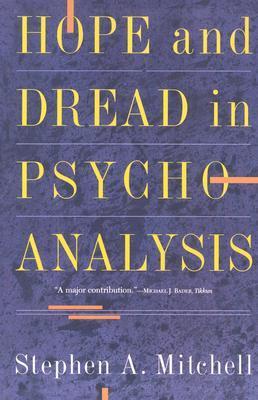
The love affair that psychoanalysis has had with its own founder has obscured just how different the field is today from what it was a century ago, when Freud was writing. Now Stephen A. Mitchell, a central figure in the modernization of psychoanlalysis, shows how the field is moving beyond the confines of Freudian drive theory to encompass the concerns of contemporary life.
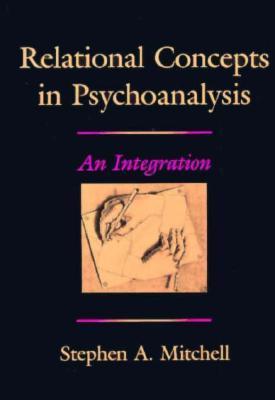
There are more psychoanalytic theories today than anyone knows what to do with, and the heterogeneity and complexity of the entire body of psychoanalytic though have become staggering. In Relational Concepts in Psychoanalysis , Stephen A. Mitchell weaves strands from the principal relational-model traditions (interpersonal psychoanalysis, British school object-relations theories, self psychology, and existential psychoanalysis) into a comprehensive approach to many of the knottiest problems and controversies in theoretical and clinical psychoanalysis.Mitchell’s earlier book, Object Relations in Psychoanalytic Theory , co-authored with Jay Greenberg, set the stage for this current integration by providing a broad comparative analysis of important thinking on the nature of human relationships. In that classic study Greenberg and Mitchell distinguished between two basic paradigms: the drive model, in which relations with others are generated and shaped by the need for drive gratifications, and various relational models, in which relations themselves are taken as primary and irreducible. In Relational Concepts in Psychoanalysis , Mitchell argues that the drive model has since outlived its usefulness. The relational model, on the other hand, has been developed piecemeal by different authors who rarely acknowledge and explore the commonality of their assumptions or the rich complementarity of their perspectives.In this bold effort at integrative theorizing, Mitchell draws together major lines of relational-model traditions into a unified framework for psychoanalytic thought, more economical than the anachronistic drive model and more inclusive than any of the singular relational approaches to the core significance of sexuality, the impact of early experience, the relation of the past to the present, the interpenetration of illusion and actuality, the centrality of the will, the repetition of painful experience, the nature of analytic situation, and the process of analytic change. As such, his book will be required reading for psychoanalytic scholars, practitioners, candidates in psychoanalysis, and students in the field.

In his final contribution to the psychoanalytic literature published two months before his untimely death on December 21, 2000, the late Stephen A. Mitchell provided a brilliant synthesis of the interrelated ideas that hover around, and describe aspects of, the relational matrix of human experience. Relationality charts the emergence of the relational perspective in psychoanalysis by reviewing the contributions of Loewald, Fairbairn, Bowlby, and Sullivan, whose voices converge in apprehending the fundamental relationality of mind. Mitchell draws on the multiple dimensions of attachment, intersubjectivity, and systems theory in espousing a clinical approach equally notable for its responsiveness andresponsible restraint. Relationality "signals a new height in Mitchell's always illuminating writing" (Nancy Chodorow) and marks the "coming of age" of the relational perspective in psychoanalysis (Peter Fonagy).

Stephen A. Mitchell has been at the forefront of the broad paradigmatic shift in contemporary psychoanalysis from the traditional one-person model to a two-person, interactive, relational perspective. In Influence and Autonomy in Psychoanalysis , Mitchell provides a critical, comparative framework for exploring the broad array of concepts newly developed for understanding interactive processes between analysand and analyst. Drawing on the broad traditions of Kleinian theory and interpersonal psychoanalysis, as well as object relations and progressive Freudian thought, he considers in depth the therapeutic action of psychoanalysis, anachronistic ideals like anonymity and neutrality, the nature of analytic knowledge and authority, and the problems of gender and sexual orientation in the age of postmodernism. The problem of influence guides his discussion of these and other topics. How, Mitchell asks, can analytic clinicians best protect the patient's autonomy and integrity in the context of our growing appreciation of the enormous personal impact of the analyst on the process? Although Mitchell explores many facets of the complexity of the psychoanalytic process, he presents his ideas in his customarily lucid, jargon-free style, making this book appealing not only to clinicians with various backgrounds and degrees of experience, but also to lay readers interested in the achievements of, and challenges before, contemporary psychoanalysis. A splendid effort to relate parallel lines of theorizing and derivative changes in clinical practice and informed by mature clinical judgment and broad scholarship into the history of psychoanalytic ideas


The Essentials of Teaching Physical Education: Curriculum, Instruction, and Assessment
by Stephen A. Mitchell
Rating: 4.0 ⭐
The Essentials of Teaching Physical Education, Second Edition, offers what every future physical educator the opportunity to hit the ground running on day one of their career, ready to deliver an effective program.In this new edition, future K-12 physical educators will find an accessible and effective approach to delivering vital content to students. The book takes a standards-based approach that is fully integrated with SHAPE America assessments, and its teaching for learning approach to curriculum development takes the guesswork out of translating the text’s information into action.The Essentials of Teaching Physical Education is fully updated from its successful first edition and is augmented by new material. A new chapter on social-emotional learning and trauma-informed practices helps prepare readers in areas that are crucial in today’s educational landscape. A new special element, Critical Perspective on Teaching and Learning, helps future and current teachers understand the importance of critical analysis and equity issues in all aspects of teaching and learning, including the learning context, the student body, the curriculum, and what and how content is taught. This new edition also features expanded instructor ancillaries.This comprehensive text covers what future teachers need to know about teaching K-12 physical education, offering a flexible, individualized approach to enhance student learning and acquisition of skills. As readers work their way through the text, they can acquire the To assist students using the text, the second edition of The Essentials of Teaching Physical Education has related online learning activities delivered through HK Propel . This includes supplemental activities for each chapter and key figures from the text.With advice, tips, and success stories from top physical educators, The Essentials of Teaching Physical Education offers readers an inside look at how to motivate students while focusing on what teachers really need to know to succeed. It delivers practical and essential information and guidance on the most relevant topics for today’s physical educators, including physical literacy, accountability, social justice, social-emotional learning, and trauma-informed practices. Everything a physical educator needs to know to succeed is found here, delivered in a straightforward and highly readable manner. A code for accessing HK Propel is included with all new print books.

Old Norse Folklore: Tradition, Innovation, and Performance in Medieval Scandinavia
by Stephen A. Mitchell
Rating: 2.0 ⭐
The medieval northern world consisted of a vast and culturally diverse region both geographically, from roughly Greenland to Novgorod and culturally, as one of the last areas of Europe to be converted to Christianity. Old Norse Folklore explores the complexities of this fascinating world in case studies and theoretical essays that connect orality and performance theory to memory studies, and myths relating to pre-Christian Nordic religion to innovations within late medieval pilgrimage song culture.Old Norse Folklore provides critical new perspectives on the Old Norse world, some of which appear in this volume for the first time in English. Stephen A. Mitchell presents emerging methodologies by analyzing Old Norse materials to offer a better understandings ofunderstanding of Old Norse materials. He examines, interprets, and re-interprets the medieval data bequeathed to us by posterity—myths, legends, riddles, charms, court culture, conversion narratives, landscapes, and mindscapes—targeting largely overlooked, yet important sources of cultural insights.

INFLUENZA E AUTONOMIA IN PSICOANALISI
by Stephen A. Mitchell

Old Norse Folklore: Magic, Witchcraft, and Charms in Medieval Scandinavia
by Stephen A. Mitchell

Old Norse Folklore: Magic, Witchcraft, and Charms in Medieval Scandinavia
by Stephen A. Mitchell
The Essentials of Teaching Physical Education: Curriculum, Instruction, and Assessment
by Stephen A. Mitchell
The Essentials of Teaching Physical Curriculum, Instruction, and Assessment Professionally spiraled and resold by a third party. Seller is not otherwise affiliated with Human Kinetics and is solely responsible for the quality of the rebinding of this book.

THE ESSENTIALS OF TEACHING PHYSICAL EDUCATION
by Stephen A. Mitchell
THE ESSENTIALS OF TEACHING PHYSICAL EDUCATION (PB). Professionally spiraled and resold by a third party. This spiraled book is not necessarily affiliated with, endorsed by, or authorized by the publisher, distributor, or author.
Thomas A. DuBois. Nordic Religions in the Viking Age.(Book Review): An article from: Scandinavian Studies
by Stephen A. Mitchell
This digital document is an article from Scandinavian Studies, published by Society for the Advancement of Scandinavian Study on March 22, 2003. The length of the article is 532 words. The page length shown above is based on a typical 300-word page. The article is delivered in HTML format and is available in your Amazon.com Digital Locker immediately after purchase. You can view it with any web browser.Citation Details Thomas A. DuBois. Nordic Religions in the Viking Age.(Book Review) Stephen A. Mitchell Scandinavian Studies (Refereed) March 22, 2003 Society for the Advancement of Scandinavian Study 75 1 113(2)Article Book ReviewDistributed by Thomson Gale
PSYCHOANALYTIC DIALOGUES A journal of relational perspectives
by Stephen A. Mitchell

Psychoanalyse als Dialog
by Stephen A. Mitchell
Stephen A. Mitchells Werk ist eine glänzende Synthese zahlreicher Ansätze, die die Psychoanalyse unserer Zeit transformiert haben. Aufbauend auf der kleinianischen Theorie, der Interpersonalen Psychoanalyse sowie progressiven freudianischen Ansätzen beschäftigt er sich eingehend mit den verschiedenen Aspekten therapeutischen von Anonymität und Neutralität über das Wesen analytischen Wissens bis zu Autorität. Er erläutert eine Vielzahl unterschiedlicher Arten, über die interaktive Natur der analytischen Situation nachzudenken, und regt zur weiteren Reflexion an. So wird ein umfassendes Verständnis der interaktiven Prozesse zwischen Analysand*in und Analytiker*in ermöglicht.

Relational Concepts in Psychoanalysis: An Integration
by Stephen A. Mitchell
In Relational Concepts in Psychoanalysis, Stephen A. Mitchell weaves strands from the principal relational-model traditions (interpersonal psychoanalysis, British school object-relations theories, self psychology, and existential psychoanalysis) into a comprehensive approach to many of the knottiest problems and controversies in theoretical and clinical psychoanalysis. In this bold effort at integrative theorizing, Mitchell draws together major lines of relational-model traditions into a unified framework for psychoanalytic thought, more economical than the anachronistic drive model and more inclusive than any of the singular relational approaches to the core significance of sexuality, the impact of early experience, the relation of the past to the present, the interpenetration of illusion and actuality, the centrality of the will, the repetition of painful experience, the nature of analytic situation, and the process of analytic change. As such, his book will be required reading for psychoanalytic scholars, practitioners, candidates in psychoanalysis, and students in the field.

Bindung und Beziehung.
by Stephen A. Mitchell
Ausgehend von der Objektbeziehungstheorie Fairbairns, der Bindungstheorie Bowlbys sowie den Arbeiten Loewalds und Sullivans bricht Stephen Mitchell in eine neue Ära der psychoanalytischen Betrachtung intersubjektiver Beziehungen auf. Dabei gelingt ihm nicht nur eine kritische Synthese der Verbindungselemente einzelner relevanter Ansätze innerhalb der Psychoanalyse, sondern auch deren Weiterentwicklung mittels eigener theoretischer Überlegungen. In lebendiger und mitreißender Sprache nimmt Mitchell seine Leser*innen auf eine Reise durch das Labyrinth der intersubjektiven und objektbeziehungstheoretischen Modelle der Psychoanalyse mit, die – untermalt von Vignetten aus der klinischen Praxis – vor brillanten Ideen sprüht.

Influencia y autonomía en el psicoanálisis
by Stephen A. Mitchell
Se explora en profundidad la acción terapéutica que promueve la psicoterapia psicoanalítica, con amplia ilustración clínica,

Teaching Sport Concepts and Skills: A Tactical Games Approach
by Stephen A. Mitchell
This worldwide top-selling text on the tactical games approach is stronger than ever. The fourth edition of Teaching Sport Concepts and A Tactical Games Approach adds four new chapters, more lesson and unit plans, and more detailed guidance in addressing broad ranges of student abilities than ever before. It offers the same stellar foundation for understanding the principles behind the approach, and instruction in applying the approach, to help students learn the concepts and develop the skills involved in a variety of sports. Elementary school teachers will use games to teach the basic concepts and tactics of invasion sports, net and wall sports, striking and fielding sports, and target sports. Middle school and high school instructors will guide students in developing sport-specific technical skills for 12 sports, including soccer, lacrosse, flag football, tennis, basketball, and volleyball. The book has four new chapters that will help you do the Align the tactical games approach to content standards in the United States and other countriesUse technology in tactical games teaching and assessmentUse the games to teach social justiceDevelop approaches to teaching social and emotional learning (SEL) through tactical gamesTeaching Sport Concepts and Skills offers more than 350 detailed lesson and unit plans that can be used as is or be easily modified and incorporated into an existing curriculum. More than 240 diagrams throughout the lessons make it easy to set up and execute the games. There are 14 video clips, delivered on HKPropel, that show some lessons in action—for example, the volleyball segments show complete question-and-answer sessions, highlighting an effective way to make sure students are understanding the lesson. Also available on HKPropel are reproducible forms, including a team contract, assessments, and game scenario worksheets for tactical problem solving. (For each thumbnail reproducible worksheet shown in the book, readers can download the full-size versions from HKPropel.) These resources will help teachers put concepts from the text into use with their students.Teaching Sport Concepts and Skills is organized into three Part I offers a thorough understanding of the tactical games approach—preparing and teaching students, transferring tactical knowledge, planning the curriculum, assessing learner performance, using games to teach social justice and to take social emotional learning into account, and more.Part II provides lesson plans for varying levels of complexity—with modifications and progressions—for invasion games, net and wall games, striking and fielding games, and target games, all at the elementary school level. The authors take great care in helping readers understand how to individualize instruction for novice, developing, and advanced performers by either reducing or increasing the challenges involved with the tasks.In part III, secondary-level teachers can choose from lesson plans for various levels of play in 12 sports.Teaching Sport Concepts and Skills offers expert instruction and an array of multilevel games that provide an exciting and interactive environment for learning in all domains. Current and future teachers will learn how to structure positive and engaging learning experiences that set the stage for students to improve their performance, develop problem-solving skills, and enhance their lifelong enjoyment of sport.

Teaching Sport Concepts and Skills: A Tactical Games Approach
by Stephen A. Mitchell
This worldwide top-selling text on the tactical games approach is stronger than ever. The fourth edition of Teaching Sport Concepts and A Tactical Games Approach adds four new chapters, more lesson and unit plans, and more detailed guidance in addressing broad ranges of student abilities than ever before. It offers the same stellar foundation for understanding the principles behind the approach, and instruction in applying the approach, to help students learn the concepts and develop the skills involved in a variety of sports. Elementary school teachers will use games to teach the basic concepts and tactics of invasion sports, net and wall sports, striking and fielding sports, and target sports. Middle school and high school instructors will guide students in developing sport-specific technical skills for 12 sports, including soccer, lacrosse, flag football, tennis, basketball, and volleyball. The book has four new chapters that will help you do the Align the tactical games approach to content standards in the United States and other countriesUse technology in tactical games teaching and assessmentUse the games to teach social justiceDevelop approaches to teaching social and emotional learning (SEL) through tactical gamesTeaching Sport Concepts and Skills offers more than 350 detailed lesson and unit plans that can be used as is or be easily modified and incorporated into an existing curriculum. More than 240 diagrams throughout the lessons make it easy to set up and execute the games. There are 14 video clips, delivered on HKPropel, that show some lessons in action—for example, the volleyball segments show complete question-and-answer sessions, highlighting an effective way to make sure students are understanding the lesson. Also available on HKPropel are reproducible forms, including a team contract, assessments, and game scenario worksheets for tactical problem solving. (For each thumbnail reproducible worksheet shown in the book, readers can download the full-size versions from HKPropel.) These resources will help teachers put concepts from the text into use with their students.Teaching Sport Concepts and Skills is organized into three Part I offers a thorough understanding of the tactical games approach—preparing and teaching students, transferring tactical knowledge, planning the curriculum, assessing learner performance, using games to teach social justice and to take social emotional learning into account, and more.Part II provides lesson plans for varying levels of complexity—with modifications and progressions—for invasion games, net and wall games, striking and fielding games, and target games, all at the elementary school level. The authors take great care in helping readers understand how to individualize instruction for novice, developing, and advanced performers by either reducing or increasing the challenges involved with the tasks.In part III, secondary-level teachers can choose from lesson plans for various levels of play in 12 sports.Teaching Sport Concepts and Skills offers expert instruction and an array of multilevel games that provide an exciting and interactive environment for learning in all domains. Current and future teachers will learn how to structure positive and engaging learning experiences that set the stage for students to improve their performance, develop problem-solving skills, and enhance their lifelong enjoyment of sport.