Loading genres...
Explore the best books about Africa genre.


During the spring of 1994, in a tiny country called Rwanda, some 800,000 people were hacked to death, one by one, by their neighbors in a gruesome civil war. Several years later, journalist Jean Hatzfeld traveled to Rwanda to interview ten participants in the killings, eliciting extraordinary testimony from these men about the genocide they perpetrated. As Susan Sontag wrote in the preface, Machete Season is a document that "everyone should read . . . [because making] the effort to understand what happened in Rwanda . . . is part of being a moral adult."

With an introduction by Rory Stewart Winner of the Guardian First Book award, a first-hand account one of the defining outrages of modern history. All at once, as it seemed, something we could have only imagined was upon us - and we could still only imagine it. This is what fascinates me most in existence: the peculiar necessity of imagining what is, in fact, real. In 1994, the Rwandan government orchestrated a campaign of extermination, in which everyone in the Hutu majority was called upon to murder everyone in the Tutsi minority. Close to a million people were slaughtered in a hundred days, and the rest of the world did nothing to stop it. A year later, Philip Gourevitch went to Rwanda to investigate the most unambiguous genocide since Hitler's war against the Jews. Hailed by the Guardian as one of the hundred greatest nonfiction books of all time, We Wish To Inform You That Tomorrow We Will Be Killed With Our Families is a first-hand account one of the defining outrages of modern history, an unforgettable anatomy of Rwanda's decimation. As riveting as it is moving, it is a profound reckoning with humanity's betrayal and its perseverance.

A highly infectious, deadly virus from the central African rain forest suddenly appears in the suburbs of Washington, D.C. There is no cure. In a few days 90 percent of its victims are dead. A secret military SWAT team of soldiers and scientists is mobilized to stop the outbreak of this exotic "hot" virus. The Hot Zone tells this dramatic story, giving a hair-raising account of the appearance of rare and lethal viruses and their "crashes" into the human race. Shocking, frightening, and impossible to ignore, The Hot Zone proves that truth really is scarier than fiction.

Note: This book was originally published as Not a Hazardous Sport. When British anthropologist Nigel Barley set up home among the Dowayo people in northern Cameroon, he knew how fieldwork should be conducted. Unfortunately, nobody had told the Dowayo. His compulsive, witty account of first fieldwork offers a wonderfully inspiring introduction to the real life of a cultural anthropologist doing research in a Third World area. Both touching and hilarious, Barley's unconventional story—in which he survived boredom, hostility, disaster, and illness—addresses many critical issues in anthropology and in fieldwork.

On October 3, 1993, about a hundred U.S. soldiers were dropped by helicopter into a teeming market in the heart of Mogadishu, Somalia, to abduct two top lieutenants of a Somali warlord. The action was supposed to take an hour. Instead, they spent a long and terrible night fighting thousands of armed Somalis. By morning, eighteen Americans were dead, and more than seventy badly injured. Mark Bowden's gripping narrative is one of the most exciting accounts of modern war ever written--a riveting story that captures the heroism, courage and brutality of battle.

One of today’s most admired and controversial political figures, Ayaan Hirsi Ali burst into international headlines following the murder of Theo van Gogh by an Islamist who threatened that she would be next. She made headlines again when she was stripped of her citizenship and resigned from the Dutch Parliament.Infidel shows the coming of age of this distinguished political superstar and champion of free speech as well as the development of her beliefs, iron will, and extraordinary determination to fight injustice. Raised in a strict Muslim family, Hirsi Ali survived civil war, female mutilation, brutal beatings, adolescence as a devout believer during the rise of the Muslim Brotherhood, and life in four troubled, unstable countries ruled largely by despots. She escaped from a forced marriage and sought asylum in the Netherlands, where she earned a college degree in political science, tried to help her tragically depressed sister adjust to the West, and fought for the rights of Muslim women and the reform of Islam as a member of Parliament. Under constant threat, demonized by reactionary Islamists and politicians, disowned by her father, and expelled from family and clan, she refuses to be silenced.Ultimately a celebration of triumph over adversity, Hirsi Ali’s story tells how a bright little girl evolves out of dutiful obedience to become an outspoken, pioneering freedom fighter. As Western governments struggle to balance democratic ideals with religious pressures, no other book could be more timely or more significant.

NEW YORK TIMES BESTSELLER • “A visionary book . . . devoted to providing opportunity to poor people in all countries in an interconnected world.”—Deepak Chopra“An inspiring book by a remarkable woman.”— People It all started with the blue sweater, the one my uncle Ed gave me. . . . The blue sweater had made a complex journey, from my closet in Alexandria, Virginia, to a young child in Kigali, the capital of Rwanda. . . . The story of the blue sweater has always reminded me of how we are all connected. Our actions—and inaction—touch people we may never know and never meet across the globe.Jacqueline Novogratz left a career in international banking to spend her life on a quest to understand global poverty and find powerful new ways of tackling it. From her first stumbling efforts as a young idealist venturing forth in Africa to the creation of the trailblazing organization she runs today, Novogratz tells gripping stories with unforgettable characters. She shows how traditional charity often fails, but how a new form of philanthropic investing called “patient capital” can help make people self-sufficient and can change millions of lives. More than just an autobiography or a how-to guide to addressing poverty, The Blue Sweate r is a call to action that challenges us to grant dignity to the poor and to rethink our engagement with the world. Jacqueline will donate her paperback royalties to Acumen Fund and other organizations fighting for social change.

A heartbreaking literary masterwork about love, family, and the power of imagination, which confirms Mengestu's reputation as one of the brightest talents of his generation.Dinaw Mengestu's first novel, The Beautiful Things That Heaven Bears, earned the young writer comparisons to Bellow, Fitzgerald, and Naipaul, and garnered ecstatic critical praise and awards around the world for its haunting depiction of the immigrant experience. Now Mengestu enriches the themes that defined his debut with a heartbreaking literary masterwork about love, family, and the power of imagination, which confirms his reputation as one of the brightest talents of his generation. One early September afternoon, Yosef and Mariam, young Ethiopian immigrants who have spent all but their first year of marriage apart, set off on a road trip from their new home in Peoria, Illinois, to Nashville, Tennessee, in search of a new identity as an American couple. Soon, their son, Jonas, will be born in Illinois. Thirty years later, Yosef has died, and Jonas needs to make sense of the volatile generational and cultural ties that have forged him. How can he envision his future without knowing what has come before? Leaving behind his marriage and job in New York, Jonas sets out to retrace his mother and father's trip and weave together a family history that will take him from the war-torn Ethiopia of his parents' youth to his life in the America of today, a story - real or invented - that holds the possibility of reconciliation and redemption.

Ifemelu and Obinze are young and in love when they depart military-ruled Nigeria for the West. Beautiful, self-assured Ifemelu heads for America, where despite her academic success, she is forced to grapple with what it means to be black for the first time. Quiet, thoughtful Obinze had hoped to join her, but with post-9/11 America closed to him, he instead plunges into a dangerous, undocumented life in London. Fifteen years later, they reunite in a newly democratic Nigeria, and reignite their passion—for each other and for their homeland.

In However Long the Night, Aimee Molloy tells the unlikely and inspiring story of Molly Melching, an American woman whose experience as an exchange student in Senegal led her to found Tostan and dedicate almost four decades of her life to the girls and women of Africa.This moving biography details Melching's beginnings at the University of Dakar and follows her journey of 40 years in Africa, where she became a social entrepreneur and one of humanity's strongest voices for the rights of girls and women.Inspirational and beautifully written, However Long the Night: Molly Melching's Journey to Help Millions of African Women and Girls Triumph is a passionate entreaty for all global citizens. This book is published in partnership with the Skoll Foundation, dedicated to accelerating innovations from organizations like Tostan that address the world's most pressing problems.

Jende Jonga, a Cameroonian immigrant living in Harlem, has come to the United States to provide a better life for himself, his wife, Neni, and their six-year-old son. In the fall of 2007, Jende can hardly believe his luck when he lands a job as a chauffeur for Clark Edwards, a senior executive at Lehman Brothers. Clark demands punctuality, discretion, and loyalty—and Jende is eager to please. Clark’s wife, Cindy, even offers Neni temporary work at the Edwardses’ summer home in the Hamptons. With these opportunities, Jende and Neni can at last gain a foothold in America and imagine a brighter future. However, the world of great power and privilege conceals troubling secrets, and soon Jende and Neni notice cracks in their employers’ façades. When the financial world is rocked by the collapse of Lehman Brothers, the Jongas are desperate to keep Jende’s job—even as their marriage threatens to fall apart. As all four lives are dramatically upended, Jende and Neni are forced to make an impossible choice.

Arrested in 1962 as South Africa's apartheid regime intensified its brutal campaign against political opponents, forty-four-year-old lawyer and African National Congress activist Nelson Mandela had no idea that he would spend the next twenty-seven years in jail. During his 10,052 days of incarceration, the future leader of South Africa wrote a multitude of letters to unyielding prison authorities, fellow activists, government officials, and, most memorably, to his courageous wife, Winnie, and his five children. Now, 255 of these letters, many of which have never been published, provide exceptional insight into how Mandela maintained his inner spirits while living in almost complete isolation, and how he engaged with an outside world that became increasingly outraged by his plight. Organized chronologically and divided by the four venues in which he was held as a sentenced prisoner, The Prison Letters of Nelson Mandela begins in Pretoria Local Prison, where Mandela was held following his 1962 trial. In 1964, Mandela was taken to Robben Island Prison, where a stark existence was lightened only by visits and letters from family. After eighteen years, Mandela was transferred to Pollsmoor Prison, a large complex outside of Cape Town with beds and better food, but where he and four of his comrades were confined to a rooftop cell, apart from the rest of the prison population. Finally, Mandela was taken to Victor Verster Prison in 1988, where he was held until his release on February 11, 1990. With accompanying facsimiles of some of his actual letters, this landmark volume reveals how Mandela, a lawyer by training, advocated for prisoners' human rights. It reveals him to be a loving father, who wrote to his daughter, "I sometimes wish science could invent miracles and make my daughter get her missing birthday cards and have the pleasure of knowing that her Pa loves her," aware that photos and letters he sent had simply disappeared. More painful still are the letters written in 1969, when Mandela—forbidden from attending the funerals of his mother and his son Thembi—was reduced to consoling family members through correspondence. Yet, what emerges most powerfully is Mandela's unfaltering optimism: "Honour belongs to those who never forsake the truth even when things seem dark grim, who try over and over again, who are never discouraged by insults, humiliation even defeat." Whether providing unwavering support to his also-imprisoned wife or outlining a human-rights philosophy that resonates today, The Prison Letters of Nelson Mandela reveals the heroism of a man who refused to compromise his moral values in the face of extraordinary punishment. Ultimately, these letters position Mandela as one of the most inspiring figures of the twentieth century. From The Prison Letters of Nelson Mandela: "A new world will be won not by those who stand at a distance with their arms folded, but by those who are in the arena, whose garments are torn by storms whose bodies are maimed in the course of contest." "I am convinced that floods of personal disaster can never drown a determined revolutionary nor can the cumulus of misery that accompanies tragedy suffocate him." "My respect for human beings is based, not on the colour of a man's skin nor authority he may wield, but purely on merit." "A good pen can also remind us of the happiest moments in our lives, bring noble ideas into our dens, our blood our souls. It can turn tragedy into hope victory."

The distinguished explorer and writer recounts his rediscovery of the Bushmen, outcast survivors from Stone Age Africa. Faced with constant attack from all the peoples who followed them, the last of the Bushmen have retreated to the scorching depths of the Kalahari Desert in southern Africa. After a gruelling trek, van der Post finds the Bushmen, thriving in one of the world’s most inhospitable landscapes, with their physical peculiarities, their cave art and their joyful music-making intact.

Nous sommes en Afrique Equatoriale Française (A.E.F., aujourd'hui le Tchad), dans les années cinquante, alors qu'apparaissent timidement les premiers signes avant-coureurs de la décolonisation et que l'administration française vit ses dernières heures de tranquillité. Une tranquillité qui serait parfaite sans l'agitation suscitée par un dénommé Morel et son acharnement à protéger les éléphants, massacrés par milliers pour l'ivoire de leurs défenses, et sous couvert d'éviter les dégradations qu'ils causent aux plantations...

Naguib Mahfouz’s magnificent epic trilogy of colonial Egypt appears here in one volume for the first time. The Nobel Prize-winning writer's masterwork is the engrossing story of a Muslim family in Cairo during Britain's occupation of Egypt in the early decades of the twentieth century.The novels of The Cairo Trilogy trace three generations of the family of tyrannical patriarch Al-Sayyid Ahmad Abd al-Jawad, who rules his household with a strict hand while living a secret life of self-indulgence. Palace Walk introduces us to his gentle, oppressed wife, Amina, his cloistered daughters, Aisha and Khadija, and his three sons–the tragic and idealistic Fahmy, the dissolute hedonist Yasin, and the soul-searching intellectual Kamal. Al-Sayyid Ahmad’s rebellious children struggle to move beyond his domination in Palace of Desire, as the world around them opens to the currents of modernity and political and domestic turmoil brought by the 1920s. Sugar Street brings Mahfouz’s vivid tapestry of an evolving Egypt to a dramatic climax as the aging patriarch sees one grandson become a Communist, one a Muslim fundamentalist, and one the lover of a powerful politician.Throughout the trilogy, the family's trials mirror those of their turbulent country during the years spanning the two World Wars, as change comes to a society that has resisted it for centuries. Filled with compelling drama, earthy humor, and remarkable insight, The Cairo Trilogy is the achievement of a master storyteller.

In the early 1990s three young people attracted to the ambitious global peacekeeping work of the UN cross paths in Cambodia. Andrew strives for a better world through his life-saving work as a doctor. Heidi, a social worker, is in need of a challenge and a paycheck, and Ken is fresh from Harvard and brimful of idealism. As their stories interweave through the years, from Rwanda, Bosnia and Somalia to Haiti, the trio reveal a world of witnessed atrocities, primal fear, desperate loneliness and base desires. They fend off terror and futility with revelry, humour and sex; ask hard questions about the world order America has created, the true power of the UN, and whether there is any possibility for change. This is a startling celebration of the power of humour and friendship, of the limits of human compassion, and the need for a warm body and a cold beer during a Condition Echo lockdown. A book that shows the human cost of global politics and the tragic truth that wars are much more avoidable than our governments would ever admit. A brilliant, provocatively funny and fast moving book.

A Commonwealth Prize–winning novel of “intense power . . . examining the role of women in modern African society” by the acclaimed Ghanaian author ( Publishers Weekly ).Living in Ghana’s capital city of Accra with a postgraduate degree and a career in data analysis, Esi Sekyi is a thoroughly modern African woman. Perhaps that is why she decides to divorce her husband after enduring yet another morning’s marital rape. Though her friends and family are baffled by her decision (after all, he doesn’t beat her!), Esi holds fast. When she falls in love with a married man—wealthy, and able to arrange a polygamous marriage—the modern woman finds herself trapped in a new set of problems.Witty and compelling, Aidoo’s novel, according to Manthia Diawara, “inaugurates a new realist style in African literature.” In an afterword to this edition, Tuzyline Jita Allan “places Aidoo’s work in a historical context and helps introduce this remarkable writer [who] sheds light on women’s problems around the globe” ( Publishers Weekly ).

Yurugu removes the mask from the European facade and reveals the inner workings of global white supremacy, a system that functions to guarantee the control of Europe and her descendants over the majority of the world's peoples. Examines the influence of European culture on the formation of modern institutional frameworks, through colonialism and imperialism, from an African perspective.

This 1942 memoir (not a complete autobiography) by Beryl Markham chronicles her experiences growing up in Kenya (then British East Africa) in the early 1900s, and her stellar careers as racehorse trainer and bush pilot. Markham was the first woman in East Africa to be granted a commercial pilot's license, piloting passengers and supplies to remote corners of Africa. She became the first person to fly solo across the Atlantic from east to west. Considered a classic of outdoor literature and ranked #8 by National Geographic Adventure in 2008 on its list of the 100 best adventure books.

"This book is the liveliest account of African history ever written, covering over [one] thousand years of trans-Saharan trade. "Finely written and researched. ... This edition will no doubt whet the appetites of a fresh generation of scholars and students for greater knowledge of parts of Africa still surprisingly little-known to the outside world." -- Journal of Islamic Studies "A unique source book." - The New York Times "Utterly enthralling ... splendidly romantic." -- The New Yorker
From the rear cover of this 738 page "A phenomenal achievement, clear, authoritative and compelling......Thomas Pakenham's fine book tells the story of this particular gold rush with admirable and judicious poise....Contains some of the best-known episodes of 19th-Century history as well as some of the most mythologized and colorful characters the world has ever seen.....Livingstone and Stanley, Brazza and Rhodes, Kitchener and Gordon, Lugard and Jameson.....Highly readable." and "Taking the entire continent as his canvas, Pakenham has painted a picture of heroism and horror. He writes both with compassion and with an effective combination of detachment and judgement. A splendid book."

Drawing on his tours in South Africa as a correspondent for the "New York Times," the author details the absurdities, rationalizations, inequities, and cruelties of apartheid, showing what it means to suffer and survive under the restrictions of racial separation

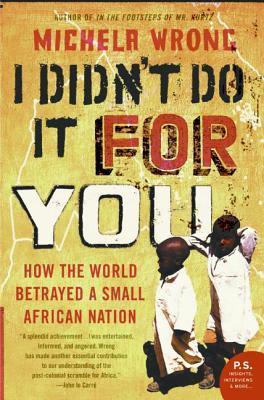
Scarred by decades of conflict and occupation, the craggy African nation of Eritrea has weathered the world's longest-running guerrilla war. The dogged determination that secured victory against Ethiopia, its giant neighbor, is woven into the national psyche, the product of cynical foreign interventions. Fascist Italy wanted Eritrea as the springboard for a new, racially pure Roman empire; Britain sold off its industry for scrap; the United States needed a base for its state-of-the-art spy station; and the Soviet Union used it as a pawn in a proxy war. In I Didn't Do It for You , Michela Wrong reveals the breathtaking abuses this tiny nation has suffered and, with a sharp eye for detail and a taste for the incongruous, tells the story of colonialism itself and how international power politics can play havoc with a country's destiny.

A tale of bitterness and division with the main plot focusing on the divisions and boundaries that Apartheid and international capitalism create within South African society.

When her ex-husband commits suicide after the failure of his anti-government activities, Liz Van Den Sandt struggles to decide whether to become involved in the South African Black nationalist movement

Ibn Battutah was just 21 when he set out in 1325 from his native Tangier on a pilgrimage to Mecca. He did not return to Morocco for another 29 years, traveling instead through more than 40 countries on the modern map, covering 75,000 miles and getting as far north as the Volga, as far east as China, and as far south as Tanzania. He wrote of his travels, and comes across as a superb ethnographer, biographer, anecdotal historian, and occasional botanist and gastronome. With this edition by Mackintosh-Smith, Battuta's Travels takes its place alongside other indestructible masterpieces of the travel-writing genre.

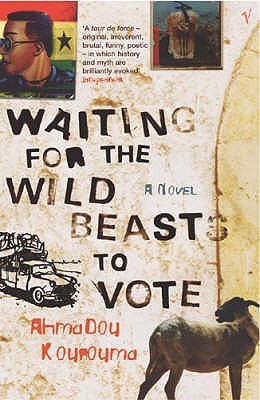
Ahmadou Kourouma's remarkable novel is narrated by Bingo, a West African sora - storyteller and king's fool. Over the course of five nights he tells the life story of Koyaga, President and Dictator of the Gulf Coast. Orphaned at the age of seven, Koyaga grows up to be a terrible hunter; he fights mythical beasts, and is a shape-shifter, capable of changing himself into beasts and birds. He fights in the French colonial armies, in Vietnam and Algeria, but on his return he mounts a coup and becomes ruler and dictator of the Gulf Coast. For thirty years he runs a corrupt but 'clean' state, surviving repeated assassination attempts and gaining support and investment from abroad. But when the 'First World' decides it no longer want to support dictatorships and call for democracy, he needs another ruse to maintain himself in power...Part magic, part history, part savage satire, Waiting for the Wild Beasts to Vote is nothing less than a history of post-colonial Africa itself.

“A study of primitive people which, for beauty of . . . style and concept, would be hard to match.” — The New York Times Book ReviewIn the 1950s Elizabeth Marshall Thomas became one of the first Westerners to live with the Bushmen of the Kalahari desert in Botswana and South-West Africa. Her account of these nomadic hunter-gatherers, whose way of life had remained unchanged for thousands of years, is a ground-breaking work of anthropology, remarkable not only for its scholarship but for its novelistic grasp of character. On the basis of field trips in the 1980s, Thomas has now updated her book to show what happened to the Bushmen as the tide of industrial civilization—with its flotsam of property rights, wage labor, and alcohol—swept over them. The result is a powerful, elegiac look at an endangered culture as well as a provocative critique of our own."The charm of this book is that the author can so truly convey the strangeness of the desert life in which we perceive human traits as familiar as our own. . . . The Harmless People is a model of the style very simple and precise, perfectly suited to the neat, even fastidious activities of a people who must make their world out of next to nothing." — The Atlantic

H. Rider Haggard's King Solomon's Mines has entertained generations of readers since its first publication in 1885. Following a mysterious map of dubious reliability, a small group of men trek into southern Africa in search of a lost friend-and a lost treasure, the fabled mines of King Solomon. Led by the English adventurer and fortune hunter Allan Quatermain, they discover a frozen corpse, survive untold dangers in remote mountains and deserts, and encounter the merciless King Twala en route to the legendary hoard of diamonds.

Auf einer Safari am Fuße des Kilimandscharo erleidet der Schriftsteller Harry eine Beinverletzung, die Wundbrand entwickelt. Während seine Frau und er auf das Rettungsflugzeug warten, lässt er sein Leben in Gedanken Revue passieren.

Set in the Igbo heartland of eastern Nigeria, one of Africa's best-known writers describes the conflict between old and new in its most poignant aspect: the personal struggle between father and son.Ezeulu, the headstrong chief priest of the god Ulu, is worshipped by the six villages of Umuaro. But his authority is increasingly under threat—from rivals within his tribe, from functionaries of the colonial government, and even from his own family members. Yet he believes himself to be untouchable: surely he is an arrow in the bow of his God? Armed with this belief, he is prepared to lead his people, even if it is towards their own destruction. But his people will not be dominated so easily. Spare and powerful, Arrow of God is an unforgettable portrayal of the loss of faith, and the downfall of a man in a society forever altered by colonialism.

Could Greek philosophy be rooted in Egyptian thought? Is it possible that the Pythagorean theory was conceived on the shores of the Nile and the Euphrates rather than in ancient Greece? Could it be that Western civilization was born on the so-called Dark Continent? For almost two centuries, Western scholars have given little credence to the possibility of such scenarios.In Black Athena, an audacious three-volume series that strikes at the heart of today's most heated culture wars, Martin Bernal challenges Eurocentric attitudes by calling into question two of the longest-established explanations for the origins of classical civilization. The Aryan Model, which is current today, claims that Greek culture arose as the result of the conquest from the north by Indo-European speakers, or "Aryans," of the native "pre-Hellenes." The Ancient Model, which was maintained in Classical Greece, held that the native population of Greece had initially been civilized by Egyptian and Phoenician colonists and that additional Near Eastern culture had been introduced to Greece by Greeks studying in Egypt and Southwest Asia. Moving beyond these prevailing models, Bernal proposes a Revised Ancient Model, which suggests that classical civilization in fact had deep roots in Afroasiatic cultures.This long-awaited third and final volume of the series is concerned with the linguistic evidence that contradicts the Aryan Model of ancient Greece. Bernal shows how nearly 40 percent of the Greek vocabulary has been plausibly derived from two Afroasiatic languages-Ancient Egyptian and West Semitic. He also reveals how these derivations are not limited to matters of trade, but extended to the sophisticated language of politics, religion, and philosophy. This evidence, according to Bernal, confirms the fact that in Greece an Indo-European people was culturally dominated by speakers of Ancient Egyptian and West Semitic.Provocative, passionate, and colossal in scope, this volume caps a thoughtful rewriting of history that has been stirring academic and political controversy since the publication of the first volume.

« La rue d’al-Nahhasin n’était pas une rue calme… La harangue des camelots, le marchandage des clients, les invocations des illuminés de passage, les plaisanteries des chalands s’y fondaient en un concert de voix pointues… Les questions les plus privées en pénétraient les moindres recoins, s’élevaient jusqu’à ses minarets… Pourtant, une clameur soudaine s’éleva, d’abord lointaine, comme le mugissement des vagues, elle commença à s’enfler, s’amplifier, jusqu’à ressembler à la plainte sibilante du vent… Elle semblait étrange, insolite, même dans cette rue criante… »N. M.C’est dans les rues du Caire que Naguib Mahfouz, le « Zola du Nil », a promené son miroir et capté toutes les facettes d’une société égyptienne en pleine évolution. Impasse des deux palais est le premier volume d’une trilogie qui comporte également Le Palais du désir et Le Jardin du passé.Naguib Mahfouz est le premier écrivain de langue arabe à avoir reçu, en 1988, le prix Nobel de littérature.

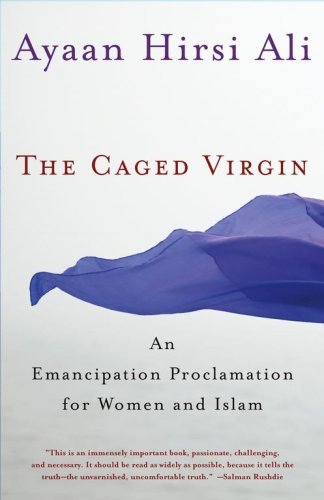
Muslims who explore sources of morality other than Islam are threatened with death, and Muslim women who escape the virgins' cage are branded whores. So asserts Ayaan Hirsi Ali's profound meditation on Islam and the role of women, the rights of the individual, the roots of fanaticism, and Western policies toward Islamic countries and immigrant communities. Hard-hitting, outspoken, and controversial, "The Caged Virgin" is a call to arms for the emancipation of women from a brutal religious and cultural oppression and from an outdated cult of virginity. It is a defiant call for clear thinking and for an Islamic Enlightenment. But it is also the courageous story of how Hirsi Ali herself fought back against everyone who tried to force her to submit to a traditional Muslim woman's life and how she became a voice of reform. Born in Somalia and raised Muslim, but outraged by her religion's hostility toward women, Hirsi Ali escaped an arranged marriage to a distant relative and fled to the Netherlands. There, she learned Dutch, worked as an interpreter in abortion clinics and shelters for battered women, earned a college degree, and started a career in politics as a Dutch parliamentarian. In November 2004, the violent murder on an Amsterdam street of Dutch filmmaker Theo van Gogh, with whom Hirsi Ali had written a film about women and Islam called "Submission," changed her life. Threatened by the same group that slew van Gogh, Hirsi Ali now has round-the-clock protection, but has not allowed these circumstances to compromise her fierce criticism of the treatment of Muslim women, of Islamic governments' attempts to silence any questioning of their traditions, and of Western governments' blind tolerance of practices such as genital mutilation and forced marriages of female minors occurring in their countries.Hirsi Ali relates her experiences as a Muslim woman so that oppressed Muslim women can take heart and seek their own liberation. Drawing on her love of reason and the Enlightenment philosophers on whose principles democracy was founded, she presents her firsthand knowledge of the Islamic worldview and advises Westerners how best to address the great divide that currently exists between the West and Islamic nations and between Muslim immigrants and their adopted countries.An international bestseller -- with updated information for American readers and two new essays added for this edition -- "The Caged Virgin" is a compelling, courageous, eye-opening work.

Set in the wake of the Mau Mau rebellion and on the cusp of Kenya's independence from Britain, A Grain of Wheat follows a group of villagers whose lives have been transformed by the 1952–1960 Emergency. At the center of it all is the reticent Mugo, the village's chosen hero and a man haunted by a terrible secret. As we learn of the villagers' tangled histories in a narrative interwoven with myth and peppered with allusions to real-life leaders, including Jomo Kenyatta, a masterly story unfolds in which compromises are forced, friendships are betrayed, and loves are tested.

A simple story of a "strong man" whose life is dominated by fear and anger, Things Fall Apart is written with remarkable economy and subtle irony. Uniquely and richly African, at the same time it reveals Achebe's keen awareness of the human qualities common to men of all times and places.

As a depiction of South Africa, this novel is more revealing than a thousand news dispatches as it tells the story of a young woman cast in the role of a young revolutionary, trying to uphold a heritage handed on by martyred parents while carving out a sense of one's self.

Green Hills of Africa is Ernest Hemingway's lyrical journal of a month on safari in the great game country of East Africa, where he and his wife Pauline journeyed in December 1933. Hemingway's well-known interest in - and fascination with - big-game hunting is magnificently captured in this evocative account of his trip. It is an examination of the lure of the hunt and an impassioned portrait of the glory of the African landscape and of the beauty of a wilderness that was, even then, being threatened by the incursions of man.

The daughter of a former aide to the king of Morocco, who was executed after a failed assassination attempt on the ruler, describes how she, her five siblings, and her mother were imprisoned in a desert penal colony for twenty years.

Winner, 2008 Book of the Year, End Malaria Awards, Malaria Foundation International Malaria sickens hundreds of millions of people―and kills one to three million―each year. Despite massive efforts to eradicate the disease, it remains a major public health problem in poorer tropical regions. But malaria has not always been concentrated in tropical areas. How did other regions control malaria and why does the disease still flourish in some parts of the globe? From Russia to Bengal to Palm Beach, Randall Packard’s far-ranging narrative traces the natural and social forces that help malaria spread and make it deadly. He finds that war, land development, crumbling health systems, and globalization―coupled with climate change and changes in the distribution and flow of water―create conditions in which malaria's carrier mosquitoes thrive. The combination of these forces, Packard contends, makes the tropical regions today a perfect home for the disease. Authoritative, fascinating, and eye-opening, this short history of malaria concludes with policy recommendations for improving control strategies and saving lives.

A previously published edition of ISBN 9781616202415 can be found here.Fifteen-year-old Kambili and her older brother Jaja lead a privileged life in Enugu, Nigeria. They live in a beautiful house, with a caring family, and attend an exclusive missionary school. They're completely shielded from the troubles of the world. Yet, as Kambili reveals in her tender-voiced account, things are less perfect than they appear. Although her Papa is generous and well respected, he is fanatically religious and tyrannical at home—a home that is silent and suffocating. As the country begins to fall apart under a military coup, Kambili and Jaja are sent to their aunt, a university professor outside the city, where they discover a life beyond the confines of their father’s authority. Books cram the shelves, curry and nutmeg permeate the air, and their cousins’ laughter rings throughout the house. When they return home, tensions within the family escalate, and Kambili must find the strength to keep her loved ones together.Purple Hibiscus is an exquisite novel about the emotional turmoil of adolescence, the powerful bonds of family, and the bright promise of freedom.

He was known as "the Leopard," and for the thirty-two years of his reign Mobutu Sese Seko, president of Zaire, showed all the cunning of his namesake, seducing Western powers, buying up the opposition, and dominating his people with a devastating combination of brutality and charm. While the population was pauperized, he plundered the country's copper and diamond resources, downing pink champagne in his jungle palace like some modern-day reincarnation of Joseph Conrad's crazed station manager.Michela Wrong, a correspondent who witnessed firsthand Mobutu's last days, traces the rise and fall of the idealistic young journalist who became the stereotype of an African despot. Engrossing, highly readable, and as funny as it is tragic, her book assesses how Belgium's King Leopold, the CIA, and the World Bank all helped to bring about the disaster that is now the Democratic Republic of Congo. If, in this poignant account, the villains are the "Big Vegetables" (les Grosses légumes) — the fat cats who benefited from Mobutu's largesse — the heroes are the ordinary citizens trapped in a parody of a state. Living in the shadow of a disintegrating nuclear reactor, where banknotes are not worth the paper they are printed on, they have turned survival into an art form. For all its valuable insights into Africa's colonial heritage and the damage done by Western intervention, In the Footsteps of Mr. Kurtz is ultimately a celebration of the irrepressible human spirit.

In this book, the author of Seven Gothic Tales gives a true account of her life on her plantation in Kenya. She tells with classic simplicity of the ways of the country and the natives: of the beauty of the Ngong Hills and coffee trees in blossom: of her guests, from the Prince of Wales to Knudsen, the old charcoal burner, who visited her: of primitive festivals: of big game that were her near neighbors--lions, rhinos, elephants, zebras, buffaloes--and of Lulu, the little gazelle who came to live with her, unbelievably ladylike and beautiful.This edition is set from the first American edition of 1937 and commemorates the seventy-fifth anniversary of Random House.

Out of Africa tells the story of a farm that the narrator once had in Africa. The farm is located at the foot of the Ngong hills outside of Nairobi, in what is now Kenya. It sits at an altitude of six thousand feet. The farm grows coffee, although only part of its six thousand acres is used for agriculture. The remaining parts of the land are forest and space for the natives to live on.

Set in South Africa under white rule, Doris Lessing's first novel is both a riveting chronicle of human disintegration and a beautifully understated social critique. Mary Turner is a self-confident, independent young woman who becomes the depressed, frustrated wife of an ineffectual, unsuccessful farmer. Little by little the ennui of years on the farm work their slow poison, and Mary's despair progresses until the fateful arrival of an enigmatic and virile black servant, Moses. Locked in anguish, Mary and Moses -- master and slave -- are trapped in a web of mounting attraction and repulsion. Their psychic tension explodes in an electrifying scene that ends this disturbing tale of racial strife in colonial South Africa.The Grass Is Singing blends Lessing's imaginative vision with her own vividly remembered early childhood to recreate the quiet horror of a woman's struggle against a ruthless fate.

This elegantly haunting work of fiction features bookstore owner Boualem Yekker, who lives in a country overtaken by a radically conservative party known as the Vigilant Brothers, a group that seeks to control every aspect of life according to the precepts of their rigid moral theology. The belief that no work of beauty created by humans should rival the wonders of their god is slowly consuming society, and the art once treasured is now despised. Boualem resists the new regime with quiet determination, using the shop and his personal history as weapons against puritanical forces. Readers are taken into the lush depths of the bookseller's dreams, the memories of his now empty family life, and his passion for literature, then yanked back into the terror and drudgery of his daily routine by the vandalism, assaults, and death warrants that afflict him. "Books have been the compost in which Boualem's life ripened, to the point where his bookish hands and his carnal hands, his paper body and his body of flesh and blood very often overlap and mingle. In the end Boualem himself didn't see a clear distinction any more. He has met so many characters in books, he has come in contact with so many destinies that his own life would be nothing without them." Marketing plans for The Last Summer of Reason : A percentage of proceeds go to ABFFE. Joint promotions with ABFFE and member stores, including highlight in Bookselling This Week .Galley mailing & BookSense Galley Program participationNational advertisingCo-op available Tahar Djaout was considered one of the most promising writers of his generation, and was a firm believer in democracy. Djaout's murder was attributed to the Islamic Salvation Front, who reported that he was killed because he "wielded a fearsome pen." He is the author of eleven books, including the novel Les vigiles , which won the Prix Mediterrane.

The establishment of South Africa's Truth and Reconciliation Commission was a pioneering international event. Never had any country sought to move forward from despotism to democracy both by exposing the atrocities committed in the past and achieving reconciliation with its former oppressors. At the center of this unprecedented attempt at healing a nation has been Archbishop Desmond Tutu, whom President Nelson Mandela named as Chairman of the Truth and Reconciliation Commission. With the final report of the Commission just published, Archbishop Tutu offers his reflections on the profound wisdom he has gained by helping usher South Africa through this painful experience.In No Future Without Forgiveness, Tutu argues that true reconciliation cannot be achieved by denying the past. But nor is it easy to reconcile when a nation "looks the beast in the eye." Rather than repeat platitudes about forgiveness, he presents a bold spirituality that recognizes the horrors people can inflict upon one another, and yet retains a sense of idealism about reconciliation. With a clarity of pitch born out of decades of experience, Tutu shows readers how to move forward with honesty and compassion to build a newer and more humane world.

The narrator of this splendidly expansive novel of high intellect and grand passion is an American anthropologist at loose ends in the South African republic of Botswana. She has a noble and exacting mind, a good waist, and a busted thesis project. She also has a yen for Nelson Denoon, a charismatic intellectual who is rumored to have founded a secretive and unorthodox utopian society in a remote corner of the Kalahari—one in which he is virtually the only man. What ensues is both a quest and an exuberant comedy of manners, a book that explores the deepest canyons of eros even as it asks large questions about the good society, the geopolitics of poverty, and the baffling mystery of what men and women really want.

In this classic work of psychological terror, Paul Bowles examines the ways in which Americans apprehend an alien culture—and the ways in which their incomprehension destroys them. The story of three American travelers adrift in the cities and deserts of North Africa, The Sheltering Sky is at once merciless and heartbreaking in its compassion. It etches the limits of human reason and intelligence—perhaps even the limits of human life—when they touch the unfathomable emptiness and impassive cruelty of the desert.

Set in a beautifully rendered 1990s Cape Town, Zoë Wicomb’s celebrated novel revolves around Marion Campbell, who runs a travel agency but hates traveling, and who, in post-apartheid society, must negotiate the complexities of a knotty relationship with Brenda, her first black employee. As Alison McCulloch noted in the New York Times, “Wicomb deftly explores the ghastly soup of racism in all its unglory—denial, tradition, habit, stupidity, fear—and manages to do so without moralizing or becoming formulaic.”Caught in the narrow world of private interests and self-advancement, Marion eschews national politics until the Truth and Reconciliation Commission throws up information that brings into question not only her family’s past but her identity and her rightful place in contemporary South African society. “Stylistically nuanced and psychologically astute” (Kirkus), Playing in the Light is as powerful in its depiction of Marion’s personal journey as it is in its depiction of South Africa’s bizarre, brutal history.

When he was a boy in Henning, Tennessee, Alex Haley's grandmother used to tell him stories about their family—stories that went back to her grandparents, and their grandparents, down through the generations all the way to a man she called "the African." She said he had lived across the ocean near what he called the "Kamby Bolongo" and had been out in the forest one day chopping wood to make a drum when he was set upon by four men, beaten, chained and dragged aboard a slave ship bound for Colonial America.Still vividly remembering the stories after he grew up and became a writer, Haley began to search for documentation that might authenticate the narrative. It took ten years and a half a million miles of travel across three continents to find it, but finally, in an astonishing feat of genealogical detective work, he discovered not only the name of "the African"—Kunta Kinte—but the precise location of Juffure, the very village in The Gambia, West Africa, from which he was abducted in 1767 at the age of sixteen and taken on the Lord Ligonier to Maryland and sold to a Virginia planter.Haley has talked in Juffure with his own African sixth cousins. On September 29, 1967, he stood on the dock in Annapolis where his great-great-great-great-grandfather was taken ashore on September 29, 1767. Now he has written the monumental two-century drama of Kunta Kinte and the six generations who came after him—slaves and freedmen, farmers and blacksmiths, lumber mill workers and Pullman porters, lawyers and architects—and one author.But Haley has done more than recapture the history of his own family. As the first black American writer to trace his origins back to their roots, he has told the story of 25,000,000 Americans of African descent. He has rediscovered for an entire people a rich cultural heritage that slavery took away from them, along with their names and their identities. But Roots speaks, finally, not just to blacks, or to whites, but to all people and all races everywhere, for the story it tells is one of the most eloquent testimonials ever written to the indomitability of the human spirit.

Journalist Helene Cooper examines the violent past of her home country Liberia and the effects of its 1980 military coup in this deeply personal memoir and finalist for the 2008 National Book Critics Circle Award.Helene Cooper is “Congo,” a descendant of two Liberian dynasties—traced back to the first ship of freemen that set sail from New York in 1820 to found Monrovia. Helene grew up at Sugar Beach, a twenty-two-room mansion by the sea. Her childhood was filled with servants, flashy cars, a villa in Spain, and a farmhouse up-country. It was also an African childhood, filled with knock foot games and hot pepper soup, heartmen and neegee. When Helene was eight, the Coopers took in a foster child—a common custom among the Liberian elite. Eunice, a Bassa girl, suddenly became known as “Mrs. Cooper’s daughter.”For years the Cooper daughters—Helene, her sister Marlene, and Eunice—blissfully enjoyed the trappings of wealth and advantage. But Liberia was like an unwatched pot of water left boiling on the stove. And on April 12, 1980, a group of soldiers staged a coup d'état, assassinating President William Tolbert and executing his cabinet. The Coopers and the entire Congo class were now the hunted, being imprisoned, shot, tortured, and raped. After a brutal daylight attack by a ragtag crew of soldiers, Helene, Marlene, and their mother fled Sugar Beach, and then Liberia, for America. They left Eunice behind.A world away, Helene tried to assimilate as an American teenager. At the University of North Carolina at Chapel Hill she found her passion in journalism, eventually becoming a reporter for the Wall Street Journal and the New York Times. She reported from every part of the globe—except Africa—as Liberia descended into war-torn, third-world hell.In 2003, a near-death experience in Iraq convinced Helene that Liberia—and Eunice—could wait no longer. At once a deeply personal memoir and an examination of a violent and stratified country, The House at Sugar Beach tells of tragedy, forgiveness, and transcendence with unflinching honesty and a survivor's gentle humor. And at its heart, it is a story of Helene Cooper’s long voyage home.

Heart of Darkness, a novel by Joseph Conrad, was originally a three-part series in Blackwood's Magazine in 1899. It is a story within a story, following a character named Charlie Marlow, who recounts his adventure to a group of men onboard an anchored ship. The story told is of his early life as a ferry boat captain. Although his job was to transport ivory downriver, Charlie develops an interest in investing an ivory procurement agent, Kurtz, who is employed by the government. Preceded by his reputation as a brilliant emissary of progress, Kurtz has now established himself as a god among the natives in “one of the darkest places on earth.” Marlow suspects something else of Kurtz: he has gone mad.A reflection on corruptive European colonialism and a journey into the nightmare psyche of one of the corrupted, Heart of Darkness is considered one of the most influential works ever written.

"I, Hasan the son of Muhammad the weigh-master, I, Jean-Leon de Medici, circumcised at the hand of a barber and baptized at the hand of a pope, I am now called the African, but I am not from Africa, nor from Europe, nor from Arabia. I am also called the Granadan, the Fassi, the Zayyati, but I come from no country, from no city, no tribe. I am the son of the road, my country is the caravan, my life the most unexpected of voyages."Thus wrote Leo Africanus, in his fortieth year, in this imaginary autobiography of the famous geographer, adventurer, and scholar Hasan al-Wazzan, who was born in Granada in 1488. His family fled the Inquisition and took him to the city of Fez, in North Africa. Hasan became an itinerant merchant, and made many journeys to the East, journeys rich in adventure and observation. He was captured by a Sicilian pirate and taken back to Rome as a gift to Pope Leo X, who baptized him Johannes Leo. While in Rome, he wrote the first trilingual dictionary (Latin, Arabic and Hebrew), as well as his celebrated Description of Africa , for which he is still remembered as Leo Africanus.

مصابي جليل، والعزاء جميل، ...وظني بأن الله سوف يديلجراح وأسر، واشتياق، وغربة...أحمل إني، بعدها، لحمولوإني، في هذا الصباح، لصالح،...ولكن خطي في الظلام جليل إذا أردتَ أن تعلَمَ قسوةَ السجّان، وتواطؤ السجن عليك، فأسأل سجين، أو ذويهإذا أردتَ أن تتذوَق صِدق المعاناة، وتتذوّق طعمَ الحياة الآخَر، فرجاءً لا تقرأ رواية عن الحبّ السرمديّ، ولكِن إقرأ في أدبِ السجونرواية الطاهر بن جلّون هذه، مقتبسة عن الحقيقة، يروي لنا سجيننا معاناته، في الزنزانة "ب" مع 23 سجين غيره، ويقصّ علينا بأسلوب "باهِر" موتَ المعظم الساحِق من أصدقائه، وظروف موتهمسُجِنوا لمحاولتهم الإنقلاب على الملك المغربي الحسن الثاني، في إنقلاب الصخيرات الشهير في 10 آب 1971الكلمات لم تستعصِ على الطاهِر بن جلّون لوصف الحفرة -الحبس- الذي دفنوا فيهِ أحياء، على مدار 18 عاماًلم يفقدوا إيمانهم بالله، وبقيَت ألسنهم رطبى بالقرآن والحديثِ الحسنإرتقوا فوق عذاباتهم الجسمية، إرتقوا فوق الجوع، فوقَ التقتير، فوق الضيق، فوق العتمة، فوقَ العقارِب والصراصير، وفوقَ سخرية السجّانوفي النهايَة، يتواطؤ السجّان مع سجينه، ويبدأ نموّ أمل الحرية، بعدَ أن قتلوههيَ فعلاً رواية باهِرة، فوقَ الوصفجميلة، مؤلمة، ولا ترتوي منها

The missing link in the chain of American slavery For three centuries slave ships carted millions of people from the coasts of Africa across the Atlantic to the Americas. Much is known of the slave trade and the American plantation system, but little of the ships that made it all possible.In The Slave Ship, award-winning historian Marcus Rediker draws on thirty years of research in maritime archives to create an unprecedented history of these vessels and the human drama acted out on their rolling decks. He reconstructs in chilling detail the lives, deaths, and terrors of captains, sailors, and the enslaved aboard a “floating dungeon” trailed by sharks.From the young African kidnapped from his village and sold into slavery by a neighboring tribe to the would-be priest who takes a job as a sailor on a slave ship only to be horrified at the evil he sees to the captain who relishes having “a hell of my own,” Rediker illuminates the lives of people who were thought to have left no trace.This is a tale of tragedy and terror, but also an epic of resilience, survival, and the creation of something entirely new. Marcus Rediker restores the slave ship to its rightful place alongside the plantation as a formative institution of slavery, a place where a profound and still haunting history of race, class, and modern economy was made.

Lawrence Durrell's series of four novels set in Alexandria, Egypt during the 1940s. The lush and sensuous series consists of Justine (1957), Balthazar (1958), Mountolive (1958), and Clea (1960). Justine, Balthazar, and Mountolive use varied viewpoints to relate a series of events in Alexandria before World War II. In Clea, the story continues into the years during the war. One L.G. Darley is the primary observer of the events, which include events in the lives of those he loves, and those he knows. In Justine, Darley attempts to recover from and put into perspective his recently ended affair with a woman. Balthazar reinterprets the romantic perspective he placed on the affair and its aftermath in Justine, in more philosophical and intellectual terms. Mountolive tells a story minus interpretation, and Clea reveals Darley's healing, and coming to love another woman.

Dave Varty was a cricket-playing schoolboy of 15 when his father died. Less than two years later and with only R62 in the bank, he and his brother John started a business that would change the conservation landscape across the African continent. In his quest to save the last remaining wilderness areas of Southern and East Africa, and to grow the reach of his ecotourism business, Dave learnt priceless life lessons. His has been a journey of discovery and rediscovery - bringing him full circle, from small family-owned and operated game lodges to tourism mogul and conservation kingpin, and now, finally, back to Londolozi, his original family farm. With passion, hope and humour, Dave sweeps readers along his journey to find workable solutions for conserving wild spaces in a complex and crowded world. Part memoir, part motivational manifesto, The Full Circle reminds of us of the grit and determination required to follow your calling and the sacrifices needed to make the world a better place for wildlife and, ultimately, for mankind.

From two of our most fiercely moral voices, a passionate call to arms against our era’s most pervasive human rights violation: the oppression of women and girls in the developing world.With Pulitzer Prize winners Nicholas D. Kristof and Sheryl WuDunn as our guides, we undertake an odyssey through Africa and Asia to meet the extraordinary women struggling there, among them a Cambodian teenager sold into sex slavery and an Ethiopian woman who suffered devastating injuries in childbirth. Drawing on the breadth of their combined reporting experience, Kristof and WuDunn depict our world with anger, sadness, clarity, and, ultimately, hope.They show how a little help can transform the lives of women and girls abroad. That Cambodian girl eventually escaped from her brothel and, with assistance from an aid group, built a thriving retail business that supports her family. The Ethiopian woman had her injuries repaired and in time became a surgeon. A Zimbabwean mother of five, counseled to return to school, earned her doctorate and became an expert on AIDS.Through these stories, Kristof and WuDunn help us see that the key to economic progress lies in unleashing women’s potential. They make clear how so many people have helped to do just that, and how we can each do our part. Throughout much of the world, the greatest unexploited economic resource is the female half of the population. Countries such as China have prospered precisely because they emancipated women and brought them into the formal economy. Unleashing that process globally is not only the right thing to do; it’s also the best strategy for fighting poverty.Deeply felt, pragmatic, and inspirational, Half the Sky is essential reading for every global citizen.

A compact, profoundly inspiring book that captures the spirit of Nelson Mandela, distilling the South African leader’s wisdom into 15 vital life lessonsWe long for heroes and have too few. Nelson Mandela, who died in 2013 at the age of ninety-five, is the closest thing the world has to a secular saint. He liberated a country from a system of violent prejudice and helped unite oppressor and oppressed in a way that had never been done before.Now Richard Stengel, the editor of Time magazine, has distilled countless hours of intimate conversation with Mandela into fifteen essential life lessons. For nearly three years, including the critical period when Mandela moved South Africa toward the first democratic elections in its history, Stengel collaborated with Mandela on his autobiography, Long Walk to Freedom , and traveled with him everywhere. Eating with him, watching him campaign, hearing him think out loud, Stengel came to know all the different sides of this complex man and became a cherished friend and colleague.In Mandela’s Way, Stengel recounts the moments in which “the grandfather of South Africa” was tested and shares the wisdom he why courage is more than the absence of fear, why we should keep our rivals close, why the answer is not always either/or but often “both,” how important it is for each of us to find something away from the world that gives us pleasure and satisfaction—our own garden. Woven into these life lessons are remarkable stories—of Mandela’s childhood as the protégé of a tribal king, of his early days as a freedom fighter, of the twenty-seven-year imprisonment that could not break him, and of his fulfilling remarriage at the age of eighty.This uplifting book captures the spirit of this extraordinary man—warrior, martyr, husband, statesman, and moral leader—and spurs us to look within ourselves, reconsider the things we take for granted, and contemplate the legacy we’ll leave behind.

Nelson Mandela is widely considered to be one of the most inspiring and iconic figures of our age. Now, after a lifetime of taking pen to paper to record thoughts and events, hardships and victories, he has bestowed his entire extant personal papers, which offer an unprecedented insight into his remarkable life.A singular international publishing event, Conversations with Myself draws on Mandela's personal archive of never-before-seen materials to offer unique access to the private world of an incomparable world leader. Journals kept on the run during the anti-apartheid struggle of the early 1960s; diaries and draft letters written in Robben Island and other South African prisons during his twenty-seven years of incarceration; notebooks from the postapartheid transition; private recorded conversations; speeches and correspondence written during his presidency--a historic collection of documents archived at the Nelson Mandela Foundation is brought together into a sweeping narrative of great immediacy and stunning power. An intimate journey from Mandela's first stirrings of political consciousness to his galvanizing role on the world stage, Conversations with Myself illuminates a heroic life forged on the front lines of the struggle for freedom and justice.While other books have recounted Mandela's life from the vantage of the present, Conversations with Myself allows, for the first time, unhindered insight into the human side of the icon.

In recent years, malaria has emerged as a cause célèbre for voguish philanthropists. Bill Gates, Bono, and Laura Bush are only a few of the personalities who have lent their names—and opened their pocketbooks—in hopes of curing the disease. Still, in a time when every emergent disease inspires waves of panic, why aren’t we doing more to eradicate one of our oldest foes? And how does a parasitic disease that we’ve known how to prevent for more than a century still infect 500 million people every year, killing nearly 1 million of them?In The Fever , the journalist Sonia Shah sets out to answer these questions, delivering a timely, inquisitive chronicle of the illness and its influence on human lives. Through the centuries, she finds, we’ve invested our hopes in a panoply of drugs and technologies, and invariably those hopes have been dashed. From the settling of the New World to the construction of the Panama Canal, through wars and the advances of the Industrial Revolution, Shah tracks malaria’s jagged ascent and the tragedies in its wake, revealing a parasite every bit as persistent as the insects that carry it. With distinguished prose and original reporting from Panama, Malawi, Cameroon, India, and elsewhere, The Fever captures the curiously fascinating, devastating history of this long-standing thorn in the side of humanity.

A highly original, stirring book on Mahatma Gandhi that deepens our sense of his achievements and disappointments—his success in seizing India’s imagination and shaping its independence struggle as a mass movement, his recognition late in life that few of his followers paid more than lip service to his ambitious goals of social justice for the country’s minorities, outcasts, and rural poor.Pulitzer Prize–winner Joseph Lelyveld shows in vivid, unmatched detail how Gandhi’s sense of mission, social values, and philosophy of nonviolent resistance were shaped on another subcontinent—during two decades in South Africa—and then tested by an India that quickly learned to revere him as a Mahatma, or “Great Soul,” while following him only a small part of the way to the social transformation he envisioned. The man himself emerges as one of history’s most remarkable self-creations, a prosperous lawyer who became an ascetic in a loincloth wholly dedicated to political and social action. Lelyveld leads us step-by-step through the heroic—and tragic—last months of this selfless leader’s long campaign when his nonviolent efforts culminated in the partition of India, the creation of Pakistan, and a bloodbath of ethnic cleansing that ended only with his own assassination.India and its politicians were ready to place Gandhi on a pedestal as “Father of the Nation” but were less inclined to embrace his teachings. Muslim support, crucial in his rise to leadership, soon waned, and the oppressed untouchables—for whom Gandhi spoke to Hindus as a whole—produced their own leaders.Here is a vital, brilliant reconsideration of Gandhi’s extraordinary struggles on two continents, of his fierce but, finally, unfulfilled hopes, and of his ever-evolving legacy, which more than six decades after his death still ensures his place as India’s social conscience—and not just India’s.

At the heart of Africa is Congo, a country the size of Western Europe, bordering nine other nations, that since 1996 has been wracked by a brutal and unstaunchable war in which millions have died. And yet, despite its epic proportions, it has received little sustained media attention. In this deeply reported book, Jason Stearns vividly tells the story of this misunderstood conflict through the experiences of those who engineered and perpetrated it. He depicts village pastors who survived massacres, the child soldier assassin of President Kabila, a female Hutu activist who relives the hunting and methodical extermination of fellow refugees, and key architects of the war that became as great a disaster as--and was a direct consequence of--the genocide in neighboring Rwanda. Through their stories, he tries to understand why such mass violence made sense, and why stability has been so elusive.Through their voices, and an astonishing wealth of knowledge and research, Stearns chronicles the political, social, and moral decay of the Congolese State.

Booker Prize-winning novelist, and one of Britain's foremost poets, Ben Okri is a passionate advocate of the written word. In A Time for New Dreams he breaks new ground in an unusual collection of linked essays, which address such diverse themes as childhood, self-censorship, the role of beauty, the importance of education and the real significance of the recent economic meltdown.Proving that 'true literature tears up the script' of how we see ourselves, A Time for New Dreams is provocative and thought-provoking. In an intriguing marriage of style and content, the concise but perfectly formed essays in this collection push the parameters of writing whilst asking profound questions about who we are and the future that awaits us.

In a time of death and terror, Leymah Gbowee brought Liberia's women together--and together they led a nation to peace. As a young woman, Gbowee was broken by the Liberian civil war, a brutal conflict that tore apart her life and claimed the lives of countless relatives and friends. As a young mother trapped in a nightmare of domestic abuse, she found the courage to turn her bitterness into action, propelled by her realization that it is women who suffer most during conflicts--and that the power of women working together can create an unstoppable force. In 2003, the passionate and charismatic Gbowee helped organize and then led the Liberian Mass Action for Peace, a coalition of Christian and Muslim women who sat in public protest, confronting Liberia's ruthless president and rebel warlords, and even held a sex strike. With an army of women, Gbowee helped lead her nation to peace.--From publisher description.

Interventions: A Life in War and Peace is the story of Annan’s remarkable time at the center of the world stage. After forty years of service at the United Nations, Annan shares here his unique experiences during the terrorist attacks of September 11; the American invasions of Iraq and Afghanistan; the war between Israel, Hizbollah, and Lebanon; the brutal conflicts of Somalia, Rwanda, and Bosnia; and the geopolitical transformations following the end of the Cold War. With eloquence and unprecedented candor, Interventions finally reveals Annan’s unique role and unparalleled perspective on decades of global politics.

In his second novel, Eghosa Imasuen presents the everyday life of a Nigerian university student against the backdrop of the pro-democracy riots of the 1980s and ‘90s, the lost hopes of June 12th, and the terror of the Abacha years.

One of the most urgent challenges in African economic development is to devise a strategy for improving statistical capacity. Reliable statistics, including estimates of economic growth rates and per-capita income, are basic to the operation of governments in developing countries and vital to nongovernmental organizations and other entities that provide financial aid to them. Rich countries and international financial institutions such as the World Bank allocate their development resources on the basis of such data. The paucity of accurate statistics is not merely a technical problem; it has a massive impact on the welfare of citizens in developing countries.Where do these statistics originate? How accurate are they? Poor Numbers is the first analysis of the production and use of African economic development statistics. Morten Jerven's research shows how the statistical capacities of sub-Saharan African economies have fallen into disarray. The numbers substantially misstate the actual state of affairs. As a result, scarce resources are misapplied. Development policy does not deliver the benefits expected. Policymakers’ attempts to improve the lot of the citizenry are frustrated. Donors have no accurate sense of the impact of the aid they supply. Jerven’s findings from sub-Saharan Africa have far-reaching implications for aid and development policy. As Jerven notes, the current catchphrase in the development community is "evidence-based policy," and scholars are applying increasingly sophisticated econometric methods—but no statistical techniques can substitute for partial and unreliable data.

A powerful portrayal of Jeffrey Sachs's ambitious quest to end global poverty "The poor you will always have with you," to cite the Gospel of Matthew 26:11. Jeffrey Sachs—celebrated economist, special advisor to the Secretary General of the United Nations, and author of the influential bestseller The End of Poverty —disagrees. In his view, poverty is a problem that can be solved. With single-minded determination he has attempted to put into practice his theories about ending extreme poverty, to prove that the world's most destitute people can be lifted onto "the ladder of development." In 2006, Sachs launched the Millennium Villages Project, a daring five-year experiment designed to test his theories in Africa. The first Millennium village was in Sauri, a remote cluster of farming communities in western Kenya. The initial results were encouraging. With his first taste of success, and backed by one hundred twenty million dollars from George Soros and other likeminded donors, Sachs rolled out a dozen model villages in ten sub-Saharan countries. Once his approach was validated it would be scaled up across the entire continent. At least that was the idea. For the past six years, Nina Munk has reported deeply on the Millennium Villages Project, accompanying Sachs on his official trips to Africa and listening in on conversations with heads-of-state, humanitarian organizations, rival economists, and development experts. She has immersed herself in the lives of people in two Millennium Ruhiira, in southwest Uganda, and Dertu, in the arid borderland between Kenya and Somalia. Accepting the hospitality of camel herders and small-hold farmers, and witnessing their struggle to survive, Munk came to understand the real-life issues that challenge Sachs's formula for ending global poverty. The Idealist is the profound and moving story of what happens when the abstract theories of a brilliant, driven man meet the reality of human life.

During the final fifteen years of the Cold War, southern Africa underwent a period of upheaval, with dramatic twists and turns in relations between the superpowers. Americans, Cubans, Soviets, and Africans fought over the future of Angola, where tens of thousands of Cuban soldiers were stationed, and over the decolonization of Namibia, Africa's last colony. Beyond lay the great South Africa. Piero Gleijeses uses archival sources, particularly from the United States, South Africa, and the closed Cuban archives, to provide an unprecedented international history of this important theater of the late Cold War.These sources all point to one by humiliating the United States and defying the Soviet Union, Fidel Castro changed the course of history in southern Africa. It was Cuba's victory in Angola in 1988 that forced Pretoria to set Namibia free and helped break the back of apartheid South Africa. In the words of Nelson Mandela, the Cubans "destroyed the myth of the invincibility of the white oppressor . . . [and] inspired the fighting masses of South Africa."

Hardback re-issue of this classic collection of stories This is the first volume of Doris Lessing's Collected African Stories. A classic work of twentieth-century literature. 'In story after story, Doris Lessing portrays the helpless collisions and alienations of the races. One brings away a sense of the sheer human impossibility of South Africa, as a place fit only for habitation by the imagination of exiles and of children. All else seems lost, betrayed and spoiled, except the glare of the sun, the dust, the boulders. An impressive collection.' Daily Telegraph

A colorful, moving, and dramatic memoir of personal transformation, set against one of the most famous game reserves in the world.When Nelson Mandela was released after twenty-seven years of imprisonment, he needed a place to recover and adjust to his new life. He went to Londolozi Game Reserve. Founded over eighty years ago by Boyd Varty's great-grandfather, Londolozi started as a hunting safari. But in 1973, Boyd's visionary father, Dave, transformed it into a nature reserve, creating a blueprint for modern-day conservation. This transformation is the backdrop of Boyd's family history and his own personal odyssey.Alongside his feisty, daring sister, Bronwyn, Boyd grows up learning to track lions, raise leopard cubs, and pilot Land Rovers. The two of them tag along with their larger-than-life uncle, John, who repeatedly flung them in danger's way to capture the best footage for his legendary wildlife videos. Boyd survives harrowing rhino charges and a vicious crocodile attack, but his most difficult challenge was a private crisis of purpose. After a period of intense spiritual questing, Boyd reconnects with nature and is able to "rediscover the track."With conviction, hope and humor, Boyd sweeps readers along his journey of discovery and rediscovery, making a passionate claim for the power of the wild to heal and restore the human spirit.

Beyond Words, readers travel to Amboseli National Park in the threatened landscape of Kenya and witness struggling elephant families work out how to survive poaching and drought, then to Yellowstone National Park to observe wolves sort out the aftermath of one pack's personal tragedy, and finally plunge into the astonishingly peaceful society of killer whales living in the crystalline waters of the Pacific Northwest.

The New York Times bestselling memoir of the heroic young inventor who brought electricity to his Malawian village is now perfect for young readers When a terrible drought struck William Kamkwamba's tiny village in Malawi, his family lost all of the season's crops, leaving them with nothing to eat and nothing to sell. William began to explore science books in his village library, looking for a solution. There, he came up with the idea that would change his family's life forever: he could build a windmill. Made out of scrap metal and old bicycle parts, William's windmill brought electricity to his home and helped his family pump the water they needed to farm the land. Retold for a younger audience, this exciting memoir shows how, even in a desperate situation, one boy's brilliant idea can light up the world. Complete with photographs, illustrations, and an epilogue that will bring readers up to date on William's story, this is the perfect edition to read and share with the whole family.

Find Me Unafraid tells the uncommon love story between two uncommon people whose collaboration sparked a successful movement to transform the lives of vulnerable girls and the urban poor. With a Foreword by Nicholas Kristof.This is the story of two young people from completely different worlds: Kennedy Odede from Kibera, the largest slum in Africa, and Jessica Posner from Denver, Colorado. Kennedy foraged for food, lived on the street, and taught himself to read with old newspapers. When an American volunteer gave him the work of Mandela, Garvey, and King, teenaged Kennedy decided he was going to change his life and his community. He bought a soccer ball and started a youth empowerment group he called Shining Hope for Communities (SHOFCO). Then in 2007, Wesleyan undergraduate Jessica Posner spent a semester abroad in Kenya working with SHOFCO. Breaking all convention, she decided to live in Kibera with Kennedy, and they fell in love.Their connection persisted, and Jessica helped Kennedy to escape political violence and fulfill his lifelong dream of an education, at Wesleyan University.The alchemy of their remarkable union has drawn the support of community members and celebrities alike—The Clintons, Mia Farrow, and Nicholas Kristof are among their fans—and their work has changed the lives of many of Kibera’s most vulnerable population: its girls. Jess and Kennedy founded Kibera’s first tuition-free school for girls, a large, bright blue building, which stands as a bastion of hope in what once felt like a hopeless place. But Jessica and Kennedy are just getting started—they have expanded their model to connect essential services like health care, clean water, and economic empowerment programs. They’ve opened an identical project in Mathare, Kenya’s second largest slum, and intend to expand their remarkably successful program for change.Ultimately this is a love story about a fight against poverty and hopelessness, the transformation made possible by a true love, and the power of young people to have a deep impact on the world.

To the charity workers, Dadaab refugee camp is a humanitarian crisis; to the Kenyan government, it is a 'nursery for terrorists'; to the western media, it is a dangerous no-go area; but to its half a million residents, it is their last resort.In City of Thorns, Rawlence interweaves the stories of nine individuals to show what life is like in the camp and to sketch the wider political forces that keep the refugees trapped there. Rawlence combines intimate storytelling with broad socio-political investigative journalism.

Daniel Black is at the top of his literary game with The Coming, a novel that National Book Award-winning author CharlesJohnson (Middle Passage) calls "powerful and beautiful" and "a work to be proud of."Lyrical, poetic, and hypnotizing, The Coming tells the story of a people's capture and sojourn from their homeland across the Middle Passage--a traumatic trip that exposed the strength andresolve of the African spirit. Extreme conditions produce extraordinary insight, and only after being stripped of everything do they discover the unspeakablebeauty they once took for granted. This powerful, haunting novel will shake readers to their very souls.

How does life work? How does nature produce the right numbers of zebras and lions on the African savanna, or fish in the ocean? How do our bodies produce the right numbers of cells in our organs and bloodstream? In "The Serengeti Rules," award-winning biologist and author Sean Carroll tells the stories of the pioneering scientists who sought the answers to such simple yet profoundly important questions, and shows how their discoveries matter for our health and the health of the planet we depend upon.One of the most important revelations about the natural world is that everything is regulated--there are rules that regulate the amount of every molecule in our bodies and rules that govern the numbers of every animal and plant in the wild. And the most surprising revelation about the rules that regulate life at such different scales is that they are remarkably similar--there is a common underlying logic of life. Carroll recounts how our deep knowledge of the rules and logic of the human body has spurred the advent of revolutionary life-saving medicines, and makes the compelling case that it is now time to use the Serengeti Rules to heal our ailing planet.A bold and inspiring synthesis by one of our most accomplished biologists and gifted storytellers, "The Serengeti Rules" is the first book to illuminate how life works at vastly different scales. Read it and you will never look at the world the same way again.

An alternate cover edition can be found here.A novel of breathtaking sweep and emotional power that traces three hundred years in Ghana and along the way also becomes a truly great American novel. Extraordinary for its exquisite language, its implacable sorrow, its soaring beauty, and for its monumental portrait of the forces that shape families and nations, Homegoing heralds the arrival of a major new voice in contemporary fiction.Two half-sisters, Effia and Esi, are born into different villages in eighteenth-century Ghana. Effia is married off to an Englishman and lives in comfort in the palatial rooms of Cape Coast Castle. Unbeknownst to Effia, her sister, Esi, is imprisoned beneath her in the castle's dungeons, sold with thousands of others into the Gold Coast's booming slave trade, and shipped off to America, where her children and grandchildren will be raised in slavery. One thread of Homegoing follows Effia's descendants through centuries of warfare in Ghana, as the Fante and Asante nations wrestle with the slave trade and British colonization. The other thread follows Esi and her children into America. From the plantations of the South to the Civil War and the Great Migration, from the coal mines of Pratt City, Alabama, to the jazz clubs and dope houses of twentieth-century Harlem, right up through the present day, Homegoing makes history visceral, and captures, with singular and stunning immediacy, how the memory of captivity came to be inscribed in the soul of a nation. Generation after generation, Yaa Gyasi's magisterial first novel sets the fate of the individual against the obliterating movements of time, delivering unforgettable characters whose lives were shaped by historical forces beyond their control. Homegoing is a tremendous reading experience, not to be missed, by an astonishingly gifted young writer.

From Man Booker Prize and National Book Critics Circle Award finalist Hisham Matar, a memoir of his journey home to his native Libya in search of answers to his father's disappearance. In 2012, after the overthrow of Qaddafi, the acclaimed novelist Hisham Matar journeys to his native Libya after an absence of thirty years. When he was twelve, Matar and his family went into political exile. Eight years later Matar's father, a former diplomat and military man turned brave political dissident, was kidnapped from the streets of Cairo by the Libyan government and is believed to have been held in the regime's most notorious prison. Now, the prisons are empty and little hope remains that Jaballa Matar will be found alive. Yet, as the author writes, hope is "persistent and cunning". This book is a profoundly moving family memoir, a brilliant and affecting portrait of a country and a people on the cusp of immense change, and a disturbing and timeless depiction of the monstrous nature of absolute power.

One of the most enduring myths on the Nigerian Femme Fatale - mammy-water, 'winch' or husband-snatcher - has to do with the cooking of fish stew ... A woman can do what she likes with a man When She knows how to satisfy his appetite for food. "Long throat Memoirs presents a sumptuous menu of essays about Nigerian food, lovingly presented by the nation's top epicurean writer. As well as a mouth-watering appraisal of the cultural politics and erotics of Nigerian cuisine, it is therefore a series of love letters to the Nigerian palate. From innovations in soup, fish as aphrodisiac and the powerful seductions of the yam, Long Throat Memoirs examines the complexities, the peculiarities, the meticulousness, and the tactility of Nigerian food. Nigeria has a strong culture of oral storytelling, myth of creation, of imaginative traversing of worlds. Long Throat Memoirs collates some of Those stories into at irresistible soup-pot, overexpressed in the flawless love language of appetite and nourishment.A sensuous testament on why, When and how Nigerians eat the food they love to eat; this book is a welcome addition to the global dining table of ideas.

This celebrated, unforgettable first novel, shortlisted for the prestigious Women's Prize for Fiction and set in Nigeria, gives voice to both husband and wife as they tell the story of their marriage--and the forces that threaten to tear it apart.Yejide and Akin have been married since they met and fell in love at university. Though many expected Akin to take several wives, he and Yejide have always agreed: polygamy is not for them. But four years into their marriage--after consulting fertility doctors and healers, trying strange teas and unlikely cures--Yejide is still not pregnant. She assumes she still has time--until her family arrives on her doorstep with a young woman they introduce as Akin's second wife. Furious, shocked, and livid with jealousy, Yejide knows the only way to save her marriage is to get pregnant, which, finally, she does--but at a cost far greater than she could have dared to imagine. An electrifying novel of enormous emotional power, Stay With Me asks how much we can sacrifice for the sake of family.

A dazzlingly accomplished debut collection explores the ties that bind parents and children, husbands and wives, lovers and friends to one another and to the places they call home. In “Who Will Greet You at Home,” a National Magazine Award finalist for The New Yorker, A woman desperate for a child weaves one out of hair, with unsettling results. In “Wild,” a disastrous night out shifts a teenager and her Nigerian cousin onto uneasy common ground. In "The Future Looks Good," three generations of women are haunted by the ghosts of war, while in "Light," a father struggles to protect and empower the daughter he loves. And in the title story, in a world ravaged by flood and riven by class, experts have discovered how to "fix the equation of a person" - with rippling, unforeseen repercussions. Evocative, playful, subversive, and incredibly human, What It Means When a Man Falls from the Sky heralds the arrival of a prodigious talent with a remarkable career ahead of her.

Após o enorme sucesso de Sejamos todos feministas, Chimamanda Ngozi Adichie retoma o tema da igualdade de gêneros neste manifesto com quinze sugestões de como criar filhos dentro de uma perspectiva feminista. Escrito no formato de uma carta da autora a uma amiga que acaba de se tornar mãe de uma menina, Para educar crianças feministas traz conselhos simples e precisos de como oferecer uma formação igualitária a todas as crianças, o que se inicia pela justa distribuição de tarefas entre pais e mães. E é por isso que este breve manifesto pode ser lido igualmente por homens e mulheres, pais de meninas e meninos. Partindo de sua experiência pessoal para mostrar o longo caminho que ainda temos a percorrer, Adichie oferece uma leitura essencial para quem deseja preparar seus filhos para o mundo contemporâneo e contribuir para uma sociedade mais justa.

A revelation shared between two privileged teenagers from very different backgrounds sets off a chain of events with devastating consequences.On the surface, Niru leads a charmed life. Raised by two attentive parents in Washington, D.C., he’s a top student and a track star at his prestigious private high school. Bound for Harvard in the fall, his prospects are bright. But Niru has a painful secret: he is queer—an abominable sin to his conservative Nigerian parents. No one knows except Meredith, his best friend, the daughter of prominent Washington insiders—and the one person who seems not to judge him.When his father accidentally discovers Niru is gay, the fallout is brutal and swift. Coping with troubles of her own, however, Meredith finds that she has little left emotionally to offer him. As the two friends struggle to reconcile their desires against the expectations and institutions that seek to define them, they find themselves speeding toward a future more violent and senseless than they can imagine.

L'Algérie dont est originaire sa famille n'a longtemps été pour Naïma qu'une toile de fond sans grand intérêt. Pourtant, dans une société française traversée par les questions identitaires, tout semble vouloir la renvoyer à ses origines. Mais quel lien pourrait-elle avoir avec une histoire familiale qui jamais ne lui a été racontée ? Son grand-père Ali, un montagnard kabyle, est mort avant qu'elle ait pu lui demander pourquoi l'Histoire avait fait de lui un " harki ". Yema, sa grand-mère, pourrait peut-être répondre mais pas dans une langue que Naïma comprenne. Quant à Hamid, son père, arrivé en France à l'été 1962 dans les camps de transit hâtivement mis en place, il ne parle plus de l'Algérie de son enfance. Comment faire ressurgir un pays du silence ? Dans une fresque romanesque puissante et audacieuse, Alice Zeniter raconte le destin, entre la France et l'Algérie, des générations successives d'une famille prisonnière d'un passé tenace. Mais ce livre est aussi un grand roman sur la liberté d'être soi, au-delà des héritages et des injonctions intimes ou sociales.

What if your sense of duty required you to betray the man you love? One woman struggles to choose between her honor and her heart in this enthralling espionage drama that deftly hops between New York and West Africa.It's 1986, the heart of the Cold War, and Marie Mitchell is an intelligence officer with the FBI. She's brilliant, but she's also a young black woman working in an old boys' club. Her career has stalled out, she's overlooked for every high-profile squad, and her days are filled with monotonous paperwork. So when she's given the opportunity to join a shadowy task force aimed at undermining Thomas Sankara, the charismatic, revolutionary president of Burkina Faso whose Communist ideology has made him a target for American intervention, she says yes. Yes, even though she secretly admires the work Thomas is doing for his country. Yes, even though she is still grieving over the mysterious death of her sister, whose example led Marie to this career path in the first place. Yes, even though a furious part of her suspects she's being offered the job because of her appearance and not her talent.In the year that follows, Marie will observe Thomas, seduce him, and ultimately have a hand in the coup that will bring him down. But doing so will change everything she believes about what it means to be a spy, a lover, a sister, and a good American.Inspired by true events -- Thomas Sankara is known as “Africa's Che Guevara” -- this novel knits together a gripping spy thriller, a heartbreaking family drama, and a passionate romance. This is a face of the Cold War you've never seen before, and it introduces a powerful new literary voice.

A novel of exhilarating range, magical realism, and history—a dazzling retelling of Liberia’s formation.Wayétu Moore’s powerful debut novel, She Would Be King, reimagines the dramatic story of Liberia’s early years through three unforgettable characters who share an uncommon bond. Gbessa, exiled from the West African village of Lai, is starved, bitten by a viper, and left for dead, but still she survives. June Dey, raised on a plantation in Virginia, hides his unusual strength until a confrontation with the overseer forces him to flee. Norman Aragon, the child of a white British colonizer and a Maroon slave from Jamaica, can fade from sight when the earth calls him. When the three meet in the settlement of Monrovia, their gifts help them salvage the tense relationship between the African American settlers and the indigenous tribes, as a new nation forms around them.Moore’s intermingling of history and magical realism finds voice not just in these three characters but also in the fleeting spirit of the wind, who embodies an ancient wisdom. “If she was not a woman,” the wind says of Gbessa, “she would be king.” In this vibrant story of the African diaspora, Moore, a talented storyteller and a daring writer, illuminates with radiant and exacting prose the tumultuous roots of a country inextricably bound to the United States. She Would Be King is a novel of profound depth set against a vast canvas and a transcendent debut from a major new author.

Includes a brand-new Binti story! Collected for the first time in a trade paperback omnibus edition, the Hugo- and Nebula-award-winning Binti trilogy, the story of one extraordinary girl's journey from her home to distant Oomza University.In her Hugo- and Nebula-winning novella, Nnedi Okorafor introduced us to Binti, a young Himba girl with the chance of a lifetime: to attend the prestigious Oomza University. Despite her family's concerns, Binti's talent for mathematics and her aptitude with astrolabes make her a prime candidate to undertake this interstellar journey.But everything changes when the jellyfish-like Medusae attack Binti's spaceship, leaving her the only survivor. Now, Binti must fend for herself, alone on a ship full of the beings who murdered her crew, with five days until she reaches her destination.There is more to the history of the Medusae--and their war with the Khoush--than first meets the eye. If Binti is to survive this voyage and save the inhabitants of the unsuspecting planet that houses Oomza Uni, it will take all of her knowledge and talents to broker the peace.But even if Binti achieves this remarkable feat, it's not the end of her story. For this lone Himba woman, now bonded with a Medusa and forever changed by this bond, still must find a way to survive and thrive at Oomza University amid swirling interspecies biases. And eventually, she must return home to test the strength of the fragile peace she worked so hard to win.Collected now for the first time in omnibus form--and introducing a new Binti story--follow Binti's journey in this groundbreaking sci-fi trilogy.

Heartbreak and hope exist together in this remarkable graphic novel about growing up in a refugee camp, as told by a Somali refugee to the Newbery Honor-winning creator of Roller Girl.Omar and his younger brother, Hassan, have spent most of their lives in Dadaab, a refugee camp in Kenya. Life is hard there: never enough food, achingly dull, and without access to the medical care Omar knows his nonverbal brother needs. So when Omar has the opportunity to go to school, he knows it might be a chance to change their future . . . but it would also mean leaving his brother, the only family member he has left, every day.Heartbreak, hope, and gentle humor exist together in this graphic novel about a childhood spent waiting, and a young man who is able to create a sense of family and home in the most difficult of settings. It's an intimate, important, unforgettable look at the day-to-day life of a refugee, as told to New York Times Bestselling author/artist Victoria Jamieson by Omar Mohamed, the Somali man who lived the story.